Disclosure: This post may contain affiliate links. If you click and buy, we may earn a commission at no extra cost to you. As an Amazon Associate, we earn from qualifying purchases.
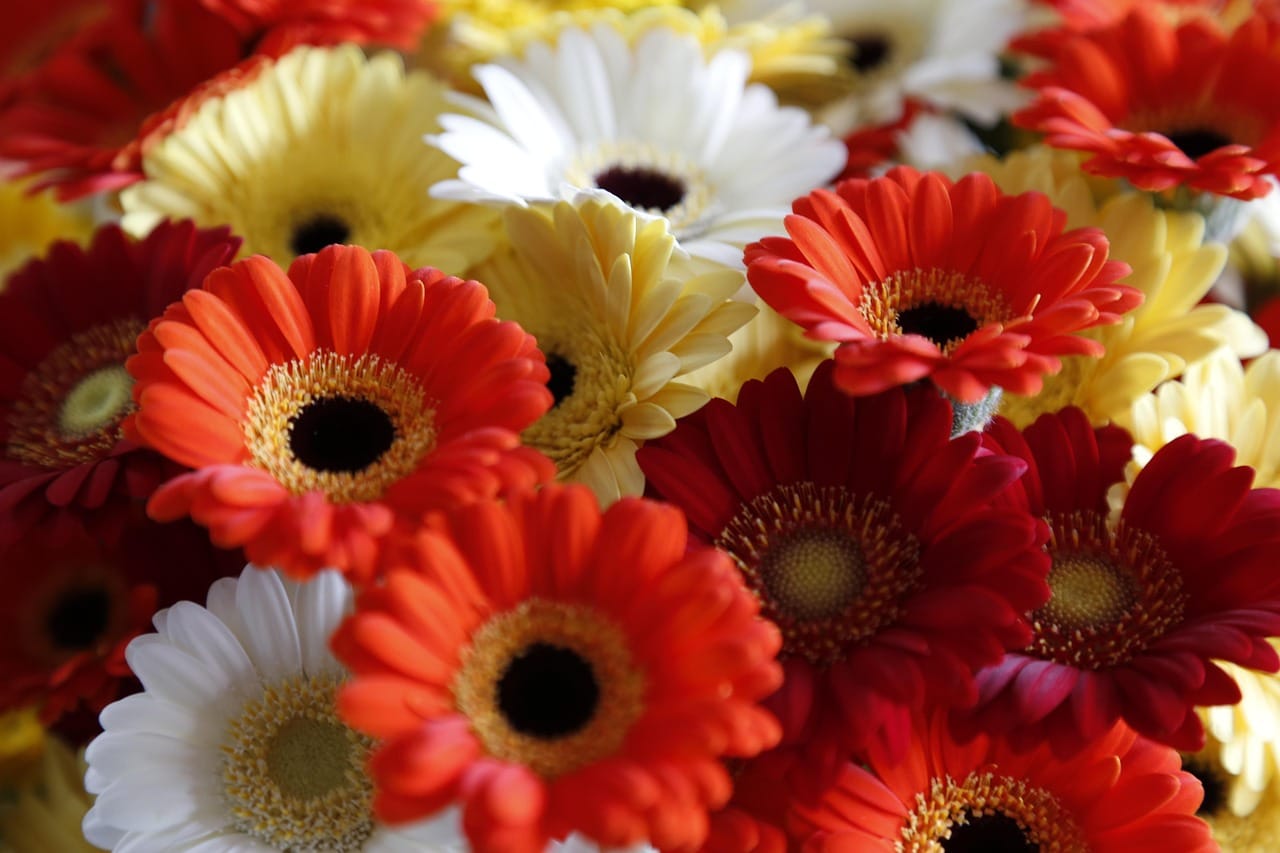
Gerbera daisies — also called Barberton daisies or Transvaal daisies — are one of the most popular cut flowers in the world, and for good reason. Their large, bold blooms come in virtually every color imaginable, they photograph beautifully, and they’re one of the most affordable ways to make a serious impact in an arrangement.
But there’s a catch: gerberas are notoriously high-maintenance once they’re cut. Their hollow stems clog easily, they’re thirsty drinkers, and they’ll droop fast if you skip even one step.
The good news? With the right technique, you can reliably get 7–10 days of vase life, sometimes more.
This guide covers everything a professional florist does from the moment gerberas arrive in a box to the moment they go into a finished arrangement.
Are Gerbera Daisies a Long-Lasting Cut Flower?
Yes — with proper care. Untreated, gerberas can wilt within 2–3 days. Follow the steps below, and 7–10 days is the realistic baseline. Exceptional care can push that even further.
The difference between a gerbera that droops overnight and one that stands tall for a week almost always comes down to three things: a fresh stem cut, clean water with preservative, and consistent hydration.
What You’ll Need
Before you start, gather these supplies:
- Sharp floral knife or clean pruning shears
- A clean glass vase (glass only — no metal or plastic)
- Floralife Quick Dip — a stem-dip solution that prevents air embolism
- Floralife Crystal Clear flower food — or another commercial floral preservative
- A large bucket or sink for the initial cut
- Optional: Floral wire or flower straws for heavy-headed blooms
Pro Tip: Skip the DIY preservative recipes (lemon juice + sugar + bleach). They’re better than nothing, but a commercial preservative like Floralife consistently outperforms homemade alternatives and extends vase life by several additional days.
Gerbera Daisy Cut Flower Care in 7 Steps
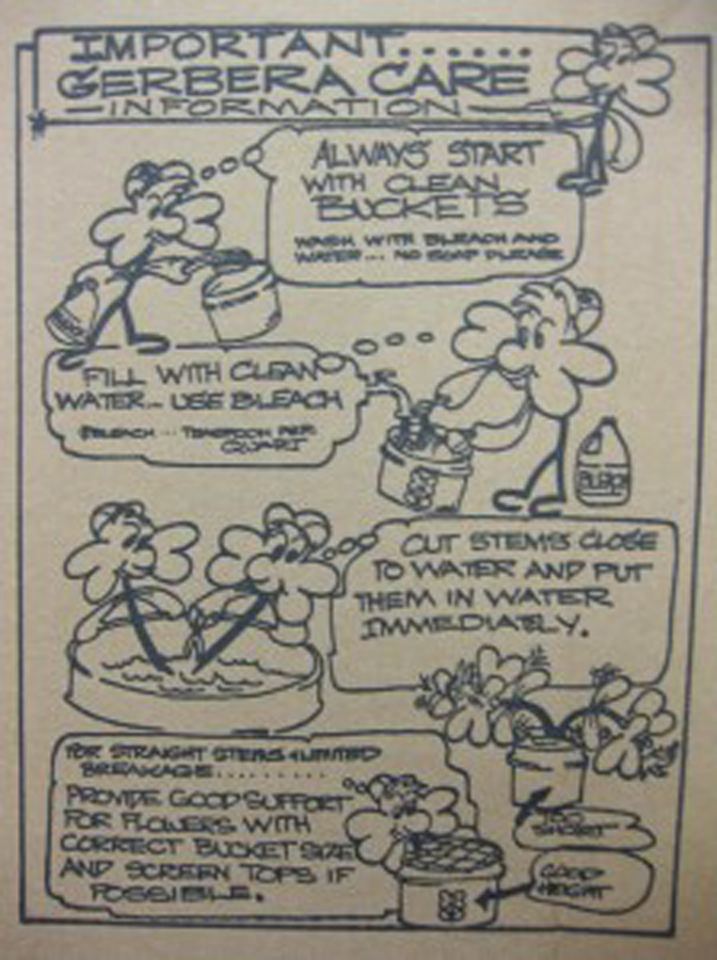
Step 1: Remove Protective Packaging
If your gerberas arrived with plastic cups or sleeves around the flower heads, remove them carefully. These are shipping protectors, not long-term storage.
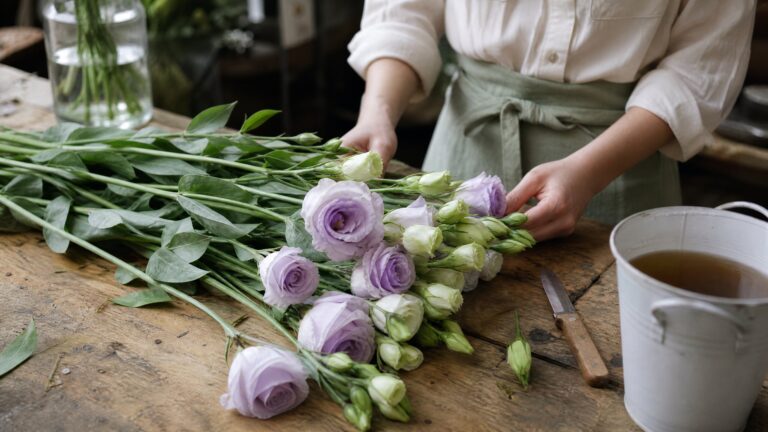
Step 2: Make a Fresh Stem Cut (Underwater)
This is the single most important step. Gerbera stems have hollow centers that are prone to airlock — a condition in which an air bubble blocks water uptake and causes wilting.
How to do it:
- Hold each stem underwater in a sink or under running water
- Cut about 1 inch off the bottom of each stem at a 45-degree angle using a sharp, clean floral knife
- Immediately dip the freshly cut end into Floralife Quick Dip
Critical: Do not let the freshly cut stem dry out, even for a few seconds. Air re-enters instantly, defeating the purpose of the underwater cut.
Step 3: Condition in Warm Water with Preservative
Don’t rush straight to your arrangement. Gerberas need time to rehydrate properly.
- Mix a commercial floral preservative with warm water (around 100°F / 38°C) in a clean vase or bucket
- Place your freshly cut gerberas in the solution immediately
- Move them to a cool, dark room or refrigerator for 2–3 hours
This conditioning period allows the flowers to fully hydrate before the stress of being arranged. Skipping it is one of the most common reasons gerberas die early.
How to mix preservative correctly: Don’t add the packet directly to your display vase. Mix it with the recommended amount of water in a separate container first, then use that water to fill your vase. Save the remainder for daily top-ups.
Step 4: Choose the Right Display Environment
Temperature matters more than most people realize. Gerberas are cool-weather flowers at heart.
- Keep them away from: direct sunlight, heating vents, air conditioning drafts, and ripening fruit (ethylene gas from fruit accelerates wilting)
- Ideal display temperature: 65–72°F (18–22°C)
- Glass vase only: Metal and plastic harbor bacteria that shorten vase life significantly
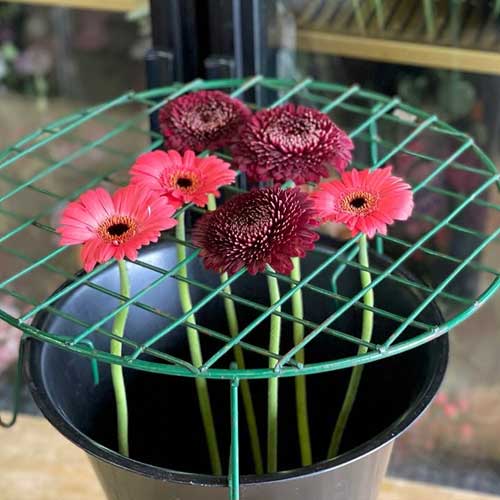
If stems need straightening, suspend them using a wire mesh grid across the top of the vase so stems hang freely and don’t touch the bottom. This prevents the stem ends from being crushed or bent.
Step 5: Check Water Daily — They’re Thirsty
Gerberas are heavy drinkers. A fully hydrated arrangement can drain a vase noticeably overnight.
- Check the water level every single day
- Top up with fresh preservative solution (not plain water)
- If using floral foam, make sure it stays completely saturated
Warning: Once a gerbera starts showing signs of dehydration — a slightly limp neck, petals beginning to curl — recovery is very difficult. Prevention is everything here.
Step 6: Recut Stems Every 2–3 Days
Every time you recut, you’re opening a fresh pathway for water uptake.
- Remove gerberas from the vase
- Make a fresh cut underwater (same technique as Step 2)
- Clean the vase thoroughly before refilling with fresh preservative solution
- Return flowers immediately
A fresh cut every 2–3 days can add several days to your overall vase life.
Step 7: Use the Pin Trick for Drooping Stems
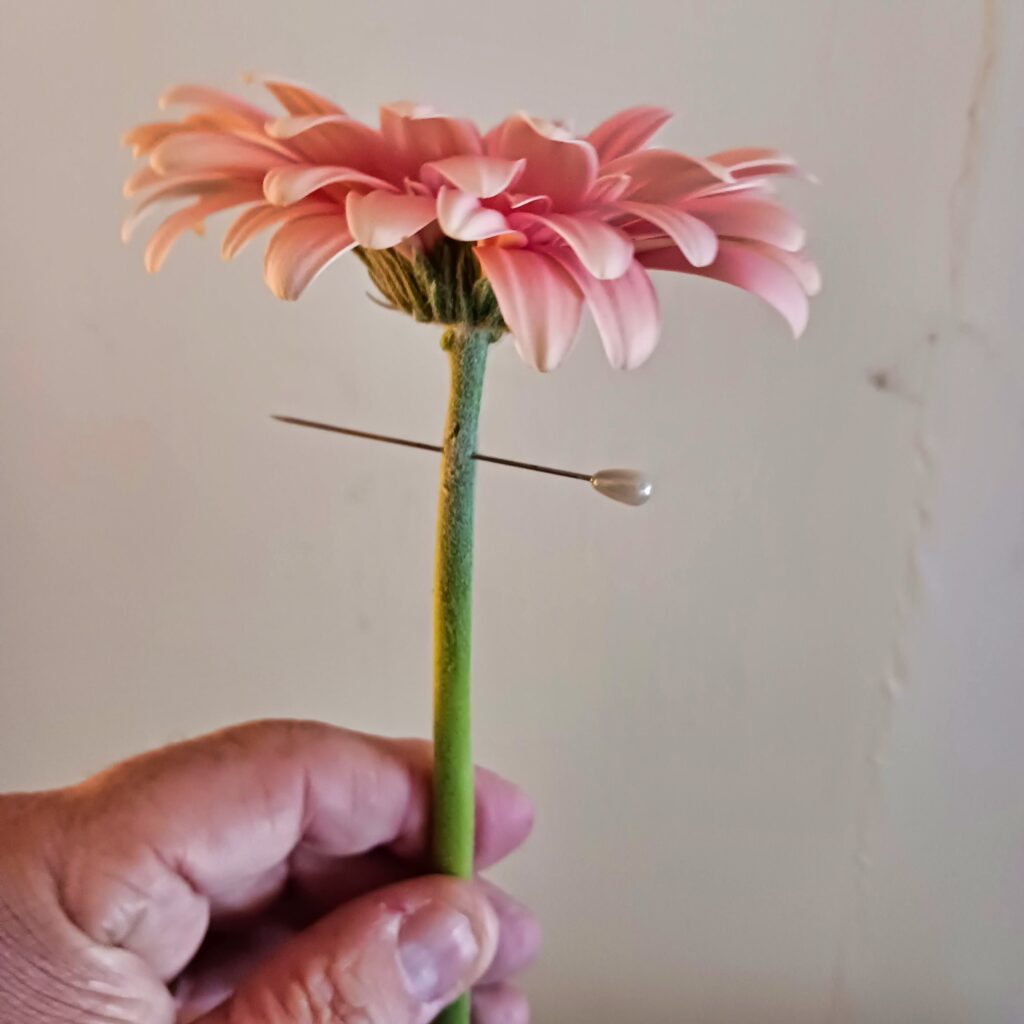
If a stem begins to droop despite good care, try this professional florist hack before giving up:
- Take a clean hatpin or floral pin
- Pierce the stem horizontally about 1 inch below the flower head — this releases trapped air
- Gently remove the pin
- Place the flower in fresh water with a preservative
- Check after 1–2 hours
It won’t save a stem that’s already fully wilted, but for early-stage drooping, it works surprisingly well. For very heavy-headed blooms, consider supporting the stem with a flower straw or floral wire to prevent gravity from doing the damage in the first place.
Quick Reference Care Card
| Step | Action | Timing |
|---|---|---|
| Unpack | Remove plastic cups | On arrival |
| Cut | 1″ angled cut underwater + Quick Dip | On arrival |
| Condition | Warm preservative water, cool/dark | 2–3 hrs on arrival |
| Display | Glass vase, cool spot, no sun/drafts | Ongoing |
| Water check | Top up with preservative solution | Daily |
| Recut | Fresh underwater cut + clean vase | Every 2–3 days |
| Drooping fix | Pin trick + fresh water | As needed |
How to Prevent Gerbera Daisies from Drooping
Drooping almost always has one of three causes:
1. Air lock in the stem — hollow stems trap air easily. Prevent this with underwater cuts and Quick Dip every time you recut.
2. Bacterial buildup — dirty vases and plain tap water accelerate bacteria that block water uptake. Always use a clean glass vase and commercial preservative.
3. The weight of the flower head — some gerbera varieties have very large, heavy blooms. Support them with a wire mesh grid or individual floral support straws.
If the stems need straightening, suspend or hang them in the vase using a wire mesh grid, making sure the stems do not touch the bottom of the vase.
How Much Do Gerbera Daisies Cost?
Prices vary significantly by source:
| Source | Price |
|---|---|
| Local florist | $4–$5 per stem |
| Grocery store floral (bunch of 5–10) | $8–$12 per bunch |
| Online (wholesale-style) | $1.50–$4.50 per stem |
Buying advice: Online sources offer better per-stem pricing, but minimum orders are typically 80+ stems. For most consumers, a local florist or grocery store floral department is the more practical and cost-effective choice. For DIY brides or event planners needing large quantities, online sourcing makes much more financial sense.
Frequently Asked Questions
How long do cut gerbera daisies last in a vase?
With proper care, fresh cuts, clean water, and daily preservative top-ups, you can expect 7–10 days. Some well-conditioned gerberas last up to 14 days.
Why are my gerbera daisies drooping?
The most common causes are an airlock in the hollow stem, bacterial buildup in the vase, or dehydration from inconsistent watering. Re-cut the stems underwater, change the water with fresh preservative, and try the pin trick for early-stage drooping.
Should I put gerbera daisies in the fridge overnight?
Yes, refrigerating overnight (around 34–38°F) can meaningfully extend vase life, especially in warm weather. Make sure there’s no fruit in the fridge, as ethylene gas accelerates wilting.
Can I use tap water for gerbera daisies?
Tap water is fine as a base, but always mix in a commercial floral preservative. Plain tap water alone won’t provide the nutrients or antibacterial protection gerberas need.
Do gerbera daisy stems need to touch the bottom of the vase?
No, ideally they shouldn’t. Stems resting on the bottom can develop flat spots that reduce water uptake. Use a wire mesh grid to suspend stems so they hang freely in the water.
What’s the best vase for gerbera daisies?
A clean glass vase is best. Metal and plastic can harbor bacteria and accelerate stem decay. The height should support the stem without forcing it to bend.
Are gerbera daisies toxic to pets?
According to the ASPCA, gerbera daisies are considered non-toxic to cats and dogs, making them a safer choice for pet-friendly homes when compared to lilies or tulips.
Final Thoughts
Gerbera daisies reward attentive care generously. The steps above aren’t complicated; they require consistency. Make the underwater cut every time, keep the water fresh and full, give them a cool spot away from sunlight and drafts, and check on them daily.
Do those things and your gerberas will stay vibrant, upright, and beautiful for well over a week.
Have a care tip that’s worked well for you? Leave a comment below. I’d love to hear it.
Til next time,