Disclosure: This post may contain affiliate links. If you click and buy, we may earn a commission at no extra cost to you. As an Amazon Associate, we earn from qualifying purchases.
Last Updated: September 1, 2026
I had a customer walk in last week, point at a vase of alstroemeria on the counter, and ask me how on earth we get them to last so long in the shop. She’d bought a bunch from a grocery store the week before, and they were already drooping by day three. Hers should have lasted at least two weeks.
Alstroemeria, aka the “Peruvian Lily,” is one of the best-selling flowers in our shop for good reason. They’re durable, they come in every color you can think of, and properly cared for, they outlast almost anything else in the cooler. But “properly cared for” is doing a lot of work in that sentence. Most people skip a step or two and never know why their flowers fade fast.
This quick video walks through the seven steps for simple alstroemeria cut flower care. This is exactly what we do in our shop, and what I told that customer to do at home.
If you’re a visual learner, watch this first, then come back for the details.
Process Them The Right Way From Day One
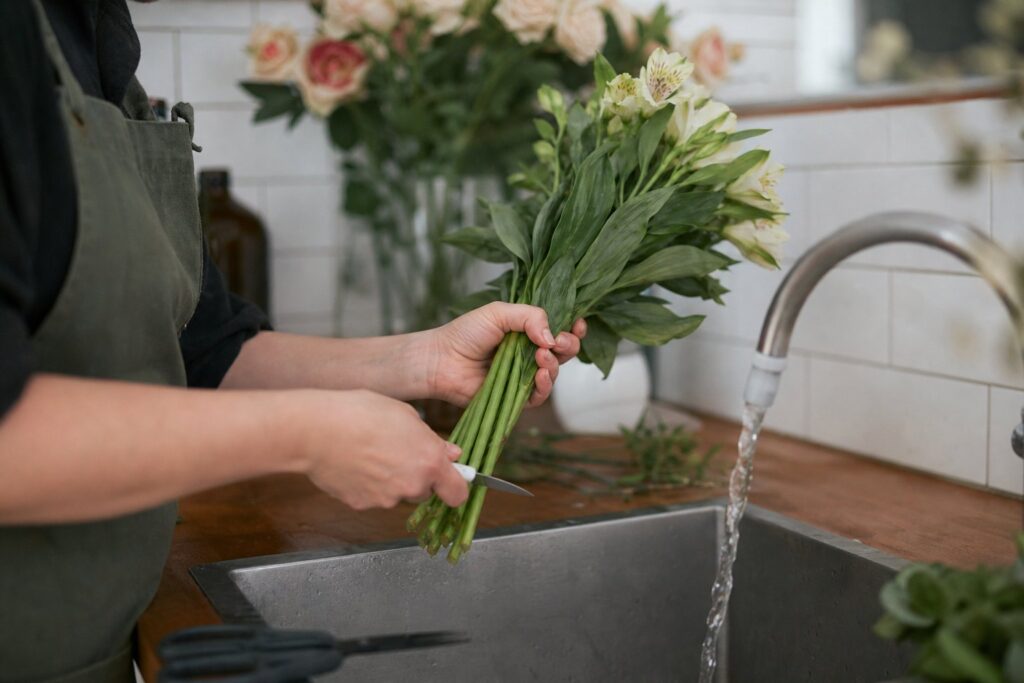
The single biggest mistake I see, at home and in other shops, is rushing the intake. How you handle alstroemeria in the first ten minutes determines how long they’ll last. Here are the seven steps we follow every single time a fresh box arrives.
- Strip any leaves that will sit underwater. Submerged foliage rots fast and turns the water cloudy within a day.
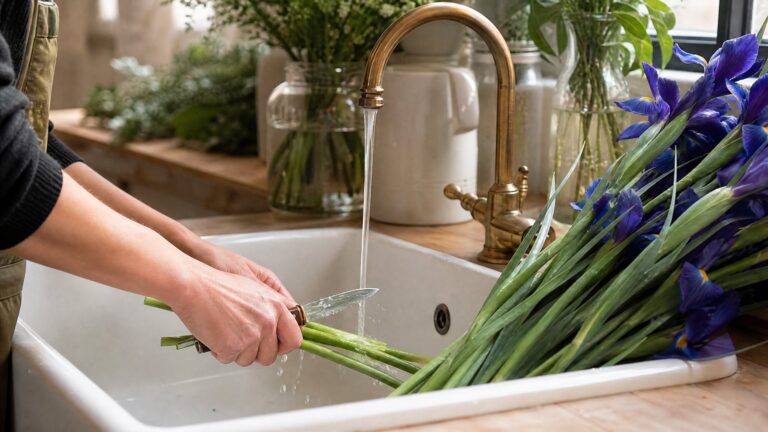
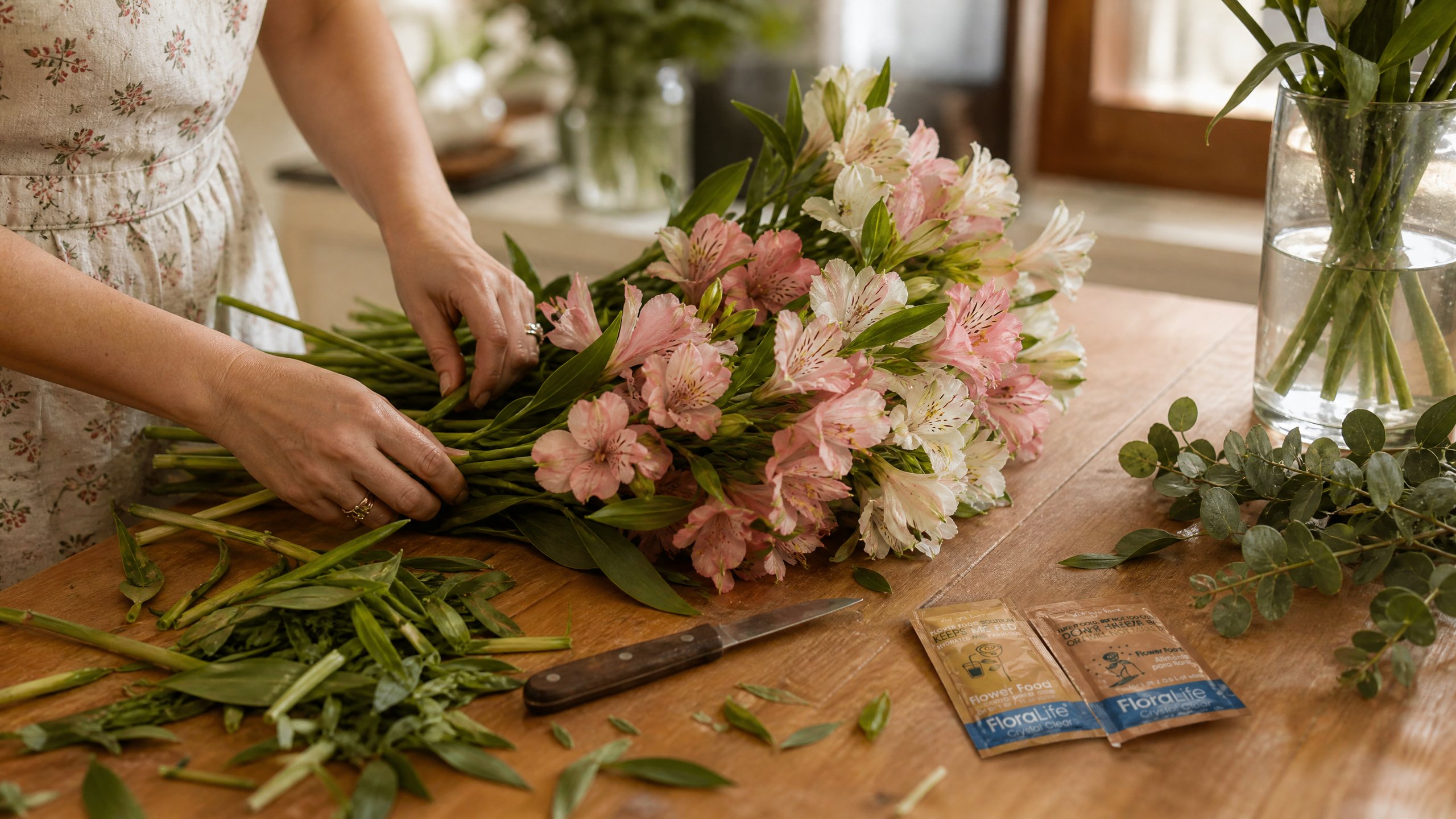
- Cut about one inch off each stem under running water using a sharp floral knife or bunch cutter. Don’t let the cut end dry off before transferring it; air bubbles will block water uptake.
- If the buds look very tight, submerge them briefly in warm water to encourage opening.
- Use clean water mixed with a floral preservative. Always. Avoid water from a softener; the salt content shortens vase life.
- Place the freshly cut stems in a warm preservative solution (around 100° F) in a clean, deep vase. Let them condition for several hours before arranging.
- Display them somewhere cool, out of direct sunlight, away from heat vents and drafts. Temperature is the silent killer of cut flowers.
- Keep the vase topped off. Alstroemeria drinks a lot. If you’re using floral foam, keep it fully saturated and the container full daily.
That’s it. Seven steps. Skip any one of them, and you’ll cut your vase life roughly in half. I’ve seen it happen too many times to call it a coincidence.
For a deeper dive on the intake process across all flower types, see my full guide on how to process fresh flowers like a pro.
Don’t Skip The Preservative
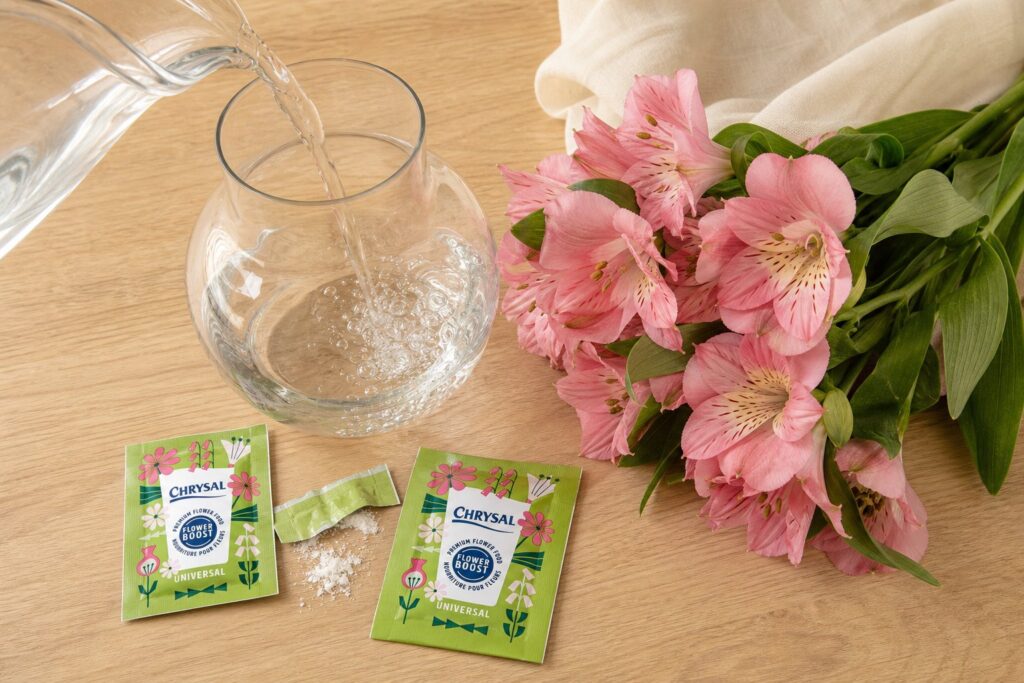
I cannot stress this enough. Plain water is not enough. Floral preservative does three things: it feeds the stems, it kills the bacteria that clog them, and it adjusts pH so water moves up the stem more easily. Skip it, and your alstroemeria will fade in five days instead of fourteen.
For weddings or special events, the video references two products we use in the shop every day: Floralife Quick Dip and Floralife Crystal Clear Flower Food. Both are commercial-grade, not the little packets that come stapled to a grocery-store bouquet.
What I use in the shop: Floralife Quick Dip for hydration on intake, and Floralife Crystal Clear Flower Food in every vase. Quick Dip is a one-time hydration treatment that opens the stem; Crystal Clear feeds the flower for the rest of its vase life. They work together; one is not a substitute for the other.
If you notice the foliage starting to yellow, that’s alstroemeria’s well-known ethylene sensitivity at work. Treatment happens at the grower level, so there’s not much you can do once it shows up. Just snip off any affected leaves, and the flowers themselves will be fine.
Open Tight Buds Without Damaging The Bloom
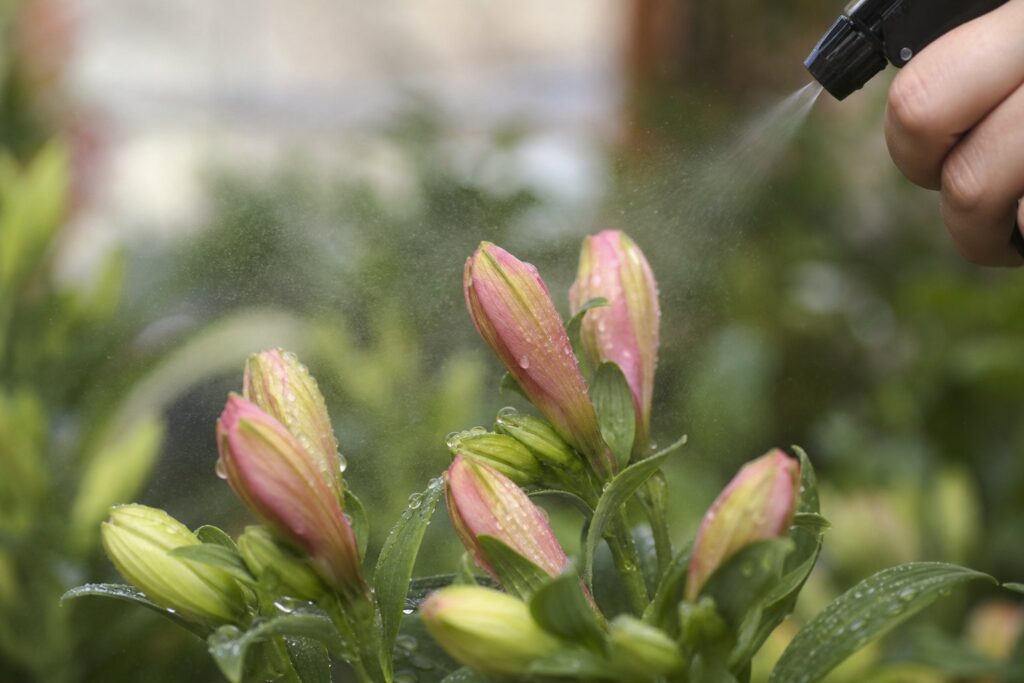
This is one of the most common questions I get: “How do I make alstroemeria open faster?” When alstroemeria ships direct, it usually arrives with tight buds; that’s by design. Closed flowers travel better.
Most bulk flower sites tell you to allow 2-3 days for full opening. In my experience, that’s overly cautious. Using the Floralife products as directed, we routinely process alstroemeria 4-6 days before an event with no ill effects. That extra runway matters when shipping delays show up uninvited, and they will.
If a few stems are still dragging their feet on opening day, you can gently reflex the petals open by hand. Done correctly, reflexing won’t shorten the bloom’s life one bit. It’s a trick I use on stubborn roses and lilies all the time.
Use The Right Tools: They Matter More Than You Think
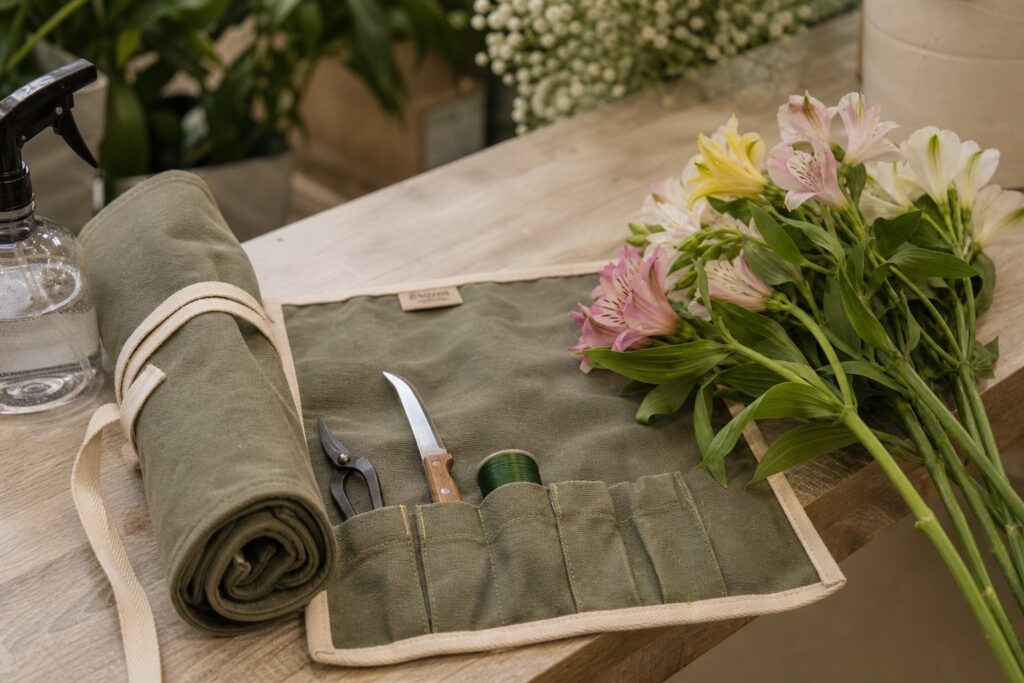
Here’s a hard truth: dull blades crush stems instead of cutting them. Crushed stems can’t drink. I see this constantly with home users who are using kitchen scissors or pruning shears on delicate alstroemeria stems.
A clean, sharp cut at a 45-degree angle is what you want. That maximizes surface area for water uptake and keeps the stem from sealing flat against the bottom of the vase. Buy a real floral knife. They’re inexpensive, they last forever, and the cut quality is night-and-day different from scissors.
For the full breakdown of what’s on my workbench, see my list of the 8 floral design tools I use every day.
Avoid These Common Alstroemeria Mistakes
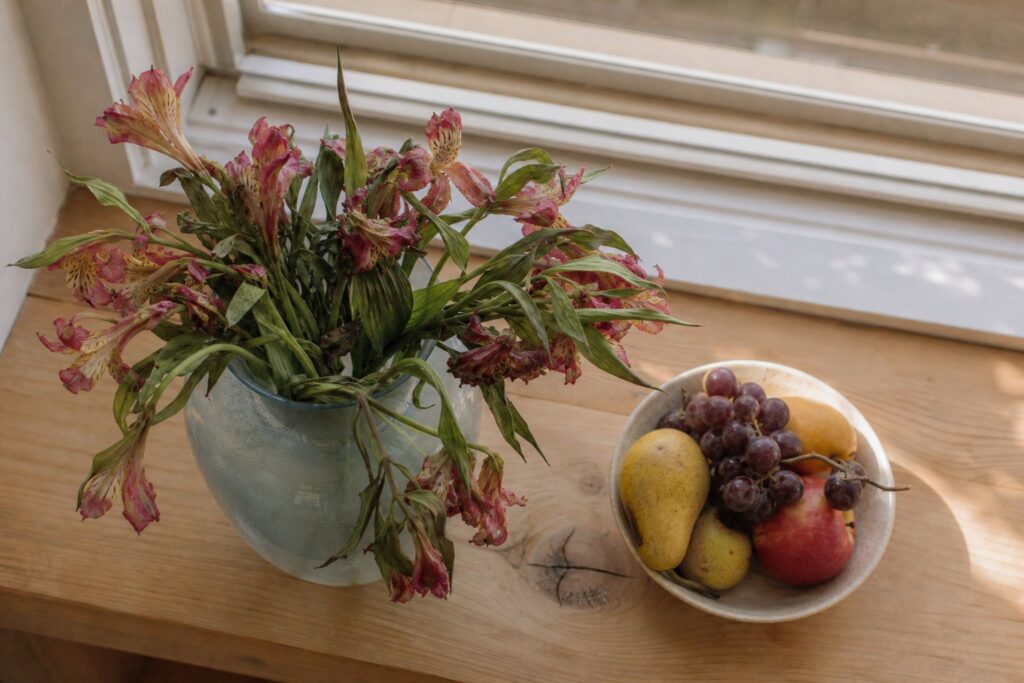
A few traps I see over and over again, and how to dodge them:
- Setting the vase next to a fruit bowl. Ripening fruit emits ethylene gas, which alstroemeria absolutely hates. Keep them in different rooms.
- Putting them in a sunny window because they “look pretty there.” Direct sunlight cooks the blooms. North-facing light or a bright corner is better.
- Topping off the vase but never replacing the water. Bacteria build up regardless of the preservative. Every 3-4 days, dump it, rinse the vase, recut the stems, and refill with fresh solution.
- Mixing alstroemeria with daffodils. Daffodils leak a sap that kills almost everything in the same vase. If you must combine them, soak the daffodils alone for 24 hours first.
- Skipping the preservative because “the flowers are dying anyway.” Florists never die. They make other arrangements. Your flowers, on the other hand, are very much trying to live; give them the help.
If yellowing leaves are showing up despite all of this, that’s the ethylene sensitivity I mentioned earlier. It’s not your fault, and it isn’t fixable. Pluck them off, and the flowers themselves will keep going.
Frequently Asked Questions
How long should fresh-cut alstroemeria last?
With proper processing and a quality preservative, you should easily get 10-14 days of vase life from alstroemeria. Some varieties push closer to three weeks. That’s why we love them in the shop. They outlast almost everything else.
Can I revive wilted alstroemeria?
Sometimes, yes, if the stems haven’t dried out fully. Give them a fresh diagonal cut underwater, place them in a warm preservative solution, and let them rest in a cool location for a few hours. If they perk up, you’ve saved them. If not, the stems are likely sealed off, and there’s no bringing them back.
Are alstroemeria toxic to pets?
Yes, alstroemeria can cause mild gastrointestinal upset in cats and dogs, and the sap can irritate skin in some people. Wear gloves when processing large quantities, and keep arrangements out of reach of curious pets.
Why is my alstroemeria dropping petals?
Petal drop usually means one of three things: water uptake failure (recut the stems), ethylene exposure (move away from fruit, smoke, or vehicle exhaust), or simply the natural end of the bloom cycle. Check the stem first. If the cut end looks brown or mushy, recutting and refreshing the water is your best move.
Can I use alstroemeria in floral foam?
Absolutely, and we do constantly. The trick is that the foam has to be fully saturated before you insert the stems, and the container needs to be topped off daily. Alstroemeria drinks heavily, and dry foam means dead flowers fast. See my floral foam basics guide for the full setup.
What flowers pair well with alstroemeria?
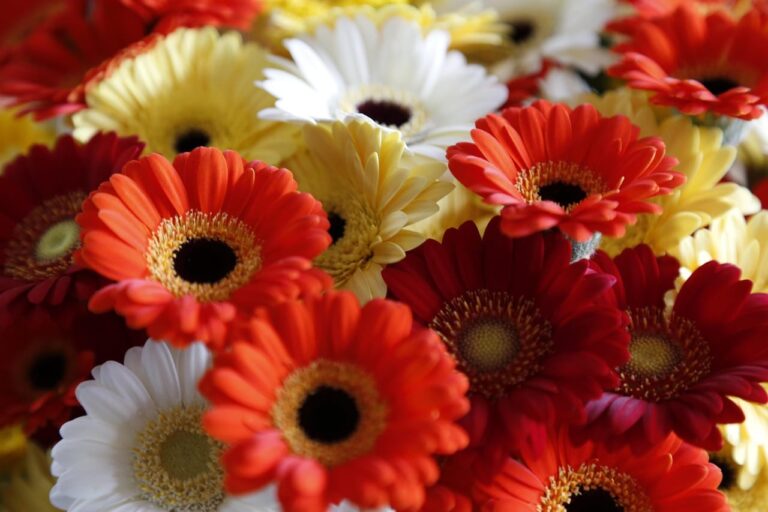
Roses, gerbera daisies, lisianthus, and most filler greenery all play nicely. Alstroemeria’s airy, multi-bloom structure makes it a fantastic supporting player. For arrangement inspiration, browse my favorite alstroemeria arrangement ideas.
Closing Thoughts
Alstroemeria is one of the most forgiving cut flowers you can buy, but only if you give it the basics it needs on day one. Sharp cut, clean water, real preservative, cool spot, daily top-off. That’s the whole game. Do those five things, and you’ll get two weeks of color out of a single bunch.
If you want to dig deeper, my full cut flower care section covers the principles that apply to every flower variety. The fundamentals don’t change much from one bloom to the next. They just get applied a little differently.
Now I’d love to hear from you. What’s the longest you’ve ever kept a bunch of alstroemeria looking great? Did you use any tricks I didn’t cover here? Drop a comment below. I read every one, and your tips might help the next person who finds this post.
Plant the right habits today, and your flowers will bloom for weeks instead of days.
Til next time,