Disclosure: This post may contain affiliate links. If you click and buy, we may earn a commission at no extra cost to you. As an Amazon Associate, we earn from qualifying purchases.
Last Updated: August 2026
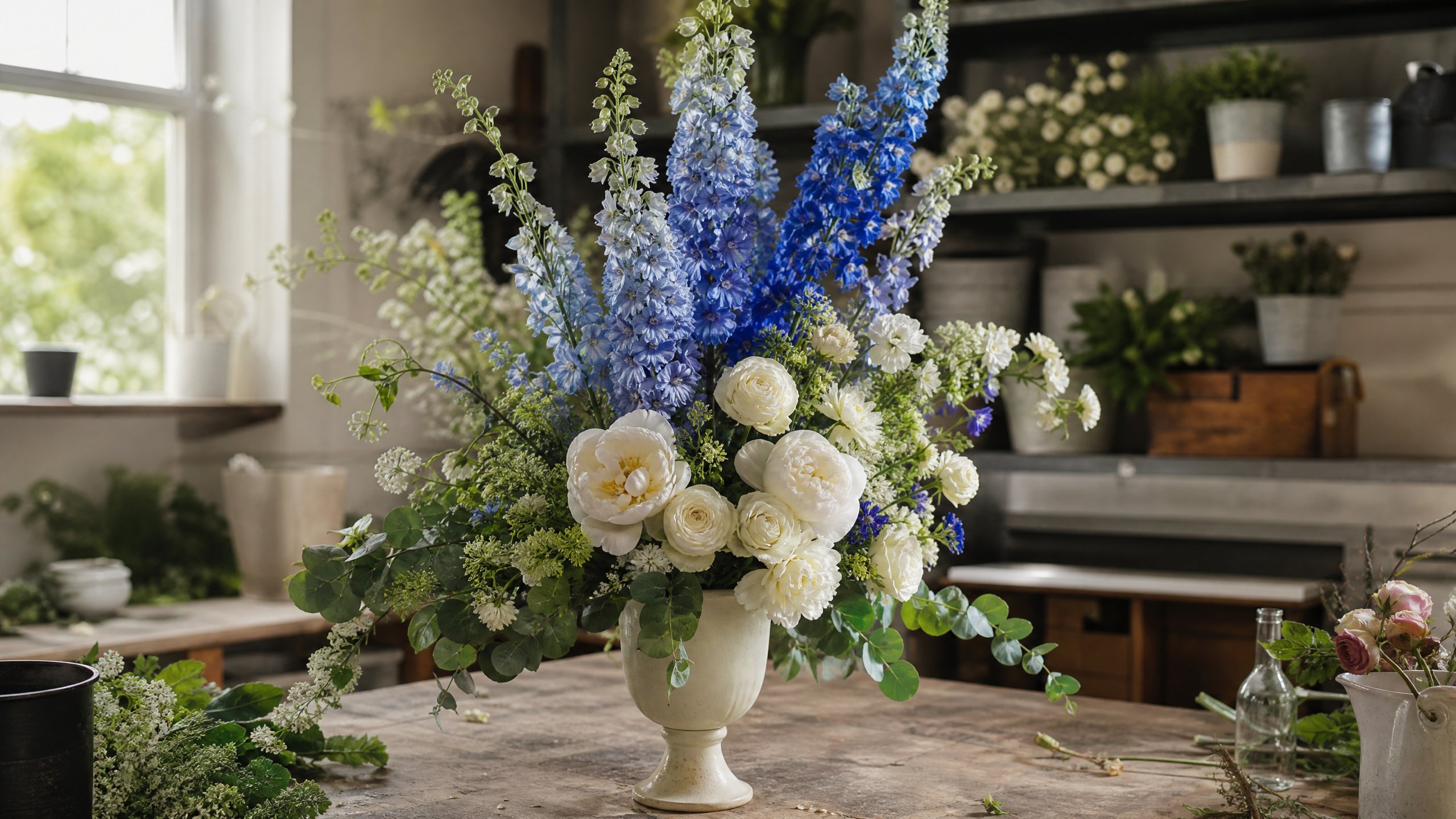
A bride walked into our shop a few summers back, clutching a Pinterest screenshot of the dreamiest blue garden bouquet you’ve ever seen, with towering spires of indigo and sky blue, soft and romantic. “Can you do this?” she asked. I told her yes, but only if she trusted me with the flower. The star of that bouquet wasn’t a rose or a hydrangea. It was delphinium.
Delphinium is one of the only naturally blue flowers in the floral world, and pound for pound, it’s one of the most photogenic stems we sell. It’s also one of the most temperamental. Mishandle it, and you’ll watch florets shatter onto your worktable an hour before delivery. Handle it right, and you’ll deliver an arrangement that stops conversation.
This guide is everything I’ve learned about delphinium care from years of buying, conditioning, and designing with it in our shop. By the end, you’ll know how to spot good bunches at the wholesaler, how to condition them so they actually last, and how to design with them without the heartbreak.
Let’s get into it.
Know Your Varieties Before You Buy
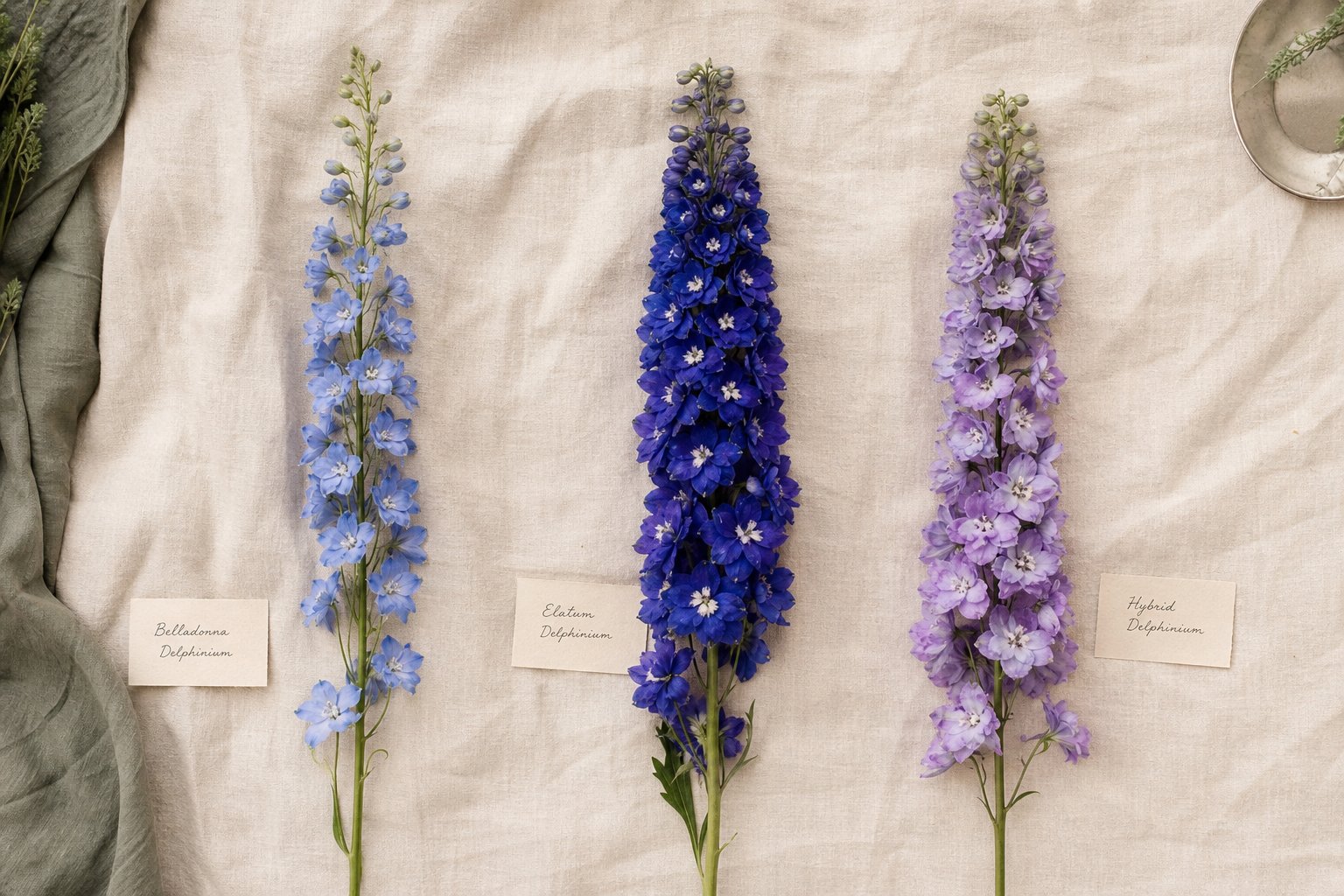
Not every delphinium behaves the same way in a design. The variety determines the spike density, stem length, and color range you’re working with, and that’s the difference between a flower that fits your arrangement and one that fights it.
Delphiniums belong to the Ranunculaceae family, the same plant cousins as Ranunculus and Anemones. They’re sometimes confused with Larkspur, which is a related genus (Consolida), with a similar look, but a smaller, more delicate flower. True delphinium is the bigger, showier cousin.
Here’s what you’ll typically see at the wholesale flower market:
| Variety | Colors Available | Best For |
|---|---|---|
| Delphinium Belladonna | Dark Blue, Light Blue, White | Airy, garden-style work |
| Delphinium Elatum | Purple, Dark Blue, Lavender, Light Blue, White | Tall, dramatic statement designs |
| Delphinium Hybrid | Blue, Dark Blue, Lavender, Light Blue, Peach, Purple, White | All-purpose, broadest color range |
| Delphinium Sea Waltz | Dark Blue | Uniform color, event work |
| Delphinium Sky Waltz | Light Blue | Soft palettes, weddings |
| Delphinium Volkerfrieden | Dark Blue | Deep, saturated blue accents |
| Delphinium Waltz | Dark Blue, Light Blue | Reliable workhorse for everyday designs |
The differences between the main types matter when you’re designing:
- Belladonna has dainty, slender spikes with loosely arranged florets. Airy and wildflower-like, perfect for everyday arrangements and softer wedding work.
- Elatum grows dense, pyramidal flower spikes on tall, sturdy stems (36–60 inches). The florets are packed tight, making Elatum the right call for big statement designs.
- Hybrids split the difference; graceful but with bolder coverage. Stems run 24 to 60 inches, depending on type, and they offer the broadest color palette.
- Waltz and Volkerfrieden are specially bred hybrids with uniform bloom size and color. These are my go-tos in the shop. When I’m doing event work and I need every stem to look identical, these are what I order.
In a nutshell: Belladonna for delicate, Elatum for bold, Hybrids for flexibility, Waltz/Volkerfrieden for consistency.
Don’t Buy a Bunch That’s Already Tired
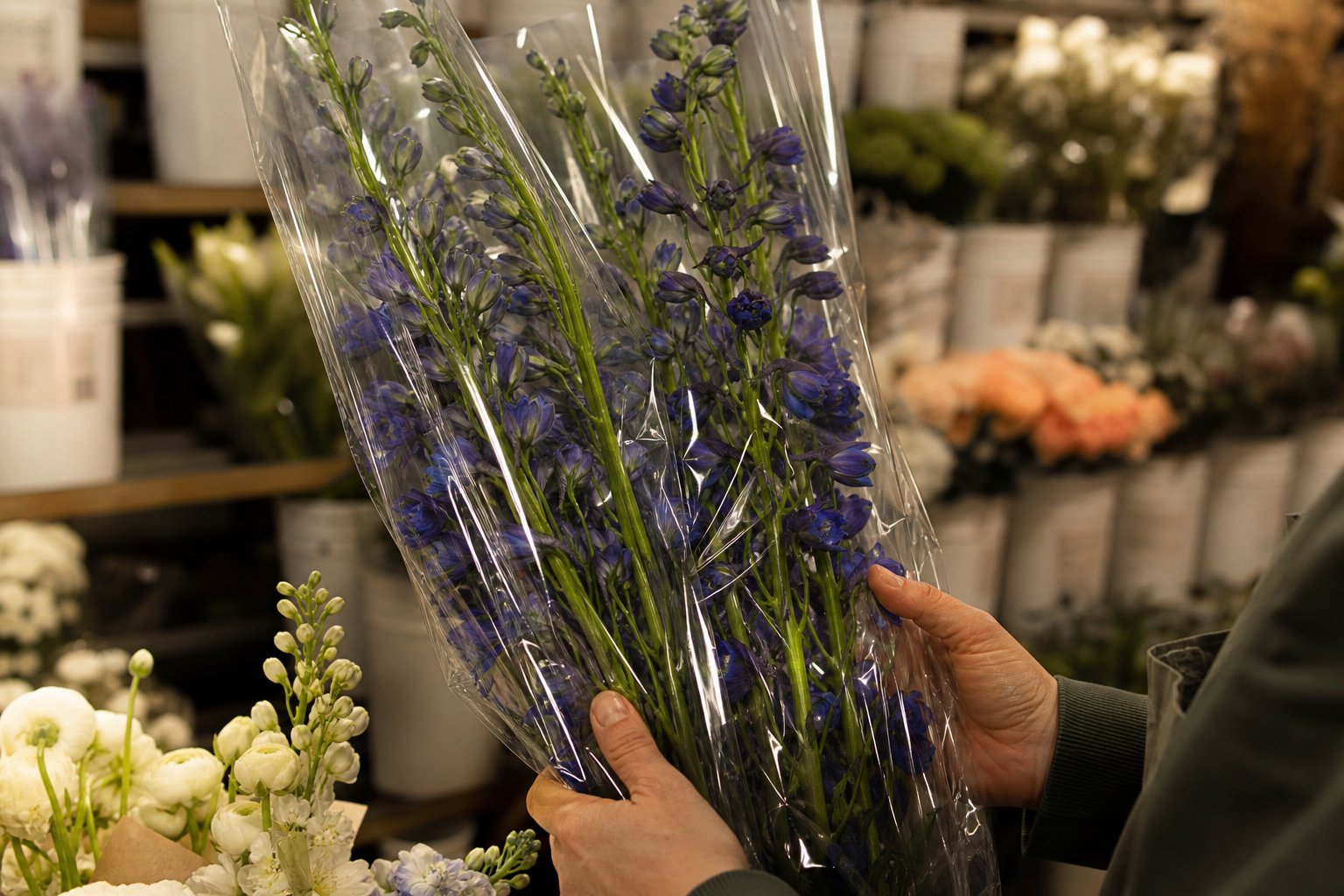
Delphinium quality lives or dies at the point of purchase. Once a stem starts shedding florets, there is no fix for it. No flower food, no Quick Dip, no prayer is going to glue those blooms back on. So pay attention here.
The flowers on a delphinium spike open from the bottom up. The sweet spot when buying is bunches with two or three lower flowers already opened and tight, healthy buds at the top. That gives you the longest possible window of beauty.
Now, the part most people don’t know: delphinium is extremely ethylene-sensitive. Much more so than most other cut flowers. Ethylene is the invisible gas given off by ripening fruit, decaying flowers, and car exhaust, and it makes delphinium florets drop on contact. It’s one of the main reasons you rarely see them in supermarket floral departments unless they’re stored well away from produce.
In my experience, most reputable commercial growers treat their delphinium with an ethylene action inhibitor before shipping. But not all of them. So when you’re buying:
- Skip any bunch with shattered florets in the sleeve. That’s a red flag for ethylene exposure or stems that have been sitting too long.
- Look for crisp green stems with no yellowing leaves.
- Please ask your wholesaler whether they treat for ethylene. A good one will know the answer.
If you’re buying online or having flowers shipped, the same rules apply — inspect the box the moment it arrives and document anything that looks off.
Condition Like Your Vase Life Depends On It
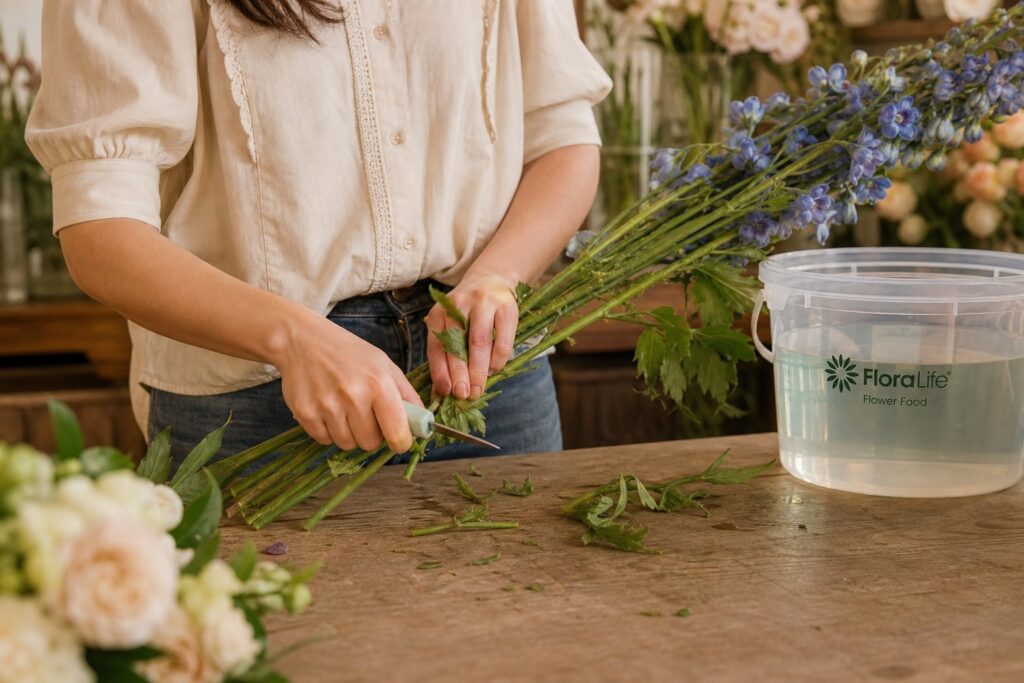
Because it does, the first hour with a fresh bunch of delphiniums sets the tone for everything that follows. Get conditioning right, and you’ll squeeze out 8 to 12 days of vase life. Get it wrong, and you’re lucky to make it to day four.
Here’s the exact process we run in the shop:
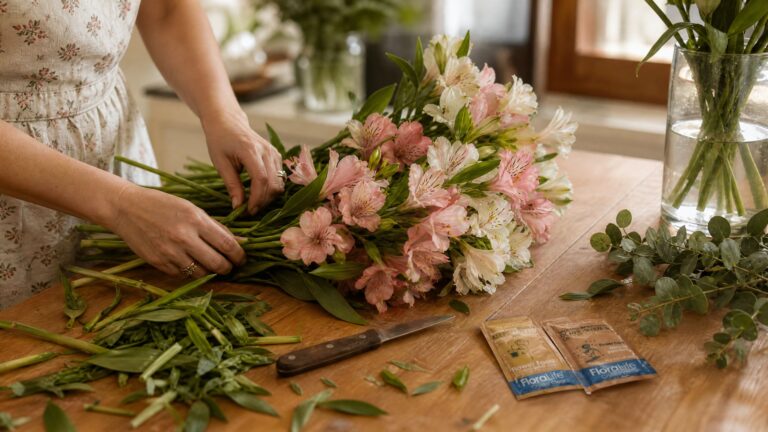
- Fill a clean plastic bucket with cool water and commercial fresh flower food, mixed according to label directions. Avoid metal or galvanized buckets; they react with the preservative and can shorten vase life.
- Gently separate the stems as you unpack the bunch. Don’t yank; delphinium florets bruise easily.
- Cut about 1 inch off each stem using a clean, sanitized floral knife or sharp clippers. A clean, angled cut maximizes water uptake.
- Treat with FloraLife® Quick Dip. It’s a quick stem dip that opens the vascular tissue and gets water flowing fast. This is the single biggest move you can make for delphinium longevity.
- Strip all foliage below the waterline. Submerged leaves rot, bacteria multiply, and your water turns into a science experiment.
- Hydrate for at least 2 hours. We give ours 3 to 4 hours minimum in our cooler before designing with them. Patience here pays off.
If you want the full step-by-step on conditioning any cut flower, I walk through the whole process in my guide to processing fresh flowers like a pro.
Storage matters too. Delphiniums love cool temps (35–40°F) and high humidity. If you don’t have a commercial flower cooler at home, find the coolest spot in your house, away from direct sunlight, ripening fruit (hello, ethylene), and heat vents. A basement or a north-facing room works.
Daily maintenance for vase life: recut stems and change the water every day, adding fresh flower food each time. This isn’t overkill; it’s how you actively inhibit ethylene effects and keep bacteria from gumming up the stems. Prevention is key.
Stock Your Delphinium Toolkit
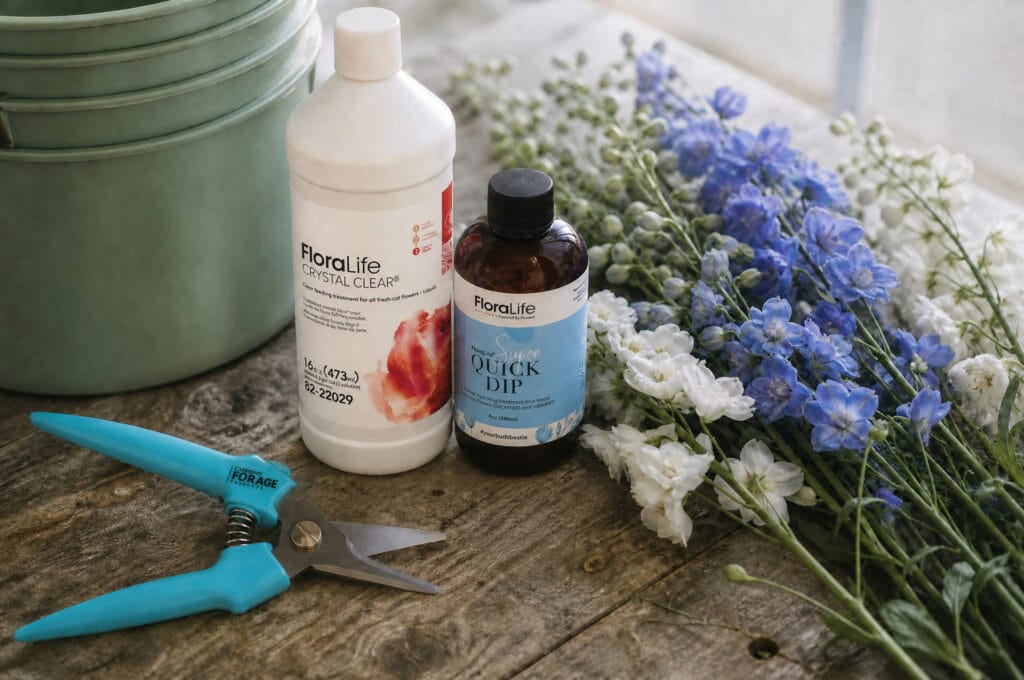
What I use in the shop: A short list of the gear that actually earns its keep when I’m processing delphinium.
- FloraLife Crystal Clear Flower Food — the standard preservative we mix into every bucket. Buffers the water, feeds the stems, and slows bacterial growth.
- FloraLife Quick Dip — the secret weapon for ethylene-sensitive flowers like delphinium. Opens up water uptake fast.
- Oasis Floral Stem Cutter — sharp, precise, easy to clean. Don’t use kitchen scissors on delphinium stems. Dull cuts crush the vascular tissue.
- Heavy-duty plastic flower buckets — non-reactive and easy to sanitize. Skip the metal ones.
Design With Delphinium Without the Heartbreak
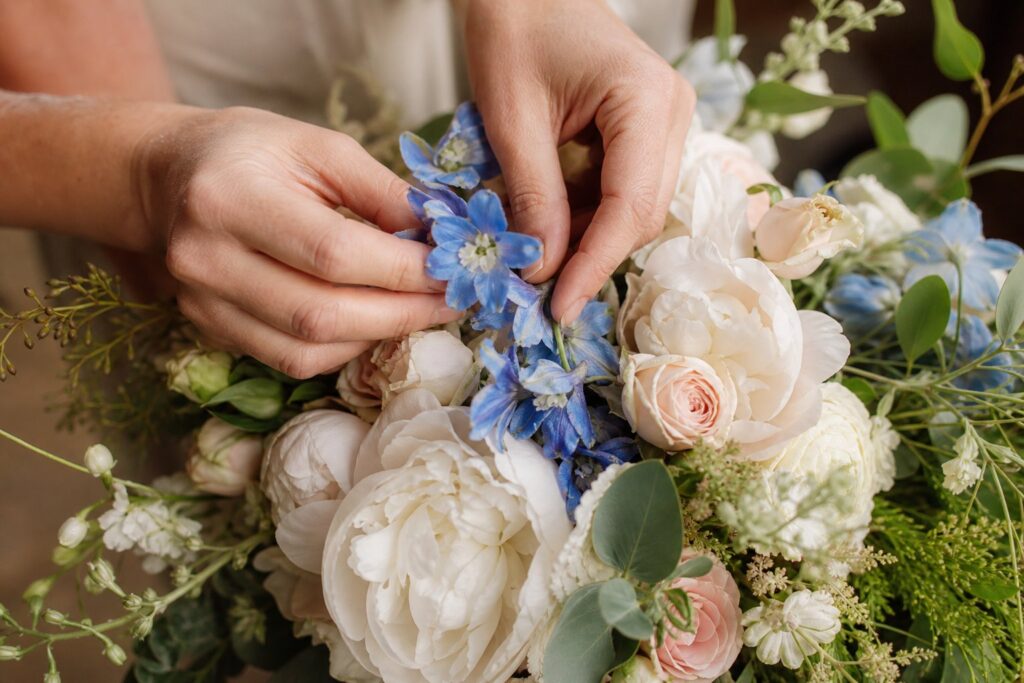
Once your delphinium is properly conditioned, the design possibilities open up. Whole stems work beautifully as line flowers in tall vase arrangements, garden-style urns, sympathy pieces, and wedding centerpieces. They give you height, drama, and that elusive true blue.
Individual florets are an entirely different gift. We pluck them off the stem and use them in wedding bouquets, corsages, boutonnieres, flower crowns, and other wearable designs. A single delphinium spike can supply florets for half a wedding party.
Here’s what I’d do if you’re building a garden-style arrangement: pair your delphinium with peonies, garden roses, snapdragons, and trailing greens. The vertical lines of the delphinium balance the round shapes of the other blooms, and the blue plays beautifully against creams and blush. It’s a combination that never misses.
One important caveat: Do not use delphinium as a garnish or decoration on anything edible, such as wedding cakes, cheese boards, or cocktail glasses. Delphinium is toxic if ingested. According to the ASPCA, delphinium can also be toxic to pets, so be mindful where you place finished arrangements in homes with curious cats and dogs.
If you’re new to designing with line flowers, my cut flower care fundamentals guide walks through the basics that apply across most stems.
Frequently Asked Questions About Delphinium Care
How long do cut delphiniums last in a vase?
With proper conditioning, expect 8 to 12 days. Without it, you might get 4 days. The big variables are ethylene exposure, water cleanliness, and how fresh the bunch was when you bought it. Recut stems and change the water daily to hit the upper end of that range.
Why are my delphinium florets falling off?
Almost always, it’s due to ethylene exposure. The flowers may have been sitting near ripening fruit, decaying flowers, or vehicle exhaust at some point in the supply chain. Once the shattering starts, you can’t reverse it. Always store delphinium away from produce and other ethylene sources, and look for bunches treated with an ethylene action inhibitor at purchase.
Are delphinium and larkspur the same flower?
Closely related, not the same. Both belong to the Ranunculaceae family, but larkspur (Consolida) is the smaller, more delicate annual cousin of true delphinium (a perennial). Larkspur has finer stems and a softer overall feel, which is perfect for wildflower-style work. Delphinium is taller, showier, and the better choice when you need a statement spike.
Can I use delphinium in a wedding bouquet?
Absolutely, and they’re stunning in one. Use whole stems as the structural line element in a cascading bouquet, or pluck individual florets and tuck them in among roses and peonies for that pop of blue. Just make sure the bouquet doesn’t bake in a hot car between the ceremony and reception. Delphinium hates heat.
Is delphinium available year-round?
Yes. While delphinium is the July birth flower and peaks in summer, commercial growers in greenhouses around the world keep it in supply year-round. Quality and price fluctuate with the season. The best availability and value tend to run from May through September.
What’s the best vase for delphinium?
A tall, heavy-bottomed glass or ceramic vase. Delphinium spikes can run 3 to 5 feet long, and a top-heavy stem in a tippy vase is asking for spilled water and broken flowers. In our shop, we like to use weighted footed urns or tall cylinder vases for any arrangement where delphinium is the line element.
Closing Thoughts
Delphinium isn’t the easiest flower in the cooler. It’s not the toughest. It’s not the longest-lasting. But it’s one of the few flowers on earth that gives you true, honest blue, and for that, it’s worth every bit of fuss.
If you remember nothing else: buy bunches that are barely cracked open at the bottom, dip the stems in Quick Dip, keep them cool, keep them away from fruit, and change the water daily. Do those five things, and you’ll have spires of blue magic for over a week.
True blue is rare enough in nature that you’d think Mother Nature ran out of pigment before she got around to most flowers. Delphinium is one of the few she didn’t shortchange.
Plant the right care habits today, and your delphinium will reward you with a week of skyward blue blooms. That’s a pretty good trade.
Have you worked with delphinium before? Got a hack of your own, or a story about a bunch that surprised you (in a good or bad way)? Drop a comment below; I read every one, and the best tips I’ve ever learned came from other florists sharing their notes. Let’s hear yours.
Til next time,