Disclosure: This post may contain affiliate links. If you click and buy, we may earn a commission at no extra cost to you. As an Amazon Associate, we earn from qualifying purchases.
Last updated: August 2026
I had an apprentice a few years back who wrapped her whole hand in a paper towel before she’d even pick up a floral knife. Fair reaction, honestly. A razor-sharp blade looks like it wants to hurt you. It doesn’t, once you know how to hold it.
A floral designer’s most indispensable tool is a good floral knife. What surprises me is how few aspiring designers ever learn to handle one properly. Once you do, I think you’ll find it’s safer, and a lot faster, than you expected.
In this video, floral designer John McDonald demonstrates how to hold and cut stems properly with a floral knife. With a little practice, you’ll cut flowers (and not your fingers) like a pro in no time. Watch and learn.
Think you’ve got it? It’s easier than it looks. Just remember two things: hold the knife steady and pull through with your arm, and always cut with a sharp blade. Do both consistently, and the rest comes with practice
Don’t worry if you break off a flower head or crimp a stem early on. Mistakes happen to all of us. Consider it part of the learning curve.
What’s the Best Floral Knife to Use?
The best floral knife is the one you feel comfortable using.
What I use in the shop: a Clauss floral knife, the one used in the video. It’s lightweight, comes ten to a box, and we’ve used them for years without complaint.
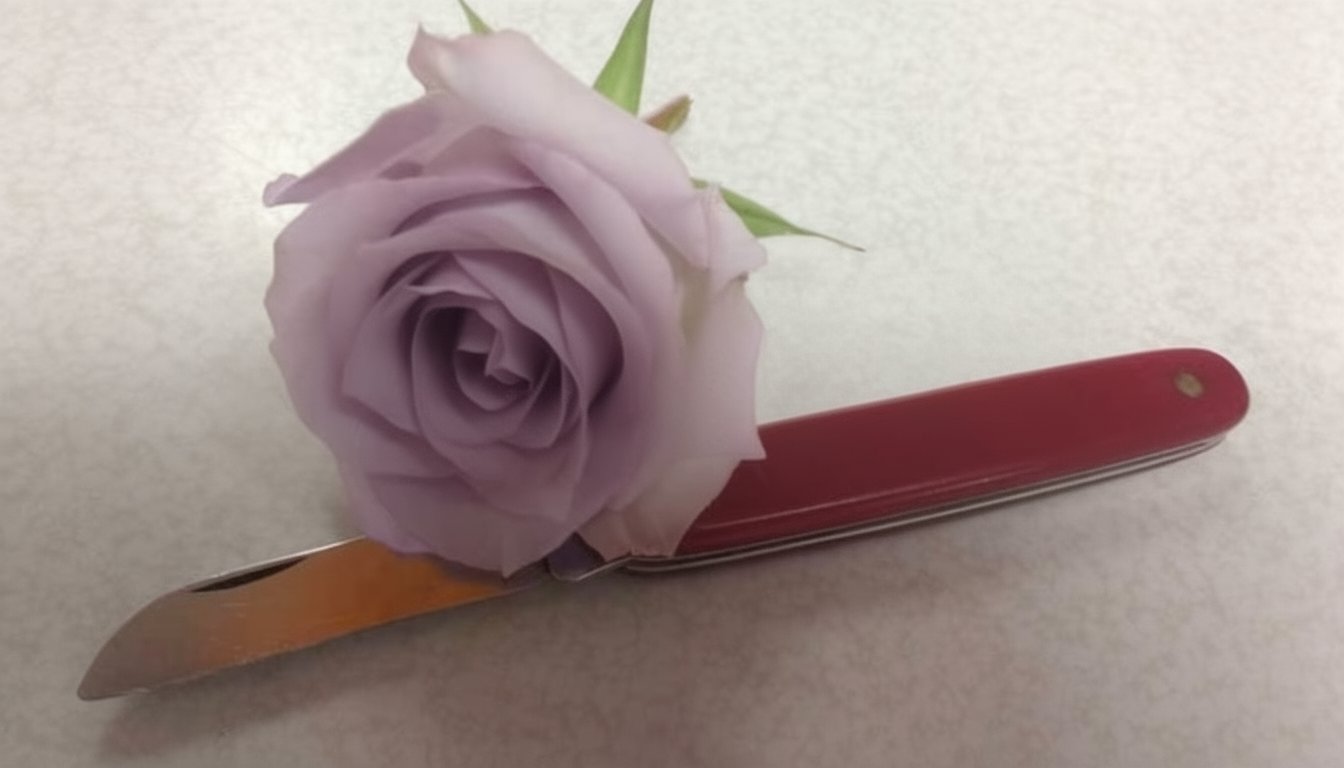
My personal favorite, though, is the Victorinox floral knife. Victorinox is best known for its line of Swiss army knives, which also do a fine job on stems in a pinch. Their floral knife is a heavier, high-quality folding knife. I’ve owned a few straight-blade versions for 15-plus years now. They simply last.
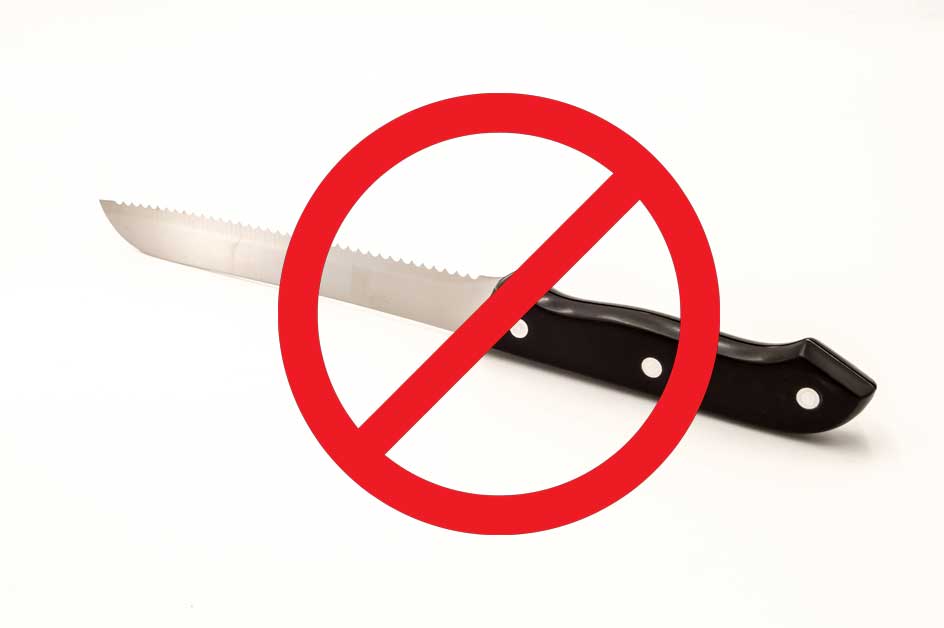
You don’t actually need a knife marketed for floral use. Any knife you’re comfortable with will do the job, as long as it doesn’t have a serrated edge. Serrated blades crush and tear stems instead of cutting them cleanly, which blocks water uptake.
How to Sharpen a Floral Knife
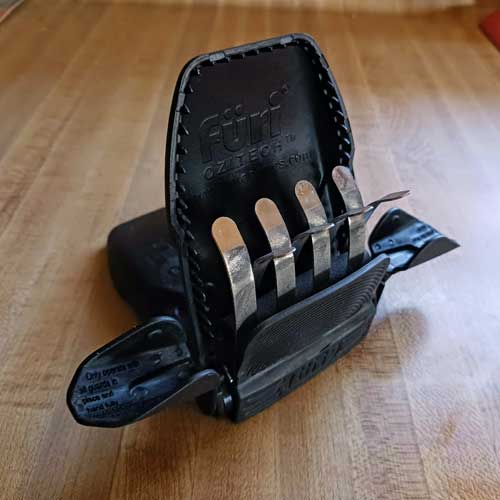
A good floral knife sharpener earns its keep, since blades dull faster than you’d expect. A razor-sharp blade makes the whole job faster and easier, and along with the knife itself, it’s one of the tools every designer should own, right alongside the rest of your essential floral design tools.
We keep several Füri Ozitech diamond-finger sharpeners in the shop, and I carry one in my traveling toolkit at all times.
I rarely reach for floral clippers when I’m designing, so my sharpener sees a lot of use. Sharpening the knife is the first thing I do before starting any arrangement.
I’m Not Comfortable Using a Floral Knife. What Else Can I Use?
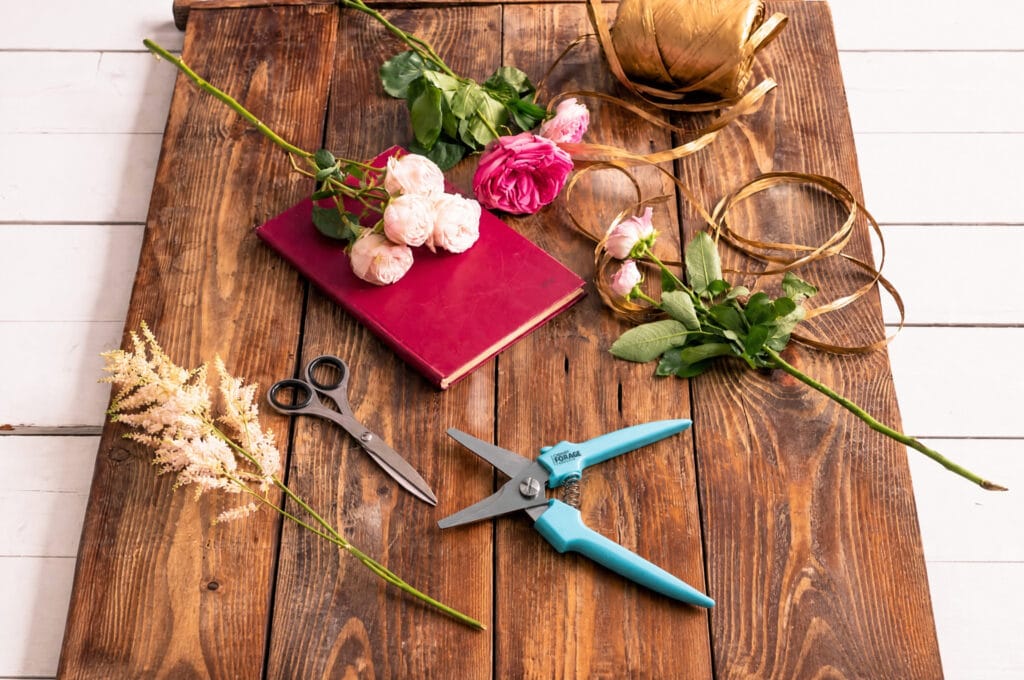
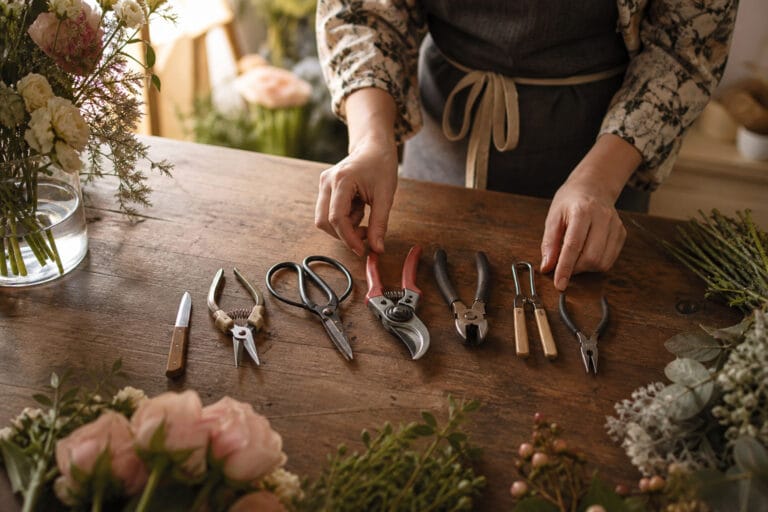
Floral clippers, shears, or scissors are all workable substitutes, and they come in handy for thick or woody stems. But most cut flower stems are soft, and clippers or shears tend to crush rather than cleanly slice them, which can prevent water uptake the same way a serrated blade does.
They’re also harder to keep in top shape, since you often have to take them apart to clean and sharpen properly. That’s why I don’t recommend them as a primary tool for cut flowers. A floral knife will serve you better in the long run.
If you want to see the full lineup of tools and supplies we use daily in the shop, they’re all listed on our Amazon storefront page.
A Word of Caution
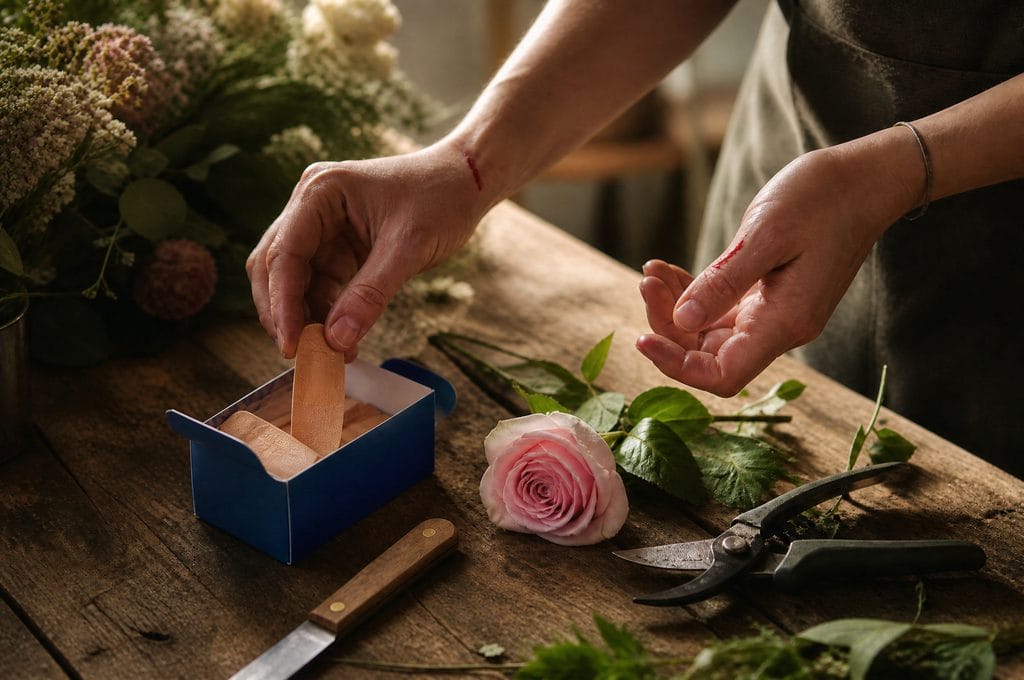
Accidents can still happen even with the proper technique. Any sharp cutting tool carries some risk. Learning to cut flowers correctly with a knife should help prevent most accidents, but keep a bandage within reach just in case.
FAQ: Using a Floral Knife
Is a floral knife really better than scissors for cutting flowers?
Yes, for fresh flower stems specifically. A sharp knife makes a clean, angled cut in one smooth pull, while scissors tend to pinch and crush the stem, closing off the very channels the flower needs to draw up water.
How often should I sharpen my floral knife?
In a busy shop, I sharpen mine daily before I start designing. For occasional home use, sharpening every few weeks, or whenever you notice the cut starting to drag instead of slide, is usually enough.
Is it safe for beginners to use a floral knife?
Yes, once you understand proper hand position and grip. Start slow, keep your guiding hand well clear of the blade path, and speed will come naturally with practice.
What angle should I cut flower stems at?
A 45-degree angle is standard. It increases the surface area for water absorption and keeps the stem from sitting flat against the bottom of the vase, which can block uptake entirely.
Can I use a floral knife on woody stems, like roses or hydrangea?
A sharp floral knife can handle most woody stems just fine. For very thick or tough branches, though, floral shears or clippers designed for woody material will be easier on your hand and the blade.
How do I know if my floral knife is too dull to use safely?
If you find yourself pressing harder or sawing at the stem instead of pulling through in one motion, it’s dull. A dull blade is actually more dangerous than a sharp one, since it’s more likely to slip.
Closing Thoughts
A good floral knife, kept sharp, will save you more time and frustration than almost any other tool in your kit. It’s a small investment that pays off every single time you sit down to design.
Still using shears out of habit? Tell me in the comments what’s holding you back from making the switch, and I’ll help you troubleshoot it.
Til next time,