Disclosure: This post may contain affiliate links. If you click and buy, we may earn a commission at no extra cost to you. As an Amazon Associate, we earn from qualifying purchases.
A customer called me last summer in a mild panic. She’d bought a beautiful bunch of dahlias at the farmers’ market on Saturday morning, got home, put them in a vase, and by Sunday evening they were already drooping. “I didn’t even get to enjoy them,” she said.
I wasn’t surprised. Dahlias are one of the most stunning cut flowers you can work with — and one of the most unforgiving if you skip the conditioning steps. They don’t give you a lot of second chances.
I’ve been conditioning dahlias at my shop for years. What I’m sharing here is exactly what I do — not textbook theory, but the actual routine that keeps dahlias looking great from the cooler to the customer’s dining room table.
Pick the Right Blooms From the Start
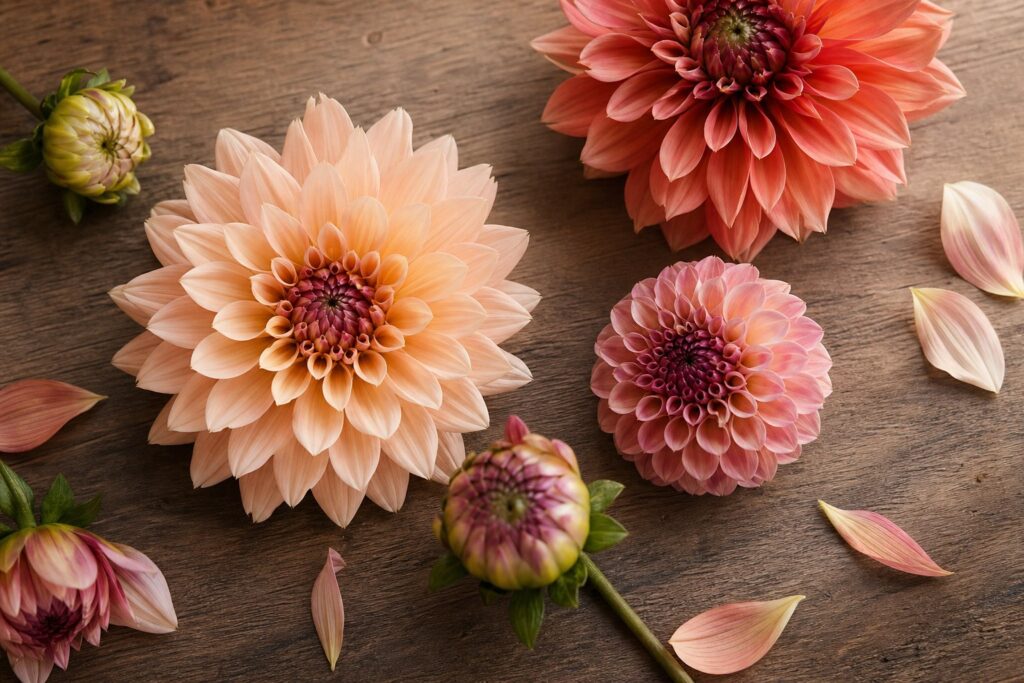
Everything downstream depends on starting with the right flowers. Whether you’re shopping at a wholesale market, a farmers’ market, or cutting from your own garden, the selection process matters more with dahlias than with almost any other flower.
Here’s what I look for:
- Choose flowers that are fully open — or as open as you need for your design. Unlike roses or peonies, dahlias do not continue to open after they’re cut. What you see is what you get.
- Avoid open centers showing pollen. That’s the dahlia telling you it’s past its prime. A flower with visible pollen has already peaked.
- Check the petals for bruising or browning on the edges. Dahlias bruise easily in transit, and damaged petals won’t recover.
- Stems should feel firm, not soft or bendy. A hollow or limp stem is a red flag.
If you’re sourcing dahlias for a wedding or a special event, be extra picky here. There’s no fixing a bad dahlia once it’s in a bouquet.
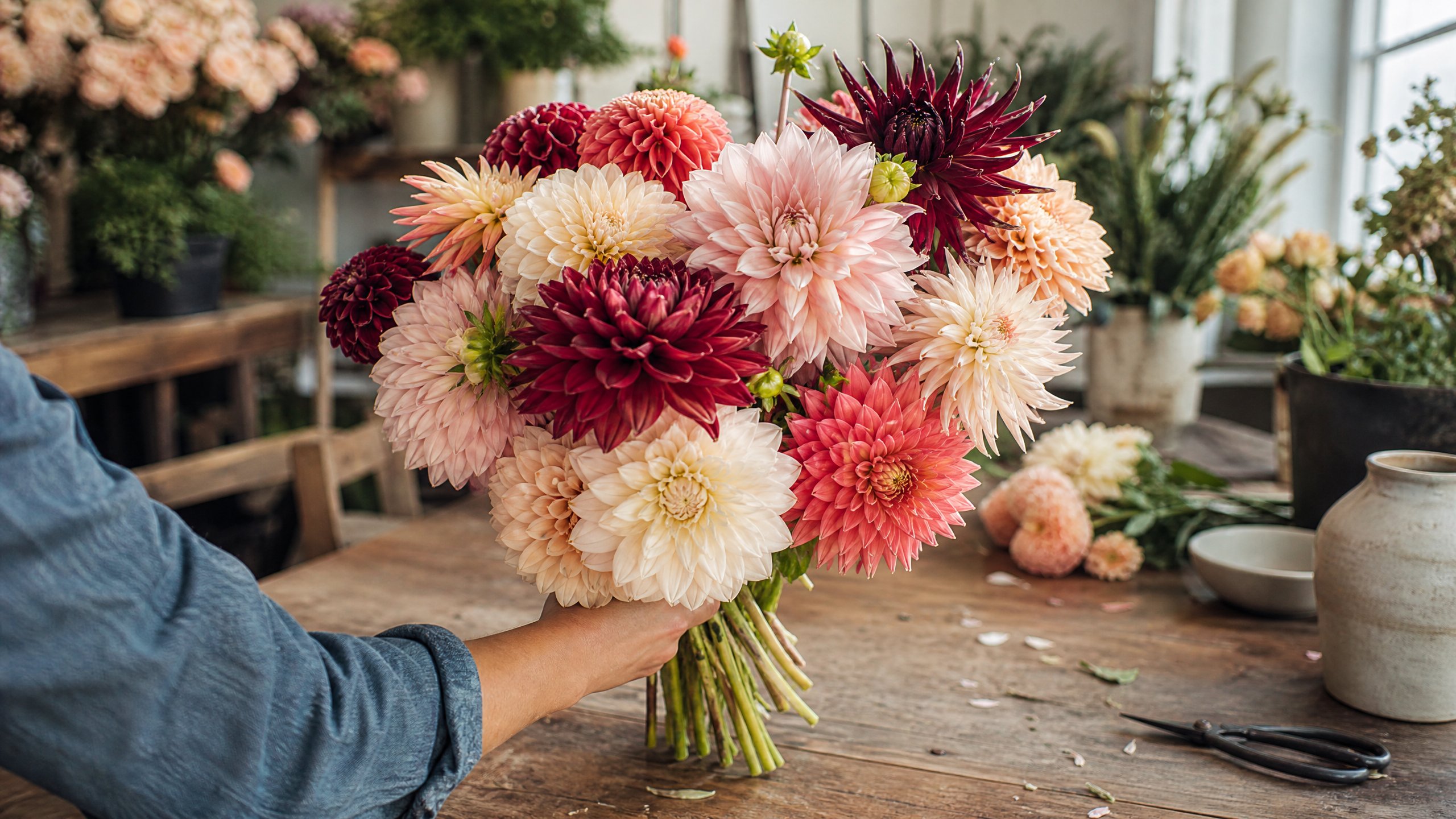
Dinner plate dahlias, cactus dahlias, pompon varieties — the selection rules apply across all of them. The variety changes the look; the standards don’t change.
Condition Dahlias the Right Way — Right Away
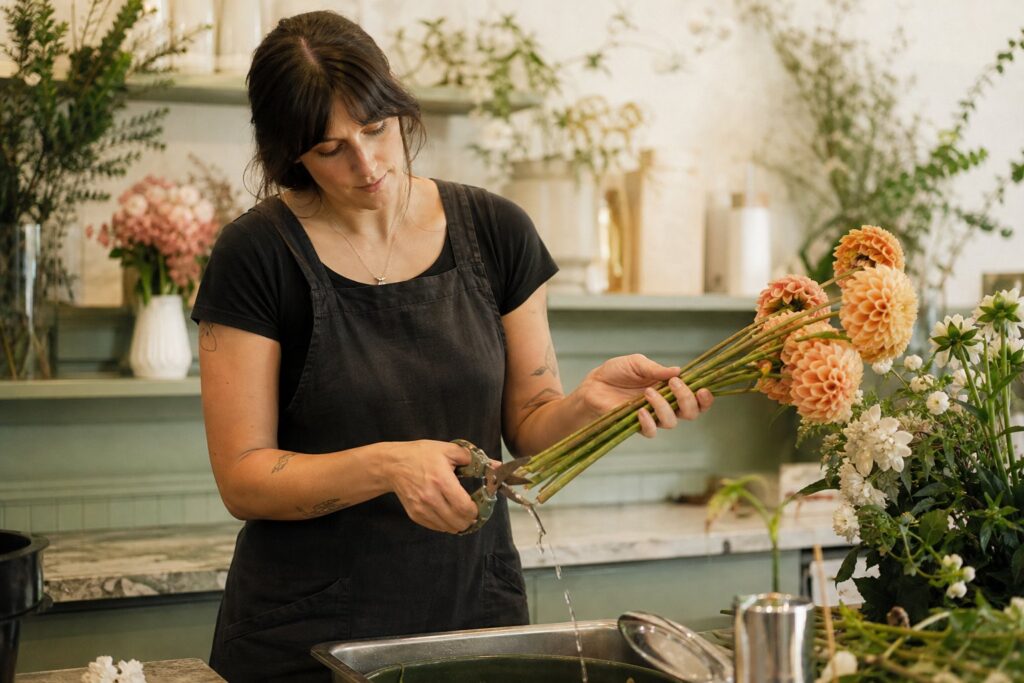
The window between cutting and conditioning is short. The faster you get dahlias into water, the better your results will be. I treat every bunch that comes through my shop door like the clock is already ticking.
Here’s my conditioning routine:
- Strip all foliage below the waterline. Leaves sitting in water break down fast and create bacterial buildup that clogs the stem and shortens vase life dramatically. Don’t skip this step.
- Cut stems at a sharp angle using clean, sharp shears. An angled cut increases the surface area available for water uptake. I cut under running water when I can — it prevents an air bubble from forming at the base of the stem the moment it’s exposed to air.
- Place immediately in warm water mixed with a quality flower food. Warm water moves up the stem faster than cold in those first critical hours.
- Let them hydrate for at least two hours before using them in any arrangement. Four hours is better. Overnight in a cool room is best.
What I use in the shop: Floralife Crystal Clear Flower Food — it’s been my go-to for years. It feeds the bloom, lowers the water pH, and keeps bacterial growth in check. Worth every penny compared to losing an expensive dahlia bunch early.
This is also a good moment to point you toward my broader guide on processing fresh flowers — a lot of those principles apply directly to dahlias.
Use Hot Water Conditioning When You Need It
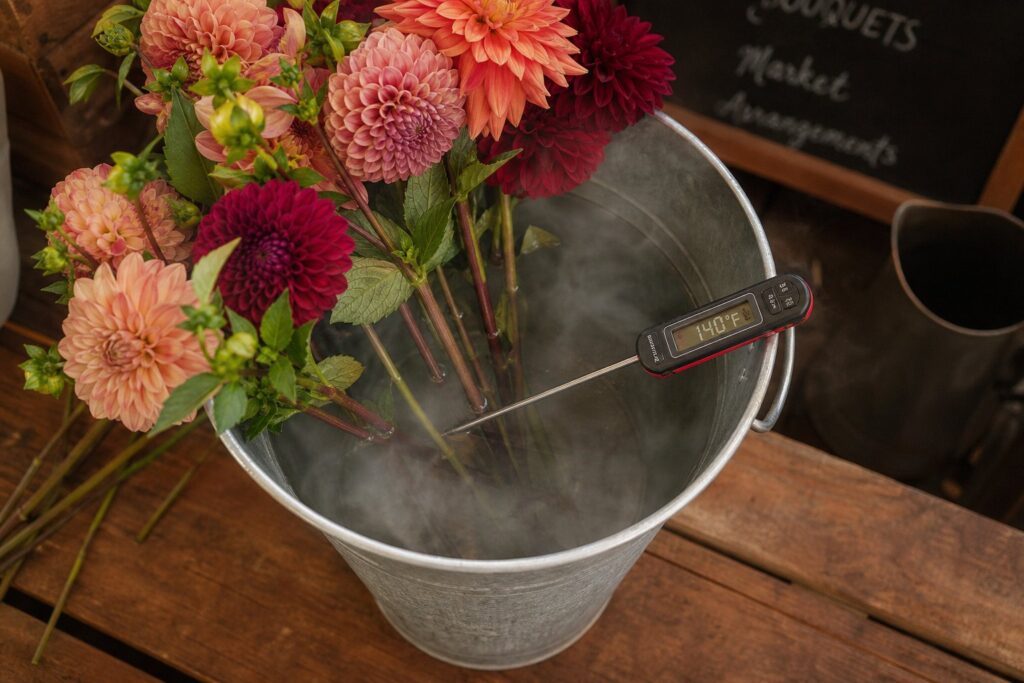
Hot water conditioning is something most home arrangers have never heard of — but it’s standard practice for flowers that come straight from a garden or a local flower farmer.
The idea is simple: hot water moves up the stem faster and more efficiently than room temperature water, helping the flower hydrate quickly and pushing out any air blockages that formed during cutting.
I learned this method from a local flower farmer we buy dahlias from every summer. She conditions every bunch this way before selling them at the market. Once I saw the difference in how long those dahlias lasted compared to flowers that skipped the step, I was sold.
Here’s how to do it:
- Heat water to between 160°F–180°F (71°C–82°C). You want it hot but not boiling. A kitchen thermometer takes the guesswork out.
- Pour the hot water into a clean bucket or deep container and add flower food according to the package directions.
- Cut the dahlia stems and place them in the hot water immediately. Let them soak for at least one hour.
- After an hour, they’re ready to move into a regular conditioning bucket or go straight into your arrangement.
What I use in the shop: OXO Good Grips Instant-Read Thermometer — quick, accurate, and it earns its place in a flower shop just as much as in a kitchen.
If you’re cutting dahlias from your own garden, this video shows exactly how the hot water method works in a home setting:
Keep Them Fresh: Daily Care That Actually Makes a Difference
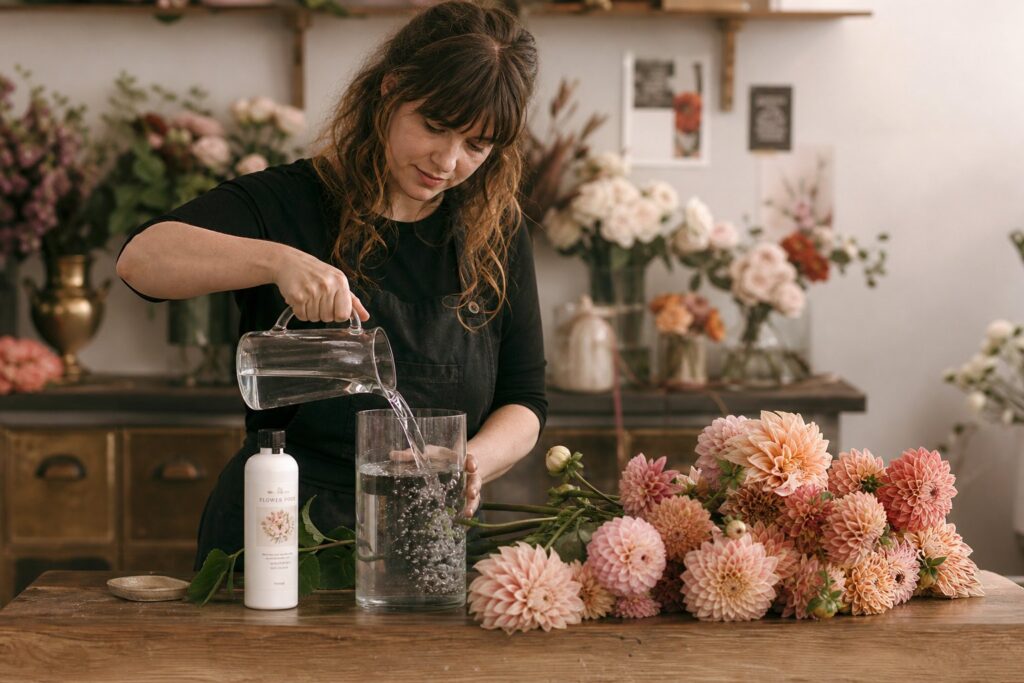
Conditioning gets dahlias off to a strong start. Daily maintenance keeps them going. Most people do too little here — and then wonder why their dahlias collapsed after three days.
Here’s what the routine looks like in my shop:
- Change the water every day or every other day. Don’t top it off — empty the vase, rinse it, and refill with fresh cool water and flower food.
- Recut the stems each time you change the water. A fresh cut reopens the vascular tissue and restores water uptake. In my experience, the angle of the cut matters less than the freshness of the cut — just make sure it’s a clean, sharp cut every time.
- Check for leaves that have slipped below the waterline and remove them immediately.
- Keep dahlias away from direct sunlight, heat vents, and ripening fruit. Ethylene gas from fruit accelerates petal drop faster than almost anything else.
- Cool temperatures extend vase life significantly. If you have a cool room overnight (below 60°F), that’s where dahlias want to be.
What I use in the shop: Chrysal Professional 3 Flower Food — this is what we use for water changes on dahlias and other high-maintenance blooms. It’s formulated specifically for cut flowers and does a noticeably better job than the little packets that come with supermarket flowers.
For more care fundamentals that apply across flower types, my cut flower care guide is a solid reference. And if you work with other delicate summer blooms, the ranunculus care guide covers a lot of similar ground.
Frequently Asked Questions
How long do cut dahlias last in a vase?
With proper conditioning and daily care, cut dahlias typically last 5–8 days in a vase. Skip the conditioning steps and that number drops to 2–3 days fast.
Should I cut dahlia stems at an angle?
Yes — an angled cut increases the surface area for water absorption and helps prevent the stem from sitting flat against the bottom of the vase. That said, what matters most is that the cut is fresh and made with sharp, clean shears.
Why are my dahlias wilting so quickly?
The most common culprits are: stems not recut after purchase, foliage left below the waterline causing bacterial buildup, water not changed regularly, and exposure to heat or direct sunlight. Walk back through the conditioning steps and you’ll likely find the gap.
Can I revive a wilted dahlia?
Sometimes. Recut the stem under water, place the flower in warm water with flower food, and move it to a cool, dark spot for a few hours. It works more often than you’d think — but it’s not a guarantee, and a badly dehydrated dahlia may be too far gone.
Do dahlias open after they’re cut?
No. This is one of the most important things to know when buying dahlias. Unlike roses or peonies, dahlias will not continue to open after cutting. Choose flowers that are already at the stage of openness you need for your design.
Is hot water conditioning necessary?
It’s not strictly required if your dahlias came from a reliable wholesale source and were already properly conditioned. But for garden-cut dahlias or flowers purchased at a farmers’ market, hot water conditioning makes a real, noticeable difference in how long they last.
What flower food is best for dahlias?
Any quality commercial flower food works — the key is using it consistently with every water change, not just on day one. I use Floralife and Chrysal products in my shop and have had great results with both.
Final Thoughts on Getting the Most From Your Dahlias
Dahlias reward attention. That’s probably why I have such a soft spot for them — they’re not the flower for someone who wants to set it and forget it. But if you’re willing to put in the care, they pay you back with some of the most spectacular blooms you’ll ever put in a vase.
The conditioning steps aren’t complicated. They’re just consistent. Start right, change the water, recut the stems, keep them cool. Do those four things and your dahlias will last significantly longer than they would otherwise — I’ve seen the difference firsthand in my shop too many times to count.
If you try any of these techniques, I’d love to hear how it goes. Drop a comment below and let me know what worked for you — or where you ran into trouble. Every dahlia situation is a little different, and I’m happy to troubleshoot.
Think of conditioning as planting the seed for a longer bloom. You put in the work upfront, and the dahlia does the rest — blooming beautifully for days longer than you expected.
Til next time,
Greg