Disclosure: This post may contain affiliate links. If you click and buy, we may earn a commission at no extra cost to you. As an Amazon Associate, we earn from qualifying purchases.
Last Updated: July 9, 2026
A bride came into the shop a few years back with a folder of saved photos on her phone. Every one of them was a white cascade, and every one of them belonged to somebody else.
When I asked which flowers she actually liked, she thought about it and told me her mother loved lilies. That’s a fine answer. It just wasn’t hers.
Most brides already know what flowers they like and what they don’t. The trouble starts when they stop trusting that and start shopping for a picture instead.
Start With the Flowers You Already Love
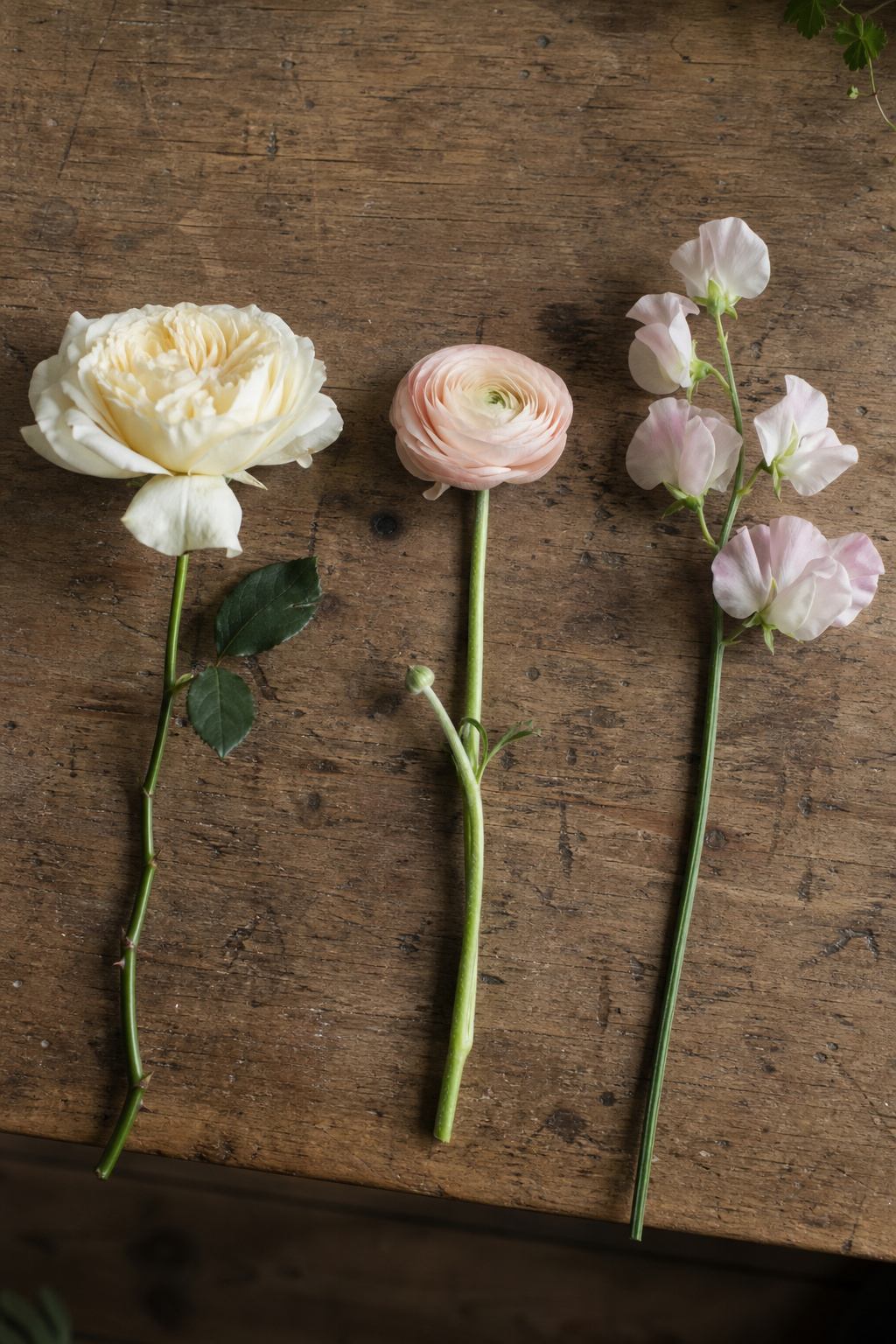
Close the Pinterest app for ten minutes. Name three flowers you would put on your own kitchen table if nobody were watching.
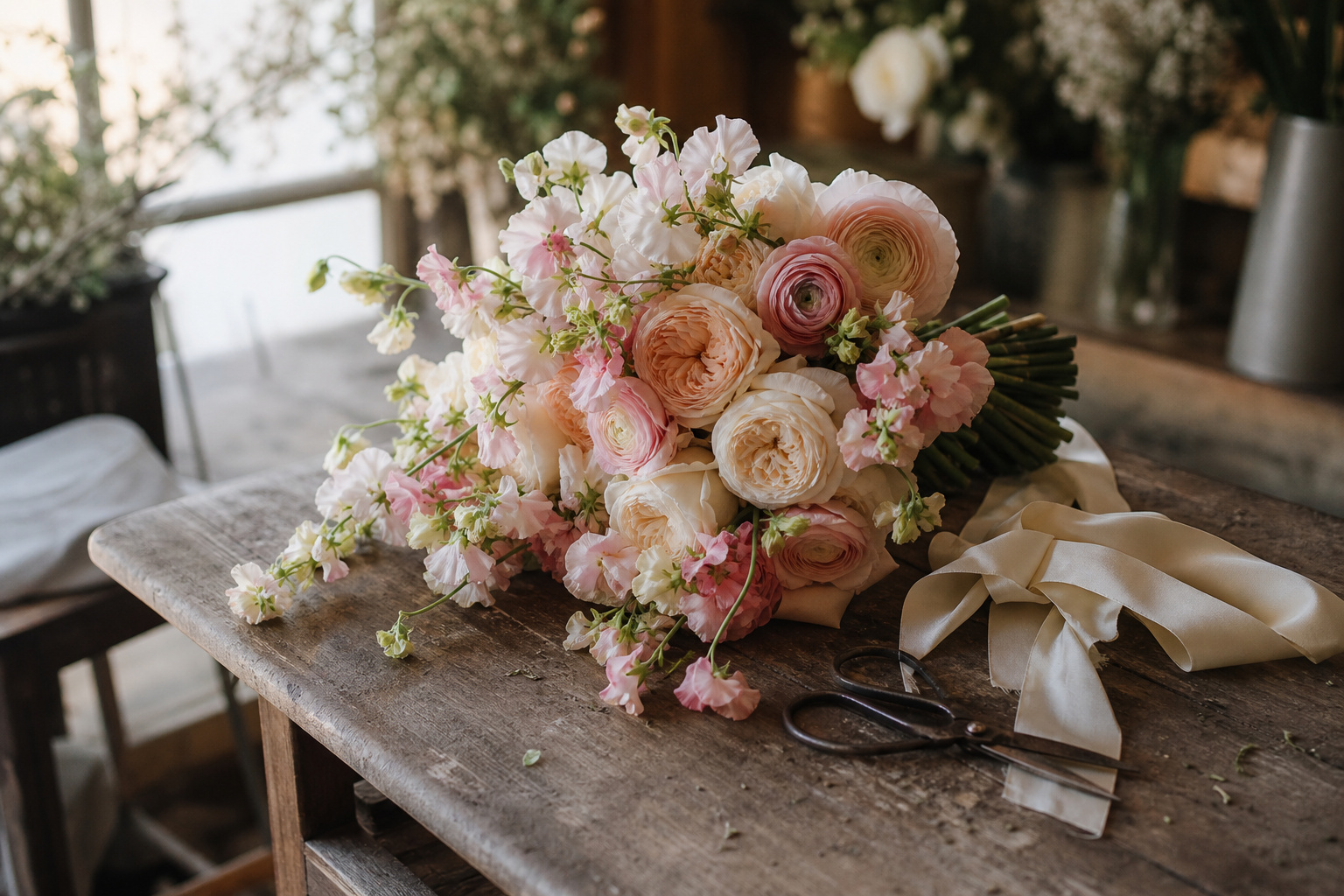
That list is your real starting point, and it tells a florist more in thirty seconds than a board of forty pins does. A bride who says garden roses, ranunculus, and a little sweet pea has just handed me a color story, a texture, and a season.
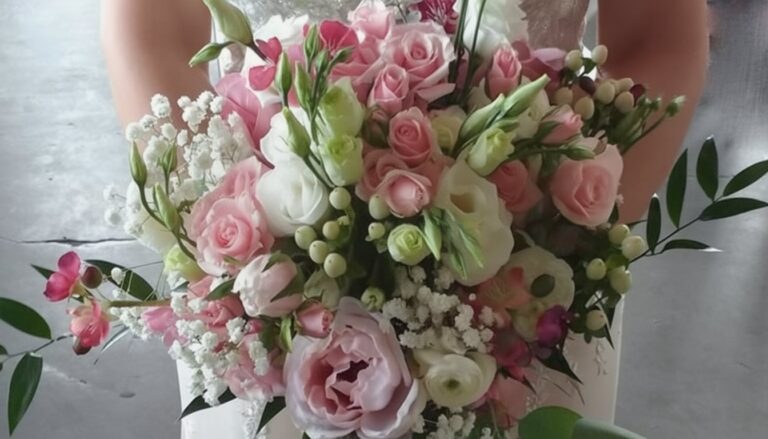
If you like a soft, romantic look but aren’t sure how to describe it, this is a combination I come back to often: garden roses and spray roses as the base, lisianthus for volume, astilbe and veronica for movement, alstroemeria to stretch the budget, and asparagus fern trailing out the sides. It reads as effortless, but every piece in it is doing a job.
Season is the one constraint you can’t argue with. Peonies are done by early July in most of the country, and no amount of budget brings them back. If you’re marrying in August, it’s worth reading what actually holds up in the heat before you fall for something that won’t.
Bring your list. Let the florist tell you what’s available the week of your date, and what will stand in beautifully if it isn’t.
Find a Florist Who Hears You

Every florist listens. Not every florist hears.
Listening is writing down “white and green, no carnations.” Hearing that you said your dress has heavy lace at the bodice, and understanding that a tight round bouquet is going to fight it.
Throughout my time at the design bench, the consultations that produced the best bouquets were rarely the ones that started with flowers. In my shop, I ask about the dress, the venue, the time of day, and what the bride does for a living. A woman who spends her days in a greenhouse and a woman who spends them in a courtroom want different bouquets, and neither of them will tell you that outright.
Here’s the test. Somewhere in that first meeting, a florist who hears you will repeat something back that you didn’t say directly. If nobody does that, keep looking.
If you want to see what that sounds like once it’s translated into flowers, here’s a short video of bouquets we built for recent weddings. Watch it, and see if you agree.
Match the Bouquet to the Dress, Not the Photo
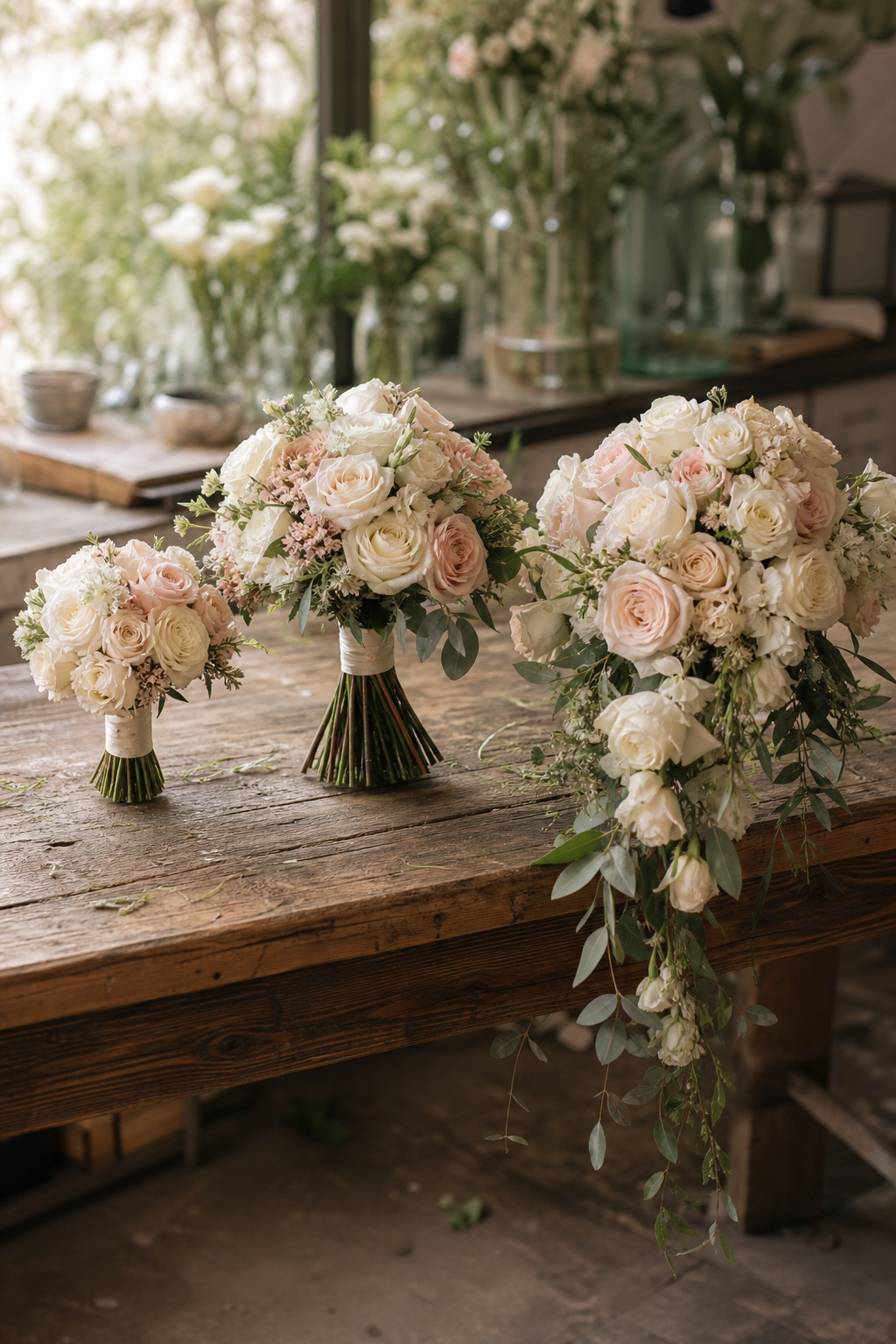
Scale is where most saved photos quietly lie to you. That cascade bouquet was probably carried by a taller model in a column gown, photographed from below.
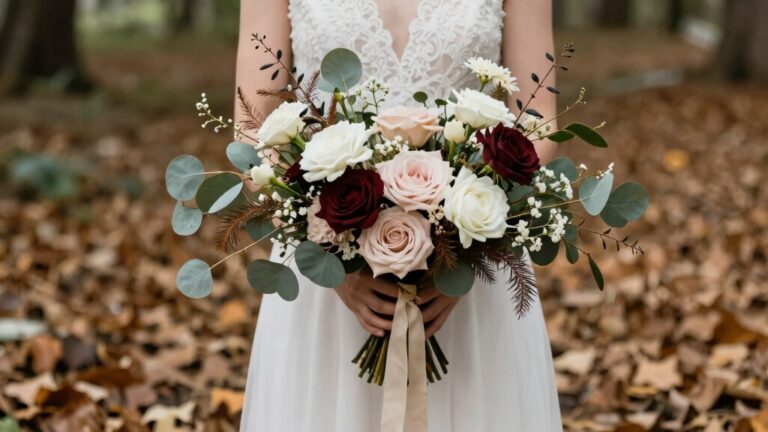
A hand-tied round is roughly ten to twelve inches across and reads cleanly against almost anything. It’s the safest shape in the business, and there’s no shame in that.
A nosegay is smaller, eight to ten inches, and it suits a petite frame or a heavily detailed bodice that already has plenty going on. A cascade adds vertical weight and length, which flatters a ball gown and overwhelms a sheath.
Then there’s the presentation bouquet, carried in the crook of the arm with the stems showing. Long-stemmed calla lilies were built for this shape, and it photographs like nothing else when the dress is simple.
Hold a stand-in at your dress fitting. A bunch of grocery-store flowers wrapped in a rubber band will tell you more about proportion than an hour of scrolling.
Sweat the Finishing Details
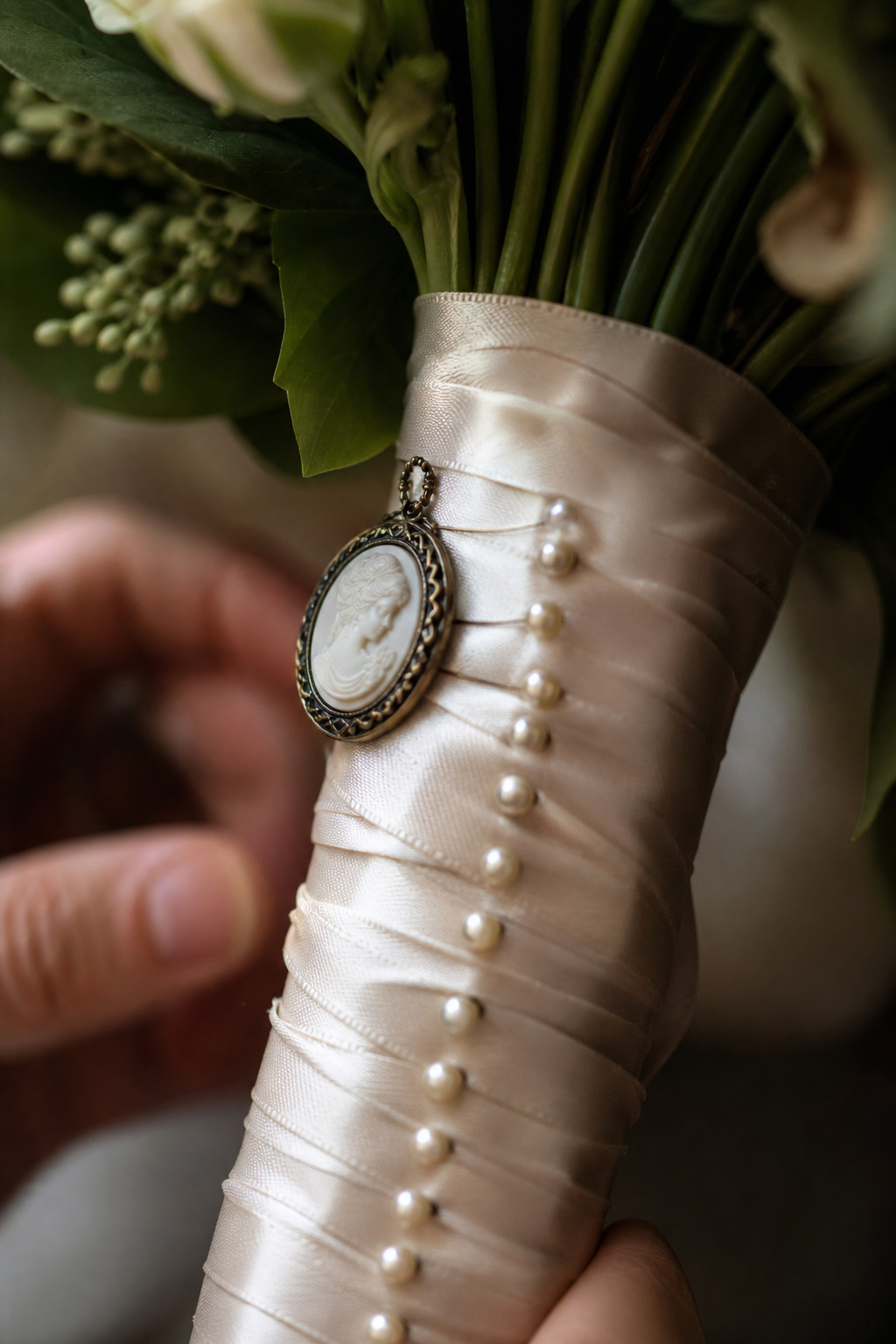
Attention to detail is what separates a professional bouquet from a nice bunch of flowers. It rarely lives in the blooms.
It lives in the pearl-headed pins pushed into stephanotis throats. It lives in a grandmother’s cameo wired to the handle of a lily-of-the-valley bouquet, or in a ribbon binding wrapped so the seam faces the body and never shows in a photograph.
Decide early whether you want stems wrapped or exposed. Exposed stems need to be cut dead even and kept clean, because every guest at the head table will be looking at them during dinner.
Ask to see a finished bouquet from the back and the bottom, not just the front. That’s where the work shows, and the spiral construction underneath is either there or it isn’t.
Decide What You’ll Do Yourself
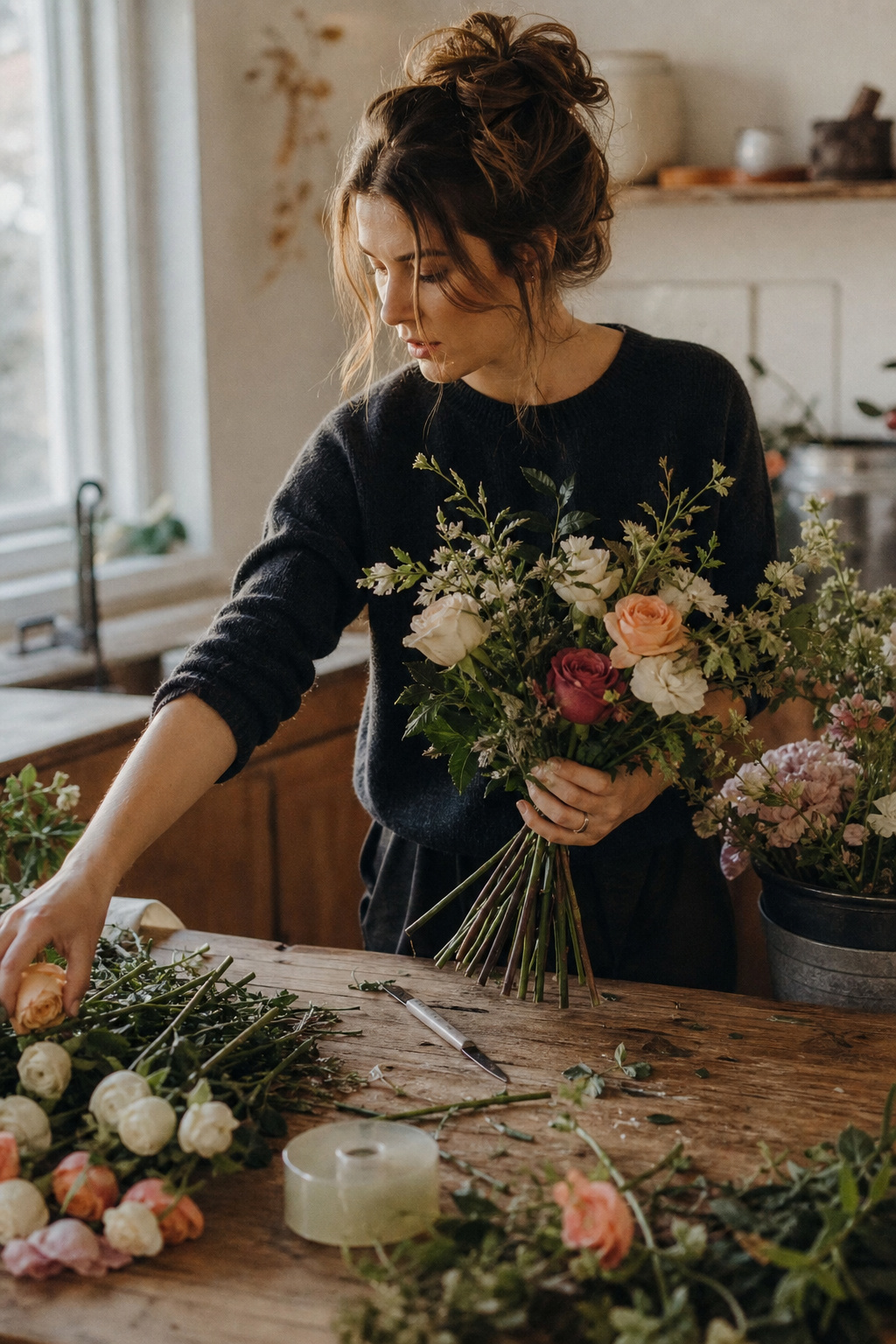
A bouquet is the only accessory you’ll grip for eight straight hours and then throw at a crowd of strangers. It earns whatever you spend on it, and that includes your own time.
Plenty of brides build their own. The ones who succeed almost always practice twice, and they almost always hand off the bridal bouquet to a professional while they handle centerpieces and bridesmaids themselves.
That’s what I’d do. The bridal bouquet is in every photograph you’ll keep for the rest of your life, and it’s the one piece you’re building the night before your own wedding.
If you are doing it yourself, start with a single hand-tied bouquet and get your flowers processed properly the day they arrive. Processing is the whole ballgame. Everything else is decoration.
What I use in the shop: a sharp floral knife for every cut, because a dull blade crushes the stem end and shuts down water uptake. I bind handles with clear waterproof tape before the ribbon goes on, so nothing slips when the bouquet gets damp. And every bucket in my cooler gets flower preservative, wedding week included.
Bring Pictures, Then Set Them Down
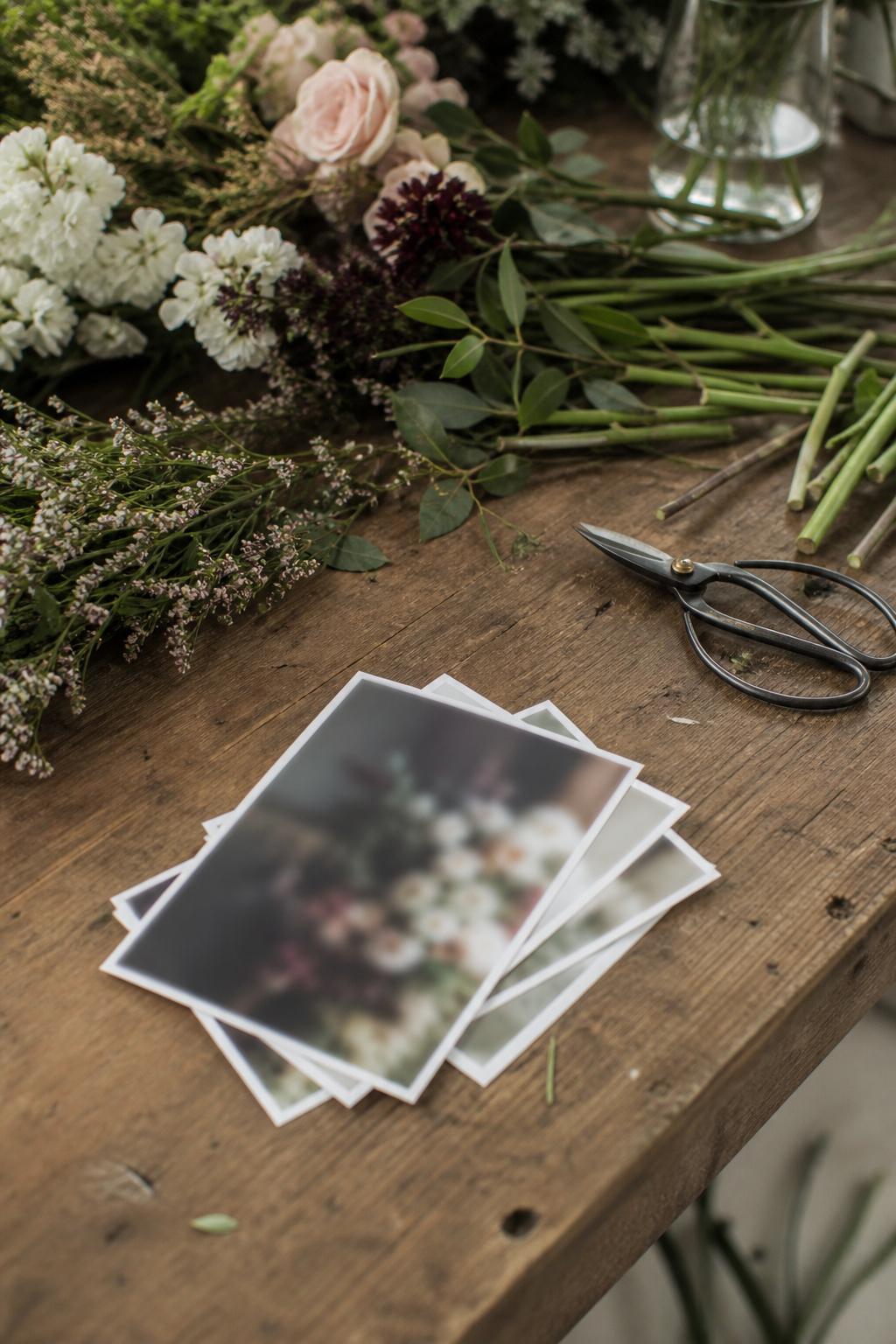
Bring three to five photos to your consultation. Not forty.
Three photos force you to figure out what they have in common, and that common thread is the actual brief. Forty photos mean you’re asking a florist to guess.
If you’re worried that saying “I don’t know what this flower is called” makes you look unprepared, don’t be. Nobody expects you to know. Point at the picture and say what you like about it, and any florist worth booking will name it for you.
Then set the photos down. A bouquet built to match a photograph is a copy of somebody else’s wedding, and you already know how that story ends.
Frequently Asked Questions
What’s the difference between a round bouquet and a cascade?
A round, or hand-tied, bouquet is a dome of flowers roughly ten to twelve inches across with the stems gathered into a single handle. A cascade spills downward from the hand in a teardrop, adding length and vertical weight. Rounds work with nearly every dress silhouette. Cascades suit fuller gowns and taller frames, and they cost more because they take significantly longer to build.
How far in advance should I book my wedding florist?
Six to nine months out for a Saturday in peak season, which in most markets means May through October. Book after you’ve secured the venue, since the space drives scale, logistics, and the setup window. The bouquet itself gets designed much later, but the florist’s calendar fills up long before that.
Can I make my own bridal bouquet?
Yes, and plenty of brides do it well. Practice the exact bouquet twice before the wedding, once about a month out and once two weeks out, using the same flowers you plan to order. Order roughly twenty percent more stems than you think you need, because you will lose some to broken heads and bad blooms. If you only have room in your schedule to do one thing well, make it the bridal bouquet and buy the rest.
How many stems go into a bridal bouquet?
It depends entirely on the flower. A round bouquet of open garden roses might use twenty-five to thirty-five stems, while the same-size bouquet built from spray roses and filler could take sixty. Large-headed flowers fill space fast. When pricing a DIY bouquet, count by coverage, not by stem.
Should my bridesmaids’ bouquets match mine?
They should relate, not match. The standard approach is to build the bridesmaids’ bouquets from the same palette at about two-thirds the scale, dropping the most expensive focal flower and leaning harder on texture. That keeps the bride’s bouquet reading as the primary piece in every photograph without making the bridal party look like an afterthought.
How do I keep my bouquet fresh on the wedding day?
Keep it in water until about thirty minutes before you walk down the aisle. A vase with two inches of water in a cool room, out of direct sun and away from any vent, will hold it. Blot the stems on a towel before you pick it up so you don’t stain the dress. Between the ceremony and the reception, put it right back in the water.
Closing Thoughts
The bouquet you’ll be glad you carried is the one that came out of a conversation, not a search result. Name the flowers you love, find someone who hears what you’re not saying, and let the details do the quiet work.
The rest of the wedding gets planned. The bouquet is grown.
What’s the one flower you already know is going in your bouquet, and who talked you into it? Drop it in the comments. I read every one.
Til next time,