Disclosure: This post may contain affiliate links. If you click and buy, we may earn a commission at no extra cost to you. As an Amazon Associate, we earn from qualifying purchases.
Last Updated: June 3, 2026
A bride came in last July, a few weeks before her outdoor wedding, holding a printout of a bouquet she’d found on Pinterest. Lush peonies, garden roses, the whole romantic look. I had to tell her the peonies were already done for the season.
She hadn’t realized that by mid-July, her window had closed. We built her something just as beautiful with dahlias and hydrangeas, but the conversation stuck with me.
Timing is everything with summer wedding flowers. So is knowing which blooms actually hold up when it’s 85 degrees outside. Here’s what I’d tell any bride planning a summer bouquet right now.
Start With What’s Actually in Season
Summer runs a longer floral calendar than most people realize, roughly May through September, but not everything is available at the same time within that window.
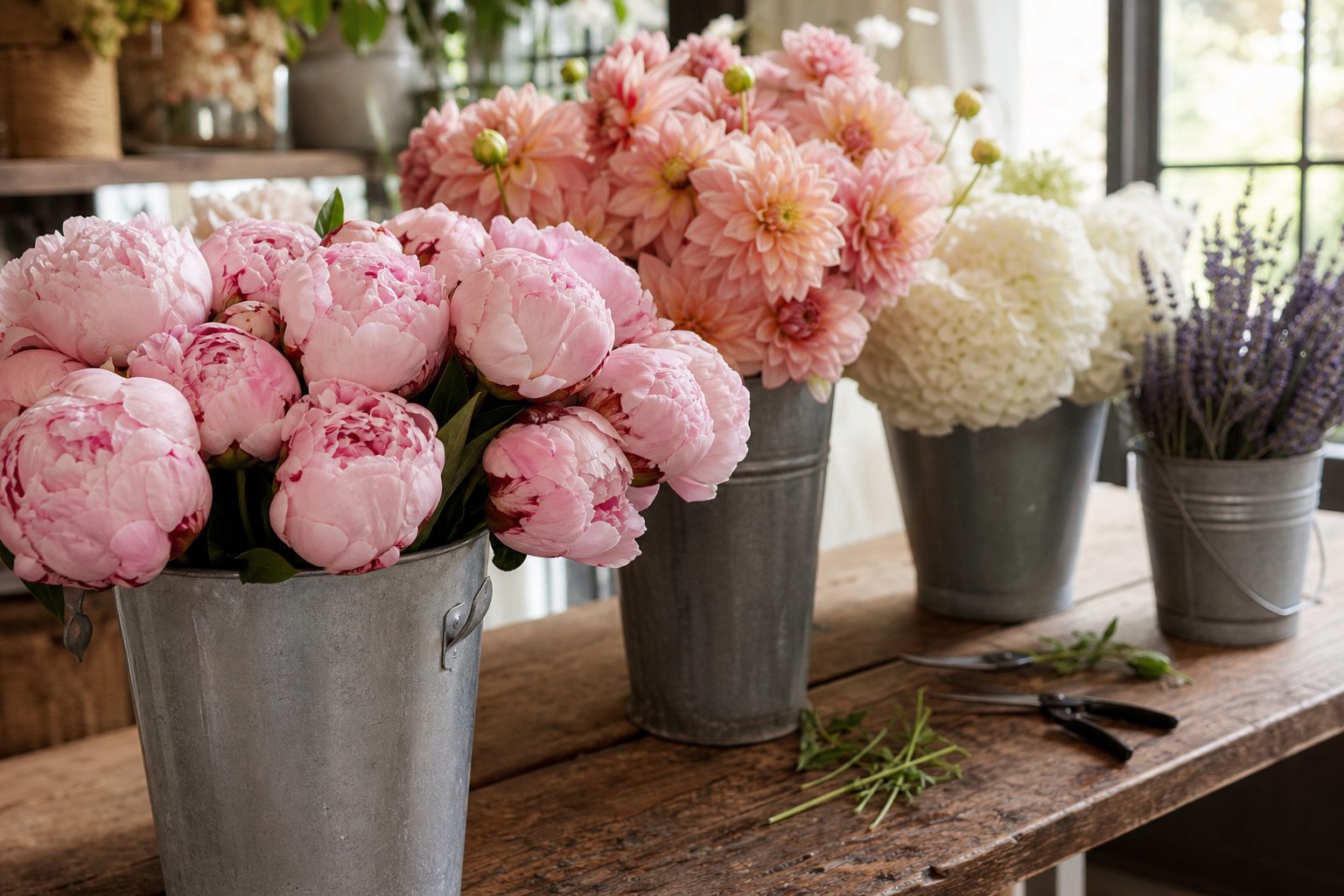
Peonies are at their best in May and June. If your wedding is in late July or August, plan around something else. Dahlias are the opposite. They’re late-season stars, peaking from August into September. Hydrangeas carry you through most of the summer. Garden roses are available year-round, but summer is where they deliver the richest color.
Zinnias, sunflowers, and lavender round out the mid-to-late summer lineup. All of them are affordable when they’re naturally in season, which is one more reason to build your bouquet around what’s actually blooming near your wedding date.
Working with in-season flowers isn’t just about cost. The blooms are genuinely fresher, more vibrant, and longer-lasting than something that’s been flown in from another hemisphere out of season.
I’ll take a bucket of well-conditioned local dahlias over imported peonies every time, if the timing lines up. If you’re sourcing flowers yourself, make sure you know how to properly process fresh flowers. That step makes or breaks how long everything lasts once you start arranging.
Pick Blooms That Can Handle the Heat
This is the part most DIY brides overlook. A bloom that looks gorgeous in a 65-degree studio can turn into a wilted mess by the time you’ve walked down the aisle in July heat. Some flowers handle it. Others don’t.
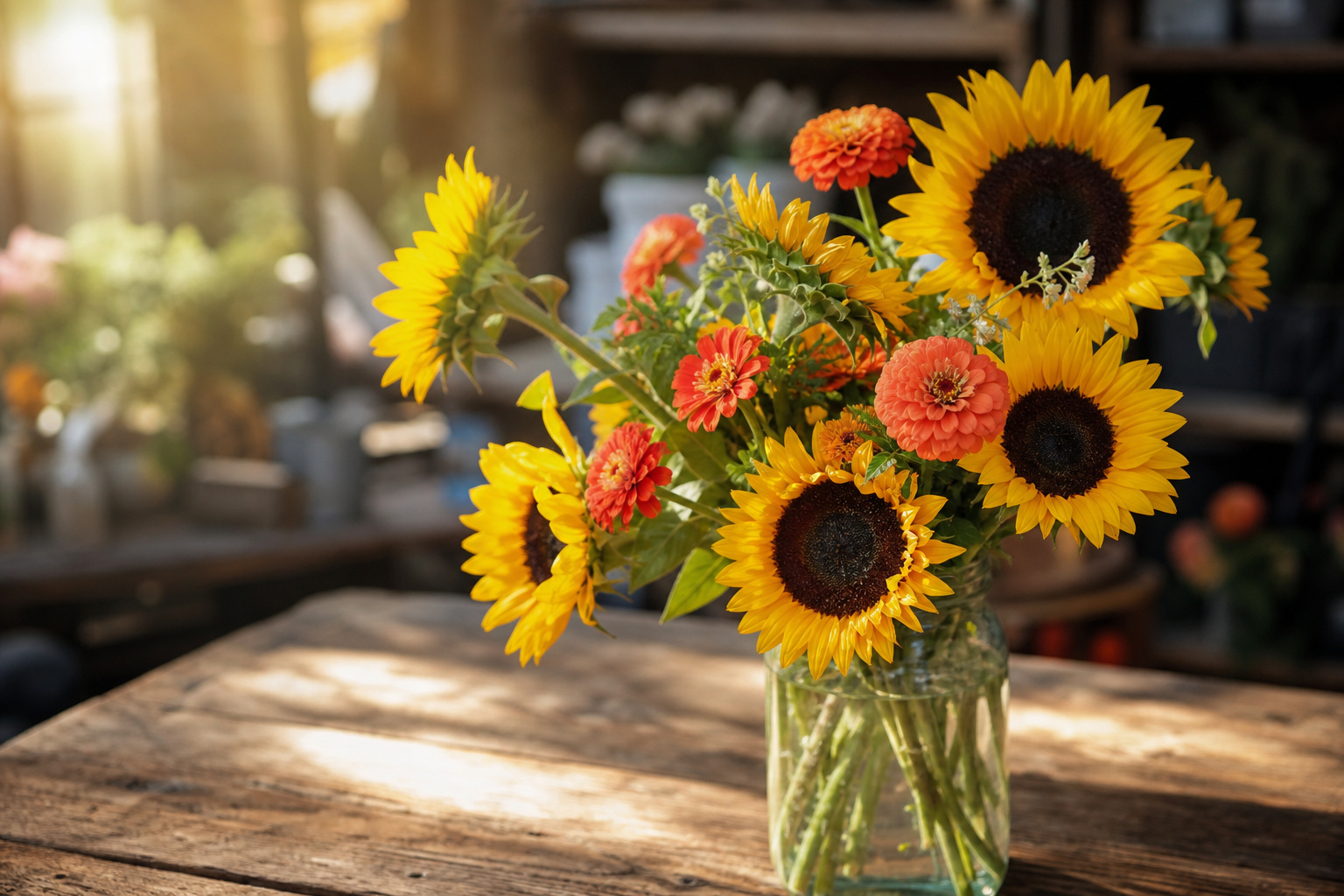
Good choices for heat tolerance: Sunflowers, zinnias, orchids, dahlias (with proper conditioning), garden roses, and hydrangeas if they’ve been well-hydrated.
Trickier in heat: Lily of the valley, delicate sweet peas, gardenias, and stephanotis. These are beautiful flowers, but they’re finicky when temperatures climb. If you want them, keep the bouquet in water right up until the ceremony and minimize time in direct sun.
Whatever you choose, conditioning and hydration matter more than the flower variety itself. A properly processed stem will outlast an improperly handled “heat-tolerant” one every time. A good floral finishing spray also helps extend the life of blooms during outdoor ceremonies. It’s worth looking into.
What I do in the shop: For summer weddings, I always build the bouquet a day ahead and keep it refrigerated until about an hour before the ceremony. That gives stems a full overnight drink and slows any premature opening.
Build Your Color Palette Around the Season
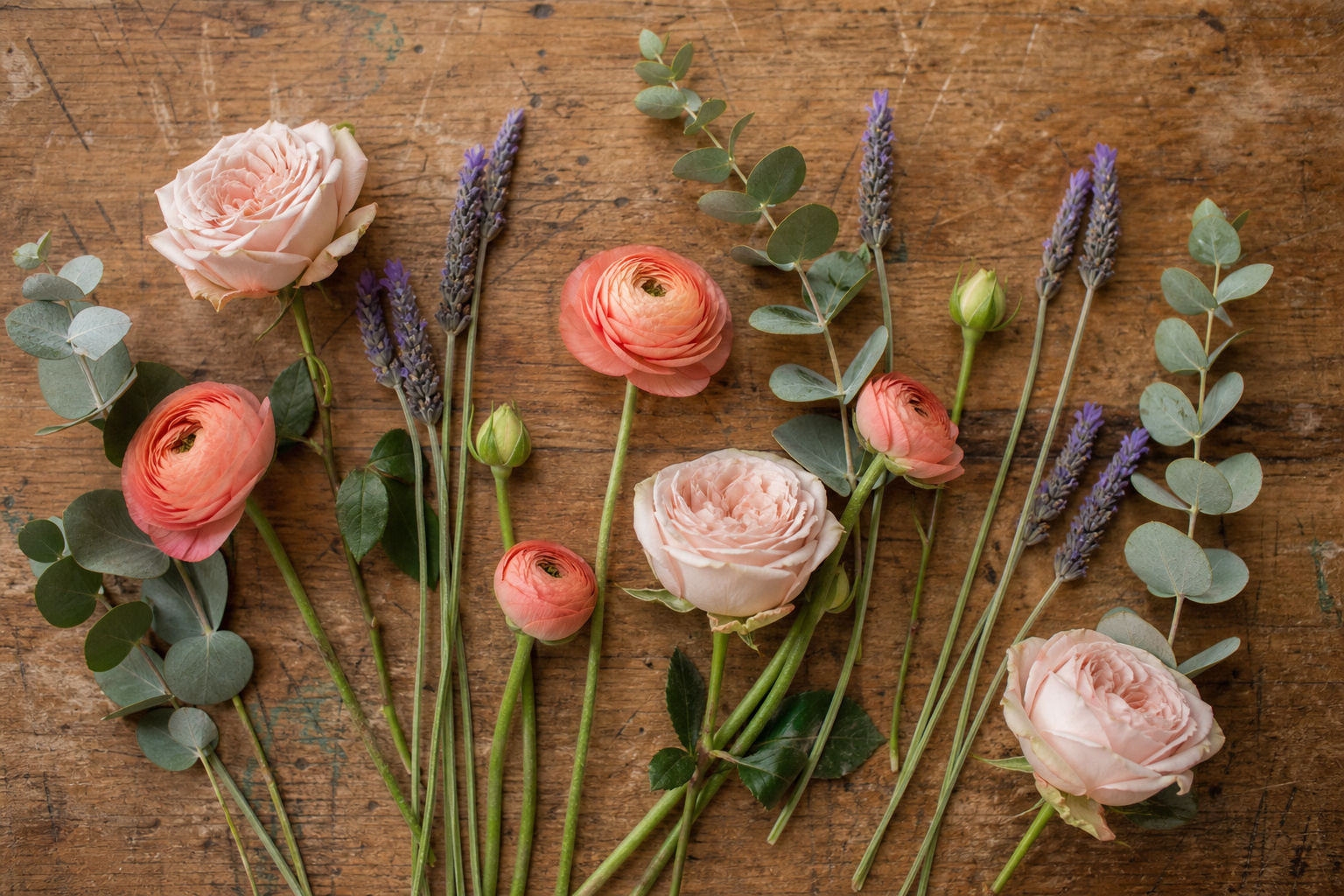
Summer gives you a lot of color to play with: coral, blush, peach, lavender, lemon yellow, white, and every shade of pink. The challenge isn’t finding colors. It’s narrowing them down.
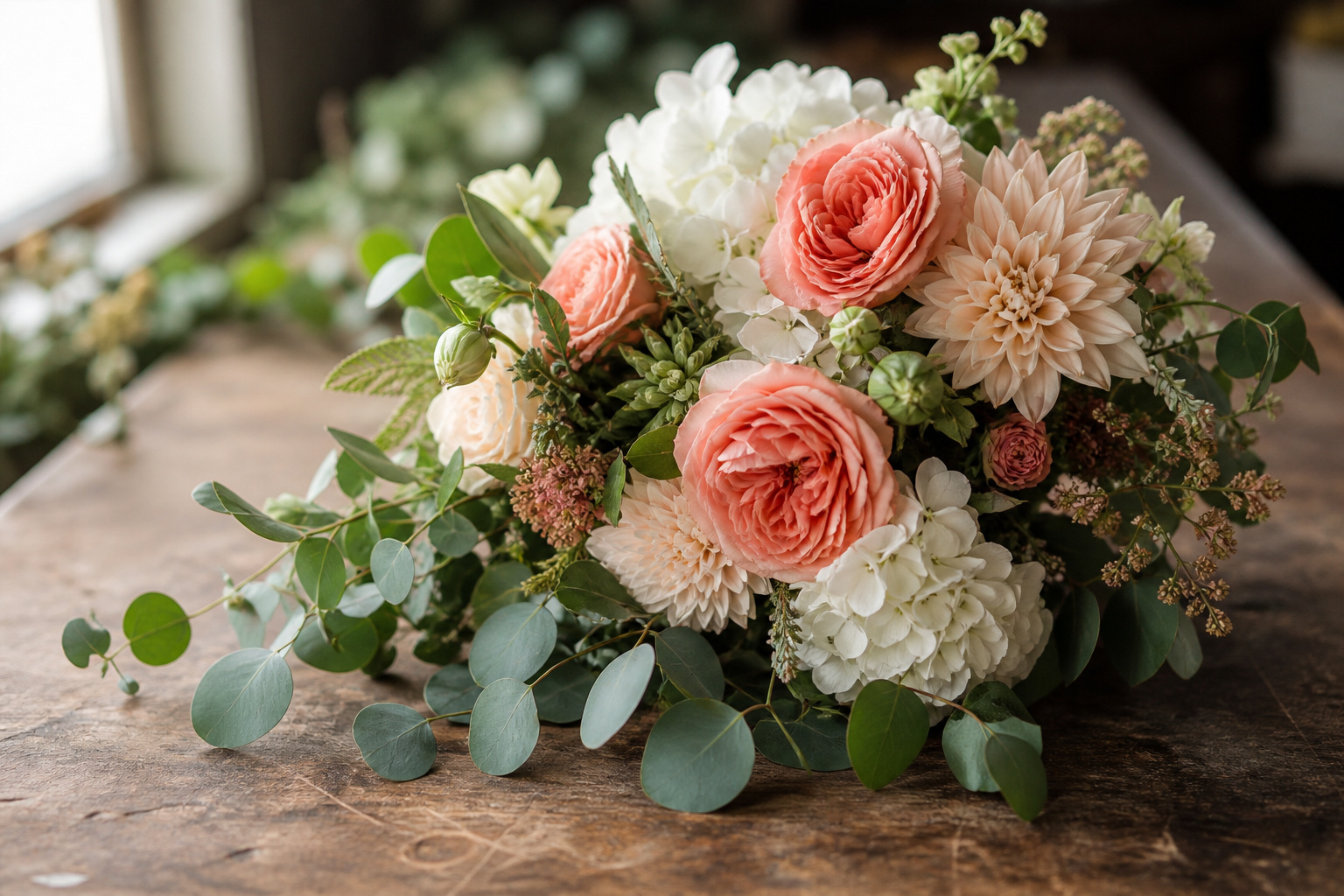
My advice: pick one or two anchor colors, then let your seasonal blooms guide the rest. A coral garden rose paired with peach ranunculus and soft white hydrangea is a complete palette. You don’t need six different flower colors to fill a bouquet. You need depth and texture within a tighter range.
Hydrangeas are worth mentioning here because they’re one of the most versatile blooms for summer palettes. Depending on soil chemistry, the same variety can shift from blue to pink to lavender. That variability can work in your favor if you’re flexible, but it’s worth confirming the exact color with your supplier before committing.
If you want a broader look at what’s trending in summer wedding color palettes right now, the wedding flower trends post on this site covers that in more detail.
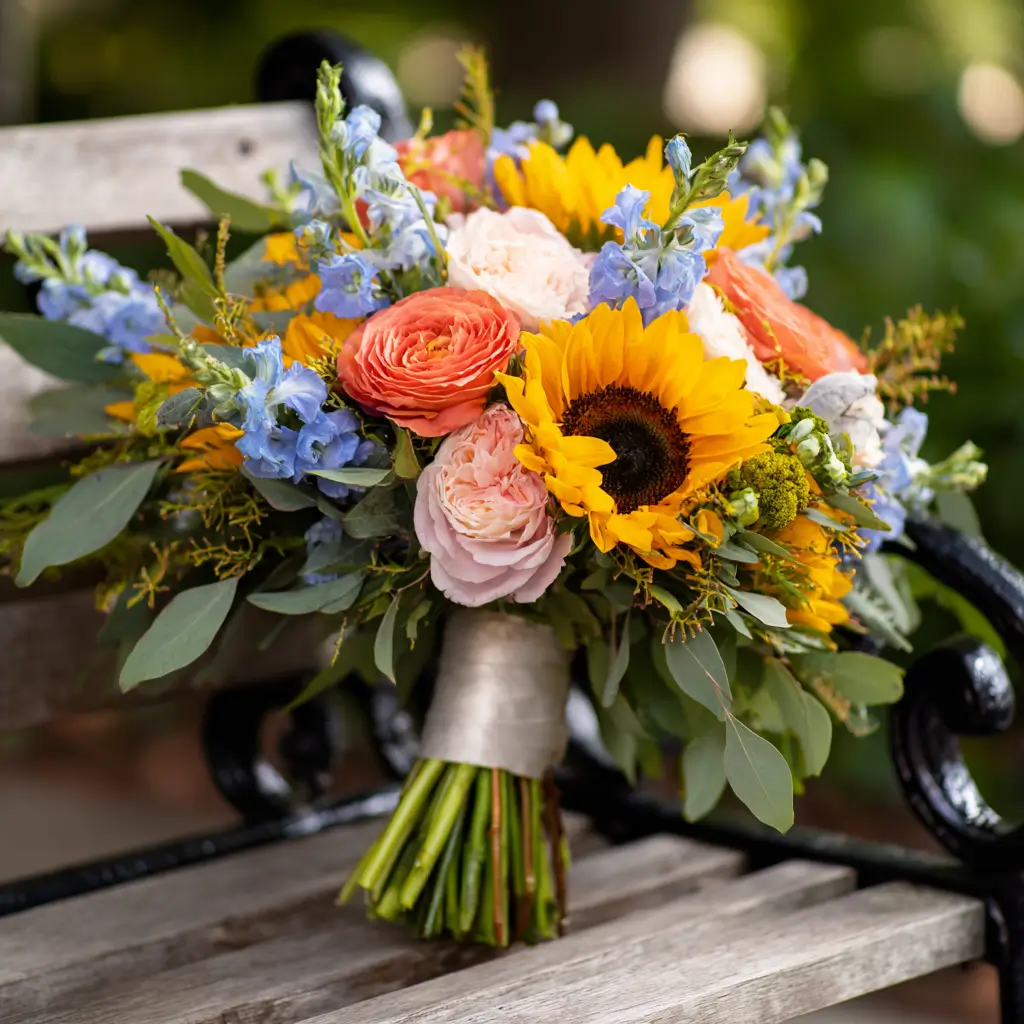
Discover beautiful wholesale summer wedding flowers at GlobalRose. Shop fresh roses, hydrangeas, carnations, and more in bulk for summer weddings, bouquets, centerpieces, and floral arrangements at affordable prices.
As an affiliate, we earn on qualifying purchases.
Pair Statement Blooms With the Right Fillers
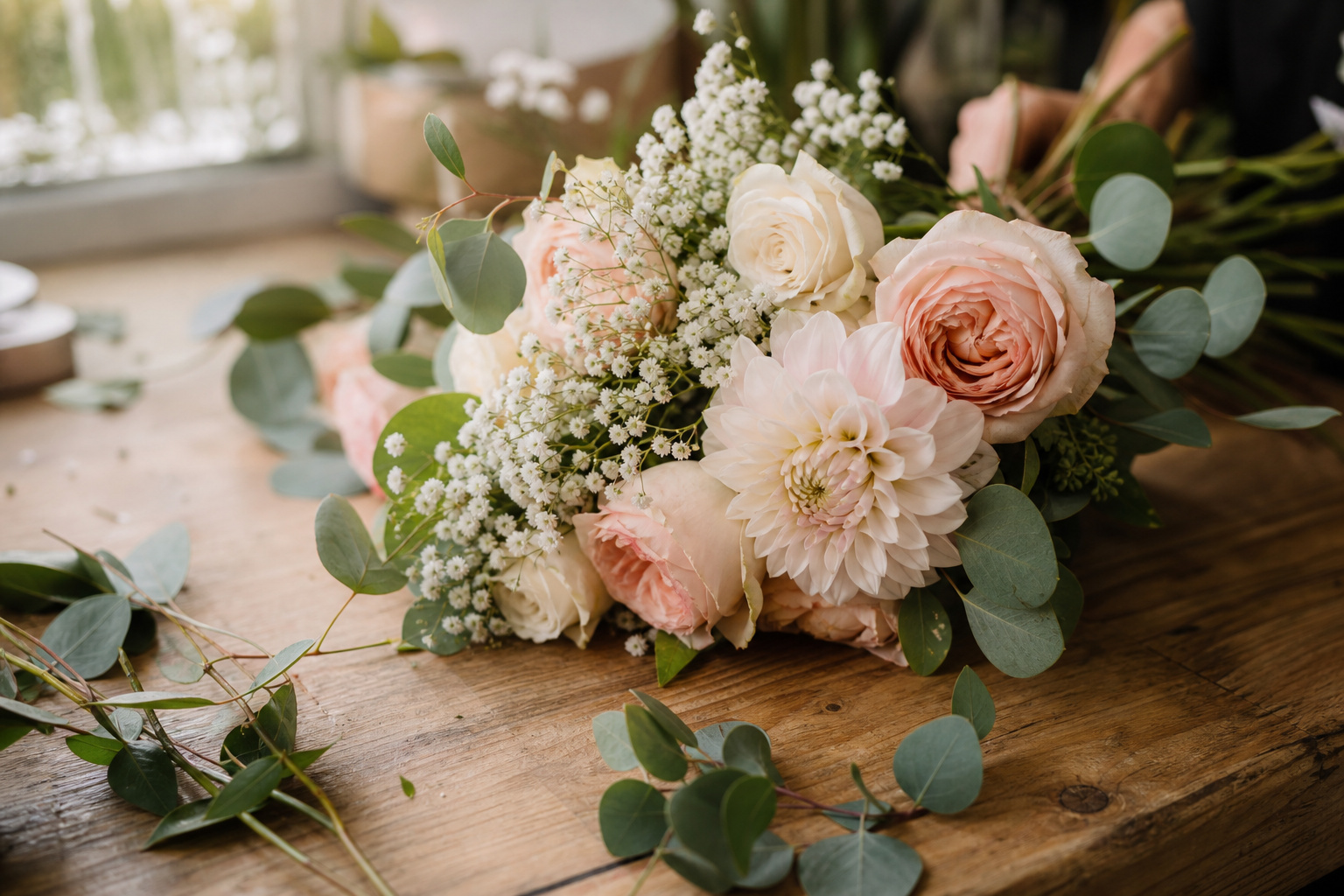
A bouquet with all focal flowers and no breathing room looks heavy. One with too much filler looks thin. Balance is what separates a well-built bouquet from one that just happened.
Your statement blooms, like peonies, dahlias, and large garden roses, need space to read as individuals. Filler flowers like baby’s breath, wax flower, and eucalyptus create that space without competing. I’d keep your fillers lighter in tone than your focal flowers so the contrast pulls the eye where you want it to go.
A few filler combinations that work particularly well in summer bouquets:
- Eucalyptus + garden roses: Clean, modern, holds up in heat
- Baby’s breath + dahlias: Classic contrast, always photographs well
- Ruscus + sunflowers: Casual, wildflower feel with good structure
- Wax flower + peonies: Romantic and lush without overloading the arrangement
Don’t overstuff the filler. A little goes further than you’d think. Let the statement blooms lead, and the fillers do the quiet work behind them.
If you’re working with a focal-flower-forward design, the focal flowers guide on this site is worth a read before you finalize your choices.
Choose a Style That Photographs Well
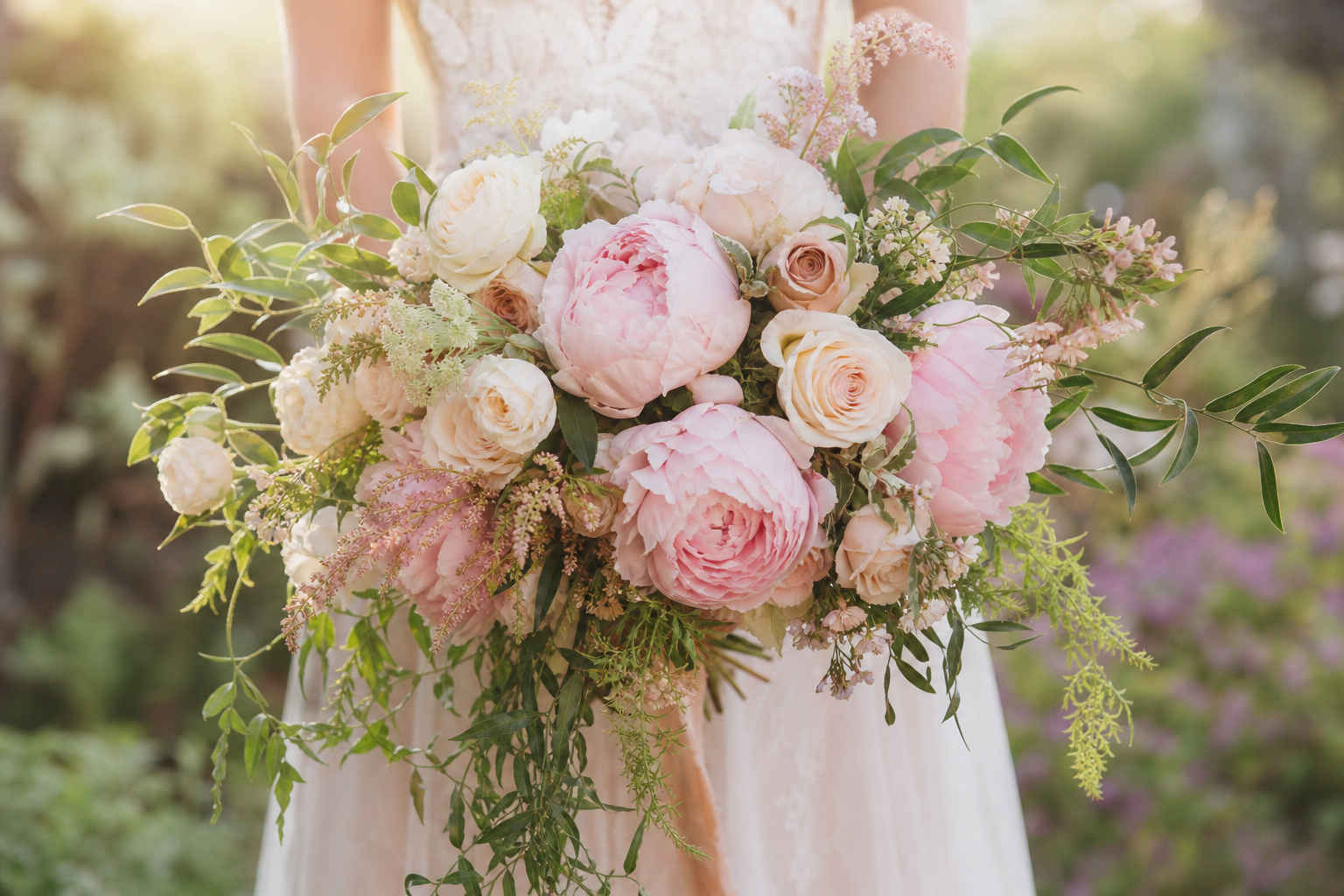
Most brides don’t think about photography when building a bouquet, and they should. The style, volume, and contrast of your arrangement shows up differently under a camera lens than it does in the mirror.
Here’s how the main styles break down:
| Style | Why It Photos Well | Best Bloom Pairing |
|---|---|---|
| Garden romantic | Soft, layered depth reads beautifully in natural light | Peonies and garden roses |
| Long-stem presentation | Clean, elegant lines — strong for formal portraits | Delphinium and hydrangea |
| Mixed wildflower | Natural, editorial feel — great for outdoor venues | Zinnias, dahlias, and grasses |
| Compact round | Graphic, defined silhouette — holds its shape all day | Garden roses and ranunculus |
Bright summer palettes, such as coral, blush, or soft peach, pop in natural light. Deep jewel tones photograph beautifully in shade or golden-hour light. If your ceremony is outdoors at midday, go lighter. If your reception photos will be at dusk, richer tones will look their best. For moody, dramatic alternatives, the moody wedding bouquet ideas post on this site has some great visual reference.
Stretch Your Budget Without Sacrificing the Look
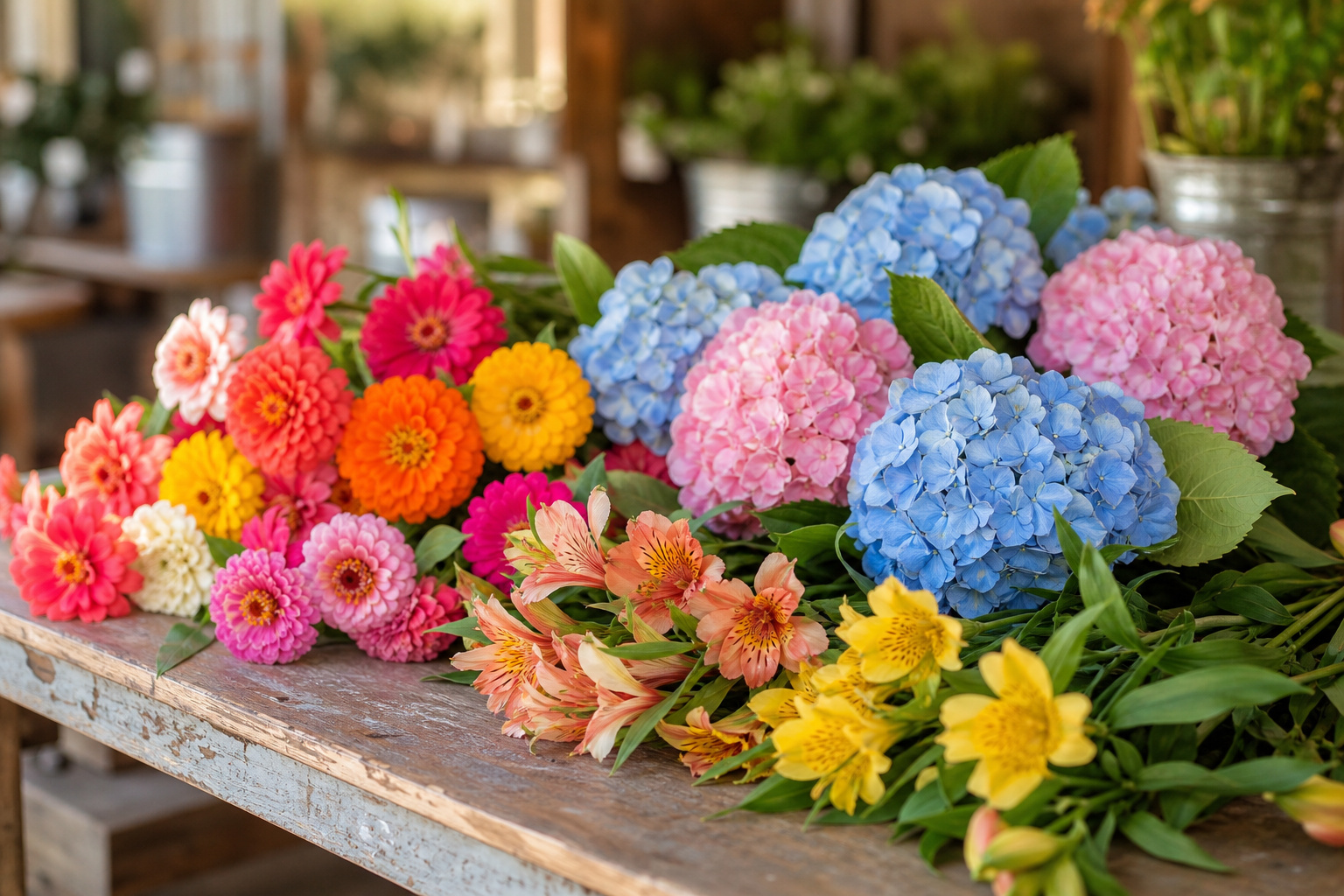
Summer is genuinely one of the more affordable seasons for wedding flowers, because so much is naturally available. You don’t need to spend more; you need to choose smarter.
The most budget-friendly summer blooms:
| Bloom | Why It’s a Good Value |
|---|---|
| Sunflowers | Widely available, very low cost per stem, bold visual impact |
| Zinnias | At seasonal peak, excellent color range, inexpensive |
| Hydrangeas | Large flower heads add significant volume at reasonable cost |
| Lavender | Fragrant filler, affordable, dries beautifully as a keepsake |
| Garden roses | Summer pricing is better than off-season; widely sourced |
| Alstroemeria | Underrated filler — long vase life, comes in many colors, very affordable |
Alstroemeria in particular is one I recommend more often than most people expect. Brides usually dismiss it as a filler, but it holds up exceptionally well in summer heat and comes in a huge color range. Proper conditioning is key. Here’s a guide to alstroemeria care if you’re sourcing your own stems.
One more thing: if you’re doing this yourself and need to build multiple arrangements on a budget, look at what local farmers’ markets and small growers have available the week of your wedding. That’s often where the freshest and most affordable stems are, especially in summer.
For a broader look at bouquet styles that work well on a tighter budget, boho wedding bouquets lean naturally toward wildflower-style arrangements that cost less to assemble.
Get the Tools Right Before You Start
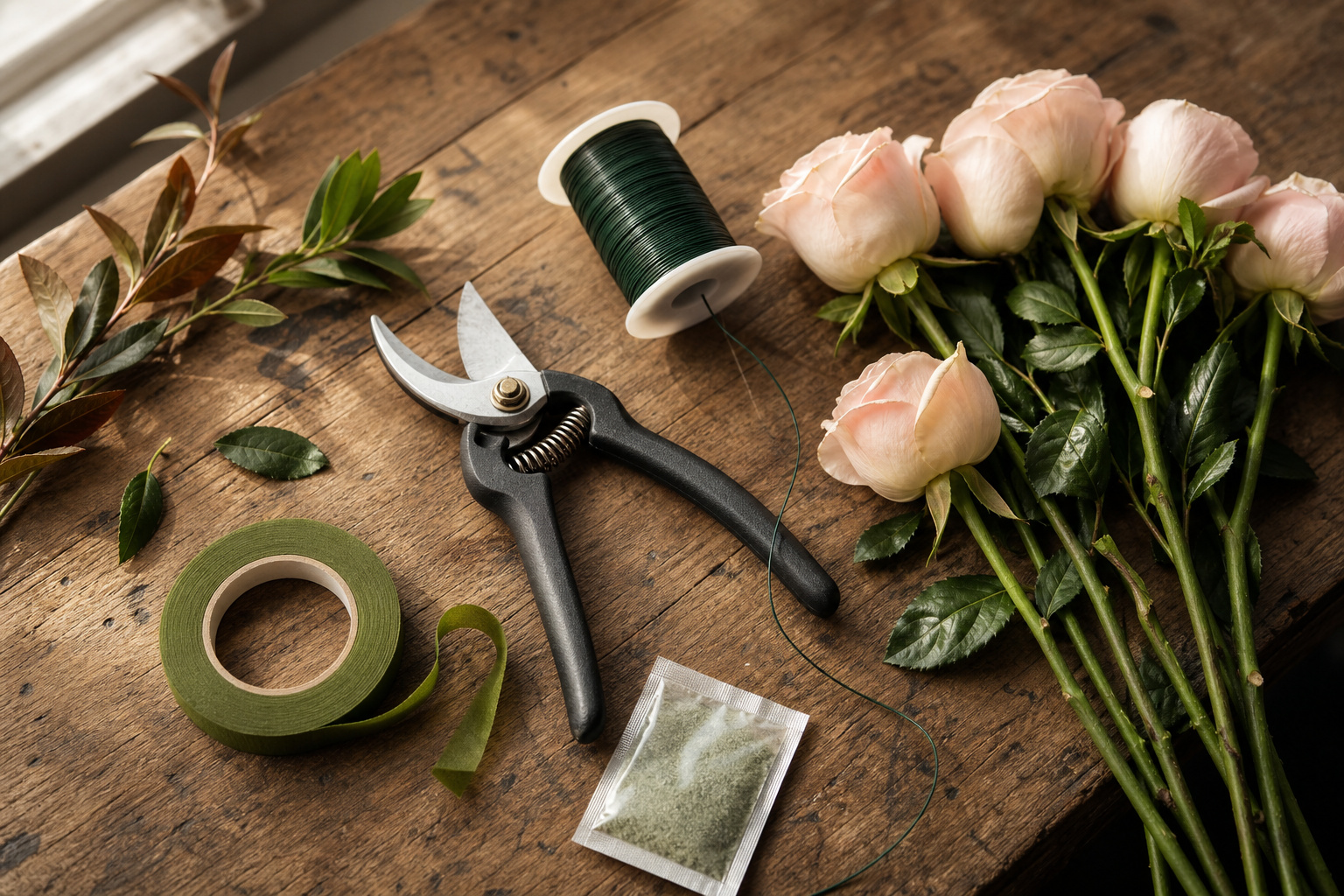
If you’re assembling your bouquet yourself, the tools matter more than most DIY guides let on. A dull blade crushes stems instead of cutting them cleanly, and a crushed stem doesn’t take up water the way it should. That’s how you end up with wilted flowers before the ceremony even starts.
What I use in the shop: A sharp floral knife or bypass pruner for stem cuts, floral wire and tape for structural support on heavy blooms, corsage pins for final adjustments, and a good finishing spray to extend vase life during the event. Here are a few products I’d recommend:
- Floralife Crystal Clear Flower Food — I use this for conditioning all fresh stems before arranging. Makes a real difference in how long blooms last.
- Bypass floral pruner — Clean cuts, comfortable grip. Don’t use scissors; they crush the stem tissue.
- Paddle floral wire — For wiring heavier blooms like dahlias or garden roses so they hold their position in the bouquet.
- Finishing spray (Crowning Glory or similar) — Helps blooms hold up during outdoor ceremonies. Not a miracle product, but worth having.
If you want a full rundown of the tools I actually reach for every day, the floral design tools guide on this site covers everything from knives to stem tape in more detail.
Frequently Asked Questions
What flowers hold up best in summer heat for a wedding bouquet?
Sunflowers, zinnias, orchids, and dahlias are among the most heat-tolerant options. Garden roses and hydrangeas also do well if properly conditioned and kept in water until shortly before the ceremony. Avoid gardenias, lily of the valley, and delicate sweet peas for outdoor summer ceremonies. They’re beautiful but finicky in high heat.
When should peonies be used in a summer wedding bouquet?
Peonies peak in May and June. If your wedding is in July or August, availability drops significantly, and prices go up. You can still request them, but be prepared for a higher price tag and less predictable quality. Dahlias or garden roses are better alternatives for late-summer weddings.
How far in advance should a DIY wedding bouquet be assembled?
One day before the ceremony is the sweet spot. Assemble the bouquet, place the stems in water, and refrigerate overnight. Take it out about an hour before the ceremony so it can acclimate to room temperature. Assembling too far in advance risks premature bloom opening; assembling the morning of leaves no margin for error.
What are the most affordable flowers for a summer wedding bouquet?
Sunflowers, zinnias, hydrangeas, lavender, and alstroemeria are all genuinely affordable in summer because they’re naturally in season. Garden roses also have better summer pricing than off-season. Avoid anything that needs to be imported out of season. That’s where costs spike quickly.
Can dried flowers be mixed into a summer wedding bouquet?
Yes, and they’re a practical addition for summer. Dried pampas grass, dried lavender, and dried lunaria hold up perfectly in heat and add texture that fresh flowers alone can’t replicate. They also make a nice keepsake after the wedding. Just be thoughtful about the ratio. A little dried material goes a long way alongside fresh blooms.
Should the bridal bouquet match the bridesmaid bouquets exactly?
Not necessarily. A common approach is to keep the same color palette and flower varieties, but scale down the size and complexity for the bridesmaids. The bridal bouquet should read as the focal point. Matching the bridesmaid bouquets too closely can pull attention away from the bride rather than supporting the overall look.
Closing Thoughts
Summer gives you more to work with than any other season when it comes to wedding flowers. You just have to know which blooms to reach for and when. Lean into what’s naturally available near your wedding date, pay attention to heat tolerance, and don’t underestimate the affordable options. A sunflower and zinnia bouquet built well will outshine an overpriced, out-of-season arrangement every time.
If you’re doing this yourself for the first time, trust the process. The flowers don’t need to be exotic to be beautiful. They just need to be fresh, well-chosen, and put together with a little patience. Every great bouquet I’ve built started with the same basic principles — good stems, a clear color story, and room for each bloom to do its job.
If you’ve built a summer wedding bouquet, DIY or with a florist, drop a comment and let me know which flowers you ended up going with. I’m always curious what’s working for people in the real world.
Til next time,