Disclosure: This post may contain affiliate links. If you click and buy, we may earn a commission at no extra cost to you. As an Amazon Associate, we earn from qualifying purchases.
Last Updated: May 17, 2026
A customer walked into the shop last November holding a grocery-store bouquet of mums she’d bought four days earlier. The blooms still looked perfect. She wanted to know if she was imagining things — or if mums really do last that long.
She wasn’t imagining it. Chrysanthemums are one of the hardiest, longest-lasting cut flowers you can buy, and with a little care, two weeks of vase life is realistic. I’ve had mums in our shop cooler push past three weeks more than once.
That’s the good news. The not-so-good news is that most people kill perfectly good mums in a few days because they treat them like roses or, worse, like cheap filler that doesn’t deserve real care.
In my experience, mums reward attention as much as any premium flower. Here’s how I handle them in the shop, and exactly what I’d do at home.
Know What You’re Working With
Before we get to the care steps, a little context. Chrysanthemums — “mums” to anyone who works with them daily — symbolize happiness, health, and well-being in the language of flowers. Their cultivation traces back to 15th-century BCE China, where they were grown for medicinal use long before anyone thought of them as ornamental.
They’re deeply woven into Japanese culture too, appearing on everything from the imperial crest to the currency. Dutch traders brought them to Europe in the 17th century, and they’ve been a garden staple there ever since. So no, mums are not the new kid on the block.
They’re the November birth month flower, the 13th wedding anniversary flower, and a classic in Homecoming corsage work. While most people think of mums as fall flowers, cut chrysanthemums are actually available year-round.
They come in more forms than most people realize:
- Cremones — large, dense, button-like blooms
- Disbuds — single large flower per stem, often football mum or spider mum
- Spider mums — long, curling petals that look almost like fireworks
- Spray mums — multiple smaller blooms per stem, the workhorse of mixed bouquets
- Santini and micro-spray mums — tiny, delicate, and gaining serious popularity
Colors run from clean white and bright yellow through lavender, bronze, burgundy, and just about everything in between. They mix with almost anything, which is why chrysanthemums make up roughly 15% of all cut flowers sold worldwide — second only to roses.
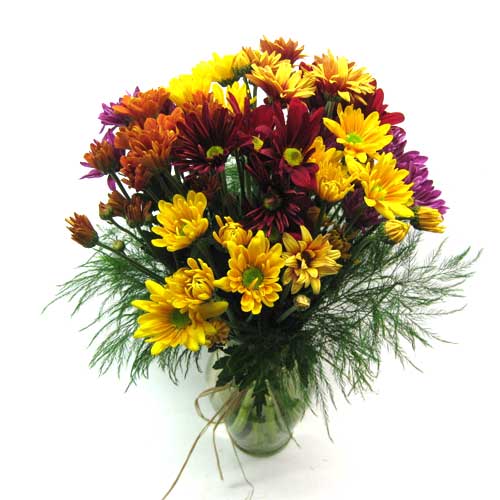
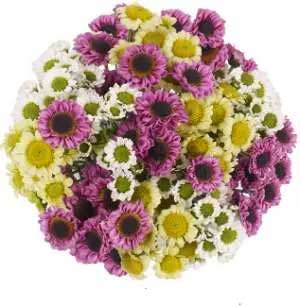
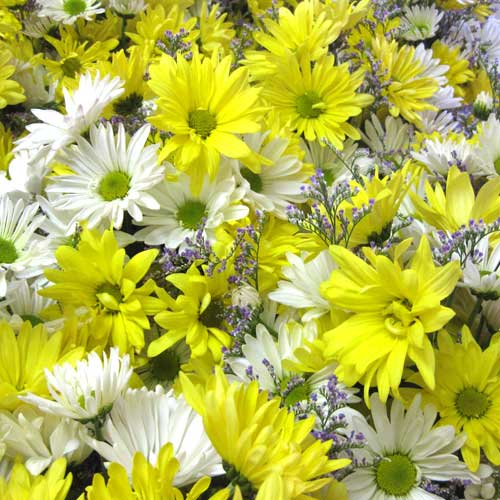
We’ve featured assorted mum arrangements like the one above in our shop for years. Some people dismiss them as “grocery-store flowers,” but they shouldn’t. The newer varieties — especially the santini poms shown below — have completely changed how florists use them. They’re popular with our customers for good reason.
Start Clean — Always
Mums are hardy, but they’re not invincible. The single biggest killer of cut flowers is bacteria, and bacteria love dirty vases.
Before any flower goes into water, I wash the vase with hot, soapy water and rinse it well. The same goes for any tool that touches the stems. If you used a vase last week and just rinsed it out, that biofilm clinging to the inside of the glass is going to choke your new flowers within days.
This is the unglamorous part of cut flower care that nobody Instagrams, but it’s the foundation of everything else. Skip it, and the rest doesn’t matter.
What I use in the shop: a bottle of Floralife D.C.D. Cleaner for vases that have seen heavy use. It’s overkill for home use, but for the shop, it’s worth it. At home, dish soap and hot water do the job.
Cut the Stems Right
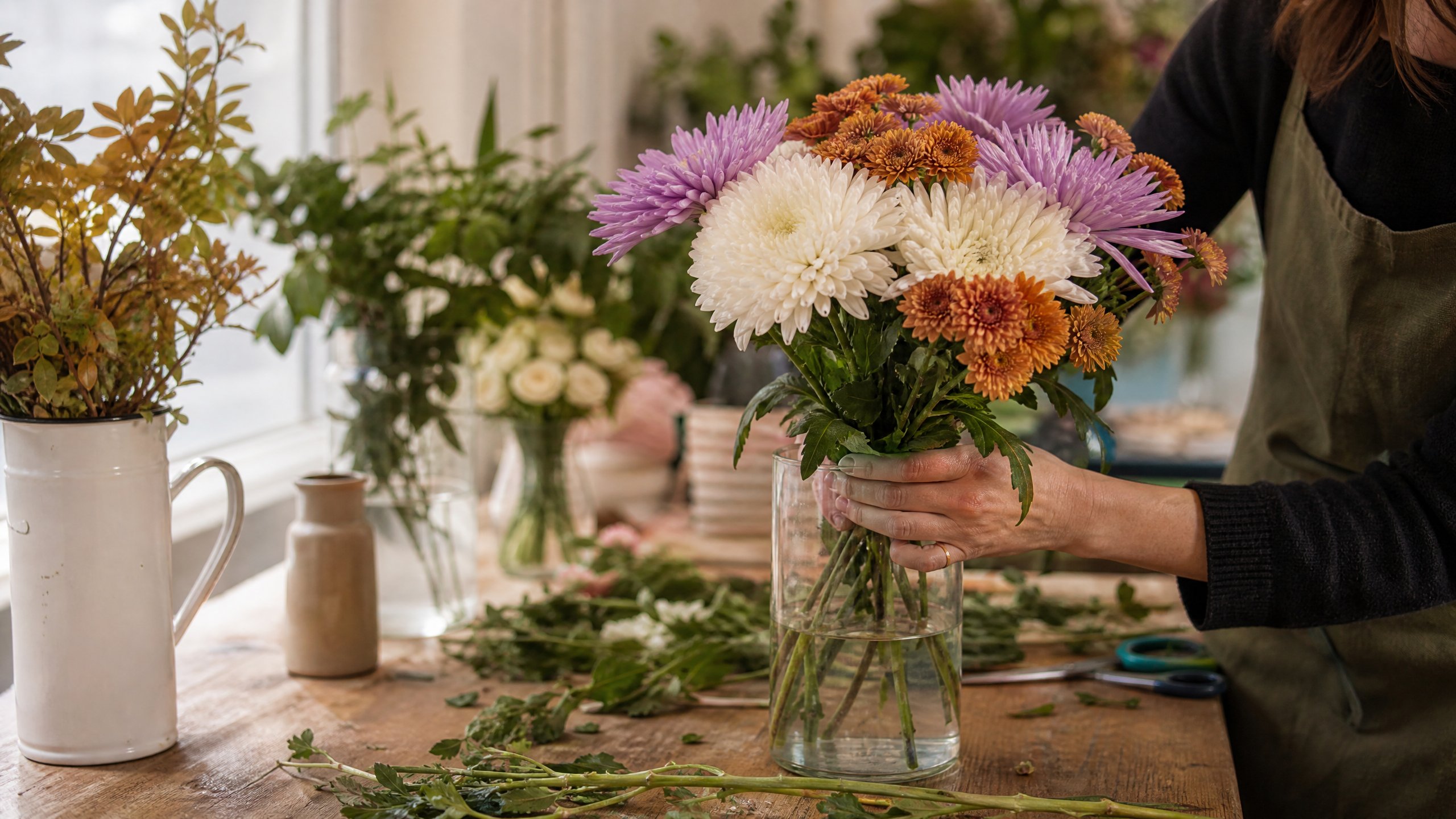
Once your vase is clean, unwrap the mums and get to work on the stems.
Recut every stem at a 45-degree angle, taking at least 1 inch off the bottom. The angled cut exposes more surface area for water uptake and keeps the stem from sitting flat against the bottom of the vase, which can seal off the drinking surface. An inch is the minimum — if the stems have been out of water for a while, take two.
Use a sharp tool. A dull knife or pruners crush the stem rather than cutting it cleanly, and a crushed stem doesn’t drink well. I prefer a floral knife for this work — most florists do — but a clean, sharp pair of bypass pruners works fine at home.
Strip off any foliage that would sit below the waterline. Submerged leaves rot fast, and rotting leaves are bacterial factories. The leaves above the water can stay.
If you want the full play-by-play from arrival to vase, I walk through the whole sequence on how to process fresh flowers like a pro.
Use Warm Water and Real Flower Food
Here’s where most home arrangements quietly fall apart: people fill the vase with cold tap water and skip the flower food packet because it “doesn’t do much.” It does plenty.
At the shop, I condition mums in warm water — not hot, not cold. Warm water moves up the stem more easily than cold, which gets the flowers hydrated faster. Cold water for tropical flowers like anthurium, sure. For mums, warm.
Then I add flower food. Real flower food — not a homemade sugar-and-bleach concoction from Pinterest. The commercial stuff does three things at once: feeds the flower, lowers the pH so water moves up the stem better, and kills bacteria. Skip it, and you’re cutting vase life in half before the flowers ever hit the water.
What I use in the shop: Chrysal Clear Universal flower food for everyday work. It dissolves cleanly and doesn’t cloud the water in clear vases. Mix it according to the packet — too concentrated isn’t better, it’s just wasteful.
Place the Vase Somewhere Smart
This is the easiest part to mess up because it feels obvious. It isn’t.
Mums don’t want direct sunlight. They don’t want to sit on top of a radiator. They don’t want the air-conditioning vent blasting on them, and they really, really don’t want to sit next to a fruit bowl. Ripening fruit gives off ethylene gas, which makes flowers age faster. A bowl of bananas on the counter can take three days off your bouquet’s life.
Pick a cool, shaded spot away from heat sources, cold drafts, and produce. A side table in a hallway is often better than the dining room table, even if the dining room table looks prettier.
If you’re displaying a particularly special arrangement and want to slow water loss from the petals, a light mist of floral finishing spray can buy you a couple of extra days. It’s not necessary for everyday bouquets, but it’s a nice trick to have in your back pocket.
Refresh the Water — Don’t Just Top It Off
Topping off cloudy water with fresh water is one of those things that feels productive and isn’t. The bacteria are already there. Adding clean water just dilutes the problem.
Every 2 or 3 days, drain the water completely, rinse the vase, recut the stems, and refill with fresh warm water and a new dose of flower food. Yes, every two to three days. Yes, the whole thing. It takes five minutes and adds a week to the arrangement.
If you see slime building on the stems below the waterline, that’s bacteria. Rinse it off when you recut. If the water smells, you waited too long — change it now.
Avoid These Common Mistakes
A few things I see customers do that quietly murder otherwise healthy mums:
- Leaving the cellophane wrapper on. The wrapper traps moisture against the stems and accelerates rot. Unwrap immediately.
- Using scissors instead of a sharp blade. Household scissors crush the stem. Crushed stems don’t drink.
- Skipping the flower food because the water “looks fine.” The water looks fine because bacteria are invisible until they’re not. Use the food.
- Displaying mums next to the fruit bowl. Ethylene gas is a silent killer. Move the bowl or move the flowers.
- Cutting stems under running water. An old wives’ tale. Just cut them on the workbench and get them in water within a minute. They don’t need an underwater cut.
Fix those five things and your mums will outlast just about everything else in the supermarket flower aisle.
What I Use in the Shop
If you want to set yourself up properly at home, here are the four things I’d buy. None of them is expensive, and all of them pay for themselves the first time you bring flowers home.
- Chrysal Clear Universal flower food — the single biggest upgrade you can make. Dissolves clean, works on virtually everything.
- A classic floral knife for clean, angled cuts. Cheap, sharp, and lasts forever if you treat it right.
- A pair of bypass pruners for thicker stems, or anyone uncomfortable with a knife.
- A small plant mister for light misting of petals on hot days. A few spritzes go a long way.
Frequently Asked Questions
How long do cut chrysanthemums actually last?
With proper care, expect two to three weeks of vase life from cut mums, longer than almost any other commercial flower. I’ve had spray mums last for nearly four weeks in our cooler. At home, two weeks is a reasonable target if you change the water regularly and keep them out of warm spots.
Why are my mums wilting after only a few days?
Early wilting almost always comes down to one of three things: the stems can’t drink (crushed cuts, blocked stem ends, or too much air uptake before they hit water), the water is bacterial (skipped flower food, dirty vase), or they’re sitting somewhere too warm. Recut the stems, change the water, and move them to a cooler spot. Nine times out of ten, that fixes it.
Can I keep chrysanthemums in the refrigerator overnight?
Yes, and it helps. Florists store mums between 34 and 38°F in a commercial cooler. A home fridge is colder and drier, but a few hours overnight won’t hurt them. Keep them away from any fruit or vegetables that release ethylene gas. Apples and bananas in particular, will damage them fast.
Are chrysanthemums toxic to pets?
Yes, mums are toxic to cats and dogs if ingested. They contain pyrethrins and other compounds that can cause vomiting, drooling, and incoordination. The reaction is rarely fatal but unpleasant. If you have a determined chewer in the house, put the arrangement somewhere they can’t reach.
Do cut mums need flower food, or is sugar water enough?
Use real flower food. Sugar alone feeds the flowers, but it also feeds bacteria, which then clog the stems. Commercial flower food balances sugar with an acidifier and a biocide, which sugar water doesn’t. The cost difference is pennies per arrangement. It’s not worth improvising.
Why do my chrysanthemums smell weird?
Mums have a slightly herbal, sometimes pungent natural scent, particularly the bronze and burgundy varieties. That’s normal. If you’re smelling something truly bad, rotten, or swampy, that’s the water, not the flowers. Bacteria are breaking down stem material below the waterline. Dump it, rinse the vase, recut, and refill. The smell should disappear within a few minutes.
Closing Thoughts
Mums get a bad rap for being the workhorse of the flower world; cheap, abundant, everywhere. But the same things that make them common make them genuinely rewarding to work with: they last longer than almost anything else in the cooler, they come in more shapes and colors than most people realize, and they reward basic care with weeks of life.
Mums are the closest thing to immortality in the flower world. Treat them well, and they’ll outlast every other bloom on your counter.
What’s your experience been with mums at home? Have you found a trick that extends their life even further, or run into a problem these tips don’t cover? Drop a comment below. I read everything that comes in, and I’m always happy to troubleshoot a sad bouquet.
Treat your mums like the premium flowers they secretly are, and they’ll bloom long past the moment you’d expect any other flower to call it a day.
Til next time,