Disclosure: This post may contain affiliate links. If you click and buy, we may earn a commission at no extra cost to you. As an Amazon Associate, we earn from qualifying purchases.
Last Updated: September 1, 2026
Roses are the number one seller in our shop, and the question I get asked more than any other is some version of: “How do I make them last?”
Usually, it’s a husband who just dropped a hundred bucks on a dozen long stems and wants his money’s worth. Sometimes it’s a bride hauling buckets home for a DIY wedding.
Once in a while, it’s a customer who swears their roses “died overnight,” and yes, that does happen, but rarely for the reason they think.
Here’s the truth: fresh-cut rose care is not complicated, but it is unforgiving. Skip a step, and you’ll see it in two days. Do it right, and a good batch of roses will give you a full week, sometimes ten days, of beautiful blooms.
Here’s a quick video walking through the whole process. Watch it first if you’re a visual learner, then I’ll break down each step in detail below, including the mistakes I see customers make over and over.
Start With Clean Tools and a Clean Vase
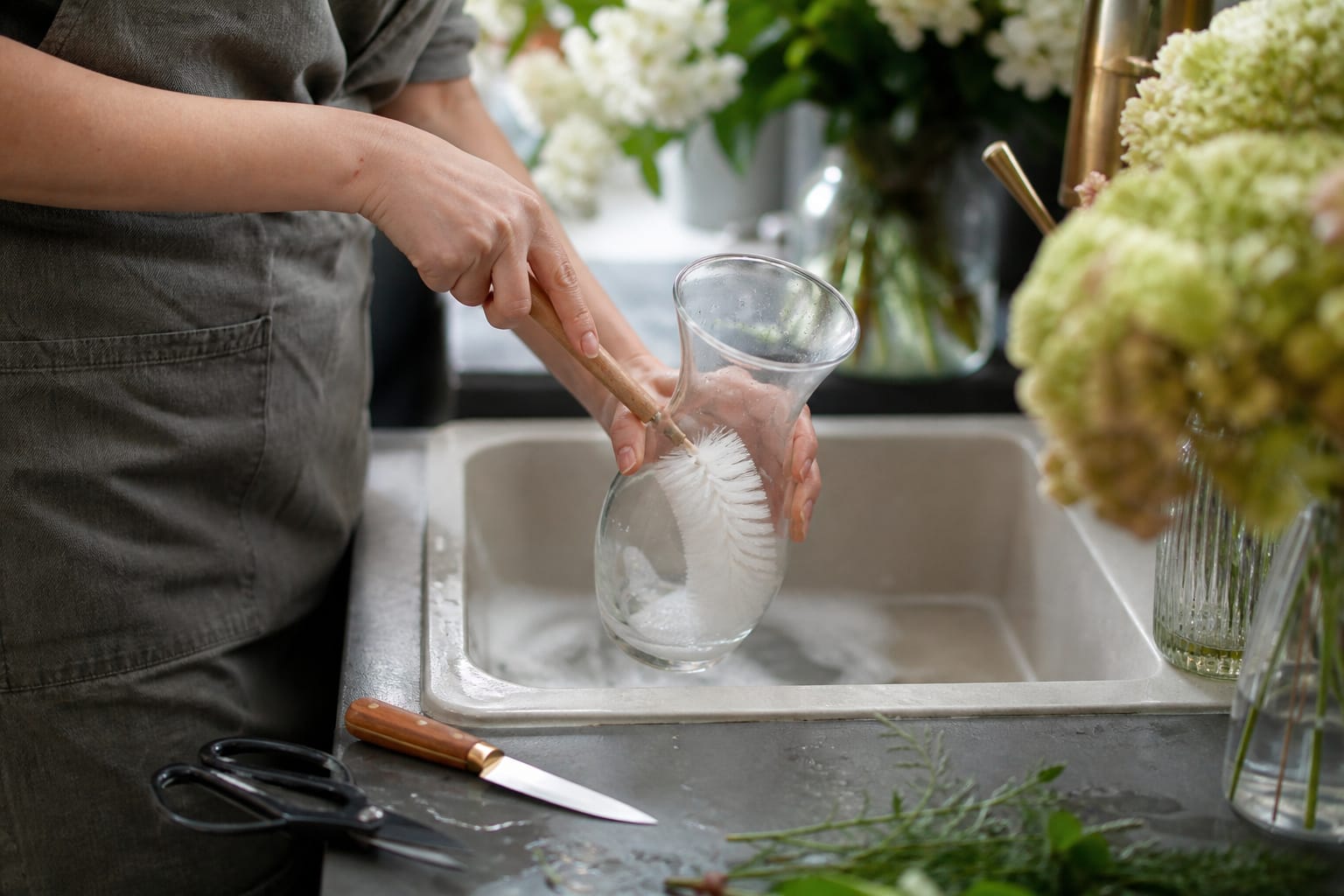
Before you touch a single stem, look at what you’re working with. Is the vase actually clean, or just rinsed? Are your shears sharp, or are they the kitchen scissors from the junk drawer? This part matters more than people realize.
Bacteria are the number one killer of cut roses. A vase that “looks fine” but hasn’t been scrubbed with hot soapy water is a petri dish, and the moment you drop a fresh stem in there, the clock starts ticking. In the shop, every vase gets washed with dish soap and a bottle brush before it gets used. No exceptions.
Same thing with cutting tools. A dull blade crushes the stem instead of slicing it cleanly, and a crushed stem can’t drink. I use a sharp floral knife for almost everything in the shop, but sharp bypass pruners or floral shears work just as well at home.
What I use in the shop:
- Floral knife (Victorinox) — the cleanest cut you can make, and it lasts forever if you keep it sharp.
- Bypass floral shears — if you’re not comfortable with a knife, these are the next best thing.
- Floralife Crystal Clear flower food — the same brand we use on every rose order that goes out the door.
Strip the Lower Leaves
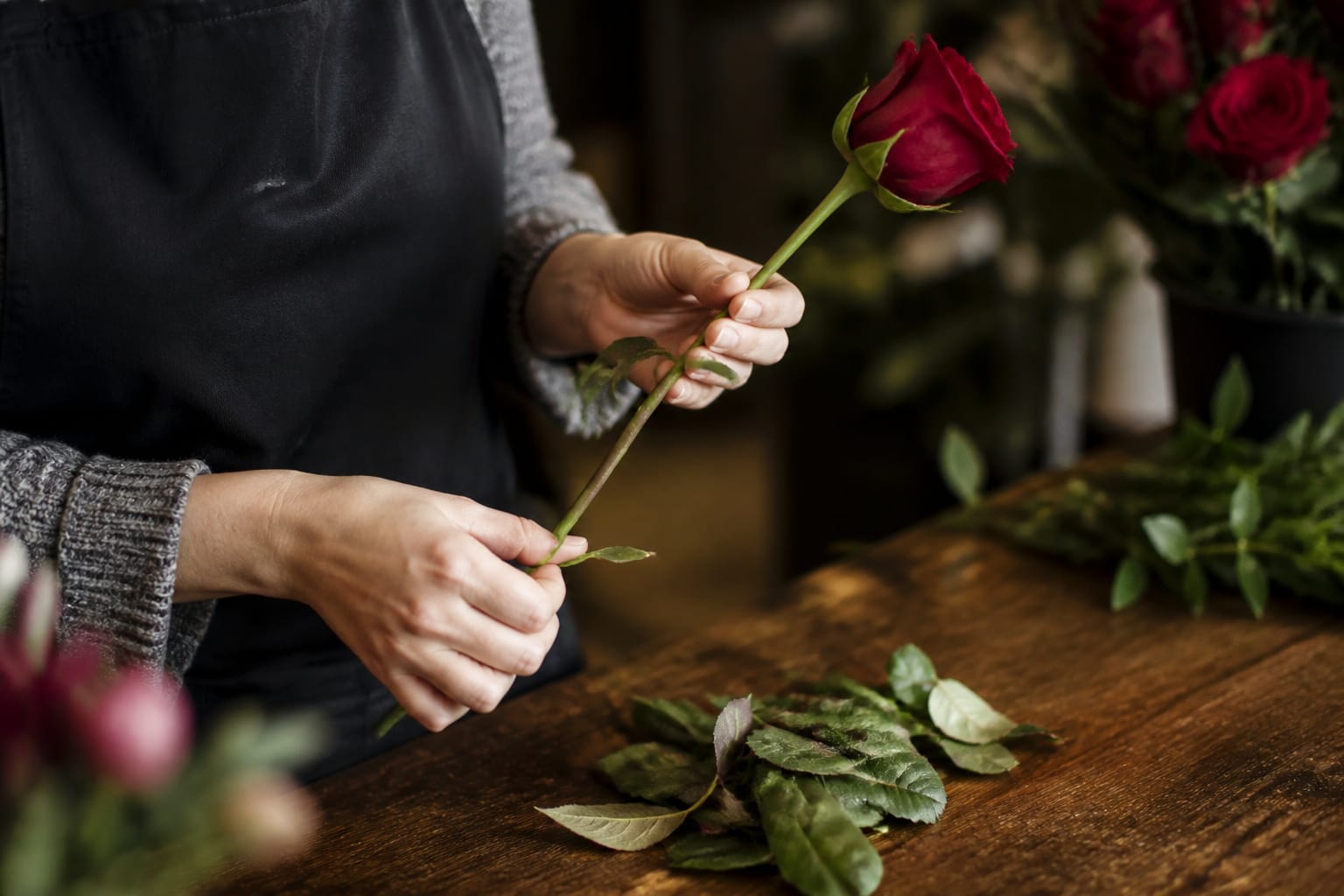
Any leaf that’s going to sit below the waterline has to come off. Period.
Leaves underwater rot. Rot creates bacteria. Bacteria clog the stem’s vascular system, and your rose can’t drink. You’ve now got a beautiful flower sitting in dirty water, slowly suffocating. I’ve seen perfectly good roses ruined in 36 hours because nobody stripped the foliage.
Run your fingers down the stem and pull off anything that’ll be submerged. Leave the upper foliage alone. Those leaves are part of the look, and they help the rose transpire normally. Underwater leaves: gone. Above-water leaves: stay.
Cut the Stems Underwater
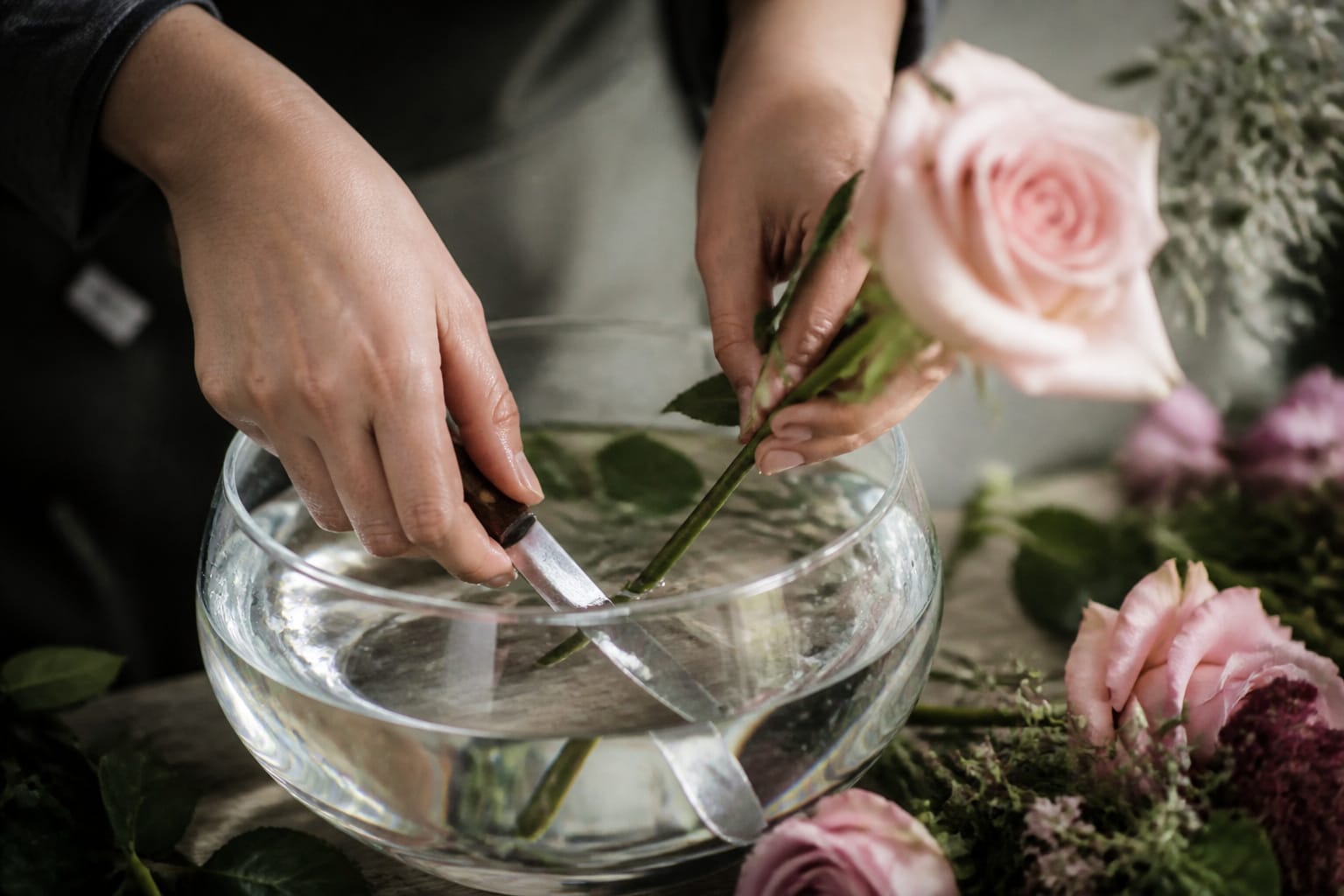
This is the step people skip most, and it matters most.
The moment a rose stem is cut and exposed to air, a tiny air bubble can lodge in the stem’s water-uptake channel. That’s called an air embolism, and once it’s there, that stem will never drink properly again. The rose will droop, the head will hang, and no amount of preservative will fix it.
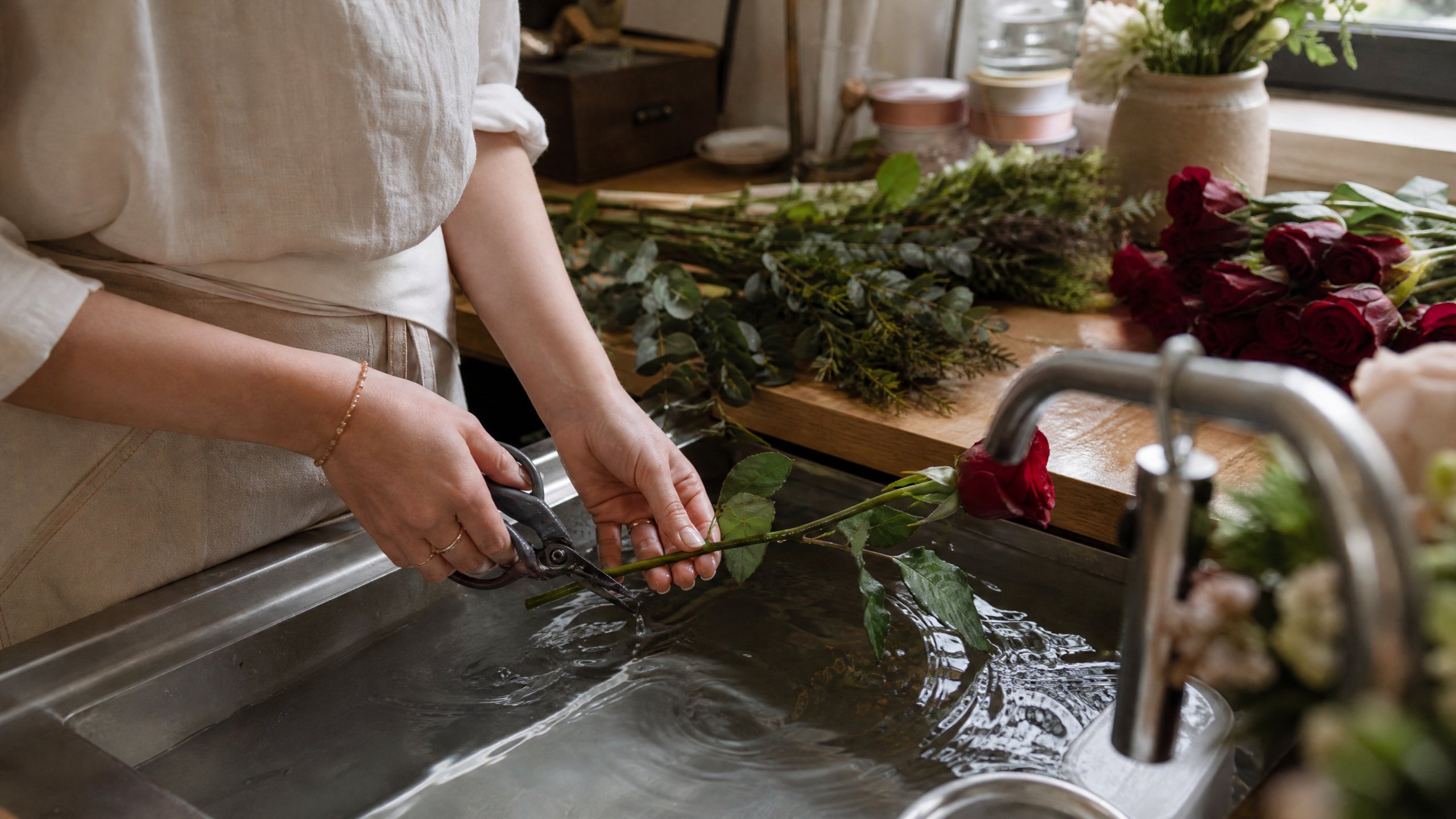
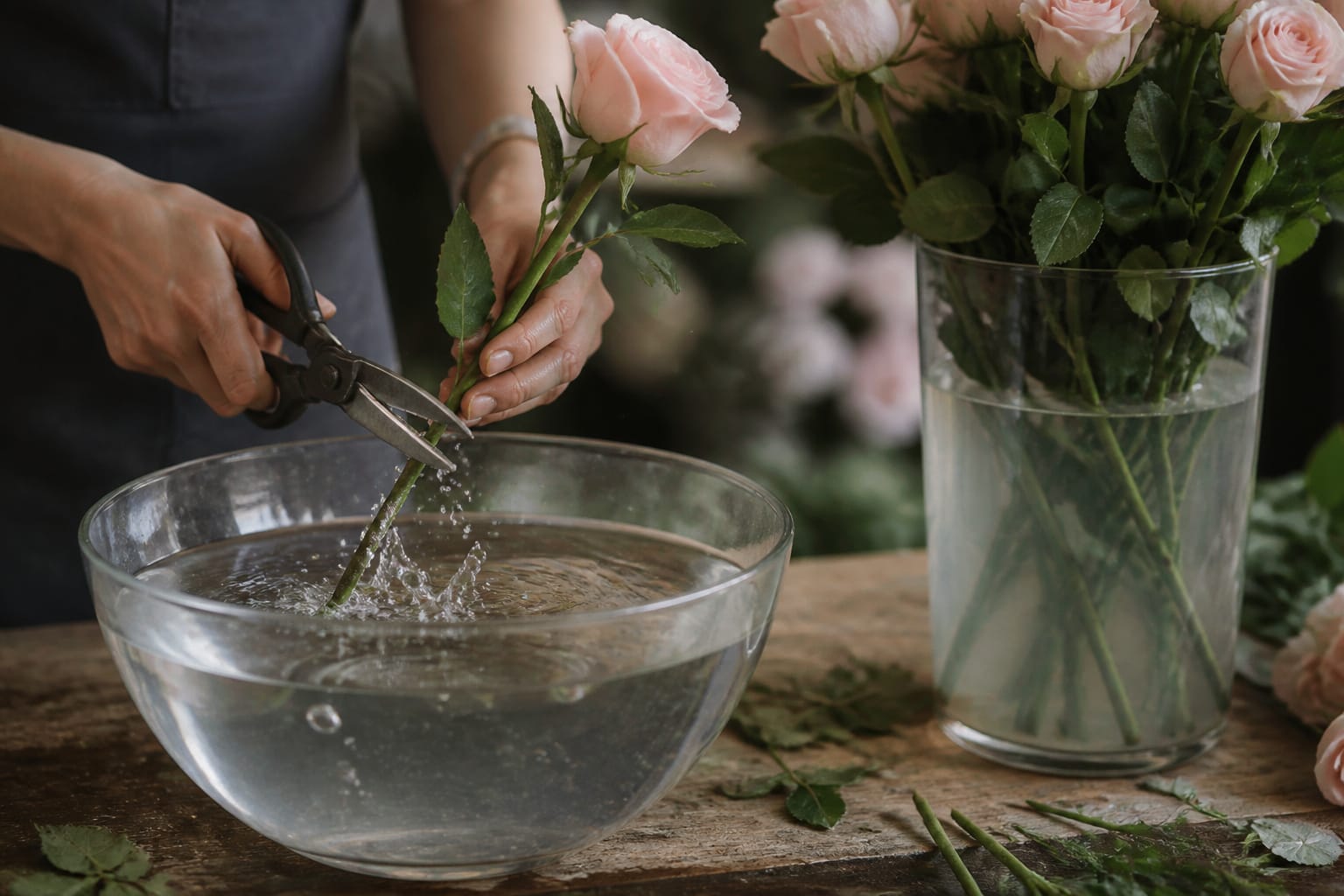
The fix is simple: cut underwater. Fill a sink or a deep bowl, hold the stem submerged, and slice about one inch off at a 45-degree angle. The angled cut exposes more surface area for water uptake. Then, and this is critical, don’t let that freshly cut end dry off before you transfer it to the vase. Move quickly.
If you’re processing a big batch, work in groups of 3 or 4 stems at a time. Don’t try to do all twelve at once and end up with cut stems sitting on the counter while you fumble with the vase.
Use Warm Water and Real Flower Food
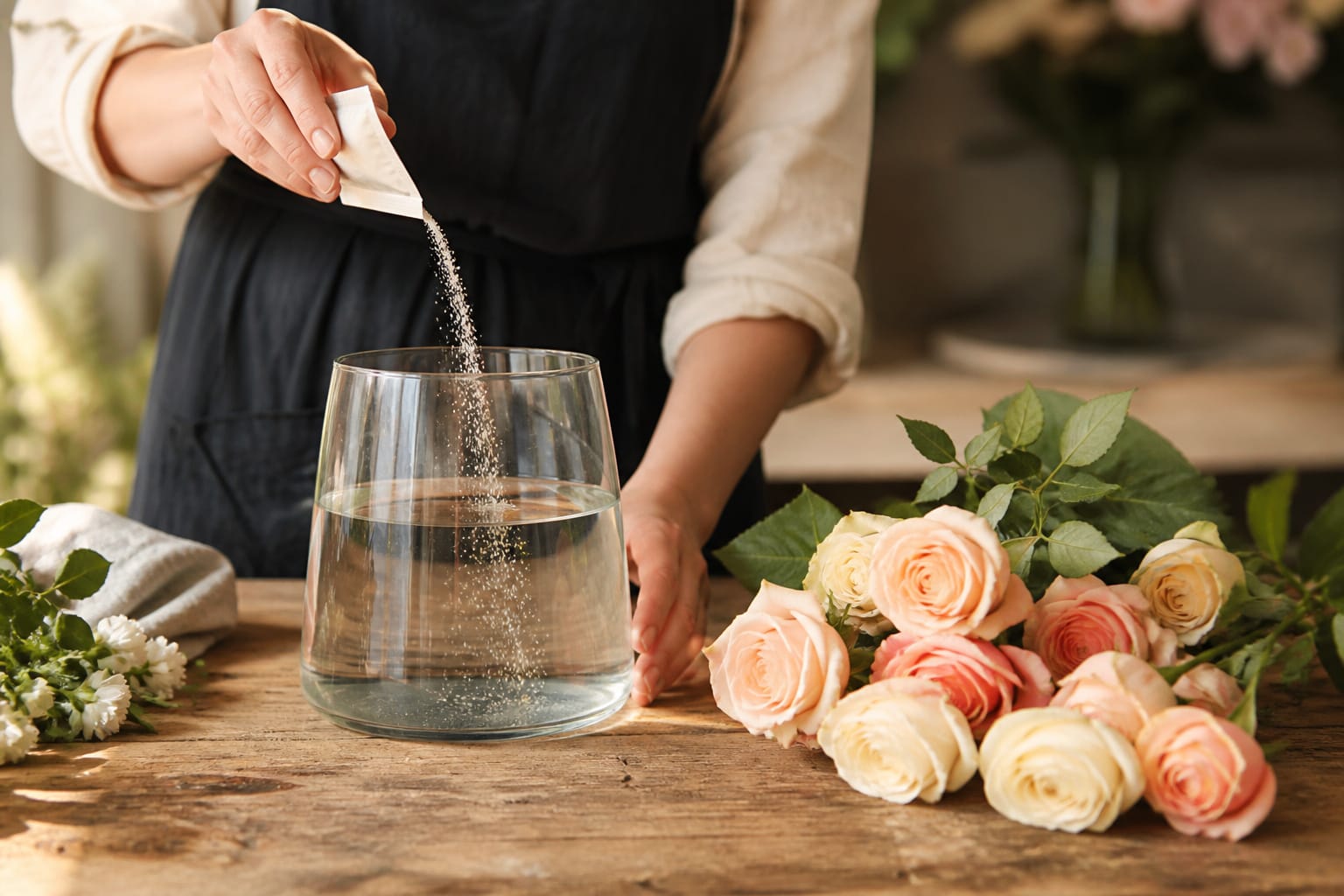
Roses prefer warm water. Not hot, about 100°F, the temperature of a comfortable bath. Warm water moves up the stem faster than cold water, and lets the rose rehydrate quickly after being cut.
And use real flower food. Not sugar. Not aspirin. Not a penny at the bottom of the vase. I’ve heard every home remedy under the sun, and most of them are folklore. Commercial flower food does three things that no kitchen-cabinet hack can replicate:
- It feeds the rose with sugars in the right concentration.
- It contains a biocide that suppresses bacteria.
- It acidifies the water so the rose can actually absorb it.
One more thing. Avoid using softened water. Water softeners replace minerals with sodium, and roses don’t love sodium. If your house has a softener, grab water from an outdoor spigot or use filtered water instead.
Condition Them Before You Display
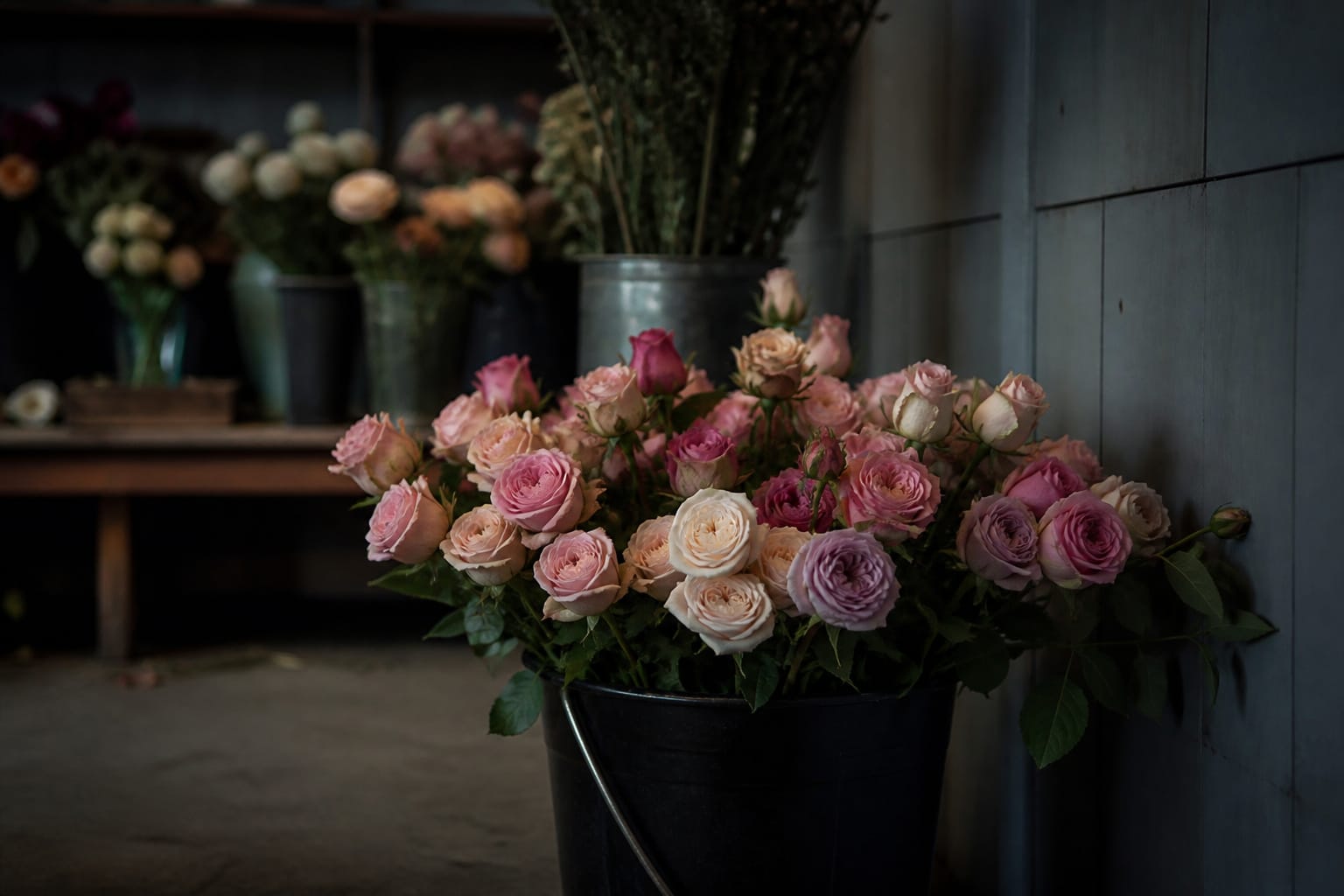
This is a step home customers seldom do, and it’s the secret weapon of every florist I know.
After cutting and placing the roses in their preservative solution, set the whole arrangement in a cool, dark spot for 2 to 3 hours. A basement, a garage in mild weather, even the bottom shelf of your fridge if it’s empty enough. Anywhere out of direct light and heat. This gives the roses a chance to drink deeply and stabilize before they have to “perform” in your living room.
In the shop, we call this conditioning, and we do it on every fresh delivery before the flowers ever hit the cooler for sale. Two hours of conditioning can add two or three days of vase life. It’s the single highest-leverage step in this whole process, and it costs nothing.
Display Them Somewhere Cool
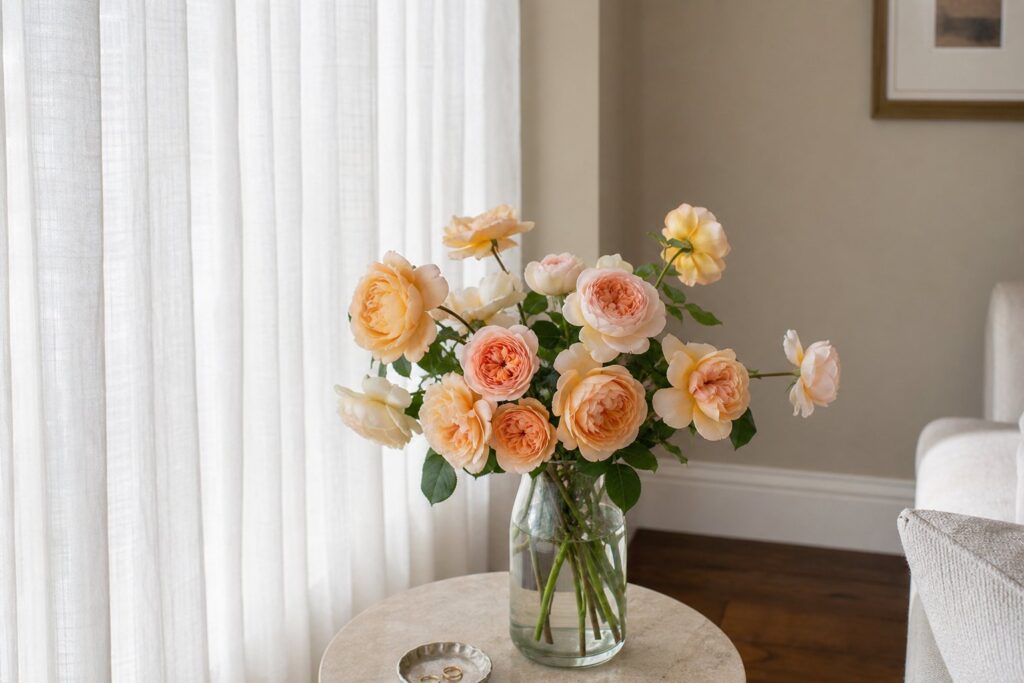
Temperature is the make-or-break factor for the cut rose’s life after processing. Heat speeds up everything: petal drop, bacterial growth, water loss through the leaves. Cool slows it all down.
Keep your rose arrangements out of direct sunlight, away from heating vents, and nowhere near the top of a TV, a refrigerator, or any other appliance that throws off heat. Also, avoid the fruit bowl. Ripening fruit releases ethylene gas, and ethylene is poisonous to cut flowers. I’ve seen a bowl of bananas kill a vase of roses in 48 hours.
If you really want to stretch vase life, move the arrangement to a cool spot overnight. A back bedroom, a basement, anywhere that runs 60°F or so. Bring them back out in the morning. It’s a hassle, but I’ve had customers add three or four extra days this way.
Refresh the Water and Re-Cut Regularly
Roses are thirsty flowers, sometimes shockingly thirsty. A dozen roses in a vase can drink down half an inch of water in a day. Check the level every morning and top it off with fresh preservative solution.
Every two to three days, dump the water entirely, rinse the vase, mix fresh solution, and re-cut the stems by about half an inch, underwater, same as before. Yes, this feels excessive. Yes, it works. The water gets cloudy faster than you think, and a stem that’s been recut drinks like a brand new one.
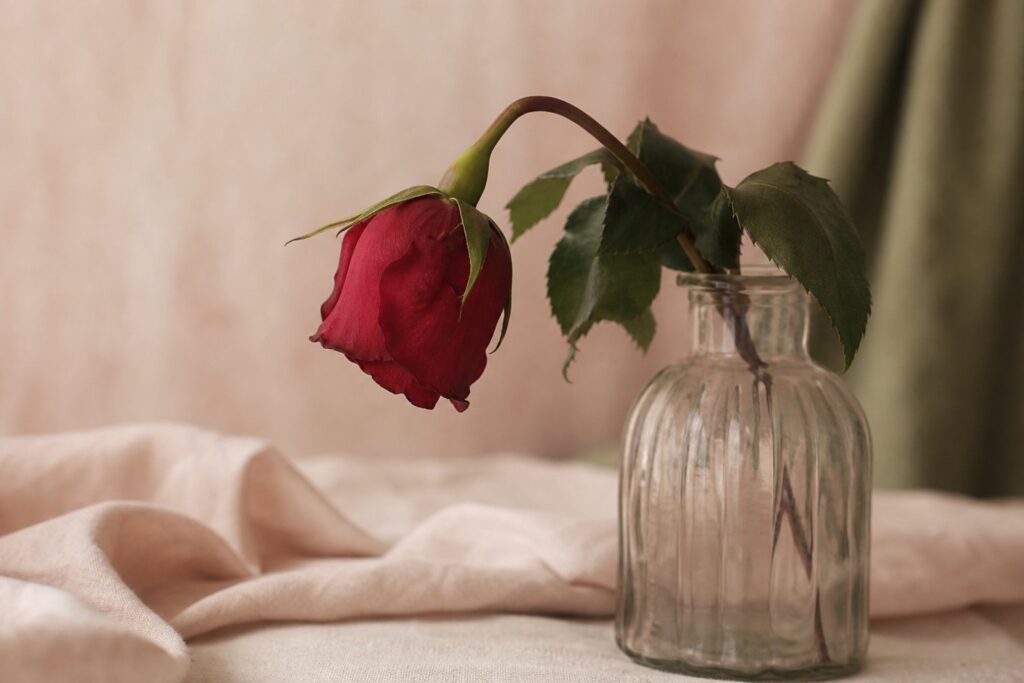
If a single rose starts to droop while the others are still strong, don’t toss it. Lay the whole rose horizontally in a sink full of cool water and let it soak for 20 to 60 minutes. While it’s submerged, cut another inch off the stem. Nine times out of ten, that rose comes back to life and gives you another few days. It’s the closest thing to flower CPR I know.
Avoid These Common Mistakes
In thirty-plus years of selling roses, the mistakes I see most often are listed below, and every single one is preventable.
- Cutting straight across instead of at an angle. A flat cut sits on the bottom of the vase and seals itself off. Always angle the cut.
- Skipping the flower food. Those little packets aren’t a gimmick. Use them. If you run out, buy more, so don’t go without.
- Topping off with plain water. Every refill should include a preservative at the right ratio, not just tap water.
- Leaving the cellophane sleeve on. If your roses came wrapped, unwrap them immediately. Trapped moisture causes botrytis (gray mold), which spreads fast.
- Putting them next to fruit. I’ll say it again because nobody believes me: ethylene from ripening fruit kills cut flowers.
- Forgetting to re-cut. One cut at the start isn’t enough. Re-cut every couple of days for the duration.
In my experience, the customers who get a full ten days out of their roses aren’t doing anything mysterious. They’re just doing all seven steps, every time, not skipping the boring ones.
Fresh Cut Rose Care FAQ
How long should fresh-cut roses last?
With proper care, expect 7 to 10 days from a quality batch of roses. Premium varieties like garden roses can go longer. Grocery store roses tend to fall on the shorter end because they’ve usually been out of water longer before you bought them.
Should I cut roses underwater every time, or just the first time?
Every time. The risk of an air embolism doesn’t go away after the first cut. Any time you trim a stem, do it underwater. It takes an extra ten seconds, and it’s the single biggest thing separating roses that last a week from roses that droop on day three.
What if I don’t have flower food?
In a real pinch, a few drops of bleach plus a teaspoon of sugar per quart of water gets you partway there; the bleach suppresses bacteria, the sugar feeds the flower. It’s not as good as a commercial preservative, and I’d order a box of Floralife packets on Amazon as a backup for next time. They’re cheap, and they last forever.
Why do my roses droop at the neck before the petals even open?
That’s called “bent neck,” and it’s caused by an air embolism in the stem; the stem can’t pull water up fast enough to support the flower head. Try the submerge-and-re-cut trick I described above. If you catch it early, you can save them. If the petals have already started to brown at the edges, it’s too late.
Can I keep roses in the fridge overnight?
Yes, as long as the fridge doesn’t contain fruit or vegetables. Ethylene gas from produce will wreck them overnight. An empty mini fridge or a beverage fridge is ideal. Otherwise, a cool basement or garage (above freezing) works almost as well.
Does the type of vase matter?
Cleanliness matters far more than material. That said, a deep vase that supports the stems and holds enough water is the right call. Roses are heavy drinkers, and a shallow vase forces you to constantly refill. Avoid metal vases unless they have a glass liner. Some metals react with preservatives, shortening vase life.
Closing Thoughts
Fresh-cut rose care isn’t a trick or a secret. It’s just seven small habits done in the right order: clean tools, no underwater leaves, cut underwater at an angle, warm water with real preservative, condition in a cool spot, display away from heat and fruit, and refresh the water every couple of days. That’s the whole game.
Do those things and your roses will reward you. Skip them, and you’ll be back at the shop next week, wondering why the last bunch only made it to Wednesday. The flowers don’t ask for much, but they ask for everything on that list.
Now go cut some stems. Your roses are waiting to bloom. Give them the chance.
What’s the longest vase life you’ve ever gotten out of a bouquet of roses? Drop a comment below. I love hearing what works in real kitchens, not just shop coolers.
Til next time,