Disclosure: This post may contain affiliate links. If you click and buy, we may earn a commission at no extra cost to you. As an Amazon Associate, we earn from qualifying purchases.
Last Updated: July 12, 2026
A customer asked me a few years back where blue roses grow, assuming they’d found some rare variety at a specialty grower. I had to tell her the truth: there’s no such thing, at least not the way she was picturing it. Every blue rose you’ve ever seen was white to start.
I’ll be honest with you. I’m not a big fan of tinted or dyed flowers, roses especially. But blue roses are popular enough, and requested often enough, that it’s worth understanding exactly what you’re buying and how it’s done.
Understand There’s No Such Thing as a Natural Blue Rose
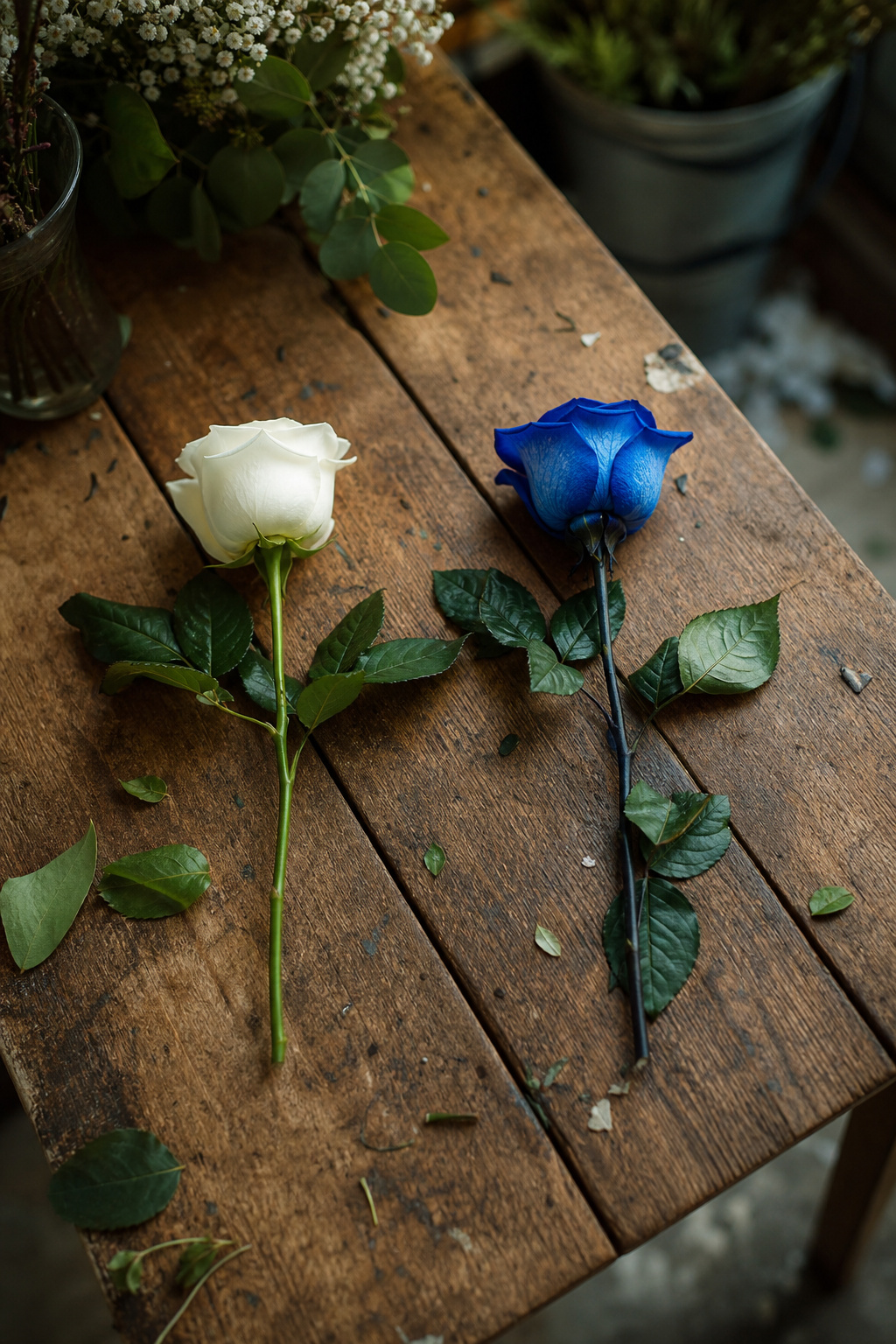
Roses don’t have the genetic pigment needed to produce true blue naturally. Every blue rose on the market is a white rose that’s been tinted or dyed after it was cut, and it’s worth knowing that before you fall in love with a photo online.
A few labs have engineered genetically modified roses with a blue-purple hue using pigment from other plants, but they’re expensive, hard to source, and closer to lavender than true blue in person. For nearly everyone shopping for blue roses, what you’re actually buying is a white rose treated with dye.
Know How the Tinting Actually Works

Two main methods produce the blue roses you’ll see for sale, and they’ve shifted some over the years.
Dip-dyeing, which coated the outside of the petals directly, has largely been phased out due to stricter regulations on the dyes involved. Spray-painting has taken its place for that same bold, saturated look, though it carries the same drawback dip-dyeing did: up close, the color sits on top of the petal rather than inside it, and edges can look a little unnatural. Absorption dyeing, where the cut stem draws colored water up through its own vascular system the same way it would draw regular water, gives a softer, more gradient effect that reads as more natural, since the color develops from inside the petal.
Both spray-painting and absorption dyeing are best done at the grower level rather than by your local florist. It takes the right equipment and controlled conditions to get consistent results at any real volume. A florist tinting a handful of stems by hand for a single order, using absorption dyeing, is a different matter and works fine at that small scale.
Ask Where and How the Roses Were Dyed
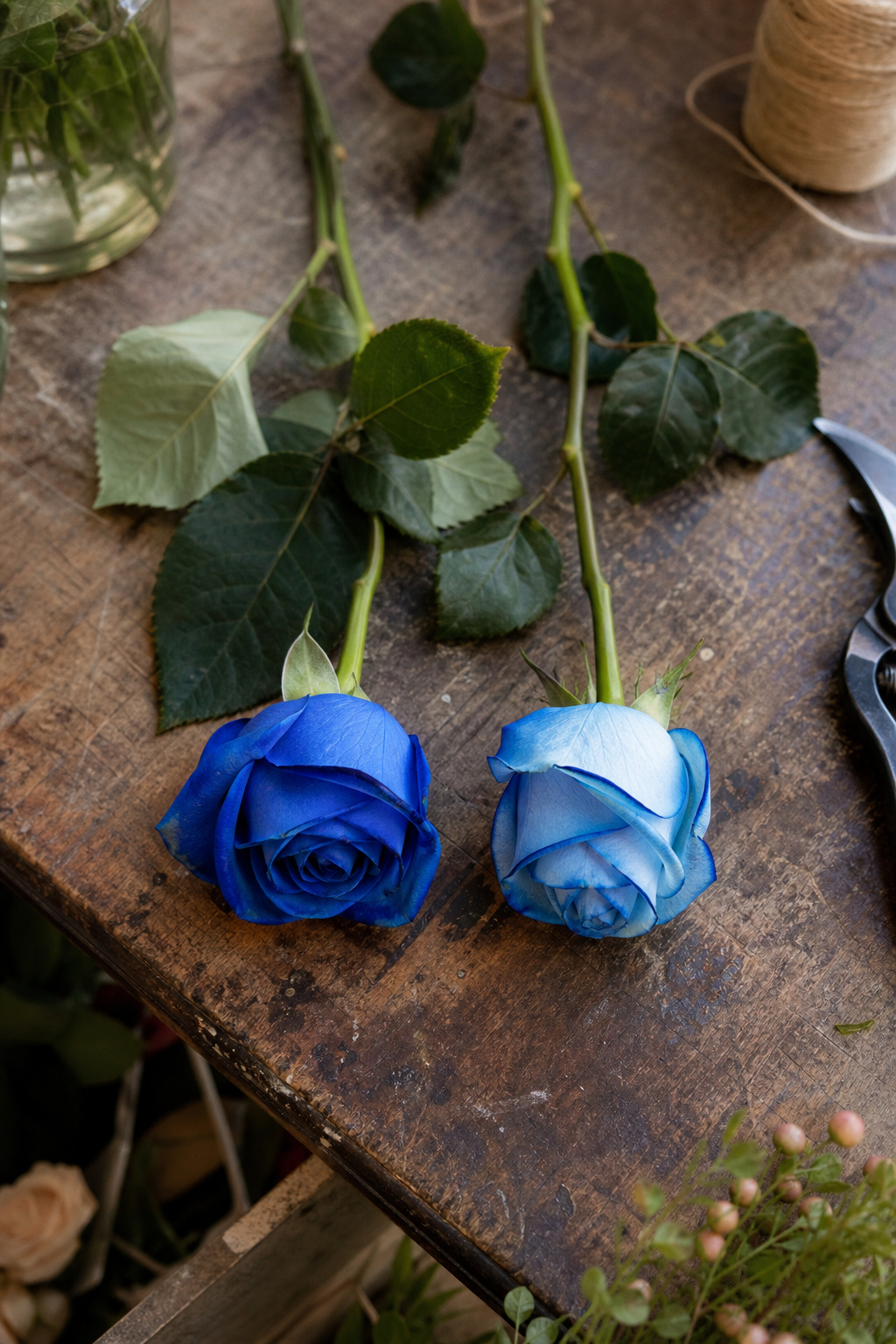
Not every dye job is equal, and it’s a fair question to ask before you order. Since most blue roses are treated at the grower level now, ask your florist where theirs are sourced from and whether the roses were spray-painted or absorption-dyed. If the order is large enough to matter, like a wedding, ask to see a sample first.
Absorption dyeing tends to give the more convincing result, but skill still matters more than the method on its own. Throughout my time at the design bench, I’ve seen absorption-dyed roses that turned out flat and uneven because the process was rushed, and spray-painted roses that looked sharp because whoever did it knew what they were doing. A well-dyed rose photographs fine either way. It’s only up close, in person, where the difference between a rushed job and a careful one really shows.
Plan for a Shorter Vase Life
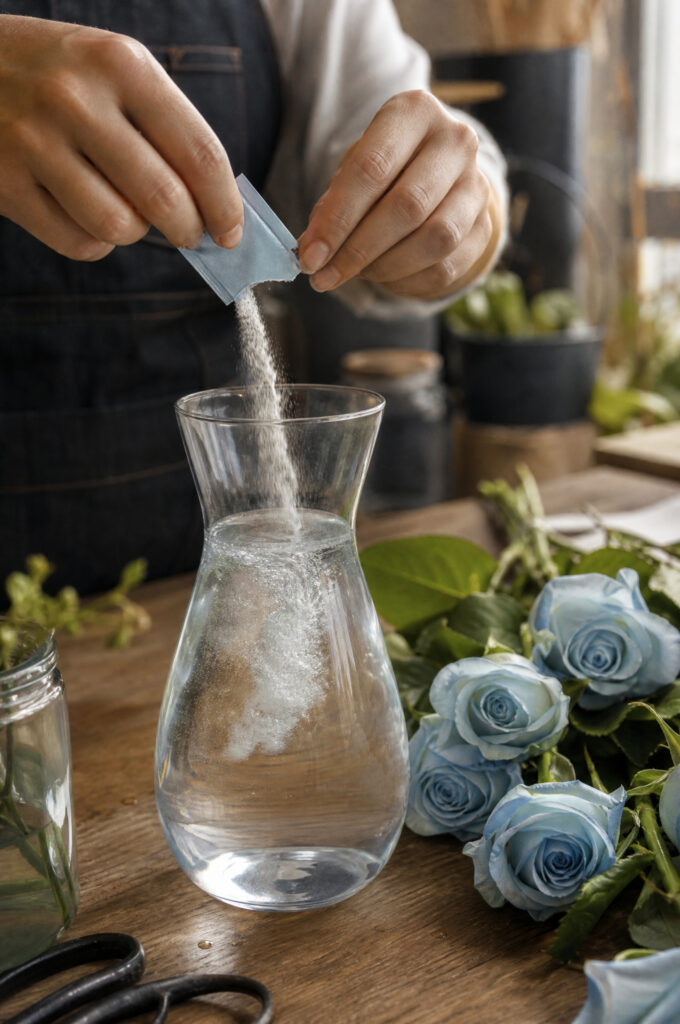
Dyed roses generally don’t last quite as long as untreated ones. The dyeing process is stressful on the flower, and absorption-dyed stems in particular have spent extra time out of proper hydration while the color develops.
Expect three to five days of good color and structure from a dyed rose, compared to a week or more from an untreated white or red rose. If you’re planning a wedding around blue roses, order them as close to the event as your florist recommends rather than early, since there’s less runway to work with than a natural-color rose.
What I use in the shop: a packet of flower preservative in every vase of dyed roses. It won’t undo the shorter lifespan entirely, but it slows the decline and buys you a real extra day or two.
Consider What You’re Actually Trying to Say
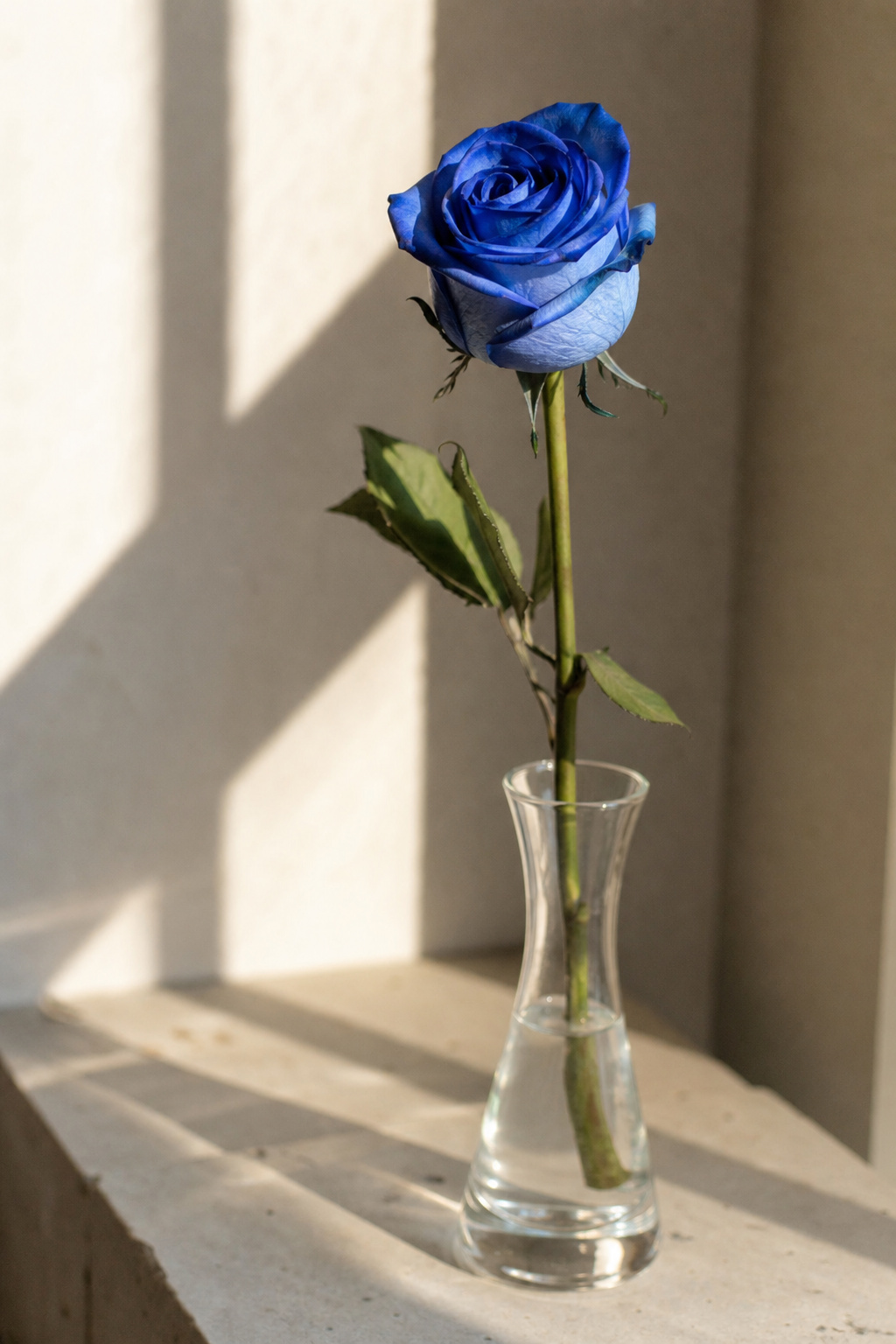
Since blue roses have no long, traditional symbolism the way red or white roses do, most people reach for them because blue feels rare, striking, or unusual, which is a fine reason on its own. If the meaning matters to you, blue is more often associated with mystery and the unattainable than with a specific sentiment like love or sympathy.
If you want a color that carries more established meaning, our guide to what rose colors mean covers the traditional symbolism behind the colors that occur naturally.
Frequently Asked Questions
Are blue roses real or dyed?
Nearly every blue rose you’ll find for sale is a white rose that’s been tinted or dyed after cutting. Roses don’t naturally produce the pigment needed for true blue. A small number of genetically modified roses exist with a blue-purple hue, but they’re expensive, hard to source, and closer to lavender than true blue in person.
How do florists make roses blue?
Two main methods: spray-painting, which coats the petal surface for a bold color, and absorption dyeing, where the cut stem draws the dye up through its own system for a softer, more natural gradient. Both are usually done at the grower level rather than by a local florist, since getting consistent results takes the right equipment and volume. A florist may hand-dye a handful of stems for a single order.
How long do blue roses last?
Expect three to five days of good color and structure, shorter than the week or more you’d get from an untreated rose. The dyeing process is stressful on the flower, so if you’re planning an event around blue roses, order them closer to the date than you would for a natural-color rose.
What do blue roses symbolize?
Since blue doesn’t occur naturally in roses, there’s no long-standing traditional symbolism the way there is for red or white. Blue is most often associated with mystery or the unattainable rather than a specific sentiment. Most people choose them simply because the color feels rare and striking.
Can I dye white roses blue myself at home?
Yes, absorption dyeing at home is doable with white roses, food coloring or floral dye, and water. Cut the stems fresh, slightly split the base to help uptake, and place them in the colored water. Results vary more than in a professional job, and it typically takes a day or two to see full color development.
Closing Thoughts
Blue roses aren’t a trick, exactly, but they’re not what most people assume either. Know what you’re buying, ask about the technique, and plan for a shorter vase life, and you’ll get a result you’re happy with.
Tinted or not, I’ll let the reader decide. That one’s a matter of taste, not a matter of fact.
Are you drawn to blue roses, or do you fall in my camp and prefer flowers in their natural colors? Tell me in the comments. I read every one.
Til next time,