Disclosure: This post may contain affiliate links. If you click and buy, we may earn a commission at no extra cost to you. As an Amazon Associate, we earn from qualifying purchases.
A bride called the shop not long ago, looking for something a little different for her wedding bouquet. She’d seen Japanese sweet peas on Pinterest and wanted to know if we could get them. I told her yes, and I could hear the excitement in her voice.
That’s the thing about Japanese sweet peas. Once people discover them, they’re hooked. Their delicate, ruffled blooms, soft fragrance, and jewel-toned color range make them one of the most-requested specialty flowers we handle at the shop. And honestly? They’re a joy to work with once you know what they need.
Whether you’re a florist handling them for the first time or a flower lover trying to get more life out of a grocery store bunch, this guide covers everything you need to know.
Process Them Right When They Arrive
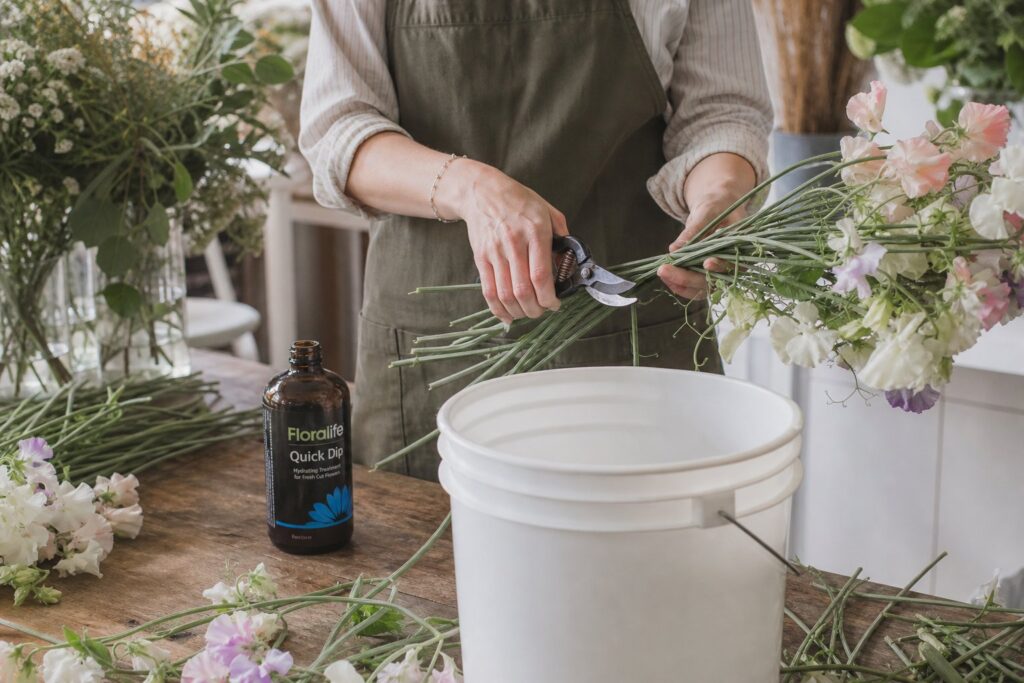
Japanese sweet peas are delicate flowers, and how you handle them in the first hour makes all the difference. Skip this step, and you’ll pay for it later. I’ve seen it happen.
- Remove all packaging immediately. Don’t let them sit wrapped up while you deal with other things. They need air and water fast.
- Recut the stems — but go easy. Sweet pea stems only run about 12″–15″ long. I’d cut no more than 1″ off the bottom. You can always trim more later, but you can’t add stem back once it’s gone.
- Dip in a hydrating solution. Give them a 5–7 second dip right away. What I use in the shop: Floralife Quick Dip — it opens the stem cells fast and gets water moving before the flowers can stress out.
- Place in clean water with flower food. Fresh, clean water mixed with flower food according to the package directions. This feeds the blooms and keeps bacterial growth in check.
- Let them hydrate for at least an hour before you use them in any design. Don’t rush this part.
One thing I can’t stress enough: start with a squeaky clean bucket or vase. Warm water and dish soap will do the trick for a lightly used vessel. If it’s been sitting around for a while or has visible buildup, hit it with some vinegar or baking soda first. In the shop, we use Floralife Surface Cleaner to sanitize buckets between uses. It keeps bacteria from ever getting a foothold in the water.
Change the water every two days. And if you see any wilting before then, recut the stems under water and repeat the whole processing routine. It usually brings them right back.
For a more detailed look at the full processing workflow, I walk through the whole thing in my post on how to process fresh flowers like a pro.
Know What You’re Working With
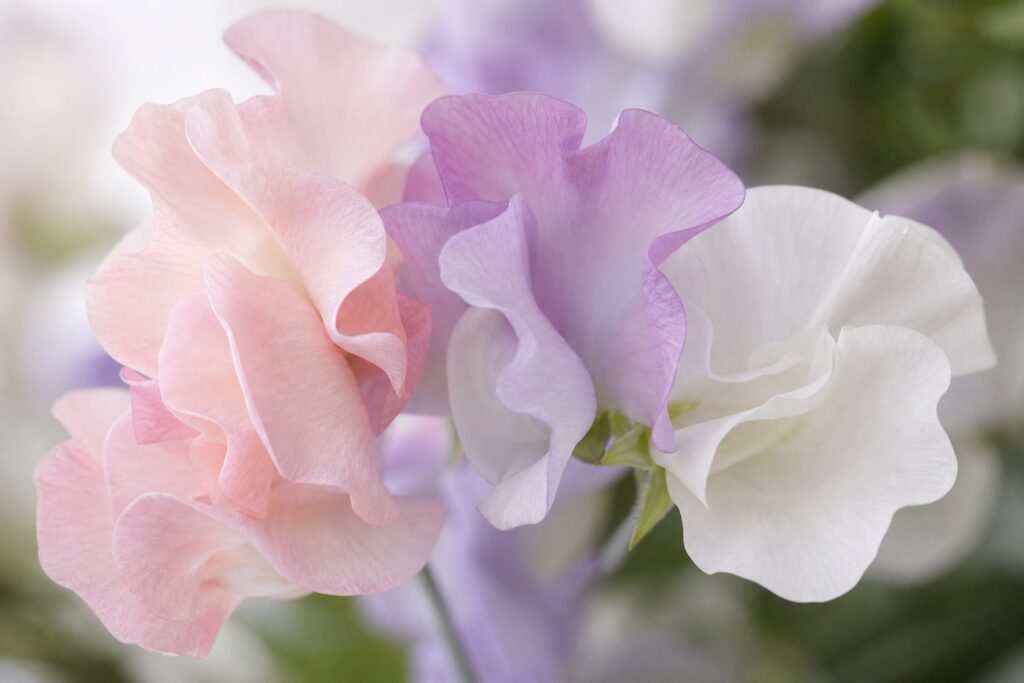
Japanese sweet peas aren’t your garden-variety sweet pea. These are imported blooms grown in Japan, often labeled “Designer” at the wholesale level because of their refined look. The color range runs from deep magenta and violet to blush, white, and coral, and the blooms themselves have a soft, almost papery texture that photographs beautifully.
They’re lightly fragrant — not overpowering, but noticeable in a good way. That scent is part of their charm. They’re also surprisingly versatile: beautiful massed together in a loose arrangement, tucked into a bridal bouquet, or used as a graceful accent in a larger mixed design.
In my experience, they pair especially well with fragrant garden roses for weddings; both flowers have that soft, romantic quality that brides tend to love. I’ve also used them beautifully in wildflower-style wedding bouquets where you want movement and a loose, gathered look.
Common Questions About Japanese Sweet Peas
These come up all the time — from customers, from newer florists, and from brides doing their research. Here are the answers I give them.
When Are They Available?
This is one of the best things about Japanese sweet peas: they’re available year-round — January through December. Traditional sweet pea varieties are spring-to-early-summer flowers, so that’s a big deal for anyone planning a fall or winter wedding. Availability can be limited at certain times of year, and they do cost more than domestic sweet peas. Order ahead when you can.
How Long Do They Last?
With proper care, you’re looking at 5 to 7 days of vase life. That’s solid for such a delicate flower. Consistent water changes and starting with clean buckets make the biggest difference here — the same principles that apply to gerbera daisy care apply here too.
Are Japanese Sweet Peas Fragrant?
Yes — and that’s a big part of why brides love them. The scent is sweet and light, not heavy like a hyacinth or oriental lily. That said, I always mention to clients that some guests have fragrance sensitivities. It’s worth a conversation before committing to a heavily scented arrangement for an indoor ceremony.
Can A Sweet Pea Be Dried?
Yes, and it’s a popular option for brides who want to keep their bouquet. The most common methods are pressing and freeze-drying. I cover the full range of options in my post on how to preserve your wedding bouquet. It’s definitely worth a read if you’re considering it.
Are Sweet Peas A Good Gift?
They’re a great gift. The colors are vibrant, the scent is lovely, and they have a romantic, old-fashioned feel that people genuinely respond to. Birthdays, anniversaries, Mother’s Day — they work for all of it. One thing to note: not every florist stocks them. If you want sweet peas for a specific date, call at least a week in advance to order them.
What’s The Best Way To Display Them?
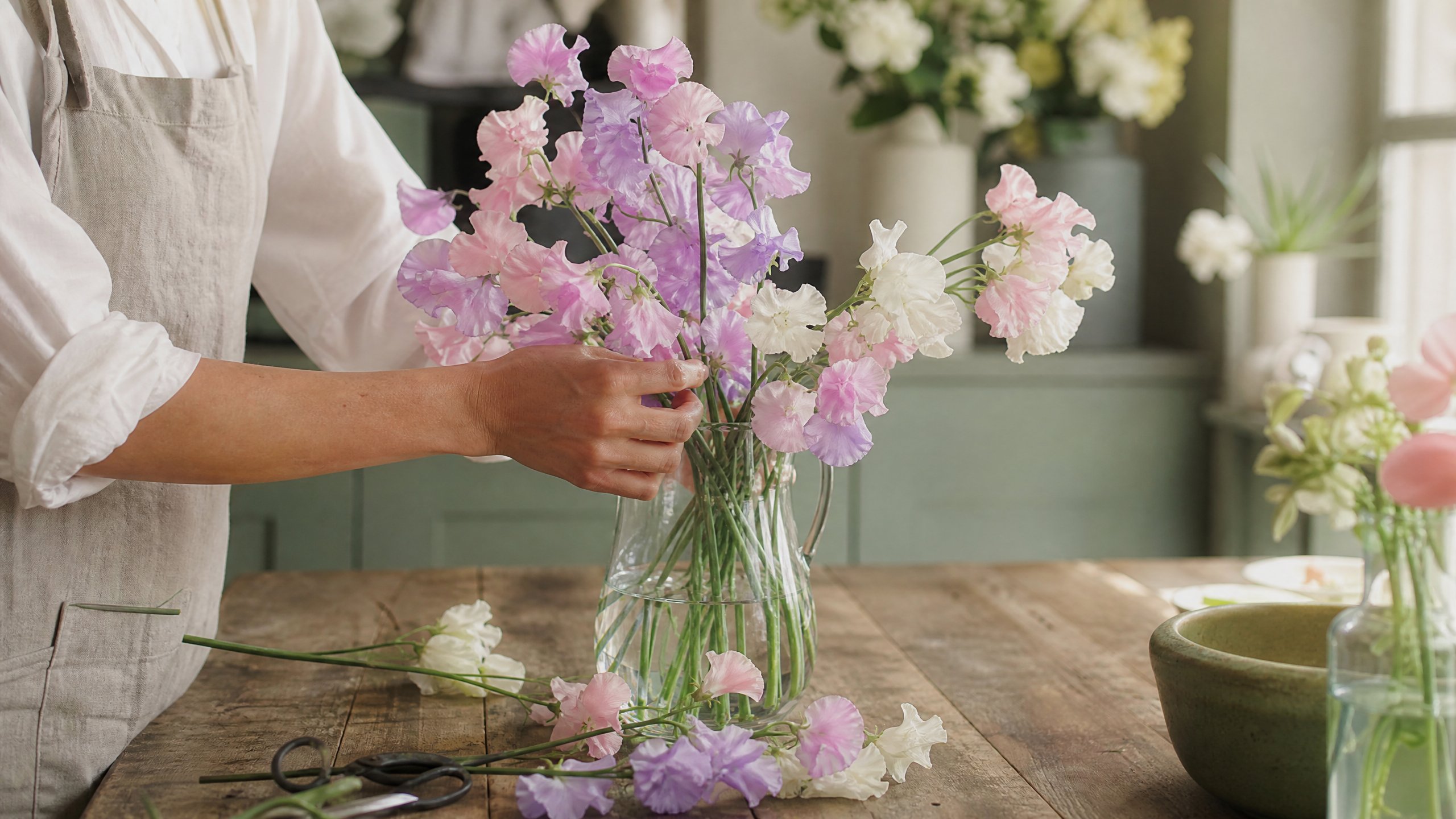
My go-to is a clear glass vase. Nothing fancy needed — the flowers do the work. A simple, loose bunch of sweet peas in a glass vase looks elegant on any table. The practical reason I like glass: you can see exactly when the water needs changing without lifting the flowers out. Keeps the vase life where it should be.
Don’t Overlook These for Weddings
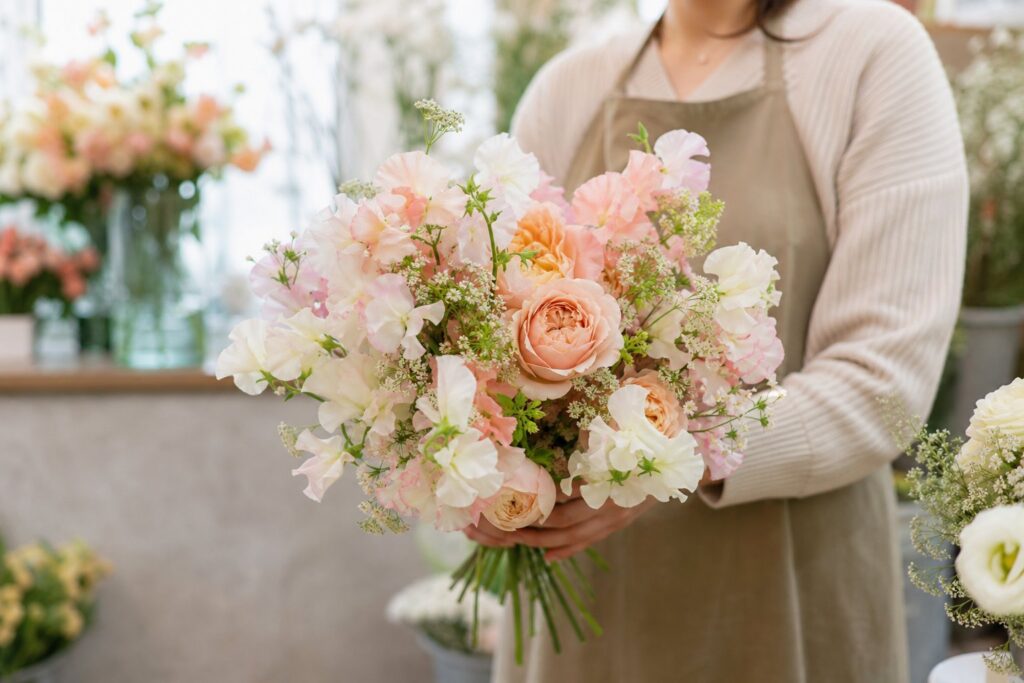
I want to put a spotlight on this specifically because I think Japanese sweet peas are underused in wedding florals, and that’s a missed opportunity.
They add movement and softness to bouquets in a way that more structured flowers just can’t. Their trailing tendrils give a loose, garden-gathered feel that’s very popular right now. And because they come in such a wide range of colors, they’re easy to fit into almost any palette.
In the shop, when a bride tells me she wants something “romantic but not too traditional,” Japanese sweet peas are usually one of the first things I suggest. They photograph beautifully and make an impression when guests lean in for a closer look.
If you’re exploring options for your wedding flowers, take a look at some of the wedding flower ideas and inspiration we’ve put together. Sweet peas show up in more than a few of them.
Closing Thoughts
Japanese sweet peas are one of those flowers that reward you for paying attention. Get the processing right, keep the water clean, and give them a little time, and they’ll deliver beautifully. That’s true whether you’re creating a bridal bouquet, designing an arrangement for a special occasion, or just brightening up a room at home.
They’re not the easiest flowers on the block, but they’re not the hardest either. Treat them well from the moment they arrive, and they’ll hold up for you. A little care today means a stunning arrangement tomorrow. That’s true of most things worth growing.
I’d love to hear how you’ve used Japanese sweet peas in your own designs. Drop a comment below and let me know if they are a staple in your shop, or if you’re trying them for the first time.
Til next time,