Disclosure: This post may contain affiliate links. If you click and buy, we may earn a commission at no extra cost to you. As an Amazon Associate, we earn from qualifying purchases.
Last Updated: July 12, 2026
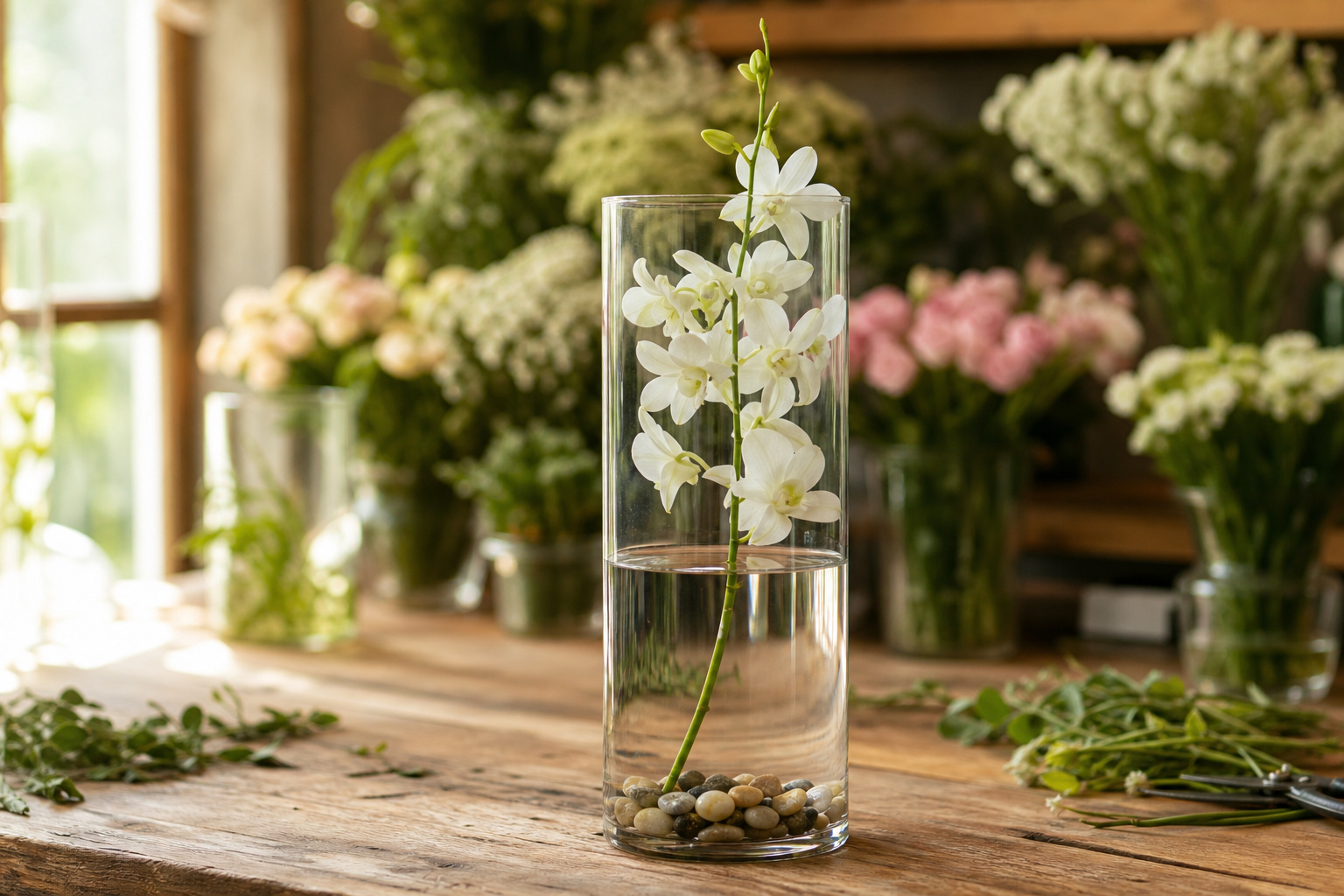
A bride asked me a few years back why the water in her submerged orchid centerpiece sample turned cloudy after just two days. She loved the look but wanted to skip the cloudy water part.
The answer’s simple once you know it: she was using tap water straight from the sink, and every bit of bacteria and mineral in it had nowhere to go but to sit in that vase, feeding on decaying flower parts. Submerged arrangements are among the most dramatic, least expensive looks in floral design, and also among the easiest to get wrong in exactly this way.
Choose Flowers That Actually Hold Up Underwater
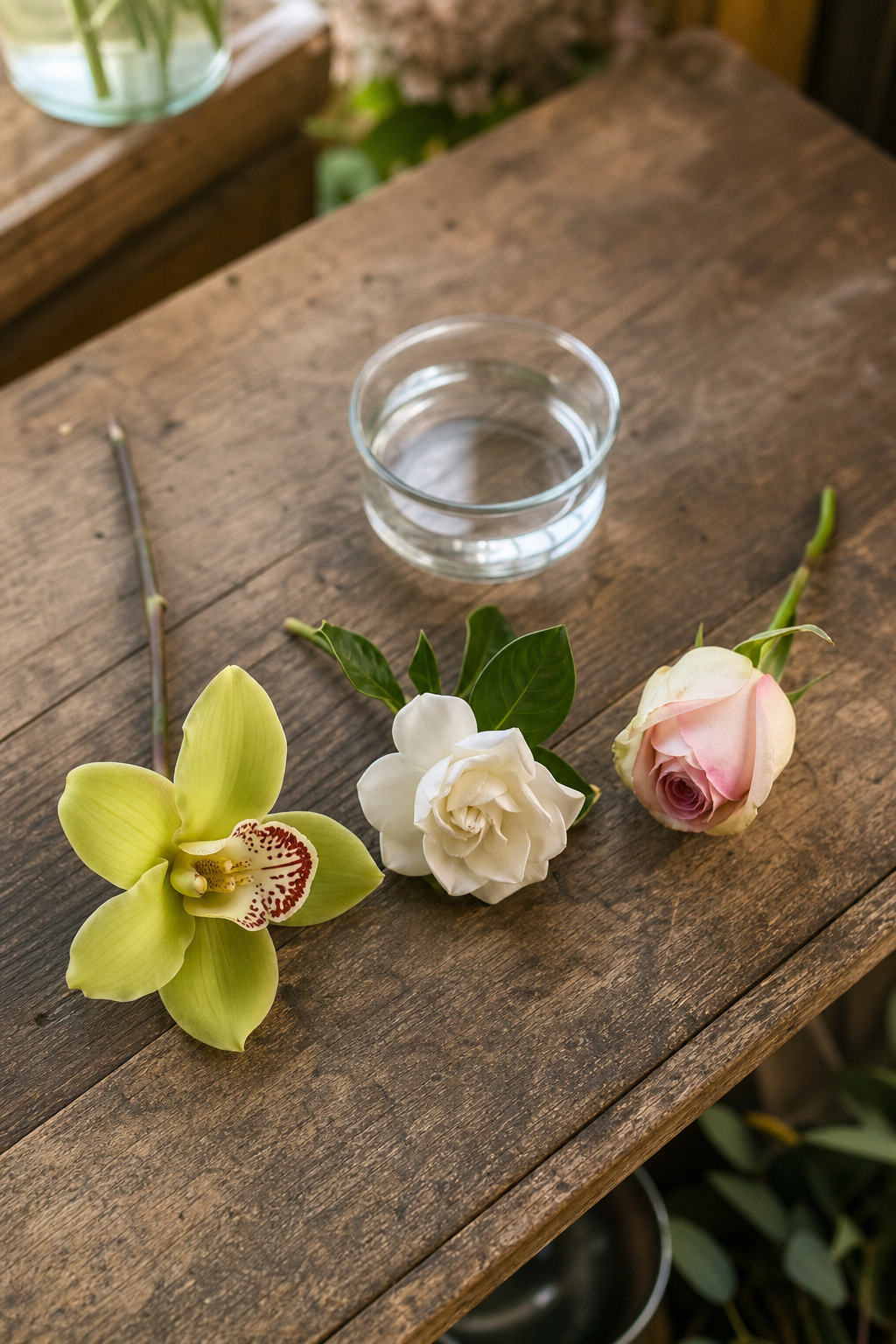
Not every flower belongs submerged. You want blooms with sturdy petals and a waxy or firm texture, since delicate, thin-petaled flowers will bruise, brown, and disintegrate within a day.
Orchids are the classic choice for good reason. Dendrobium and Cattleya varieties hold their color and shape underwater for days. Roses work if you choose blooms that are just barely open rather than fully blown, since a fully open rose sheds petals fast once submerged. Gardenias, camellias, and anthurium all hold up well, too. Skip anything papery or thin, like ranunculus, poppies, or sweet peas. They’ll turn to mush within hours.
Use a Flower Frog to Anchor the Stems
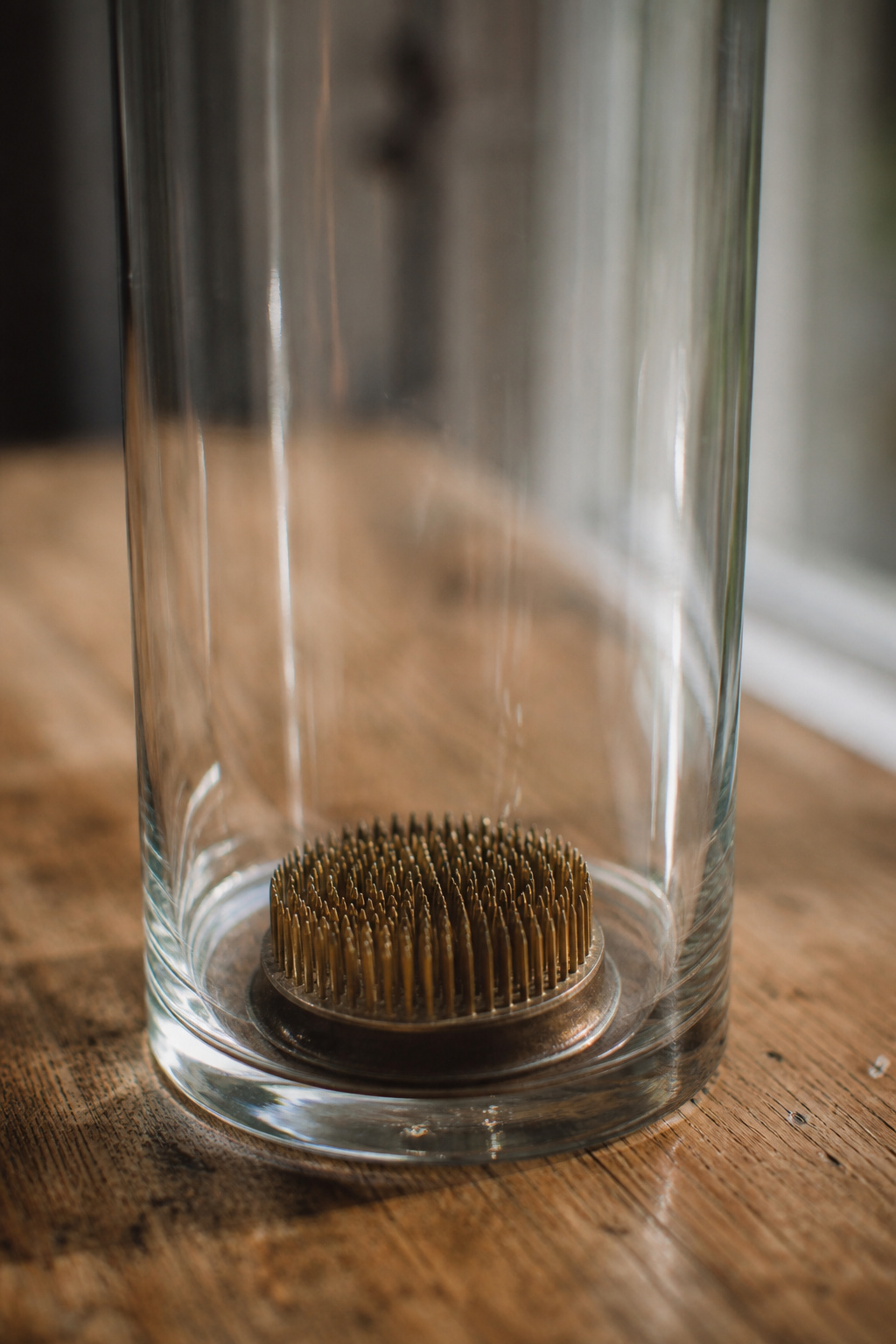
Flowers float. Left on their own in a vase of water, they’ll drift to the surface or bunch up against the glass instead of sitting where you placed them.
A flower frog, a weighted metal or glass base with pins or a grid, sits at the bottom of the vessel. It holds each stem in place while the bloom floats freely above it. This is the same tool florists have used for a century to anchor stems without foam, and it’s what makes a submerged arrangement look intentional instead of chaotic.
Place the frog first, then build your arrangement stem by stem, checking from the side of the glass vessel as you go, since submerged work is judged from every angle, not just from above.
What I use in the shop: a weighted metal flower frog for every submerged design. It’s the one piece of equipment that this technique genuinely can’t be done well without pme.
Use Distilled or Filtered Water, Not Tap
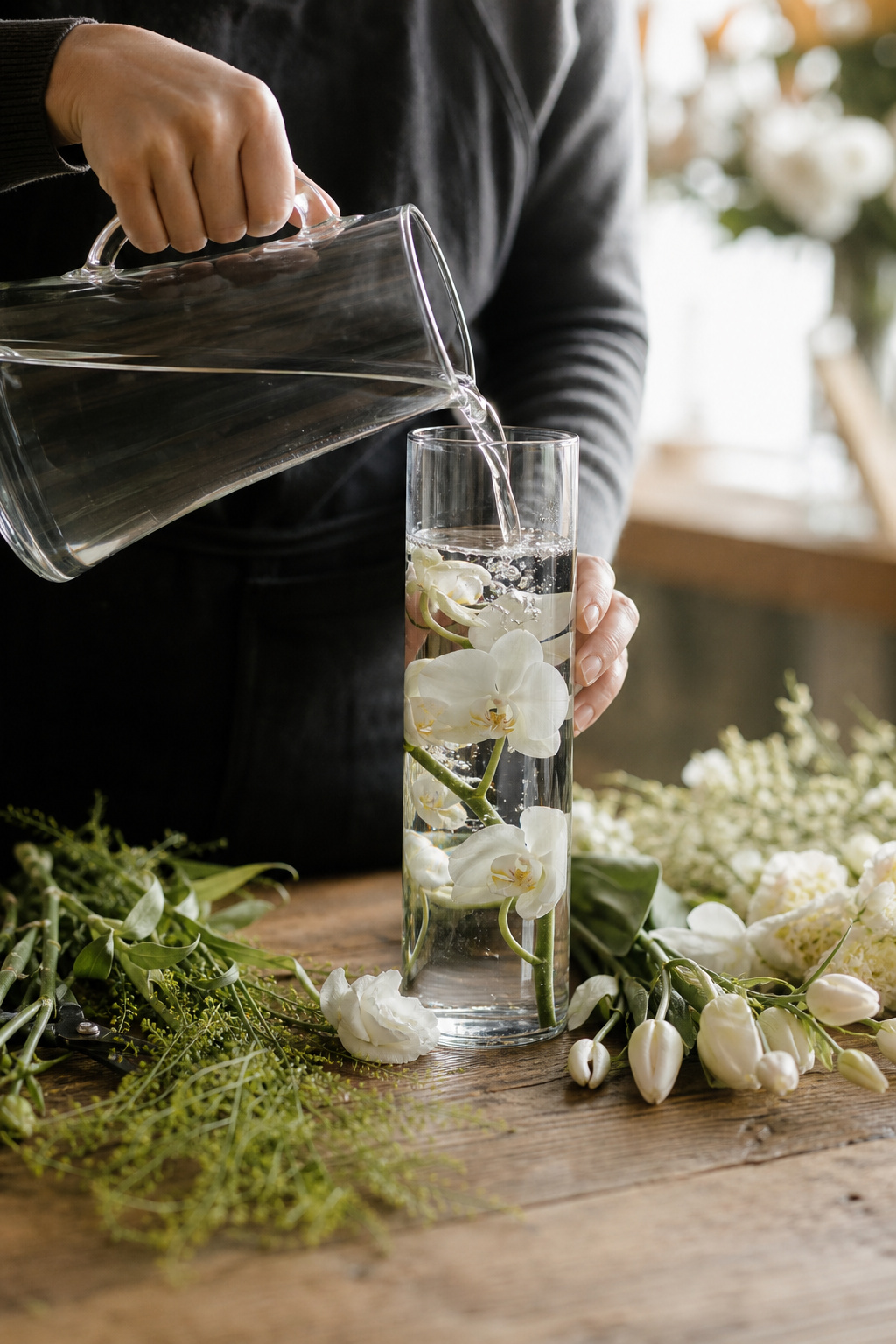
This is the fix for the cloudy water problem, and it’s the single biggest difference between a submerged arrangement that stays clear for a week and one that clouds over in two days.
Tap water contains minerals and bacteria that feed algae growth and accelerate decay when flower material sits in it continuously. Distilled or filtered water starts cleaner and stays noticeably clearer longer. It costs a few dollars more, and it’s worth every penny for a design where the water itself is part of the visual.
Even with clean water, plan to change it every two to three days for anything you need to hold longer than that. Remove the flowers, rinse the vessel and frog, refill with fresh water, and reinsert the same stems if they’re still holding up.
Add a Floating Candle for an Evening Event
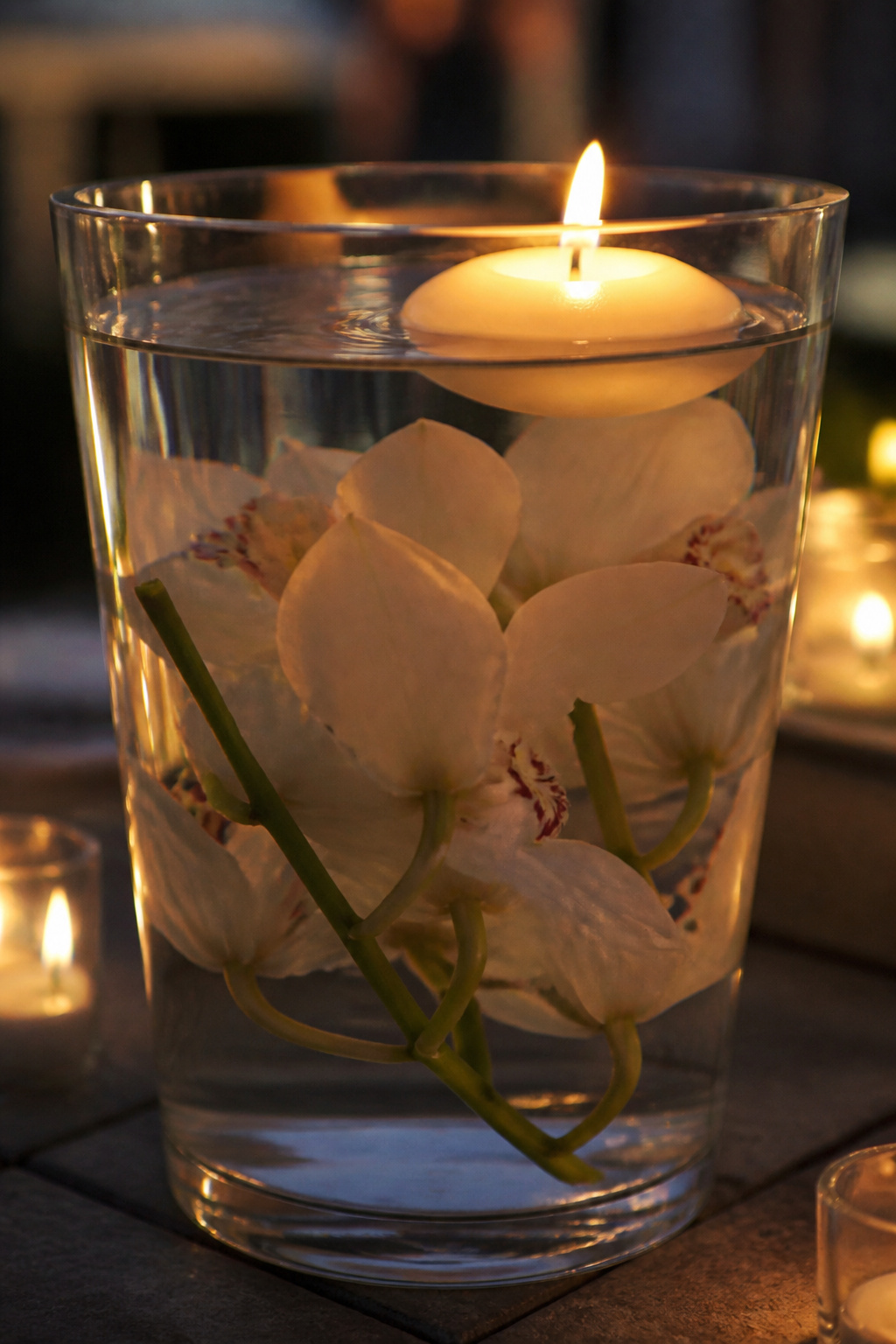
A submerged arrangement with a floating candle on top is one of the most requested looks for evening receptions, and it’s a simple addition once the base design is built.
Leave an inch or two of clearance between the top of your submerged flowers and the water surface so the candle has room to float freely without touching the blooms below it. A floating candle that’s resting directly on a submerged flower head will scorch the petals, and it looks accidental rather than designed.
If you want more ideas for pairing floating elements with fresh flowers at an evening event, our summer decor guide covers a few variations on this same technique.
Frequently Asked Questions
Why does my submerged flower arrangement get cloudy?
It’s almost always the water. Tap water contains minerals and bacteria that feed algae growth and decay when floral material sits in it continuously. Switch to distilled or filtered water, and change it every two to three days for longer-lasting displays.
What flowers work best submerged in water?
Sturdy, waxy-petaled flowers hold up best. Dendrobium and Cattleya orchids are classic choices, along with gardenias, camellias, and anthurium. Roses work if the blooms are just barely open. Avoid thin-petaled flowers like ranunculus, poppies, or sweet peas, which break down within hours underwater.
How do you keep flowers from floating to the top of the vase?
A flower frog anchors each stem at the bottom of the vessel, letting the bloom sit exactly where you placed it instead of drifting to the surface. It’s the essential tool for this technique, and there isn’t a good workaround without one.
How long do submerged flower arrangements last?
With sturdy flowers, distilled water, and a water change every two to three days, a submerged arrangement can look good for a week or more. Without those steps, expect a noticeable decline within two to three days as the water clouds and the petals start to break down.
Can I add a floating candle to a submerged flower arrangement?
Yes, and it’s a popular look for evening events. Leave an inch or two of clearance between the submerged flowers and the water’s surface so the candle can float freely without resting on and scorching the blooms below it.
Closing Thoughts
A submerged arrangement is one of the more dramatic looks you can build for surprisingly little money, provided you respect the two things that make or break it: the right flower and the right water.
Get those two right, and a single anchored orchid can carry a whole table.
Have you tried a submerged design yet, or is the cloudy water problem what’s kept you away? Tell me in the comments. I read them all.
Til next time,