Disclosure: This post may contain affiliate links. If you click and buy, we may earn a commission at no extra cost to you. As an Amazon Associate, we earn from qualifying purchases.
Last Updated: May 17, 2026
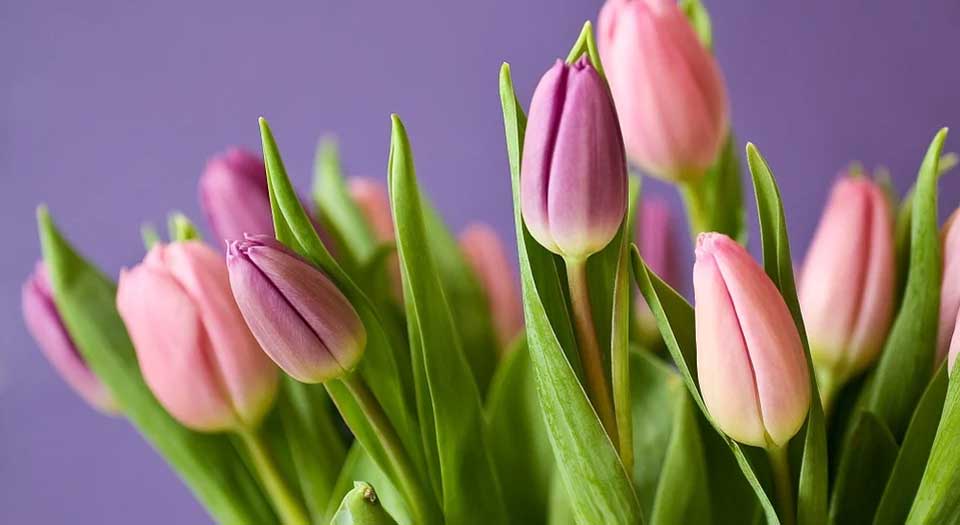
A woman walked into the shop a few weeks back with a bunch of tulips she’d bought at the grocery store the day before. They were already flopping over the edge of her vase like they’d given up on life. She wanted to know if I could “fix them” before her dinner party that night.
I told her the truth: tulips don’t fail because they’re fragile. They fail because nobody tells you what they actually need. And what they need is mostly free — a little technique, a sharp cut, cool water, and about five minutes of attention.
January through March is peak tulip season — they’re widely available, the quality is excellent, and the prices won’t make you wince. But peak season or not, the same care rules apply. Follow the steps below, and you’ll get the full week (sometimes longer) out of them instead of three sad days.
Quick video first, then the steps in detail.
Start With the Wrap On — Don’t Rush to Arrange
This is the step everyone skips, and it’s the one that pays off most.
When you get the tulips home, leave them in the paper or plastic wrap they came in. Stand them up in a vase of cool water for about an hour, under a light source if you can manage it. The wrap keeps the stems straight while they hydrate, and the light tricks them into staying upright instead of bending.
Tulips are phototropic, meaning they grow toward light even after they’re cut. They’ll keep moving and reaching in the vase for as long as they’re alive. If you skip the wrap-and-hydrate step, you’re starting with stems that have already started to curve, and they’ll exaggerate the bend all week.
In my experience, this single step is the difference between an arrangement that looks composed and one that looks tired by day three.
Strip Any Leaves That Will Sit Underwater
Foliage below the waterline rots fast. Rotting leaves dump bacteria into your vase water, and bacteria is the #1 reason cut flowers die early. Pinch or pull off any leaves that would sit below the waterline before you arrange.
This isn’t a tulip-specific rule; it applies to every cut flower I handle in the shop. But tulips have soft, juicy leaves that break down particularly quickly, so it matters more here than with something woody like a rose or eucalyptus.
Cut the Stems Underwater with a Sharp Blade
Here’s where most people get it wrong. They grab a pair of kitchen scissors, snip the stems on the counter, and stuff them in a vase. That works, sort of. But you can do a lot better.
Hold the stems under running water or submerged in a sink, then cut about an inch off each stem with a sharp knife or florist shears. The underwater cut prevents an air bubble from forming inside the stem; air bubbles block water uptake, which is exactly the problem you’re trying to avoid. Don’t let the freshly cut end dry off before getting it back into water; even a few seconds of exposure can re-seal it.
What I use in the shop: A pair of Joyce Chen original unlimited scissors. They cost about $25, but they cleanly cut through tulip stems without crushing them, and I’ve had the same pair for years. Dull scissors crush stem tissue and slow water uptake, so don’t skip this one. If you want a fuller breakdown of what’s worth buying, I covered my full kit in this guide to the 8 floral design tools I use every single day.
Use a Real Floral Preservative — Not a Penny or Bleach
Every couple of weeks, somebody tells me they put a copper penny or a splash of vodka in their vase. I get it, the internet is full of “florist hacks.” But there’s one thing actual florists use, and it’s not in your spice cabinet.
Floral preservative does three things plain water can’t: it feeds the flowers sugar, it acidifies the water so the stems can drink more easily, and it kills bacteria. All three matter, and home substitutes only hit one of the three at best.
What I use in the shop: Floralife Crystal Clear liquid flower food. It’s the same as the packets your local florist tucks into bouquets, and you can buy a bottle for less than $10. A one-pint bottle treats 13 gallons of water, so it goes a long way.
One more thing: avoid filling the vase from a water softener. The sodium in softened water is hard on cut flowers. Use cold tap water from a non-softened line, or filtered water if you have it.
Get Them Into Warm Preservative Water — Then Chill Them
This sounds counterintuitive, but stay with me.
Immediately after cutting, place your tulips in a clean, deep vase filled with warm preservative solution (about 100°F), or roughly the temperature of a baby’s bath. Warm water moves up the stem faster than cold water, so it rehydrates the flower more efficiently in those critical first minutes.
Then, and this is the part people miss, let the arrangement sit in a cool, dark place for two or three hours. A refrigerator works if you can spare the space. So does an unheated garage in winter, or a basement. We call this “conditioning” in the shop, and it sets the flowers up to last a few days longer.
Display Them Cool, Out of Sun and Drafts
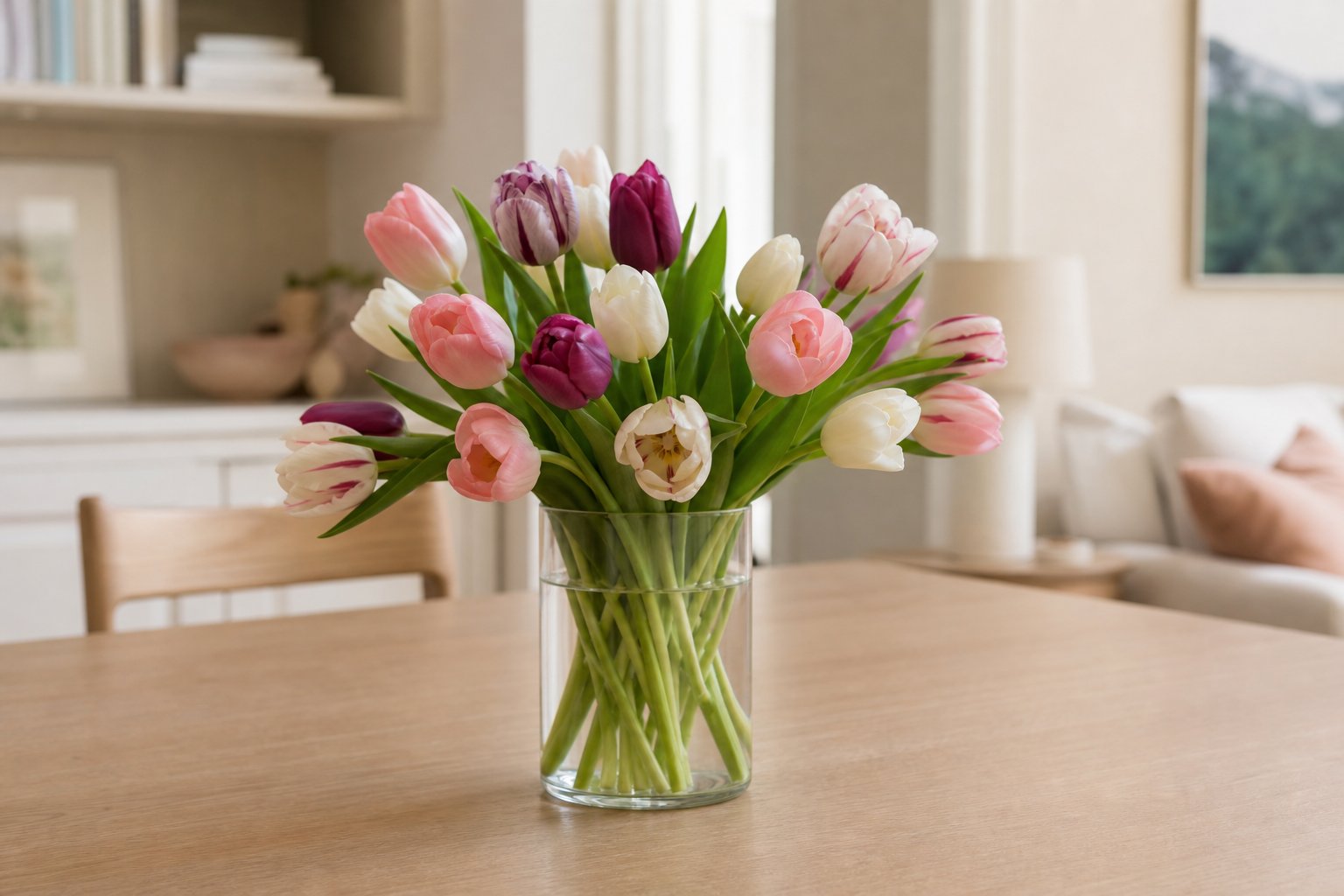
Temperature is everything with tulips. They’re built for spring weather, not 72-degree living rooms next to a sunny window.
Once your arrangement is conditioned and ready to display, find a spot that’s:
- Out of direct sunlight — the sun heats the water and accelerates aging
- Away from heat vents and fireplaces — same reason
- Not next to a fruit bowl — ripening fruit releases ethylene gas, which is a death sentence for cut flowers
- Out of drafts — dehydration kills tulips faster than almost anything else
Here’s what I’d do: enjoy the arrangement on the dining room table in the evening, then move it to a cooler room (or even the refrigerator overnight) if you want to push the vase life to the absolute limit. A few extra hours of cool every day really does add up.
Top Off the Water Daily — Tulips Are Thirsty
Tulips drink more water than almost any other cut flower I handle. They’ll drop the level in a vase by a full inch in 24 hours, especially in the first few days.
Check the water every day. If it’s low, top it off with fresh cool water and a half-dose of preservative. If the water looks cloudy, dump it, rinse the vase, recut the stems, and start fresh. Cloudy water means bacteria, and bacteria mean the clock is ticking.
If you’re working with floral foam instead of an open vase, the same principle applies. Keep the foam fully saturated, and the container topped off. Foam that’s allowed to dry out even once won’t rehydrate properly. (If you’re new to working with foam, here’s a primer on floral foam basics that covers the whole process.)
Avoid These Common Tulip Mistakes

I’ve seen the same handful of mistakes for 30 years. None of them is catastrophic on their own, but stack two or three together, and your tulips will give up by Wednesday.
- Skipping the underwater cut. An air-locked stem can’t drink. This is the most common mistake by a wide margin.
- Using a dull blade. Crushed stems = slow water uptake = wilted flowers. Sharp shears or a clean knife, every time.
- Forgetting that tulips keep growing. Yes — even after they’re cut, tulips continue to grow up to an inch in the vase. Buy them with this in mind, and don’t be surprised when they outgrow your arrangement by mid-week.
- Mixing tulips with daffodils in the same vase. Daffodils release a sap that’s toxic to tulips. If you want both, condition the daffodils separately in their own water for 24 hours first, then combine.
- Pulling them out of the wrap too early. The wrap is doing real work. Leave it on until the stems are hydrated and standing tall.
What I Use in the Shop — Tulip Care Toolkit
If you’re going to handle tulips at home with any regularity, here’s the short list of what’s actually worth owning. Everything below is what I either use myself or have used and trust.
- Floralife Crystal Clear liquid preservative — the same flower food we use behind the counter
- Joyce Chen original unlimited scissors — sharp, clean cuts every time, around $25
- A simple spray bottle — a light mist on the petals in dry winter air buys extra vase days
You don’t need anything fancy. You only need the right basics, used correctly.

Frequently Asked Tulip Care Questions
How long do cut tulips last?
With proper care, fresh-cut tulips will last 7 to 10 days. Without it, you’re looking at 3 to 5. The difference is almost entirely about the underwater cut, clean water with preservative, and keeping them cool.
Why are my tulips drooping?
Drooping tulips are usually thirsty tulips. The most likely cause is an air bubble in the stem from a dry cut or a stem that’s been crushed by dull scissors. To revive them: recut the stems underwater, wrap the entire bunch tightly in newspaper or kraft paper, stand them in cool, deep water for an hour, then unwrap. They’ll often perk right back up.
Do tulips really keep growing after they’re cut?
Yes. Tulips are one of the few cut flowers that continue to elongate in the vase — sometimes up to an inch. It’s not a sign of a problem; it’s just what tulips do. Plan your arrangement with this in mind.
Can I put tulips in the refrigerator overnight?
Absolutely, and it’ll noticeably extend their vase life. Just keep them away from fruits and vegetables; ethylene gas from produce will age cut flowers prematurely. If you have an extra fridge or a beverage cooler, even better.
What’s the best water temperature for tulips?
Warm (about 100°F) water when you first cut and arrange them. Warm water moves up the stem faster and rehydrates the flower more efficiently. After the first few hours, cool tap water is fine for daily top-offs.
Why do my tulips bend toward the window?
Because they’re alive and reaching for light. Tulips are phototropic, which means they grow toward the brightest light source even after being cut. If you want them to stay symmetrical, rotate the vase a quarter turn each day, or display them away from a strong directional light source.
Closing Thoughts
Tulips have a reputation for being temperamental. In my experience, they’re just honest — they show you exactly when you’ve cut a corner. Skip the underwater cut; they droop. Forget the preservative; they fade fast. Park them next to a sunny window; they’re done by Friday.
But give them the basics — a sharp cut, clean water, a packet of flower food, and a cool spot — and they’ll reward you with a full week of color when half the world outside is still gray.
That’s the whole secret. There’s no florist sleight of hand here, just a handful of small choices that add up to flowers worth bringing home.
What’s been your biggest tulip frustration? Droopers, fast fades, or stems that grow out of the arrangement? Drop a comment below and let me know. I read every one.
Til next time, may your tulips stand tall and your vase always be full.