Disclosure: This post may contain affiliate links. If you click and buy, we may earn a commission at no extra cost to you. As an Amazon Associate, we earn from qualifying purchases.
A bride called the shop not long ago asking what it would cost to build her a full flower wall for the reception, and she about fell out of her chair when I gave her the flower estimate. Flower walls eat blooms by the dozens.
That’s usually when I bring up the flower curtain instead. Same dramatic, photo-ready backdrop, a fraction of the flowers, and it packs flat for reuse.
Floral designer Hitomi Gilliam put together one of the clearest flower curtain tutorials I’ve come across, and in my opinion, she’s one of the best instructors in the industry. If you’re considering this project, you’ll enjoy this short video. Watch it, and see if you agree.
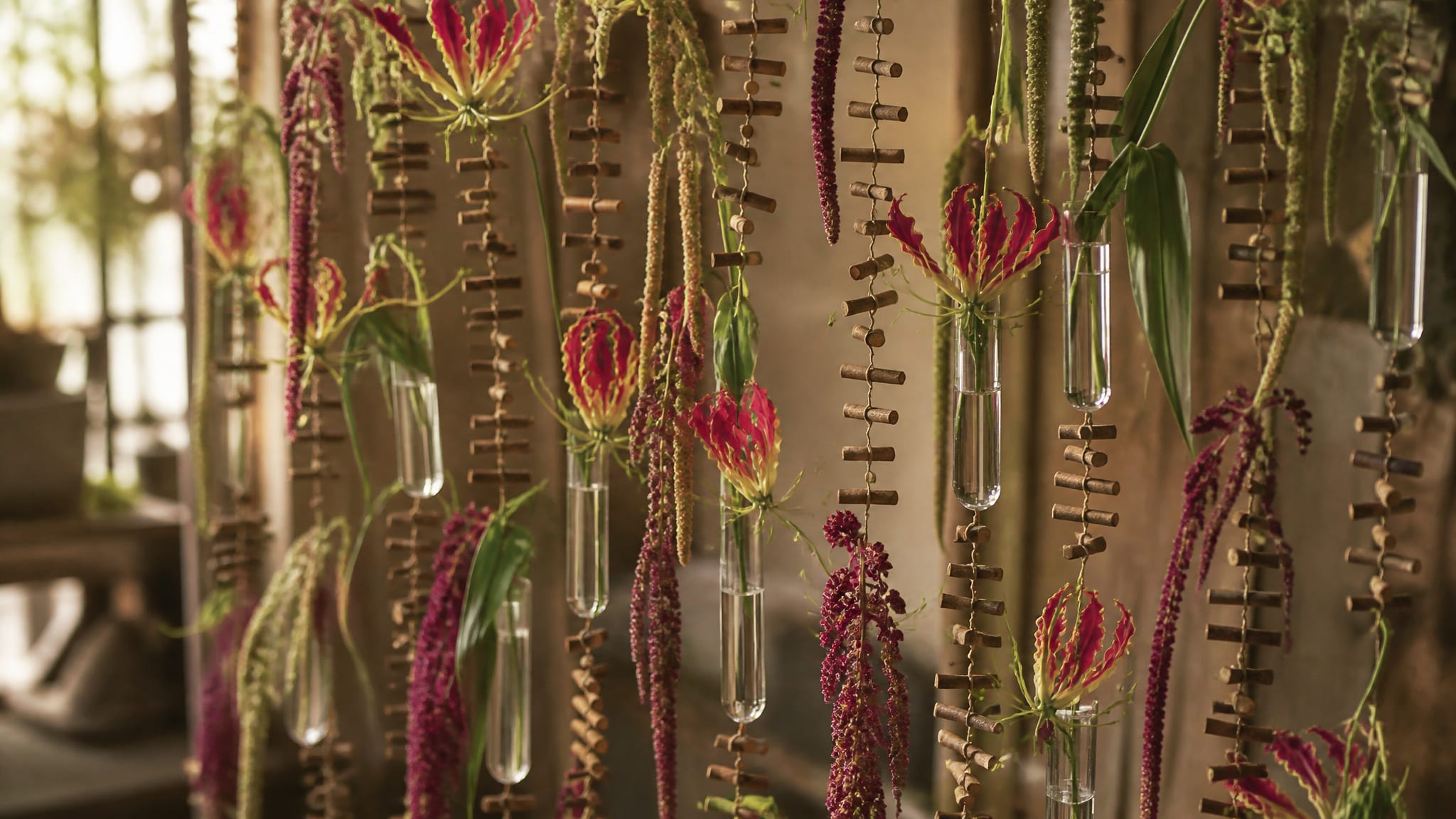
The design uses twig garlands with water tubes wired in at intervals, hung to form a vertical, see-through partition you fill with fresh flowers. Build it dense or airy, depending on how heavy-handed you get with the blooms. It works for weddings, showers, retail windows, and honestly, just about anywhere you want height and color without a wall’s worth of material behind it.
What You’ll Need to Build a Flower Curtain
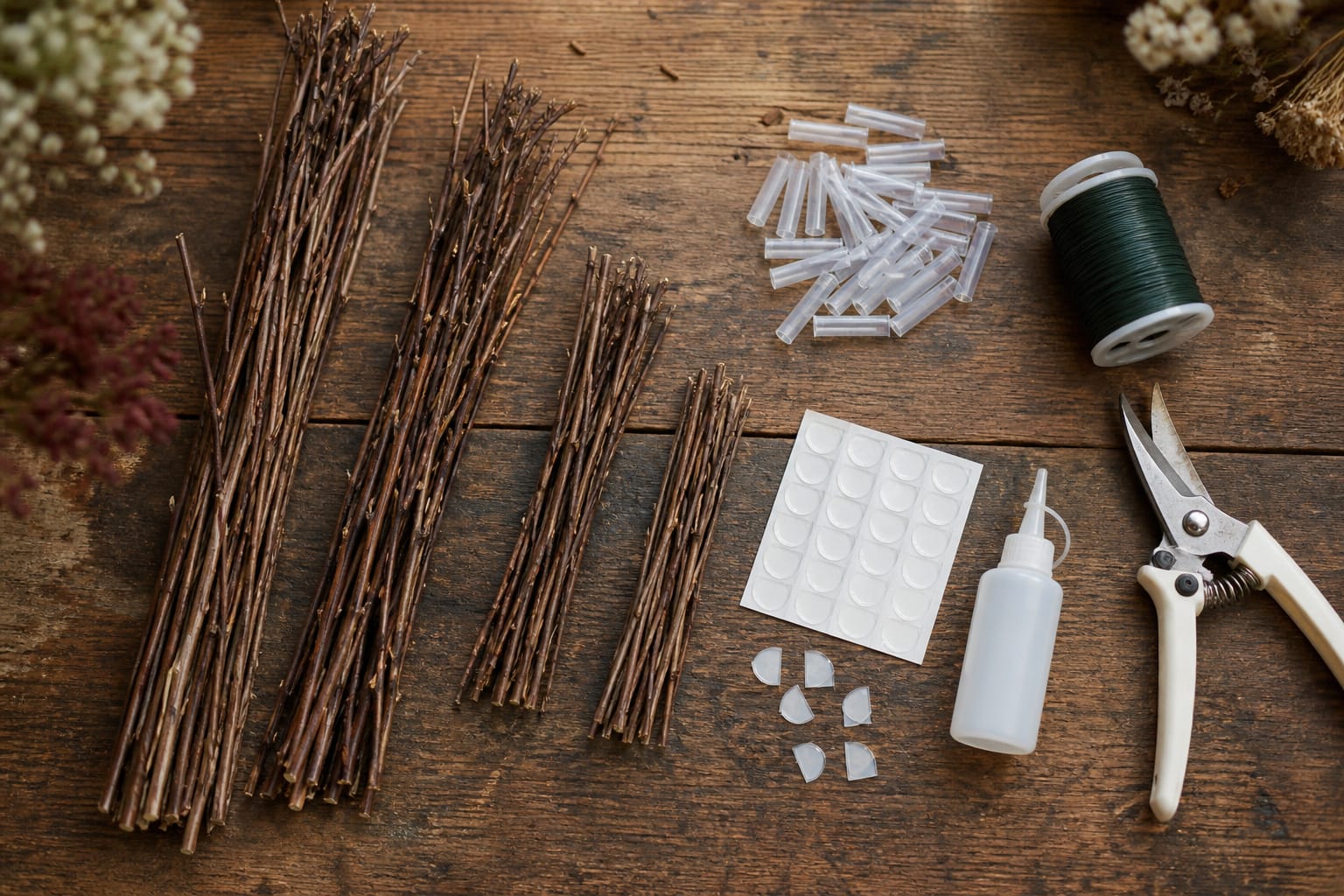
Get these together before you start. The assembly goes a lot faster.
- Dried twigs, cut into random lengths and shapes. Dried wood won’t shrink on you after assembly the way green cuttings will.
- Water tubes, one for every stem grouping along the garland.
- Bind wire, doubled up. A single strand won’t hold the weight of wet water tubes over time.
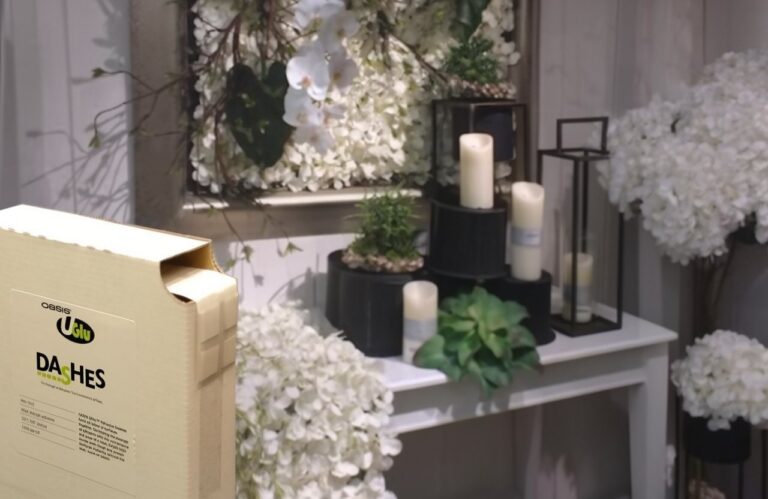
- U-Glue dashes or tabs, cut into quarters.
- A squeeze bottle for filling the tubes once everything is hung.
- Pruners and nonstick scissors for cutting twigs and wire.
Cut your U-Glue into small quarters ahead of time and stick a piece onto each twig and onto the bottom and sides of every water tube. They keep everything locked in place even after the twigs shrink a bit with age. Skip this step, and you’ll be re-gluing loose twigs mid-event.
How to Build the Curtain Step by Step
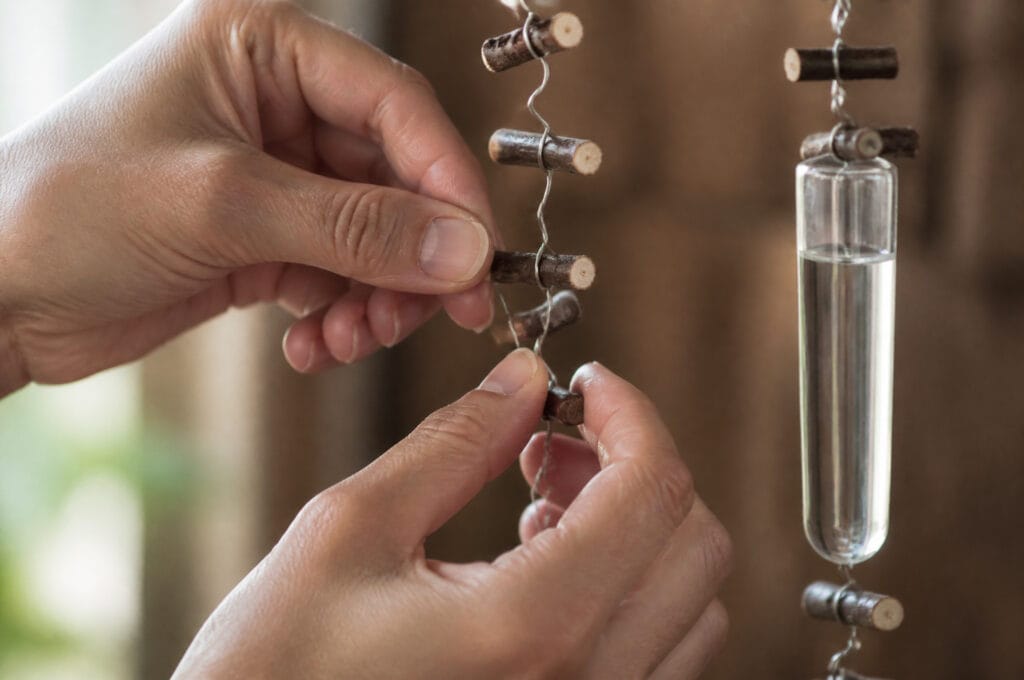
- Fold your bind wire in half to set the garland length, then twist it several times around the first twig to anchor it.
- Keep twisting twigs onto the wire, working down the length, spacing them randomly for a natural look.
- Slide water tubes in between twig groupings. The wire splits and runs across the center of each tube, so you end up with one stem’s worth of space on either side for balance.
- Hang the finished garlands from a top bar or wood frame, side by side, until you’ve built out the full width of the curtain.
- Fill every tube with your squeeze bottle once the garlands are hanging. The water’s weight is what keeps the lines straight instead of twisting.
- Add your flowers last, two stems per tube at most. Stick to light drinkers; they’ll outlast thirstier varieties in a tube that small.
One more thing worth doing: mix in some foraged branches or small garden blooms alongside your premium cut flowers. You get more texture and visual interest without burning through your whole flower budget on one design.
Why I Like Flower Curtains for Weddings and Events
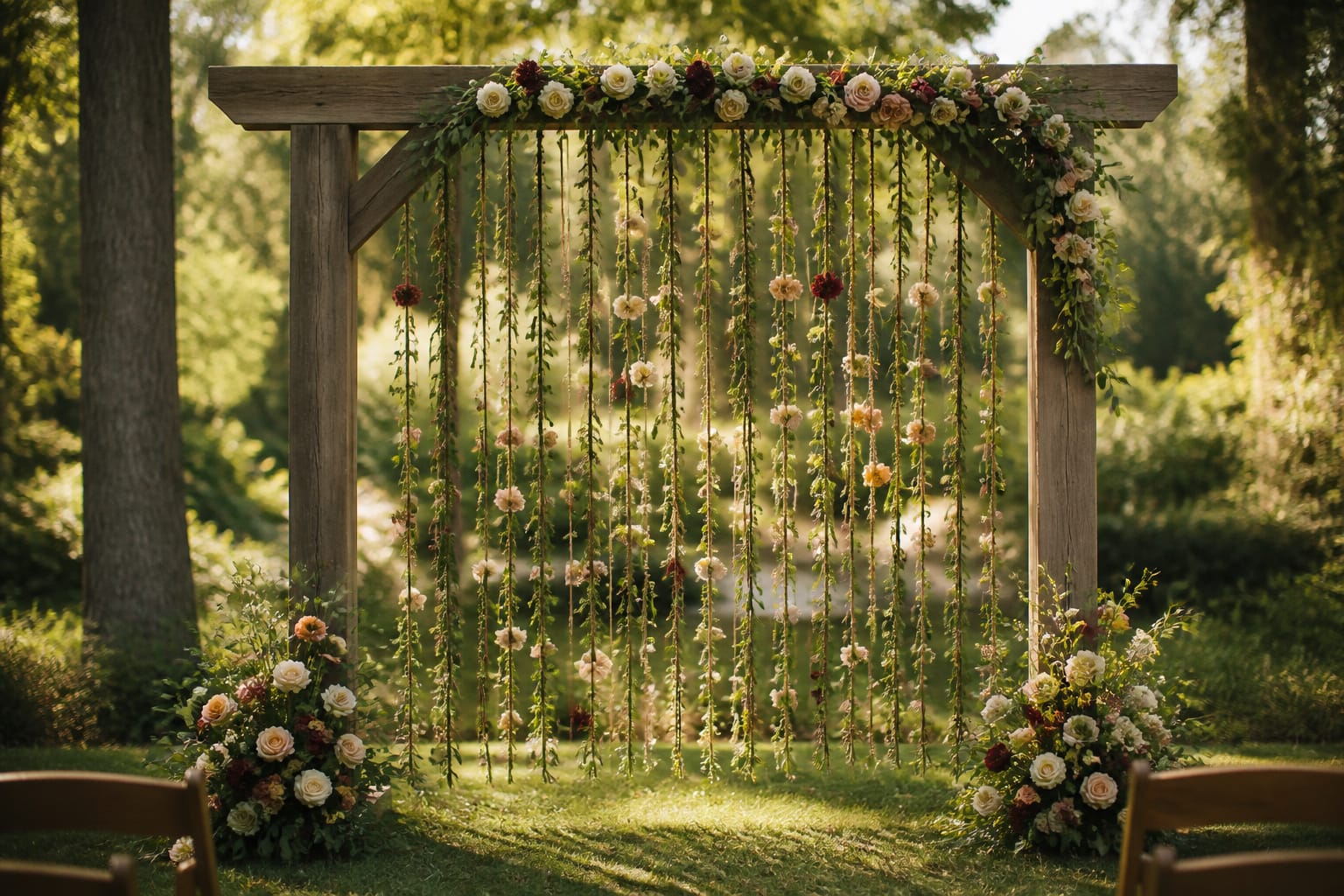
- It’s a fairly easy project once you’ve built one or two garlands and gotten the rhythm down.
- It uses a fraction of the material a flower wall needs, which matters if you’re pricing this out yourself.
- Width is adjustable. Add or subtract garlands and the curtain scales with your space.
- It’s reusable. Store it flat between events, and it’s ready to go again, which is exactly why designers use this style for rental installations.
What I’d do: I’ve used flower curtains as a backdrop for window and cooler displays at the shop, and smaller versions to add color to a few rooms at home. If you’re decorating a wedding arch or ceremony backdrop, this same twig-and-wire approach scales up or down depending on how much drama you want.
The One Downside You Should Know About
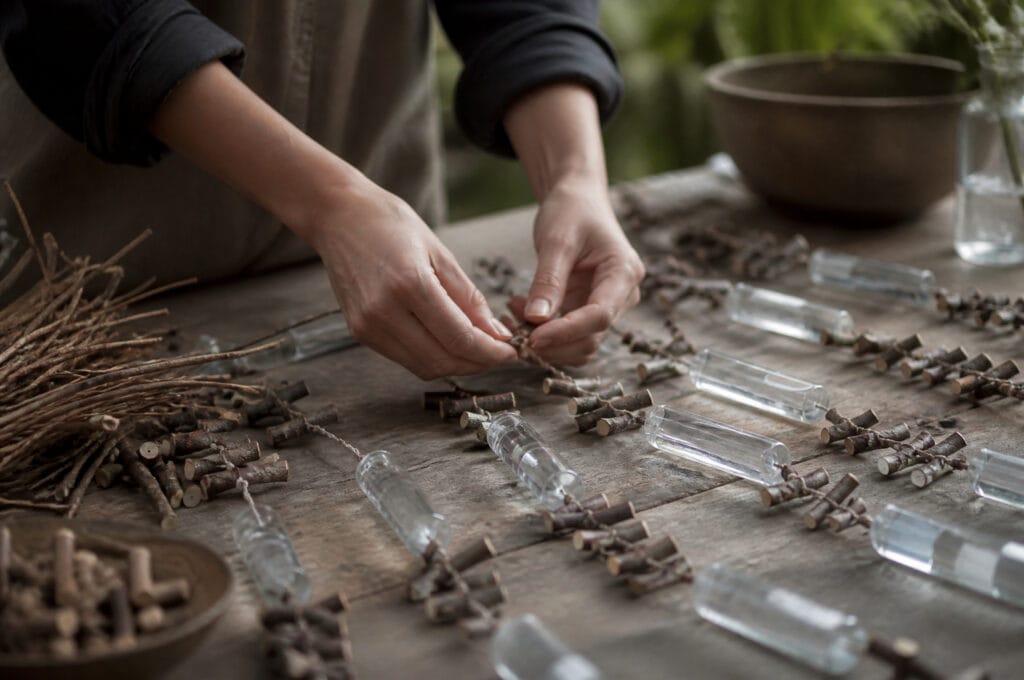
In my opinion, here’s the biggest negative. Building a flower curtain is labor-intensive. Wiring individual garlands is tedious, and it gets faster the more you do, but there’s no “easy” button. Nobody sells that at the hardware store.
That’s the reason a lot of you won’t try this. It looks like too much work. It’s not, though, once you get a couple garlands under your belt. You’ll be surprised what you can build.
If you’d rather secure your garlands with zip ties instead of twisting bind wire by hand, I’ve written up that zip tie technique separately. It’s faster for long installations, though it won’t give you quite the same organic, hand-tied look.
Where to Get the Flowers and Supplies You’ll Need
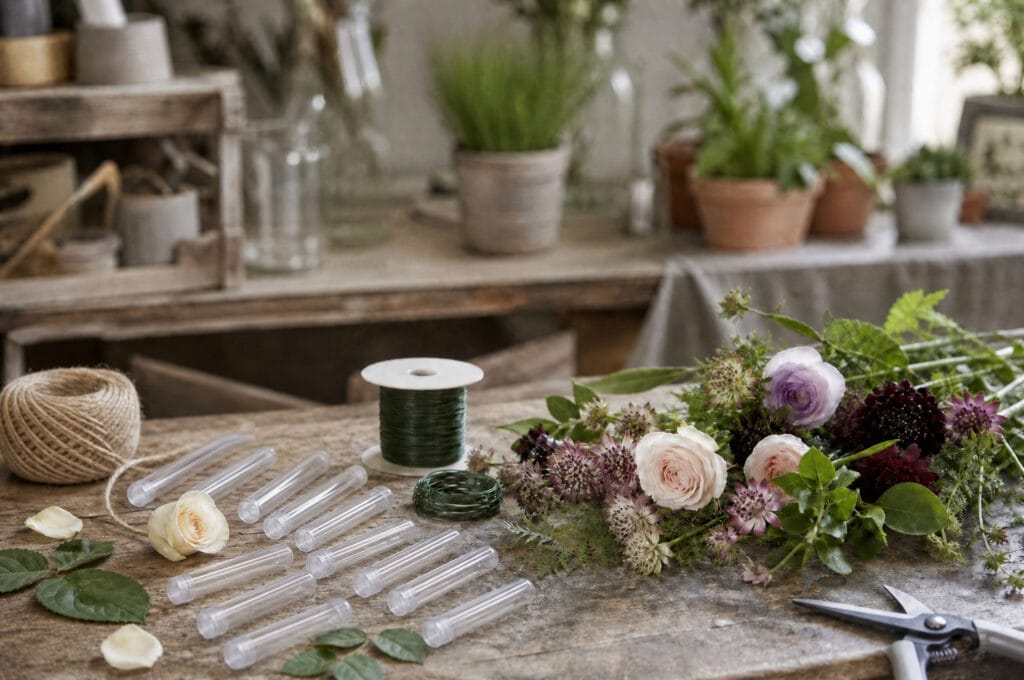
The core supplies for this project are easy to find online. Here’s what I use in the shop:
- What I use in the shop: U-Glue dashes — they hold the twigs and tubes together through setup, transport, and teardown without popping loose.
- What I use in the shop: bind wire — doubled up, it’s strong enough to carry a full garland of filled water tubes without sagging.
- What I use in the shop: water tubes — the right size keeps your stems hydrated without adding bulk that shows through the design.
For flowers, I’ve had good experience ordering Glorioso lilies and hanging amaranthus, the two varieties Hitomi uses in the video, from Flower Explosion, BloomsbytheBox, and GlobalRose. There are many online wholesalers, but these are the ones I’ve personally ordered from.
If your project is small and only needs a handful of high-quality stems, buy them from your local florist. That’s always been my preference for anything under a dozen stems.
Silk flowers work here too, and I cover sourcing and design tips for that route in my silk flower arrangements guide. One tip if you go that direction: mix in a few stems of fresh greenery with the silk. It keeps the whole design looking less artificial.
Frequently Asked Questions
How long will the flowers in a flower curtain last?
About as long as they would in any small water source, roughly three to seven days depending on the variety. Stick to light drinkers and keep the curtain out of direct sun, and you’ll get the most out of it.
Do I need a wood frame to hang one?
No. Any sturdy top bar works, a curtain rod, a pipe-and-drape frame, even a tension rod in a doorway for a smaller version. The garlands just need something to hang from that can handle the weight of filled water tubes.
How much cheaper is a flower curtain than a flower wall?
I don’t have an exact figure; it depends on your flower choices and the size of the piece, but you’re using a fraction of the stems a flower wall requires. That difference adds up quickly.
Can I reuse a flower curtain?
Yes, and that’s one of its best features. The twig-and-wire structure holds up well between events. Store the garlands flat, swap in fresh flowers before the next use, and you’ve got a rental-ready piece.
The flower curtain is a versatile piece for wedding and event designers, and for anyone at home who wants to try something a little different. It uses less material than a flower wall, it packs away for the next event, and it gives you room to make it your own every time you build one.
Have you built one of these before, or is this your first flower project past a basic vase arrangement? Tell me in the comments; I’d like to know what you’re planning to hang it for.
Whatever you build, keep in mind that even the simplest garland, twig by twig, wire twist by wire twist, grows into something worth hanging.
Til next time,