Disclosure: This post may contain affiliate links. If you click and buy, we may earn a commission at no extra cost to you. As an Amazon Associate, we earn from qualifying purchases.
Last Updated: July 8, 2026
A bride walked into my shop last month with two photos torn from a magazine. One arrangement was built on soaked green foam, tight and structured. The other was loose and airy, held together by nothing you could see. She wanted to know which one was right.
Neither one is right on its own. It depends on what you’re building and how much time you have before the ceremony starts.
Know When Floral Foam Still Earns Its Keep
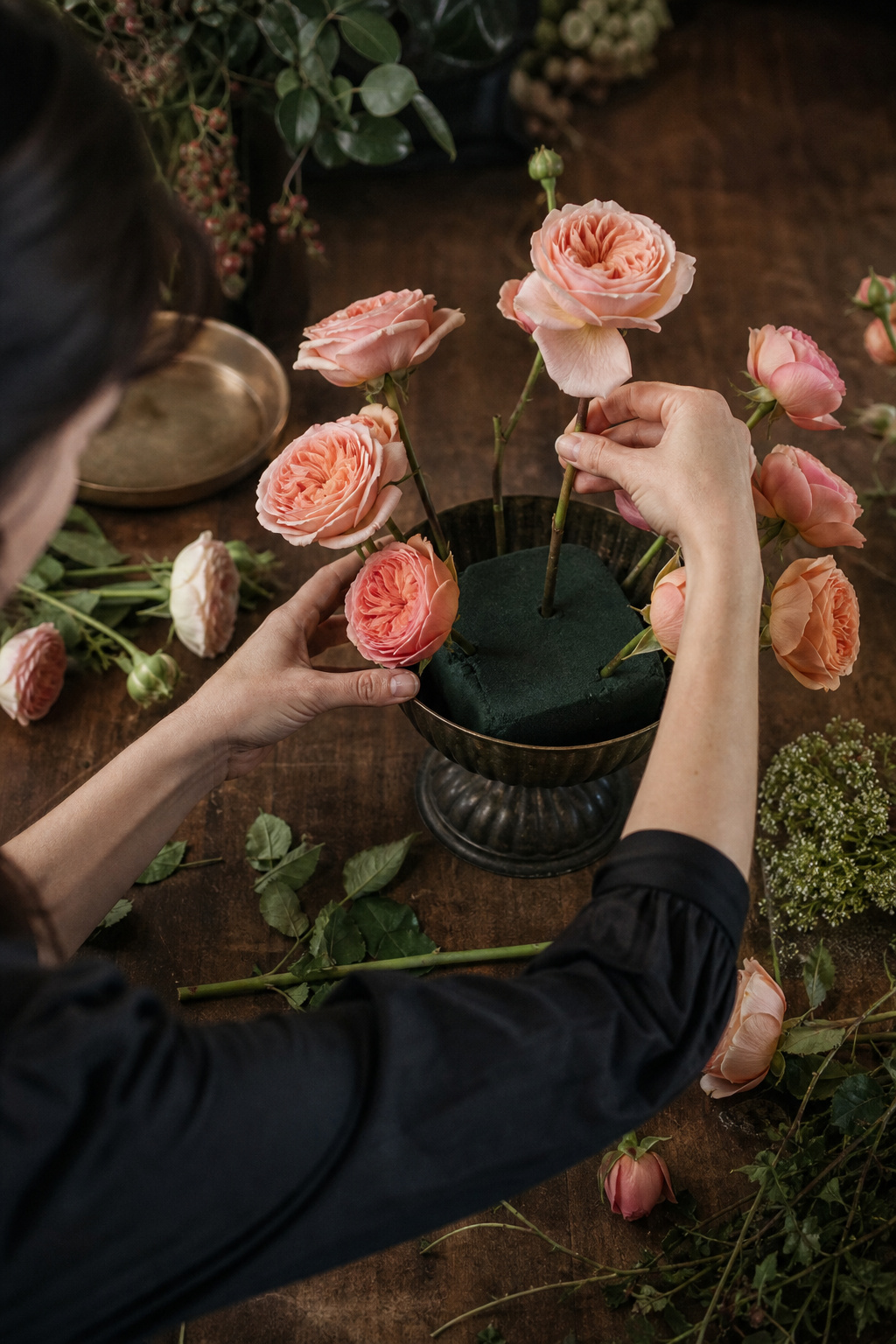
When I started designing, floral foam and chicken wire were both standard. Foam gradually took over as the base of choice, especially for designers newer to the trade. It’s easy to see why.
Foam holds water. It holds an angle. It lets you build a tight, structured design fast, which matters a great deal when you’ve got twelve centerpieces due at a venue in three hours. In my experience, that’s the real reason foam won out for so long. It’s not about looking better. It’s about working faster under pressure.
Foam still makes sense for large-scale wedding day work, tight budgets that need every stem to count, and designs where precision matters more than movement. If you want the full rundown on how I use it today, including the newer biodegradable options, I covered that in my floral foam basics guide.
But like everything else in this business, what goes around comes around.
Give Chicken Wire a Real Look
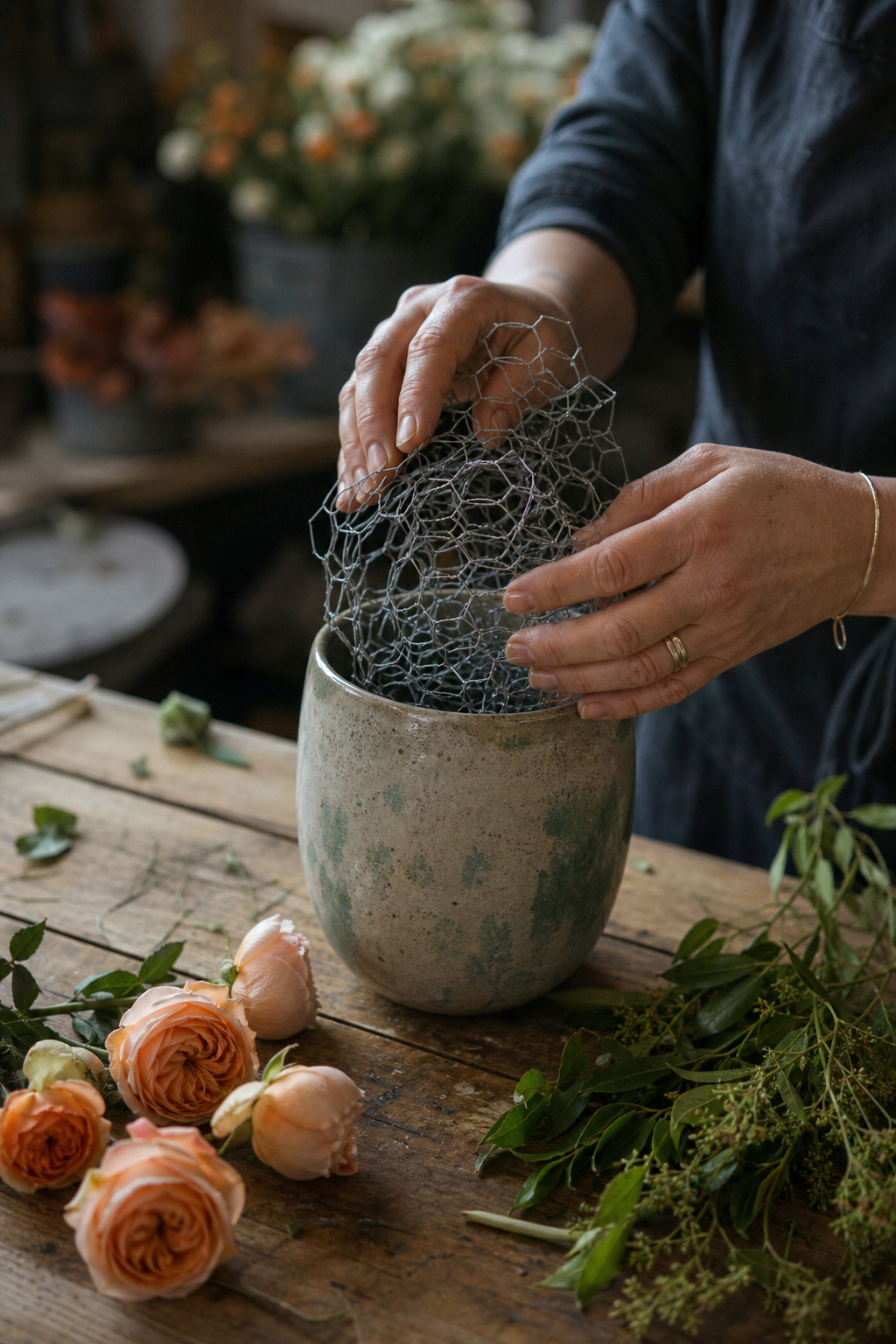
Chicken wire is back, and it’s not just nostalgia. Two things are driving it. Free-form, garden-style arrangements have become popular again, and chicken wire simply moves better than foam for that look. It also skips the landfill problem foam carries with it, which matters more to today’s brides than it did twenty years ago.
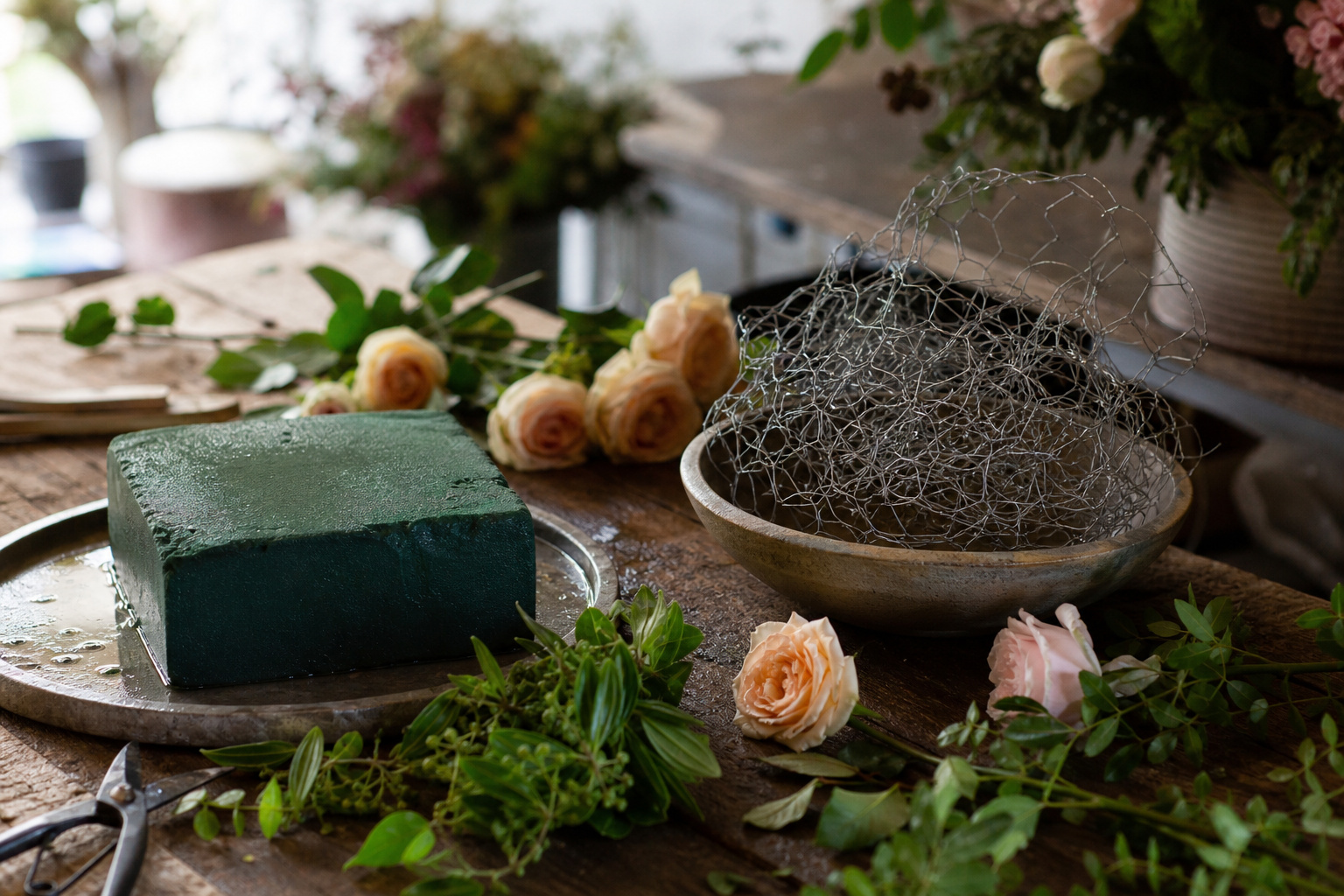
Crumple a length of wire into a loose ball, tuck it into your container, and you’ve got a grid that lets stems angle in every direction instead of straight down into soaked foam. It takes a little longer to learn than foam does. Once it clicks, it’s not going anywhere.
A floral pillow is a close cousin to this technique, using wire or a lightweight cage instead of foam. I walked through that build step by step in my floral pillow tutorial, and it’s a good next step once you’re comfortable with a basic wire cage.
Prevention is key here, too. Wire that’s packed too tight will fight you the whole way through the build. Loose and airy first, then tighten as you place stems.
Watch This Before You Pick Your Mechanic
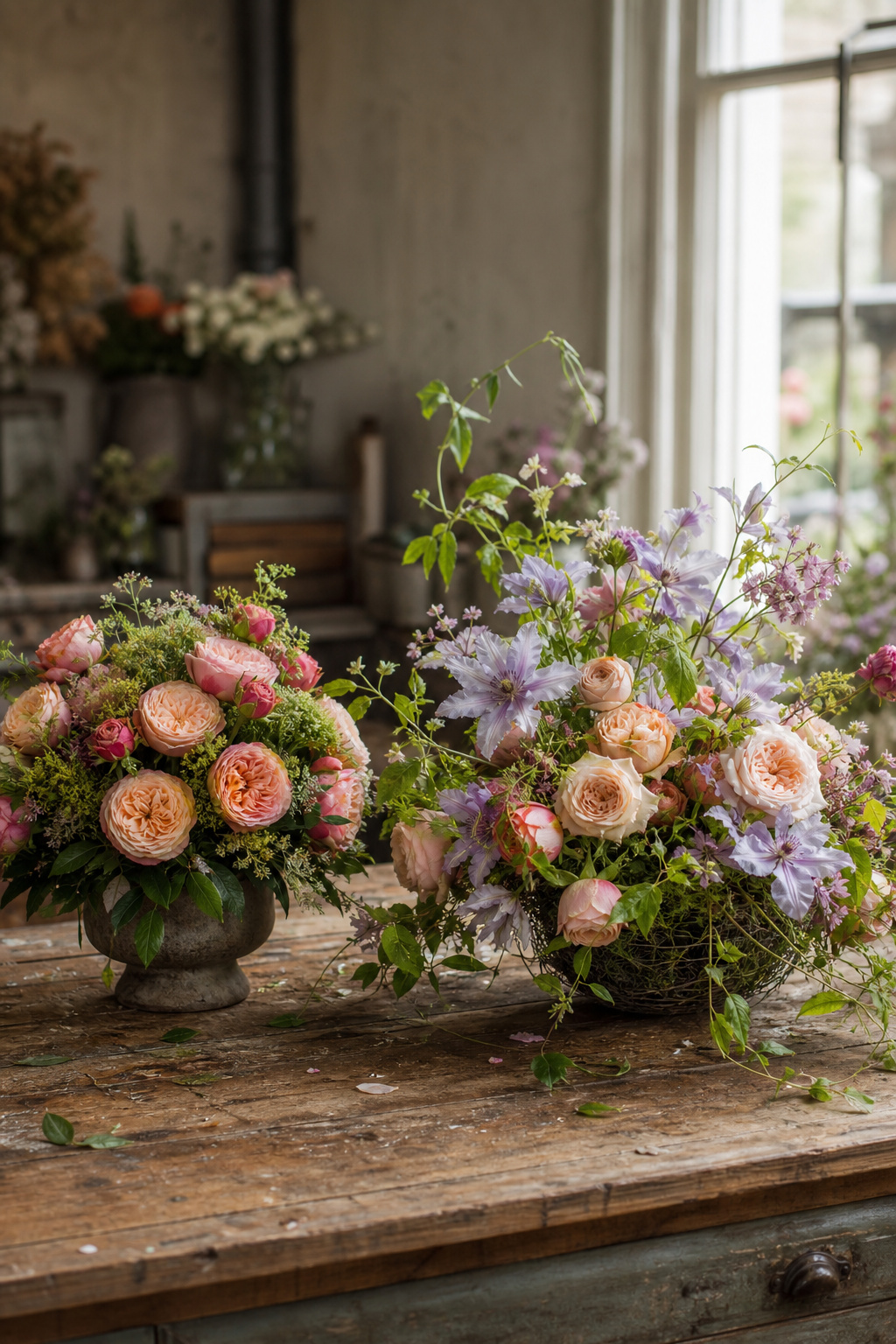
If you’re still on the fence, this video walks through building the same arrangement both ways, foam and wire, so you can see the difference in how each one handles. Watch it, and see if you agree with me on which one fits your project.
The fresh materials in that video, clematis, peonies, and garden roses, aren’t cheap. If you’re only building an arrangement or two, order through a local florist rather than a wholesaler. You’ll pay less for the small quantity and get a great product.
What I Use in the Shop
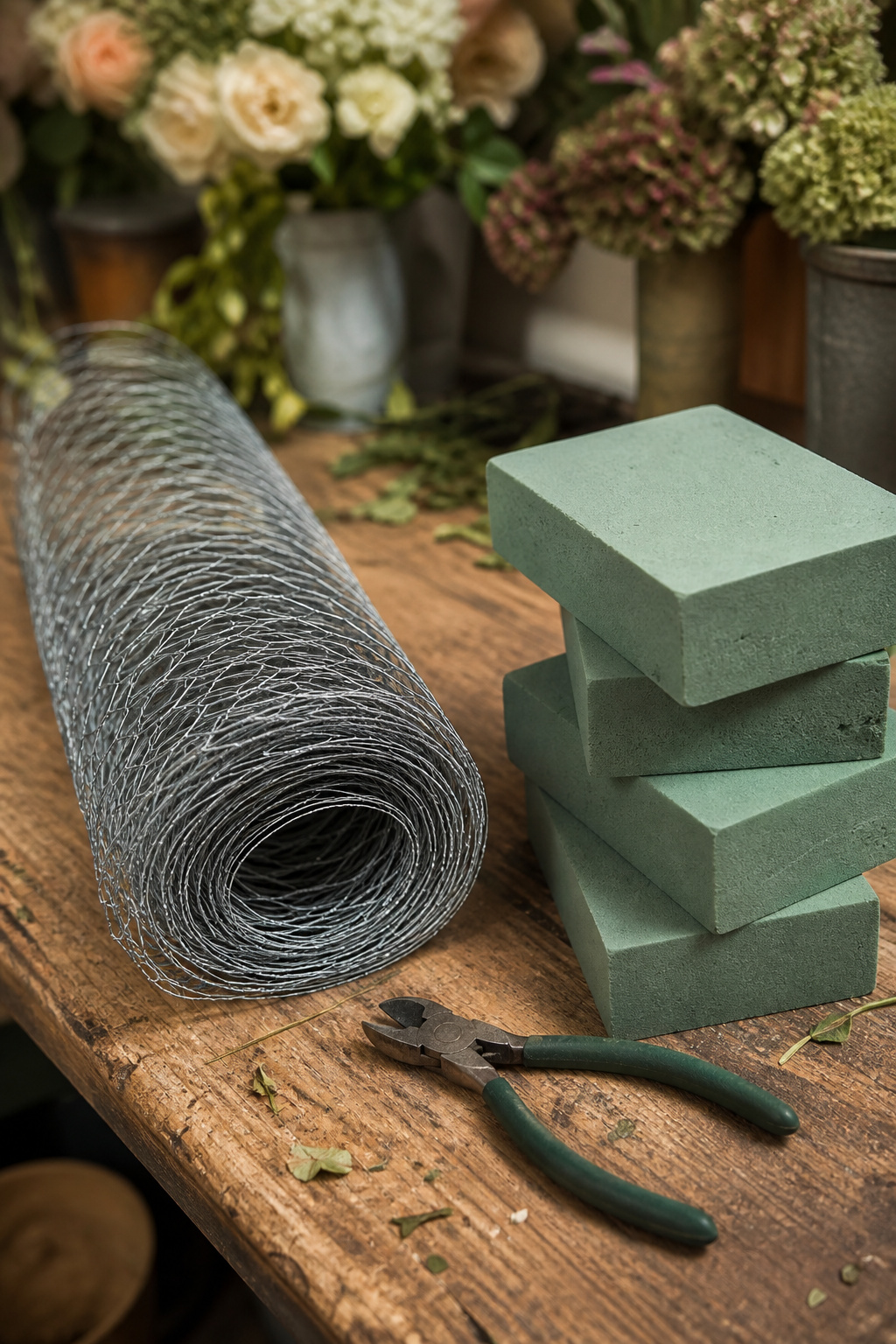
What I use in the shop: chicken wire mesh rolls, cut to size for whatever container I’m working with that day. A roll lasts a long time and works for everything from a low centerpiece to a full arch mechanic.
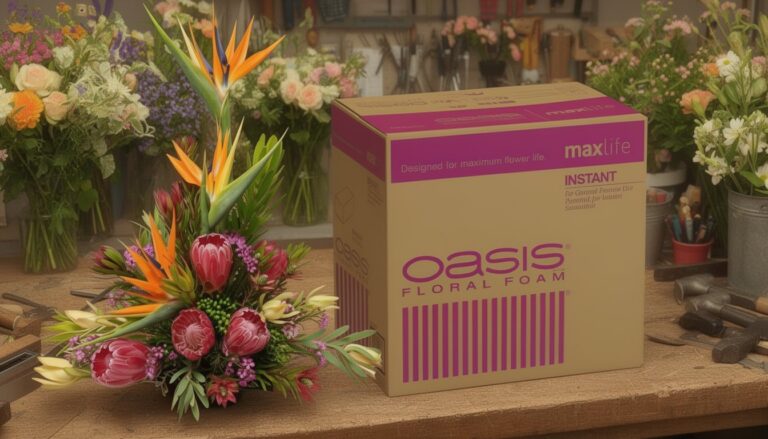
What I use in the shop: floral foam bricks, kept on hand for the wedding days when speed matters more than eco points. I’m not going to pretend I’ve abandoned foam. I use the right tool for the day.
What I use in the shop: a dedicated pair of wire cutters. Don’t use your good floral shears on chicken wire. I learned that the hard way, and it cost me a set of shears I actually liked.
You can also find both materials at a craft store or your local hardware store in a pinch. And if you’re securing a larger installation on top of your wire or foam base, zip ties are worth keeping in your kit. I use them constantly for anything that has to survive an outdoor reception.
Frequently Asked Questions
Can I mix floral foam and chicken wire in the same arrangement? Yes. I do it often on large installations, using foam for the anchor points that need to hold water reliably and wire for the loose, reaching stems on top.
Does chicken wire hurt the vase life of my flowers? No, as long as your container still holds water. Wire doesn’t affect hydration. What matters is whether your stems are actually sitting in water, not just wedged into the grid.
Is floral foam actually bad for the environment? Traditional foam is not biodegradable and does contain formaldehyde. Biodegradable versions exist now and perform reasonably well, though I still find them softer to work with than traditional foam.
What gauge of chicken wire should I buy? I stick with a 1-inch or 2-inch hex mesh for most arrangements. Smaller openings give you tighter stem control; larger openings work better for chunky, garden-style stems.
Can beginners use chicken wire, or is it only for experienced designers? Beginners can absolutely use it. It actually forgives more mistakes than foam does, since you can reposition a stem without leaving a hole behind.
How do I keep chicken wire from scratching my container? Line the inside edge with floral tape or a strip of cellophane before you pack the wire in. Takes thirty seconds and saves your good vases.
Closing Thoughts
Foam or wire isn’t really a competition. It’s two tools that solve different problems, and knowing which one to reach for is what separates a design that holds up through the reception from one that starts drooping by dinner.
I’d love to know which one you’re leaning toward for your next project and what you’re building. Drop a comment below and let me know.
Whichever base you choose, the goal is the same: give your stems room to open the way they’re meant to.
Til next time,