Disclosure: This post may contain affiliate links. If you click and buy, we may earn a commission at no extra cost to you. As an Amazon Associate, we earn from qualifying purchases.
Last updated: August 2026
A customer came into the shop last week holding her phone up, showing me a picture of a lush, expensive-looking arrangement she’d seen online. “Can you make something like this, but I don’t want to spend a fortune,” she said. I asked what was in the photo. Alstroemeria, mostly. I laughed and told her that’s exactly the flower for that job.
Alstroemeria is one of the most popular cut flowers we sell, and it’s easy to see why. It’s widely available, inexpensive, and lasts a week or more in a vase. We use it in everyday arrangements, sympathy work, and wedding designs alike.
Below are a few of the arrangement ideas and techniques I rely on most, along with two short video tutorials that show the technique better than I can describe it in words.
Alstroemeria Arrangement Ideas and Design Techniques You Can Use
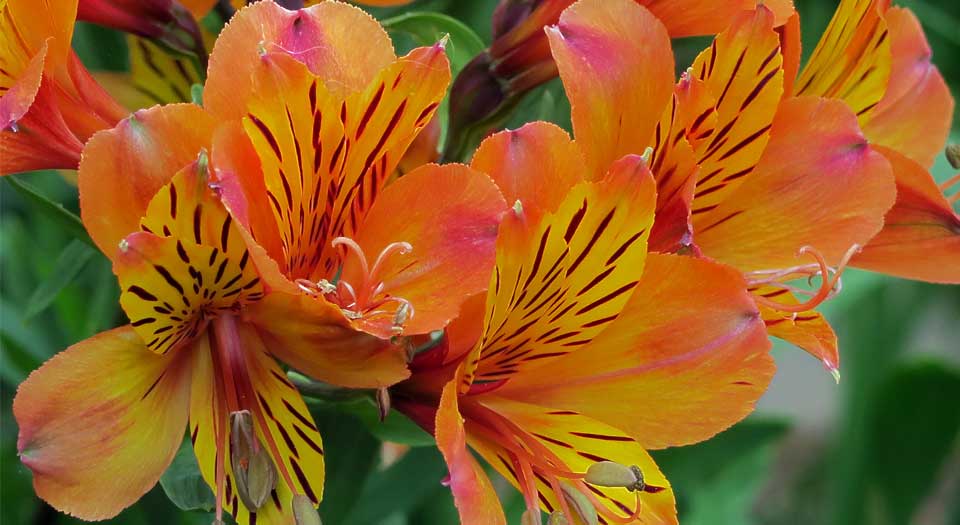
Alstroemeria is a fun, forgiving flower to work with. Here are a few ideas to get you started.
How Do You Arrange Alstroemeria Flowers?
Before you begin, make sure your alstroemeria has been properly processed and hydrated. If your stems arrive with the buds still closed tight, don’t worry. Warm water and a little household warmth will coax them open in a day or so.
One thing I always mention to customers: alstroemeria foliage can occasionally cause skin irritation, especially with heavy handling. If you’ve got sensitive skin, throw on a pair of garden gloves before you start stripping stems. It’s a small step, and it’ll save you an itchy afternoon.
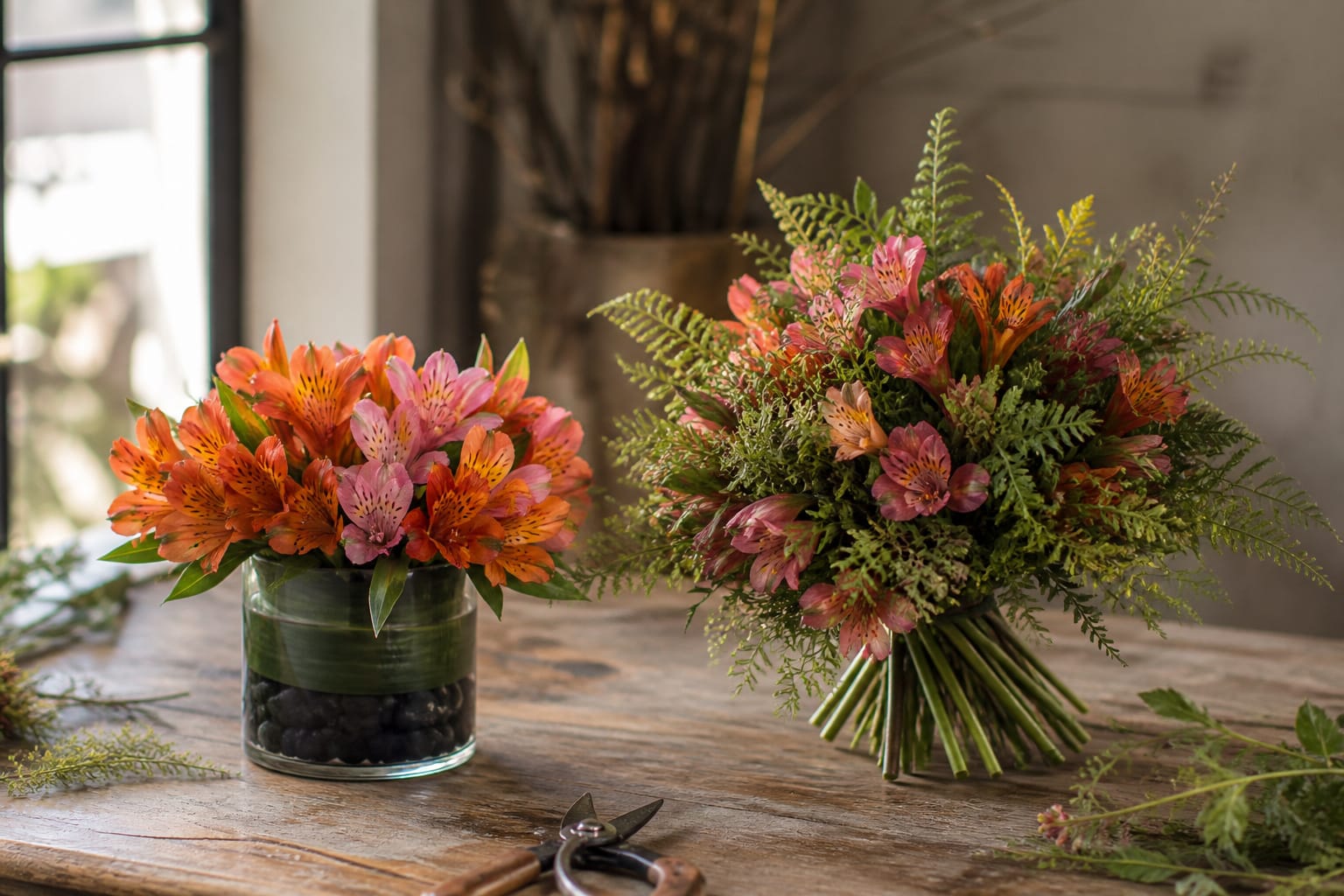
This video, from floral expert Sharon McGukin, shows one of my favorite quick centerpiece methods. It uses just six stems of alstroemeria, and it looks like it cost a lot more than it did.
A few things make this one work. Start with black decorative stones (sea shells, marbles, or small gravel work too) in the bottom of a clean glass vase, then fill it with water mixed with flower food. Take a large leaf, aspidistra or peace lily both work well, remove the center spine so it’s pliable, wrap it around your hand, and tuck it into the vase to hide the stems.
Strip the lower foliage off your alstroemeria, then cut the stem ends at an angle with a sharp knife or floral shears to open up the water pathways. Insert the stems, choosing ones with tight, unopened buds if you want the arrangement to last as long as possible. Finish with a light spray of anti-transpirant to help the blooms hold their moisture.
What I use in the shop: a waterproof ti leaf pattern ribbon in place of fresh aspidistra or ti leaves when I want the look without worrying about wilting. It holds up in water indefinitely, and nobody’s ever guessed it’s not real leaf.
If you want to go the extra mile on that anti-transpirant step, I break down which spray actually earns a spot on your worktable in this comparison of floral finishing sprays.
The second video shows a technique called “spiraling,” used here to build a lush bouquet with alstroemeria and tree fern. It takes more practice than the stones-and-vase method above, but it’s a fundamental skill every floral designer should master. I use it in nearly every hand-tied bouquet I design for weddings. That’s why I’m including it here.
Here’s the sequence I follow. Sort your flowers by color first. It’s a small thing, but it keeps color distributed evenly through the bouquet instead of clumping on one side. Start with a single central stem, then add stems one at a time against it at a consistent, single-direction angle, giving the bundle a three-quarter turn after each addition. That turn is what builds the spiral.
Once everything’s in, adjust. Pull or push individual stems to fine-tune height and rotation until you’re happy with the shape. Secure the bundle with paper-covered bind wire, keeping it a little loose so you can make final tweaks, then trim the stem bottoms evenly.
What I’d do: a properly balanced spiral bouquet should stand up on its own on a flat surface. If yours can’t, the spiral isn’t quite there yet, and it’s worth practicing until it is. I still check every wedding bouquet this way before it leaves the design room.
If you want to go deeper on the mechanics of this technique outside of alstroemeria, my full breakdown of the spiral method covers the fundamentals step by step. And once it’s tied off, my post on finishing a hand-tied bouquet has a few more ways to dress the stems, aspidistra leaf included.
Use this technique if you want your alstroemeria arrangement, or really any arrangement, to have a professionally finished look.

Another easy option is a topiary-style design. Tie a bundle of alstroemeria stems together and insert them as one “stem” into a container filled with floral foam. Cover the foam with moss, greenery, or both, then finish with single stems of alstroemeria or other flowers tucked around the base.
This idea works well for a wedding or special event, but it’s just as at home on your own dining room table.

What Flowers Go Well With Alstroemeria?
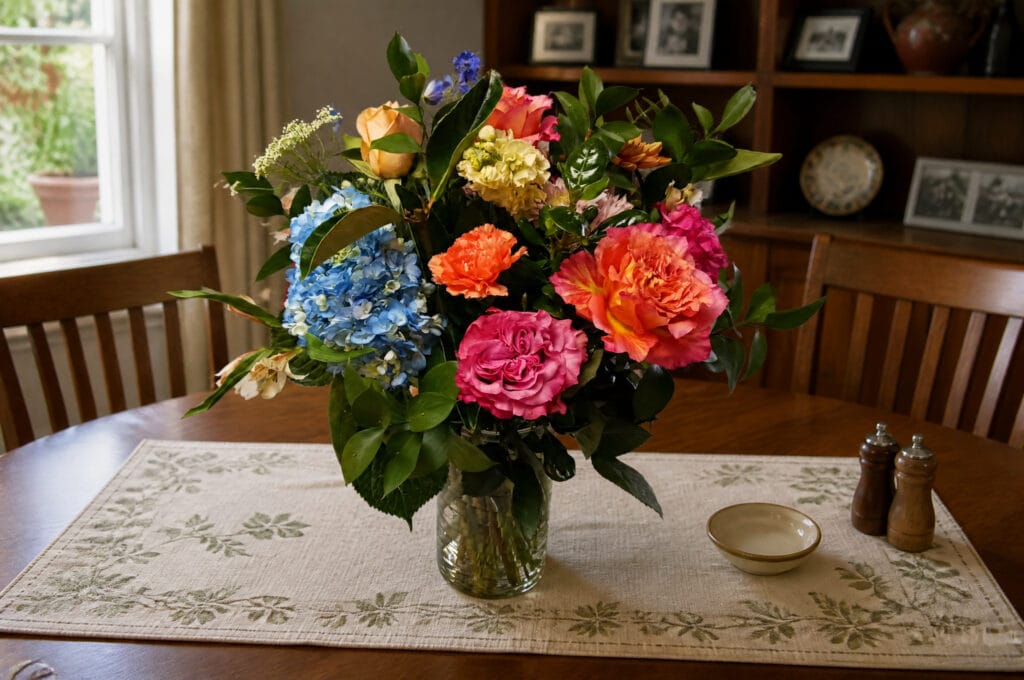
With the range of colors available, alstroemeria looks great arranged in a vase all on its own. It also plays well with nearly everything else in the cooler.
Roses pair beautifully with it, as do lilies, peonies, tulips, hydrangeas, and daffodils. Daisies, sunflowers, and irises work well too. With that many options, why not experiment with your own favorites?
Here’s a mixed vase arrangement that includes alstroemeria alongside a few other blooms.
How Long Do Alstroemeria Flowers Last in a Vase?
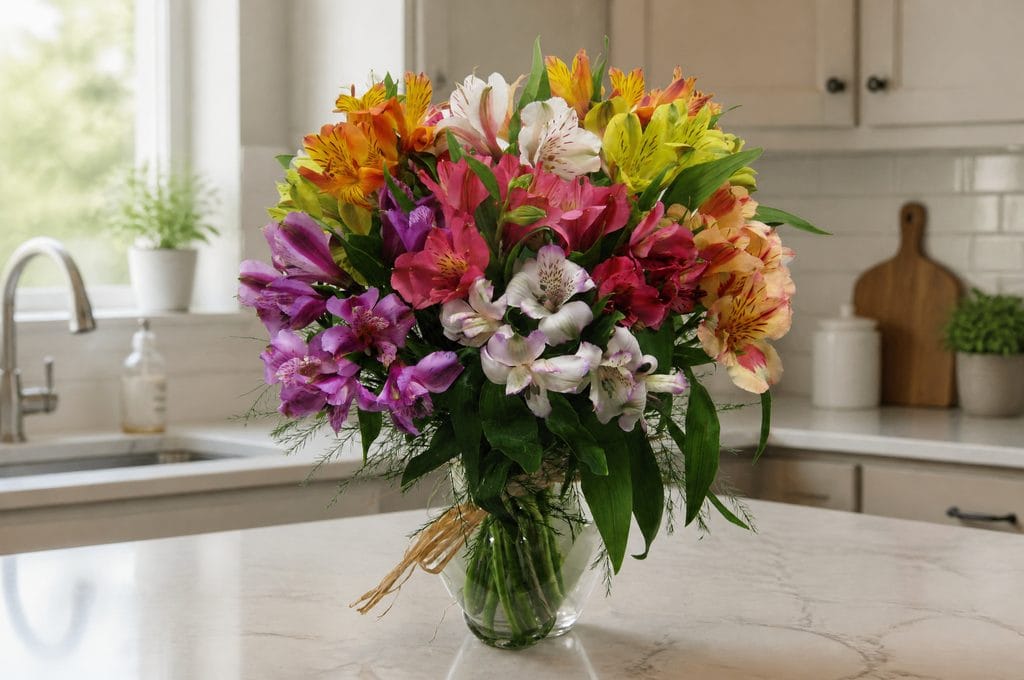
With proper care, alstroemeria should last seven to fourteen days in a vase or a container filled with floral foam, and regular stem trimming can stretch that closer to three weeks. A few varieties last even longer, but that’s the exception, not the rule.
To extend your flowers’ life, keep them out of direct sunlight and away from heat sources, drafts, and air vents. Maintain the water level, and change it every two to three days, or sooner if it looks cloudy.
One habit that makes a bigger difference than people expect: strip away any foliage that falls below the waterline, and don’t stop there. I pull off a good amount of the upper foliage too, since leaves age faster than the blooms do. Less foliage means cleaner water and a bouquet that looks fresh longer.
Cloudy water is really just bacteria doing its thing. Fresh water solves most of it.
For the full rundown on processing any cut flower properly before it even hits the vase, my guide to processing fresh flowers covers the basics that make everything last longer, alstroemeria included. And for the deep dive on this flower specifically, bud stage, foliage handling, and vase-life troubleshooting, my full alstroemeria care guide rounds it out.
FAQ: Alstroemeria Arrangements
Is alstroemeria a good flower for beginners?
Yes. It’s forgiving, holds up well once processed, and the stems are flexible enough to bend into shape without snapping. It’s one of the easiest flowers to build confidence with.
Why is my alstroemeria wilting so fast?
Usually it comes down to processing. Cut alstroemeria stems to encourage water uptake, then hydrate in cool water with a floral preservative before arranging. Skipping that step is the most common cause of early wilting.
Can alstroemeria irritate your skin?
Occasionally, yes. Alstroemeria foliage can cause mild skin redness or irritation in some people, especially with repeated handling. I recommend wearing gloves if you have sensitive skin or you’re processing a large quantity of stems at once. It’s uncommon, but common enough that florists know about it.
Can alstroemeria be used in floral foam?
Yes, and it holds up well in foam as long as the foam stays consistently wet. Check the water level daily, since allowing foam to dry out shortens vase life significantly.
Does alstroemeria have a scent?
Most varieties are unscented or very mild, making it a safe choice for sympathy arrangements, hospital deliveries, or anyone sensitive to strong floral fragrance.
Is alstroemeria toxic to pets?
Alstroemeria itself is considered non-toxic to cats and dogs, though I always recommend keeping any arrangement out of reach. Water in the vase and stray leaves cause trouble, not the flower.
Can I dye alstroemeria for a specific color?
We don’t typically dye it in the shop since it already comes in such a wide natural color range, but the stems will absorb floral dye in a pinch the same way most cut flowers do.
Closing Thoughts
Alstroemeria doesn’t get the credit it deserves. It’s affordable, it’s forgiving, and it holds up longer than flowers twice its price. Start with the stones-and-vase method if you’re new to arranging, then work up to spiraling once you’re comfortable. Either way, you’ll end up with a bouquet that looks like it cost a lot more than it grew for.
Which technique are you going to try first, the stones-and-vase centerpiece or the spiral bouquet? Let me know in the comments, and tell me what flowers you’re pairing it with.
Til next time, Greg Johnson, FlowerDesignGuide.com