Disclosure: This post may contain affiliate links. If you click and buy, we may earn a commission at no extra cost to you. As an Amazon Associate, we earn from qualifying purchases.
Last Updated: May 8, 2026
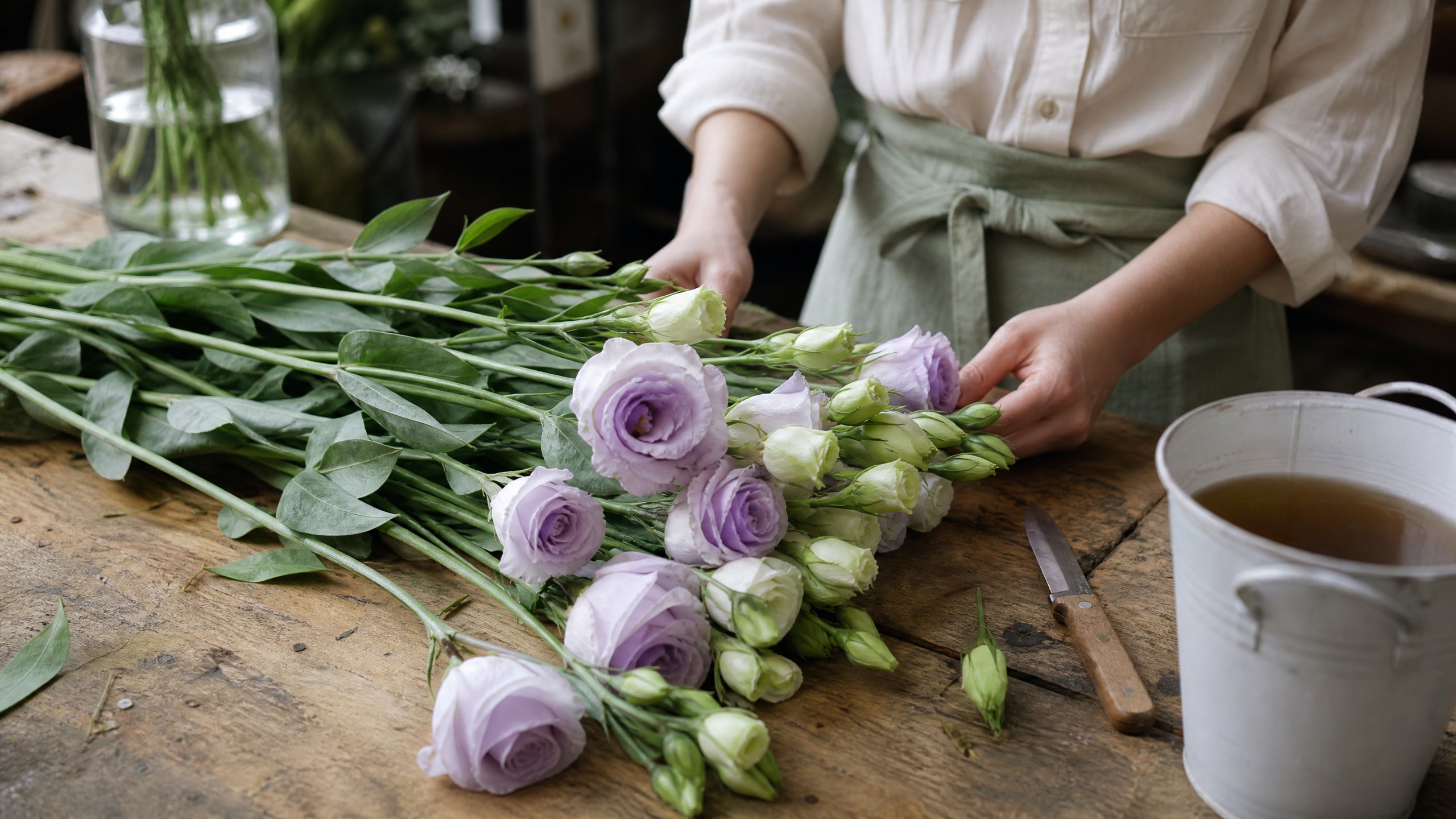
I had a bride walk into the shop a few weeks ago with a Pinterest board full of garden roses and peonies, asking if any of it was actually achievable on her budget. I pointed at a bucket of lavender lisianthus on the workbench and told her, “That’s your answer.” She didn’t believe me at first. Most people don’t until they see lisianthus arranged.
Lisianthus (also called eustoma or prairie gentian) is one of those flowers that punches well above its weight class. The blooms have the soft, ruffled romance of a garden rose, the buds add architectural interest most flowers can’t match, and the vase life — when you handle it right — is genuinely outstanding.
In my experience, 14 days of vase life is the realistic baseline. I’ve had stems hold for 18+ days in the shop cooler. That’s longer than almost anything else we carry.
But this is the part most people miss; lisianthus has its own quirks. It doesn’t behave like a rose, and it definitely doesn’t behave like a gerbera daisy. Skip the right steps, and those 14 days drop to four. So let’s walk through how I handle it from the moment a box hits the back door.
Know What You’re Working With First
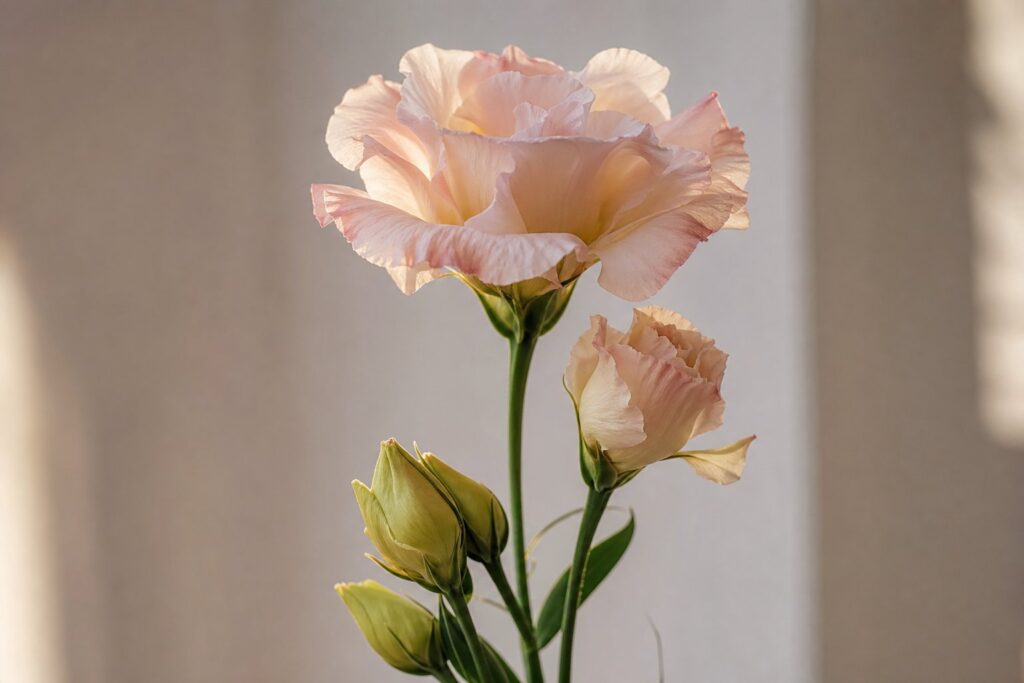
Before we get into the steps, a quick lisianthus orientation. They usually arrive with multiple blooms per stem at varying stages. Some open flowers at the top, half-open blooms in the middle, and tight buds further down. That’s not a flaw. That’s the value.
As the open blooms age out, the buds beneath them continue opening over the course of the vase life. So even on day 10, you’ve still got fresh blooms appearing. This is why lisianthus rewards patience, and why the care steps below matter so much. You’re not just keeping today’s flower alive. You’re protecting the whole sequence.
One thing to know: Lisianthus stems are softer than they look. They bend easily, the necks can flop if dehydrated, and the foliage browns fast in dirty water. Treat it like a delicate flower, and you’ll do fine.
Gather Your Tools Before You Cut
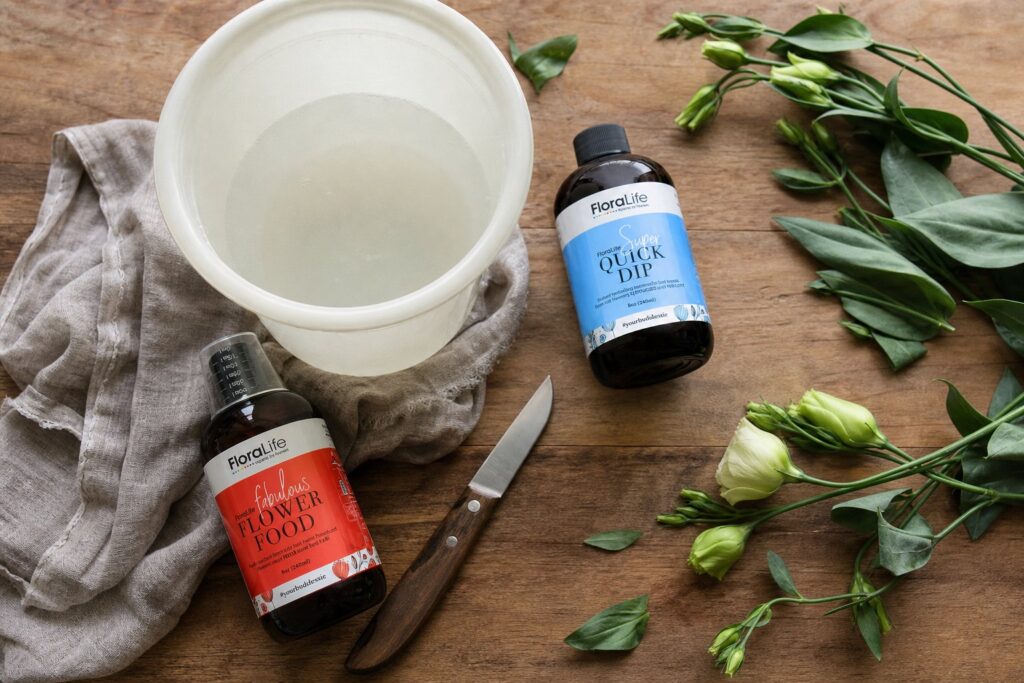
Speed matters with lisianthus, just as with any cut flower. Have everything ready before you start.
- A sharp floral knife — clean cuts only; crushed stems hydrate poorly
- Clean buckets — lisianthus is sensitive to bacterial buildup, more so than most flowers
- Commercial floral preservative — Floralife Crystal Clear is what I use in the shop
- Floralife Quick Dip — for that immediate post-cut treatment
- Room-temperature water — around 100°F for conditioning
What I use in the shop: Floralife Crystal Clear flower food — it’s the cleanest preservative I’ve used, and the antibacterial action makes a real difference with lisianthus specifically, since this flower hates dirty water.
For a deeper dive on the full toolkit, my 8 floral design tools I use every single day guide covers what stays on my workbench at all times.
Unpack and Inspect Right Away
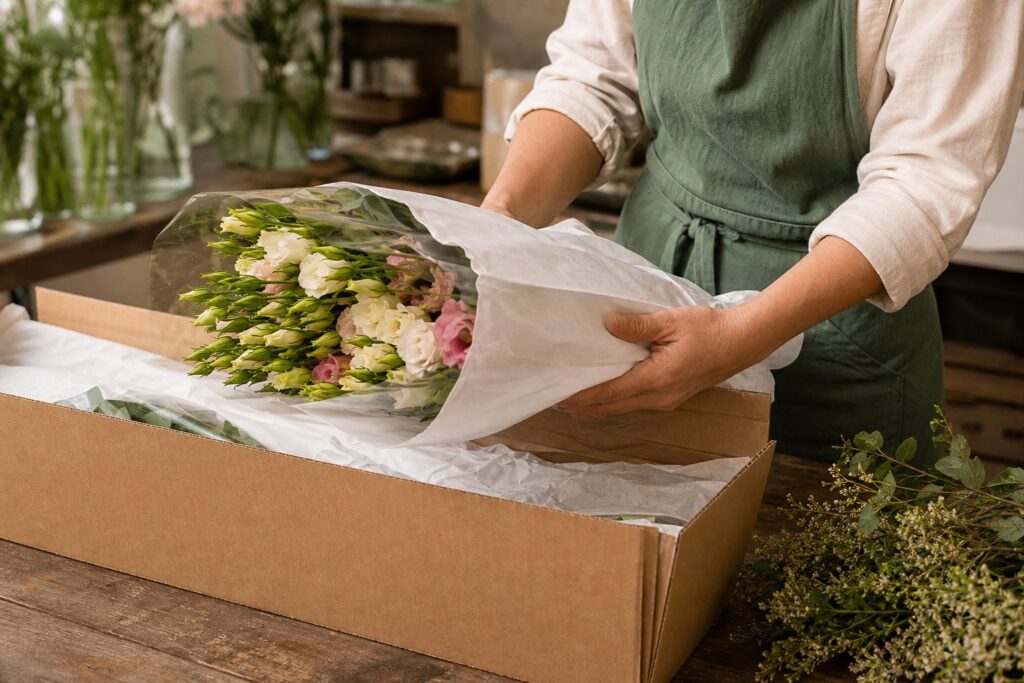
The minute the lisianthus arrives, get it out of the box. Don’t let it sit. The combination of a closed shipping environment and the ethylene gas that builds up in transit is a slow killer.
As you unpack, look for:
- Browning or yellowing foliage — common with shipped lisianthus; trim these leaves off entirely
- Bent or kinked stems — Lisianthus stems are flexible, but they don’t recover well from sharp bends
- Open blooms with bruised petals — these can be salvaged but need fresh water fast
- Mold or sliminess at the stem ends — cut well above any affected area
One quirk: lisianthus often arrives looking a little floppy. Don’t panic. That’s transit dehydration, not damage. With proper processing, it’ll firm right back up over the conditioning period.
Strip Foliage Aggressively
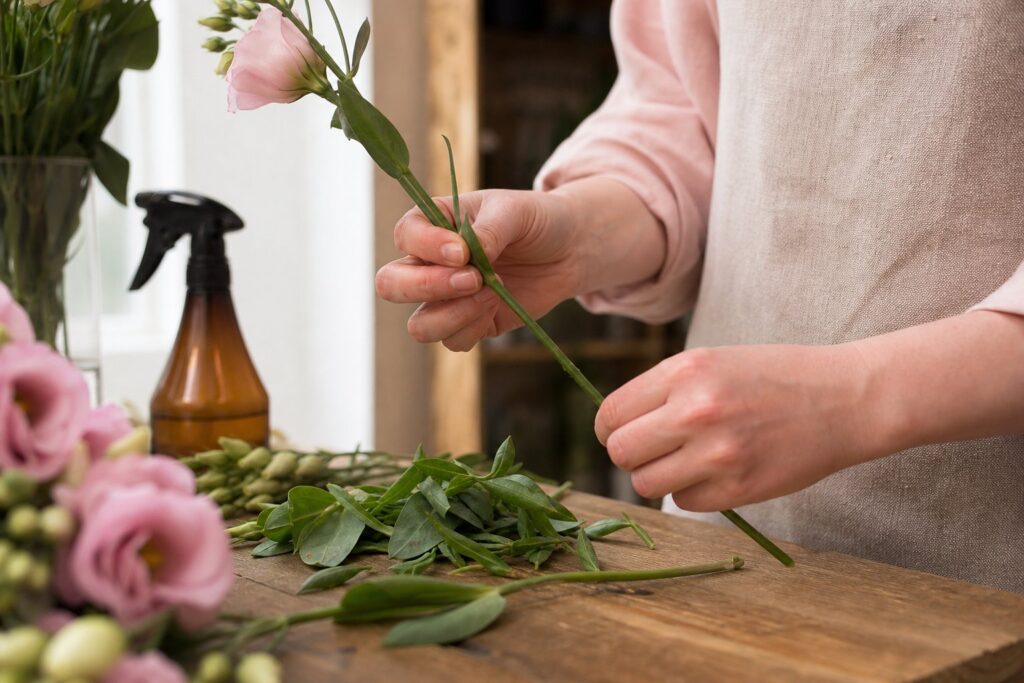
Lisianthus foliage is the single biggest reason this flower fails in a vase. The leaves rot fast in water, and the bacteria they release will choke off the stems within a few days.
Strip every leaf that will sit below the waterline. Then strip a few more for good measure. I leave the foliage near the top blooms intact. It’s part of the visual interest, but everything below the halfway mark on the stem comes off.
I also remove any spent or browning blooms and side buds that look damaged at this stage. They’re not coming back, and leaving them on the stem diverts energy from the buds that will actually open.
Cut Stems at a Sharp Angle
This is where technique matters. Lisianthus stems aren’t hollow like gerberas, but they do have narrow vascular channels that clog easily.
Here’s the sequence:
- Hold the stem at a 45-degree angle against your cutting surface
- Cut 1 to 2 inches off the bottom with a sharp floral knife — not scissors, not pruning shears for this step
- Cut underwater if you can, or move from cut to water in seconds — air enters the channel fast
- Dip immediately into Floralife Quick Dip before placing in your conditioning bucket
What I use in the shop: Floralife Quick Dip — the stem dip step is non-negotiable for me on lisianthus. It opens water uptake immediately and adds days to vase life. Skip this at your own risk.
If your stems are particularly long and you want fuller-looking arrangements, you can cut them shorter to encourage stronger water uptake to the blooms. Long stems with heavy flower clusters at the top are more likely to flop.
Condition Cool, Not Cold
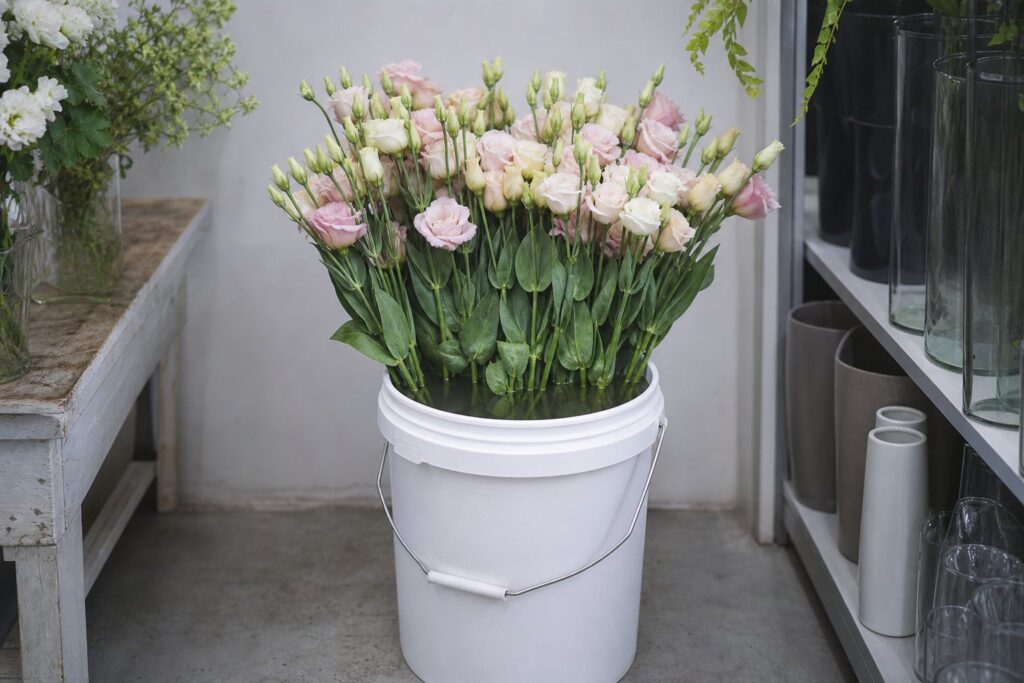
Here’s where lisianthus differs from a lot of cut flowers: it doesn’t love icy water. Cold-shocking lisianthus can cause the buds to stop opening altogether, which defeats the whole purpose of buying the flower.
My approach:
- Mix preservative with warm water — around 100°F (38°C) — in a clean bucket
- Place the freshly cut, dipped stems immediately into the solution
- Move to a cool room (50–60°F is ideal), out of direct sun — not the cooler if you can avoid it
- Let them condition for at least 4 hours, ideally overnight
If you’re using lisianthus for event work, conditioning them overnight is recommended every time. The flowers arrive at the shop a little tired from transit and need time to become fully conditioned. Arrange them too soon, and they’ll wilt mid-event. Arrange them rested, and they’ll outlast the wedding by a week.
For a full walkthrough on the conditioning sequence I use for everything in the shop, my flower processing guide covers everything in detail.
Display Lisianthus Smarter Than the Average Flower
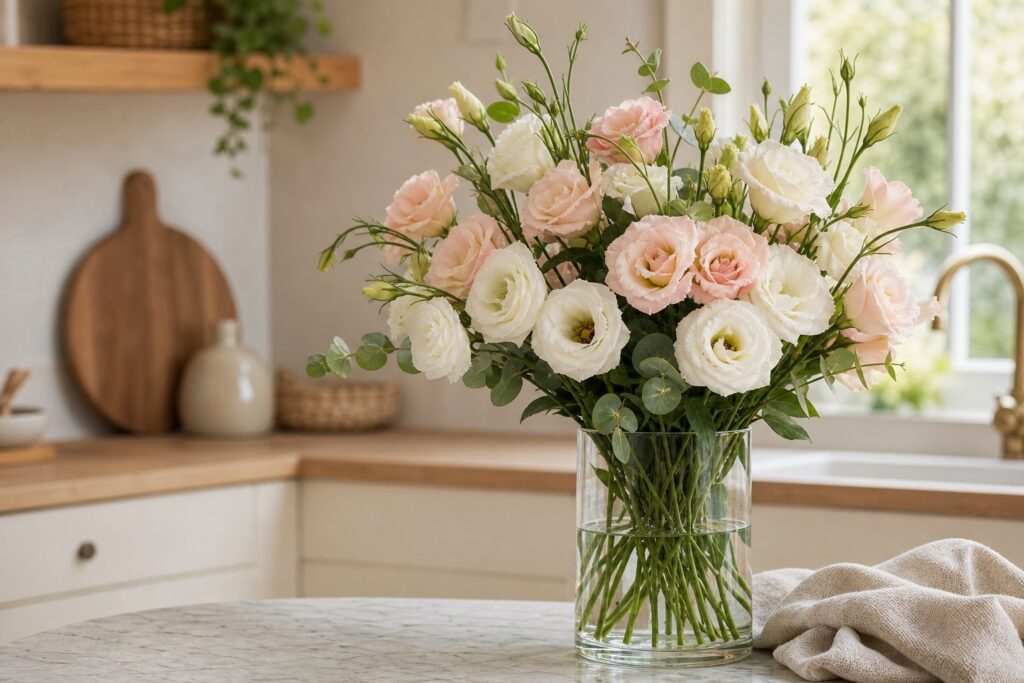
Once your lisianthus is conditioned and ready for an arrangement, the display environment matters more than people realize. A few rules:
- Use a clean glass vase. Metal or plastic harbors bacteria, and lisianthus is allergic to bacteria.
- Keep them cool. 65–72°F is the sweet spot. Anything warmer accelerates bloom opening and shortens display life.
- Avoid drafts and direct sun. Heating vents, sunny windows, and AC vents will dehydrate the petals fast.
- Keep them away from fruit. Ethylene gas from ripening fruit accelerates wilting in basically every cut flower, but lisianthus is especially vulnerable.
If you’re doing a low, dense centerpiece and the lisianthus stems are flopping, support them with a wire mesh grid or a frog. The blooms are heavier than the stems can sometimes carry, especially on multi-bloom stems.
Maintain Daily — It’s Worth It
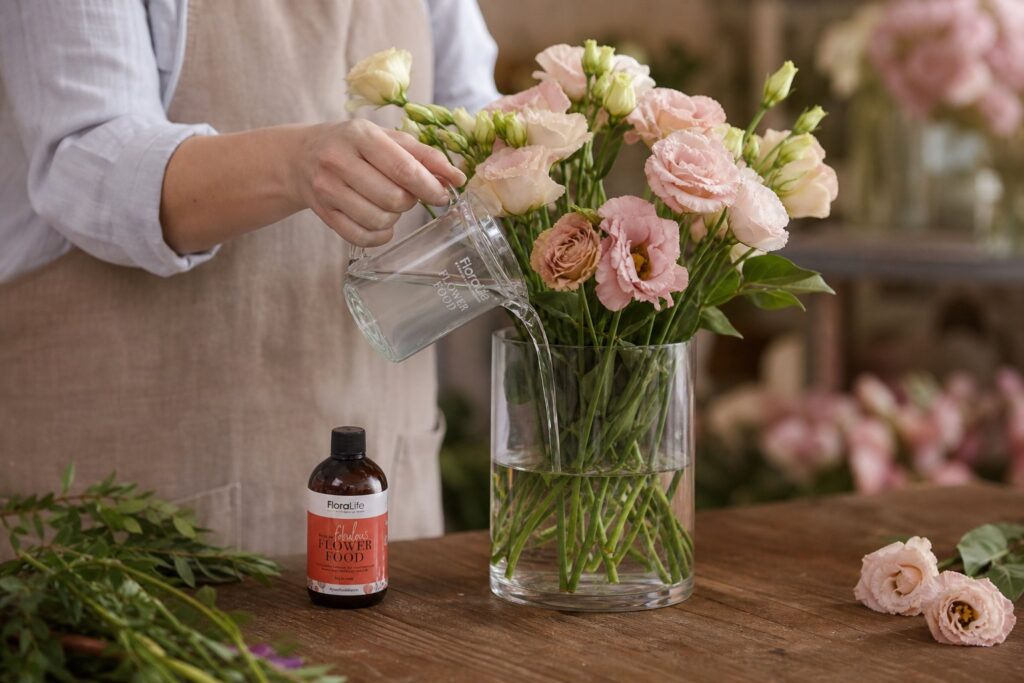
Maintenance is where most people lose their lisianthus. Skip the daily check, and you’ll cut the vase life roughly in half. Don’t skip it.
- Top up the water daily with fresh preservative solution, not plain tap water
- Change the water entirely every 2–3 days and recut the stems each time
- Pluck spent blooms as they fade, so the energy goes to the buds still opening
- Keep the vase squeaky clean — bacterial film on the glass shortens vase life dramatically
Florists never die. They make other arrangements. But lisianthus will absolutely die if you ignore it for four days straight, so set a reminder if necessary.
Recommended Tools for Lisianthus Care
A short list of what’s earned a permanent spot on my workbench for this flower specifically:
| Item | Why It Matters for Lisianthus | My Pick |
|---|---|---|
| Floral knife | Clean angle cuts without crushing the stem | Victorinox Floral Knife |
| Stem dip solution | Immediate hydration after cutting | Floralife Quick Dip |
| Floral preservative | Antibacterial action — critical for this flower | Floralife Crystal Clear |
| Finishing spray | Seals petals on event-day arrangements | Floralife Finishing Touch |
If you’re trying to decide between finishing sprays for a wedding application, my finishing sprays comparison breaks down which one to reach for and when.
Design With Lisianthus, Don’t Just Stick It in a Vase
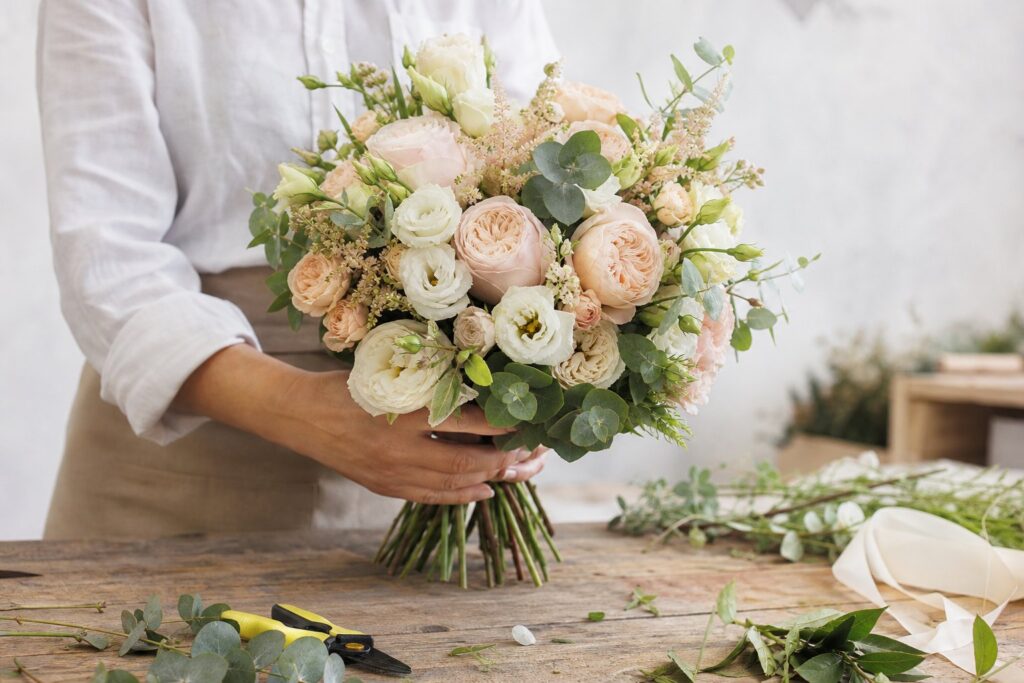
A quick aside on design, since I’d be doing this flower a disservice if I didn’t mention it. Lisianthus is one of the most versatile cut flowers I work with. It pairs beautifully in:
- Romantic, garden-style bouquets — a near-perfect garden rose substitute at a fraction of the price
- Bridal bouquets — the soft ruffled petals photograph as well as anything in the cooler
- Modern, monochromatic arrangements — the buds add architectural interest you won’t get from roses alone
- Sympathy work — the white varieties are quietly elegant in a way that lasts
If you’re working on a wedding bouquet and want a real-world example, my garden rose wedding bouquet tutorial walks through how I incorporate lisianthus to stretch the look without stretching the budget.
Frequently Asked Questions
How long do cut lisianthus last in a vase?
With proper care, expect 10–14 days. Well-conditioned lisianthus held in clean water with regular preservative refreshes can hit 16–18 days. That’s longer than almost any other cut flower I work with.
Why is my lisianthus drooping?
Almost always one of three causes: dehydration from skipped processing, bacterial buildup in dirty water, or cold-shock from icy water or the cooler. Recut the stems at a sharp angle, dip in Quick Dip, and rehydrate in warm preservative water for several hours.
Will the buds on my lisianthus stem open?
Yes, that’s the magic of this flower. Tight buds will continue to open over the course of the vase life as long as the stem is hydrating well. Keep the water clean, top up daily, and you’ll see fresh blooms appearing throughout.
Should I refrigerate lisianthus overnight?
I generally don’t, and I’d recommend against putting it in a home fridge. Cold-shocking can stop the buds from opening, which is the opposite of what you want. A cool room (50–65°F) is plenty. Florists with proper coolers can hold them at higher cooler temps without issue.
Are lisianthus toxic to pets?
According to the ASPCA, lisianthus (eustoma) is non-toxic to cats and dogs, making it a much safer choice than lilies or tulips as cut flowers in pet-friendly homes.
Can I use lisianthus in floral foam?
Yes, and it performs well in foam, but make sure the foam is fully saturated before insertion and check daily that it stays wet. Lisianthus stems are softer than rose stems, so insert them at an angle and don’t force them.
What’s the difference between a lisianthus and a garden rose?
Lisianthus has the ruffled, romantic look of a garden rose at roughly half the price, with longer vase life. Roses have a richer fragrance and more bloom mass per stem. For budget-conscious weddings, lisianthus is one of the best substitutes I know.
How much do lisianthus stems cost?
Pricing varies, but in my experience: $3–$5 per stem at retail florists, $1.50–$3 per stem from wholesale online sources (with bulk minimums), and $7–$12 per small grocery store bunch. Each stem produces multiple blooms, so the per-bloom value is excellent.
Closing Thoughts
Lisianthus is one of those flowers that rewards the people who take it seriously. The processing isn’t complicated, just specific. Strip the foliage hard, cut clean at a sharp angle, dip in Quick Dip, condition cool but not cold, and check on it daily.
Do those things, and you’ll get a flower that opens slowly, holds its color, and outlasts almost everything else in the cooler. That’s a lot of mileage for a stem that costs a few bucks.
Plant the right care habits today, and your lisianthus will keep blooming for you long after most other flowers have faded. I’d love to hear what varieties you’re working with. Drop a note in the comments and let me know how it’s going.
Til next time,