Disclosure: This post may contain affiliate links. If you click and buy, we may earn a commission at no extra cost to you. As an Amazon Associate, we earn from qualifying purchases.
Last Updated: August 2026
A customer called the shop in a panic a few Halloweens ago. Her cat had knocked over a lily arrangement and chewed on a petal before she caught it. She spent the evening at the emergency vet instead of handing out candy. That call is the reason I bring this up every year before anyone finalizes their Halloween decor.
Most people don’t think about flower toxicity until something like that happens. A little planning up front means you never have to find out the hard way.
Know Which Flowers and Plants to Avoid Around Pets
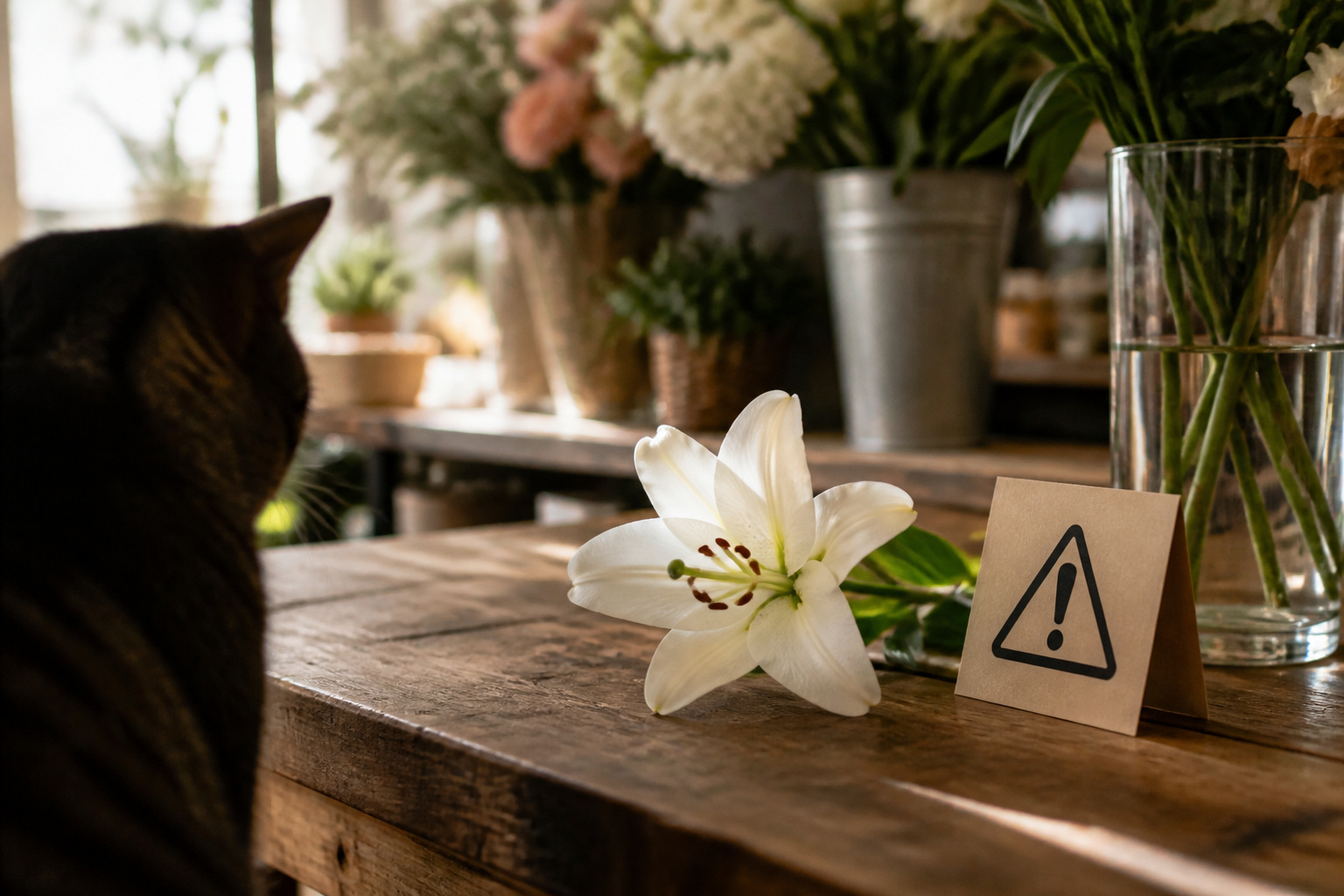
Lilies are the big one, and cats specifically. Every part of a lily- petals, leaves, pollen, even the water in the vase- is highly toxic to cats and can cause kidney failure. If you have a cat in the house, lilies shouldn’t be anywhere they can reach, full stop.
Other common culprits around Halloween arrangements include chrysanthemums, which can cause stomach upset in both cats and dogs, and autumn crocus, which is far more dangerous and can cause severe poisoning. Baby’s breath, a common filler flower, causes mild GI upset if chewed on. According to the ASPCA’s plant toxicity database, it’s worth checking any unfamiliar stem before it goes into a home with pets.
Reach for These Safe Substitutes Instead
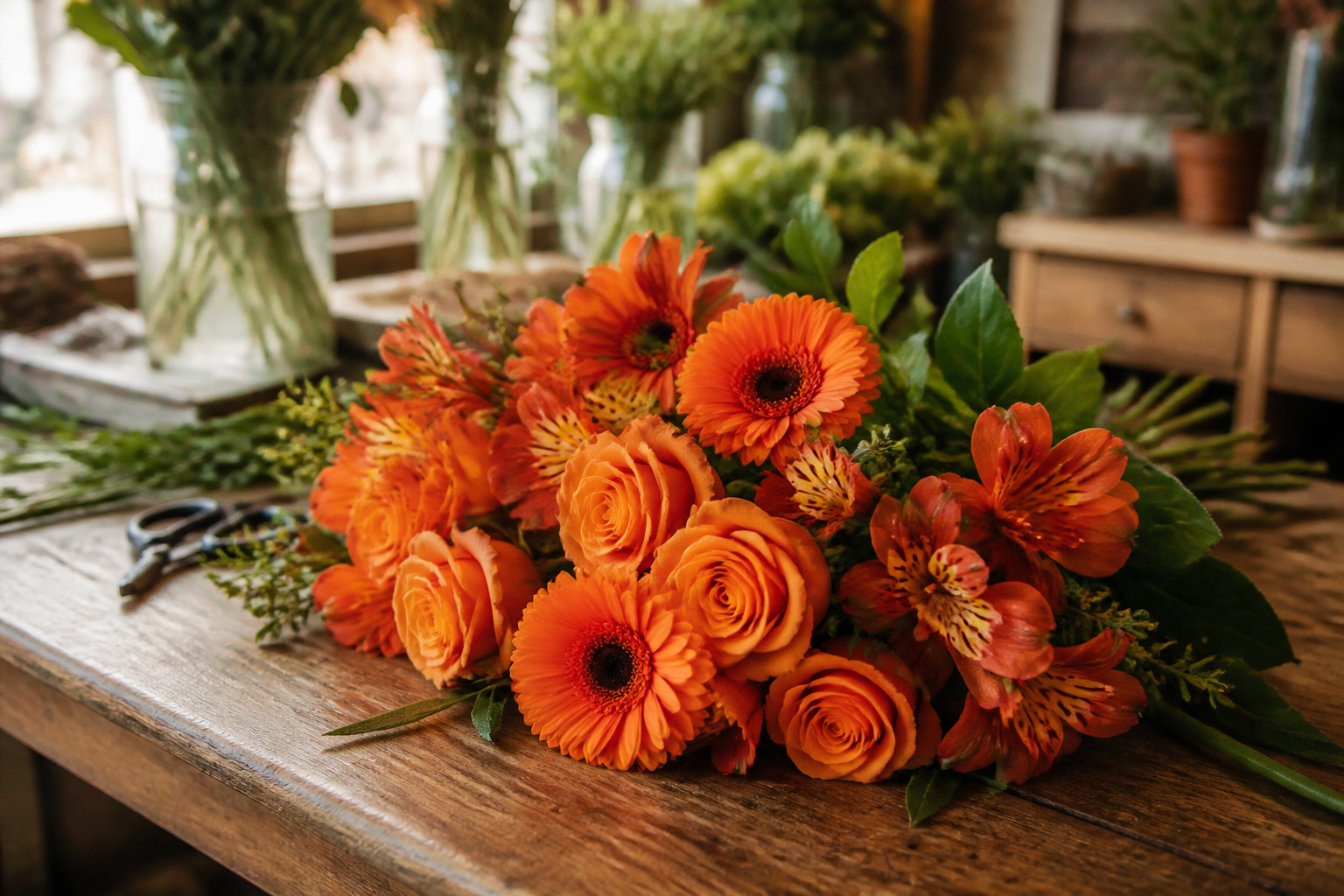
You don’t have to give up the Halloween look to keep it pet-safe. Roses, sunflowers, and orchids are all non-toxic and have plenty of color and texture to work with. Alstroemeria and gerbera daisies are both non-toxic too, and they hold their shape and color well into the week, making them useful stand-ins for shorter-lived blooms.
What I’d do: if a customer specifically wants mums for that classic fall look but has a cat at home, I’ll build the arrangement with the mums positioned toward the back or center, out of easy reach, rather than talk them out of the flower entirely.
Keep Candy, Candles, and Small Props Out of Reach
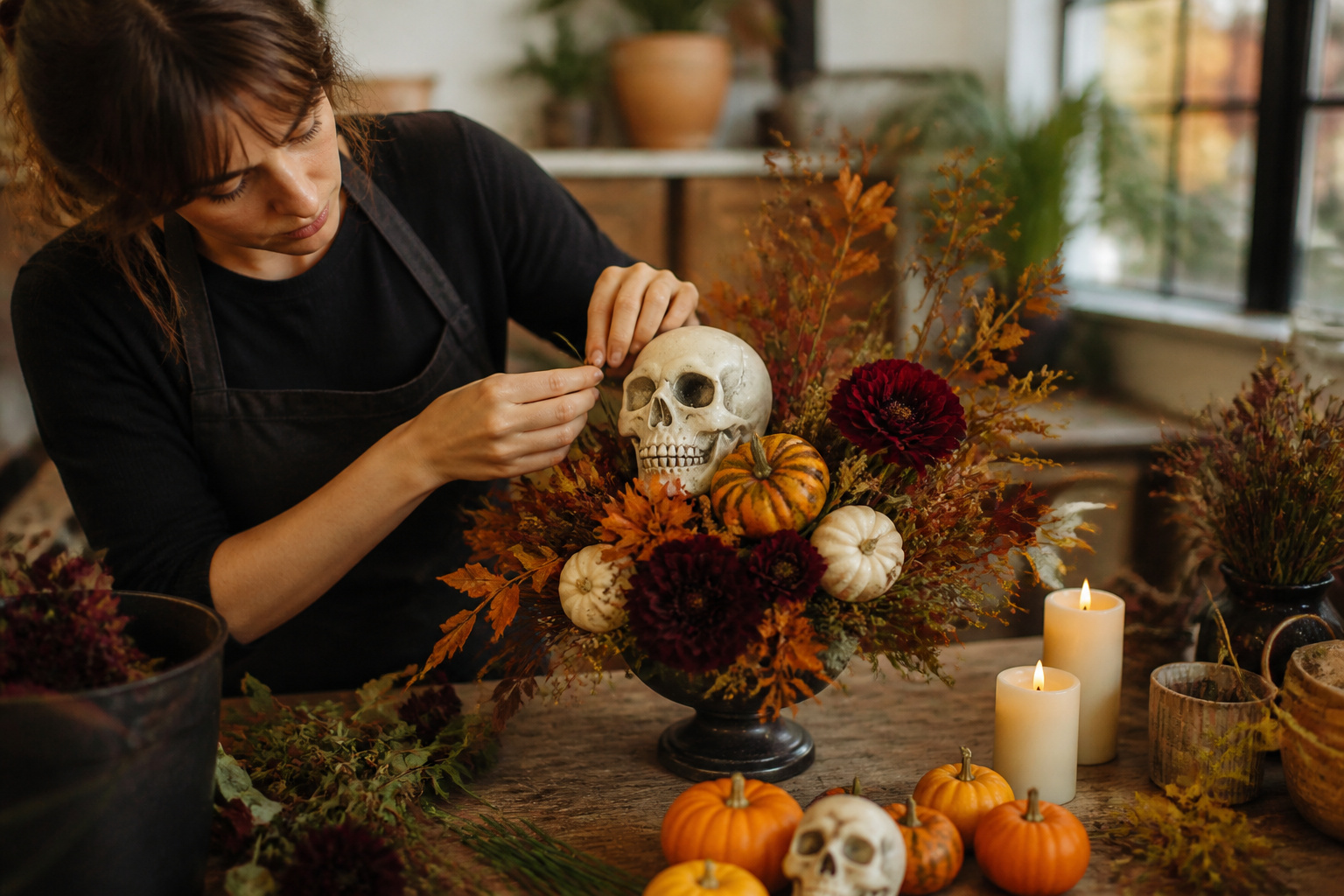
Flowers aren’t the only hazard in a Halloween display. Small decorative props, plastic skulls, mini pumpkins, and loose beads are a choking risk for both pets and small kids, and they tend to end up on the floor faster than anything else in the arrangement.
I go into more detail on securing small props so they don’t come loose in my skull-and-bones arrangement post, since that build uses more small pieces than most.
Open flame is its own hazard around trick-or-treaters coming and going through the door all evening. Real candles get knocked over more easily than people expect in a busy entryway.
What I use in the shop: battery-operated candles anywhere pets, kids, or a steady stream of trick-or-treaters will be near the display.
Build a Simple Non-Toxic Centerpiece Anyone Can Make
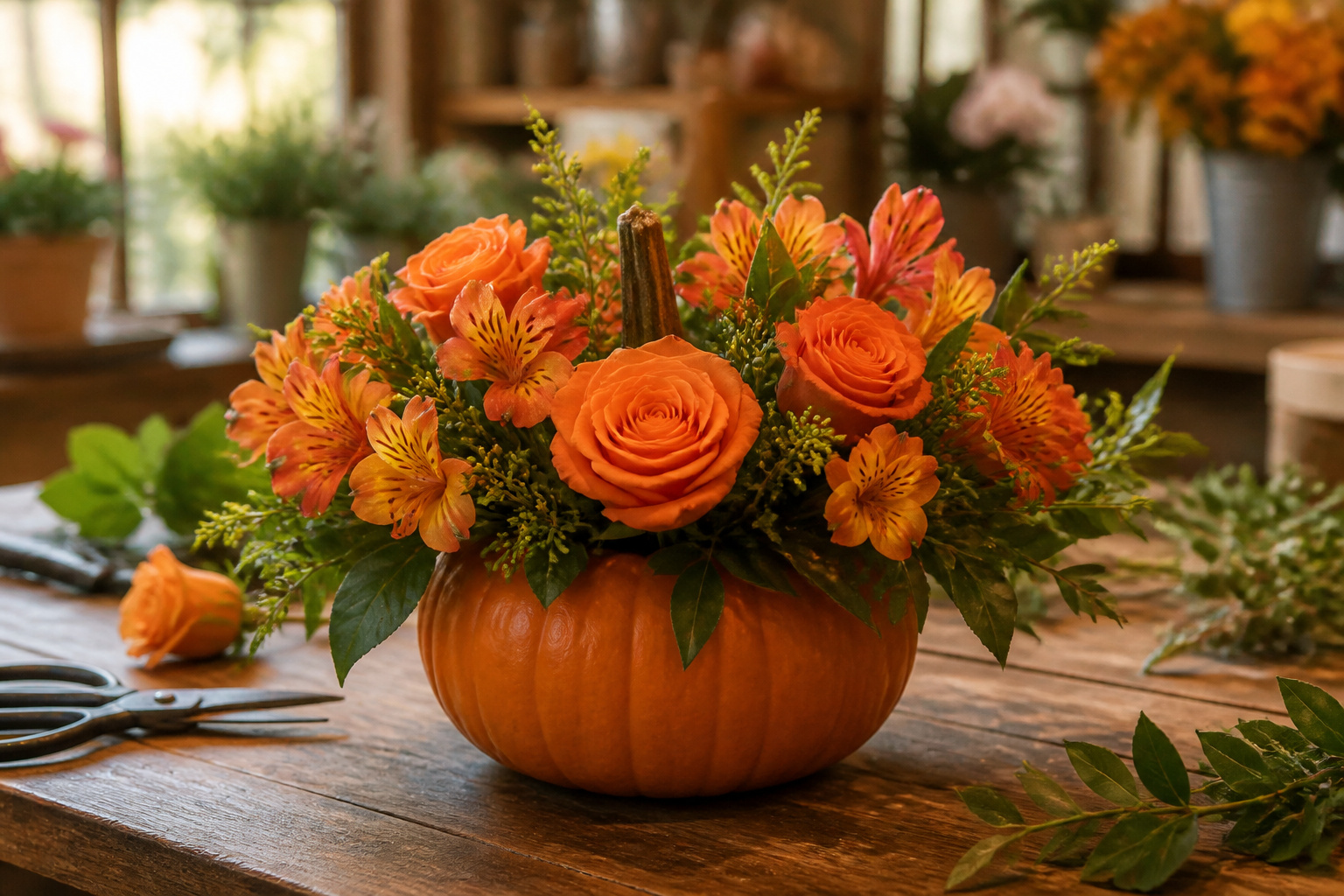
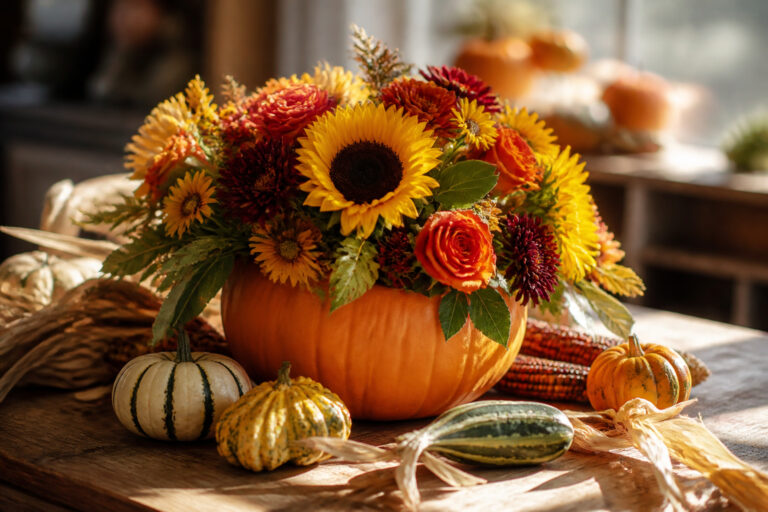
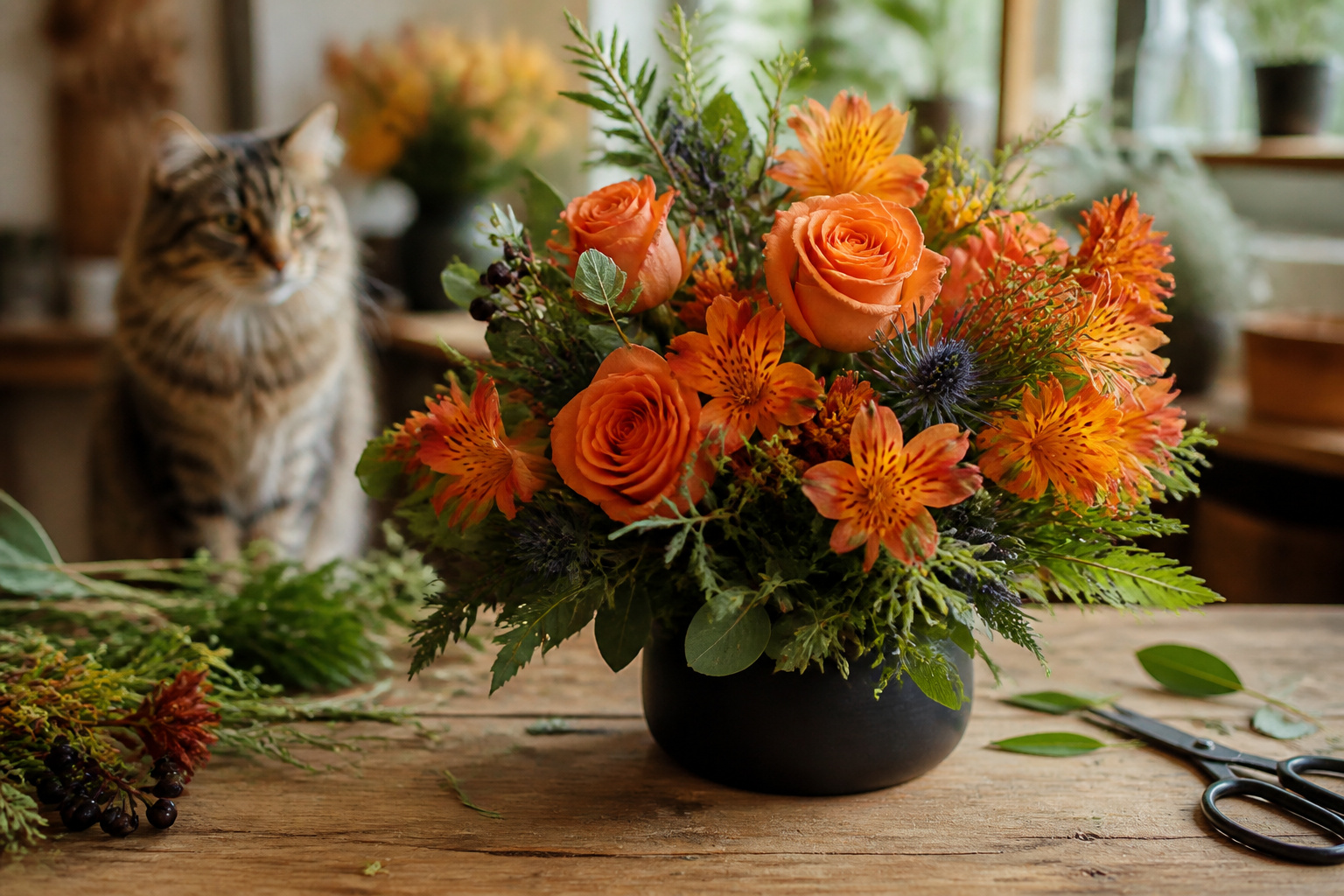
Start with roses or sunflowers as your base, since both hold color and shape well and carry zero toxicity risk. Add orange and purple accents with alstroemeria, which is non-toxic and inexpensive enough to use generously.
For pumpkins and gourds, real ones are non-toxic if chewed on, though not something you want your pet snacking on regularly. Faux pumpkins are the safer call if you know your dog or cat likes to investigate everything on the table.
What I use in the shop: if a client’s home has cats, I’ll recommend a pet-safe cut flower food for the vase water itself, since standard flower foods aren’t formulated with pets drinking from the vase in mind.
If you’re planning a bigger gathering around this arrangement, my Halloween party ideas post covers the rest of the table without adding more hazards to the room.
Frequently Asked Questions
Which common Halloween flowers are toxic to pets?
Lilies are the most dangerous, especially for cats, where every part of the plant is toxic. Chrysanthemums and autumn crocus are risks, and baby’s breath causes mild stomach upset if chewed.
What should I do if a pet eats one?
Call your vet or the ASPCA Animal Poison Control Center right away, and try to identify exactly which plant was involved. Don’t wait for symptoms to appear, especially with lilies and cats, where the window to prevent serious harm is short.
Are battery candles worth it for a house with kids or pets?
Yes. The look is close enough for most rooms, and it removes the open-flame risk entirely on a night when your door is constantly opening and closing.
Closing Thoughts
None of this means giving up a good-looking Halloween arrangement. It means knowing which flowers to swap out and which small details to double-check before the display goes up, so the only surprise on Halloween night comes from the trick-or-treaters.
Tell me in the comments if you’ve had a pet Halloween mishap of your own. I have a feeling I’m not the only one who’s gotten that call.
A safe arrangement and a good-looking one aren’t different projects. They’re the same one, done with a little more care.
Til next time,