
Disclosure: This post may contain affiliate links. If you click and buy, we may earn a commission at no extra cost to you. As an Amazon Associate, we earn from qualifying purchases.
Last Updated: May 13, 2026
A bride walked into the shop a few springs ago holding a Pinterest screenshot of a ranunculus bouquet. She wanted that exact bouquet for her May wedding, with soft, ruffled, almost peony-like ranunculus, with petals stacked like tissue paper.
I told her we could absolutely make it happen. What I didn’t tell her right away was that the ranunculus I’d ordered for her would arrive at our back door looking less like a dream wedding bouquet and more like a bundle of sad, dry sticks.
And that’s the whole secret with ranunculus. These flowers look fragile and finicky, but they’re actually one of the most forgiving cut flowers I work with, but only if you condition them properly the second they hit your workbench.
Mess up that first hour, and you’ll be throwing money away. Get it right, and you’ll get 7 to 10 days of vase life from blooms that look like they were grown in a fairy tale.
Here’s how we handle them at our shop, plus the mistakes I see DIYers (and a few rookie florists) make over and over.
Hydrate Them The Moment They Arrive
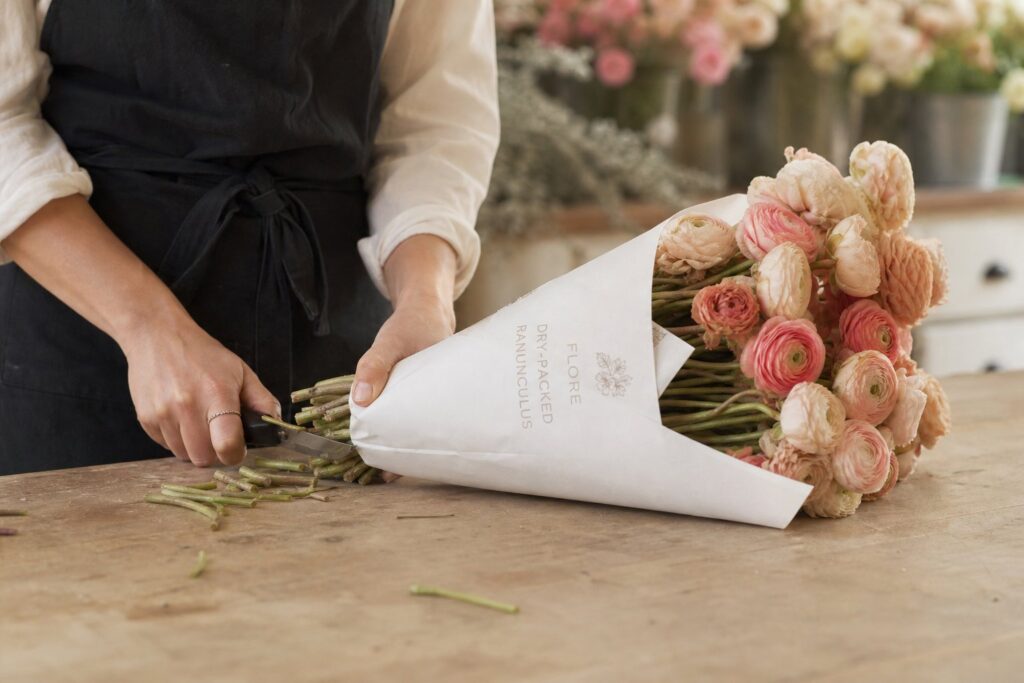
Ranunculus (a.k.a. Persian Buttercups) almost always ship dry-packed, with no water, and the bunch tightly wrapped in paper or plastic sleeves. That’s normal.
Don’t panic when you open the box and they look limp. They’re supposed to look that way. Your job is to wake them up.
Here’s exactly what we do at the shop:
- Leave the wrap on. The paper sleeve keeps the stems straight while they drink and prevents them from flopping sideways as they rehydrate.
- Trim about an inch off the stems using a clean, sharp floral knife or bunch cutter. Sharp tools matter. A dull blade crushes the vascular tissue, and the flower can’t drink. In my experience, this is the #1 fix-it for limp ranunculus.
- Dip the cut ends in a floral hydrating solution. I use Quick Dip from Floralife. A quick 1-second dip is all you need.
- Place the bunch in lukewarm water (100° to 110°F) in a clean bucket or vase. Lukewarm, not hot, not cold. Hot shocks them, cold slows the uptake to a crawl.
- Keep the water shallow — about an inch deep. Ranunculus stems are famous for rotting in deep water. I’ll explain why in a minute.
- Let them drink for 1 to 2 hours until the water reaches room temperature, and you see the flowers visibly perk up.
If you’re worried that they’re not going to bounce back, don’t be. I’ve watched ranunculus go from “I just threw $80 in the trash” to full, glorious, perky blooms in under 90 minutes, more times than I can count.
Don’t Drown The Stems
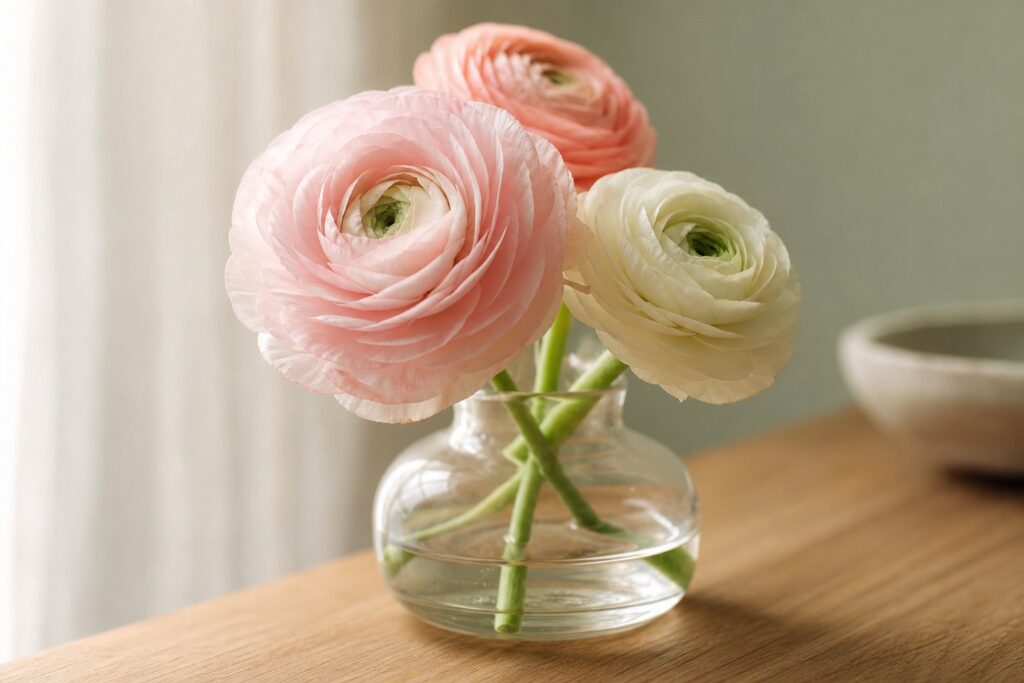
This is the part nobody tells you in those pretty Instagram reels. Ranunculus stems are hollow, and they rot fast. Stick them in a tall vase full of water like you would a rose, and within 48 hours, the bottom inch of the stem is going to turn into brown mush. Once that happens, the flower can’t drink anymore, and it’ll wilt no matter how much fresh water you keep adding.
The fix is simple: use shallow water — about an inch — both during the initial hydration and once they’re in their final vase. That’s it. That single change will buy you days of extra vase life.
Once your ranunculus have rehydrated, here’s the second step:
- Remove the outer wrap.
- Strip off any damaged foliage and side shoots. They’ll compete with the main bloom for water.
- Re-cut the stems on an angle.
- Transfer them into a clean vase with about an inch of fresh water and flower food added.
- Keep them in a cool spot, away from direct sun and fruit (more on that in a minute).
I use Floralife Crystal Clear® flower food at the shop because it’s gentle on delicate stems and keeps the water clear. Chrysal flower food is another solid choice if you can’t find Floralife. Skip the homemade aspirin-and-sugar concoctions — I know the internet loves them, but they don’t work as well as a proper preservative, and you’ll see the difference by day five.
Change the water and re-cut the stems every two days. If you notice the flowers starting to droop, that’s their way of telling you they’re not getting enough water — pull them out, give them a fresh cut, and they’ll usually come back.
Here’s the short video that walks through the whole conditioning process:

What I Use In The Shop
I get asked all the time what specific products I reach for when conditioning ranunculus. Here’s the short list — these are the exact items I keep within arm’s reach of the workbench:
- What I use in the shop: Floral knife — a sharp blade gives you a clean, angled cut that lets the stems drink properly. Dull tools crush the stem and choke off water uptake.
- What I use in the shop: Floralife Crystal Clear® flower food — keeps water clean, feeds the flowers, and is gentle on delicate stems like ranunculus.
- What I use in the shop: Floralife Quick Dip hydrating solution — a 1-second dip on arrival makes a real, visible difference in how fast they perk up.
- What I use in the shop: Oasis floral bunch cutter — when you’re processing a whole box of dry-packed bunches at once, this saves serious time. Buy a spare compression spring while you’re at it.
- What I use in the shop: Foliage and thorn stripper — useful for cleaning up side shoots and damaged leaves before the final cut.
Know Your Ranunculus Varieties
Ranunculus has quietly become one of the most popular wedding flowers in the world. After roses, they’re the second most-requested wedding bloom in our shop — outpacing both peonies and dahlias. And I get it. They’ve got the ruffled softness of a peony, the color range of a tulip, and they hold up beautifully in a bouquet.
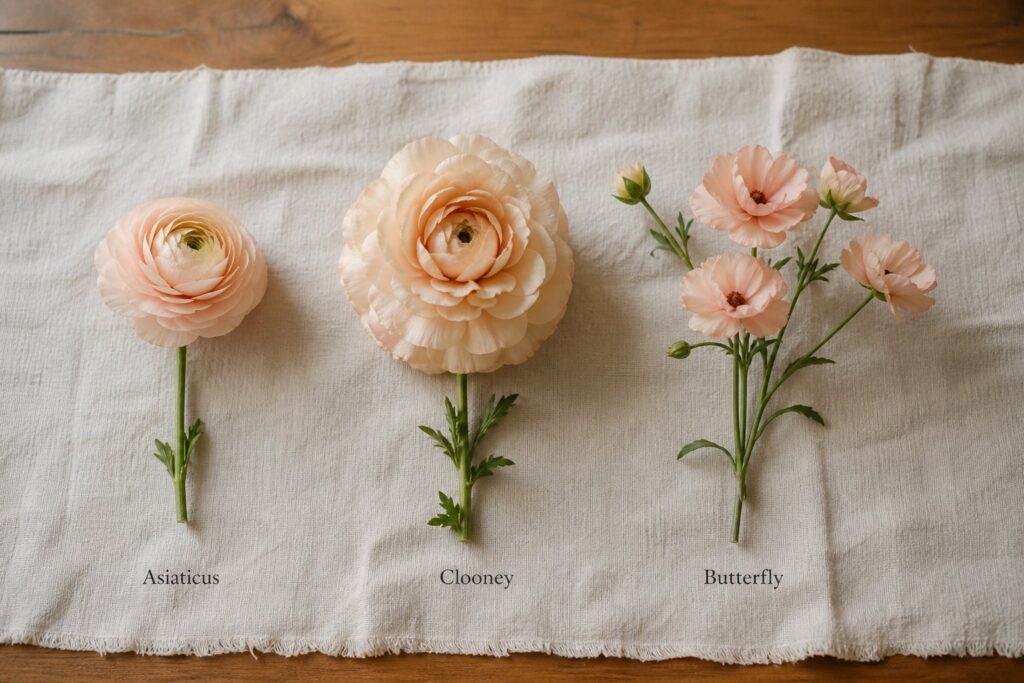
The variety you’ll see most often is Ranunculus “Asiaticus” — the classic, multi-petaled, almost-peony-shaped bloom. It comes in:
- Bright tones: red, deep purple, hot pink, orange, sunny yellow
- Pastels: blush, peach, cream, pale yellow, white
The pastels are what most brides are after these days. The brights are a workhorse for everyday arrangements and any festive event work.
Two other varieties worth knowing about:
- Clooney (Italian) ranunculus — bigger, fuller, almost garden-rose sized. These are the showstoppers. If you’ve seen a wedding photo where the ranunculus looked like it was on steroids, that was probably a Clooney.
- Butterfly ranunculus — airy and delicate, with 12-15 small flowers per stem and petals that look like butterfly wings. They have a waxy shine to the petals that actually helps extend their vase life, and they’re a dream for bohemian or rustic bouquets.
Ranunculus are technically available year-round through wholesalers, but peak season runs January through May. That’s when you’ll get the best stem length, the biggest heads, and the best per-stem pricing.
Design With Ranunculus Like A Pro
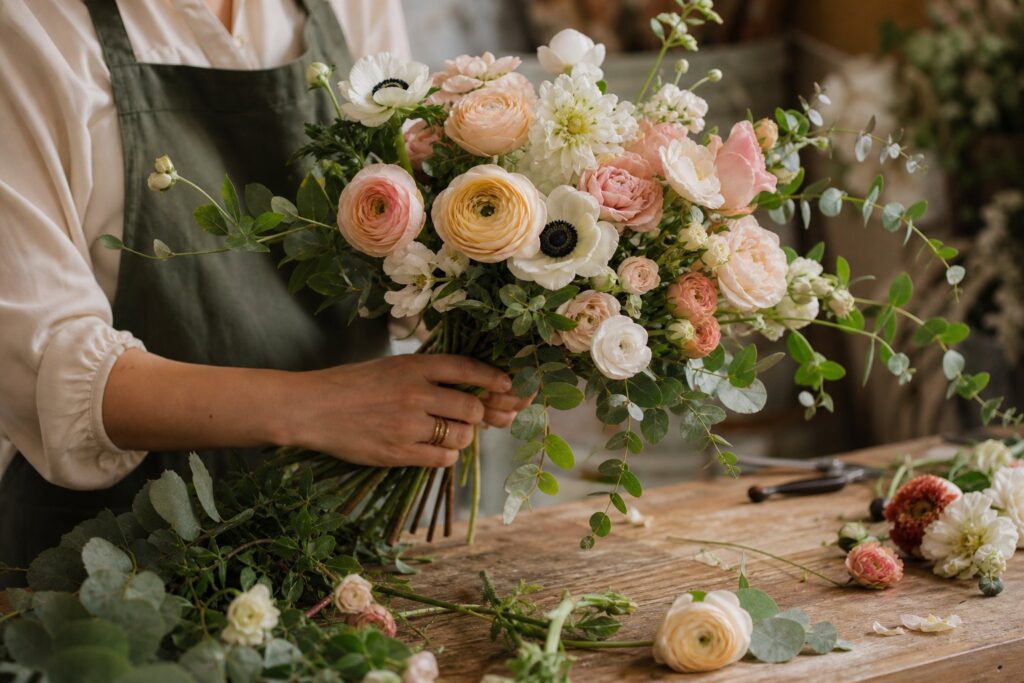
Once you’ve got ranunculus properly conditioned, the real fun starts. Here’s how I think about using them in arrangements:
Use them as a soft focal flower. Ranunculus aren’t quite the size of a peony or a garden rose, but they bring the same ruffled, romantic quality. I’ll often cluster three or five ranunculus together at the focal point of a bouquet — they read as one bigger bloom that way, and they hold the eye.
Pair them with texture, not competition. If you put ranunculus next to another ruffled flower, they get lost. Instead, pair them with:
- Anemones — the dark center plays beautifully against the ranunculus’s ruffled face
- Spray roses — for fullness without size competition
- Sweet pea or lisianthus — for a soft, romantic texture mix
- Eucalyptus or jasmine vine — to give the arrangement movement and breathing room
Color pairings I lean on constantly:
- Blush + peach + cream + white — the classic wedding palette, never goes out of style
- Burgundy + dusty pink + mauve — moody, modern, fall-perfect
- Sunny yellow + soft orange + white — spring brunch energy
- All-white with green — for clean, modern, minimalist arrangements
Here’s what I’d do if I were building a centerpiece at home: start with a low, footed bowl. Grid the top with floral tape. Put your greenery in first, then your focal ranunculus in clusters of three, then fill in with spray roses and a few stems of sweet pea trailing over the rim. Keep the water level shallow, and yes, even in your centerpiece, the shallow-water rule still applies.
Avoid These Common Ranunculus Mistakes
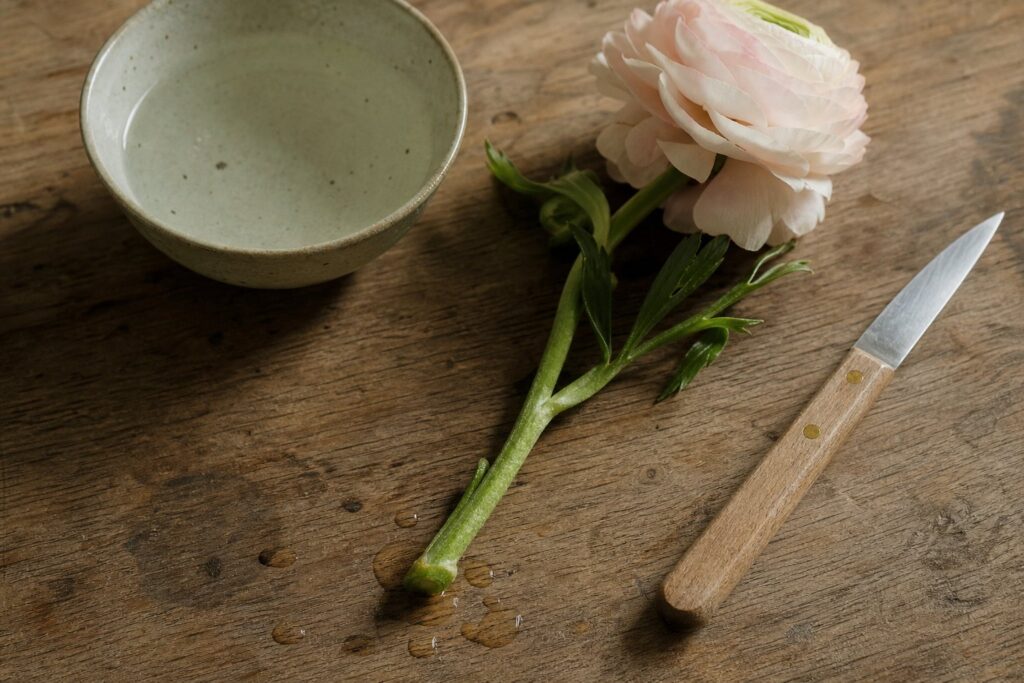
Most of the “my ranunculus died in two days” complaints I hear come down to one of these five mistakes. Sidestep them, and you’re 90% of the way there.
- Mistake #1: Deep water. The biggest killer. Stems rot, blooms wilt, game over. One inch of water. That’s it.
- Mistake #2: Skipping the flower food. Plain water grows bacteria fast, and ranunculus stems are especially vulnerable. Always use a proper preservative.
- Mistake #3: Storing them near fruit. Ripening fruit gives off ethylene gas, which makes the ranunculus age in fast-forward. Keep your bowl of fruit in another room.
- Mistake #4: Direct sunlight or heat vents. Ranunculus are cool-temperature lovers. A sunny windowsill or a spot above the radiator will fry them in a day.
- Mistake #5: Forgetting to re-cut. Every two days, fresh cut, fresh water. Non-negotiable. Stems seal over and stop drinking if you skip this.
Where To Buy Ranunculus In 2026
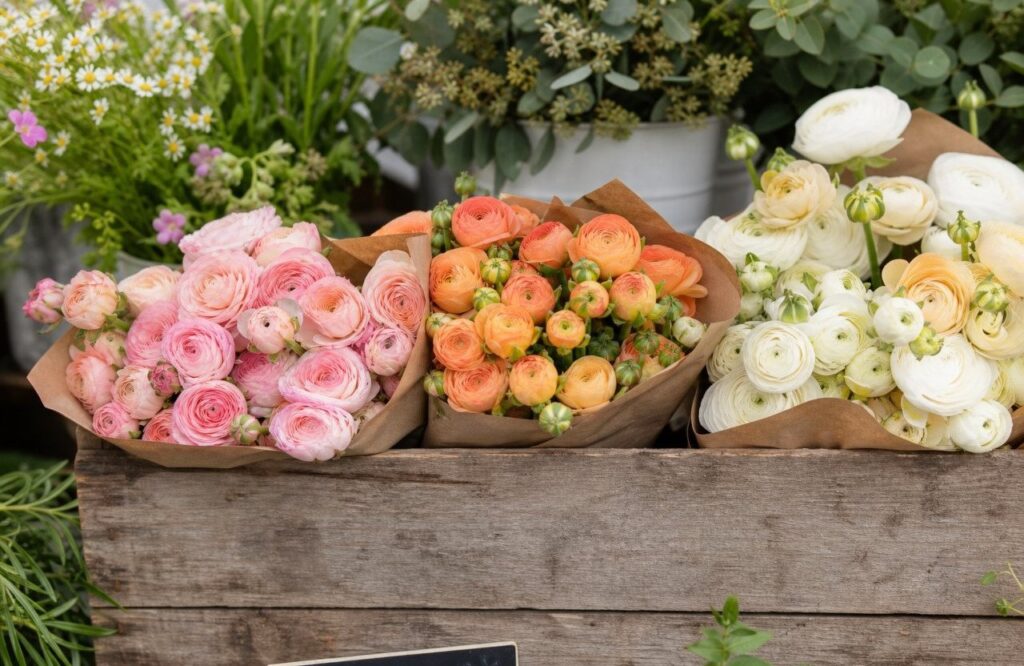
Ranunculus are still a bit of a specialty flower, so you’re not going to find them in every grocery store cooler. Here’s where to look, in the order I’d actually recommend:
- Your local florist (first stop, always). A good florist can order ranunculus in any color and variety you want, including the harder-to-find Clooney and Butterfly types, usually with a week’s notice. You’ll pay a bit more per stem than ordering wholesale, but you’re getting fresher flowers and someone who’ll stand behind them if there’s a problem.
- Farmers’ markets, January through May. If you live anywhere with a decent local-flower scene, peak-season ranunculus at the farmers market can be unbeatable in both quality and price. Look for growers who specialize in specialty cut flowers.
- Higher-end grocers. Trader Joe’s, Whole Foods, Wegmans, and similar stores carry ranunculus seasonally, usually in the spring. Quality varies wildly. Inspect before buying: the bloom should be tight and just barely opening, with firm stems and no slimy bits.
- Online wholesale (for events and weddings). If you need 5 or more bunches for a wedding, special event, or large DIY project, online wholesalers are where the math works in your favor. Check BloomsByTheBox, GlobalRose, FiftyFlowers, and FlowerExplosion. I’ve found their per-bunch pricing to be pretty competitive, and shipping is reliable. For Clooney and Butterfly varieties specifically, FiftyFlowers usually has the best selection.
A word of caution on online ordering: always order to arrive 3 to 5 days before you need them. That gives you a buffer if shipping is delayed, plus time to properly hydrate the flowers before designing.
Frequently Asked Questions About Ranunculus Care
How long do cut ranunculus flowers last in a vase?
With proper conditioning, 7 to 10 days is normal. I’ve had Butterfly varieties go 12 days when stored cool and re-cut on schedule. If yours are only lasting 2 or 3 days, something in your hydration setup is off, usually deep water, no flower food, or a heat source nearby.
Why do my ranunculus look limp when they arrive?
That’s totally normal. Ranunculus ship dry-packed from the grower, and they look pretty pitiful coming out of the box. Don’t panic. Trim the stems, dip them in hydrating solution, put them in shallow lukewarm water with the wrap still on, and give them 1 to 2 hours. They’ll come back.
Can I use ranunculus in floral foam arrangements?
You can, but I usually don’t. Ranunculus stems are hollow and delicate, and they don’t pierce foam as cleanly as a rose or carnation. If you have to use foam, you may have to pre-poke a hole with a wooden pick first, so the stem doesn’t crush on insertion. Honestly, though, ranunculus look better in a footed bowl with a tape grid or chicken wire, so they get the airy movement they’re known for.
Are ranunculus poisonous to pets?
Yes. Ranunculus contains protoanemonin, which is mildly toxic to dogs, cats, and horses if ingested. It can cause drooling, vomiting, and mouth irritation. If you’ve got a curious pet, keep arrangements out of reach. The ASPCA lists them on their toxic-plants list.
When do ranunculus open up after I get them?
It depends on how tight they are when you receive them. Wholesale ranunculus usually arrive in the bud-cracking stage, with the petals just starting to separate. Once hydrated and in warm room temps, they’ll open over 1 to 3 days. Want them to open faster? Move them to a warmer spot. Want them to hold tight? Keep them cooler. Easy to control once you know the trick.
What’s the difference between ranunculus and peonies?
They’re often mistaken for each other because of the ruffled, multi-petaled shape of the bloom, but they’re completely different flowers. Peonies are much larger (sometimes the size of a softball), have a fuller, more open bloom, and a shorter overall season. Ranunculus are smaller, more controlled, available for a longer chunk of the year, and significantly less expensive. If you want a peony look on a non-peony budget, ranunculus is your answer.
Closing Thoughts From The Workbench
Ranunculus get a reputation for being fussy, but the truth is they’re just specific. Treat them like the dry-packed, shallow-water-loving, cool-temperature divas they are, and they’ll repay you with some of the most romantic, photograph-worthy blooms you’ll ever bring home.
The bride from the beginning of this post? Her bouquet was stunning. The ranunculus that arrived looking like sad sticks turned into the soft, ruffled centerpiece of every photograph she has from that day. Prevention is key — get the conditioning right in the first hour, and the flowers do the rest of the work for you.
Plant the seeds of good habits today, the sharp knife, the shallow water, the right flower food, and your arrangements will bloom for days longer than you’d ever expect.
I’d love to hear from you in the comments. What variety of ranunculus is your favorite to work with? Have you found a color combination that’s become your go-to? Or is there a trick that’s saved a bunch of ranunculus from the compost bin for you? Drop a comment below. I read every one.
Til next time,