Disclosure: This post may contain affiliate links. If you click and buy, we may earn a commission at no extra cost to you. As an Amazon Associate, we earn from qualifying purchases.
Last Updated: August 2026
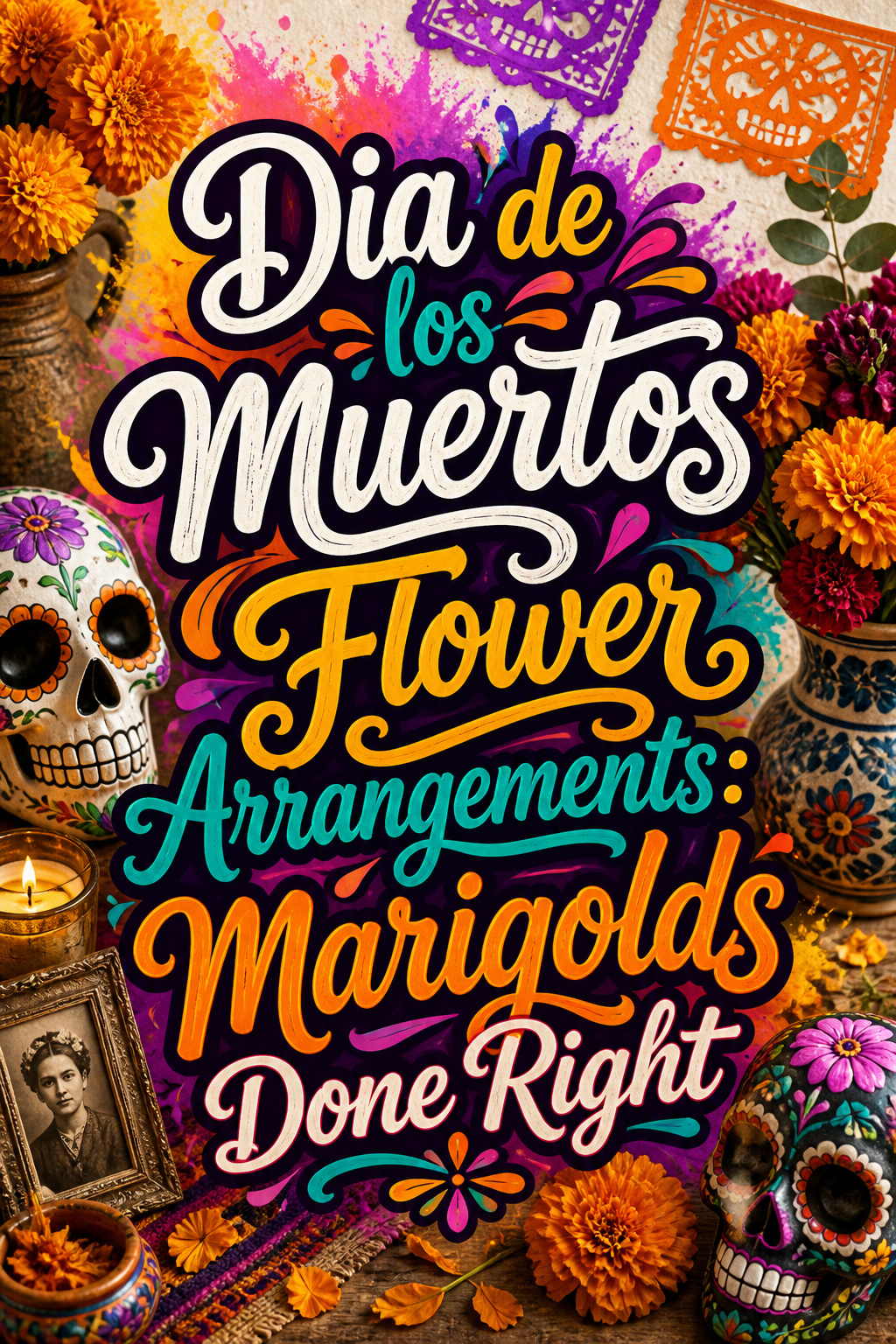
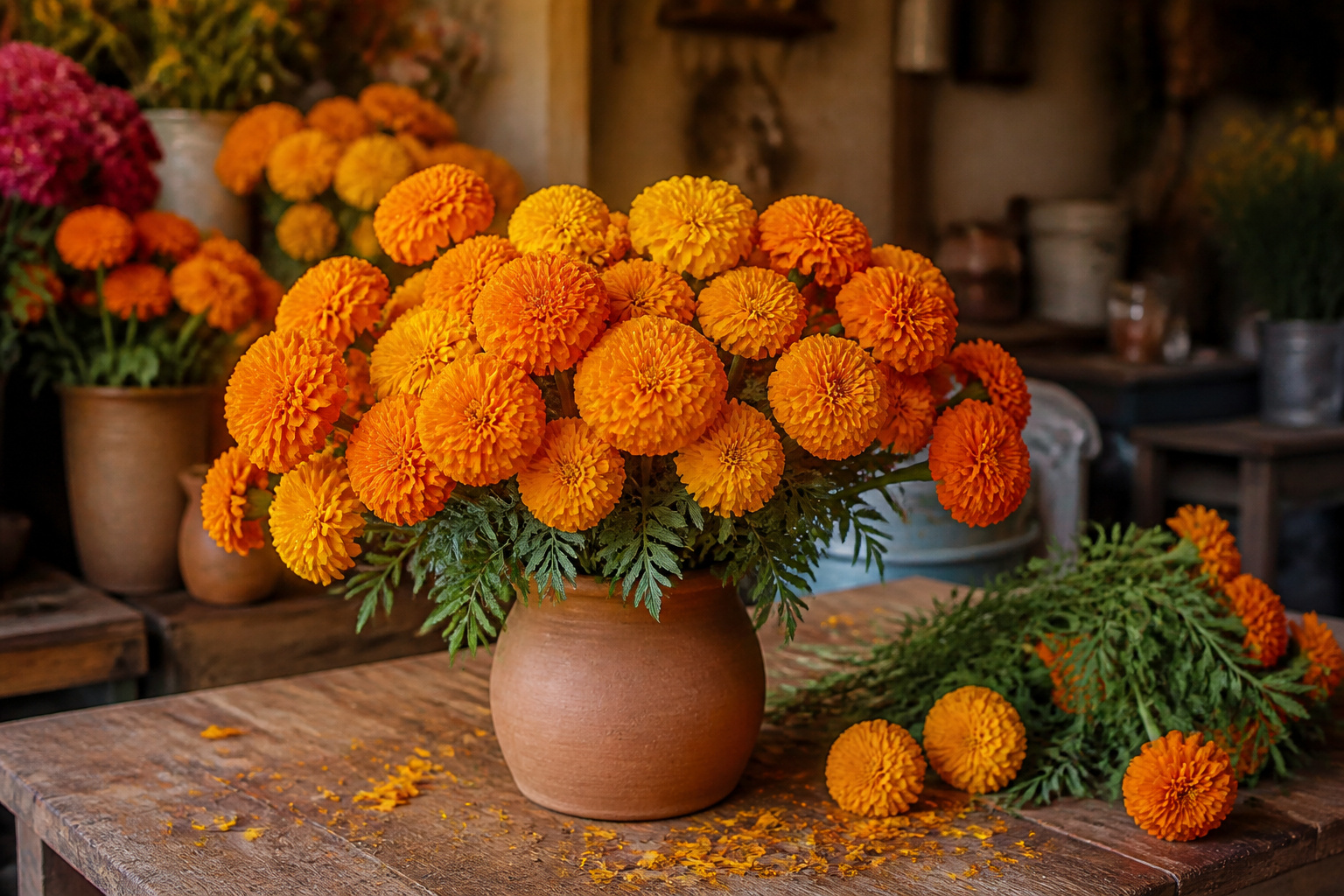
A customer stopped by the shop a couple of years back asking for “Day of the Dead flowers” to go with her Halloween display. I asked a few questions, and it turned out she was actually planning her first ofrenda for her grandmother, not decorating for Halloween at all. Those are two different projects, and they deserve to be treated that way.
This post is about the first one. If you landed here looking for spooky decor, my Halloween arrangement ideas post is a better fit. If you’re building an ofrenda, here’s what I know about the flowers that make it right.
Marigolds Are the Whole Point
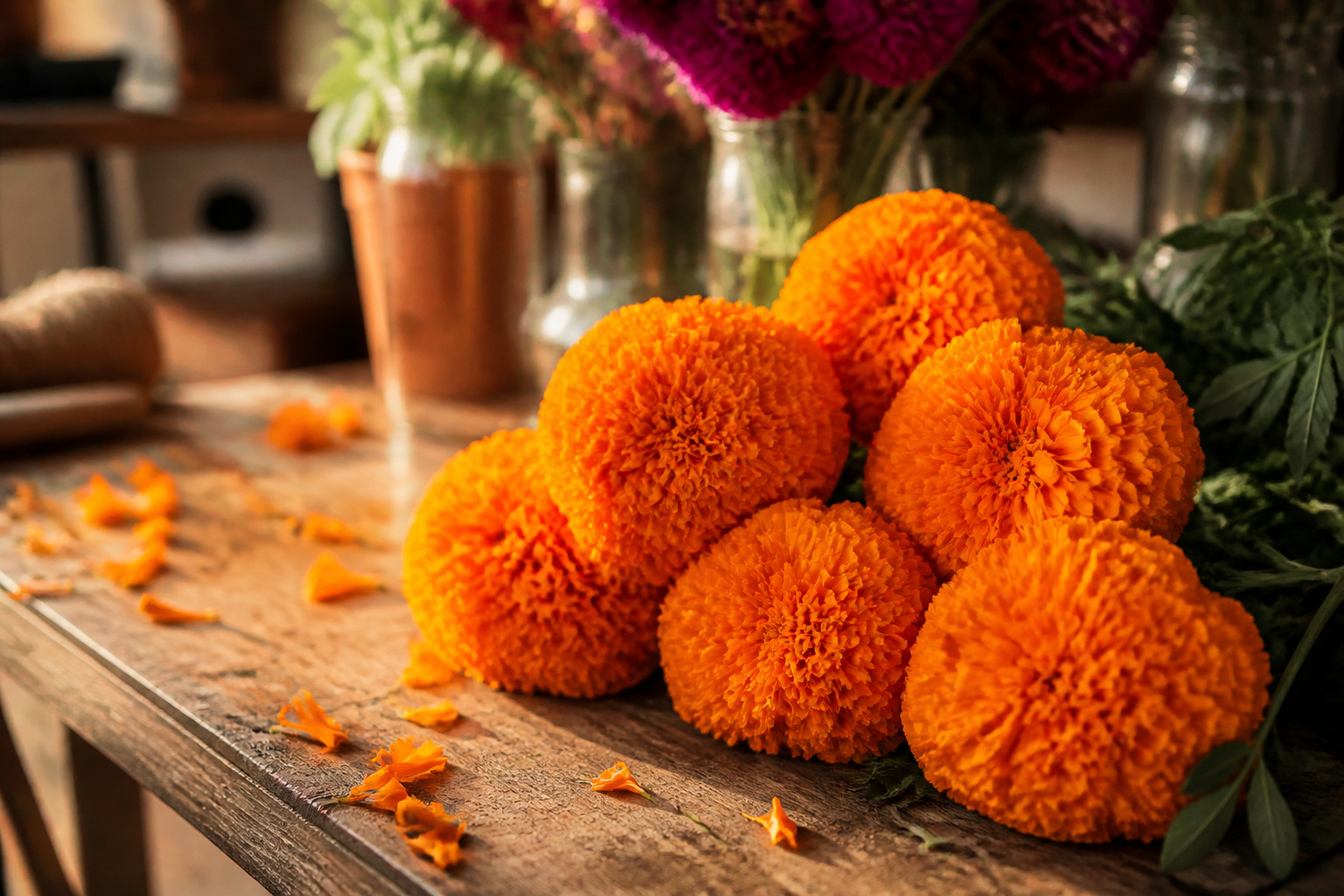
Cempasúchil, the Mexican marigold, is the flower most associated with Dia de los Muertos, and it isn’t a stylistic choice. In the tradition, the marigold’s bright color and strong scent are believed to guide the spirits of loved ones back home for the celebration. The petals are often scattered in a path leading to the ofrenda for exactly that reason.
I’ll say this plainly, since it matters: this is a cultural and spiritual tradition, not a Halloween variant. The colors overlap with the season, but the meaning behind the marigold doesn’t have anything to do with Halloween at all.
Build a Simple Ofrenda Arrangement
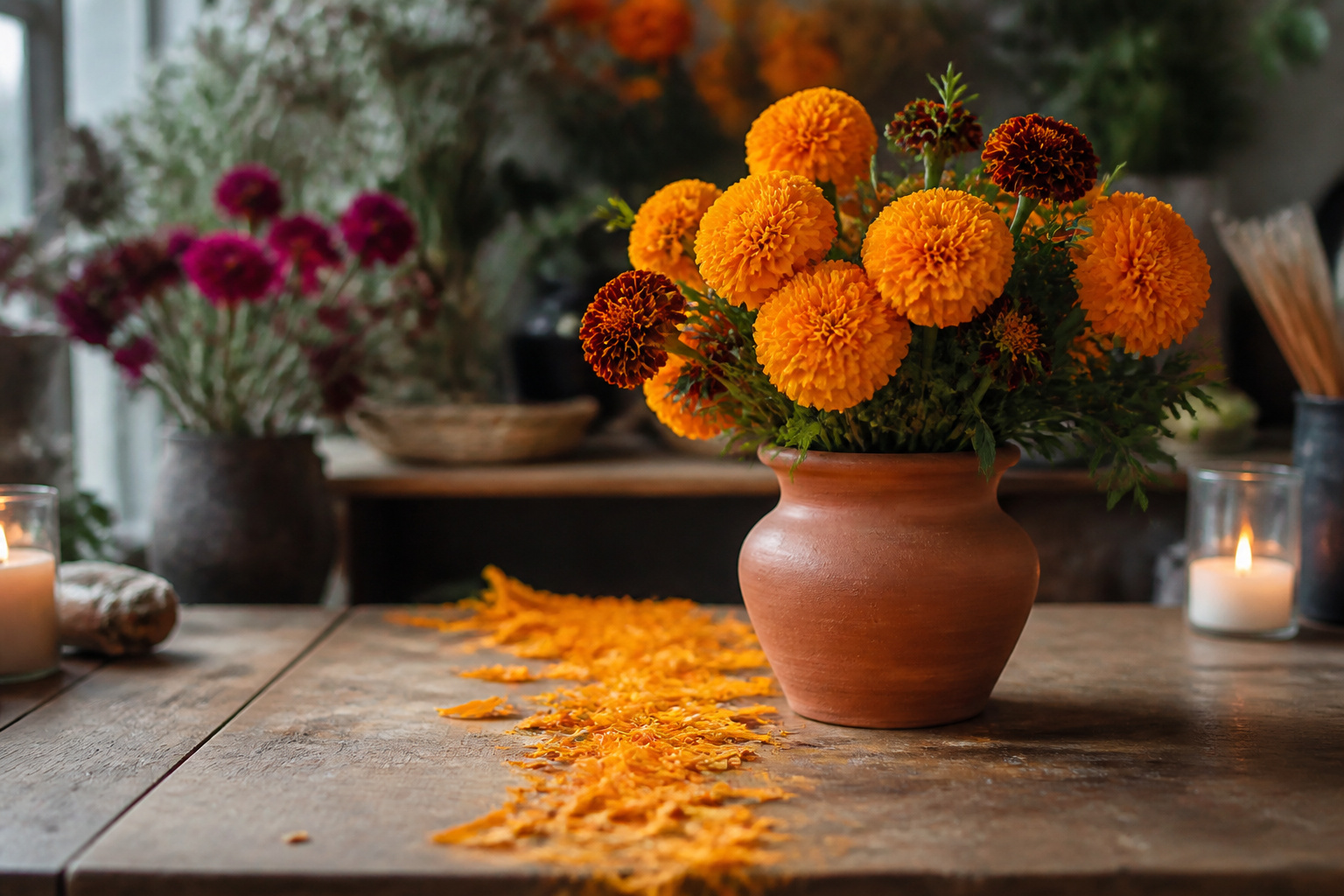
A traditional ofrenda arrangement doesn’t need to be complicated. Marigolds in a simple vase or gathered loosely at the base of the display do the job. Many families build an arch or a trail of petals leading up to the altar, using loose marigold heads rather than full stems.
What I’d do: if you’re short on marigolds, concentrate what you have where it’s seen first, at the entrance to the display or along the front edge, rather than spreading a small amount thin across the whole thing.
Pair Marigolds With Papel Picado and Candles
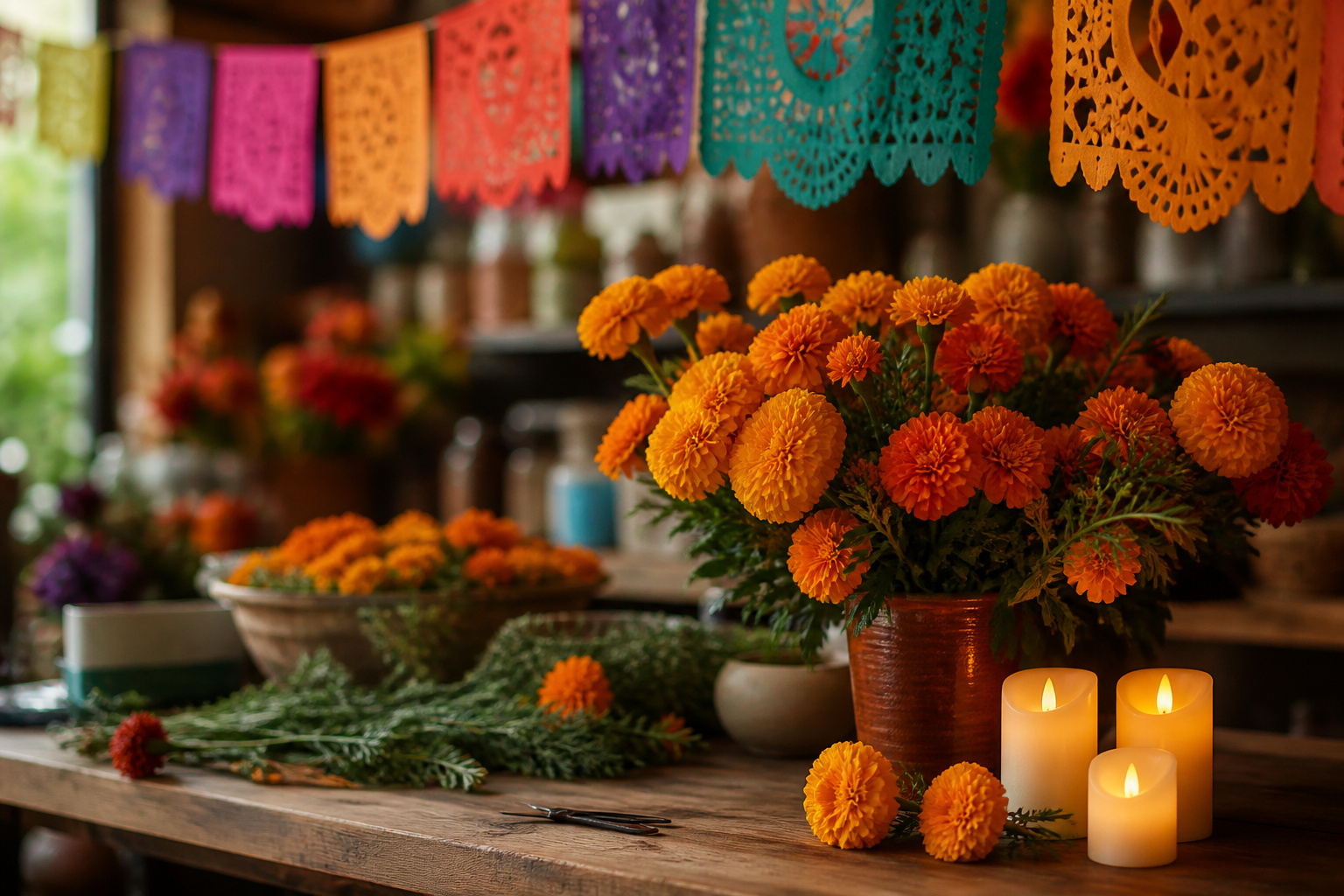
Papel picado, the perforated paper banners, add color and movement above the marigolds without competing with them. String a line of it above or behind the arrangement rather than tucking it in among the flowers themselves.
Candles are traditional as well, meant to help guide the spirits with their light. If the display will sit out for several days, battery candles are the safer choice around dried papel picado and marigold petals that dry out and become more flammable over time.
Source Marigolds in the U.S. in Late October
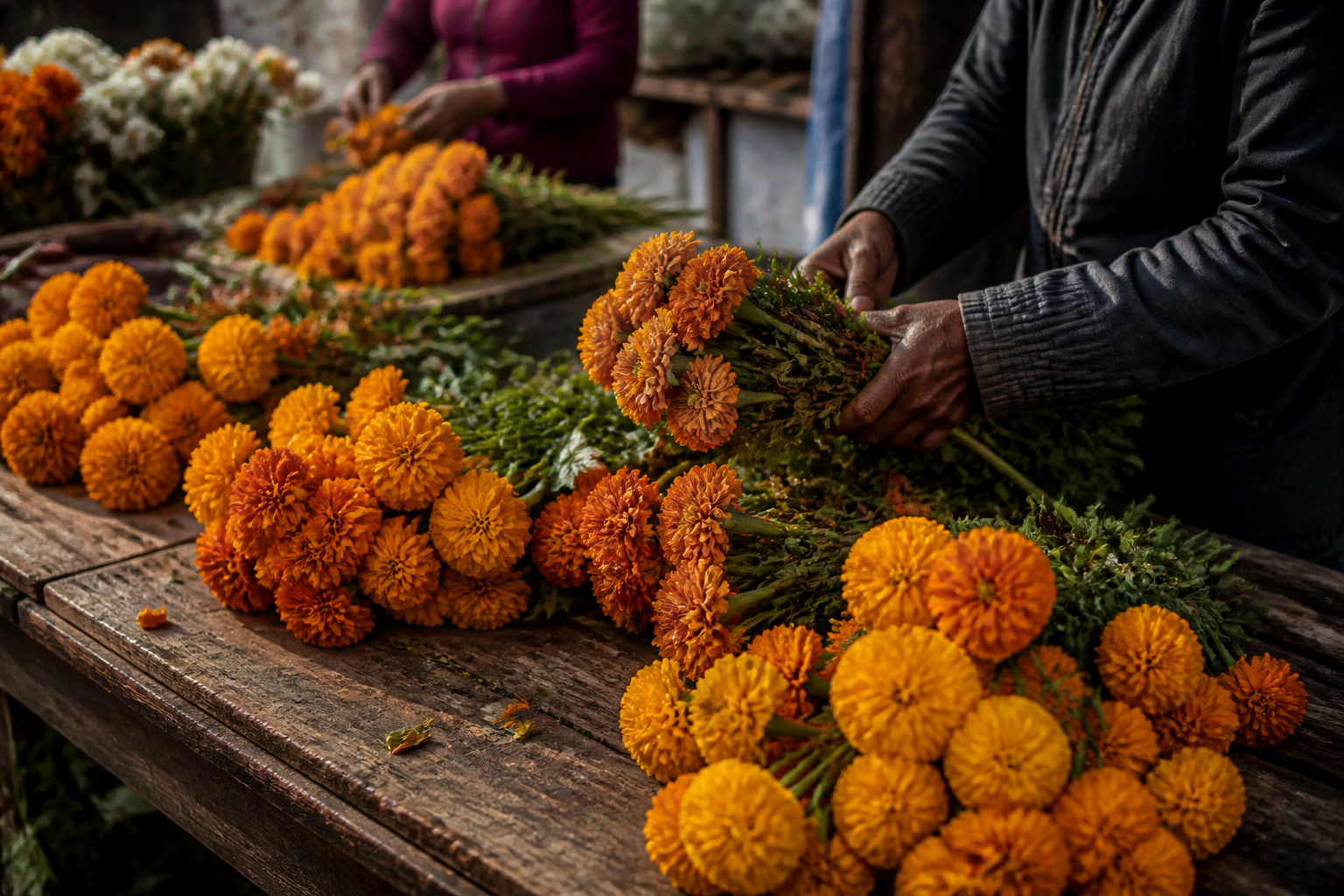
True cempasúchil can be harder to find outside of neighborhoods with a strong Latino market presence. A local Mexican grocery store or farmers market is usually the best first call, and many will bring in extra stock as Día de los Muertos approaches.
Standard African or French marigold varieties, the kind sold at most garden centers, are a reasonable substitute if cempasúchil isn’t available near you. The color and scent are close enough to carry the same visual effect, even if the exact variety differs.
Respect the Tradition While Decorating
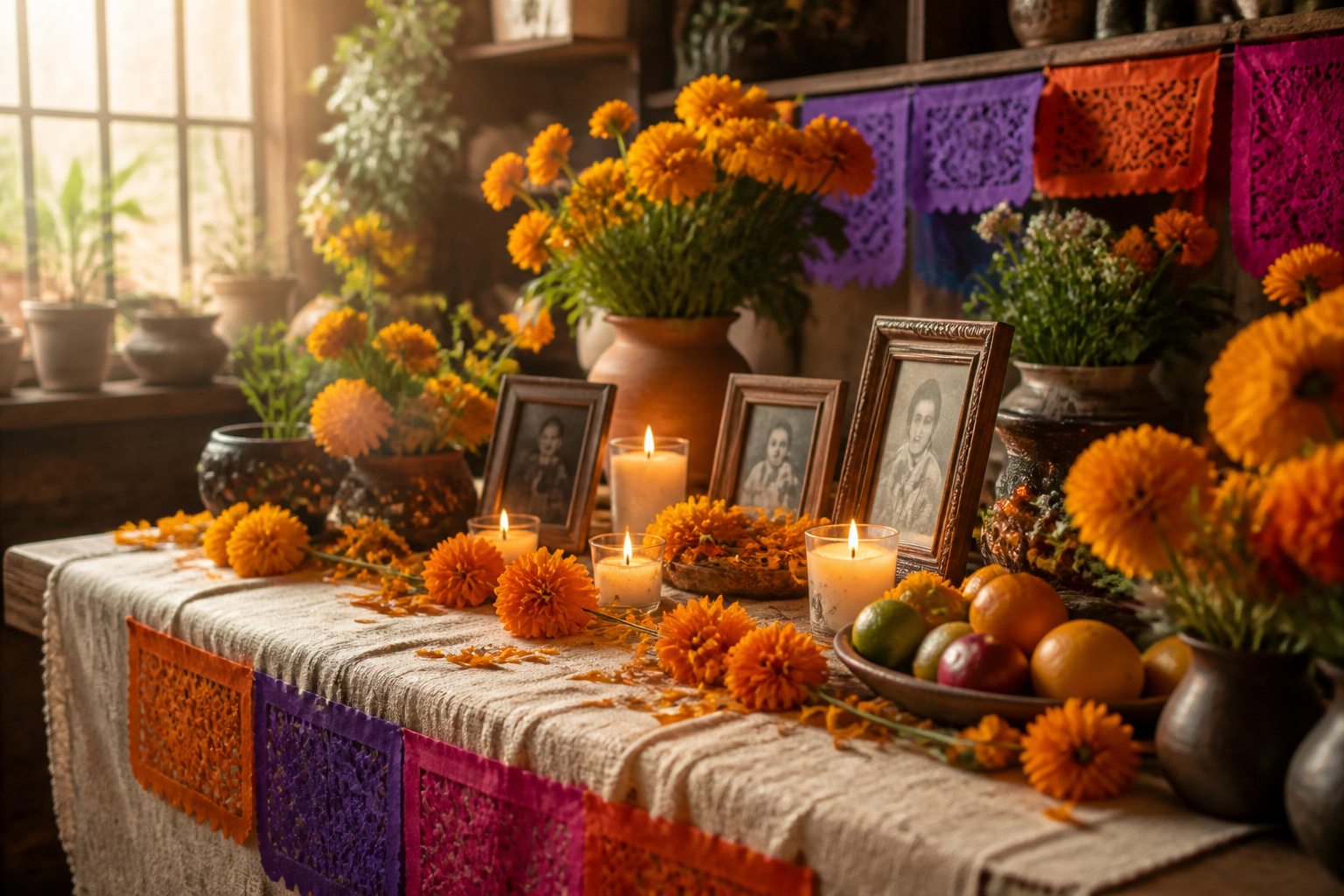
I’ll keep this part short, because it deserves to be said plainly rather than dressed up. Dia de los Muertos is a celebration of remembrance with real meaning behind every element: the marigolds, the candles, the photos of loved ones on the ofrenda. It’s not a costume theme, and it isn’t the same as Halloween decor, even though they land closely together on the calendar.
If you’re building an ofrenda for your own family’s tradition, the flowers matter less than the intention behind them. If you’re drawn to the aesthetic without the cultural context, that’s worth sitting with before you decorate.
What I use in the shop: marigold seeds if you want to grow your own cempasúchil-style blooms ahead of next year’s celebration, since fresh-cut marigolds aren’t always easy to source with short notice.
What I use in the shop: papel picado banners for the paper element, since authentic perforated designs are hard to recreate with anything else.
What I use in the shop: battery votive candles for any display that sits out for multiple days near paper and dried petals.
Frequently Asked Questions
What flowers are traditional for Día de los Muertos?
Cempasúchil, the Mexican marigold, is the primary flower. Some families also include white flowers such as baby’s breath or chrysanthemums to represent purity, but marigolds remain the central element.
When should the display go up and come down?
Traditionally, ofrendas are set up in the days leading up to November 1st and 2nd and stay up through the celebration. They come down shortly after.
How long do marigolds last cut?
Cut marigolds typically last five to seven days in water with a fresh cut and regular water changes. Loose petals used for a path or scattered decoration will dry out faster, usually within a couple of days.
Can mums substitute if marigolds aren’t available locally?
Mums can work in a pinch for color, but they don’t carry the same cultural meaning or scent marigolds do. If cempasúchil truly isn’t available, standard garden marigolds are a closer and more appropriate substitute than mums.
Closing Thoughts
Marigolds do more than fill a vase here. They’re doing the work the tradition asks of them, guiding the way home. Get that part right and the rest of the display, the candles, the paper, the photos, falls into place around it.
If you build an ofrenda of your own, I’d like to hear about it in the comments. What traditions does your family include?
Some blooms are grown to be admired, and some are grown to do a job. The marigold has always been the second kind.
Til next time,