
Disclosure: This post may contain affiliate links. If you click and buy, we may earn a commission at no extra cost to you. As an Amazon Associate, we earn from qualifying purchases.
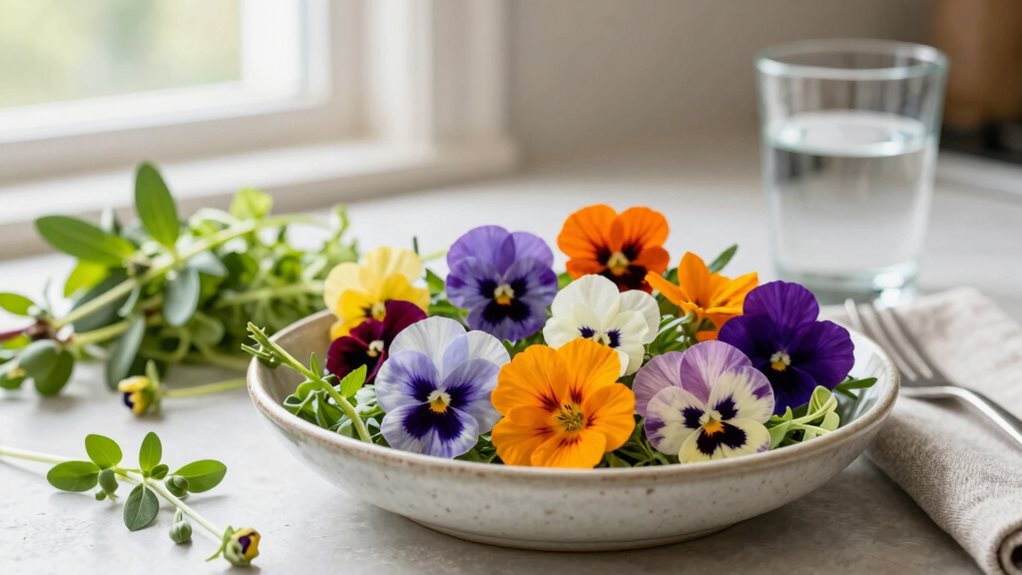
You can transform an ordinary dish into something striking with the right edible flower. Not every bloom belongs on your plate, though.
Some taste peppery, others sweet, and a few carry citrus notes that surprise you. Choosing wrong means bitterness, or worse.
Get this right, and your cooking changes completely.
Quick Overview
- Nasturtiums add a peppery, mustard-like punch to salads, while chive flowers lend a mild onion flavor perfect for savory garnishes.
- Roses offer strawberry and green apple notes for desserts; always remove the bitter white base before using.
- Borage blooms frozen into ice cubes elevate punches, while hibiscus petals steeped in water create a tart, cranberry-flavored drink.
- Herb flowers like basil blooms and cilantro blossoms add fresh, citrusy depth to pasta, salads, and salsas.
- Only source edible flowers from pesticide-free growers, and research each variety carefully, as some flowers are toxic.
What Makes a Flower Safe to Eat?
Not every flower belongs on your plate. Some flowers carry toxins that’ll make you seriously sick, so you’ve got to identify what you’re eating before it ever touches your food.
Stick to flowers grown without pesticides, and always source them from trusted growers, local florists, or your own garden.
Remove bitter white bases from roses, strip petals from their stems, and introduce new flowers slowly. Your body needs time to adjust. Research each flower carefully, cross-referencing reliable guides. If you’re pregnant, certain flowers are off-limits entirely.
Fresh-cut flowers used decoratively, such as in bud vases as centerpieces, are often sourced from growers who may use pesticides not approved for consumption, so always confirm edibility before eating any flower used in arrangements.
Know your flowers, trust your sources, and eat with confidence.
Edible Flowers and Their Flavor Profiles: Peppery, Sweet, and Citrusy
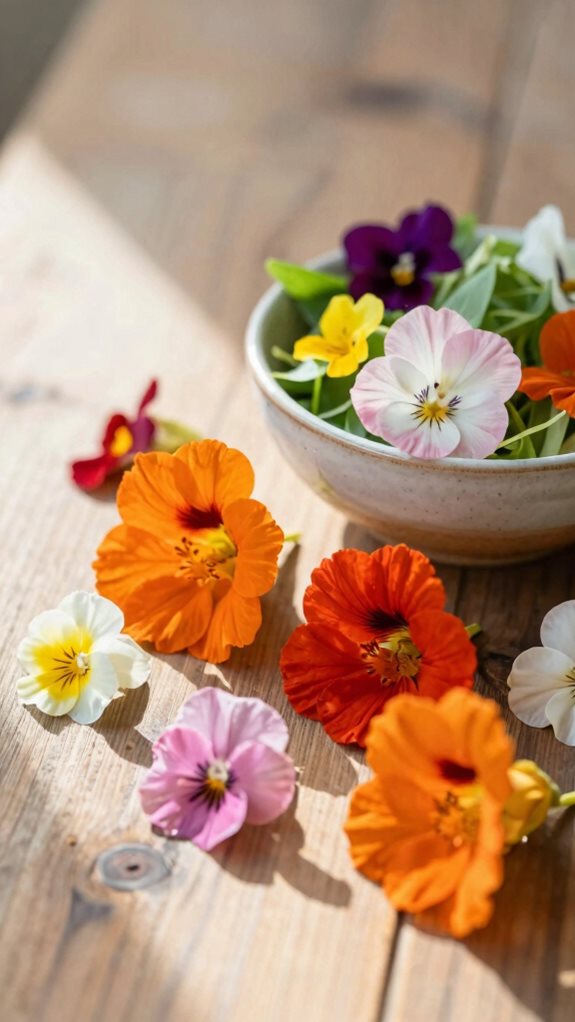
Flowers don’t just look beautiful — they taste like something, too. Nasturtiums bite back with a peppery, mustard-like kick, making them perfect for salads and vinaigrettes.
Roses carry hints of strawberry and green apple, with darker varieties delivering stronger flavor. Marigolds bring citrusy, saffron-like warmth to rice and pasta dishes. Hibiscus tastes tart, almost like cranberry with citrus overtones.
Chrysanthemums range from peppery to mild, almost cauliflower-like. You’ll find each flower fits a purpose. Match bold flowers to savory dishes, delicate ones to desserts. Flavor guides your choices just as much as color does.
The Best Edible Flowers for Salads and Savory Dishes
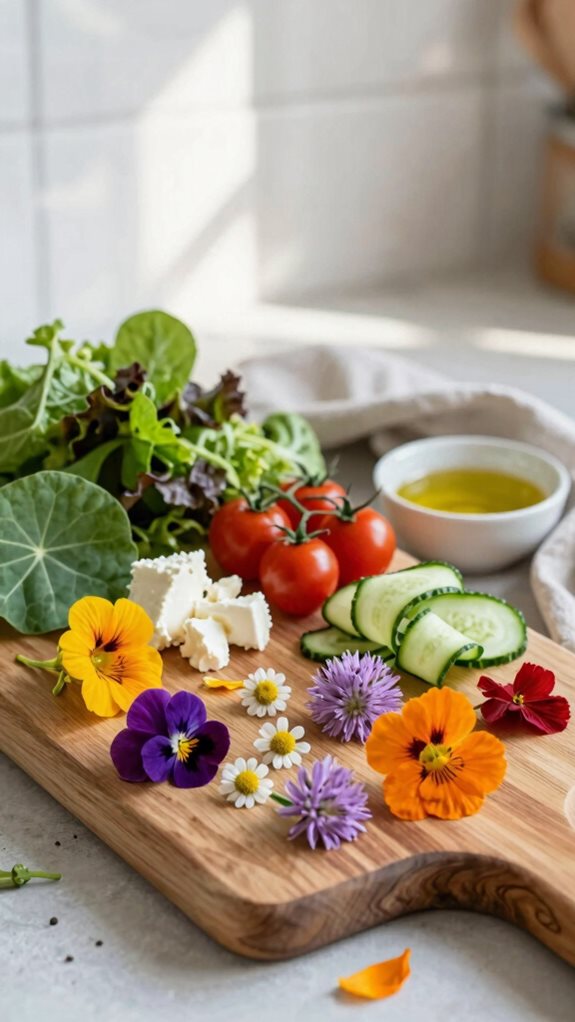
Salads come alive when you add edible flowers. They bring color, texture, and bold flavors to every bite. Choose wisely, and your dish transforms completely.
Here are the best flowers for salads and savory dishes:
- Nasturtiums add peppery, mustard-like punch to salads and stir-fries
- Calendula petals deliver subtle spice, brightening rice and pasta dishes
- Arugula flowers offer delicate white pinwheels, perfect for soups and salads
- Chive flowers provide a mild onion flavor, beautifully garnishing savory herb dishes
- Daylilies taste slightly sweet, resembling melon; always remove their bitter base
Toss them fresh, use them boldly.
Which Herb Flowers to Use and When to Add Them
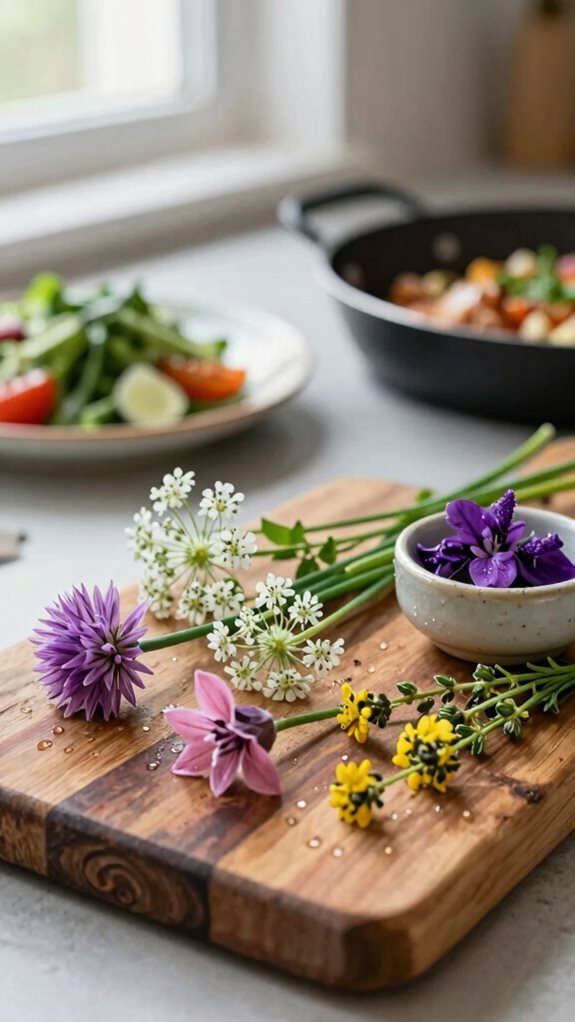
Beyond salads and savory dishes, herb flowers open a whole new layer of flavor. You’ll find them mild, fragrant, and surprisingly versatile.
Add them late, after cooking, so the heat doesn’t destroy their delicate taste.
Use chive flowers on eggs, borage in drinks, and basil blooms on pasta.
There are many creative ways to incorporate edible herb flowers into your entertaining spread.
| Herb Flower | Flavor | Best Use |
|---|---|---|
| Chive | Mild onion | Eggs, soups |
| Borage | Cucumber | Drinks, ice cubes |
| Basil | Sweet, peppery | Pasta, salads |
| Cilantro | Citrusy | Salsas, rice |
| Thyme | Earthy, floral | Roasted meats |
Edible Flowers for Desserts, Syrups, and Baked Goods
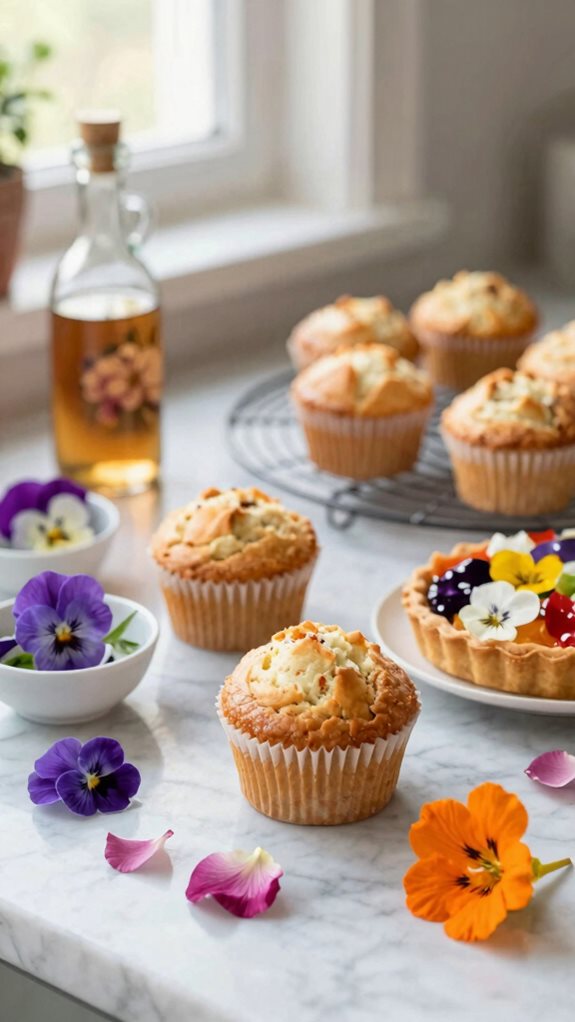
Desserts come alive when you add edible flowers. You’ll transform ordinary sweets into stunning creations. Choose carefully, and you’ll master flavor and beauty together.
Try these top picks:
- Roses deliver strawberry and green apple notes; remove the bitter white base first
- Violets sweeten baked goods, beverages, and decorations naturally
- Carnations add sugary flavor; always separate petals from their bitter base
- Chamomile decorates desserts beautifully and blends perfectly into syrups
- Apple blossoms candy wonderfully, though use them sparingly
Each flower brings something unique. Experiment boldly, identify correctly, and create confidently.
Edible Flowers in Drinks, Ice Cubes, and Table Garnishes
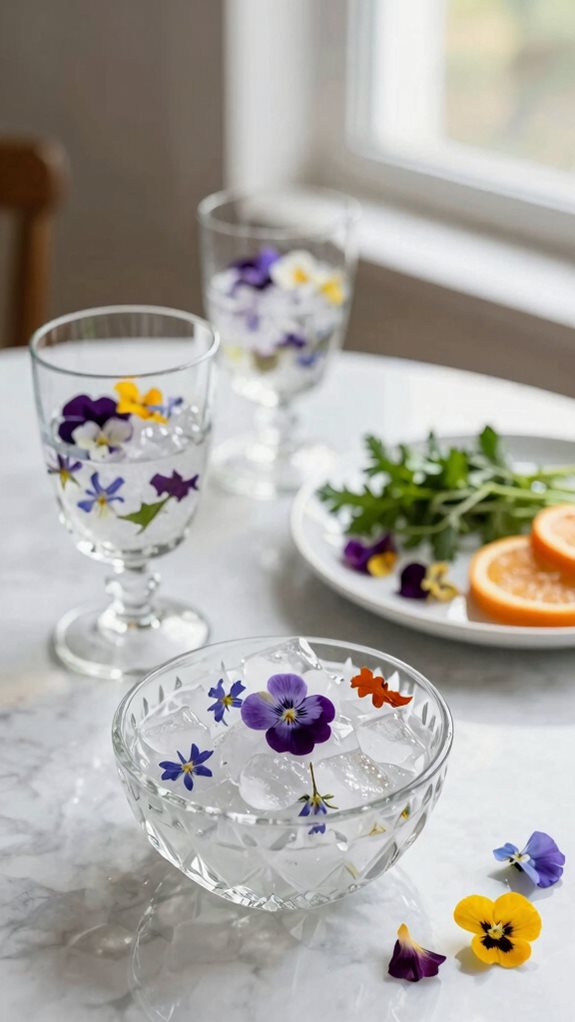
Why stop at food when edible flowers can transform your drinks, ice cubes, and table displays just as beautifully?
Freeze borage’s star-shaped blooms or rose petals directly into ice cubes, then drop them into punches and lemonades for a stunning visual effect. Violets work beautifully in beverages, too.
Float chamomile blossoms in hot tea, or steep hibiscus petals for a tart, cranberry-flavored drink. For table garnishes, scatter nasturtiums and pansies around serving plates. They’re edible, so guests can enjoy them. Simple, purposeful, beautiful.
Flowers don’t just decorate your table; they complete the entire experience from first glance to final sip.
The Easiest Edible Flowers to Grow at Home
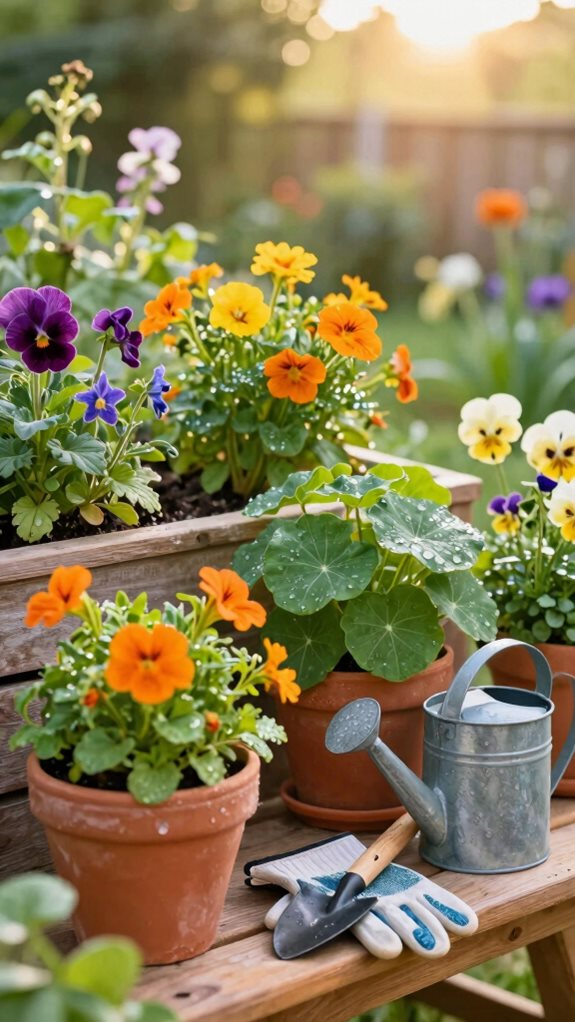
Growing edible flowers at home doesn’t require a green thumb or a sprawling garden. Start small, stay consistent, and you’ll harvest blooms all season long.
Here are five easy picks to get you started:
- Nasturtiums grow fast, need little water, and taste peppery
- Calendula thrives in poor soil and blooms for months
- Chives return every year and reward you with mild, onion-flavored flowers
- Borage self-seeds freely, producing cucumber-flavored blue stars
- Chamomile stays low-maintenance and doubles as a dessert garnish
Plant them in containers or garden beds. You’ll be surprised how quickly they flourish.
Mistakes to Avoid When Cooking With Edible Flowers
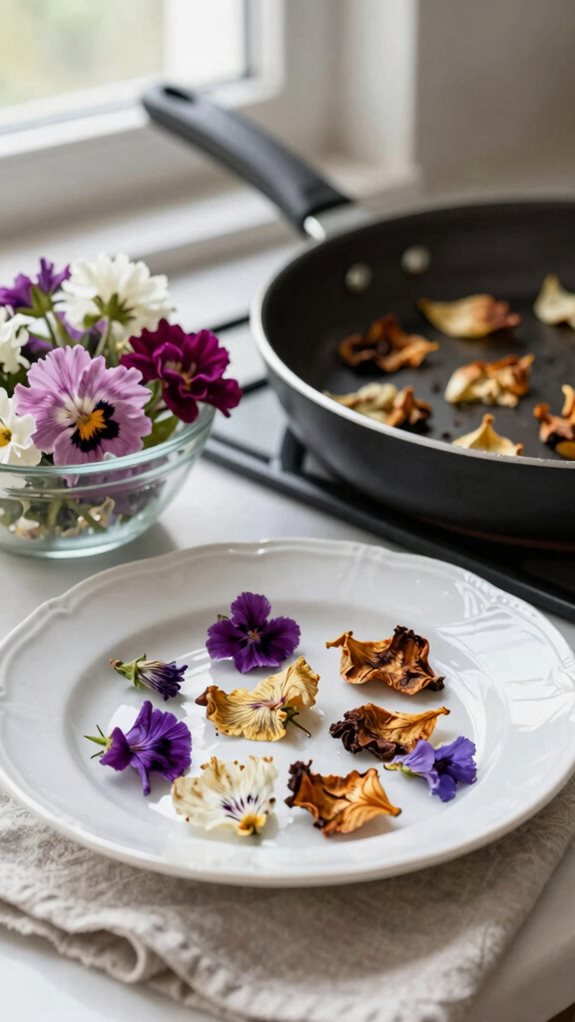
Many cooks make the same mistakes when they first start cooking with edible flowers, and most of them are easy to avoid. Don’t use flowers that have been sprayed with pesticides. Always identify your flower properly before eating it, because not every pretty bloom is safe.
Remove bitter bases first. Rose and carnation petals need their white bottoms trimmed before using them. Add flowers last, since heat destroys their delicate flavor and color. Use them sparingly, letting their taste complement your dish rather than overwhelm it. Less truly is more.
Frequently Asked Questions
Can Edible Flowers Be Dried and Stored for Later Use?
Yes, you can dry and store many edible flowers for later use. Chamomile and roses dry well, retaining their flavor. Store them in airtight containers away from light to preserve their taste and color.
Are Edible Flowers Safe for Children and Pets to Consume?
Some edible flowers are safe, but you’ll want to exercise caution with children and pets. Avoid toxic varieties, check for allergies, and always properly identify flowers before letting them consume any.
Do Edible Flowers Retain Their Flavor When Frozen for Long Periods?
Frozen edible flowers don’t retain their flavor as well over long periods. You’ll find they lose potency and texture. For the best results, you should use them fresh or freeze them briefly in ice cubes for drinks.
Can Edible Flowers Cause Allergic Reactions in Sensitive Individuals?
Yes, edible flowers can trigger allergic reactions in you, especially if you’re sensitive to related plants. Always identify flowers properly, avoid ones with pregnancy restrictions, and introduce them slowly into your diet to monitor your body’s response.
Are Organically Grown Edible Flowers Safer Than Conventionally Grown Ones?
Organically grown edible flowers are safer for you since they’re free from synthetic pesticides and chemicals. You’ll reduce your exposure to harmful residues, making them a healthier choice, especially when eating flowers raw in salads or desserts.
Want More Tips Like This?
If so, sign up, and I’ll let you know whenever I add or update anything here.
You can also follow me on social media for updates. And if you enjoyed what you just read, share it with your friends.
Til next time,