Disclosure: This post may contain affiliate links. If you click and buy, we may earn a commission at no extra cost to you. As an Amazon Associate, we earn from qualifying purchases.
The floral industry has long provided customers with high-quality flowers for special occasions. Our shop has been doing the same since 1957.
In recent years, however, brick-and-mortar florists have seen a decline in sales, partly due to the rise of online flower delivery services and a corresponding shift in consumer behavior.
This article will explore how technology and changing customer preferences impact the retail floral industry and what strategies can be employed to ensure its continued success.
Trends That Are Affecting Retail Flower Shops Today
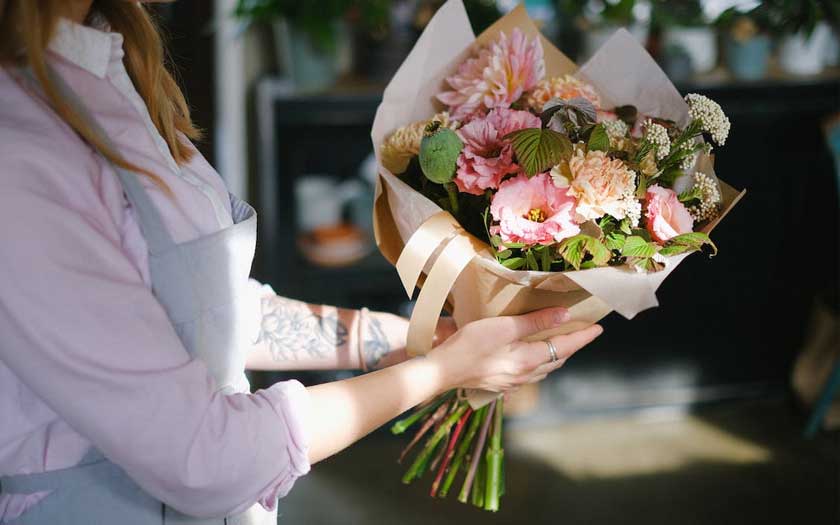
It is difficult to predict what will happen to retail florist businesses in the next few years, as they are influenced by various factors such as consumer demand, technological developments, and economic conditions.
Here are some of the huge trends that have impacted the flower industry and will shape the direction of our business in the coming years.
Increased Online Sales
The rise of e-commerce and the increasing use of online platforms for purchasing fresh flowers and other gifts is increasing.
This trend was accelerated by the COVID-19 pandemic, which led to more people shopping with online florists and avoiding physical stores.
Our online sales have grown substantially over the last several years, and we expect this trend to continue.
We built our websites from the ground up to give customers the user experience they want and the flexibility and accountability we need. We continually monitor, tweak, and maintain them to keep current.
In my opinion, e-commerce should not be intimidating. Keeping things simple and under our control has been key to our success in the e-commerce world.
Use Of Technology
While e-commerce technology has made ordering more convenient for consumers, florists need to adopt technology to improve operations and customer experience as much as possible.
For example, we are using artificial intelligence and automation to improve our marketing, increase customer support, and improve the efficiency of some of our other behind-the-scenes processes.
This allows us to experiment with different technologies while keeping a watchful eye on ROI.
Personalization And Customization
These are areas local retail florists especially need to focus on by offering more personalized and customized products to meet their customers’ individual needs and preferences.
This could involve offering a more comprehensive range of flower varieties, more service options, and the advanced design skills necessary to create custom bouquets or arrangements for any occasion.
Greater Focus On Sustainability
Although sustainability certification has been around for many years for commercial flower growers, consumers are becoming more environmentally conscious. They are increasingly seeking out sustainably produced products and packaging.
Retail florists have embraced this trend, with an increasing number offering sustainable options such as locally grown flowers, biodegradable products and packaging, and employing eco-friendly floral design techniques.
In my opinion, this sustainability movement will continue to gather steam and grow in the years to come.
Increased Competition
Traditional retail florists will likely continue to face competition from various sources, including online marketplaces, grocery stores, and other non-floral retailers selling flowers.
Brick-and-mortar florists must focus on differentiating their products and services, while still offering value and convenience to remain competitive. Leveraging technology is one way to do that.
Another way I see that being done physically is through pop-up shops, which bring the florist to the customer, like food trucks bringing the restaurant to the diner.
Predicting The Future?
This op-ed piece about the uncertain future of local florists and other small boutique retail stores by author Amy Stewart was published in the New York Times more than ten years ago.
I think it’s as timely today as it was when it was first published. Maybe even more so. In any case, it’s food for thought.
Amy is an author, an artist, and a strong supporter of local florists and the “buy local” movement.
One of the six books she has authored is Flower Confidential: The Good, the Bad, and the Beautiful in the Business of Flowers. It’s a fascinating insider look into the flower business.
In my years in the flower industry, I’ve faced many of the same challenges she describes in the book.
The environment in the floral industry today is not the same as when I started. The digital age is more competitive, fast-paced, and convenience-based.
Today, nearly everyone from grocery stores, big-box stores, gas stations, pharmacies, and extensive online retailers sells flowers.
Retail florists must continually adapt to changes to survive. Failure to do so will spell disaster. It has for some of my fellow florists already.
But where there are challenges, there is also opportunity. Maybe I’m just an eternal optimist, but as the saying goes, “Florists never die. They make other arrangements.”
Why I Believe The Future Is Bright
I’ve been in this business long enough to watch trends come and go. I’ve seen wire services reshape how orders get placed, the internet upend how customers shop, and a global pandemic accelerate changes that might otherwise have taken a decade. And yet, here we are.
The florists who are struggling right now aren’t struggling because people stopped loving flowers. They’re struggling because they stopped adapting.
In my experience, those are very different problems, and only one of them is fatal.
My prediction? The retail flower shops that will still be standing in ten years won’t be the biggest ones.
They’ll be the ones that figured out how to be genuinely local in a way no algorithm can replicate. The ones where the designer actually knows that Mrs. Patterson prefers garden roses over carnations, and that the Hendersons always order white for anniversaries.
That kind of relationship isn’t a feature you can add to a website.
Our shop has been doing this since 1957. We’ve outlasted many competitors who thought size or price alone would win. It didn’t. Personal connection did.
So no, I’m not worried about the future, but I’m not complacent either.
The florists who treat every order like it matters, who stay curious about new tools without losing sight of the customer in front of them, who show up for their communities the way communities have shown up for them, those shops are going to be just fine.
If you’ve got any thoughts on this, leave them in the comments below. I’d love to hear from you.
Til next time,