Disclosure: This post may contain affiliate links. If you click and buy, we may earn a commission at no extra cost to you. As an Amazon Associate, we earn from qualifying purchases.
Last Updated: June 2026
A bride called the shop a few years back, maybe six weeks before her wedding. She had a beautiful church booked. It had high ceilings, a long center aisle, and dark wooden pews running the length of the nave. She wanted something on those pews. Not elaborate. Just enough to make the aisle feel like it belonged to her wedding and not last weekend’s.
She asked me what she should do. I told her pew-end flowers. Simple, affordable, and when done right, they make that aisle look like a professional designed it, even if you made them the night before at your kitchen table.
Here’s everything you need to know to pull them off.
Watch This First
Before we get into the details, watch this tutorial from Flower Joos. It shows the hand-tied method I recommend for beginners. It’s a simple technique, a clean result, and no floral foam required. Watch it, and see if you agree it’s easier than you expected.

Choose the Right Flowers for the Job
Pew-end flowers take a beating on the wedding day. Guests brush past them, kids grab at them, and they sit without water for hours. So the flowers you choose matter.
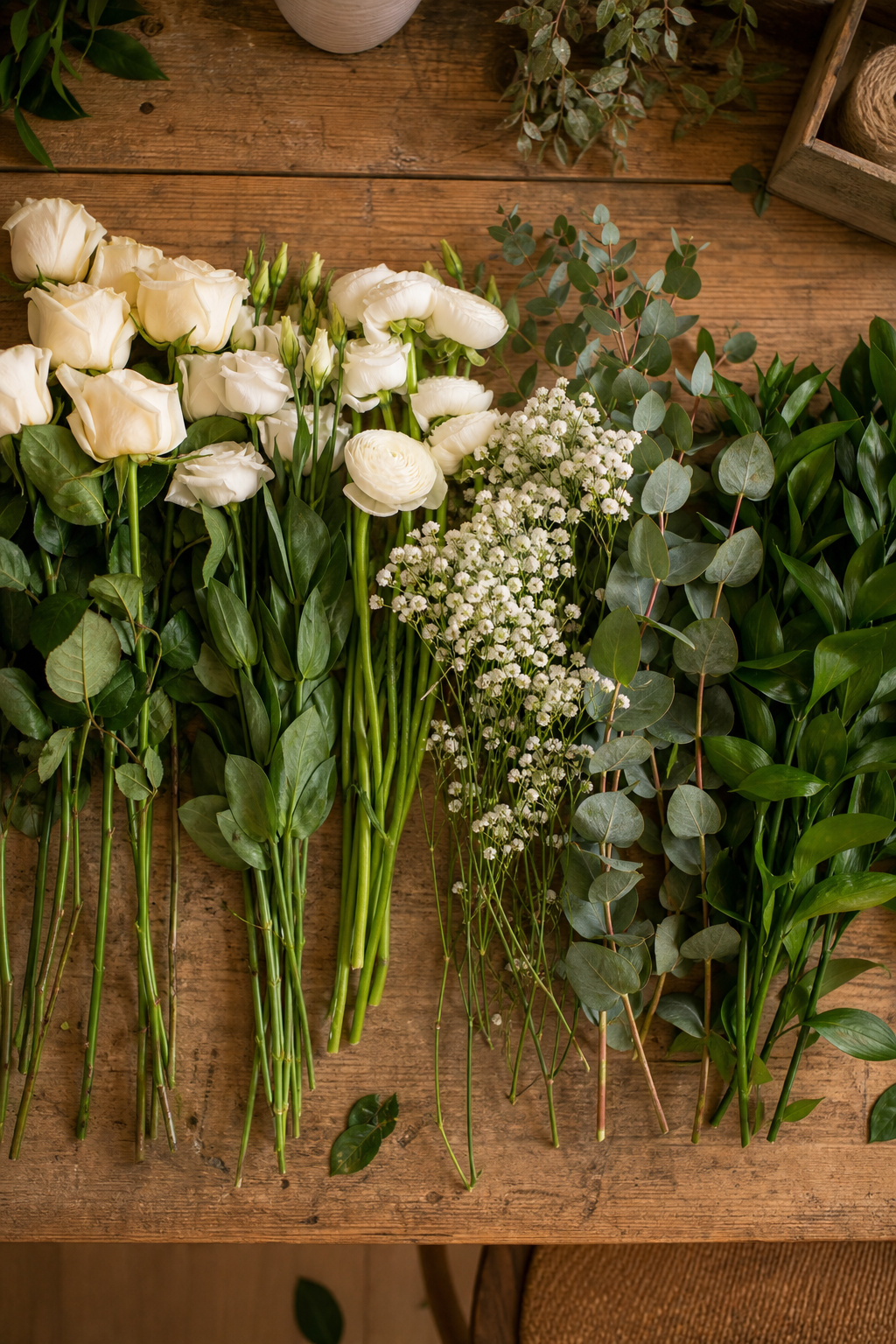
Stick with hardy varieties that hold up without water. Roses, lisianthus, ranunculus, and spray chrysanthemums are all solid choices. Eucalyptus and salal hold beautifully as greenery filler. Baby’s breath is inexpensive and adds volume without weight.
What I avoid: delicate blooms like sweet peas or anemones, anything that wilts fast in warm rooms, and very heavy stems that make the arrangement droop. Pew-end flowers need to stay upright and tidy throughout the ceremony. and sometimes in a crowded church that’s uncomfortably warm.
If you’re buying your own flowers, you can find roses, lisianthus, ranunculus, baby’s breath, salal, and eucalyptus online through BloomsbytheBox, GlobalRose, and FlowerExplosion. Those are the three I’ve had direct experience with and can stand behind. If you only need a small quantity, your local florist is always my first recommendation.
Decide on Your Attachment Method Before You Start
This is the part most tutorials skip, and it’s where DIYers run into trouble on the wedding day.
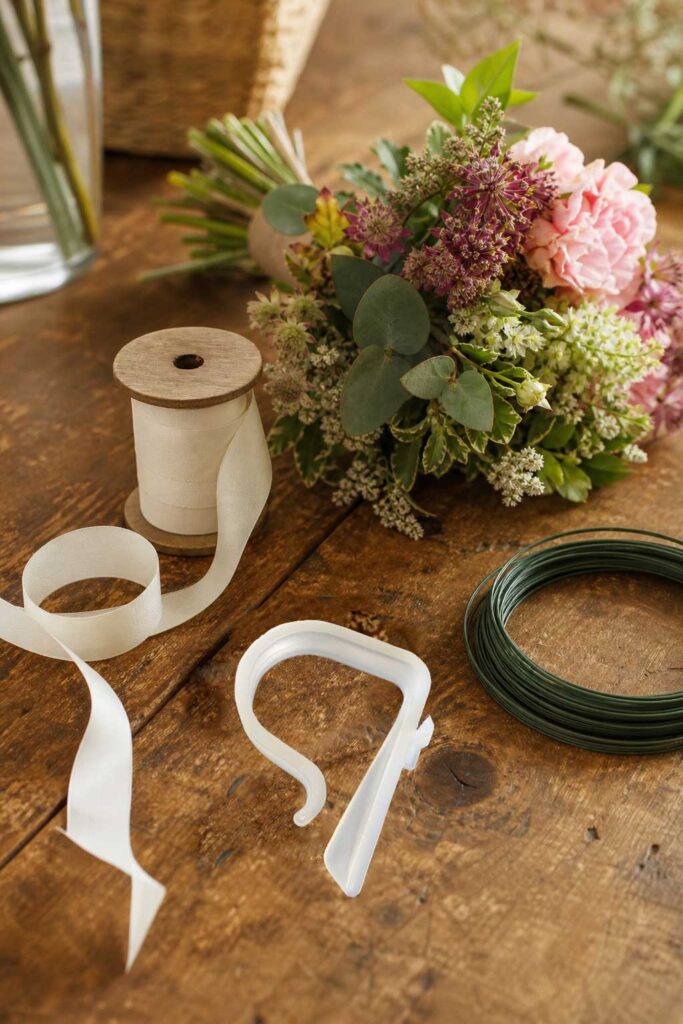
There are three main ways to attach pew end flowers: floral wire and ribbon, pew clips (also called pew hooks), and suction-cup holders. Which one you use depends entirely on the pew design.
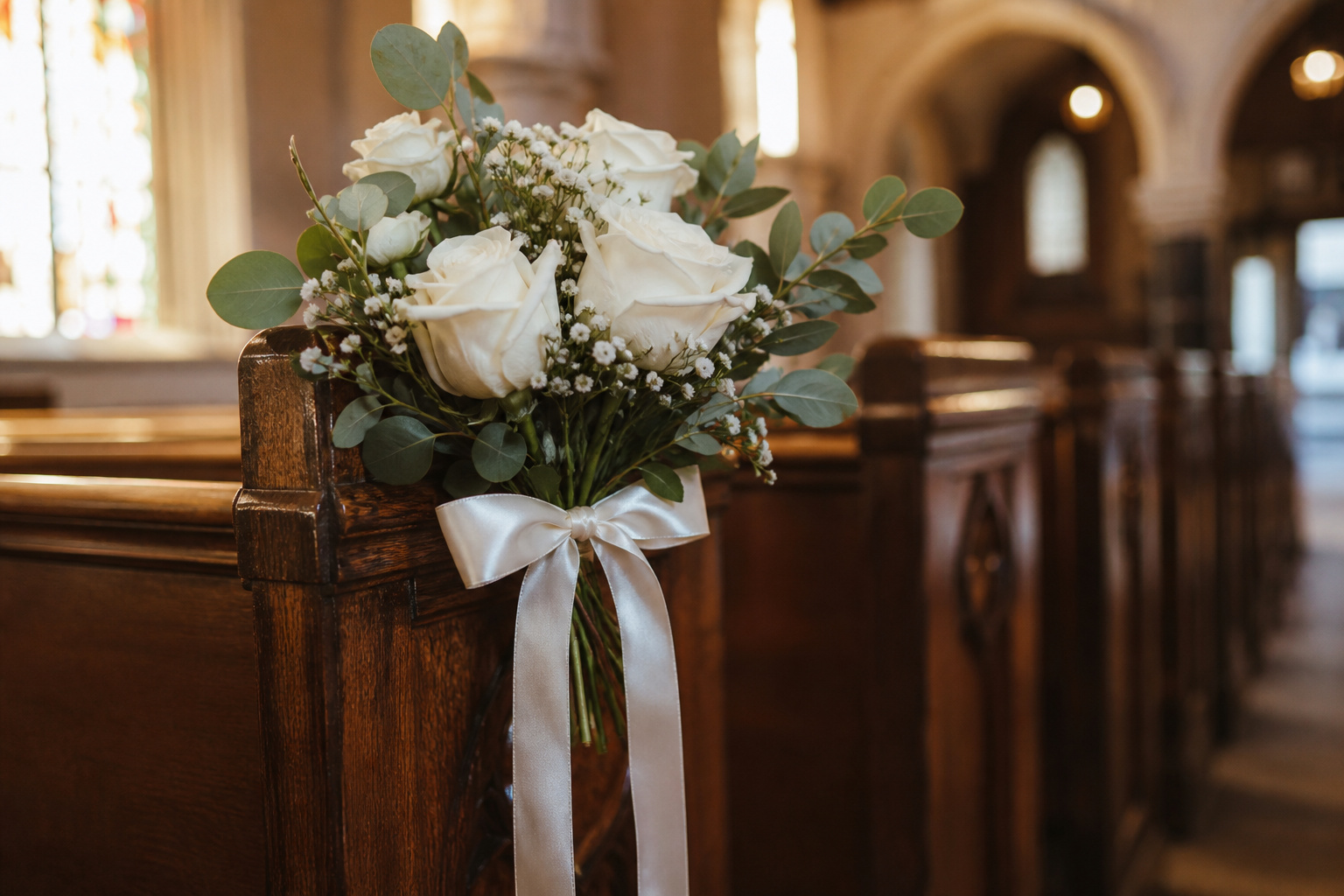
Floral wire and ribbon work on open-back pews with a rail you can tie around. It’s the most common method, demonstrated in the video. Tie the arrangement to the pew end rail with ribbon or fishing line, then cover with a decorative bow.
Pew clips are plastic or metal hooks that slide over the top of a closed-back pew. They’re sold at most craft stores and online. Fast to attach, reusable, and they don’t mark the wood.
Suction-cup holders work on smooth, flat pew ends, usually modern or painted wood. Less common but worth knowing about if you’re dealing with a contemporary venue.
My advice: visit the church before you design anything and look at the actual pews. Take a photo. Different pew styles require different attachment solutions, and you don’t want to figure that out on the morning of the wedding.
Build the Hand-Tied Arrangement
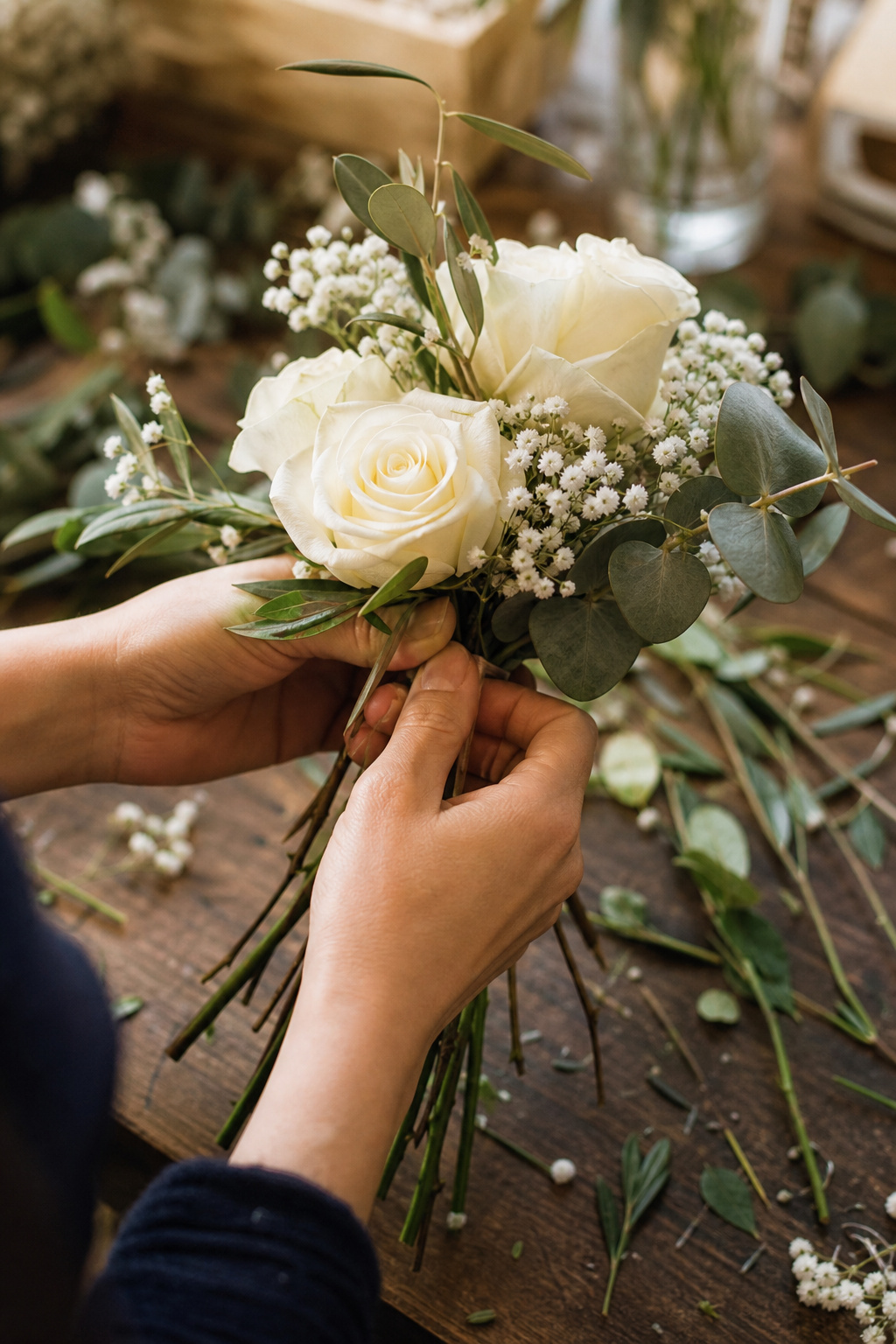
The hand-tied method is the most beginner-friendly approach, and it produces a natural, garden-style look that photographs beautifully.
Start with your greenery as a base. Hold a few stems of eucalyptus or salal in one hand and build outward, adding flowers one at a time. Keep rotating the bunch slightly as you add stems. This is what gives the arrangement a round, full shape rather than a flat face.
Add your focal flowers first (roses or ranunculus), then filler (baby’s breath or lisianthus), then texture (more greenery or a ribbon bow). Keep the arrangement compact. Pew-end flowers don’t need to be large; they need to be tidy and consistent down the aisle.
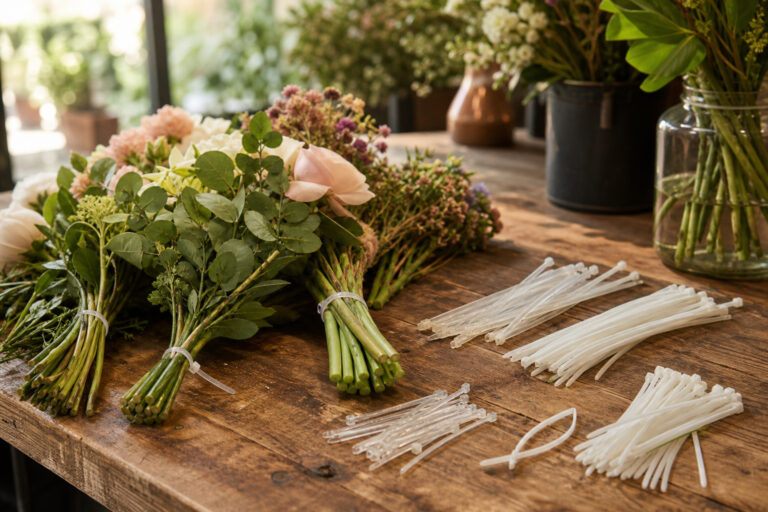
When you’re happy with the shape, wrap the stems tightly with floral tape or rubber bands, then cover that with ribbon. Leave enough ribbon tail to tie the arrangement to the pew or to bow out decoratively.
One quick tip: make all your arrangements before attaching any of them. It’s much easier to stay consistent in size and style when you’re making them as a batch.
Consider Using Silk Flowers for Pew Ends
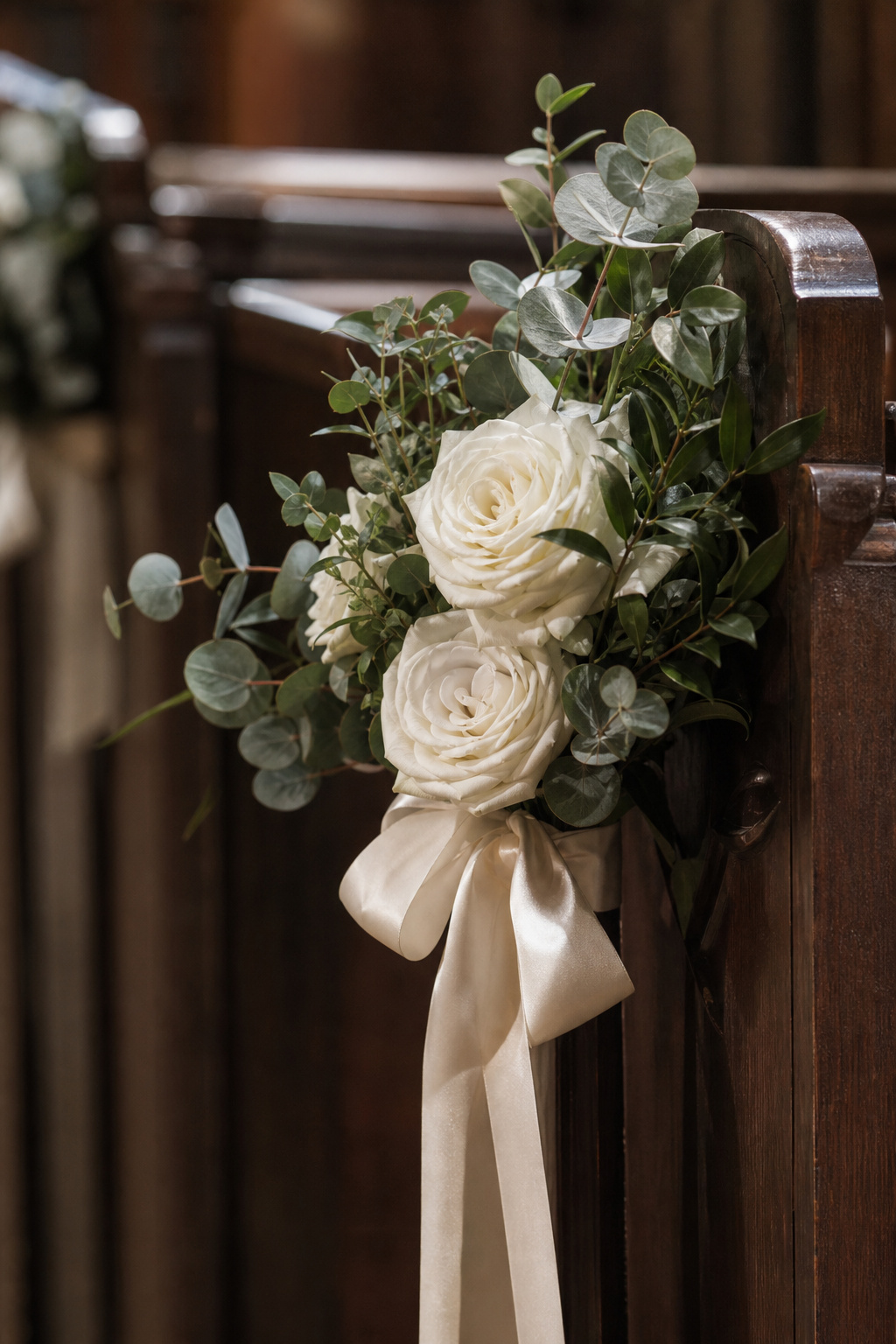
Silk flowers are a legitimate option for pew ends, and I say that as someone who works with fresh flowers every day. The pew-end flowers won’t be photographed up close. They’re background elements, part of the overall aisle picture, not the featured attraction.
If the budget is tight or you’re working with a venue that has a long aisle requiring many arrangements, silk is worth considering. You can find good selections at NearlyNatural, Michaels, and Hobby Lobby.
One tip if you go the silk route: use fresh greenery even if the flowers are artificial. Fresh eucalyptus or salal mixed in keeps the arrangement from looking too stiff, and the scent helps, too.
How Many Pew End Decorations Do You Actually Need?
This question comes up constantly, and the answer is: not as many as you think.
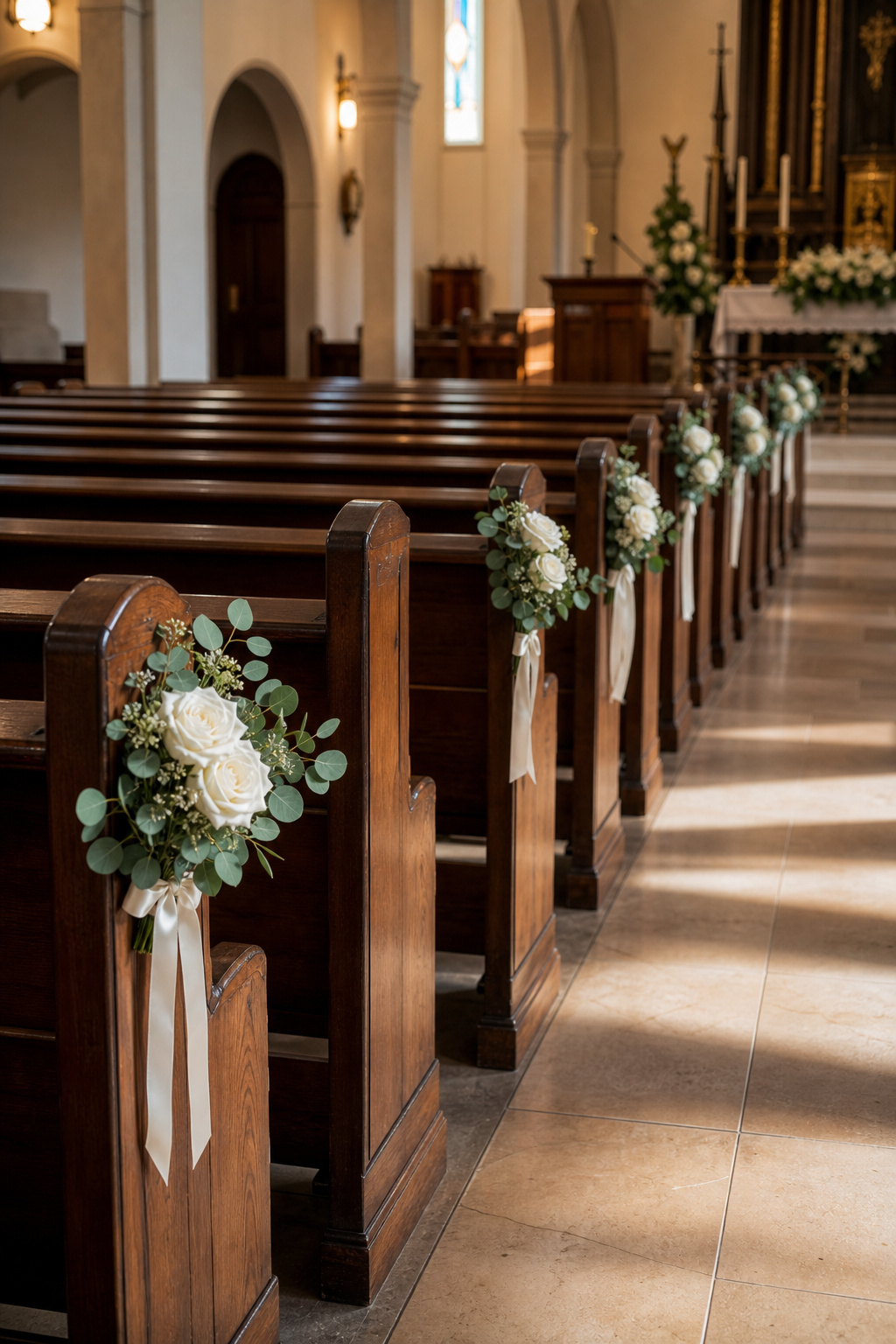
You don’t need to decorate every single pew. The standard approach is to mark every other pew, or every third pew, down the aisle. For a typical church ceremony, that usually works out to six to ten total arrangements. three to five per side.
The visual effect of evenly spaced markers down both sides of the aisle is actually stronger than cramming decorations on every pew. The eye reads the pattern, not the individual arrangements.
Count your reserved pews first. Family seating up front usually gets priority. Then plan the rest of the aisle from there. See the Wedding Aisle Decor Ideas post for more on spacing and layout options.
Frequently Asked Questions
How far in advance can I make pew-end flowers?
Hand-tied fresh arrangements can be made the night before the wedding if you keep them in a cool location and mist the stems. Don’t put them in water after you’ve wrapped the stems. It gets messy and can stain the ribbon. If you’re making them more than a day out, silk is a better choice.
Can I attach pew end flowers without damaging the wood?
Yes. Pew clips are the safest option for finished wood. If you’re using ribbon or wire, wrap it carefully and avoid anything that can pinch or scratch. Ask your venue coordinator first. Some churches have specific rules about what’s allowed.
Do pew end flowers need to be in water?
No. Hand-tied arrangements are designed to be out of water. The key is properly conditioning your flowers the day before by cutting the stems at an angle, placing them in fresh water overnight, and letting them hydrate fully. Well-conditioned flowers can last several hours out of water without wilting.
How much do pew-end flowers cost?
If you’re DIYing with bulk flowers, plan on $8–$15 per arrangement, depending on the flowers used. A set of ten arrangements runs $80–$150 in materials. That’s a fraction of what a florist charges for the same work.
What flowers work best for church pew ends in summer?
Roses, spray chrysanthemums, and lisianthus are your safest bets in warm weather. They handle heat better than most. Avoid peonies and hydrangeas for pew ends. Both wilt quickly without water, especially in a warm church.
Can I reuse pew-end flowers at the reception?
Absolutely. It’s one of the smartest budget moves in DIY wedding flowers. After the ceremony, have someone pull the arrangements and move them to the reception. They work well on the bar, the welcome table, or as accent pieces on the guest tables. See the Wedding Flower Checklist post for help planning that transition.
Closing Thoughts
Pew-end flowers are one of the most underrated DIY wedding projects out there. They’re not complicated, they’re not expensive, and they have a bigger visual impact on the ceremony space than most people expect. A well-decorated aisle sets the tone for everything that follows.
If you’re also thinking about what goes at the front of that aisle, take a look at How to Design a Wedding Ceremony Arch With Fresh Flowers or 7 Easy Ways to Decorate a Wedding Arch Yourself. The arch and the aisle work together, so it’s worth planning them together.
If you’ve made pew-end flowers for your own wedding or a friend’s, drop a comment below. I’d love to hear what flowers you used and how the attachment held up during the ceremony.
Til next time,