Disclosure: This post may contain affiliate links. If you click and buy, we may earn a commission at no extra cost to you. As an Amazon Associate, we earn from qualifying purchases.
Last Updated: May 22, 2026
A customer walked into the shop last week, set a Phalaenopsis on the counter, and said, “I think I’m killing it.” The leaves were a little limp. One flower spike had turned brown. She was sure it was beyond saving.
It wasn’t. The roots were green, the crown was firm, and the plant was actually doing fine. She didn’t know what to look for.
This is the conversation I have all the time. Phalaenopsis orchids, or moth orchids, look exotic enough that people assume they need exotic care. They don’t. Of all the orchid species you’ll find at a garden center, Phalaenopsis is the easiest one to live with.
Four things matter, and once you get those right, the plant takes care of itself.
Give It Bright, Indirect Light
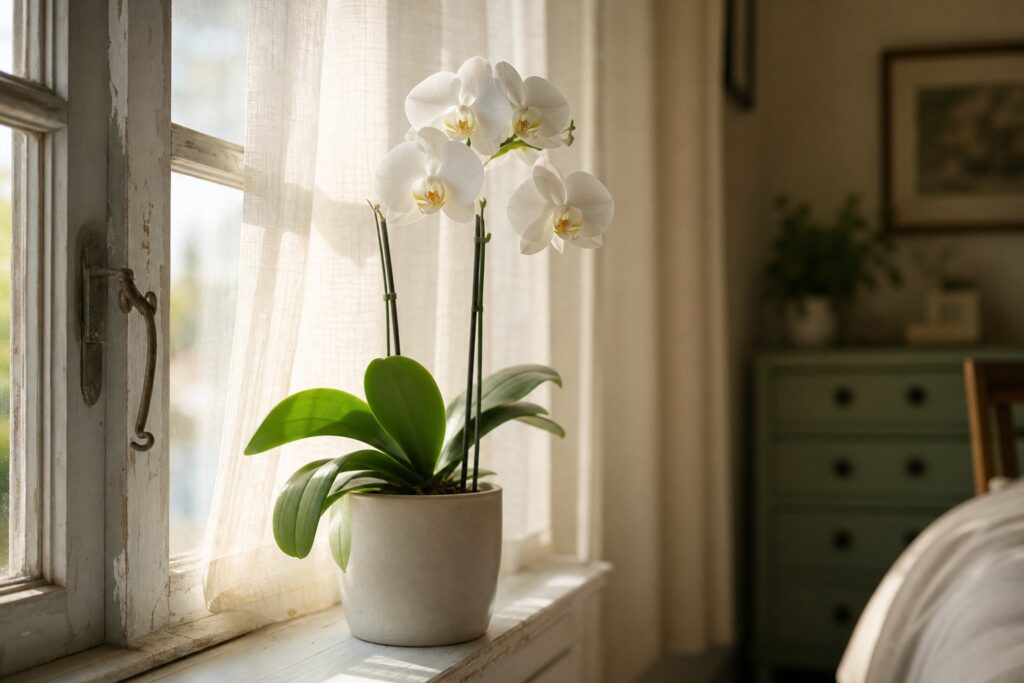
An east-facing window is the sweet spot. The morning sun is gentle enough not to burn the leaves, and there’s plenty of brightness throughout the rest of the day for the plant to keep growing.
South or west windows work too, but you’ll want a sheer curtain in front of them. Direct afternoon sun on Phalaenopsis leaves leaves a permanent yellow or brown scorch mark. Once it’s there, it’s there.
The easiest way to tell if your light is right: look at the leaves. Healthy Phalaenopsis foliage is a medium grass green. Dark, almost emerald leaves mean the plant wants more light. Yellowish, washed-out leaves usually mean it’s getting too much.
Water Once a Week (Yes, With Ice)
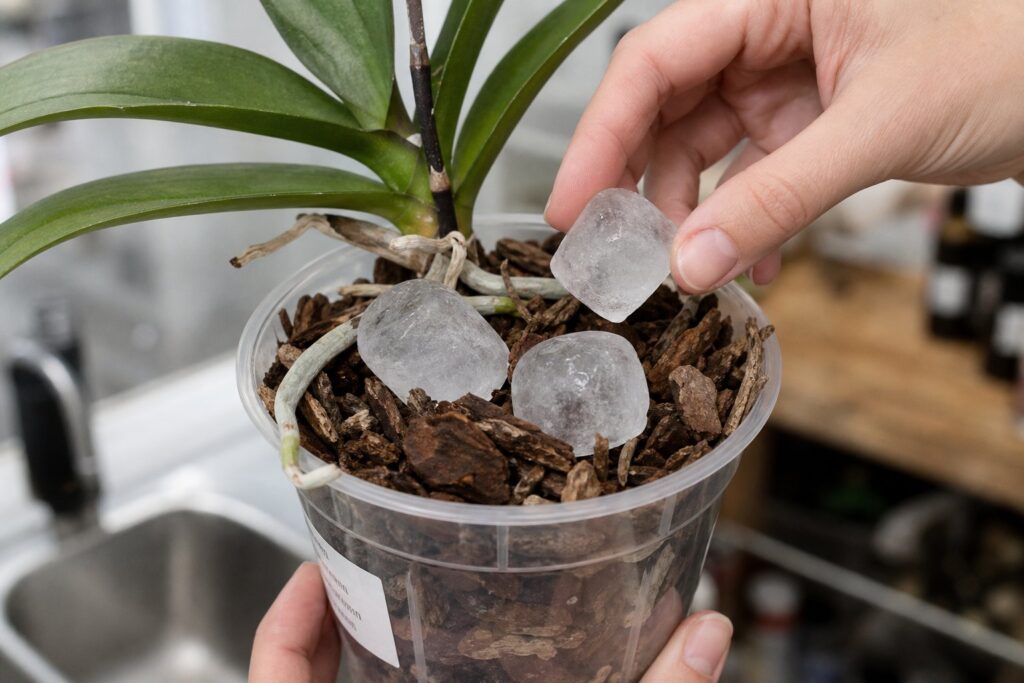
This is the part where I tell you I use ice cubes, and half the orchid people on the internet get worked up about it.
Here’s the method: once a week, I put three ice cubes on top of the bark in each pot and walk away. They melt slowly, the bark and roots absorb the moisture, and the plant never sits in standing water. I’ve kept Phalaenopsis going for years this way. So have plenty of growers and big-box retailers.
You’ll hear arguments that cold water shocks tropical roots. In my experience, ice cubes warm to room temperature fast enough on the bark surface that nothing bad happens. The bigger danger with Phalaenopsis is overwatering, not cold water. Ice cubes solve that.
If you’d rather skip the ice, run lukewarm water through the pot in the sink for 15 to 20 seconds once a week, let it drain completely, and put it back. Same result. Just don’t let the pot sit in a saucer of water.
Feed It Regularly With Orchid Fertilizer
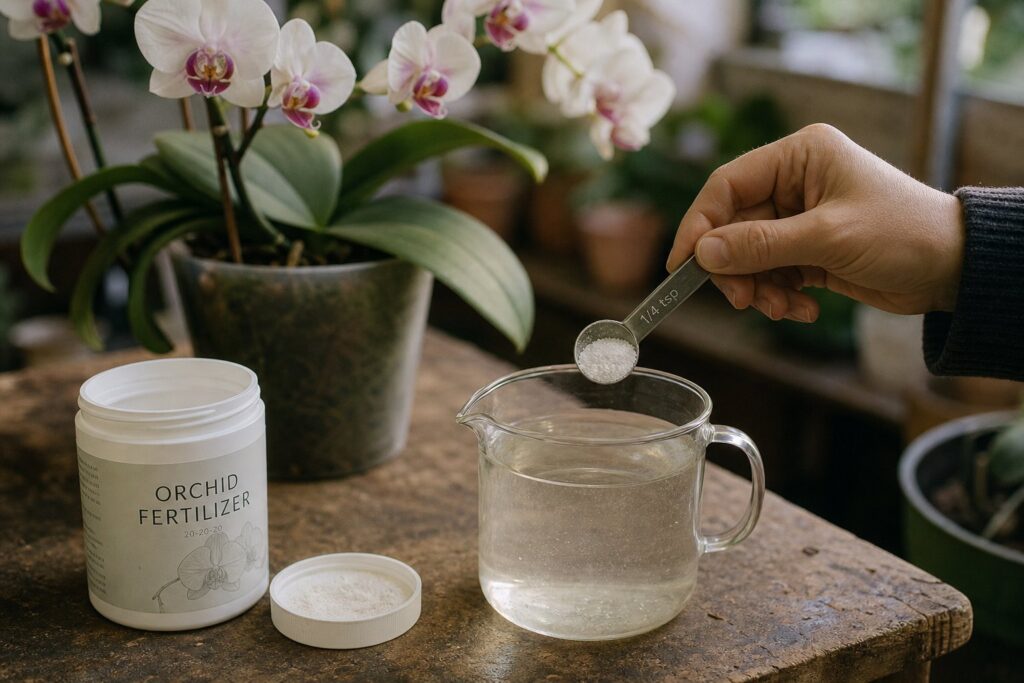
During the growing season (spring through early fall), I feed once a week with a balanced orchid fertilizer at quarter strength. The phrase orchid growers use is “weakly, weekly,” and it holds up. A little bit often beats a heavy dose now and then.
In the winter, I cut back to once a month. The plant slows down, and so should the feeding.
I’ve used orchid fertilizer made for Phalaenopsis for years because that’s what my local growers use. When the pros are using something, I trust it. Other reputable orchid fertilizers will work fine too. The brand matters less than actually feeding the plant on a schedule.
Repot Every Two to Three Years
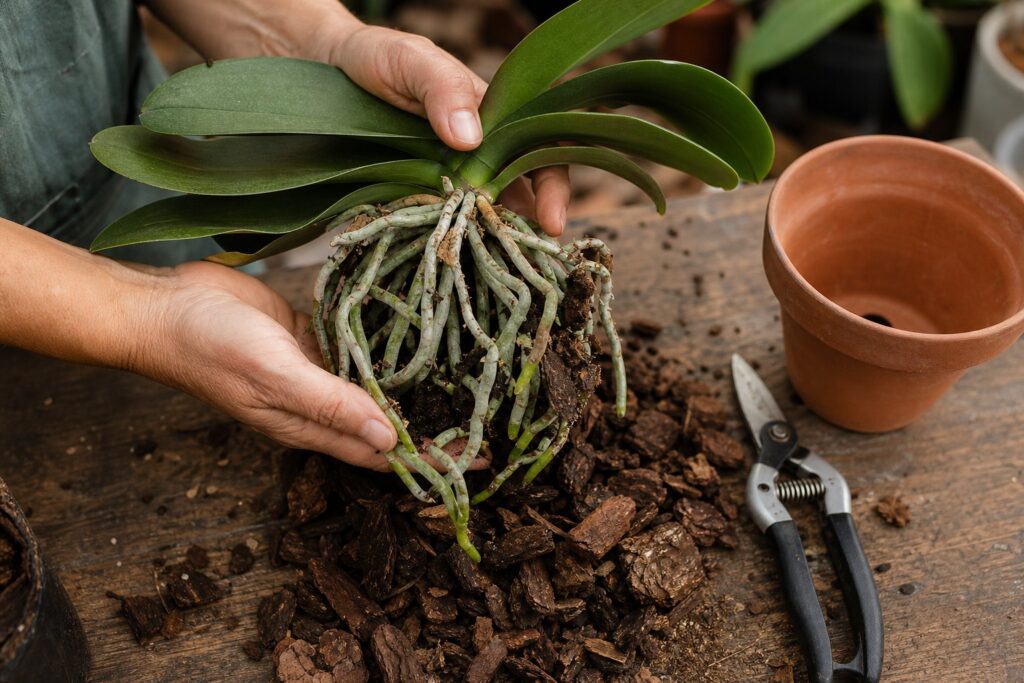
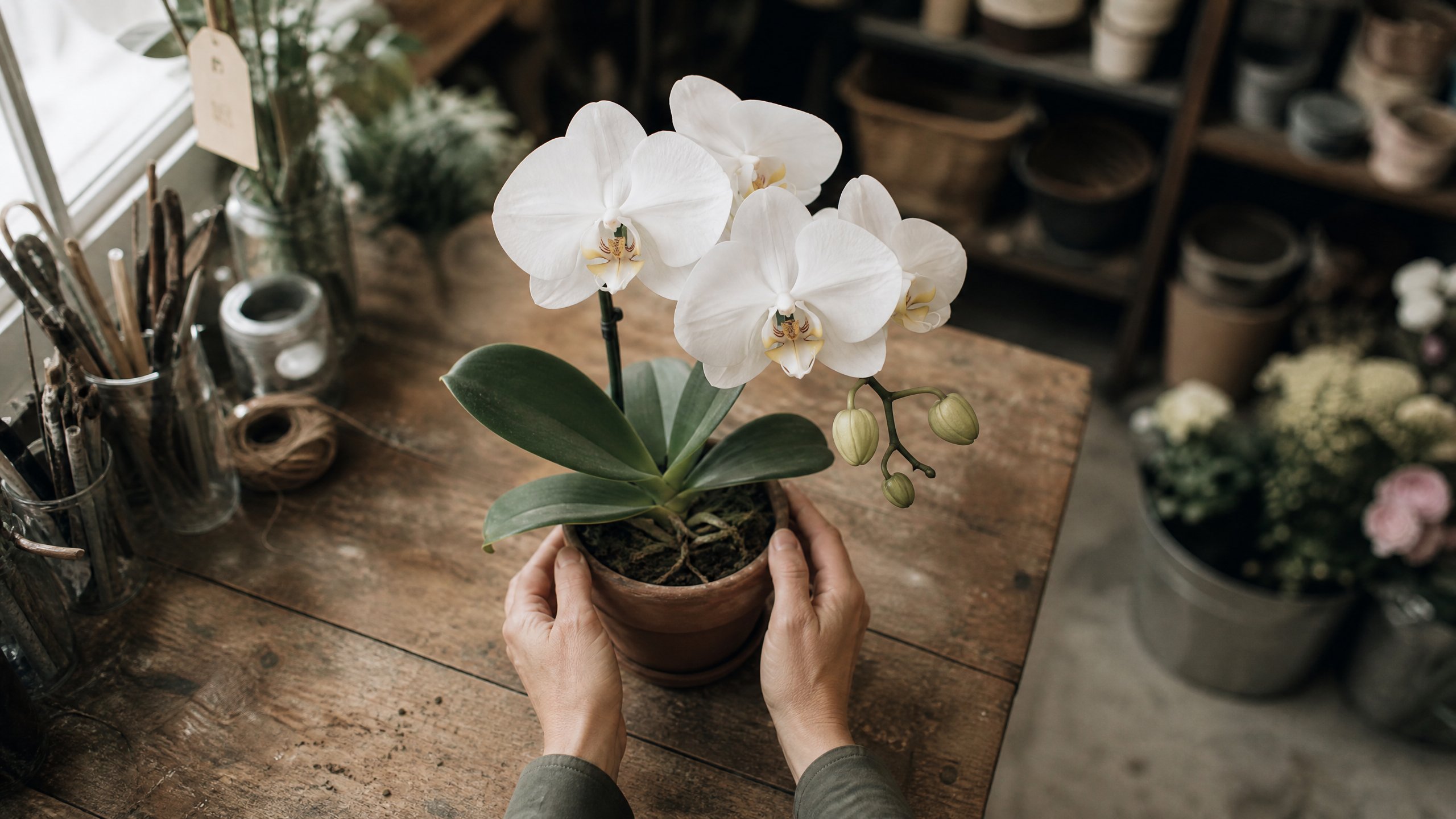
Phalaenopsis doesn’t grow in soil. They grow in chunky bark that lets air circulate around the roots. Over time, that bark breaks down into something closer to potting mix, and the roots start to suffocate.
Repotting timing matters. Wait until the plant has finished blooming, and you can see new root tips (they look pale green or silvery white) starting to emerge. Then pull the plant out, shake off the old bark, trim any soft or rotted roots with sterilized shears, and pot it up in fresh orchid bark mix.
Go up one pot size at most. Phalaenopsis bloom better when they’re a little snug. A pot that’s too big means the bark stays wet longer than the roots want, and root rot is right around the corner.
Don’t Cut the Flower Spike Right Away
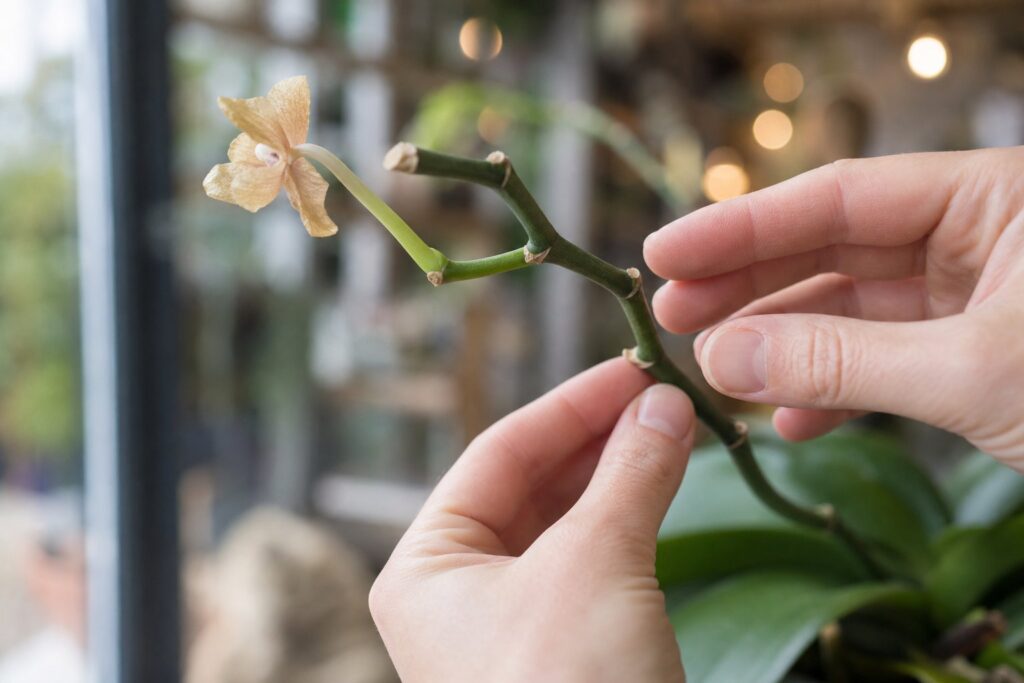
This is the tip most people miss. Phalaenopsis is the one orchid species that will rebloom on the same flower spike. After the last flower drops, leave the spike alone. If it stays green, you can sometimes get a second flush of blooms from a node below the original flowering point.
From my perspective, the easier path is to wait until the spike turns brown and dries naturally, then cut it off at the base. The plant puts its energy into the leaves and roots through the winter, and you get a stronger new spike the following year.
Either way, don’t cut a healthy green spike just because the flowers are done.
Avoid These Common Mistakes
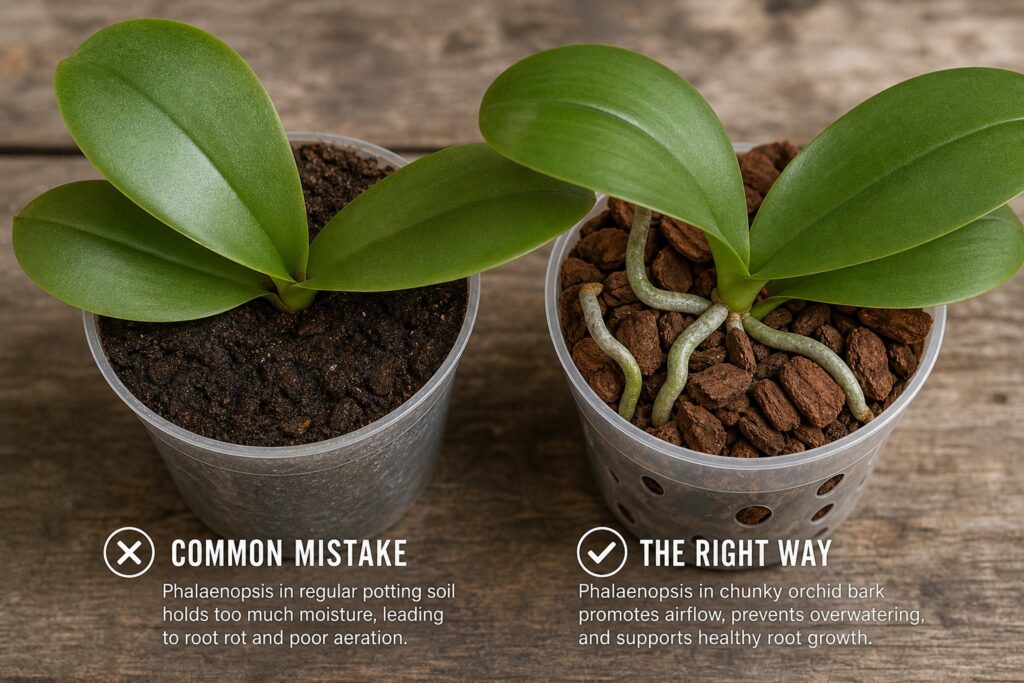
Most of the dead Phalaenopsis that come into the shop got there the same way.
- Watering on a schedule instead of by the plant. Once a week is a guideline. If the bark is still damp, skip it. Soggy bark kills roots faster than anything else.
- Potting in regular soil. Phalaenopsis roots need air. Garden soil suffocates them. Always use orchid bark.
- Setting them on a hot windowsill. Direct sun through the glass cooks the leaves. Bright, filtered light only.
- Misting the leaves. Water sitting in the crown of the plant (where the leaves meet) causes crown rot, which is almost always fatal. Skip the misting.
- Tossing out the plant when the flowers drop. The flowers last six to twelve weeks. The plant lives for decades. A bloomed-out Phalaenopsis isn’t done, it’s just resting.
What I Use in the Shop
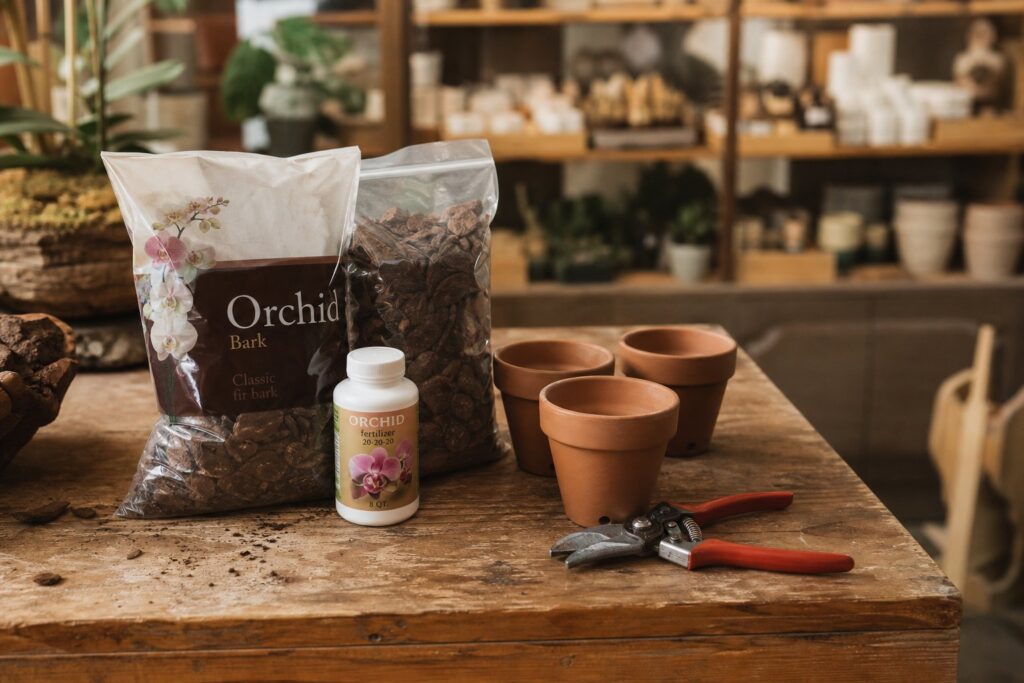
The supplies I keep on hand for our shop’s Phalaenopsis. Everything here gets used regularly.
- Fertilizer: Orchid-specific fertilizer. Quarter strength, once a week in the growing season. Don’t substitute regular houseplant food.
- Potting mix: Premium orchid bark mix. Chunky pieces, good drainage, replaces every two to three years.
- Clear orchid pots: Clear plastic orchid pots. They let the roots photosynthesize and make it easy to check root color and moisture without unpotting.
- Pruning shears: Sharp bypass pruners. Sterilize with rubbing alcohol between cuts to keep from spreading anything between plants.
- Moisture meter: A simple soil moisture meter. Useful if you tend to overwater. Stick it in the bark, get a reading, and water only when it reads dry.
If you’re new to orchids and want a broader look at the family, our orchid care 101 guide covers cattleyas, dendrobiums, and a few others worth knowing.
There are a lot of orchids out there that are surprisingly easy to grow. This short video walks through some of the friendliest ones for beginners:
Phalaenopsis Orchid FAQs
How do I get my Phalaenopsis to rebloom?
The trigger is a temperature drop. Phalaenopsis needs a few weeks of nighttime temperatures around 55 to 60 degrees Fahrenheit to set a new flower spike. A spot near a window in fall, where it gets cool at night, usually does the trick. Keep up the regular watering and feeding through that period, and you should see a new spike start to emerge within four to six weeks.
Are ice cubes really safe for orchids?
In my experience, yes. Three cubes on the bark surface once a week works. The ice melts slowly and never floods the roots. Some growers prefer room-temperature water, and that’s fine too. What kills Phalaenopsis isn’t cold water, it’s standing water in the pot. Either method avoids that.
What do healthy Phalaenopsis roots look like?
Plump, firm, and silvery green when dry, bright green when wet. Aerial roots (the ones growing out of the pot into the air) are normal and healthy. Soft, brown, mushy roots need to be trimmed off. Hollow or shriveled roots are dead. Use a clear pot so you can check without disturbing the plant.
Why are the lower leaves turning yellow?
One yellow lower leaf at a time is normal. The plant sheds older leaves as it grows new ones from the top. Multiple yellow leaves at once usually point to overwatering or root rot. Pull the plant out of the pot and check the roots. If they’re soft and brown, it’s time to trim, repot in fresh bark, and ease up on watering.
When should I repot my Phalaenopsis?
Every two to three years, after the plant has finished blooming, you see new root tips emerging. Don’t repot a plant in bloom unless something is clearly wrong, like the bark has rotted or the plant is overflowing the pot. Repotting stresses the plant, and stressed plants drop flowers.
Can Phalaenopsis live in a bathroom?
If there’s a window with bright indirect light, a bathroom can actually be a great spot. The natural humidity from showers mimics the tropical conditions of Phalaenopsis. A bathroom with no window doesn’t work. Phalaenopsis needs real daylight, not just artificial light.
Closing Thoughts
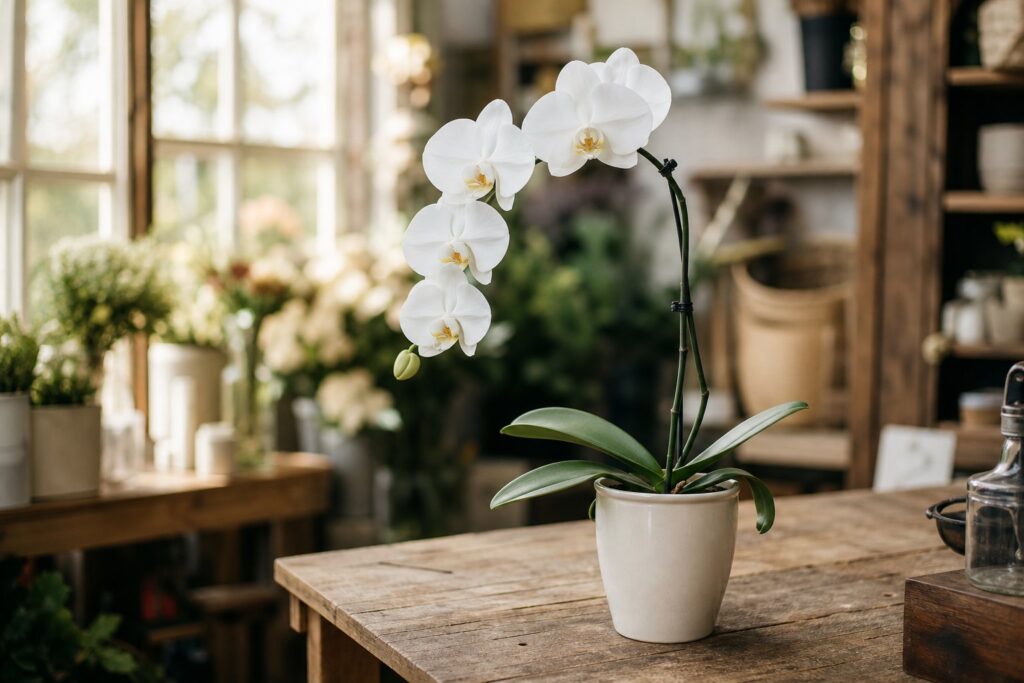
Phalaenopsis don’t need much, but they do need consistency. Bright indirect light. A weekly watering you can set on the calendar. A little fertilizer. Fresh bark every couple of years. Hands off the flower spike when it’s done.
The customer who walked in last week, thinking her orchid was dying, went home with the same plant, a fresh pot of bark, and a watering schedule. Two months later, she sent me a picture of a new spike with five buds on it. That’s the thing about Phalaenopsis. They look fragile, but they’re tougher than they get credit for. Give them the basics, and they’ll bloom for you year after year.
If you’ve had a Phalaenopsis come back from the brink, drop a comment and tell me what saved it. I read every one, and the stories help other readers as much as the post does.
Til next time,