Disclosure: This post may contain affiliate links. If you click and buy, we may earn a commission at no extra cost to you. As an Amazon Associate, we earn from qualifying purchases.
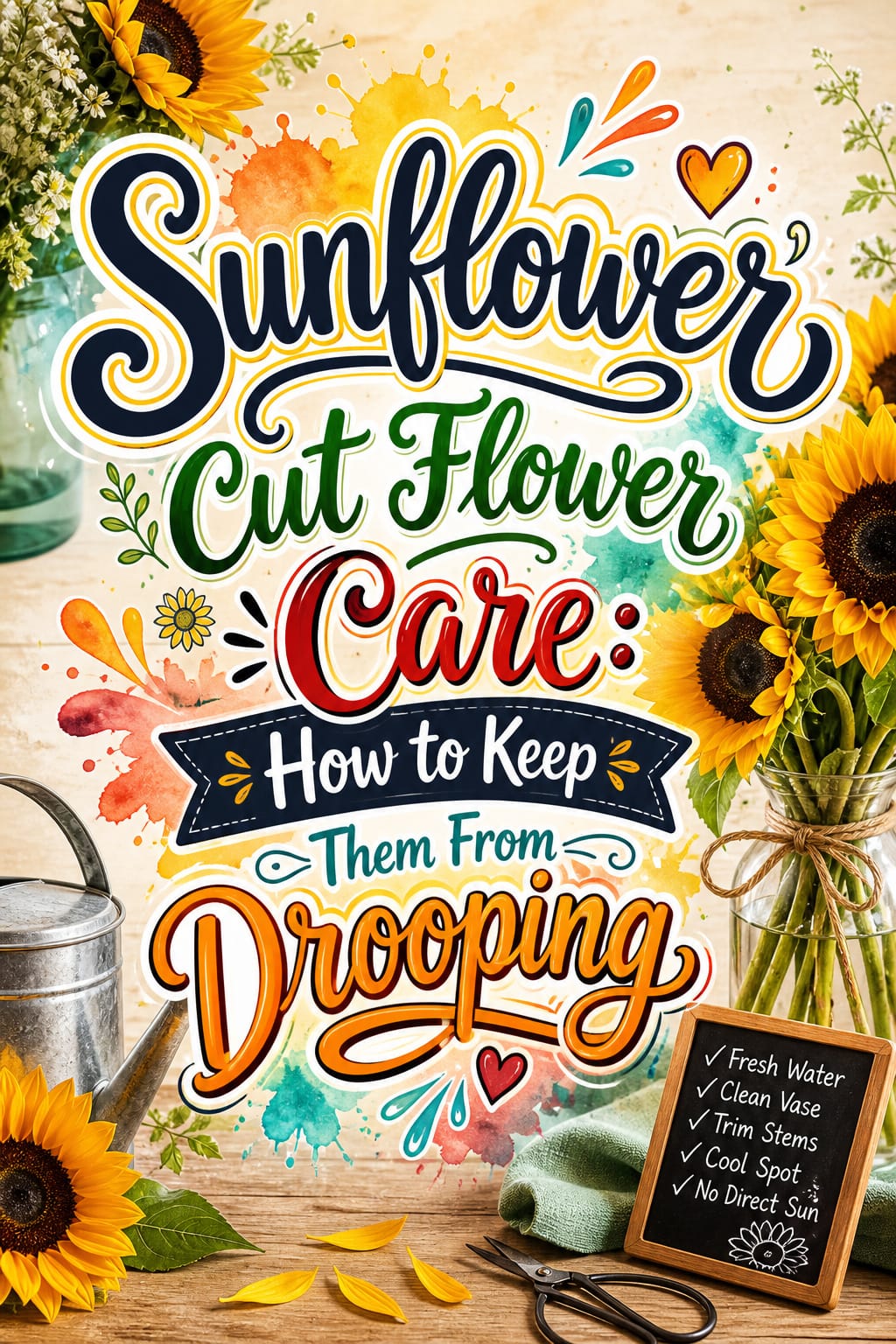
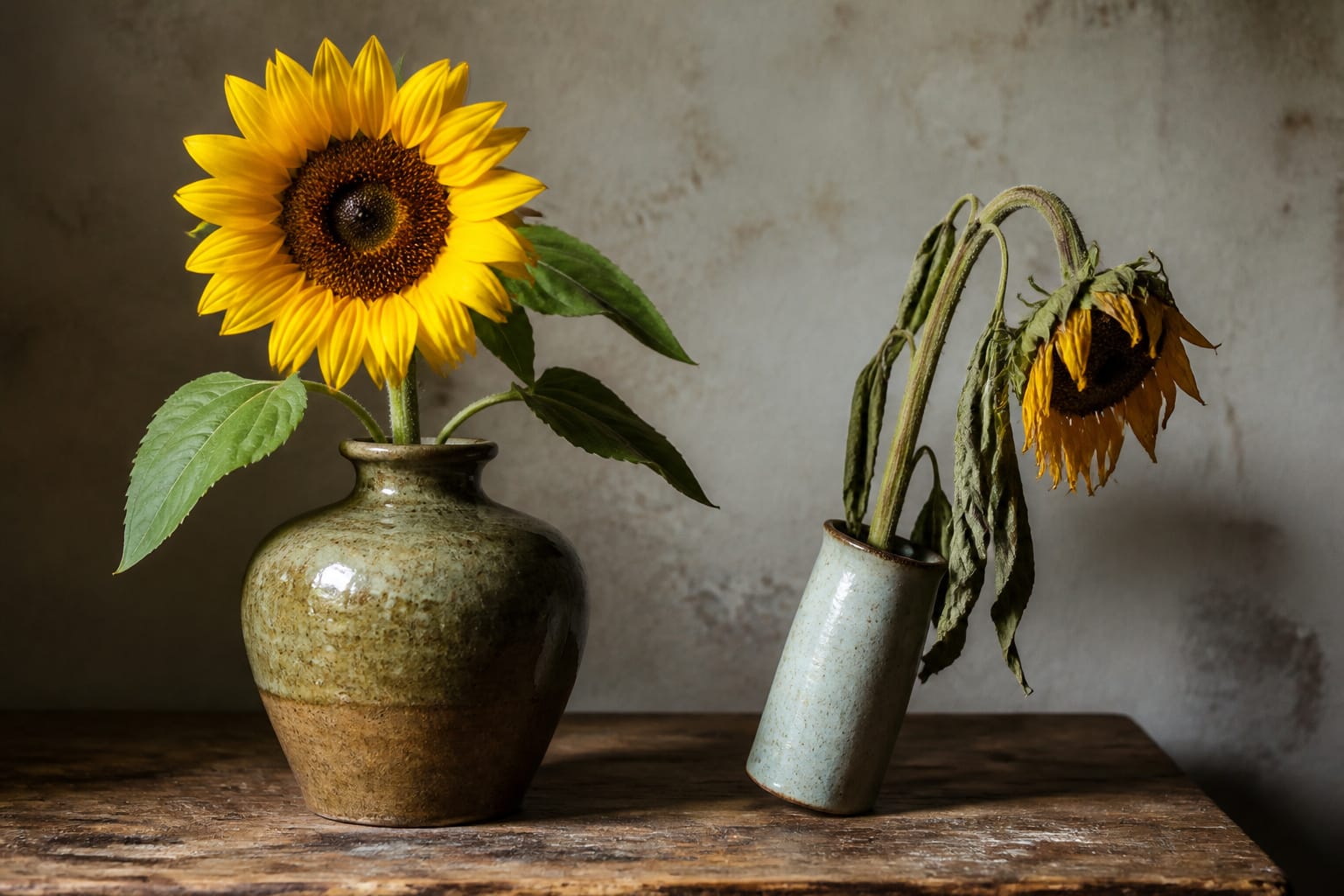
Sunflowers droop for a reason most people never get told: it’s not the flower’s fault, it’s the stem. That thick green stalk looks sturdy, but inside it’s mostly hollow, and a hollow stem behaves differently than a solid one the moment you cut it.
Air gets trapped in that hollow stem more easily than in a solid one, and once air blocks the path water needs to travel, the big heavy flower head above it doesn’t stand a chance. That’s why sunflowers get a reputation for drooping fast, even though a properly conditioned stem can hold up for a week or more.
Here’s how I keep sunflowers standing tall in the shop, and what I’d tell you to do with a bunch at home.
Pick Sunflowers That Are Built to Last
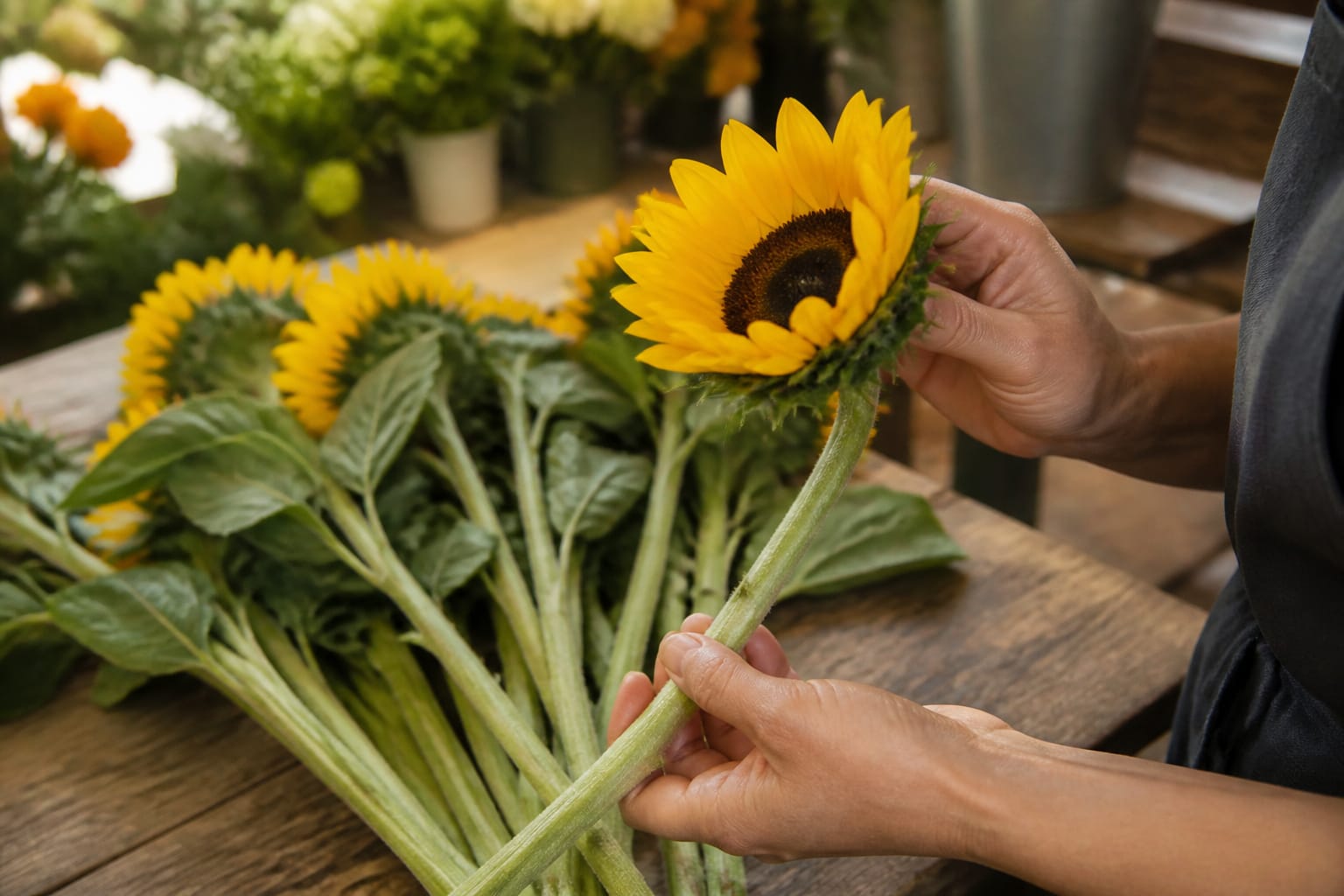
Look for stems that are firm and not bendy, with petals that are bright and unblemished and a center that’s tight rather than fuzzy and shedding pollen. A sunflower that’s already dropping pollen has peaked and won’t give you much runway.
Thicker stems generally hold up better than spindly ones, and they’ll support a large head without help. If you’re buying a mixed bunch, check each stem individually. Sunflowers vary a lot even within the same bucket.
Products Worth Considering

FRESH CUT FLOWERS, HAND-TIED IN THE USA - Your flowers are harvested daily from our Southern California farm, professionally hand-tied, carefully packed and shipped with care so they arrive fresh and ready to enjoy.

50 Yellow Sunflower Stems – Brighten any celebration with 50 premium fresh Sunflower stems that symbolize warmth, happiness, and appreciation. Create stunning floral arrangements for gifting, events, weddings, or home décor.

Timeless Beauty, Effortless Elegance: Our forever flowers are preserved using advanced Japanese technology, maintaining their vibrant color and velvety texture for up to 3 years. No watering or sunlight required, bringing lasting beauty to any space with minimal effort.
Cut and Condition the Hollow Stem Properly
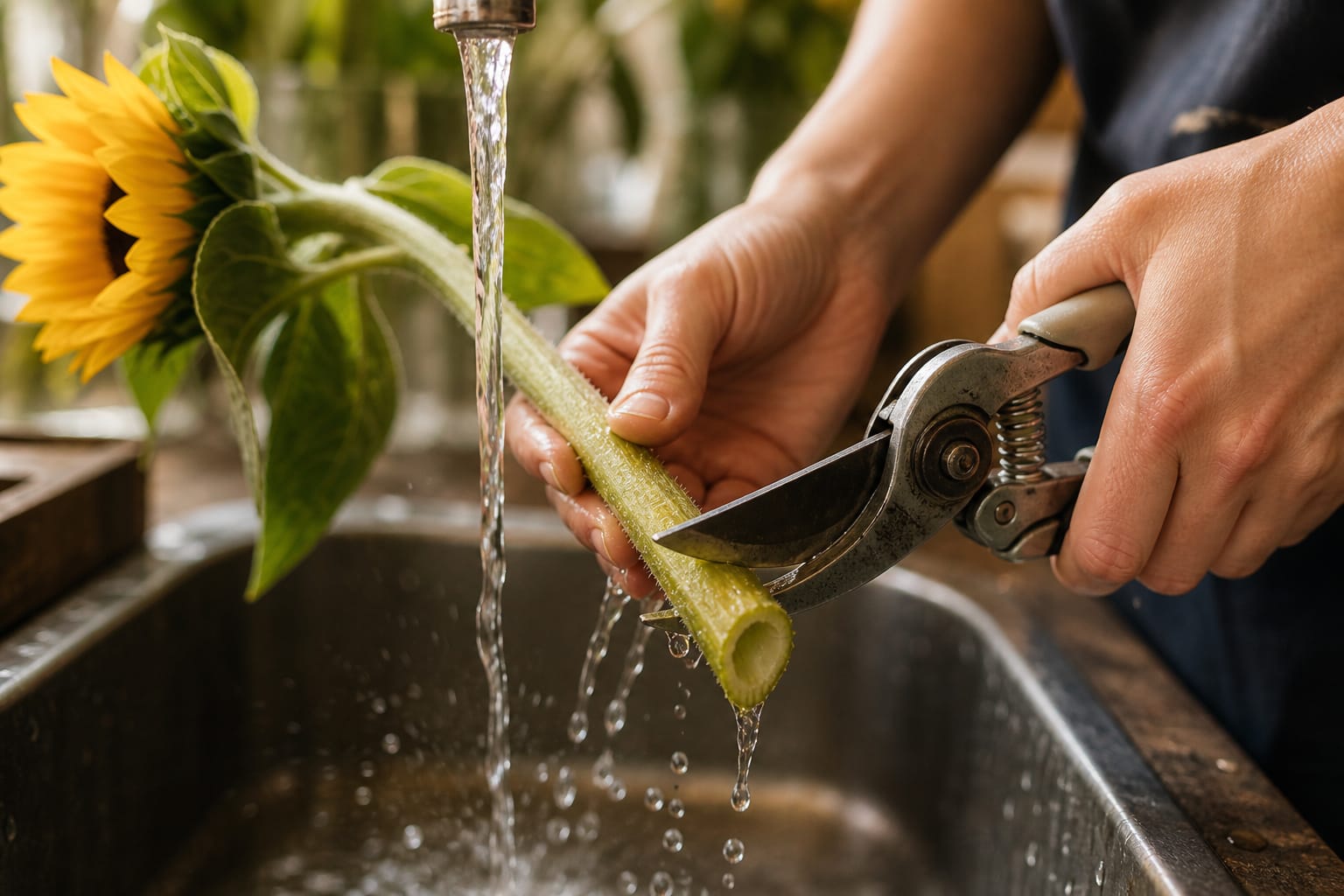
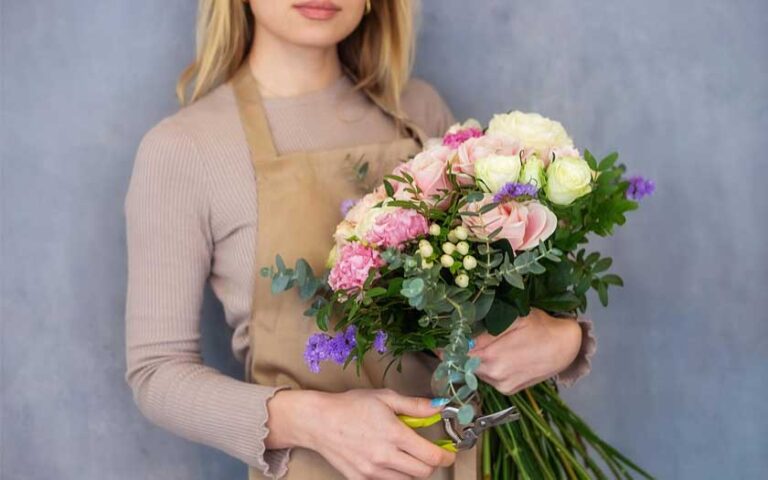
Recut every stem at a sharp angle, cutting at least an inch off the bottom, and do it under running water if you can. That prevents an air pocket from forming right at the cut, which is the exact problem a hollow stem is prone to in the first place.
Strip any leaves that would sit below the waterline. Sunflower leaves are rough and a little fuzzy, and they break down messier than most foliage once they’re submerged, clouding the water faster than you’d expect.
What I use in the shop: the same floral shears I use on everything else. A clean cut matters even more on a hollow stem than a solid one.
Place the stems in warm water right after cutting and let them condition for two to four hours before arranging. Warm water moves up a stem faster than cold, which gives a hollow stem a better head start before it has to hold up a heavy bloom on its own.
Feed and Refresh the Water Regularly
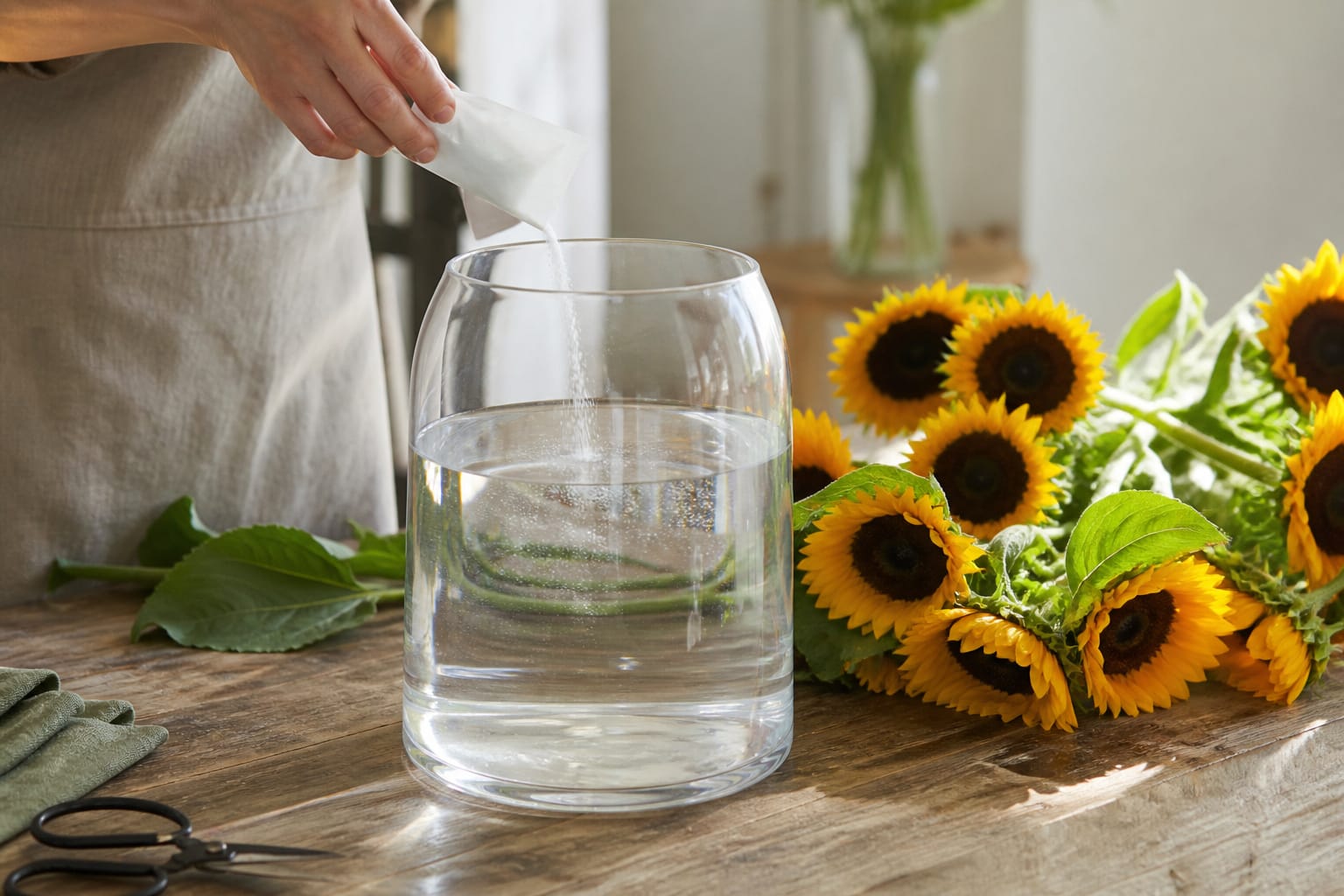
Sunflowers drink a lot. Check the water level daily and top it off between full changes, they’ll pull a vase down faster than most other flowers you’ll work with this time of year.
What I’d do: I do a full water change and a fresh recut every two to three days, same as I would with any other flower, but I also keep an eye on the water level between changes. A sunflower vase that’s run dry overnight is a sunflower that’s drooping by morning.
What I use in the shop: a packet of flower food in every vase, mixed according to the package. It feeds the bloom and keeps bacteria from building up in water that’s already working hard to keep a big flower head hydrated.
Products Worth Considering

FLOWER FOOD: Just like us, fresh-cut flowers need to eat!! Feed them the right nourishment and they stay fresh, vibrant, and looking fabulous.
Floralife Flower Food 300 5gm
Support the Heavy Head and Place It Right
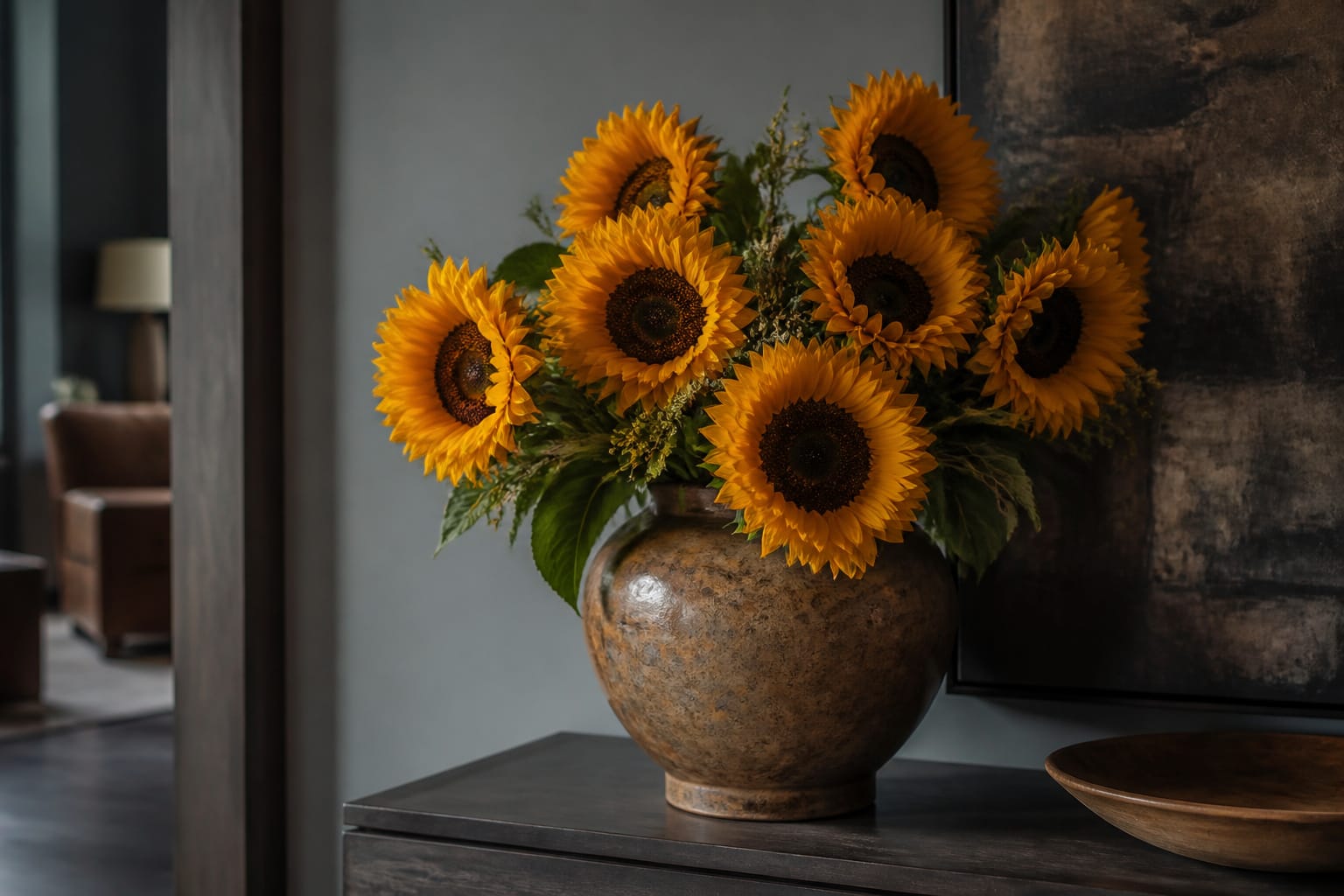
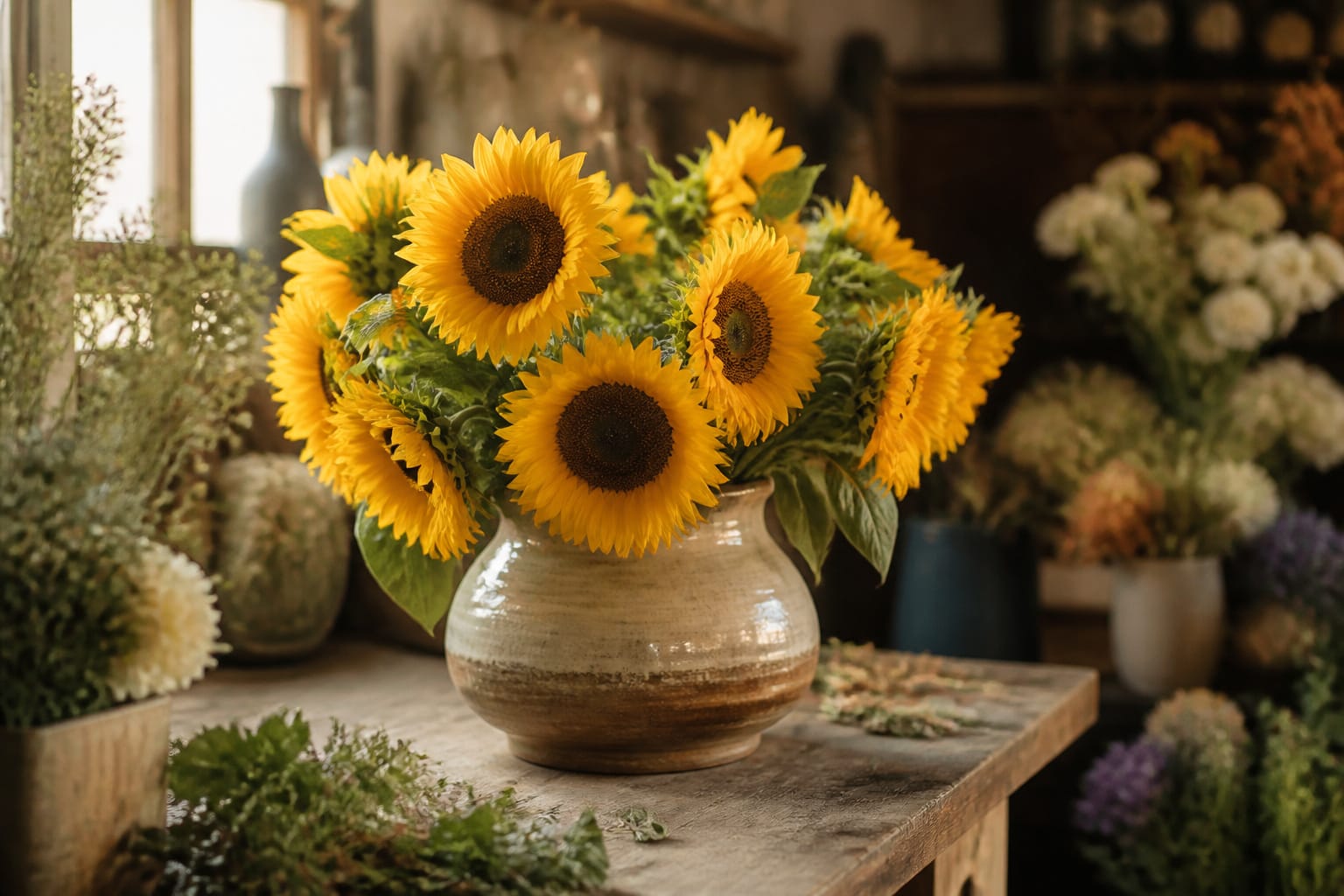
A tall, narrow vase can let a sunflower’s heavy head tip the whole arrangement over. A wider, weightier vase gives the stem the stability it needs, especially once you’ve got more than two or three stems in there.
Keep the arrangement away from direct sun and heating vents, and away from a bowl of ripening fruit. Ethylene gas from fruit ages flowers faster, sunflowers included, even though people don’t always associate that risk with such a sturdy-looking bloom.
Sunflowers are about the only flower in my shop that actually looks like it could survive a Wisconsin winter on its own. It can’t. Treat it like everything else on this list.
Products Worth Considering

【3-Piece Vase Set】This set features three vases of varying heights, creating a visually rich layered effect. Whether displayed individually or grouped together, they effortlessly form an artistic focal point, elevating any decor beyond monotony. Dimensions: Diameter x Height: 3.27'' x 10.04'', 3.15'' x 7.36'', 2.95'' x 4.96''.
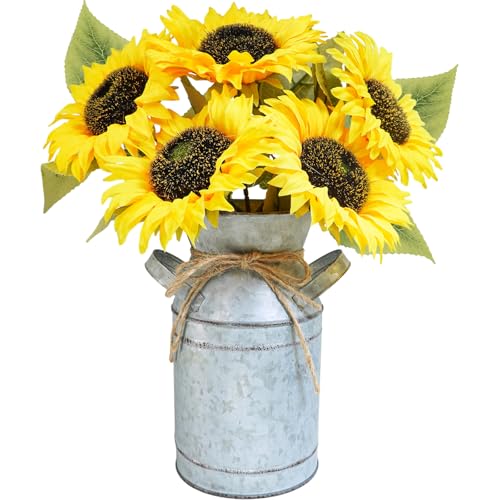
Beautiful Sunflower Centerpiece Set: This package includes 5 pcs artificial flower stems and 1 pc rustic metal milk jug. Designed as separate pieces, they allow for flexible arrangement to suit your taste. Simply place the sunflowers in the jug, and with a gentle adjustment of the stems, you can create an attractive fall floral display. This sunflower table centerpiece is perfect for adding a touch of rustic charm to your home decor.

Friendly Reminder: This product for sale is copyrighted, please respect the originality!
Common Mistakes That Shorten Sunflower Vase Life
- Cutting with a dull blade. A crushed cut is worse for a hollow stem than a solid one, since there’s less structure to begin with.
- Letting the vase run dry. Sunflowers drink more water than most cut flowers. Check levels daily, not just on water-change day.
- Using a top-heavy or narrow vase. The stem can hold the bloom up. The vase needs to hold the stem up.
- Buying stems that are already shedding pollen. That bloom has already peaked, no amount of care afterward will buy back the days you lost before you brought it home.
Frequently Asked Questions
How long do cut sunflowers usually last?
With good conditioning, a full week to ten days is realistic. Skip the conditioning steps and a hollow-stemmed sunflower can droop within two or three days.
Why is my sunflower’s head drooping even though the petals look fine?
That’s almost always an air lock in the hollow stem, not a problem with the bloom itself. Recut the stem under water at a fresh angle, place it in warm water with flower food, and give it a few hours in a cool spot before judging whether it’s recovered.
Do sunflowers need a bigger vase than other flowers?
Not necessarily bigger, but sturdier and wider at the base. A heavy sunflower head can tip a tall, narrow vase, so weight and stability matter more than sheer size.
Are sunflowers toxic to pets?
Sunflowers are generally considered non-toxic to cats and dogs, which makes them a solid choice for households with curious pets. That said, the stems and leaves can still cause mild stomach upset if a pet eats a large amount, so it’s still worth keeping arrangements out of easy reach.
Closing Thoughts
Sunflowers don’t need to be complicated. Respect the hollow stem, keep the water fresh, and give the head a vase that can actually hold it up, and you’ll get a lot more than the two or three days most people assume is the ceiling.
Tell me in the comments: has a sunflower ever drooped on you faster than you expected, and did you figure out why?
A sunflower that’s cared for right will keep turning toward the light in your kitchen the same way it did in the field.
Til next time,