Disclosure: This post may contain affiliate links. If you click and buy, we may earn a commission at no extra cost to you. As an Amazon Associate, we earn from qualifying purchases.
Last Updated: July 15, 2026
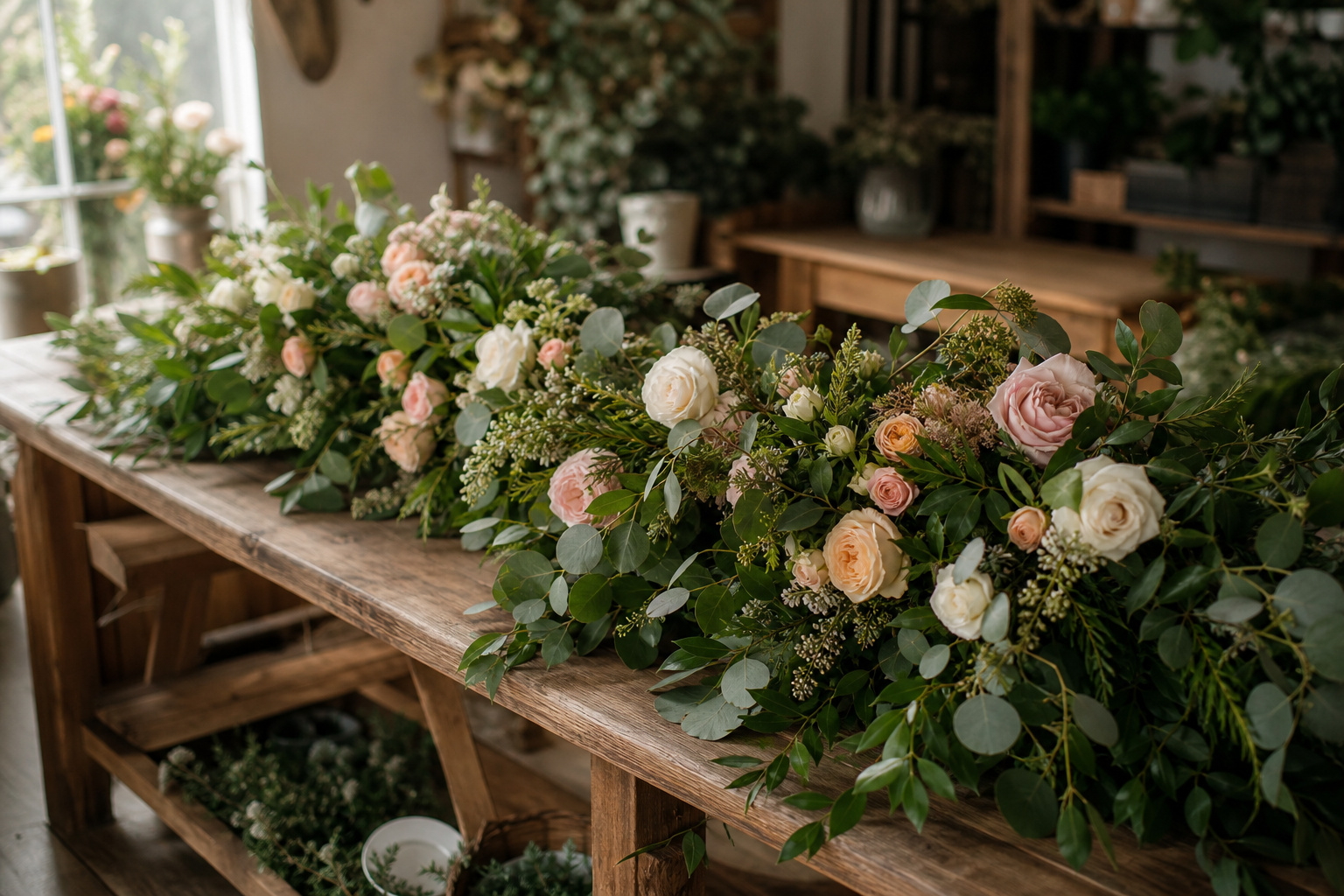
A bride asked me a few years back if a garland was just a really long arrangement. I understood why she thought that. From a few feet away, a well-built garland does read like one continuous arrangement. Up close, it’s actually built more like a rope than a bouquet, and that distinction is the whole trick to making one that holds together.
Garlands are a more forgiving DIY wedding project once you understand the base structure. Here’s how I build them in the shop.
Start With a Base That Can Take the Weight
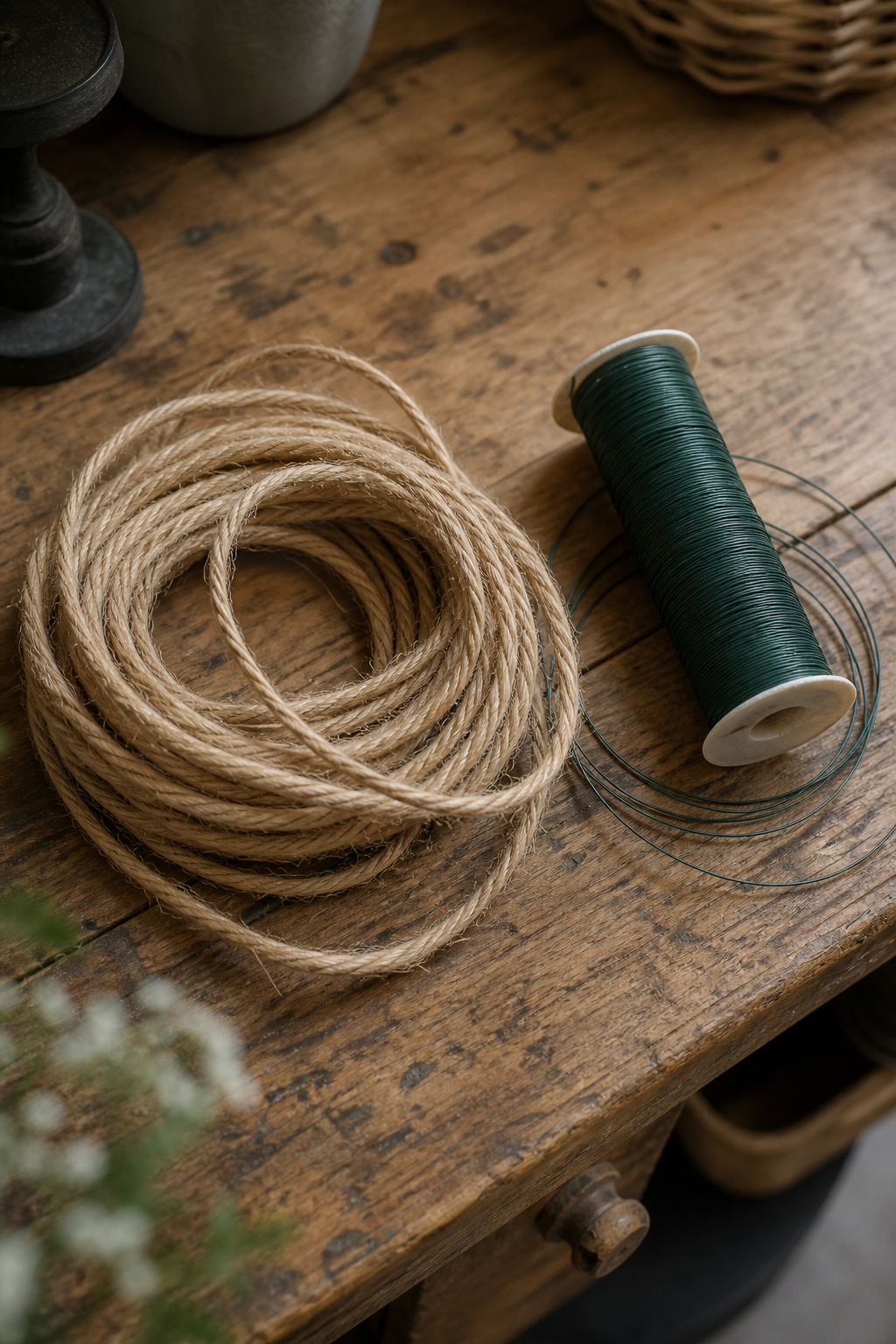
Every garland needs a spine, something the greenery and flowers attach to, and that spine has to be strong enough to hold the finished weight without stretching or sagging once it’s hung.
Sisal rope or heavy jute twine works well for most garlands. It gives you something sturdy to wire against. For a longer garland, thin wire cable or chain hidden inside the greenery adds real structural support without adding visible bulk. Whatever you choose, cut your base a foot or two longer than the finished length you want, since you’ll lose some length once everything is bunched and wired tight.
Build in Small, Overlapping Bunches
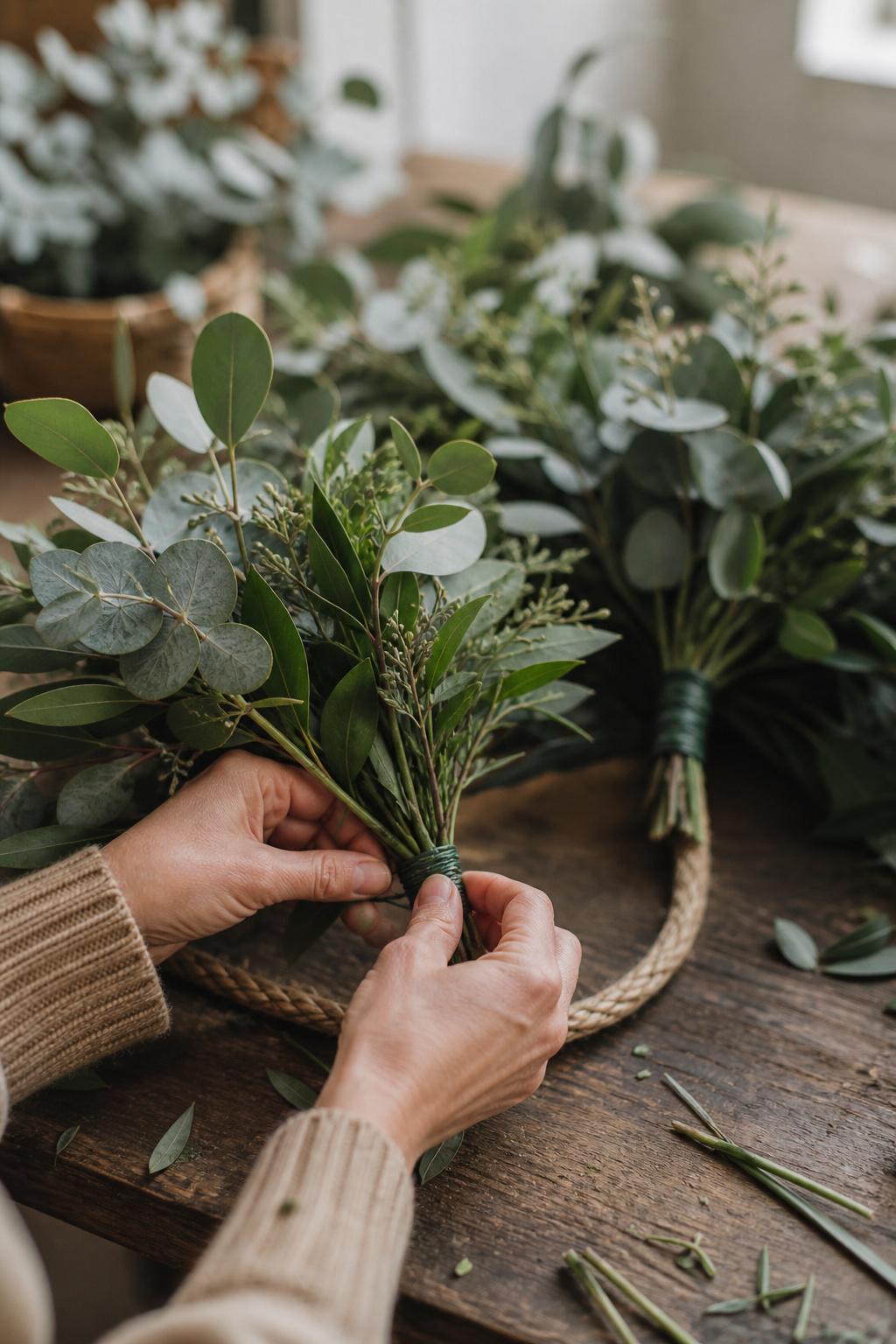
This is the technique that actually makes a garland look continuous instead of like a row of separate bouquets tied together.
Gather a small handful of greenery, three or four stems, mixing a couple of different textures, and wire it tightly to the base. Move down a few inches and add the next bunch so it overlaps the stems of the one before it, hiding the mechanics of the last bunch under the foliage of the new one. Work in one direction the entire length, and the overlap reads as a continuous piece, rather than a series of individual clusters.
Mix your greenery varieties as you go rather than doing all of one type first. Seeded eucalyptus, Italian ruscus, and myrtle in rotation give a garland far more texture and depth than a single foliage type used from start to finish.
If you want to see the overlap technique in motion, this short video shows the bunching and wiring process from start to finish. Watch it, and see if you agree it’s easier done than said.
What I use in the shop: a roll of 22-gauge floral wire for every bunch. It’s thin enough to disappear into the greenery but strong enough to hold under real weight once the garland is hung.
Add Flowers Last, Once the Greenery Base Is Set
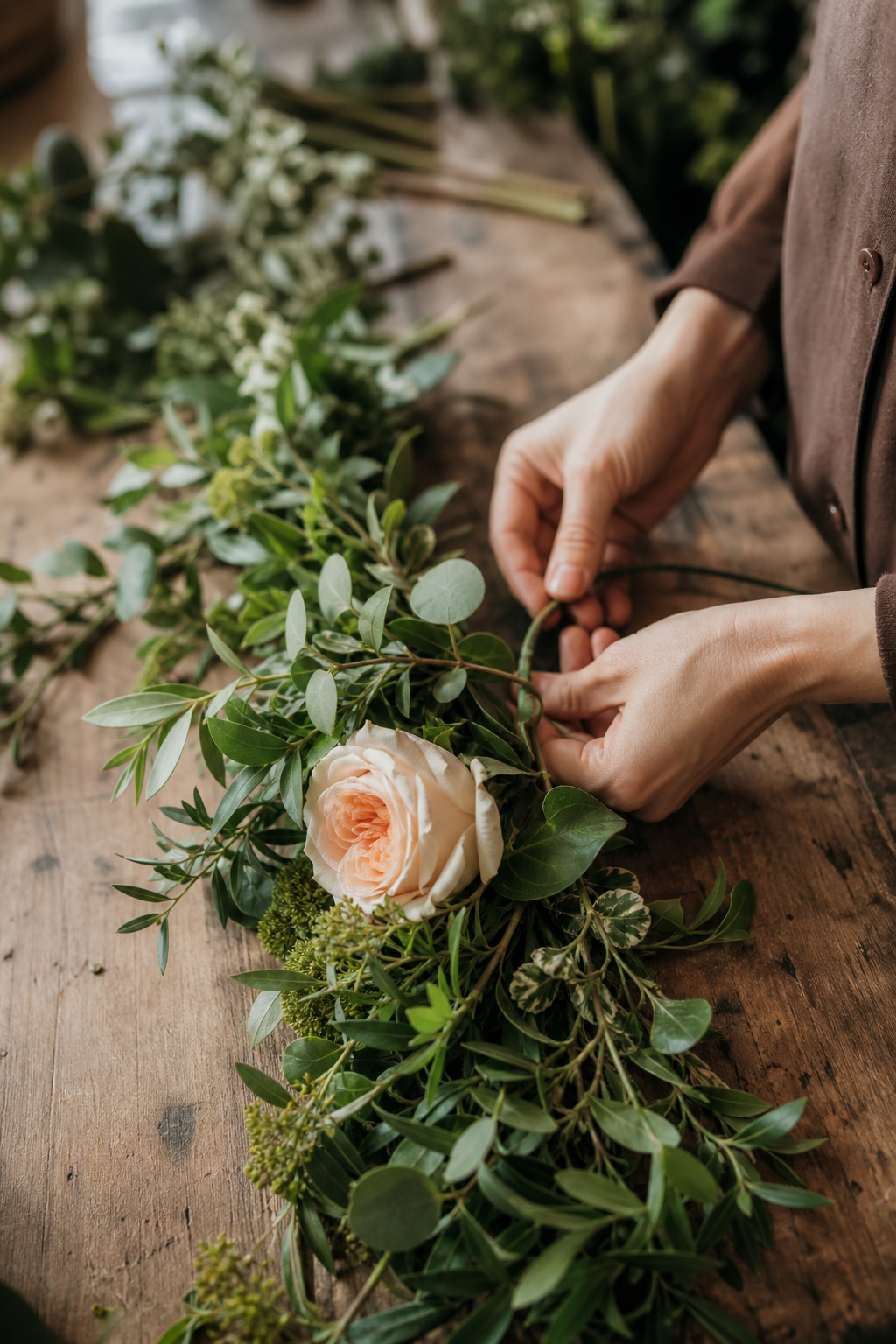
Build the entire greenery base first, all the way down the length, before you add a single bloom. Trying to weave flowers in as you go makes it much harder to judge spacing, and you’ll end up with clusters bunched in some spots and bare in others.
Once the greenery is finished, step back and look at the whole length before placing flowers. Focal blooms, garden roses or ranunculus work well, and should land at slightly irregular intervals rather than perfectly even spacing, since evenly spaced flowers read as mechanical instead of gathered. Wire each stem individually and tuck it into the greenery at an angle rather than laying it flat on top, so it looks like it’s growing out of the garland instead of sitting on it.
Know How Long It’ll Actually Hold Up
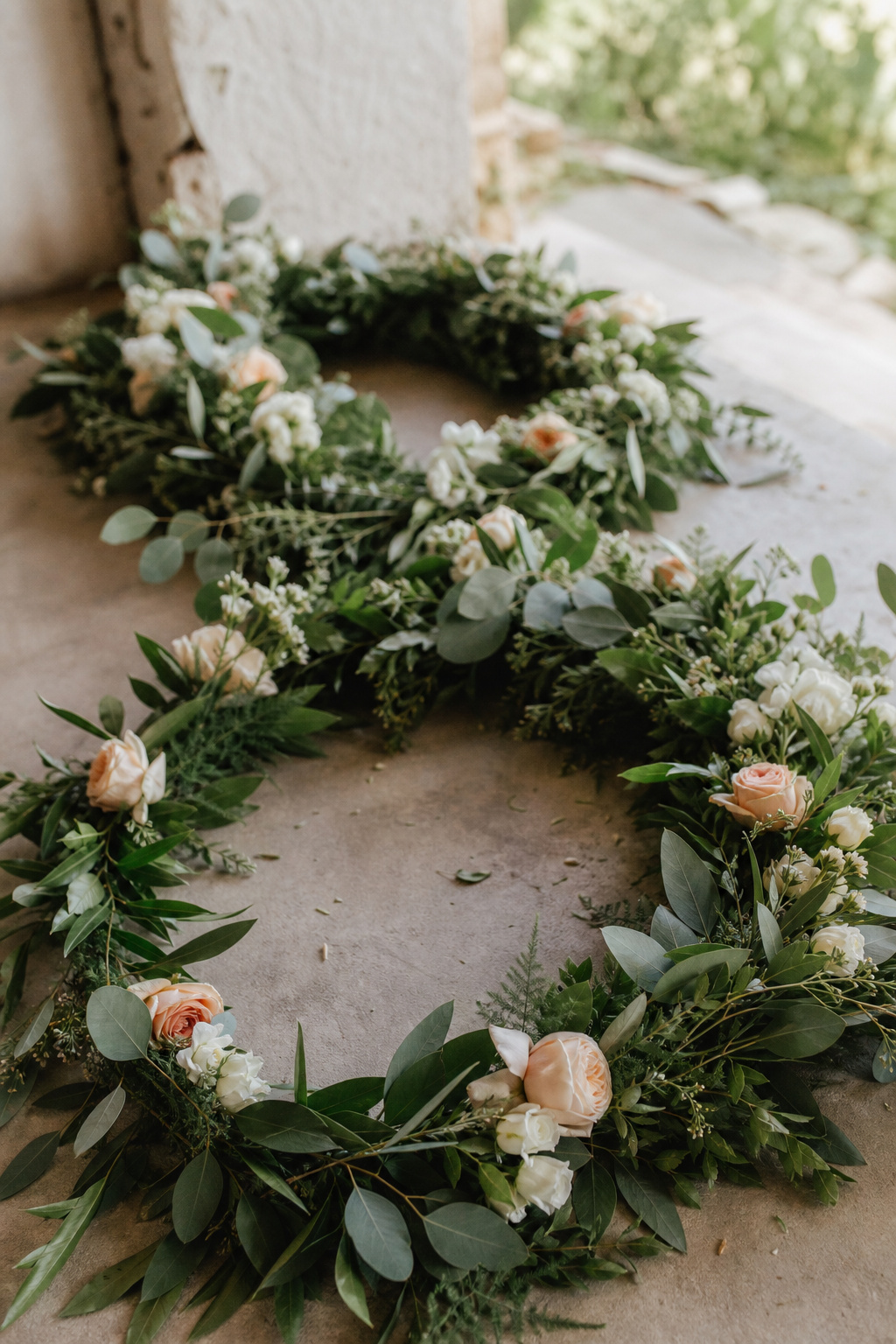
A garland has no water source once it’s built, which means everything in it is on borrowed time from the moment you start wiring.
Sturdy greenery like eucalyptus, myrtle, and boxwood holds up well for a day or two out of water, sometimes longer if it’s cool where it’s hanging. Flowers are the limiting factor. Garden roses and ranunculus will start to droop within several hours in warm conditions, faster outdoors in direct sun. Build the flower portion of your garland as close to the event as your schedule allows, and keep the finished piece cool until it’s hung.
If you’re worried it won’t survive a full day on display, don’t be. Most garlands only need to look their best for a few hours during a ceremony or reception, not hold up all weekend. Plan the build time around when it actually needs to peak, not around when it’s convenient to build it.
Consider Silk for Anything Hanging More Than a Day
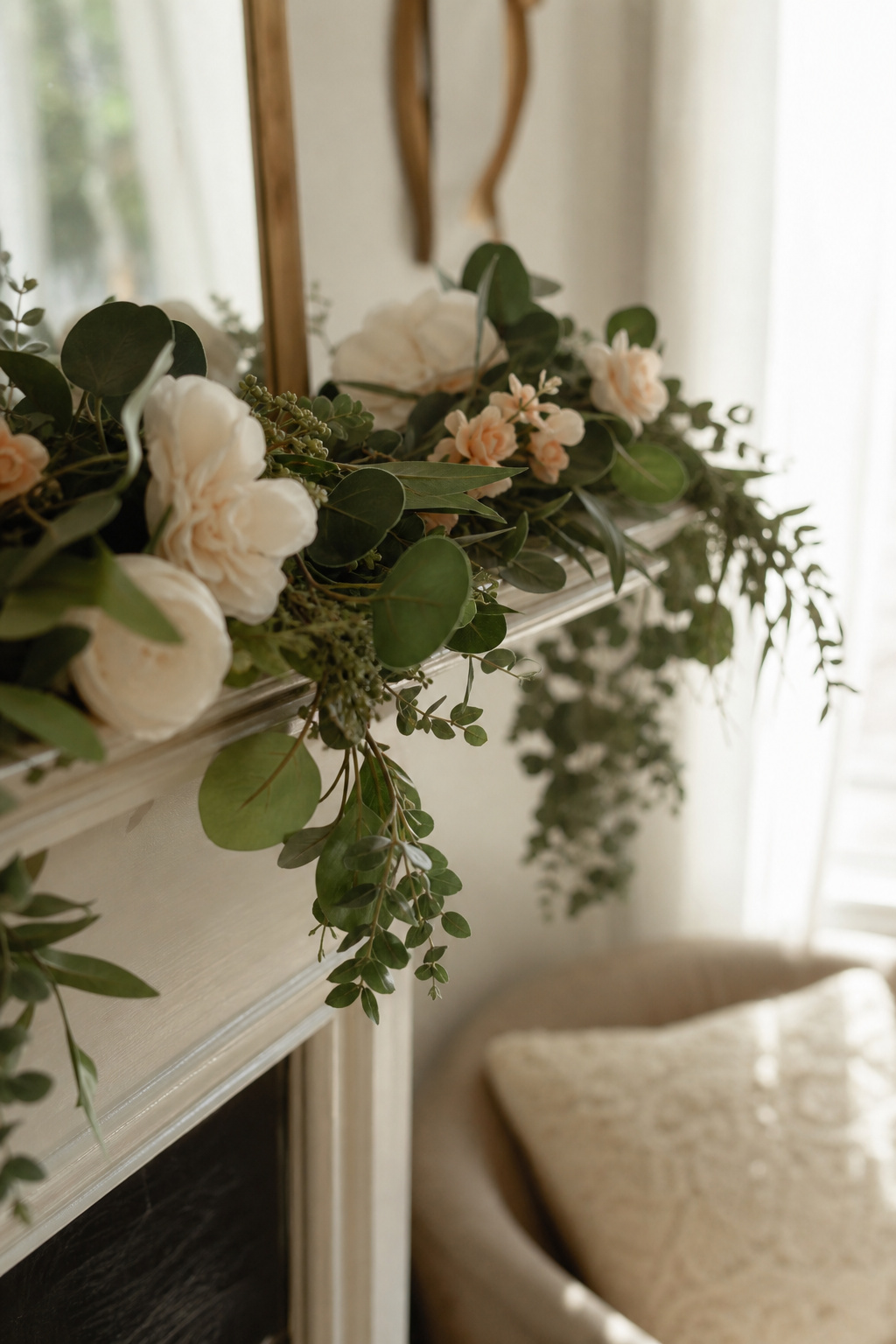
For a garland that needs to stay up longer than a single event, over a multi-day celebration, or as standing decor, fresh greenery mixed with silk flowers is a more realistic plan than an all-fresh build.
Fresh greenery alone, without flowers, actually holds up quite well without water for several days, especially something sturdy like eucalyptus or boxwood. Mixing in silk flowers instead of fresh ones lets you keep that live greenery texture without worrying about wilted blooms by day two. If you’re building somewhere your garland will hang for an entire wedding weekend, this combination is worth considering over an all-fresh design. For more ideas on where a garland fits into your overall ceremony decor, our guide to wedding aisle decor covers several other options that pair well with it.
Frequently Asked Questions
What’s the best base material for a DIY wedding garland?
Sisal rope or heavy jute twine works well for most garlands, giving the greenery something sturdy to wire against. For longer garlands that need to hold real weight, thin wire cable or chain hidden inside the foliage adds structural support without showing. Cut the base a foot or two longer than your finished length, since bunching and wiring shorten it.
How do I keep a garland from looking like separate bouquets tied together?
Build in small, overlapping bunches, wiring each new handful of greenery so it covers the stems of the one before it. Working continuously in one direction down the length is what creates the seamless look. Skipping the overlap, or leaving gaps between bunches, is the most common reason a homemade garland looks segmented instead of continuous.
How long will a fresh flower garland last without water?
Sturdy greenery like eucalyptus or boxwood can hold up for a day or two, longer in cool conditions. Flowers are the limiting factor and typically start drooping within several hours in warm conditions. Build the flower portion as close to the event as possible, and keep the finished garland somewhere cool until it needs to be displayed.
Should I use fresh flowers or silk flowers in a garland?
Fresh flowers look best for a single event lasting a few hours, but they won’t hold up for a multi-day display. For a garland that needs to stay up longer, fresh greenery mixed with silk flowers gives you the live texture of real foliage without the wilting concern of fresh blooms.
How much greenery do I need for a garland?
It depends on fullness and length, but a good starting estimate is roughly one full bunch of greenery per foot of finished garland for a lush, dense look. Thinner, more relaxed garlands can use less. Buy a bit extra, since some stems will get trimmed away or won’t work well once you’re building.
Closing Thoughts
A garland looks complicated hanging across a mantle or draped down a table, but the technique underneath is really just small bunches, wired tight, overlapped in one direction.
Get the base right and the overlap consistent, and the rest takes care of itself.
Are you building a garland for a table runner, a mantle, or something hanging overhead? Tell me in the comments. I’d love to hear about it.
Til next time,