Disclosure: This post may contain affiliate links. If you click and buy, we may earn a commission at no extra cost to you. As an Amazon Associate, we earn from qualifying purchases.
Last Updated: June 2026
A bride came into the shop a few years back carrying a printout of a cascade bouquet she’d found on Pinterest. Long, trailing greenery. Loose, unstructured blooms. That effortlessly “undone” look takes more effort than it appears. She wanted to make it herself and asked where to start.
I pointed her toward the bucket of Muehlenbeckia on the workbench and told her that was her starting point. She had no idea what it was. Neither do most people, but it’s one of the best-kept secrets in boho floral design.
The boho cascade bouquet is one of the more forgiving styles you can attempt as a DIYer, once you understand the underlying structure. The video below shows floral designer Giada Graziani building one from scratch using a Muehlenbeckia plant as the base. Watch it first, then I’ll walk you through what she’s doing and why it works.
Understand What Makes a Cascade Bouquet Different
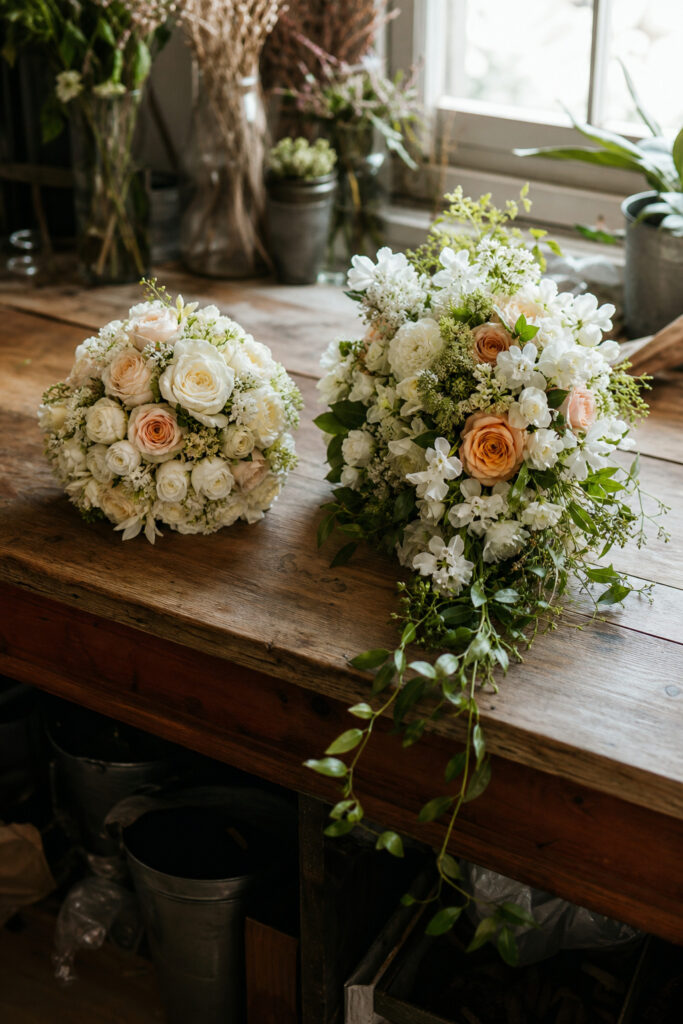
A cascade bouquet isn’t just a round bouquet with some greenery hanging off the bottom. The structure is fundamentally different. In a cascade, the focal flowers sit at the top and center, and the design trails downward in a deliberate, elongated line. The “cascade” refers to that trailing element. It’s what gives the bouquet its characteristic waterfall shape.
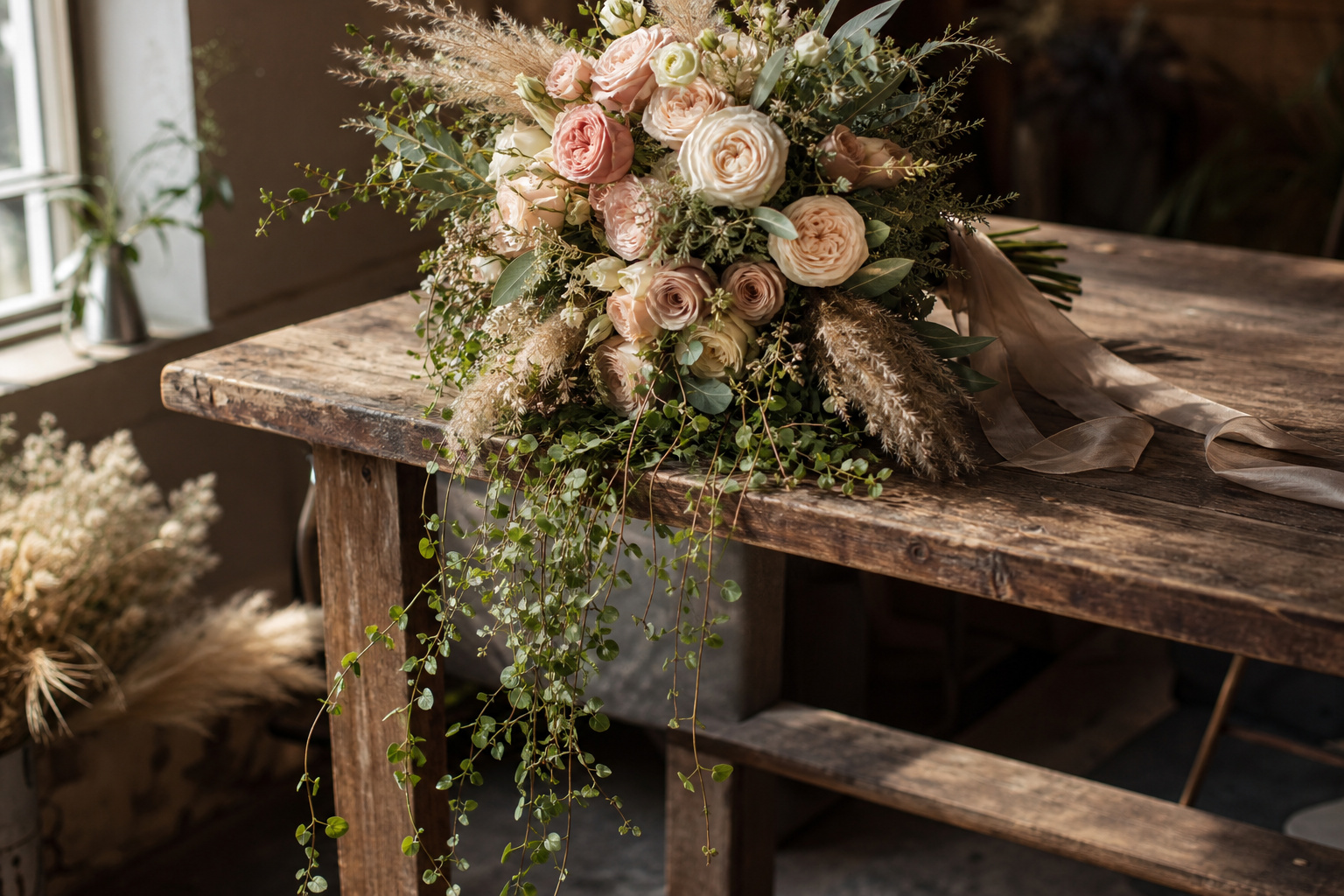
The boho version loosens that structure considerably. Instead of a tight, manicured trail of flowers, you’re working with vines, tendrils, and loose foliage that creates movement. It reads as organic and unplanned, but there’s still a structure underneath holding it together.
That structure is the key. Without it, you get a floppy mess that won’t survive the ceremony, let alone the reception. With it, you get something that looks like you picked it straight from the garden.
Start With the Right Base Material
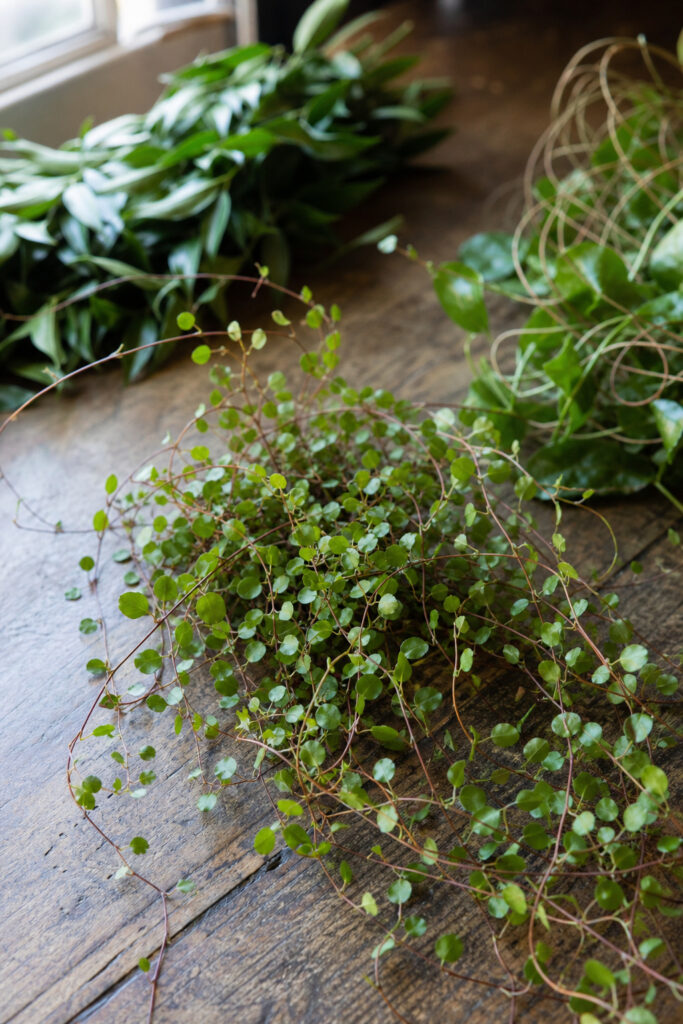
Muehlenbeckia, also called wire vine or maidenhair vine, is the plant Giada uses in the tutorial, and it’s genuinely one of the best base plants for a boho cascade. The stems are thin and wiry, which is where the common name comes from, and they drape naturally without needing to be manipulated much. The tiny, round leaves have a delicate quality that reads as wild and organic without looking like you just grabbed a handful of weeds from the yard.
We’ve used it in the shop for trailing bouquet elements, and it holds up well. It’s not always easy to find at a retail garden center, but it shows up regularly at wholesale flower markets. If you’re buying locally, ask your florist. Most shops either carry it or can get it.
Other plants that work well as boho cascade bases include Italian ruscus (more structured, good for a longer trail), smilax (classic, romantic, fragile), and jasmine vine when it’s in season. Each one reads slightly differently. Muehlenbeckia is the most forgiving for a beginner because it holds its shape without much coaxing.
What I’d avoid: ivy. It’s everywhere and easy to source, but ivy wilts fast once it’s cut and out of water. Unless you’re conditioning it carefully and working quickly, it’ll look tired before the ceremony’s over.
Choose Flowers That Won’t Fight the Structure
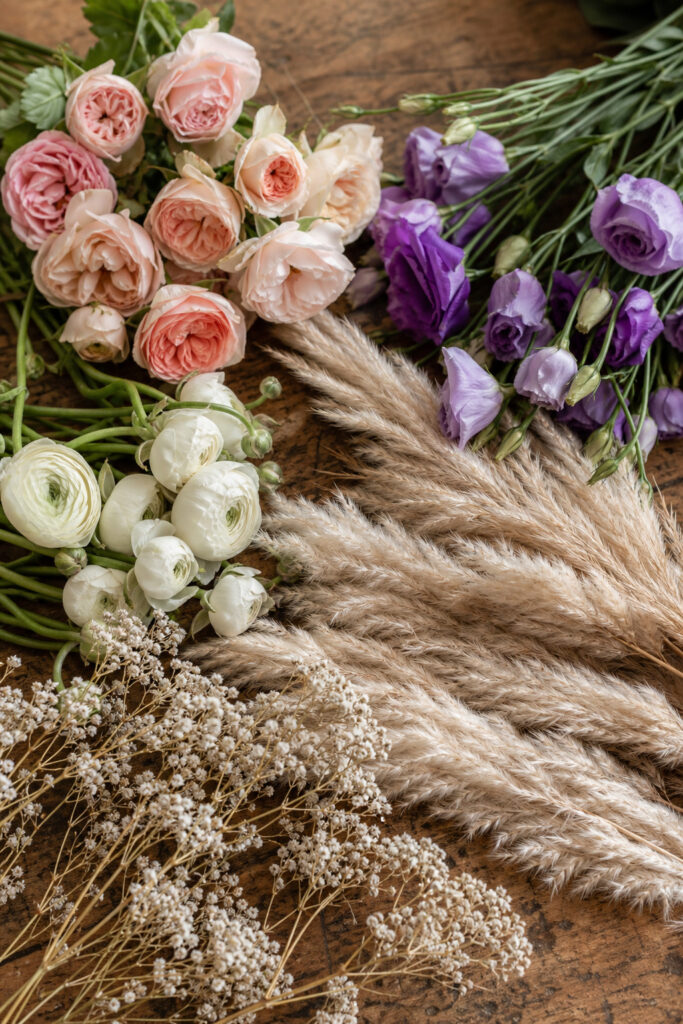
The boho cascade look works best when the flowers feel loose and unforced. Big blooms like carnations and standard roses do not work well with the aesthetic. You want flowers that have a natural, slightly open quality, something that looks like it belongs in a meadow, not a glass case.
Garden roses are a natural fit. Their loose, many-petaled form reads as effortless in a way that standard hybrid tea roses don’t. Ranunculus work beautifully. They’re smaller, papery, and they layer nicely without adding bulk. Lisianthus is worth considering too; the ruffled petals read almost like a garden rose at a fraction of the price, and they’re one of the more durable cut flowers you’ll find. They’re one of our go-to blooms at the shop.
For texture, dried elements are very much on-trend right now, and they play well in boho designs. Pampas grass, dried bunny tail grass, and bleached baby’s breath add that earthy, textural quality without competing with the fresh flowers. Just be careful not to overdo the dried material; a little goes a long way.
If you’re sourcing flowers yourself, buying in bulk online can work well for this bouquet style, since the boho aesthetic is forgiving of slight size variations between blooms.
Build the Cascade from the Top Down
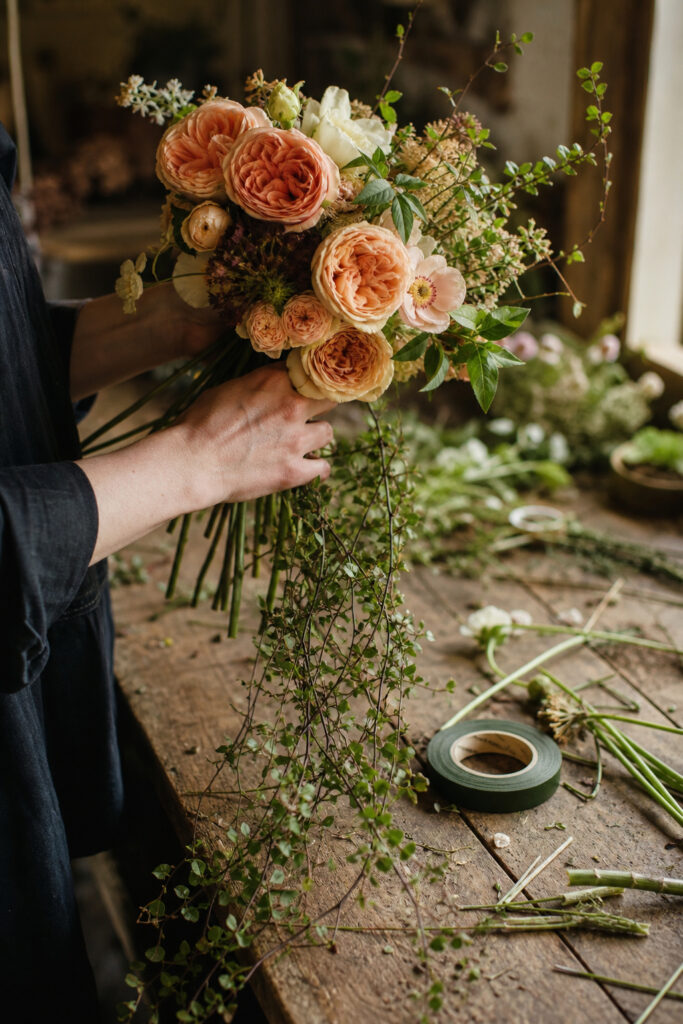
Here’s the construction sequence I’d follow, whether you’re working with fresh or silk flowers.
Start by building a small, loose cluster of your focal flowers using three to five blooms. This becomes the heart of the bouquet. Hold them loosely in your non-dominant hand; you’re not spiraling the stems the way you would for a round bouquet. The stems will all come together at a binding point lower down.
Add your secondary flowers and fillers around the focal cluster, still working at roughly the same height. Keep the profile loose and slightly irregular. A perfectly round top looks out of place on a cascade.
Now introduce your trailing base material. Take your Muehlenbeckia or whatever vine you’re using and let it drape downward from beneath the flower cluster. The length of the trail is a personal choice, but for a true cascade, you want it to extend at least 12-15 inches below the binding point. Anything shorter reads more as a teardrop than a cascade.
Weave a few additional flower stems and foliage pieces down into the trailing section to keep it from looking like you just taped a vine to the bottom of a bouquet. The transition from flower cluster to trailing vine should feel gradual and natural.
Once you’re happy with the shape, bind the stems firmly with floral tape at the point where your hand naturally holds the bouquet. Wrap ribbon over the tape to finish the handle. I like to use a natural, unprocessed ribbon for the boho look, raw silk, twine, or even strips of lace work well.
Plan Your Timing Around Freshness
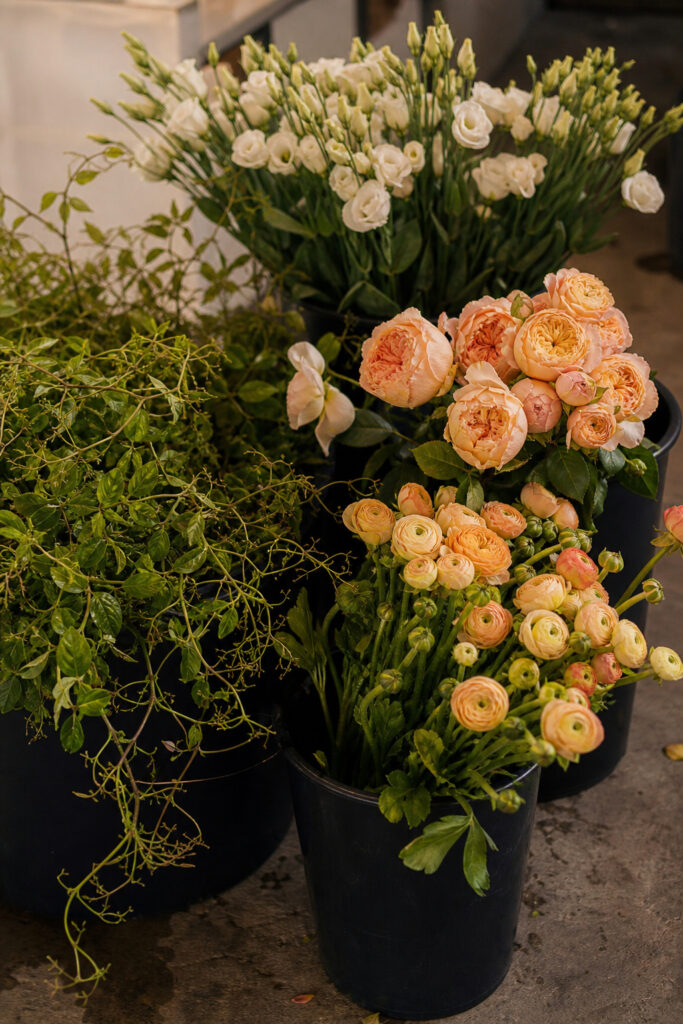
Cascade bouquets, particularly the boho style with trailing vines, are more susceptible to wilting than compact round bouquets. The exposed trailing elements lose moisture faster, and there’s no floral foam holding water near the stem ends.
Don’t make this bouquet more than a day in advance. Ideally, assemble it the morning of the wedding. If you must do it the day before, store it upright in a vase with the stem ends in water, and keep it in the coolest room in the house — not the refrigerator if you’re using delicate blooms like ranunculus, which don’t love cold storage.
Condition all your flowers properly before you start assembling. That means a clean cut on each stem, a few hours in water with a good floral preservative, and getting them out of direct light. Flowers that haven’t been conditioned will start to show it within an hour of assembly, and there’s no fixing a wilted cascade once the ceremony starts.
From my experience at the shop, the biggest mistake DIY brides make with cascade bouquets isn’t the design, it’s the timing. They make the bouquet too early, skip the conditioning step, or both. Don’t let that be you.
Silk Flowers Work — With One Condition
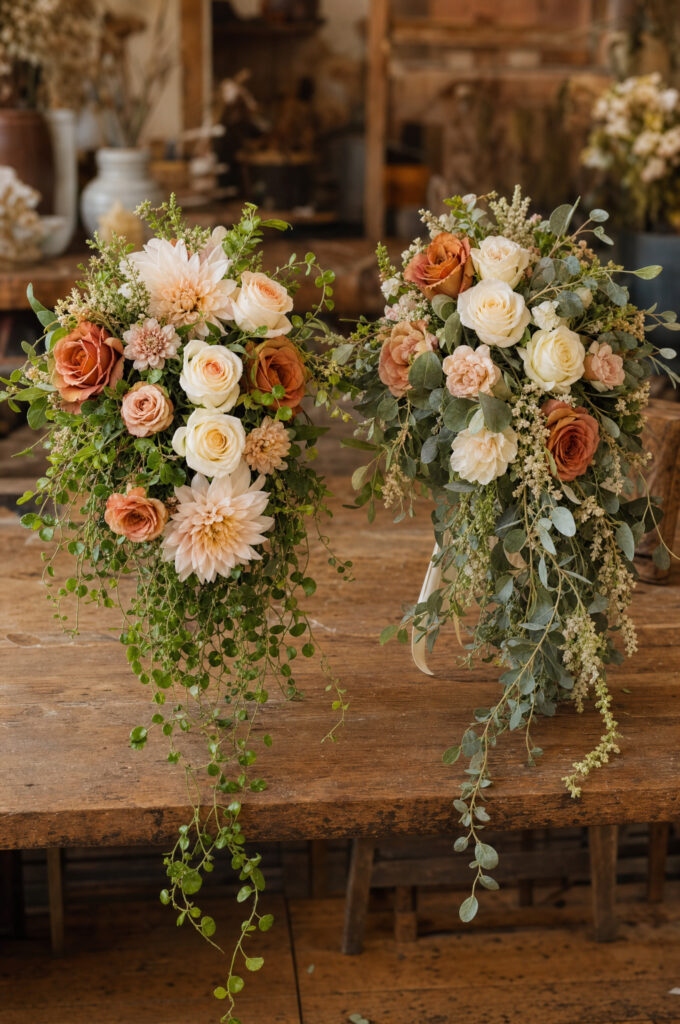
If you’re working with silk flowers, the boho cascade is actually a forgiving style to attempt. The loose, organic aesthetic hides the occasional imperfect petal better than a tight, round bouquet would.
One strong recommendation: use fresh foliage for the trailing base, even if everything else is silk. The difference in how the bouquet reads is significant. Silk vine and fresh Muehlenbeckia sitting side by side, the fresh material wins every time. It drapes differently, it has more color depth, and it has that slight unpredictability that makes a boho design feel alive.
If fresh foliage isn’t an option, look for high-quality silk trailing greenery with individual stems rather than a single molded piece. You want to be able to manipulate each tendril separately to get a natural-looking drape.
For sourcing silk flowers, sites like Nearly Natural offer a solid selection of boho-appropriate blooms. Check the stem count and petal detail in the product photos before you order. Quality varies considerably at the lower price points.

Frequently Asked Questions
What flowers work best in a boho cascade bouquet?
Garden roses, ranunculus, lisianthus, and anemones all work well. Add texture with dried pampas grass, bunny tail grass, or eucalyptus. The key is choosing flowers with an open, loose form rather than tight, formal blooms.
How long does it take to make a boho cascade bouquet?
Plan for two to three hours if you’re doing it for the first time, including conditioning your flowers. An experienced maker can get it down to 45 minutes to an hour, but give yourself extra time on the wedding day.
What is Muehlenbeckia, and where can I buy it?
Muehlenbeckia, also called wire vine or maidenhair vine, is a trailing plant with small round leaves and wiry stems. It’s available at wholesale flower markets and some specialty nurseries. Your local florist may be able to source it for you if you can’t find it yourself.
How do I keep a cascade bouquet from wilting?
Condition all flowers 12 to 24 hours before assembly. Assemble the bouquet as close to the wedding day as possible, ideally the morning of. Store it upright in water in a cool location until it’s time to carry it.
Can I make a boho cascade bouquet with silk flowers?
Yes. Use fresh foliage for the trailing vine elements, even if everything else is silk. It makes a significant difference in how natural the final bouquet looks.
How long should the trail on a cascade bouquet be?
For a true cascade, aim for at least 12 to 15 inches below the binding point. A shorter trail reads more like a teardrop bouquet. There’s no upper limit. Some dramatic cascades extend 24 inches or more.
Closing Thoughts
The boho cascade is one of those bouquet styles that looks more complicated than it is once you understand the structure underneath. The video above is a good place to start. Giada walks through the construction clearly, and watching the plant material take shape in her hands gives you a sense of how the trailing base actually works. Watch it again after reading through the tips here, and you’ll catch details you might have missed the first time.
If you’re working on other parts of your wedding flowers, the boho wedding bouquet ideas post has 15 more DIY concepts worth a look. And if you’re planning a summer wedding, the summer wedding bouquet guide covers which flowers actually hold up in the heat. That’s an important consideration if your ceremony is outdoors.
The cascade style has been around long before Pinterest discovered it. What Pinterest added was the boho interpretation, a looser, wilder, and more organic than the formal cascades popular decades ago. It suits the moment, and it’s genuinely beautiful to carry. Give it the time it deserves to build properly, and it’ll hold up beautifully from the first look all the way through the last dance.
If you’ve made a boho cascade bouquet, or you’re planning to, drop a comment below and tell me what plant material you used for the trailing base. I’m always curious what’s working for people outside of the shop.
Til next time,