Disclosure: This post may contain affiliate links. If you click and buy, we may earn a commission at no extra cost to you. As an Amazon Associate, we earn from qualifying purchases.
Last Updated: July 16, 2026
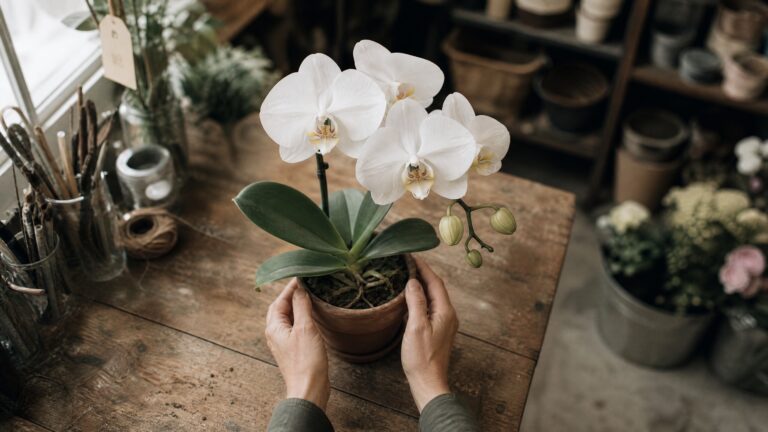
A customer once bought a $15 orchid plant from the shop and asked what it would take to make it look like the $80 designer version she’d seen at a hotel lobby. The answer surprised her. Same plant, a different container, a hidden stake, and about ten minutes of work.
You don’t need a rare orchid variety to get that upscale look. You need the right vessel and a little staking know-how.
Choose a Vessel That Elevates the Plant
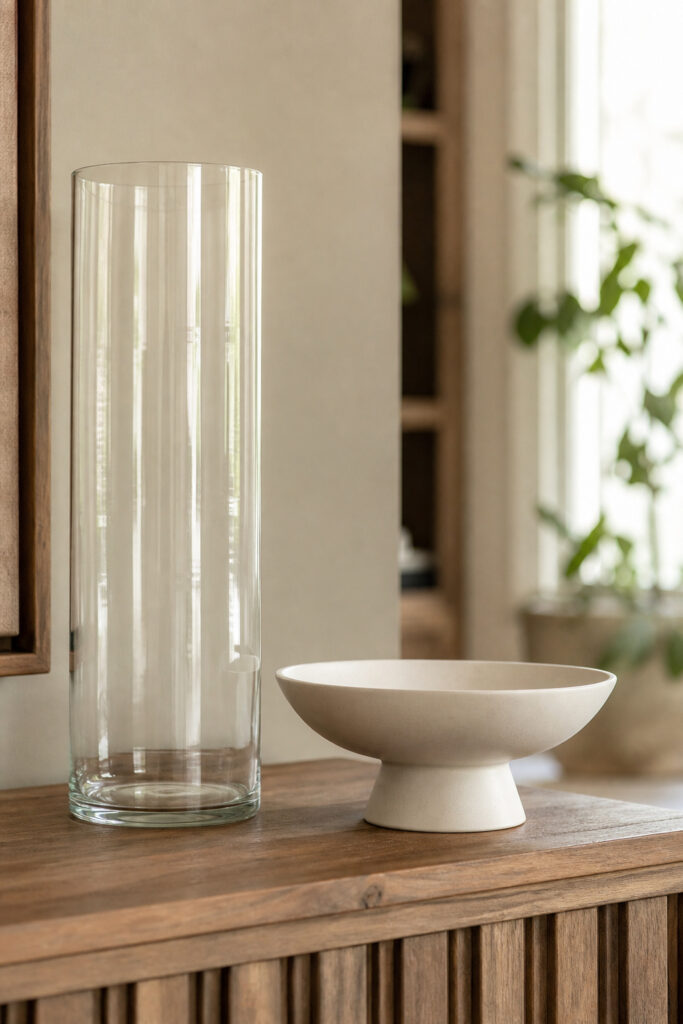
The container is doing most of the visual work here, more than the orchid itself. A tall, clean glass or ceramic vessel reads as intentional and designed. The plastic growing pot the orchid comes in reads as, well, a plastic growing pot.
Keep the orchid in its original plastic liner, and nest that liner inside your decorative vessel rather than repotting the plant directly. This protects the roots from disturbance and makes it easy to swap containers later if you want a different look. A tall cylinder vase gives you the most dramatic vertical presentation, while a shorter compote works well for a bloom you want closer to eye level on a side table.
Stake the Stem, So the Bloom Holds Its Line
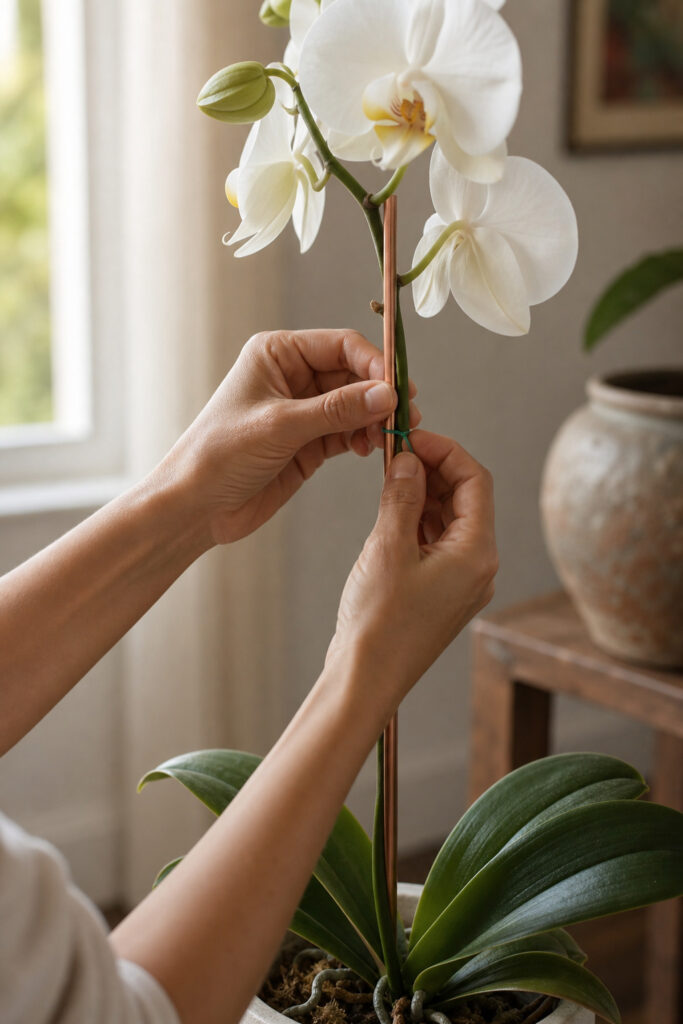
An orchid stem left unsupported tends to lean or curve as it grows, which undercuts the clean, architectural look you’re going for. A hidden stake fixes this.
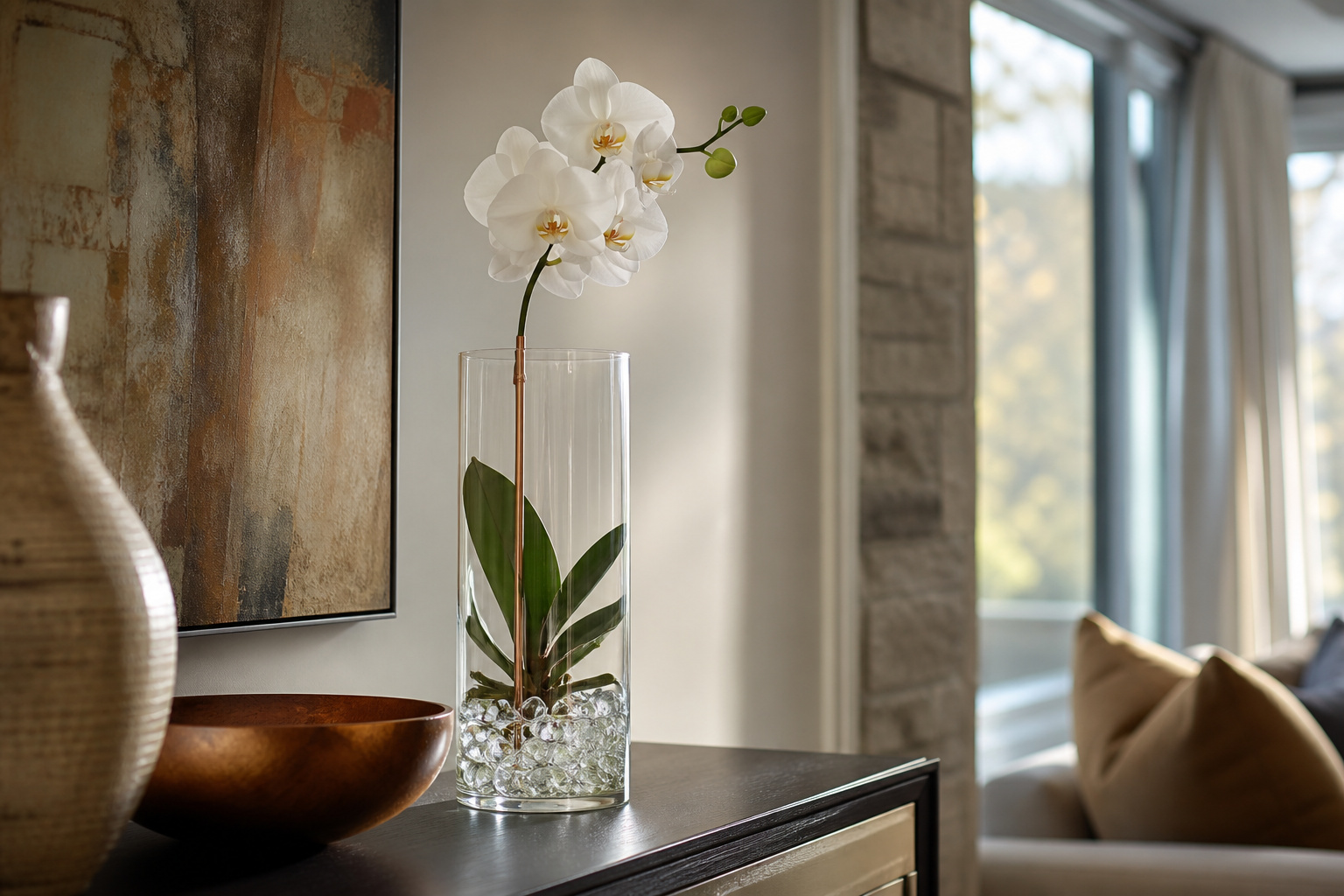
I’ve used painted PVC pipe, river cane, copper tubing, and galvanized plumbing pipe, and honestly, whatever looks best against the vessel I’m using wins. Copper and galvanized pipe read as more modern and pair well with a clean glass container. River cane feels more organic and suits a ceramic or stone vessel. Insert the stake down through the plant’s growing medium into the liner, then gently secure the main stem to it with floral wire wherever it wants to wander off-line.
This video shows the technique in motion, from choosing the vessel through staking the finished piece. Watch it, and see if the process looks as simple as I’m telling you it is.
Hide the Mechanics With Water Cubes or Moss
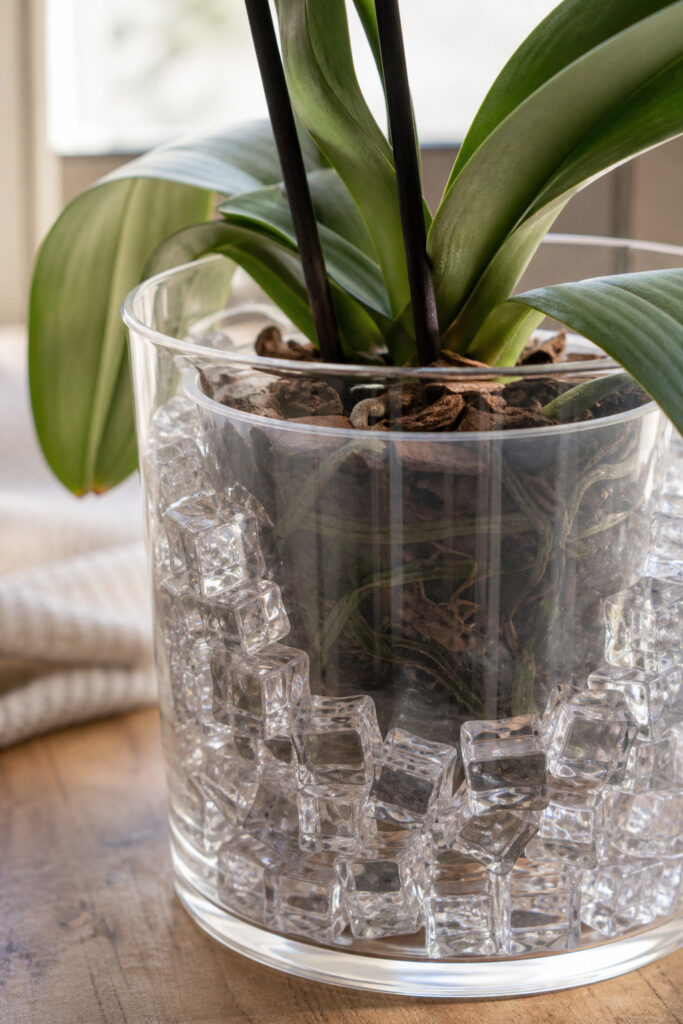
Once the plant is staked and nested in its vessel, there’s usually a visible gap between the liner and the outer container that needs filling. This is purely cosmetic, but it’s the difference between a finished design and a plant that clearly has a stake shoved in it.
Clear water cubes or acrylic gel beads fill a glass vessel while staying transparent, so the eye reads straight through to the roots and stake without any visual clutter. For an opaque or ceramic vessel where transparency doesn’t matter, sheet moss packed around the liner does the same covering job with a softer, more organic finish.
What I use in the shop: clear acrylic water cubes for glass vessels. They fill the gap without hiding the clean lines that made you choose a glass container in the first place.
Keep the Plant Alive Once It’s Styled
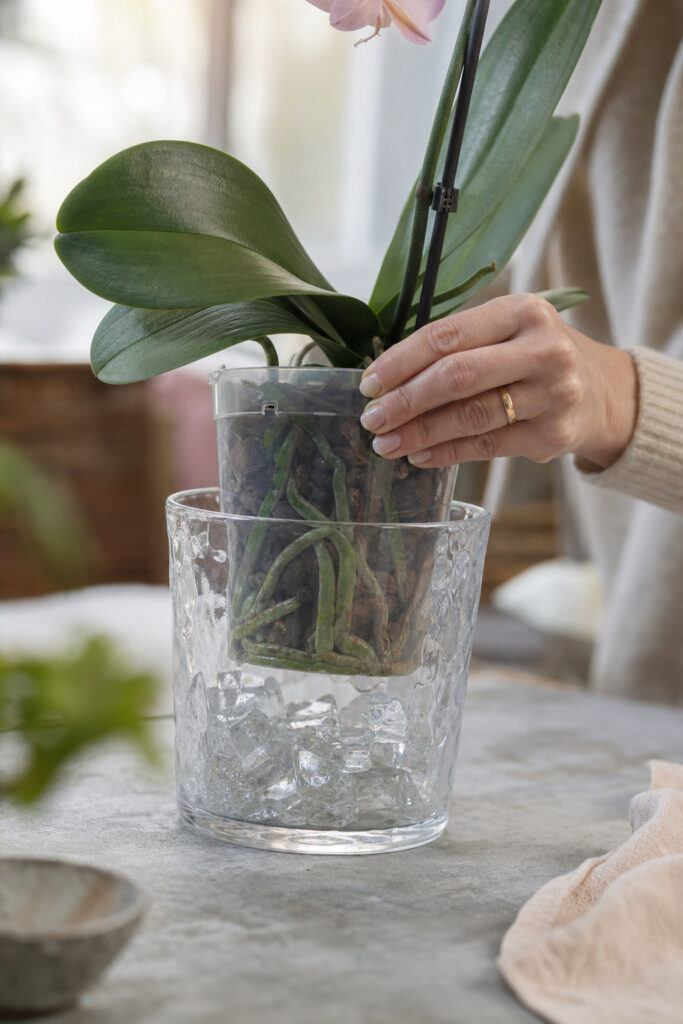
All this styling doesn’t change what the orchid actually needs to survive. It still needs the same light, water, and care as any phalaenopsis, and a decorative vessel makes it slightly easier to accidentally overwater since you can’t see the drainage the way you can in a clear nursery pot.
Lift the liner out periodically to check the roots and water properly, rather than watering blindly through whatever filler you’ve used to hide the gap. If you want the full watering and light routine for keeping the plant itself healthy long-term, our Phalaenopsis care guide covers it in depth.
Frequently Asked Questions
What kind of container makes an orchid look upscale?
A tall, clean glass or ceramic vessel does most of the visual work. Keep the orchid in its original plastic liner and nest it inside the decorative container rather than repotting directly, which protects the roots and makes it easy to change containers later.
What can I use to stake an orchid stem?
Painted PVC pipe, river cane, copper tubing, and galvanized plumbing pipe all work well. Choose based on what looks best with your vessel: copper and galvanized pipe suit a modern, clean look, while river cane feels more organic. Secure the stem to the stake with floral wire wherever it wants to lean off-line.
How do I hide the plastic liner inside a decorative orchid vessel?
Clear water cubes or acrylic gel beads work well in glass vessels, since they fill the gap while staying transparent. For opaque or ceramic vessels, sheet moss packed around the liner does the same job with a softer, more natural look.
Does styling an orchid this way affect how I care for it?
The plant’s actual care needs don’t change, but a decorative vessel makes it easier to overwater accidentally, since you can’t see the drainage the way you can in a clear nursery pot. Lift the liner out periodically to check the roots rather than watering blindly through the filler material.
Can this technique work with any orchid, or just Phalaenopsis?
Phalaenopsis is the easiest and most common choice because of its long, arching stem, which stakes well and holds a clean line. Other orchid varieties can work too, but the technique is really built around that tall stem shape, so results vary more with orchids that grow differently.
Closing Thoughts
The difference between an ordinary grocery-store orchid and a designer piece isn’t the plant. It’s the vessel, the stake, and ten minutes of your attention.
Once you’ve styled one, you’ll never look at a plain plastic pot the same way again.
What vessel do you already have at home that might work for this? Tell me in the comments. I love to hear what you used.
Til next time,