Disclosure: This post may contain affiliate links. If you click and buy, we may earn a commission at no extra cost to you. As an Amazon Associate, we earn from qualifying purchases.
Last Updated: September 2026
A bride called the shop a while back, asking if we could do her wedding flowers. When I asked what she had in mind, she said, “Simple. Country. Nothing too fussy.” I knew exactly what she meant. She didn’t want a formal garden rose cascade or an elaborate English-style arrangement. She wanted something that looked like it came from a field: loose, natural, and easy on the budget.
That call reminded me that country wedding bouquets are genuinely one of the best choices a DIY bride can make. The style forgives imperfection, works with a wide range of flowers, and often costs less than more structured designs. If you’re planning a rustic or outdoor ceremony, this post covers everything you need: the right flowers, how to put it together, where to source, and how to keep the whole thing from falling apart on your big day.
Embrace the Loose and Natural Look
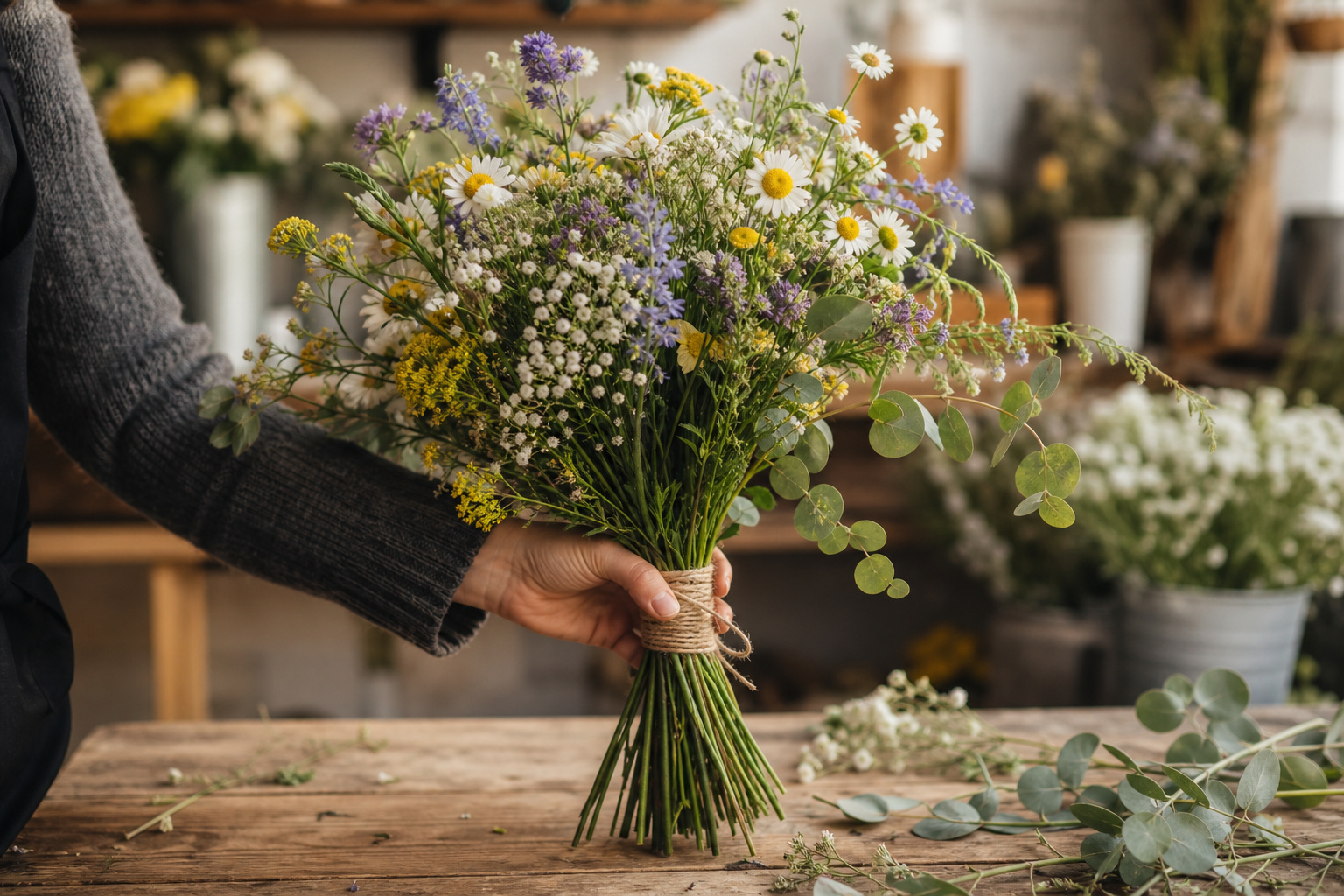
The defining characteristic of a country wedding bouquet isn’t a specific flower; it’s the overall feeling. These bouquets look gathered, not engineered. Think wildflowers, soft greenery, and a ribbon or twine wrap rather than a tight, structured ball of blooms.
What I tell DIY brides in the shop: country style is one of the most forgiving to assemble yourself. You’re not trying to create a perfect spiral. You’re building something that’s supposed to look a little wild. That works in your favor, it’s the one style in floral design where “good enough” is actually the goal.
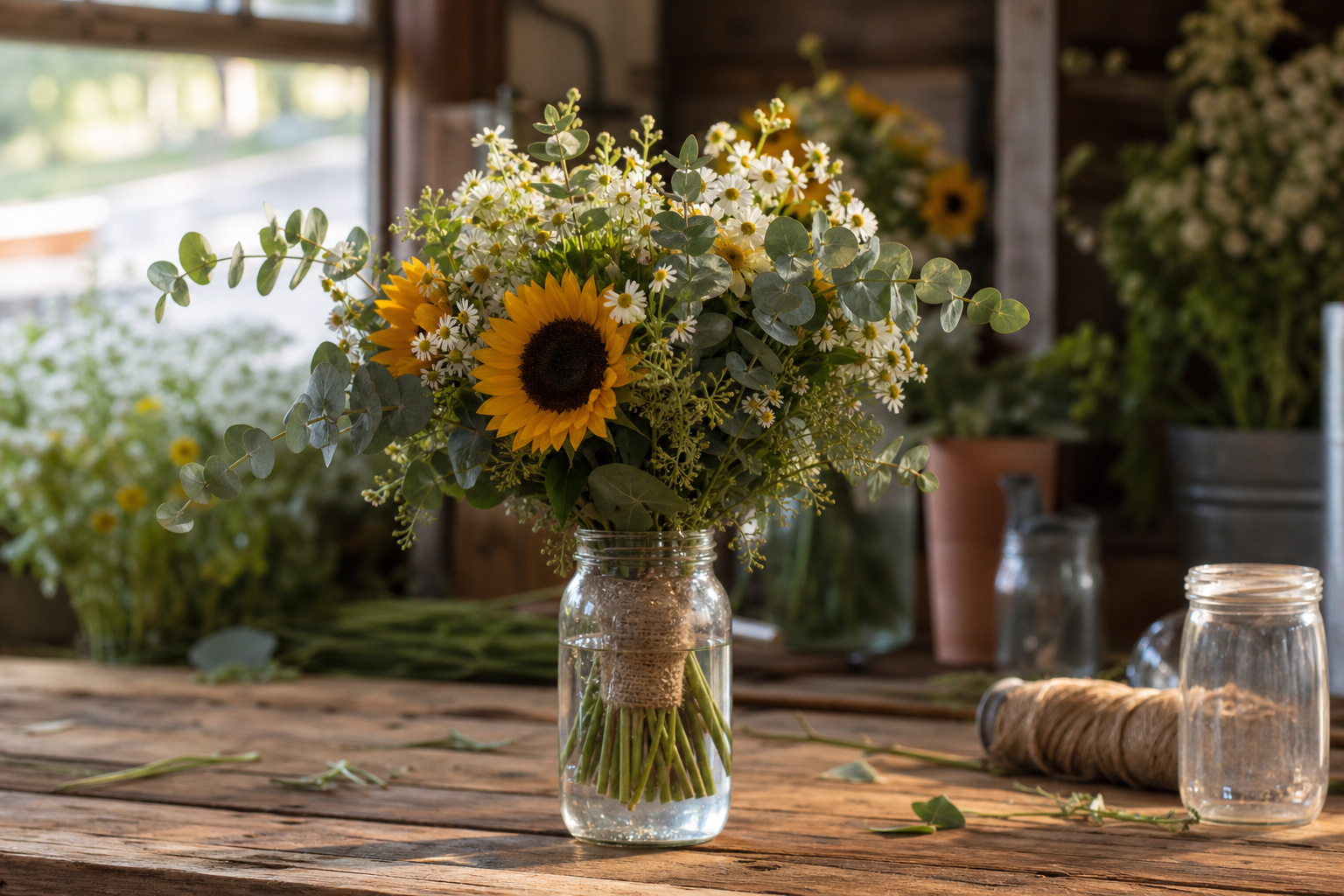
The key elements are loose stem placement, a mix of flower shapes and sizes, and some greenery to fill the gaps. Twine, burlap ribbon, or lace wrap at the stems ties the whole aesthetic together. Keep the shape rounded but relaxed: not a tight dome, not a cascade, just a natural-looking bunch.
Choose Flowers That Actually Work for This Style
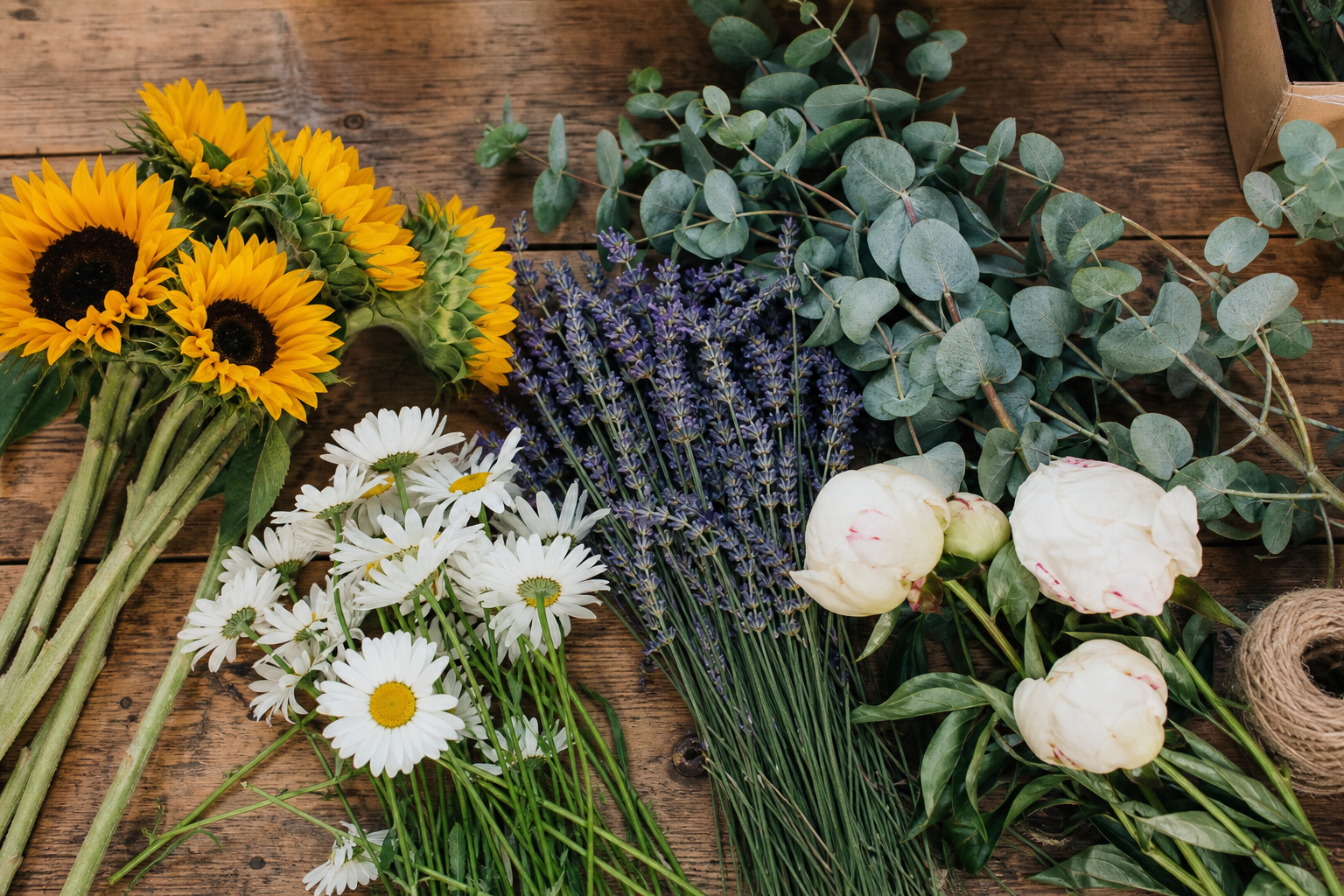
Roses and sunflowers are the anchors for most country bouquets, and for good reason. They’re widely available, they hold up well out of water, and they read as “country” immediately. But they’re not your only options.
Some of my favorites for this style:
Daisies: simple, cheerful, and inexpensive. They add an almost childlike innocence to the bouquet that fits the country aesthetic perfectly.
Baby’s breath: used as a filler or as the entire bouquet, baby’s breath is a classic country choice. It’s lightweight, inexpensive, and dries beautifully if you want to preserve it after the wedding.
Lavender: adds fragrance and a soft purple tone. Works especially well in late spring and summer bouquets. Dried lavender holds its color well and travels without a water source.
Peonies: available in late spring, and worth every penny. One or two peonies in a country bouquet adds a softness and fullness that’s hard to replicate with anything else.
Eucalyptus and greenery: silver dollar eucalyptus, seeded eucalyptus, or simple fern fronds add texture, depth, and a natural, foraged quality. Always include some greenery. It’s what separates a bouquet from a fistful of flowers.
For a deeper dive into what works by season, see my guide to wildflower wedding bouquets.
Build the Bouquet Yourself (It’s Not as Hard as You Think)
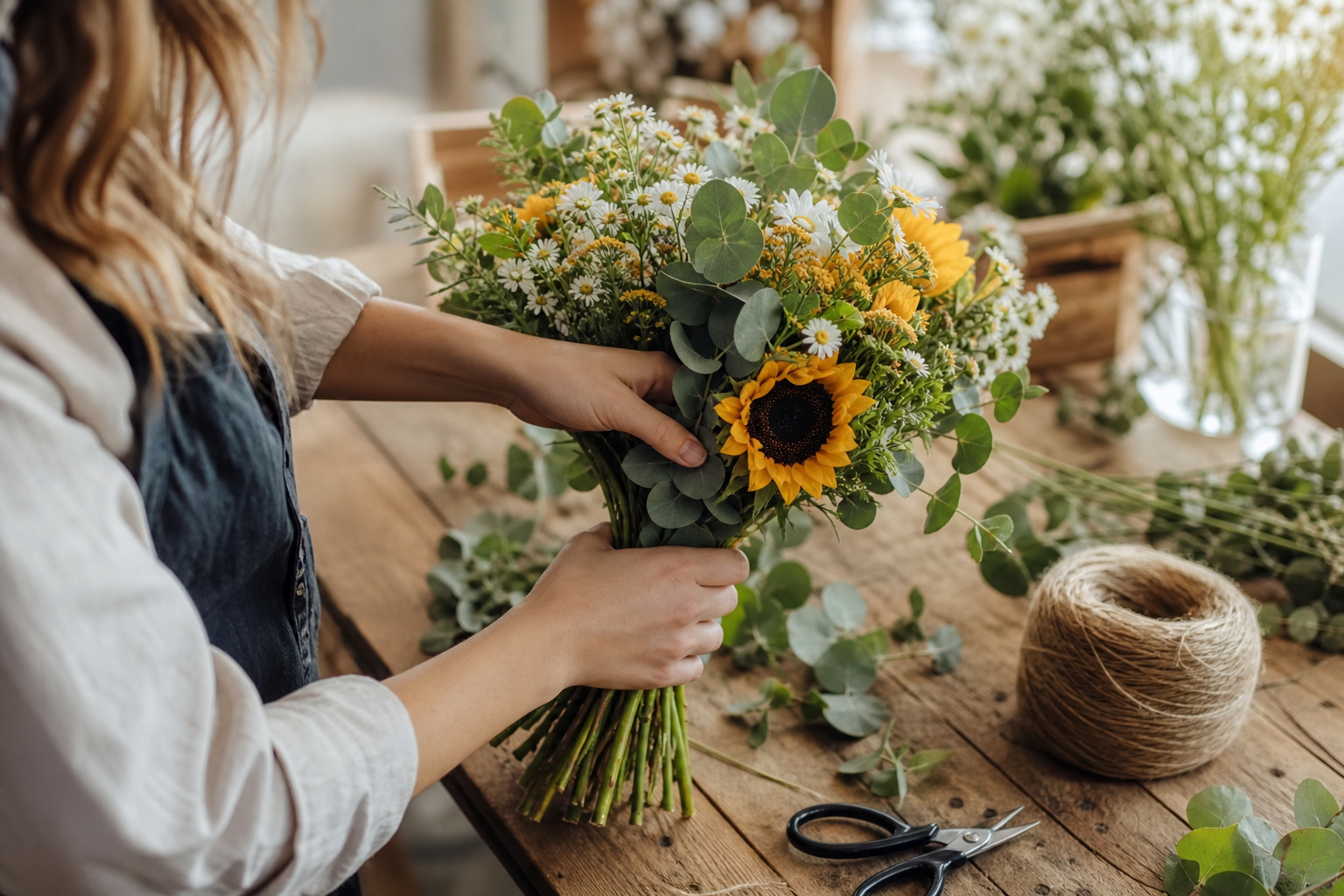
If you’re committed to DIYing your country wedding bouquet, here’s what I’d do.
Start by selecting flowers that are in season during your wedding month. Seasonal flowers are easier to find, better quality, and less expensive than out-of-season blooms. For spring and summer, that means daisies, peonies, sunflowers, lavender, and wildflowers. For fall, look at dahlias, chrysanthemums, and warm-toned roses.
Once you have your flowers, trim all stems to roughly the same length, about 10 to 12 inches is workable for most bouquets. Remove any leaves that would fall below your hand grip. Strip them off cleanly.
Hold your focal flower in one hand and build outward, rotating the bouquet slightly as you add each stem. Let things fall a little loosely rather than forcing them into a tight arrangement. Add greenery between flowers to create natural gaps and movement.
When you’re satisfied with the shape, bind the stems tightly with a rubber band first. This holds everything in place. Then wrap it over with twine, ribbon, or lace. The wrap is structural as well as decorative; make sure it’s secure enough that the bouquet won’t shift when you’re carrying it.
One-flower bouquets deserve a mention here. A bouquet built entirely around sunflowers, or entirely around daisies, or a mass of baby’s breath is not only beautiful; it’s significantly easier to assemble. These are the easiest and most cost-effective DIY options for a country wedding. I’ve seen all of them work beautifully.
If you want step-by-step visuals, the boho wedding bouquet guide covers assembly in detail, and much of it translates directly to country-style work.
Match Your Flowers to the Season
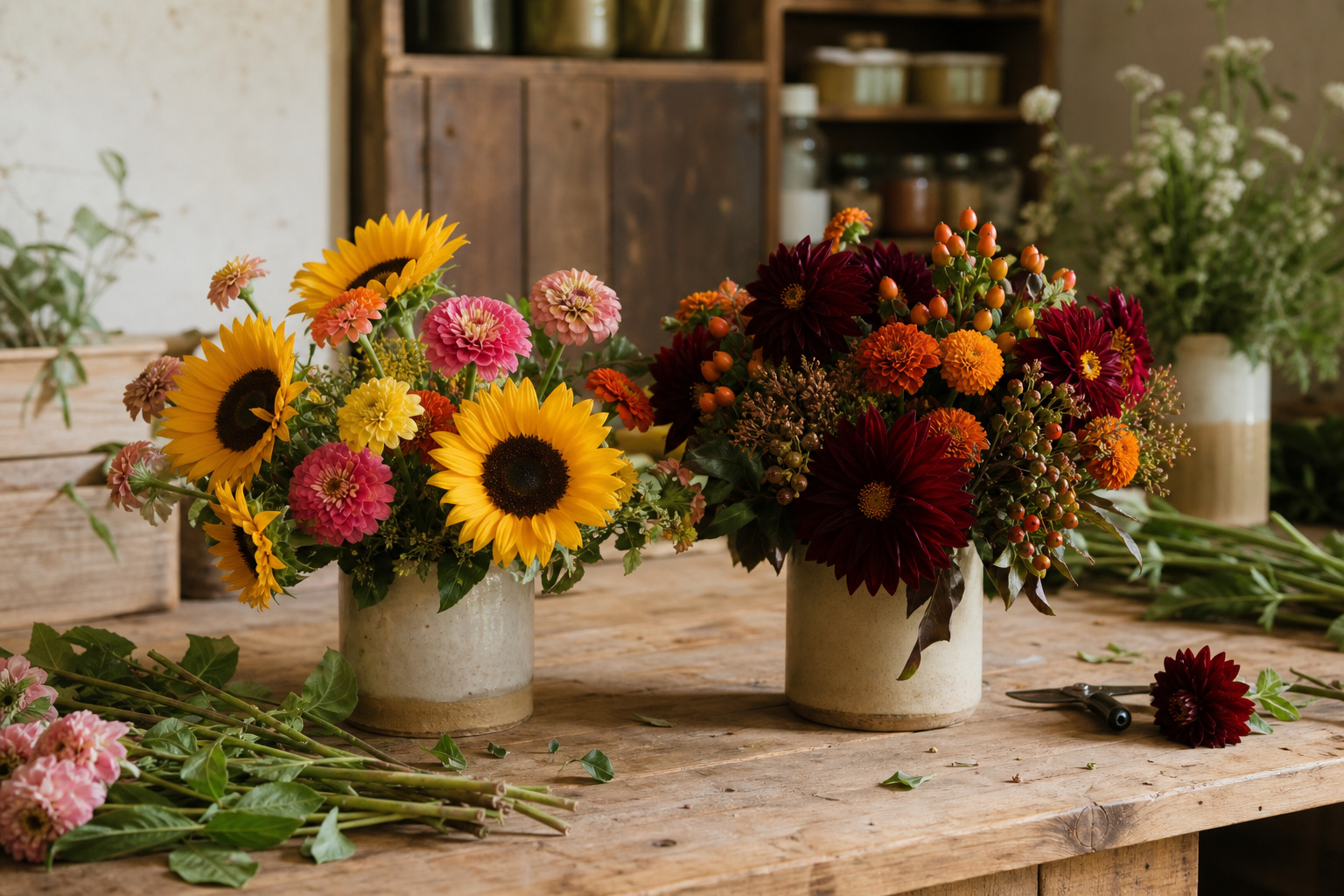
Buying in-season flowers is one of the most practical things you can do for your wedding flower budget. Quality goes up. Cost goes down. Availability improves. It’s not a complicated calculation.
Here’s a rough seasonal guide for country bouquet flowers:
Spring: Peonies, tulips, ranunculus, lilacs, daisies, baby’s breath. Spring is one of the strongest seasons for lush, full country bouquets.
Summer: Sunflowers, zinnias, lavender, wildflowers, black-eyed Susans, cosmos. Summer is peak season for the classic country look. See my summer wedding bouquet guide for ideas that hold up in the heat.
Fall: Dahlias, chrysanthemums, marigolds, hypericum berries, warm-toned roses, fall foliage. Rich burgundy dahlias with eucalyptus is one of my favorite fall country combinations.
Winter: Roses, carnations, greenery, dried elements like cotton stems, wheat, or dried lavender. Winter country bouquets work best when you lean into the dried and preserved aesthetic rather than fighting for fresh wildflowers that aren’t in season.
For colors: earthy and soft tones work best for country weddings. Blush, ivory, sage, lavender, and cream are consistent performers. If you want something bolder, sunflower yellow and deep burgundy both land well in a country setting without feeling out of place.
Source Your Flowers Without Overpaying
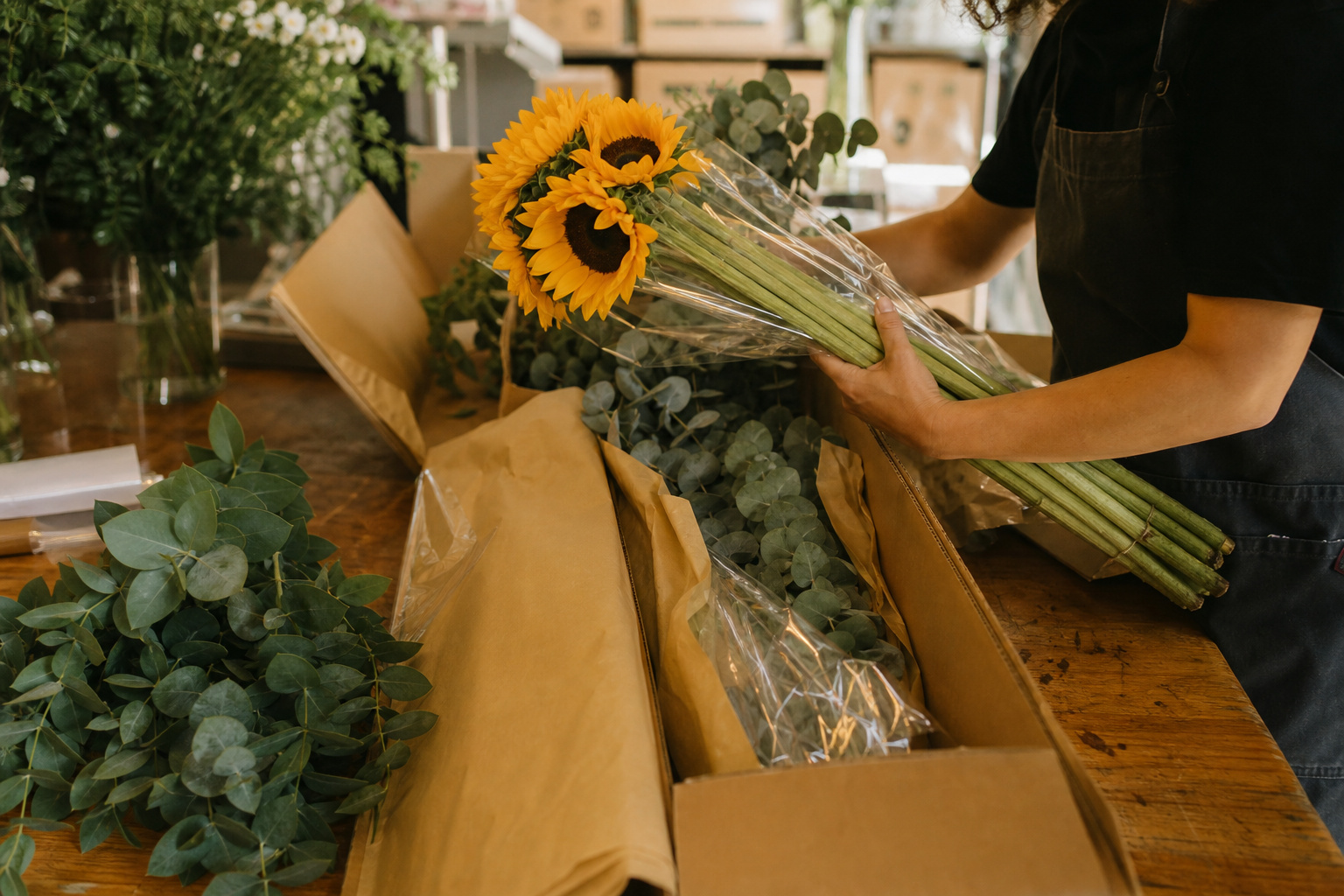
Many of the flowers used in country bouquets (roses, hydrangeas, daisies, baby’s breath) are available year-round and are a better value when purchased by the box rather than by the bunch.
I suggest checking online wholesale suppliers like GlobalRose.com, BloomsByTheBox.com, and FiftyFlowers.com for availability and pricing. All three offer country-wedding-appropriate flowers, and buying in quantity is where the real savings are.
Here’s a tip I give every DIY bride who calls the shop: don’t be impressed by “free shipping.” Every online flower vendor offers it. What it means is that the shipping cost is already built into the price you pay. The real savings come from buying full cases or boxes.
When you buy a full case, the shipping cost spreads across more bunches, so your per-bunch cost drops. When you buy just a few bunches, you’re still paying to fill that box, just with fewer flowers. Ask your vendor how many bunches fit in a case, and whether they allow mixed varieties in one shipment. Some do, some don’t.
Full cases will always be your best value. If you end up with more than you need, use the extras for ceremony décor, table arrangements, or send them home with guests. Nothing goes to waste at a country wedding.
For a broader look at the sourcing process, my post on buying bulk wedding flowers online covers what to watch out for before you place an order.
Add a Personal Touch Without Overcomplicating It
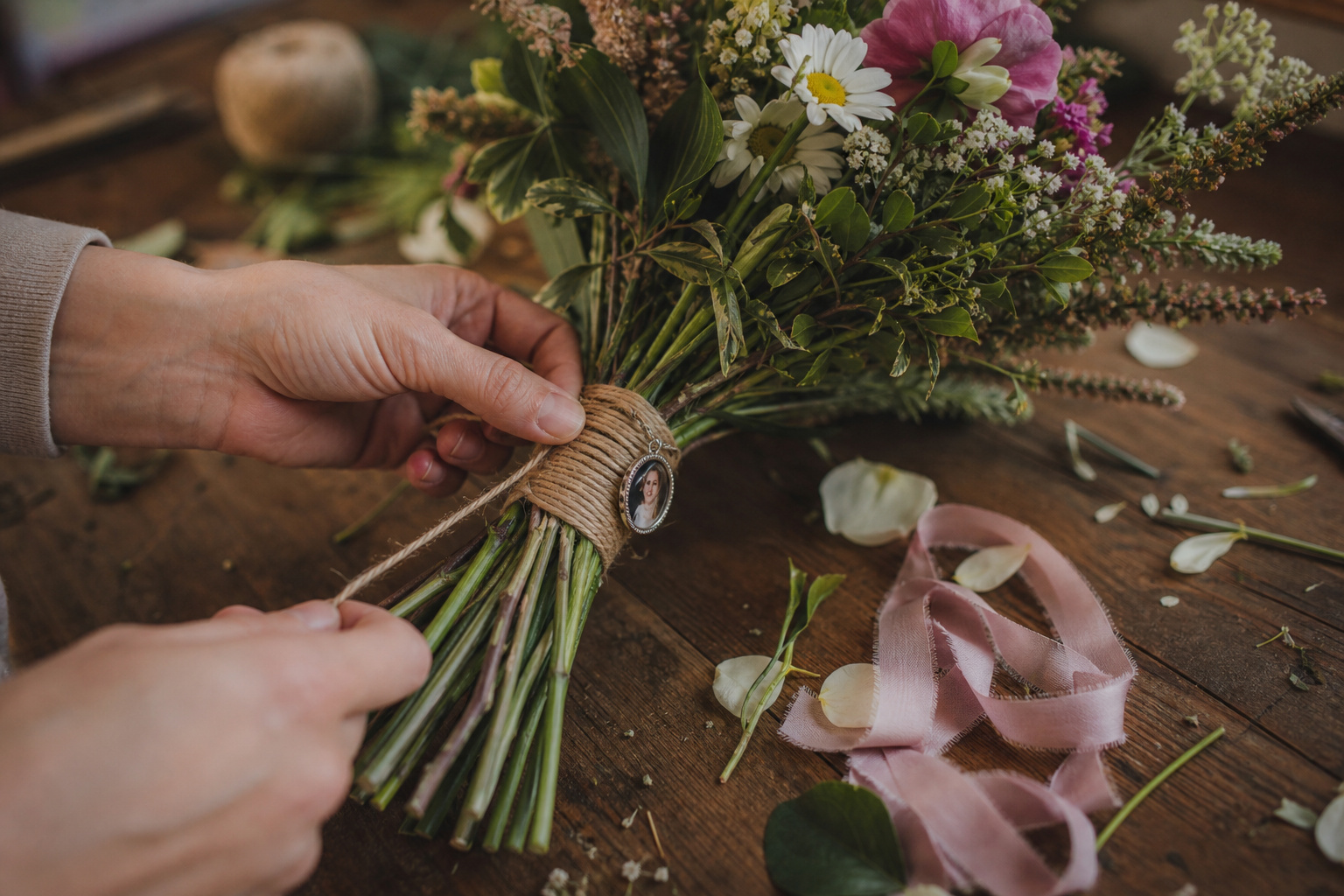
A country bouquet is one of the easier styles to personalize, and a few well-chosen details go a long way.
The stem wrap is the easiest place to start. Burlap or twine gives a true country feel. Lace adds a vintage edge. A wide satin or velvet ribbon brings a little formality without losing the rustic aesthetic. Whatever you choose, wrap it neatly and secure it with a pin or tie it off cleanly.
Beyond the wrap, a few other touches I’ve seen work well:
Memorial photo charms: we’re asked to include these regularly. A small memorial photo charm tucked into the stem wrap is a quiet, meaningful addition that photographs beautifully.
What I use in the shop: Memorial photo charms. Brides ask for these more than any other personalization item, and they’re easy to add at the last minute.
Herbs are another underused option. A few sprigs of rosemary, mint, or lavender tucked into the bouquet add fragrance and a tactile quality that’s genuinely different from an all-flower design. If you have a kitchen garden, this is a nice way to bring something personal and homegrown into the day.
Time It Right: When to Order and When to Assemble
If you’re working with a florist, order at least one month in advance. That gives them time to source your flowers, and it gives you time to make adjustments if something isn’t available.
If you’re DIYing, I’d suggest something a little more specific: make a test bouquet at least a month before the wedding. Use inexpensive flowers from a grocery store or a cheap online order. The goal is to practice the stem placement, figure out your wrap, and identify anything that doesn’t look right. You won’t regret the practice run.
For the actual wedding flowers, order them to arrive two to three days before the ceremony. That gives you a buffer for conditioning, any reshipping issues, and assembly. Most cut flowers ordered from a reputable supplier arrive in bud, and they need at least 24 hours in water to fully hydrate and open.
Assemble the bouquet the morning of the wedding if possible, or the evening before. Keep assembled bouquets in a cool room, out of direct sunlight, with the stems in fresh water right up until the ceremony.
Frequently Asked Questions
What flowers are best for a simple country wedding bouquet?
Sunflowers, daisies, roses, baby’s breath, lavender, and peonies are all strong choices. They’re widely available, hold up well out of water, and fit the loose, natural look that defines country-style bouquets. Greenery like eucalyptus or ferns should always be included to add texture and fill gaps naturally.
Can I DIY a country wedding bouquet with no experience?
Yes, country style is one of the most forgiving to assemble. You’re not building a precise geometric shape. The goal is a loose, natural look, which means slight imperfections in stem placement actually work in your favor. Stick to one or two focal flowers and keep the design simple for the best results.
What color schemes work for country wedding bouquets?
Earthy, soft tones are the most consistent performers: blush, ivory, sage, lavender, and cream. For a bolder look, sunflower yellow and deep burgundy both work well in a country setting. Avoid overly saturated or neon tones. They tend to clash with the natural, organic aesthetic.
How far in advance should I order wedding flowers?
If you’re working with a florist, place your order at least one month out. For DIY orders from an online supplier, schedule the order to arrive two to three days before the ceremony. That gives you time for flowers to hydrate and open, and a buffer for any shipping delays.
What are some alternatives to traditional flowers for a country bouquet?
Dried and rustic elements work beautifully: wheat, dried lavender, statice, thistle (eryngium), billy balls (craspedia), and cotton stems all fit the country aesthetic. These hold up better in heat, don’t need water, and can be assembled days in advance, which is a real advantage for a DIY bride.
Should I buy flowers by the bunch or by the box?
By the box, if you can. Full cases from online wholesalers give you the best per-stem cost because the shipping expense spreads across more flowers. When you buy fewer bunches, you’re still paying to fill that shipping box, just with less product. Ask your vendor about mixed-variety cases if you need multiple flower types.
Closing Thoughts
Country wedding bouquets don’t require a professional, an expensive florist, or a florist’s cooler full of exotic blooms. What they require is a little planning, the right flowers for the season, and the willingness to let things look naturally imperfect. That’s the whole point of the style.
If this is your first time putting together wedding flowers yourself, start with one test bouquet before the big day. Pick up some inexpensive daisies or sunflowers, practice your wrap, and see what looks right. By the time you’re assembling the real thing, it’ll feel familiar. The stems will go where you want them. The bouquet will look like you meant it, because you did.
If you’ve made a country wedding bouquet yourself, drop a comment below and let me know what flowers you used. I’m always curious what combinations are working out there.
Til next time,