Disclosure: This post may contain affiliate links. If you click and buy, we may earn a commission at no extra cost to you. As an Amazon Associate, we earn from qualifying purchases.
Last Updated: July 2026
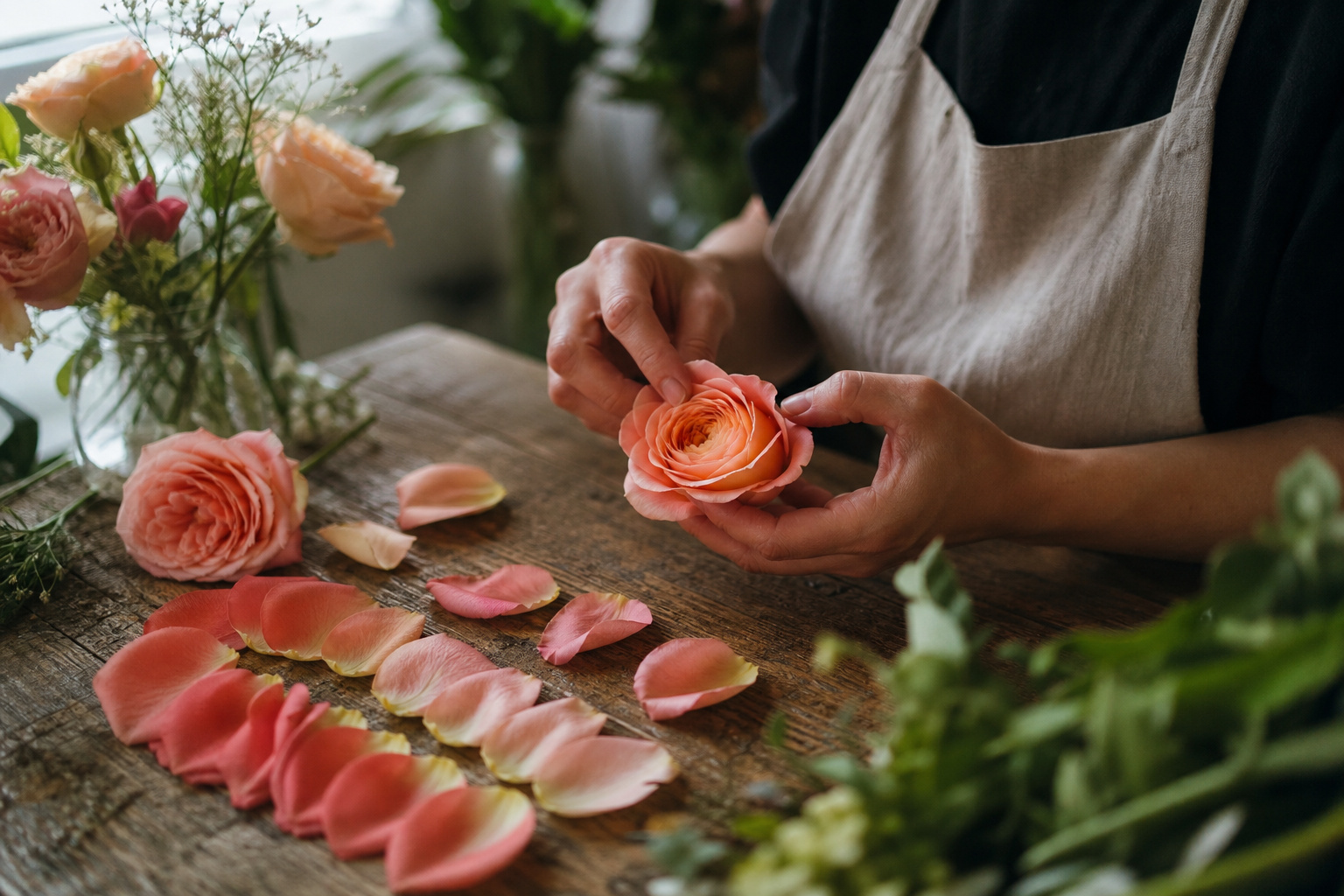
A bride came into the shop a while back with a photo on her phone of a bouquet that looked like one giant rose. She wanted to know where I sourced “that flower.” I had to break it to her that it wasn’t a flower at all. It was individual petals, wired and glued together to look like one enormous bloom. She was disappointed for about a second, then thrilled once I told her we could build one for her.
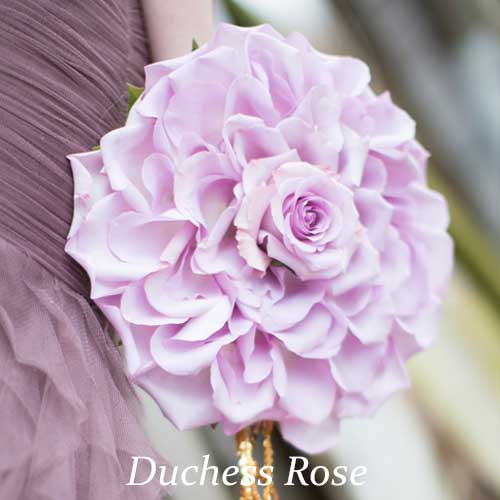
That technique is called a composite flower, and glamelias and Duchess roses are the two you’ll see most often. If you’ve ever tried building one the old way, with wire and floral tape, you know it’s fussy work. Today’s cold glues have made the whole process a lot more forgiving, even if you’ve never done it before.
Choose Flowers With Sturdy Petals
Not every flower makes a good composite. You want larger, sturdier petals that hold their shape once they’re separated from the stem. Roses are the classic choice for that reason. They have larger petals and are easier to build and finish.
In my experience, gladiolus petals are underrated for this. They’re hearty, and they hold up well once assembled, which matters if your composite flower needs to survive a full wedding day without water.
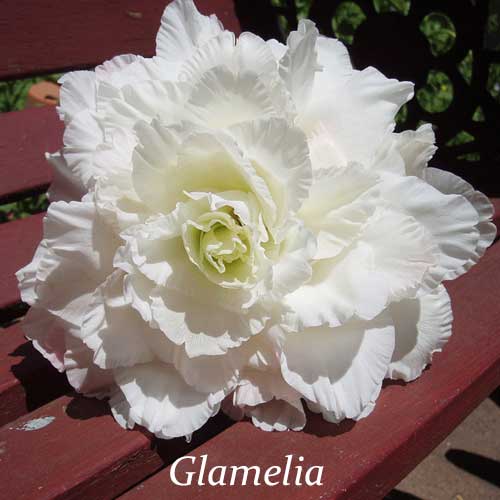
Glamelias and Duchess roses are the two best-known versions of this technique, but they’re not the only ones. I’ve built composite flowers from cymbidium orchids, lilies, and even gardenias over the years. Once you understand the petal-by-petal build, you can apply it to almost anything with a broad, flat petal.
Watch the Technique Step by Step
Floral designer J Schwanke walks through the full build in this video, including how he uses mass bouquets to create maximum visual impact from a single flower type. If you’re ready to try something a little outside the standard bouquet, watch this from start to finish before you pick up any petals.
If you’d rather build up a design with the whole flower instead of taking it apart petal by petal, our guide to choosing the right focal flowers for a wedding bouquet covers that approach instead.
Skip the Wire and Tape With Cold Glue
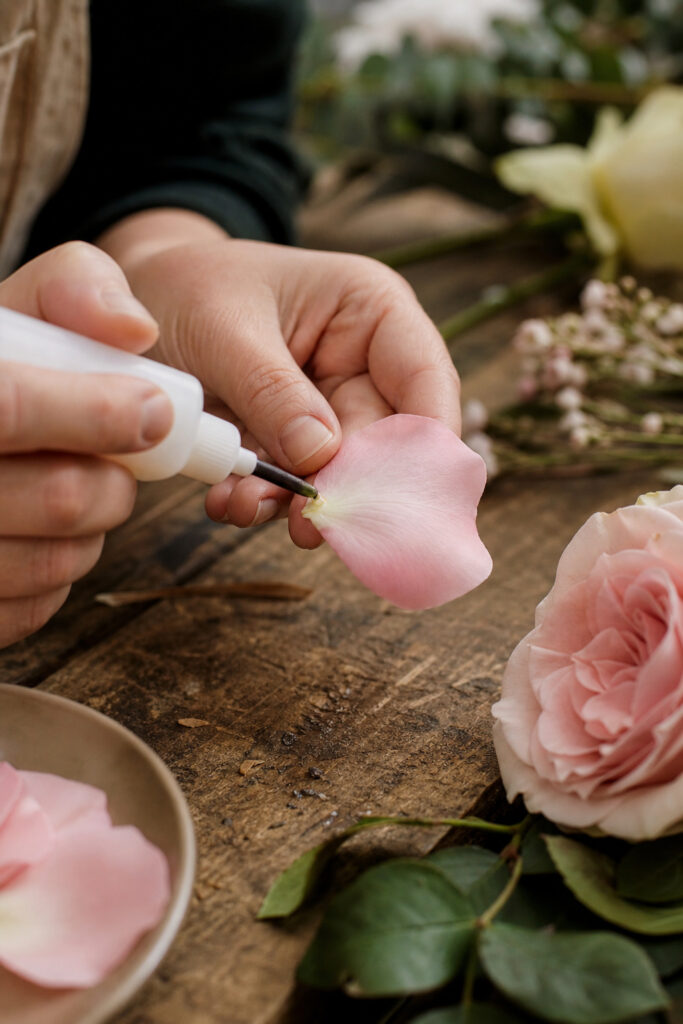
The old-school method wired every petal individually, then wrapped the wire in floral tape. It works, but it’s slow and unforgiving if your hands aren’t steady. Cold glue changed that.
What I use in the shop: Oasis Floral Adhesive. It’s made specifically for fresh flowers, sets fast, and won’t scorch the petals the way a hot glue gun will.
Avoid hot melt adhesives entirely for this project. The heat damages delicate petals, and hot glue won’t hold once the piece goes into the cooler. If you want the fuller rundown on which adhesive to use for which job, I put together a full comparison of floral glues that covers this in more detail.
Avoid These Floral Glue Mistakes
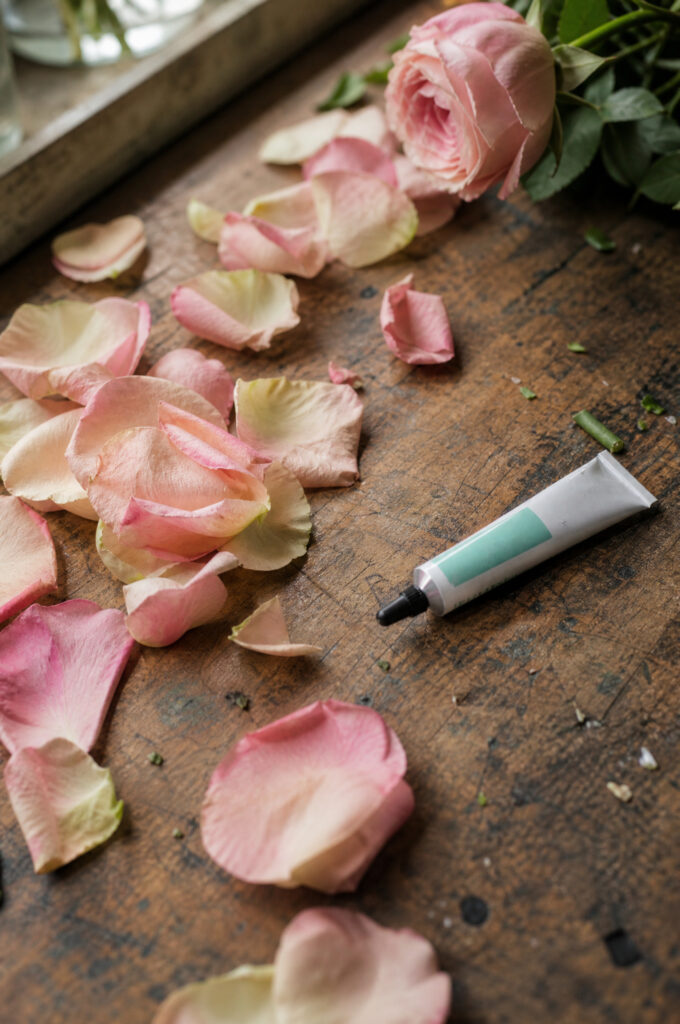
If you haven’t worked with cold glue before, practice on a few sample petals first. My early attempts with it did not go smoothly. Read the label before you start, especially the cleanup part, because dried floral glue does not come off your fingers easily.
Most of the mistakes I see in DIY composite flowers come down to two things: not following the product directions and not practicing before the real attempt. Neither one is complicated to fix. If you want more practice with small-scale glue work before tackling a full composite, building a corsage first is a good, lower-stakes way to get comfortable with the glue.
Do it right, and you’ll end up with a composite flower you’re genuinely proud to say you built yourself. Prevention is key. Now go make one.
Frequently Asked Questions
What is a composite flower?
A composite flower is built from individual petals of one or more real flowers, glued or wired together to look like a single, oversized bloom. Glamelias and Duchess roses are the most common versions.
What flowers work best for composite flowers?
Roses are the classic choice because of their large, sturdy petals. Gladiolus, cymbidium orchids, lilies, and gardenias also work well.
Is floral glue safe for fresh flowers?
Cold floral adhesives made for fresh flowers, like Oasis Floral Adhesive, are safe and won’t damage petals the way hot glue can.
How long does a composite flower bouquet last?
With sturdy petals and proper cold glue, a composite flower bouquet holds up for a full wedding day, similar to a standard bridal bouquet.
Can beginners build a composite flower?
Yes. It takes practice, but the technique itself isn’t complicated once you’ve worked with the glue a few times on sample petals first.
How do I clean up floral glue?
Read the product label before you start. Cleanup instructions vary by brand, and dried floral adhesive is much harder to remove than the wet glue.
Closing Thoughts
Composite flowers are one of those techniques that look a lot harder than they are. Give it one practice round with a few extra petals before you commit to the real thing, and you’ll be surprised how quickly it comes together.
Have you tried a glamelia or a Duchess rose before? Drop a comment and let me know which flower you used. I’m always curious which petals hold up best for other people’s builds.
One flower, taken apart and built back up into something bigger. That’s the whole trick.
Til next time,