Disclosure: This post may contain affiliate links. If you click and buy, we may earn a commission at no extra cost to you. As an Amazon Associate, we earn from qualifying purchases.
Last Updated: June 2026
A customer came into the shop a few years back, convinced she’d spotted a “hack” from a wedding she’d attended. The ceremony arch had been covered in full floral clusters, and everything stayed perfectly in place through an outdoor reception that included a pretty good wind gust. She wanted to know the secret.
Zip ties. That was the whole secret.
I’ve been using them for years on large installations — ceremony arches, column wraps, hanging pieces, selfie walls. They’re fast, strong, reusable, and when you know how to hide them, completely invisible in the finished design. If you’re doing any kind of structural floral work and you’re not already using zip ties, this post is going to change your setup.
Stock Your Kit Before You Start
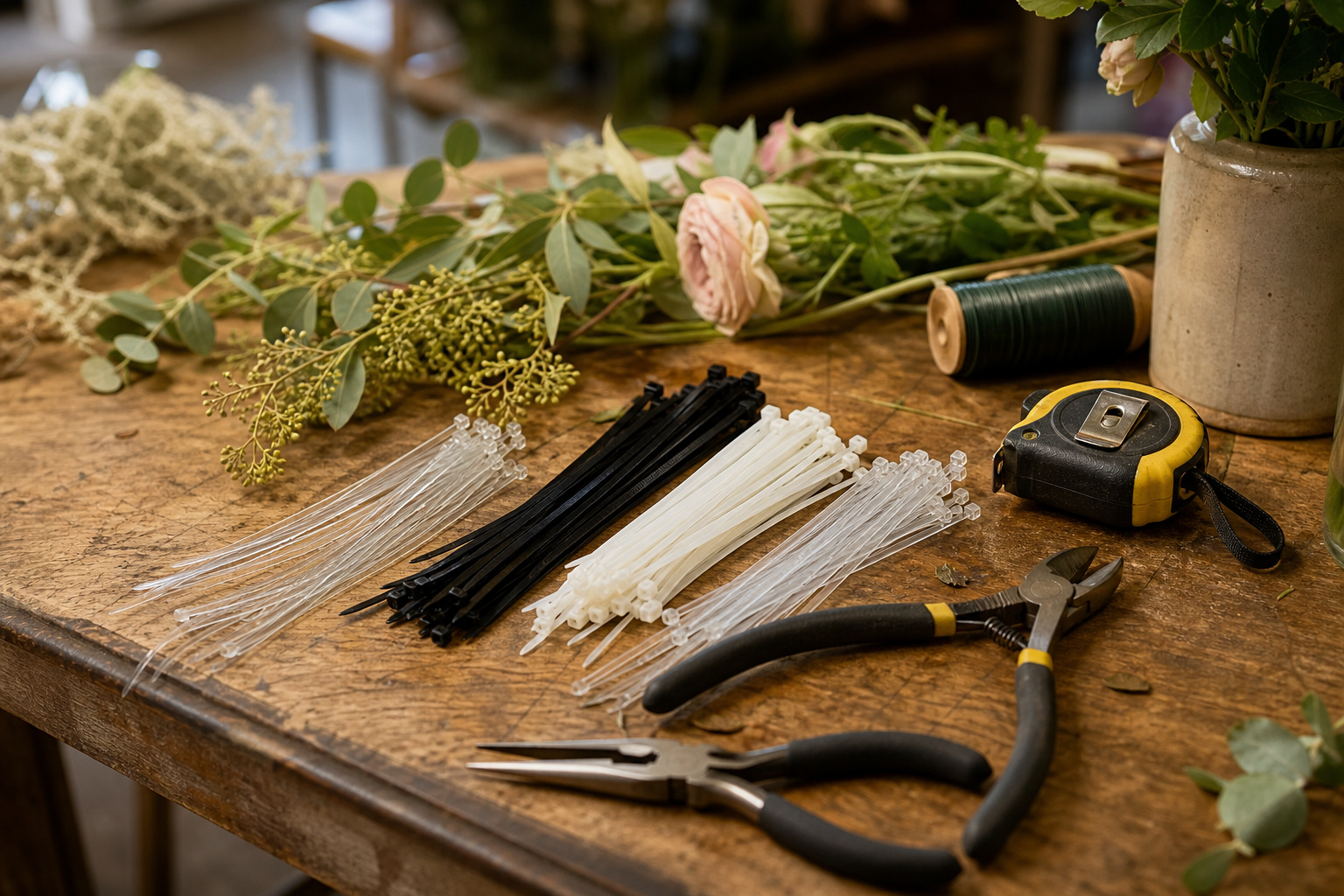
The right tools make the difference between a smooth installation and a stressful one. Here’s what I bring to every large floral job.
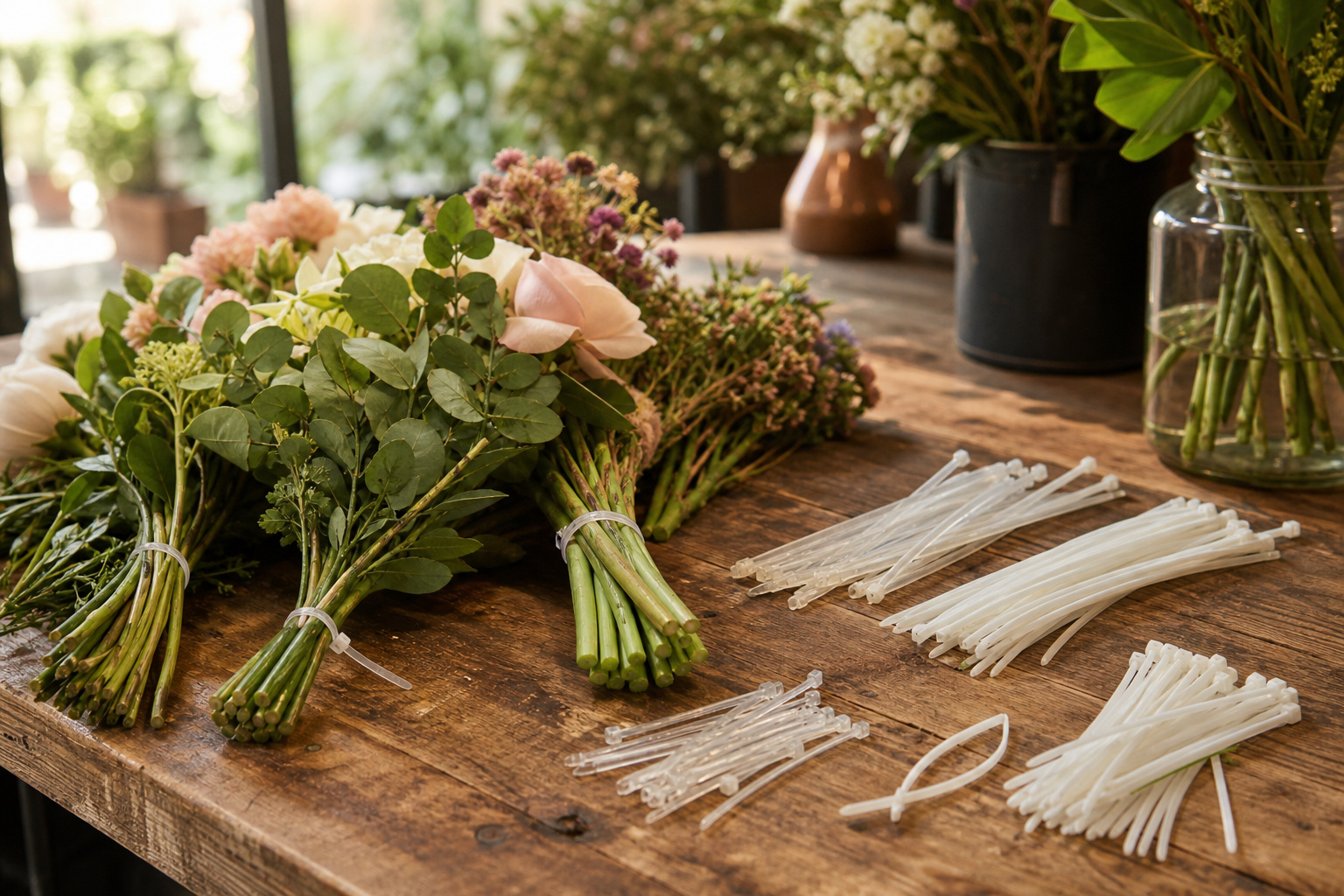
Zip ties in three sizes: 4-inch for small stem attachments, 8- to 12-inch for mid-range work, and 24-inch for wrapping around columns, thick branches, or structural supports. I carry clear and white as my defaults — they disappear into most designs. Black is useful for high-contrast situations or darker foliage-heavy pieces.
What I use in the shop: Hmrope 500-Piece Assorted Zip Tie Set — multiple sizes and colors in one pack, which means I’m not making last-minute runs to the hardware store mid-setup.
Ordering ahead of a job? Zip ties cost pennies, but they’re hard to improvise once you’re standing at the venue without the right size. Prime gets eligible orders to your door fast, and eligible new members can start a free Prime trial. As an affiliate, we earn on qualifying purchases.
Beyond the ties themselves, pack needle-nose pliers for tightening in tight spots, wire cutters or scissors for trimming ends cleanly, and a measuring tape if your installation requires precision placement. A small tool belt or apron with pockets keeps everything accessible when you’re working on a ladder.
Create Custom Lengths for Any Structure
Standard zip tie lengths cover most situations, but large installations, especially arch wraps and column pieces, sometimes need more reach than a single tie provides.
The fix is simple: chain them. Feed the tail of one tie through the head of another, pull until it clicks, and repeat. You can link three, four, or more ties this way to reach whatever length you need. I’ve done this for installations where we were wrapping florals around 10-inch-diameter columns. You’d need a lot of duct tape to replicate that hold.
For extra stability, overlap the connection points by about an inch and test the chain’s strength before attaching anything to it. Give it a firm tug. If it holds your pull, it’ll hold your florals.
This technique is especially useful for hanging flower wall installations and cascading arch designs where precise length control matters.
Use the Double-Lock Method for Heavy Work
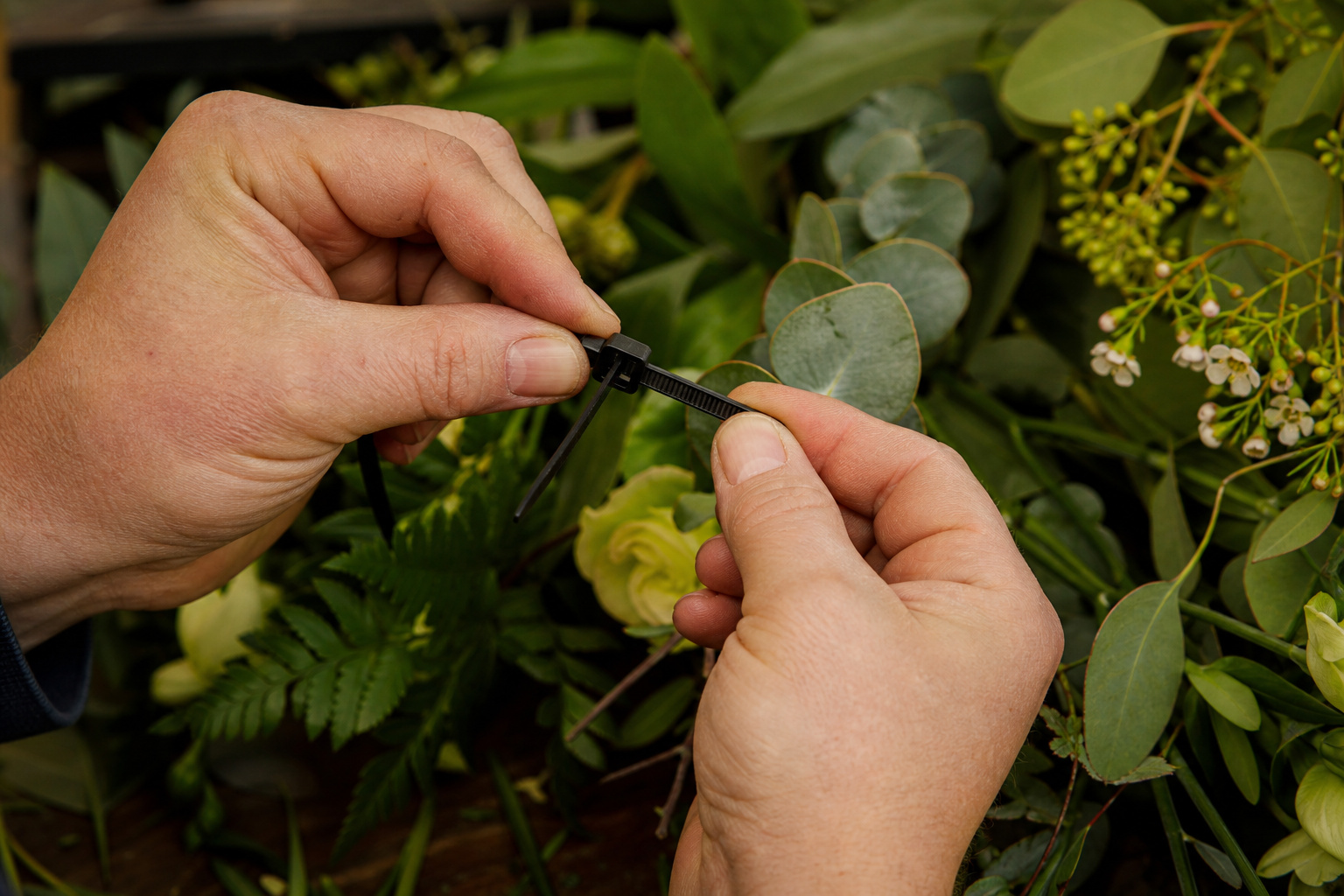
For larger, heavier floral clusters, think big: hydrangea sections or dense greenery bundles; a single tie may not provide the security you need. That’s when I use the double-lock method.
Thread one zip tie through a second tie before you secure it. What you get is a movable anchor point that can pivot slightly without loosening. This is particularly useful for hanging arrangements from exposed beams or wrapping florals around irregular structures where the attachment point needs a little flexibility.
Position these reinforced points at natural stress areas, such as the base of a heavy cluster, or wherever a stem grouping changes direction. Strategic placement does more than covering everything in ties. You want support where the weight actually falls.
If you’re designing larger structural pieces, also check out my post on floral foam and chicken wire as structural alternatives. These materials work well alongside zip ties, depending on the design.
Plan for Outdoor Installations
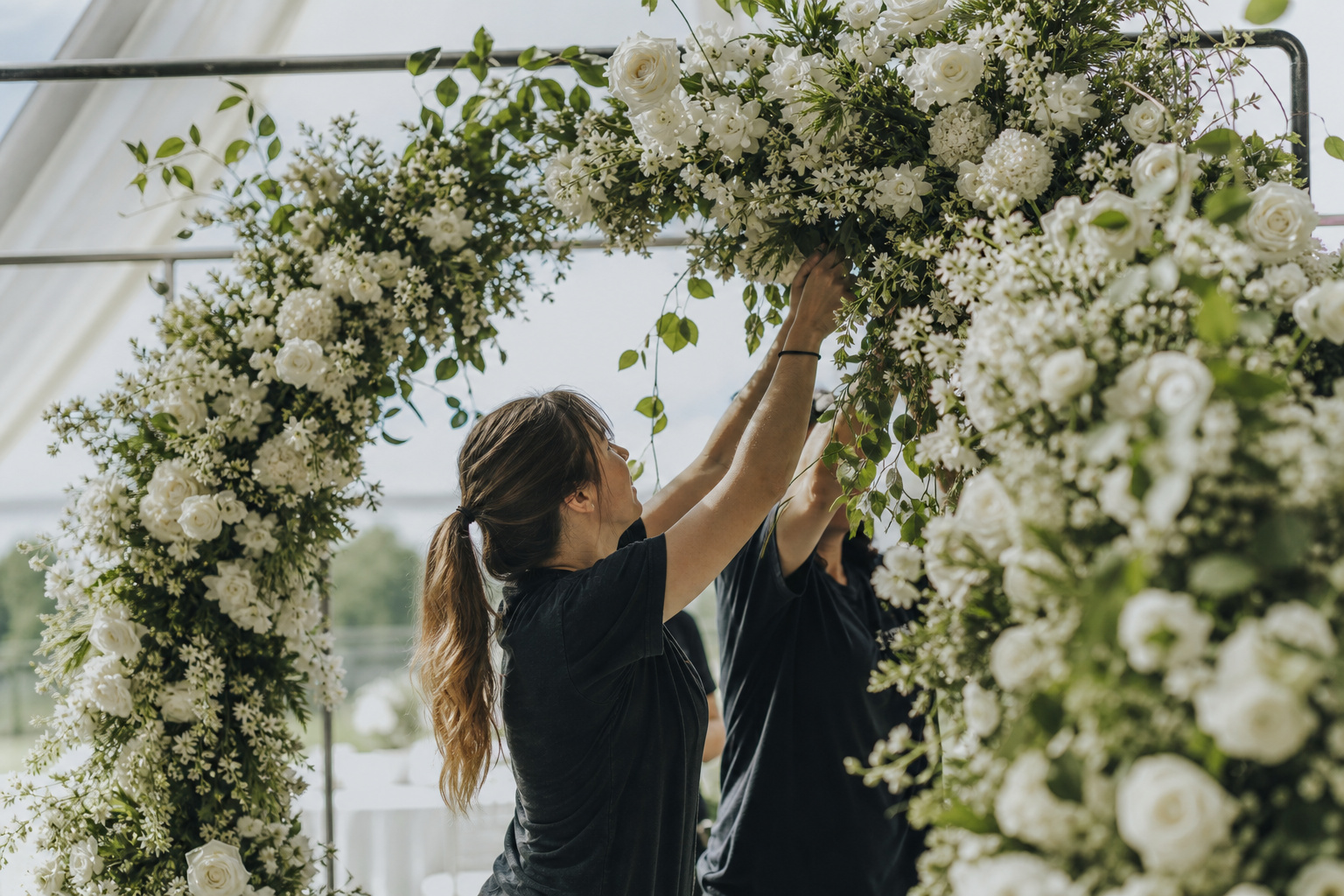
Outdoor events are where zip ties really earn their keep. Wind, humidity, and direct sun all put stress on a floral installation that an indoor setup never sees. Planning for that in advance is the difference between a design that holds all day and one that’s slowly sagging by the time of the ceremony.
A few things I always do for outdoor work:
Double-chain ties when securing arrangements to tent poles or metal pipe arches. The redundancy matters when there’s wind. Angle ties at 45 degrees on vertical surfaces. It prevents rotation and slipping far better than a straight wrap. Use clear ties in any visible areas. And always build in a few emergency anchor points you can access quickly if the weather shifts mid-event.
I also check the forecast in the morning and adjust my installation plan if wind is expected. It’s easy to skip when you’re focused on the design itself.
Hide Your Ties Like a Pro
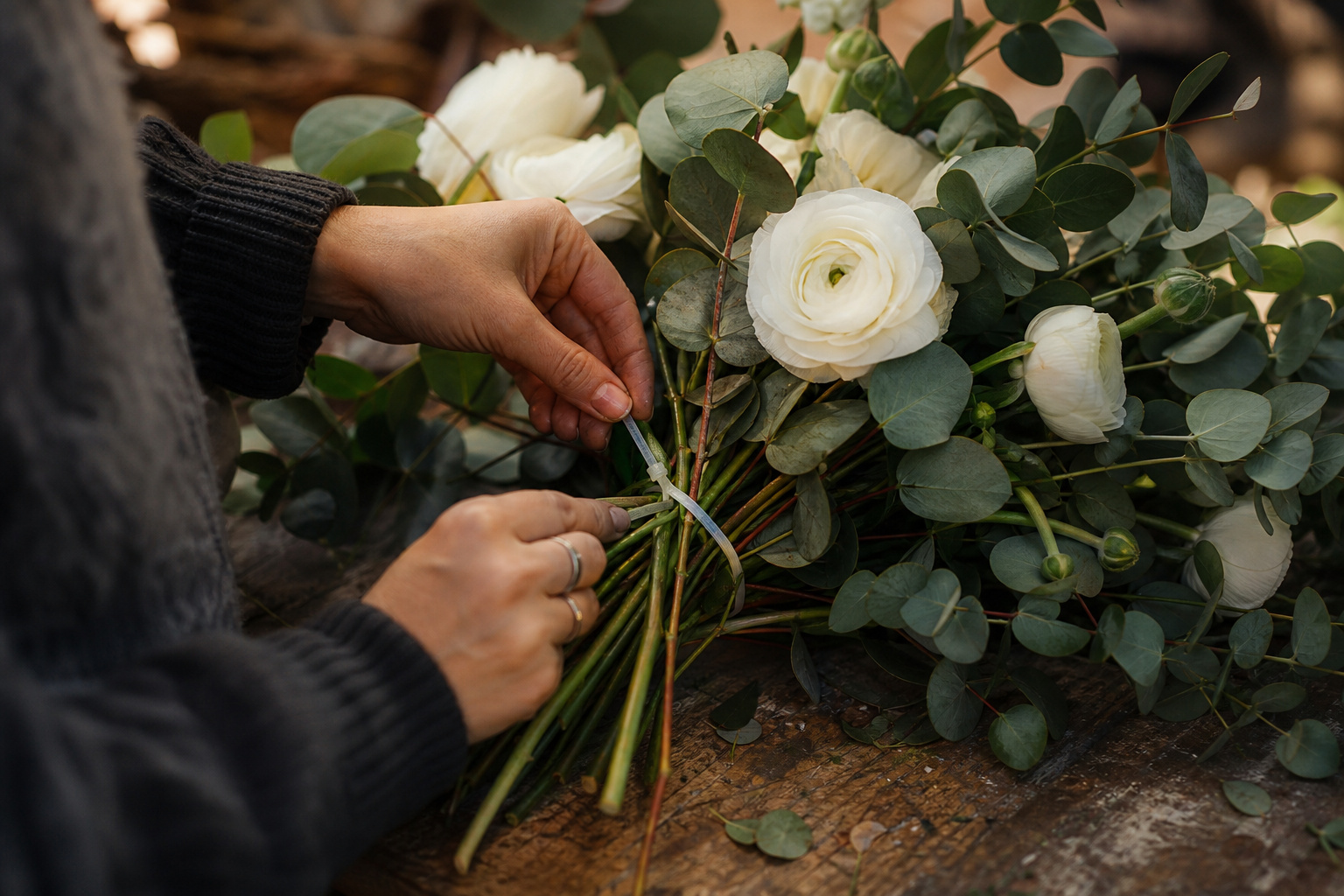
The whole point of using zip ties is that nobody sees them. A beautiful arch installation with visible plastic fasteners is a missed detail, and clients notice.
Here’s how I conceal them every time. Position tie heads behind stem crossing points. These natural junctions in the design give you cover. Tuck tail ends into dense foliage clusters, pushing them back until only greenery is visible from the front. If you’re working with colorful arrangements, match your tie color to the dominant foliage or bloom color in that section. And as a final pass, layer additional blooms or greenery over any visible connection.
Take a walk-around before you’re done. View the installation from every angle a guest would see it from. If you can spot a tie, it needs another look.
For floral hoop designs, concealment is especially important since the structure is often minimal and visible from multiple sides.
Avoid These Common Mistakes
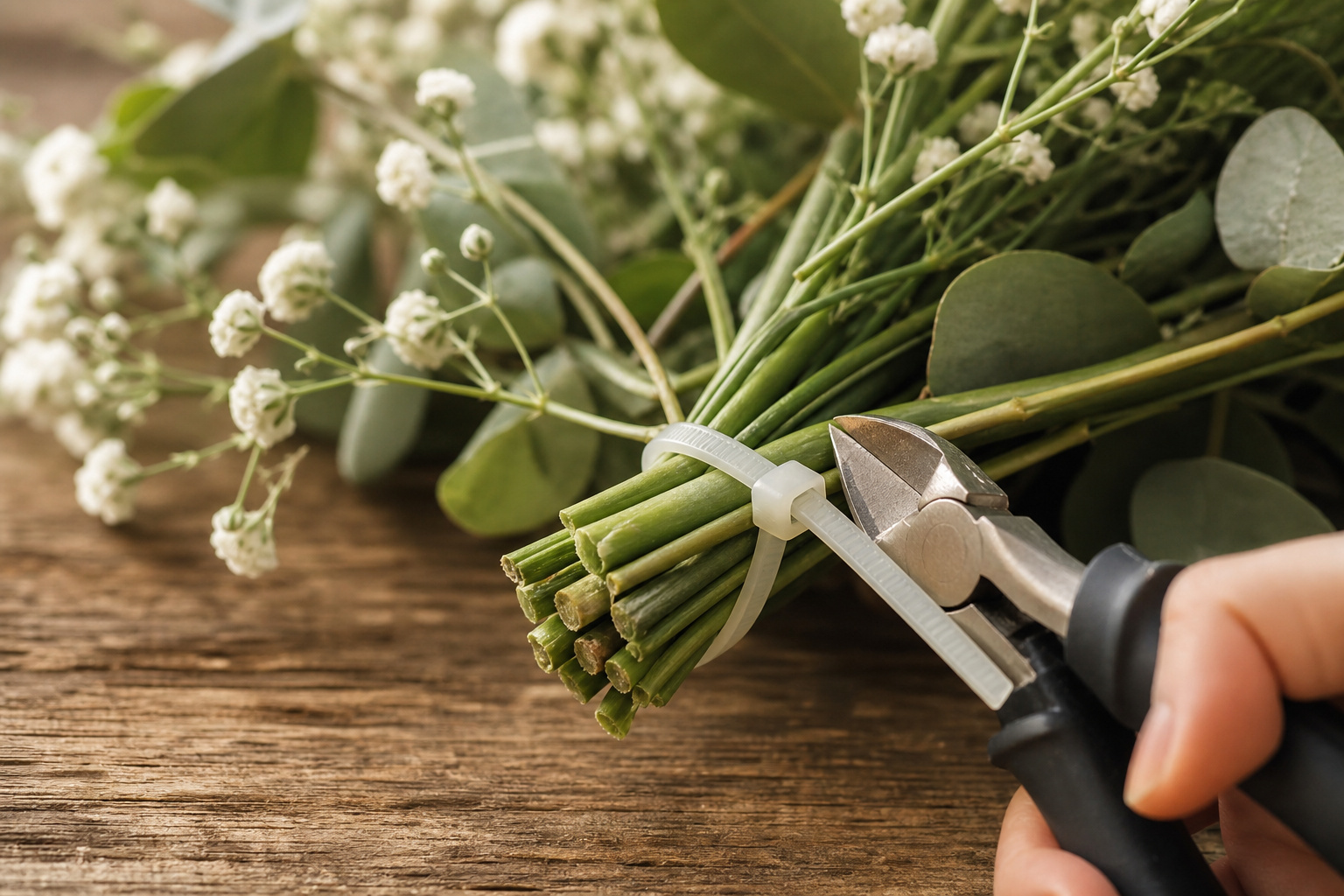
A few things I see people do wrong with zip ties in floral work that cause problems later.
Over-tightening on delicate stems. Zip ties can cut through a soft stem if you crank them too hard. For thinner stems, tighten to snug — not tight. You want hold, not a tourniquet.
Leaving sharp ends untrimmed. Always cut tail ends at a 45-degree angle with wire cutters after securing. A flat-cut tail has a sharp corner that can scratch hands, snag fabric, or poke guests. A diagonal cut eliminates that edge.
Using one size for everything. A 4-inch tie on a thick column wrap won’t work. Match the tie size to the job. Bring a variety and don’t try to make one size fit everything.
Not testing before you go. Build a small mock-up at home with your ties, especially for a new installation style. Finding out a technique doesn’t work the way you expected is much better discovered in your kitchen than at the venue.
Frequently Asked Questions
What size zip ties should I use for floral arch installations?
For most arch work, 8- to 12-inch ties handle most attachments. Use 24-inch ties around thicker structural elements like poles or branches, and 4-inch ties for smaller stem bundles.
Can zip ties damage fresh flowers or stems?
They can if over-tightened. For delicate stems, tighten to snug. For structural greenery or thick woody stems, you can cinch them down more firmly without damage.
What colors should I stock?
Clear and white covers most situations. Black is useful for dark foliage or high-contrast designs. I’d start with clear. They blend into almost anything.
Are zip ties reusable?
Yes, they can be, but why bother? They’re inexpensive enough that this isn’t a real concern. At cents per tie, you can use fresh ones on every job.
How do I keep zip ties hidden in the finished design?
Position heads behind natural stem crossing points, cut off or tuck tails into dense foliage, and do a final walk-around from every guest-view angle before calling it done.
Can I use zip ties for DIY wedding flowers at home?
Absolutely. They’re not just for professionals. If you’re doing any kind of large DIY installation, a backdrop, arch, or garland, zip ties will hold things in place far more reliably than floral wire in most structural applications. Check out my post on DIY wedding flowers if you’re going that route.
Closing Thoughts
Zip ties don’t get a lot of credit in floral design conversations, but they’ve saved more than a few installations in my shop’s history. The good ones don’t let go. Neither should your design.
If you’re using zip ties in your floral work, or you just tried this approach for the first time, drop a comment below and let me know what you’re installing. I’m curious what kinds of projects you’re taking on.
Til next time,