Disclosure: This post may contain affiliate links. If you click and buy, we may earn a commission at no extra cost to you. As an Amazon Associate, we earn from qualifying purchases.
Last Updated: June 2026

A bride stopped by the shop a few weeks after her wedding, bouquet in hand. She’d kept it in a vase with water, hoping it would hold. It hadn’t. She wanted to know if anything could still be done.
The honest answer was: not much. Most preservation methods need to start within a day or two of the wedding — ideally the day after. Once the flowers have wilted and started to break down, the window has closed.
That’s why I’m writing this before your wedding, not after. If preservation matters to you, plan for it now. Here’s what works, what doesn’t, and what I’d actually recommend depending on your situation.
Know Your Options Before the Wedding Day
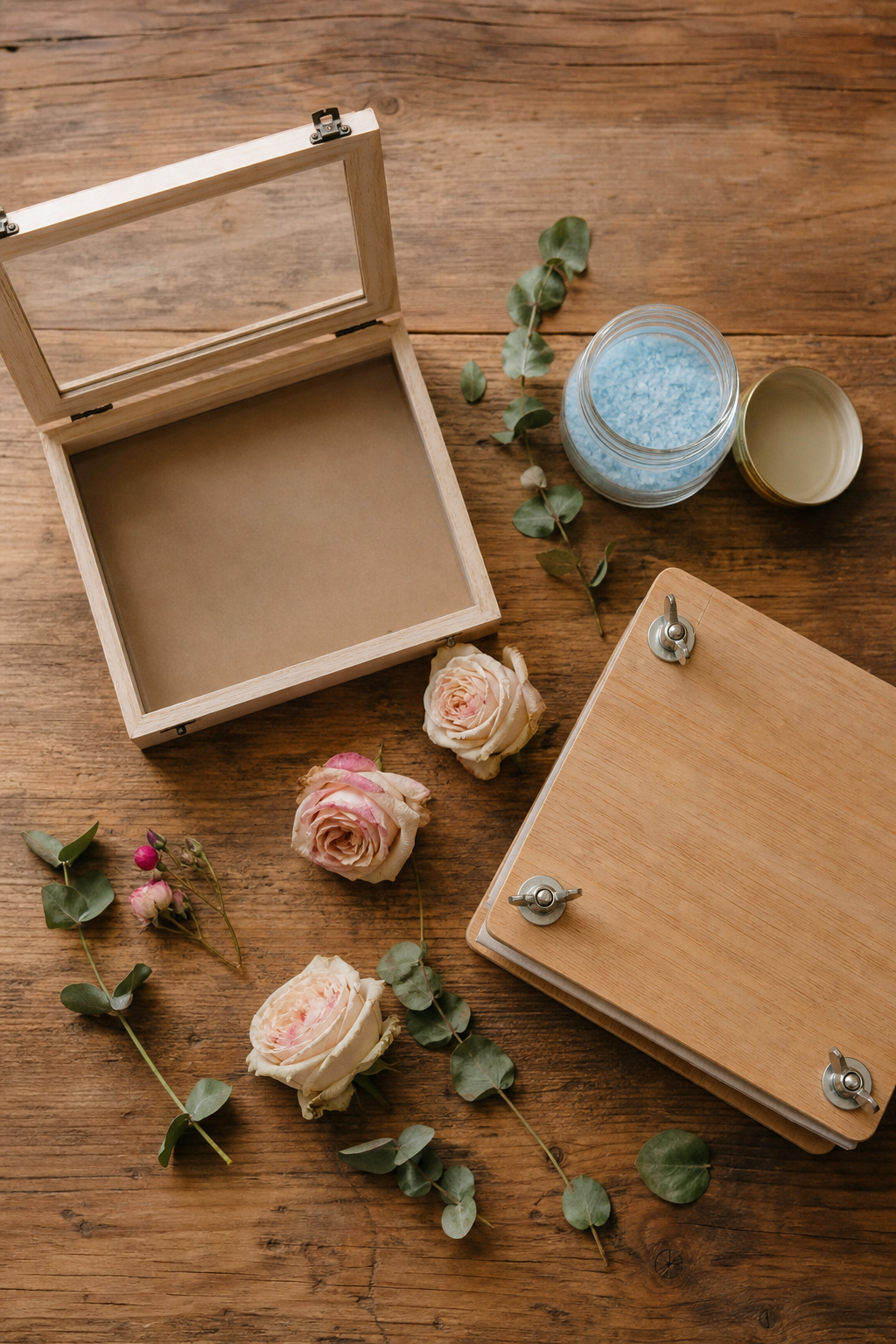
There are three realistic paths for preserving a wedding bouquet: hiring a professional freeze-drying service, doing it yourself with silica gel, or pressing the flowers. Each one produces a different result and requires a different level of effort and investment.
The method you choose should match how you want to display the finished keepsake. A freeze-dried bouquet can sit in a shadow box almost exactly as it looked on your wedding day. Pressed flowers are flat and better suited for framing or a scrapbook. Silica gel falls somewhere in between: the blooms stay three-dimensional, but they’re fragile and need to be reassembled afterward.
Before you decide, it’s worth knowing what each method actually involves.
Hire a Freeze-Drying Service for the Best Results
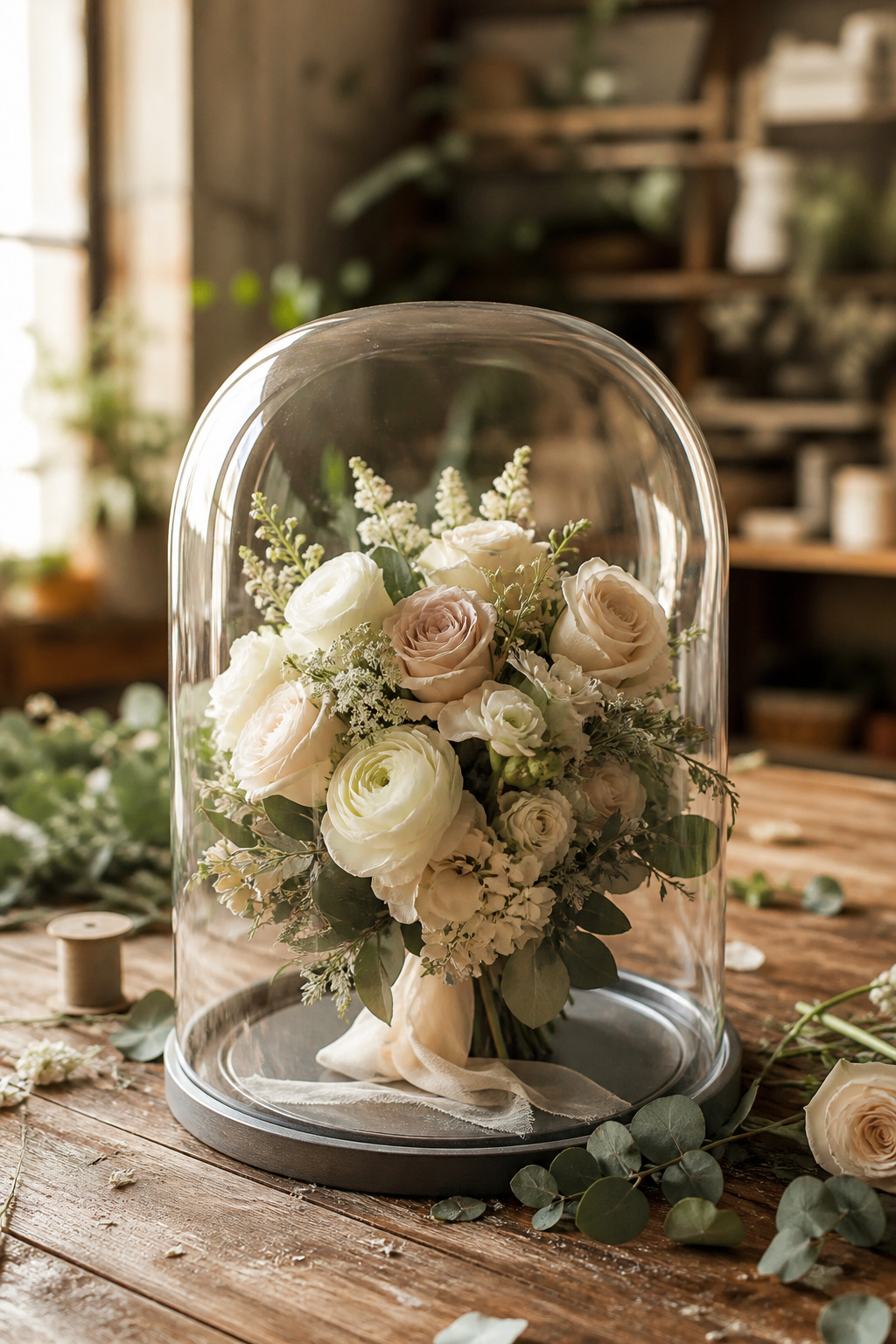
If you want the bouquet to look close to what it looked like on the wedding day — same shape, same colors, real depth — freeze-drying is the only method that comes close to delivering that.
Commercial freeze-drying removes moisture from the flowers slowly, under controlled conditions, while keeping the cellular structure intact. You can’t replicate that at home. The equipment alone costs tens of thousands of dollars. This is not a DIY method.
Book the service before the wedding if you can. Most reputable companies want the bouquet delivered within one to four days of the event. The sooner they receive it, the better the results. Ship it cold if you’re mailing it. Pack it with ice packs, not dry ice, and use an insulated box.
The cost runs several hundred dollars, depending on the bouquet’s size and the options you choose. Framed shadow boxes and glass domes are the most popular finishes. Some companies also offer petal jewelry, such as rings, pendants, and ornaments made from the preserved blooms.
One thing to know: not every flower will freeze-dry well. Very delicate petals or high-moisture blooms may not hold up, and some services charge extra for difficult varieties. Ask before you send.
What I use in the shop: When brides ask me for a referral, I tell them to search for certified floral preservation companies and look for ones with before-and-after portfolio photos. The quality varies significantly between providers.
Use Silica Gel If You Want to DIY and Keep the Shape
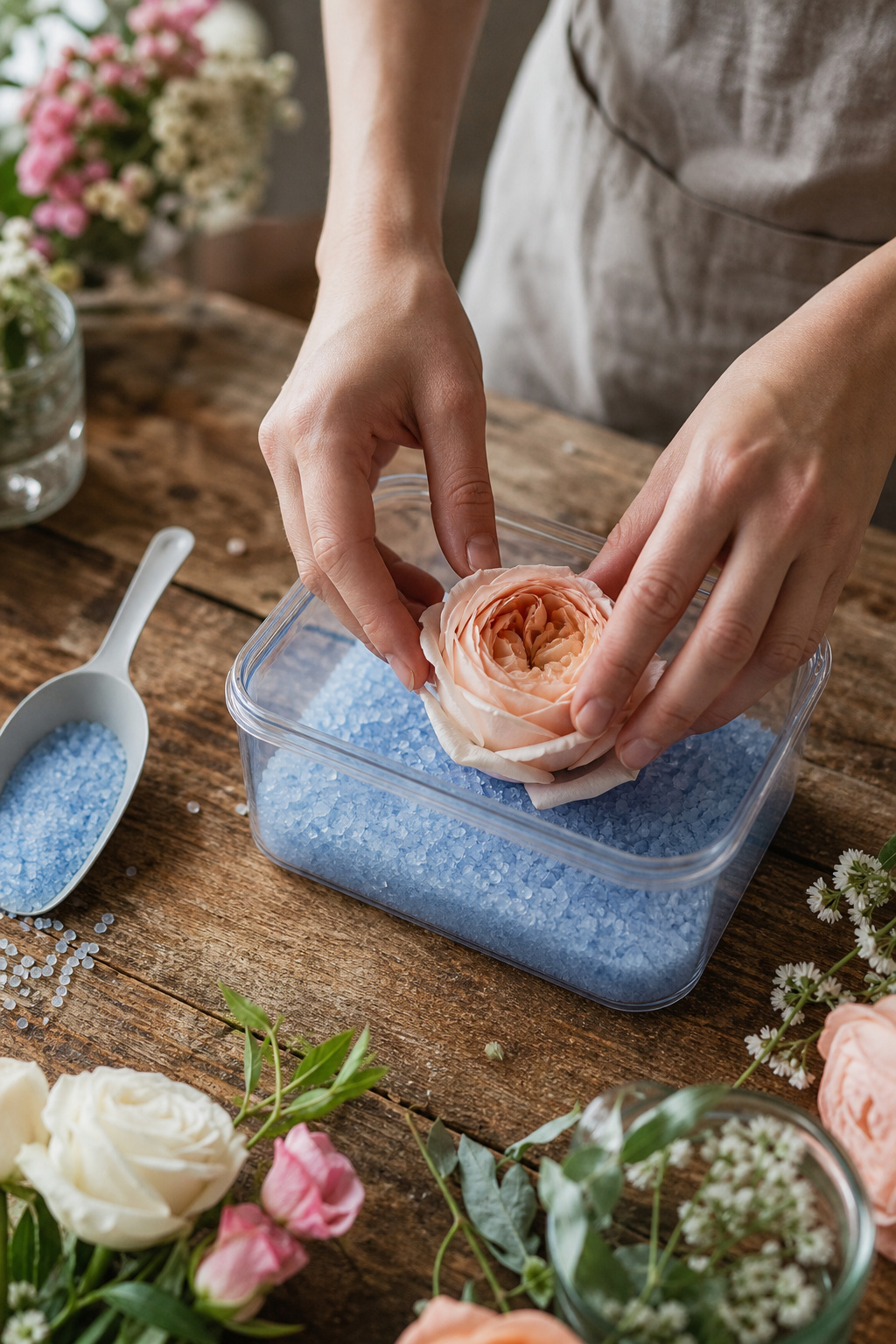
Silica gel is the best DIY option for flowers to use to retain their three-dimensional shape. It draws moisture out of the petals steadily, and when done right, the blooms come out looking fairly close to fresh, just lighter and more fragile.
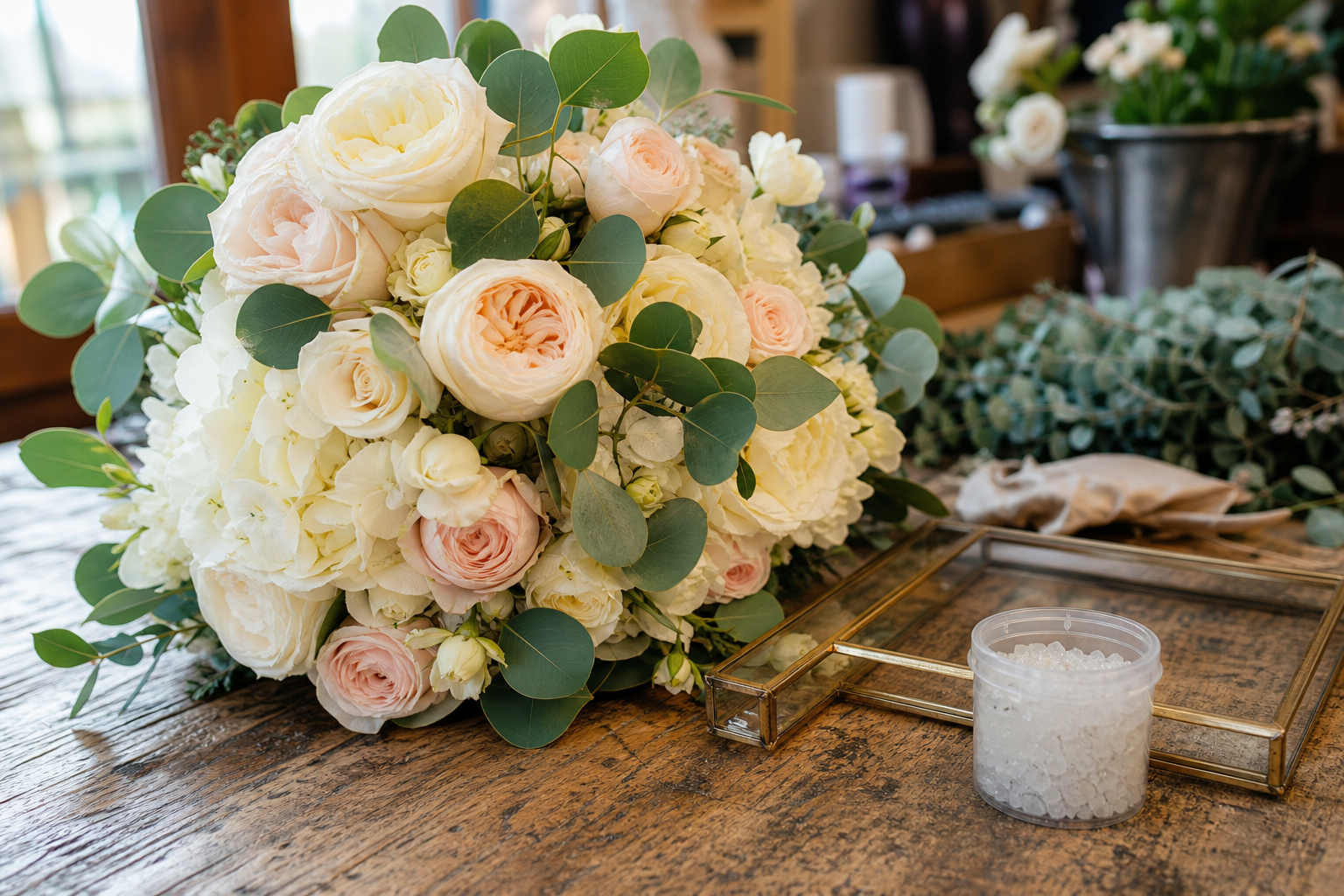
The supplies are minimal. You need an airtight container large enough to hold the blooms, and enough silica gel to fully submerge the flower heads. Silica gel is reusable, so the cost is low spread over multiple uses.
What I use in the shop: color-indicating silica gel crystals — they change color when they’ve absorbed their limit, so you know when to refresh them.
Here’s the basic process:
Trim the stems to about an inch below the flower head. Pour a layer of silica gel into your airtight container. about a quarter full. Place the blooms face-up on that layer, then pour more silica gel over them until the petals are covered. Seal the container and store it in a cool, dry place for four to seven days.
Check the blooms after four days. If they feel papery and dry, they’re done. If they still have any give, add more silica gel and let them sit another day or two. Don’t rush this step.
If you want to speed the process up, put the sealed container in the microwave for one minute, then let the silica cool for at least 30 minutes before opening it. The heat accelerates drying, but the cool-down period matters. Cracking the container while it’s still hot can cause the petals to bubble.
Here’s a short video showing the basics of the silica gel method. Watch it before you start — the technique for placing the flowers makes a real difference in the outcome
One thing silica gel doesn’t solve: the stems. Once the flowers are dry, you’ll need to recreate them using floral wire and tape. It takes a little practice, but the video covers that as well.
Press the Flowers for Framing or Scrapbooks
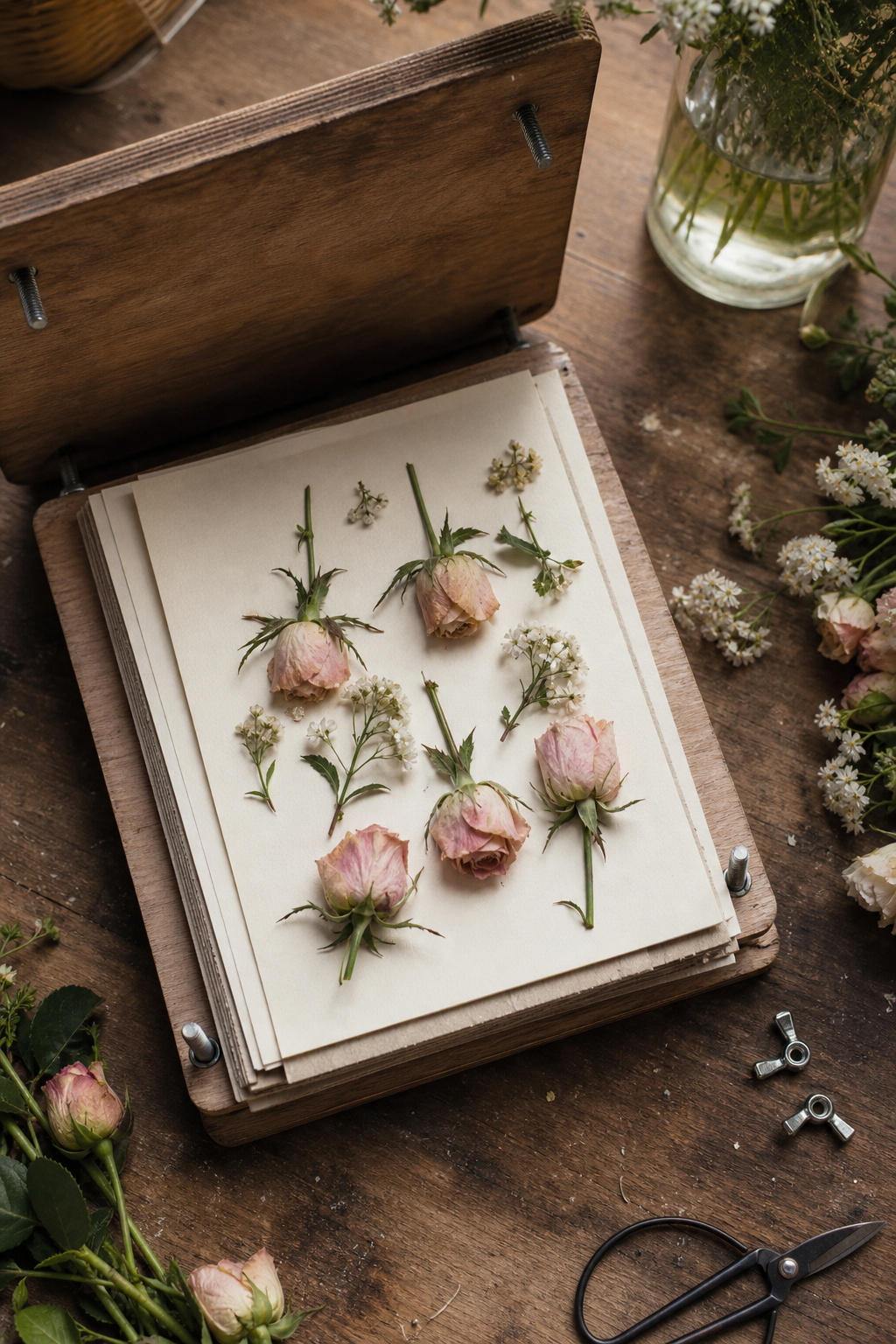
Pressing is the simplest preservation method. It’s also the most limited. You end up with flat flowers, which rules out a shadow box display but works well for framed art, greeting cards, or scrapbook pages.
You need absorbent paper (blotting paper, parchment paper, or even coffee filters), some cardboard, and either a flower press or a stack of heavy books. That’s it.
Separate the leaves from the flowers first. They dry at different rates. Lay a piece of cardboard down, then a sheet of blotting paper. Arrange the flowers face down on the blotting paper, cover with another sheet, add another layer of cardboard, and repeat as needed. Slide the whole stack into your flower press, or lay it flat and weight it down with books.
Leave it for two to four weeks. Flowers with more water content take longer. Don’t check on them obsessively. Every time you open the stack, you risk disturbing the petals before they’ve set.
One tip I give people: don’t use textured or embossed paper (like paper towels). It leaves an imprint on the petals. Plain parchment or blotting paper gives you the cleanest finish.
This video covers the flower press technique, if you want to see it in action before you start.
Skip These Methods for Long-Term Keepsakes
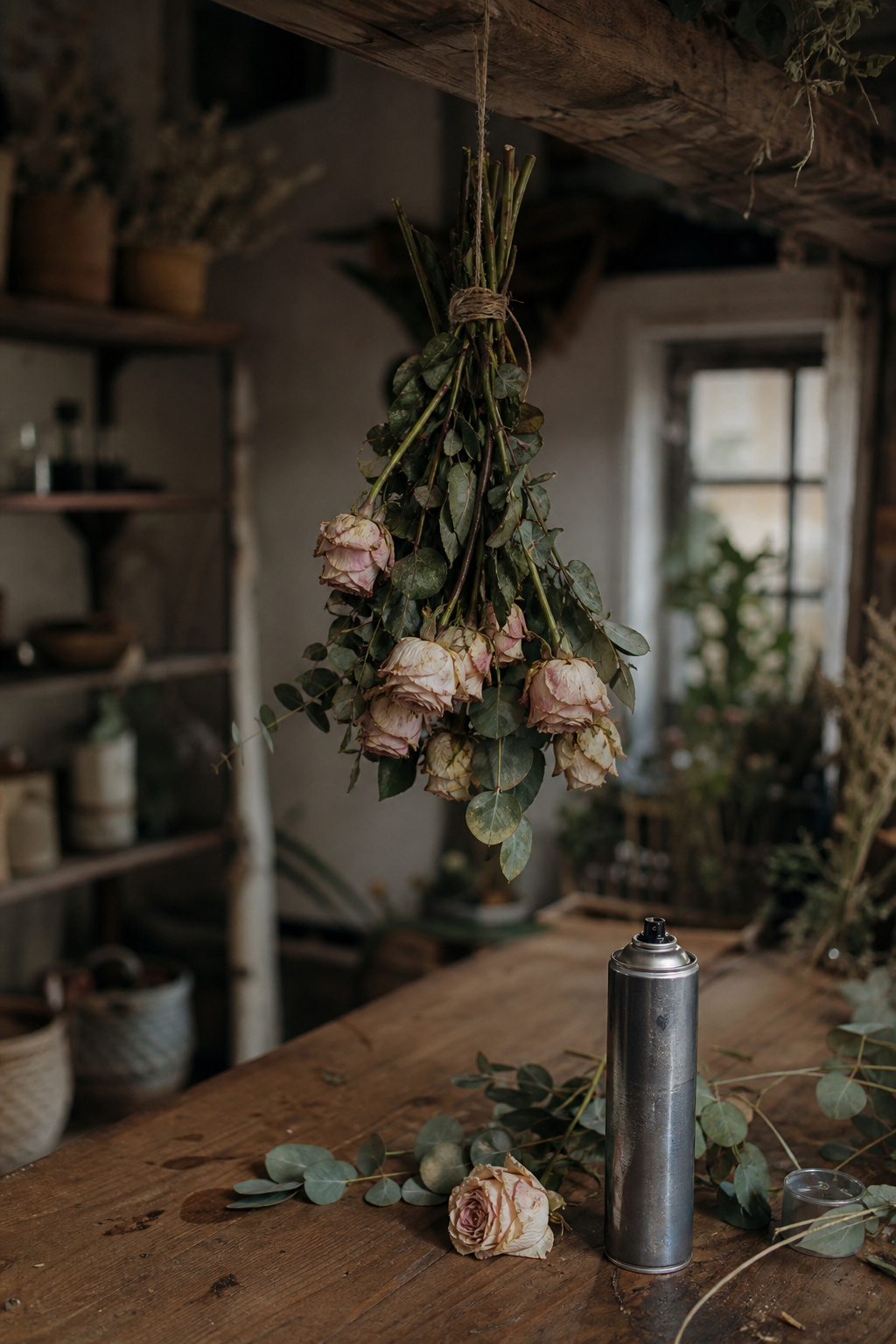
A few other options come up when people research bouquet preservation. I’d steer clear of most of them if you’re looking for something that will last more than a season.
Hanging flowers upside down to air-dry is simple, and it works for some varieties, like lavender, statice, and baby’s breath. But most wedding bouquet flowers don’t dry well this way. Roses lose their color. Hydrangeas sometimes come out fine, sometimes fall apart. You won’t know until it’s too late to try something else.
Coating flowers with hairspray, lacquer, or paraffin wax will hold them for maybe six months. After that, they deteriorate. If you’re looking for a permanent keepsake, these are not the methods to use.
Resin casting has become popular online. The results look good in photos, but it’s technically demanding. Air bubbles, heat buildup during curing, and uneven shrinkage are all common problems. I’ve seen more failed attempts than successful ones from people who tried it without experience. If you want to go this route, find a craftsperson who specializes in it rather than attempting it yourself on a one-time item you can’t replace.
Frequently Asked Questions
How soon after the wedding do I need to start the preservation process?
For professional freeze-drying, the sooner the better, ideally within one to four days. For silica gel or pressing, start within 24 hours of the ceremony if possible. Fresh flowers preserve more successfully than flowers that have already started to wilt.
Can I preserve a bouquet that’s been sitting in water for several days?
Probably not with good results. Flowers that have been in water will have started to break down at the cellular level, even if they still look presentable. The more time that has passed, the poorer the outcome, especially for silica gel and freeze-drying.
How much does professional freeze-drying cost?
Generally, several hundred dollars, depending on bouquet size and the display option you choose. A basic framed shadow box will cost less than a glass dome or custom jewelry. Get quotes from a few providers and look at their portfolio before committing.
Does silica gel work on all flower types?
It works well on roses, daisies, zinnias, and most garden blooms. Very delicate or high-moisture flowers like lily of the valley or gardenias can be trickier. Test the method on similar flowers before the wedding if preservation is important to you.
Can I preserve just part of the bouquet instead of the whole thing?
Absolutely. Selecting a handful of the most meaningful blooms is often more practical than trying to preserve everything. A few well-preserved roses or peonies from the bouquet can make a beautiful framed piece on their own.
Is pressed flower preservation suitable for a shadow box display?
Not really. Pressed flowers are flat, so they’re better suited for framed art or scrapbooks. If you want a three-dimensional display that looks like the original bouquet, silica gel or professional freeze-drying is the better path.
Closing Thoughts
Preservation doesn’t have to be complicated, but it does have to be planned. The bouquet you carry on your wedding day has a short window before the options narrow. Decide before the day, not after, and make sure someone knows what to do with the bouquet when you hand it off.
If you have other keepsake flowers beyond the bouquet, prom corsages, anniversary arrangements, or anything worth holding onto, the same methods apply. Silica gel and pressing work for any flower, not just wedding blooms.
These petals won’t last forever on their own. A little planning now means they can last a lifetime. Drop a comment below and let me know which method you’re considering. I’m happy to answer questions specific to your bouquet.
Til next time,