Disclosure: This post may contain affiliate links. If you click and buy, we may earn a commission at no extra cost to you. As an Amazon Associate, we earn from qualifying purchases.
Every September, a handful of my regulars would come into the shop asking for the same thing: a fall wreath that didn’t look like it came off a big-box shelf. Not more orange mums glued to a grapevine circle. Something with real texture, pods, grasses, dried foliage, that actually said autumn.
You don’t need a shop behind you to get that look. You need a wire frame, a spool of paddle wire, and about an hour. This video from floral designer Beth O’Reilly shows exactly how it’s done, using a wire frame, fresh flowers, and foliage that dries in place so the wreath holds up through the whole season.
If you’re considering making your own fall wreath this year, you’ll enjoy this video. Watch it, and see if you agree.
Why a Fall Wreath Is the Easiest Way to Dress Up Your Door
A fall wreath is one of the simplest decorating projects you can take on, and it gives you a lot of room to be creative.
In this video, Beth walks through building a fall wreath on a wire frame using fresh flowers and foliage chosen specifically because they dry well in place. That’s the trick that makes this project worth your time: you’re not fighting the natural drying process, you’re using it.
If you’ve never made a wreath before, don’t let that stop you. The basic technique, attaching bundles to a frame with wire, stays the same no matter what materials or style you choose. Once you’ve got it down, you can let your creativity run wild.
Try These Wreath Styles Once You’ve Got the Basics Down
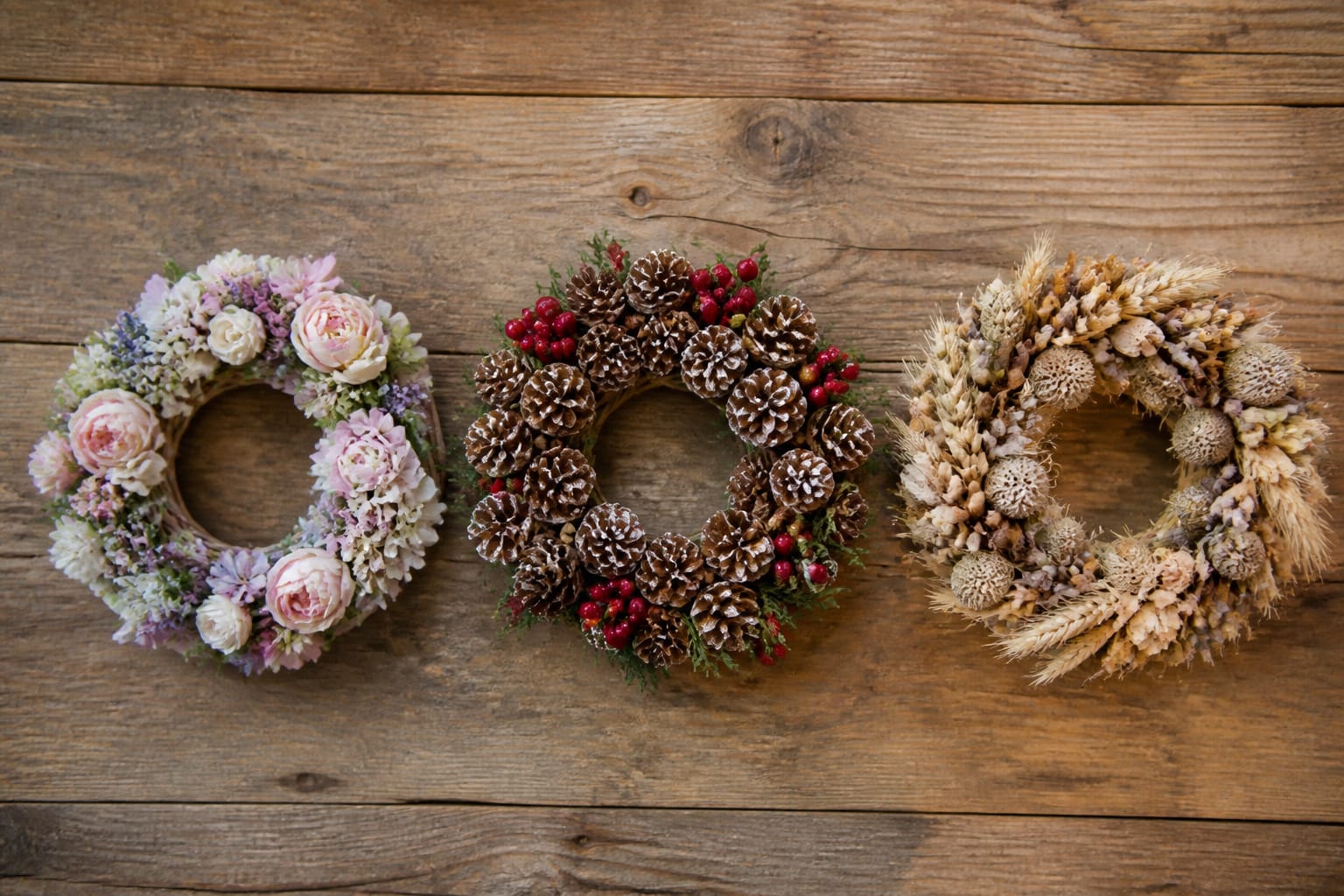
Here are a few directions you could take once the basic wiring technique feels comfortable:
- Bright, colorful artificial flowers and ribbons for a welcoming summer door display.
- Preserved leaves, mini pumpkins, acorns, and twigs for a rustic, autumnal look, perfect for Thanksgiving or the whole fall season.
- Evergreen branches, pinecones, cranberries, cinnamon sticks, and red berries for a traditional Christmas wreath.
- Fresh and silk pastel-colored flowers like tulips, roses, lilies, and baby’s breath to welcome spring.
- Seashells, starfish, sand dollars, and driftwood for a coastal, beach-house feel.
- Colorful feathers, tassels, fabric flowers, and macrame accents for a boho-chic look that works well in a kid’s room.
- Faux fruits, vegetables, and herbs for a food-themed wreath on a kitchen or dining room door.
Want to take the autumnal option further into full Halloween territory, skulls, ravens, and a darker palette instead of pinecones and acorns? I broke that build down separately in how to make a Halloween wreath.
The options are close to endless. If wreath-making turns into a habit, an eucalyptus wreath is a good next project, it uses a different base technique that’s worth having in your back pocket.
One thing to keep in mind: materials without stems usually need to be wired before bundling. If it doesn’t have a stem, wire it, or glue it in with the right adhesive for the job.
Where to Find Everything You Need
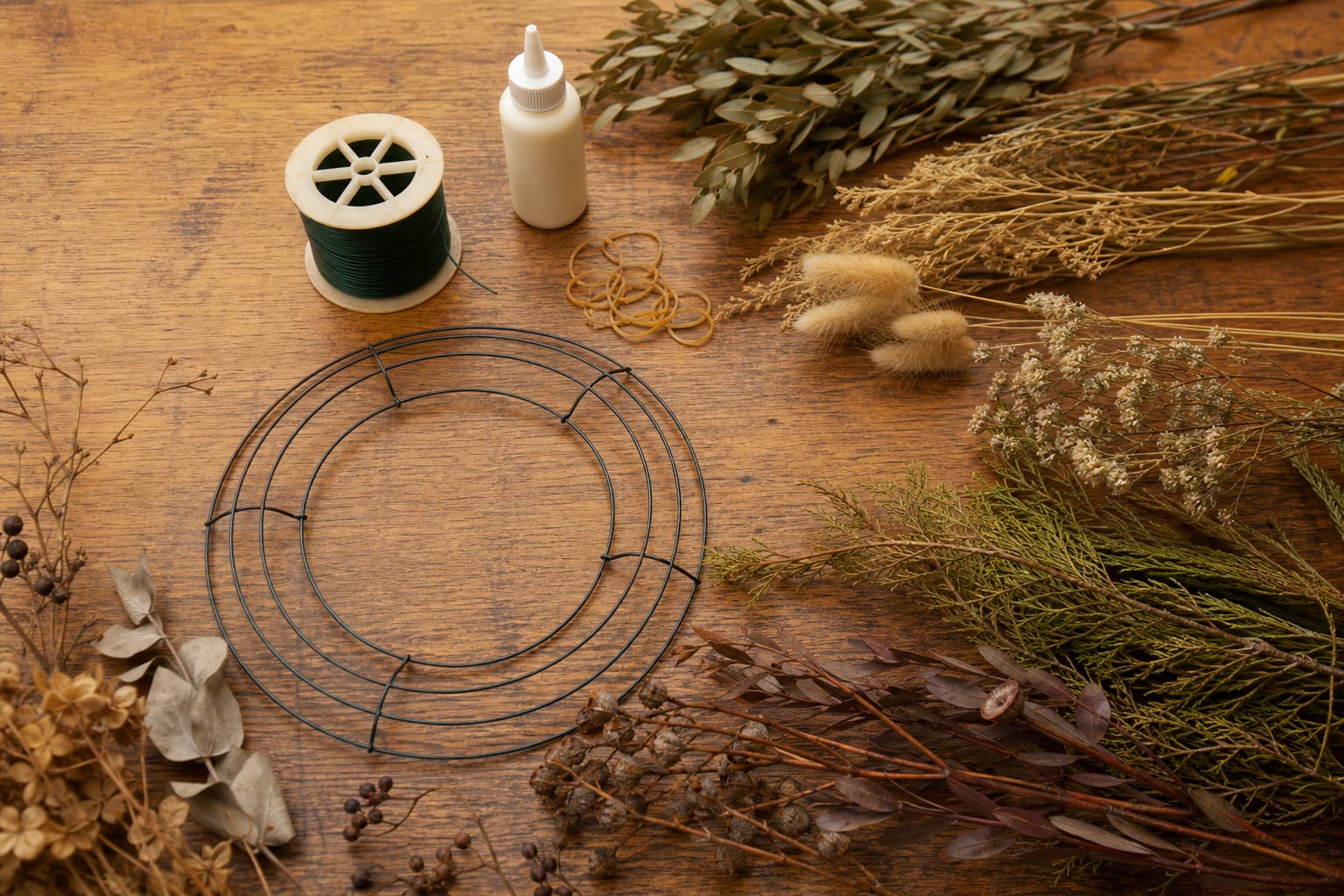
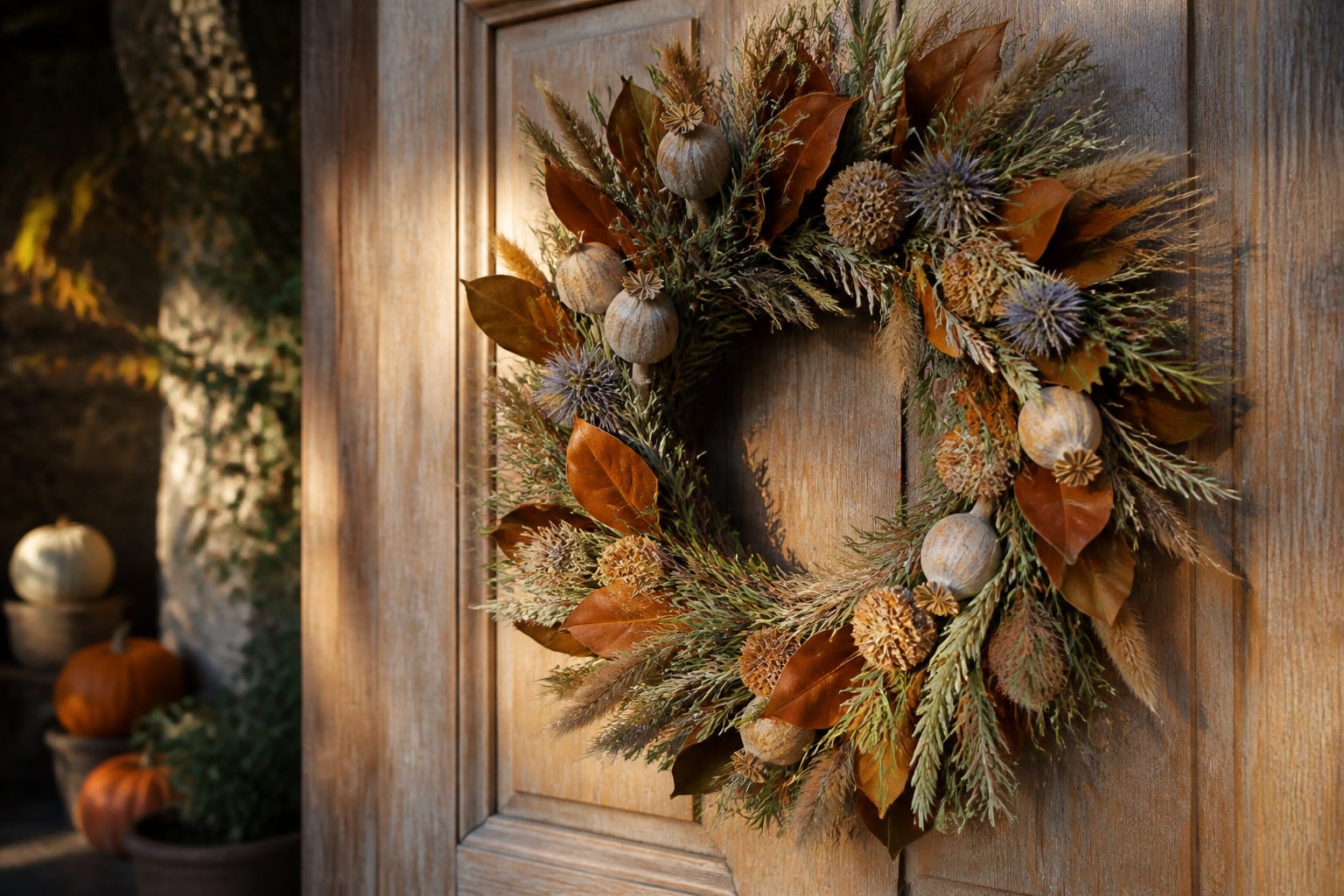
The flowers and foliage in this fall wreath, magnolia foliage, rosemary, scabiosa pods, poppy pods, thistle, and fountain grass, are all easy to buy online.
I’ve had good experience ordering from GlobalRose, Flower Explosion, and BloomsbytheBox. Other sources may be fine too, but those are the ones I know firsthand.
Need a smaller amount? Buy locally from a florist or floral outlet. You’ll likely pay a bit more per stem, but you’ll save overall by only buying what the wreath actually needs.
If silk flowers fit your project better, check NearlyNatural online, or craft stores like Hobby Lobby and Michaels. I’ve also found surprisingly good options at Dollar Tree.
One tip if you’re going the silk route: stick with fresh greens where you can. It reads more natural, even when the flowers themselves are faux.
For the hard goods, wire frames, wire, glue, bands, I go straight to Amazon. Here’s what’s actually in my kit:
What I use in the shop: Wire Wreath Frames. They hold their shape through a full season of hanging, which the flimsier stamped frames don’t.
What I use in the shop: Paddle Wire. One spool goes a long way, and it’s what actually holds your bundles to the frame, so don’t skimp here.
What I use in the shop: Floral Glue. For anything without a stem, pods, acorns, dried pieces, this is what keeps them put through the season instead of falling off by week three.
What I use in the shop: Rubber Bands. Small, cheap, and useful for holding a bundle steady while you wire it, a little trick that saves you a lot of fumbling.
Put These Techniques to Work
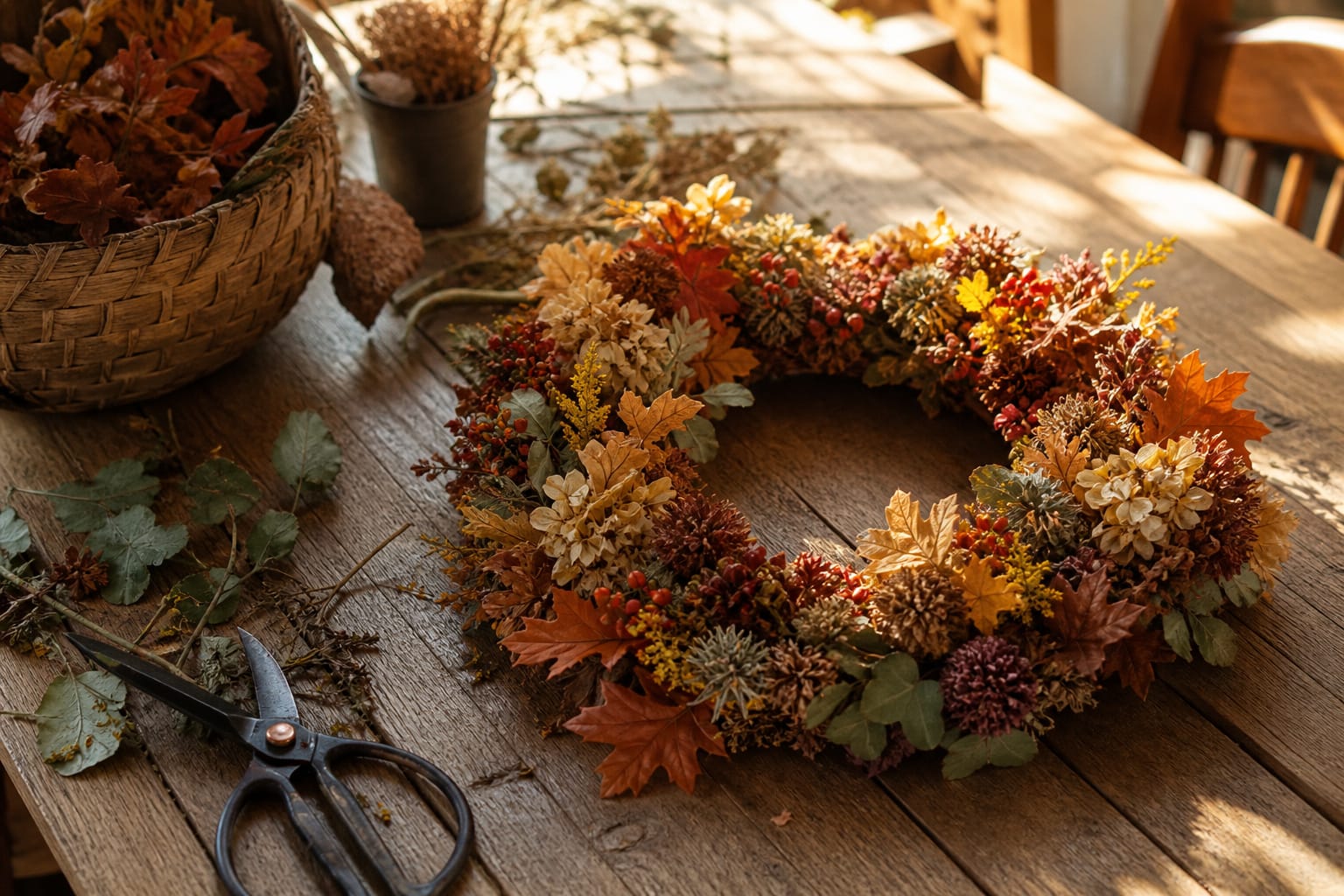
You now know how easy it is to build your own fall wreath, following the technique in the video.
A word of warning, though. Knowing the technique doesn’t improve your wreath-building skills. Using it does.
What I’d do: before I touch any material I paid good money for, I build one practice bundle with whatever cheap stems or greenery I have lying around. It’s not glamorous, but it saves the good material for the wreath you’ll actually hang on the door.
Review the technique, then start. The sooner you do, the sooner you’ll have the skill and the confidence to build wreaths for every season, not just this one.
Frequently Asked Questions
How long will a fresh fall wreath last?
A wreath built with the right drying materials, like the ones used in the video, holds up for the whole fall season once it dries in place on the frame. Fresh-cut greens without that drying quality won’t last nearly as long.
Can I use silk or dried flowers instead of fresh ones?
Yes. Silk and dried materials skip the drying process entirely and hold their look for years, not just a season. From my perspective, mixing silk flowers with real dried foliage gives you the most natural-looking result.
What’s the easiest wreath base for a beginner?
A wire frame is the most forgiving base to start with. It’s inexpensive, holds bundles well once wired, and works for fresh, dried, or silk materials.
Do I need floral foam to make a wreath?
No. The wiring technique in this tutorial doesn’t use foam at all. Foam has its place in floral design, but a wreath built on a wire frame doesn’t need it.
How do I keep materials from falling off my wreath?
Anything without a stem needs to be wired or glued in, not just tucked into the bundle. Skipping that step is the number one reason a wreath sheds pieces a few weeks in.
What’s the first wreath style you’re going to try? Drop it in the comments, I read every one and I’m always curious what people end up building.
A wreath is really just a bundle of small decisions wired together, one stem at a time it turns into something worth hanging on the door. Start with one bundle today, and in no time you’ll have a wreath worth the compliments.
Til next time,