Disclosure: This post may contain affiliate links. If you click and buy, we may earn a commission at no extra cost to you. As an Amazon Associate, we earn from qualifying purchases.
Last Updated: July 12, 2026
A customer brought a sealed glass terrarium back to the shop a couple of years ago, convinced it was dying. The glass had fogged over completely and she couldn’t see the plants inside anymore. She wanted to know what she’d done wrong.
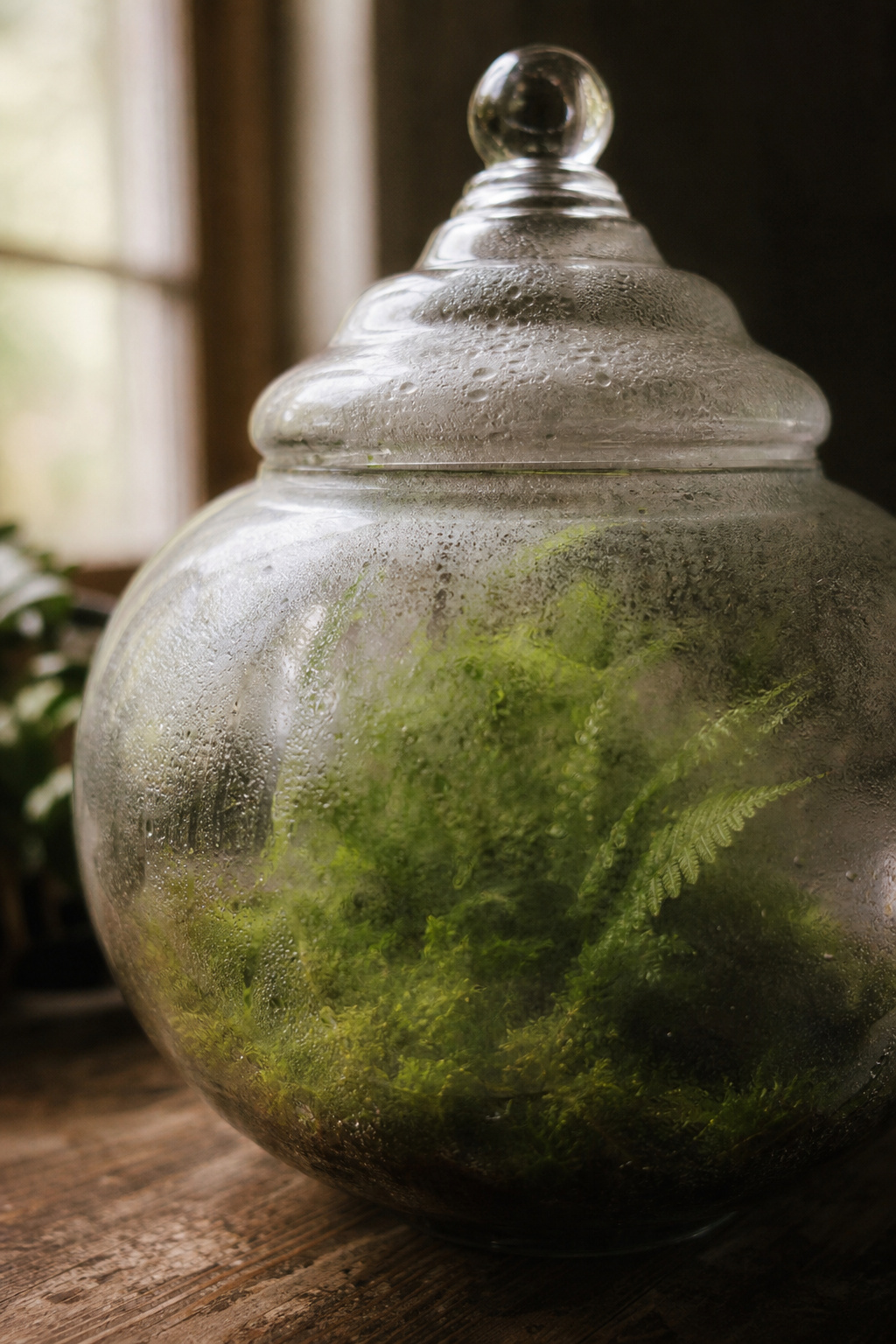
Nothing. That fog is the whole point of a closed terrarium. It’s water cycling through the air inside the glass, and it usually means the thing is working exactly as it should.
Terrariums confuse people because they look like they should be complicated, and they’re really not, once you understand the two different types and stop treating them the same way.
Decide Between Open and Closed Before You Buy Plants
This is the decision that determines everything else, and it’s the one most tutorials skip past.
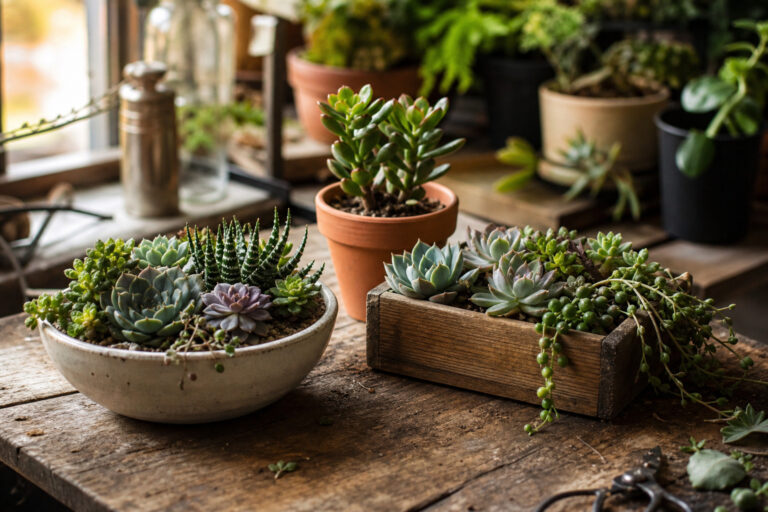
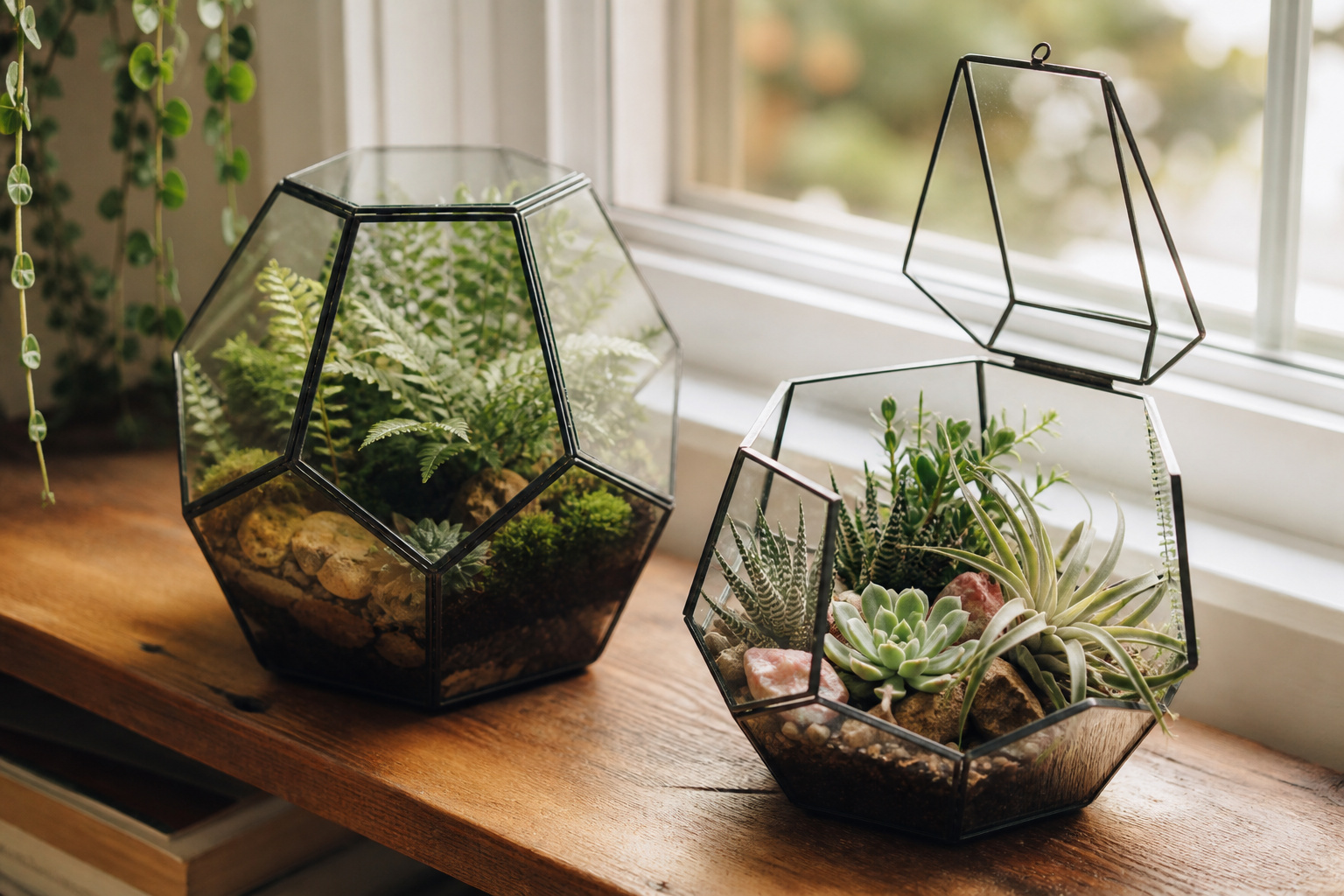
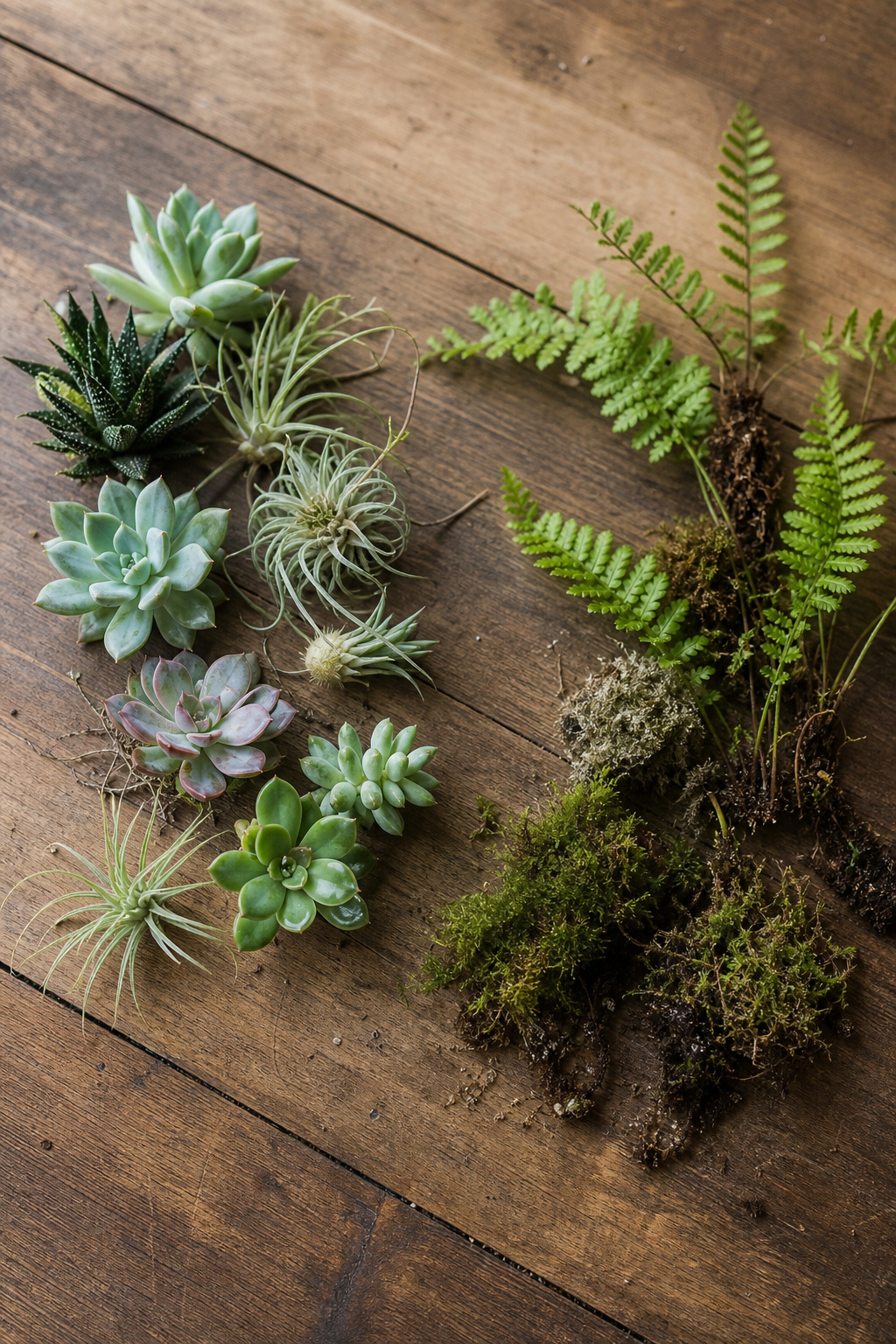
An open terrarium, uncovered or in a wide-mouthed vessel, suits plants that want airflow and don’t love constant humidity. Succulents, cacti, and air plants belong here. A closed terrarium, sealed under glass, creates its own humid microclimate and suits moisture-loving plants like ferns, moss, and fittonia. Put a succulent in a closed terrarium and it will rot within weeks. Put a fern in an open one and it’ll dry out and crisp up just as fast.
If you’re drawn to succulents and air plants, our guide to easy indoor succulents covers which varieties handle an open terrarium best.
Layer the Base So Water Has Somewhere to Go
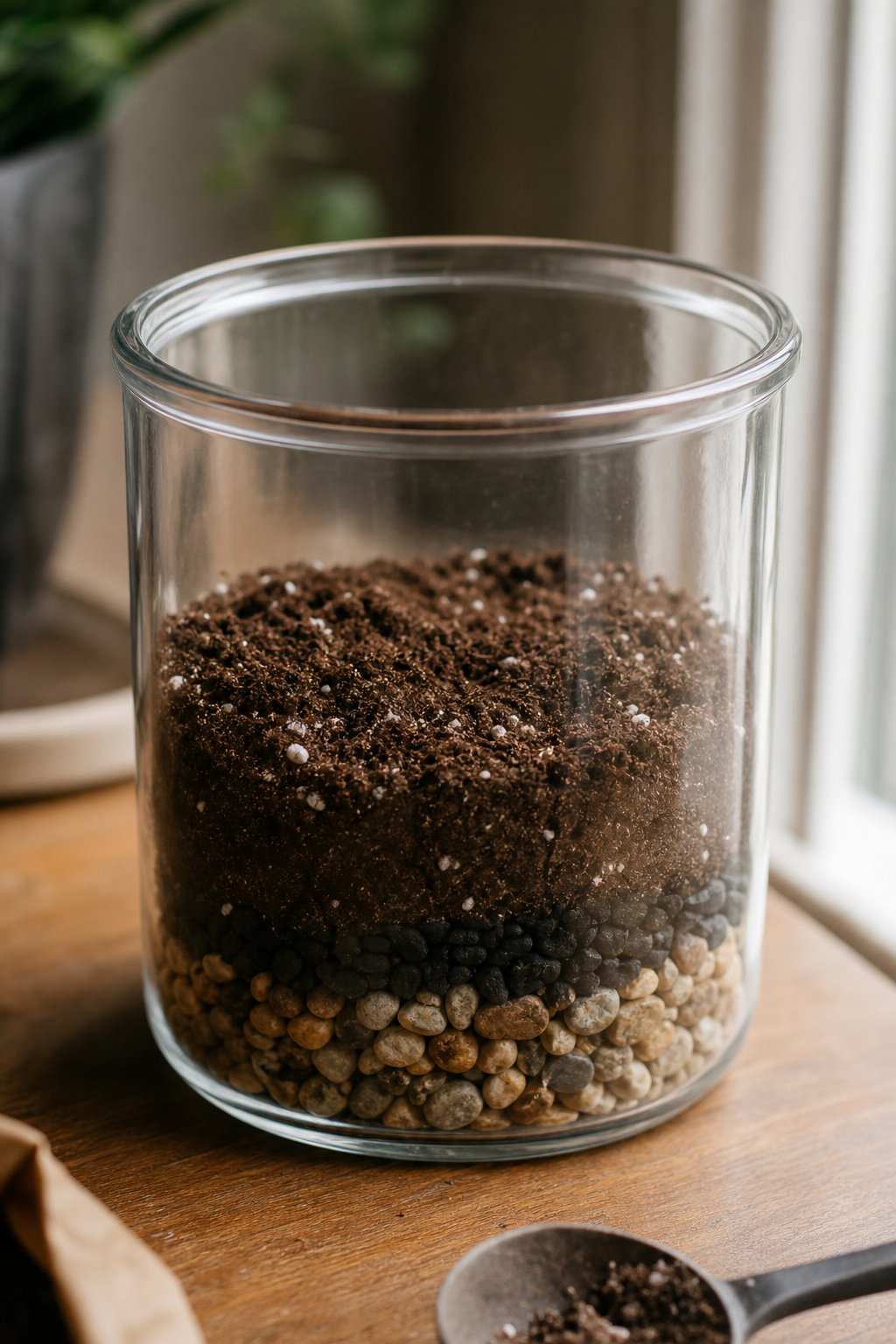
Most terrarium vessels don’t have drainage holes, which means the layering underneath the soil is doing the job a drainage hole would normally do.
Start with an inch or two of small stones or gravel at the bottom to give excess water somewhere to sit away from the roots. On top of that, a thin layer of activated charcoal keeps the water from souring and going stale, especially important in a closed terrarium where nothing evaporates out. Then a layer of potting soil suited to whatever you’re planting: a fast-draining cactus mix for succulents, a standard moisture-retentive mix for ferns and moss.
Skipping the charcoal layer is the most common shortcut I see, and it’s the one that causes the musty smell people associate with a terrarium going bad.
Water Far Less Than Feels Right
Overwatering kills more terrariums than anything else, and the smaller the vessel, the faster it happens.
For an open terrarium with succulents, water lightly and only when the soil is fully dry, which might be every couple of weeks depending on your home. For a closed terrarium, water sparingly at setup and then largely leave it alone. The sealed environment recycles its own moisture, so a well-built closed terrarium can go weeks or even months between waterings once it’s established.
If you’re worried about the fogged glass I mentioned earlier, don’t be. That’s condensation cycling normally. Crack the lid for a few hours to let it clear if it’s constant and heavy, but occasional morning fog that burns off is exactly what a healthy closed terrarium looks like.
What I use in the shop: a bag of activated charcoal for every closed terrarium I build. It’s inexpensive and it’s the single easiest step to skip, which is exactly why I never skip it.
Give It Light, But Not Direct Sun
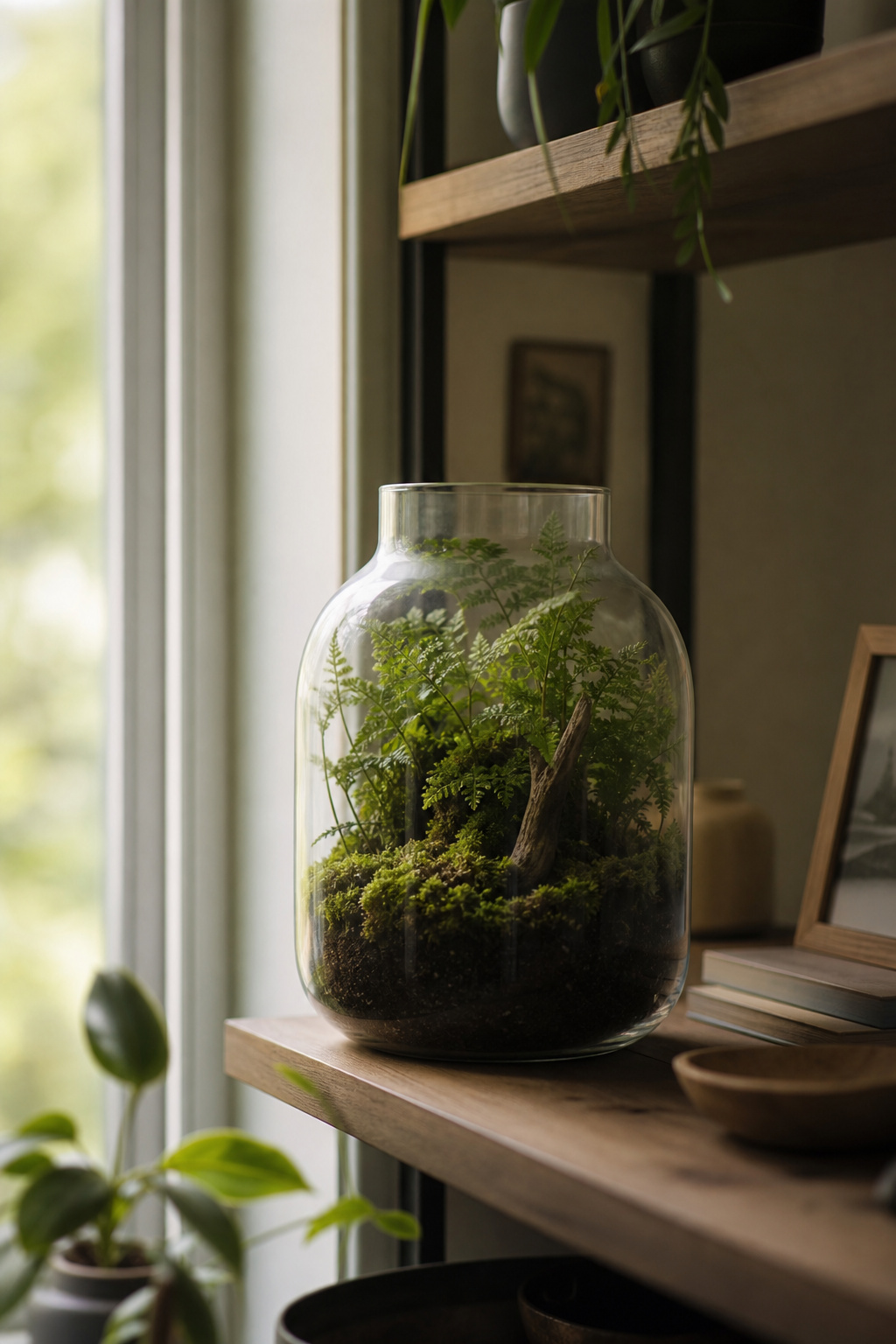
Bright, indirect light works for almost any terrarium. Direct sun through glass is the one thing to avoid, since a sealed glass vessel in direct sun turns into a small oven and will cook the plants inside it within a single afternoon.
A spot a few feet back from a bright window, or a north- or east-facing window directly, tends to work well. If your terrarium’s growth starts leaning hard toward one side, that’s your plants asking for more light, not less.
Add Moss and Miniature Accents Last
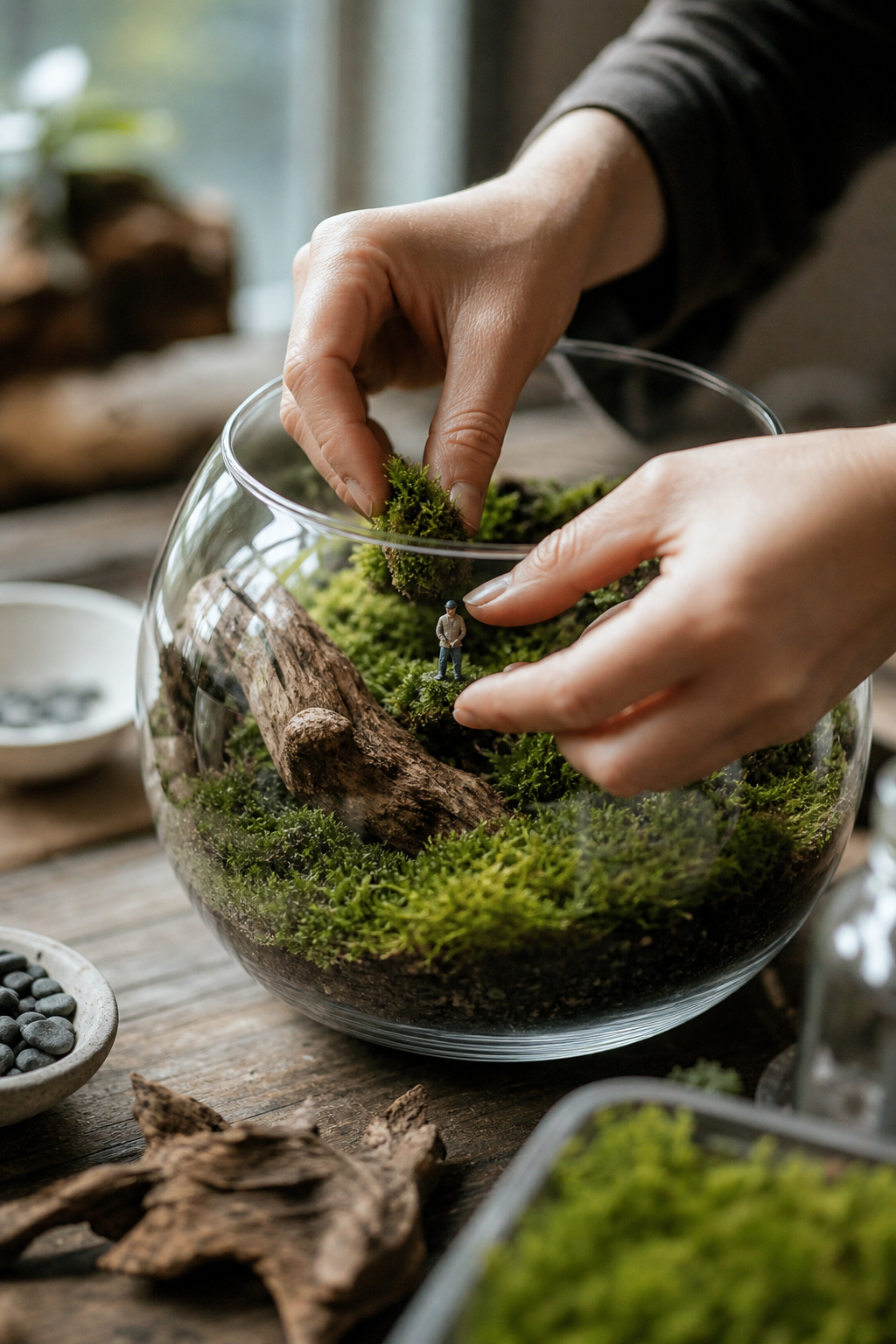
Once the plants are in, moss is where the terrarium starts to look finished. It covers bare soil, adds texture, and it’s forgiving of the same humid conditions that suit ferns in a closed terrarium.
If you like working with moss, it’s worth trying kokedama next, a Japanese technique that wraps a plant’s whole root ball in a moss-covered ball instead of a container. It’s a different look from a terrarium but uses a lot of the same instincts.
Small figurines, stones, or driftwood pieces finish things off, and this is where a terrarium can turn into a full miniature garden if you want to take it further. I go into scaling accessories properly and choosing the right miniature plants in our guide to miniature and fairy gardens.
Frequently Asked Questions
What’s the difference between an open and closed terrarium?
An open terrarium has no lid and allows airflow, suiting succulents, cacti, and air plants that don’t want constant moisture. A closed terrarium is sealed and creates its own humid microclimate, suiting ferns, moss, and other humidity-loving plants. Using the wrong plant type in either setup is the most common reason terrariums fail.
Why is my closed terrarium foggy?
Fog inside a closed terrarium is condensation from the water cycle happening inside the sealed glass, and it usually means the terrarium is working correctly. If the fog is constant and heavy rather than clearing periodically, crack the lid for a few hours to let some moisture escape and rebalance the humidity.
How often do I need to water a terrarium?
Far less than most people expect. Open succulent terrariums need light watering roughly every two weeks, only when the soil is fully dry. Closed terrariums, once established, can go weeks or months between waterings since the sealed environment recycles its own moisture. Overwatering is the most common way people kill a terrarium.
Do terrariums need drainage holes?
No, and most terrarium vessels don’t have any. Instead, a base layer of stones or gravel followed by activated charcoal does the job a drainage hole would normally do, giving excess water somewhere to collect away from the plant roots and keeping it from going stagnant.
Why does my terrarium smell musty?
A musty smell usually means stagnant water sitting in the base layer, often because the activated charcoal layer was skipped during setup. If it’s an established terrarium, cut back on watering and consider adding a thin layer of charcoal on top of the soil to help absorb odor going forward.
Can I put a terrarium in direct sunlight?
No, this is one of the more common mistakes. A closed glass terrarium in direct sun heats up quickly and can cook the plants inside within hours. Bright, indirect light is what almost every terrarium plant actually wants, regardless of whether it’s an open or closed setup.
Closing Thoughts
Terrariums reward restraint more than almost any other plant project I work with. Pick the right type for your plants, layer the base properly, and then leave it alone more than your instincts will tell you to.
Get that right, and a terrarium is one of the lowest-maintenance things you can grow.
Are you leaning open with succulents, or closed with moss and ferns? Tell me in the comments. I read every one.
Til next time,