Disclosure: This post may contain affiliate links. If you click and buy, we may earn a commission at no extra cost to you. As an Amazon Associate, we earn from qualifying purchases.
Last Updated: May 30, 2026
A customer came in last fall carrying a fiddle leaf fig in a terra cotta pot, looking like she’d just lost a pet. The leaves were brown around the edges, a few had dropped, and she was convinced she’d killed it. I looked it over and asked one question: “Did you move it recently?”
She had. Twice. In the same week.
That’s usually the whole story with fiddle leaf figs. They’re not as fragile as their reputation suggests. They just hate change. Give them a stable spot with good light and a consistent watering rhythm, and they’ll reward you with some of the most dramatic foliage you can grow indoors.
We sell fiddle leaf figs at the shop from time to time, and I’ve answered enough follow-up calls about drooping leaves and brown spots to know where most people go wrong. Here’s what actually works.
Understand What This Plant Is Before You Bring It Home
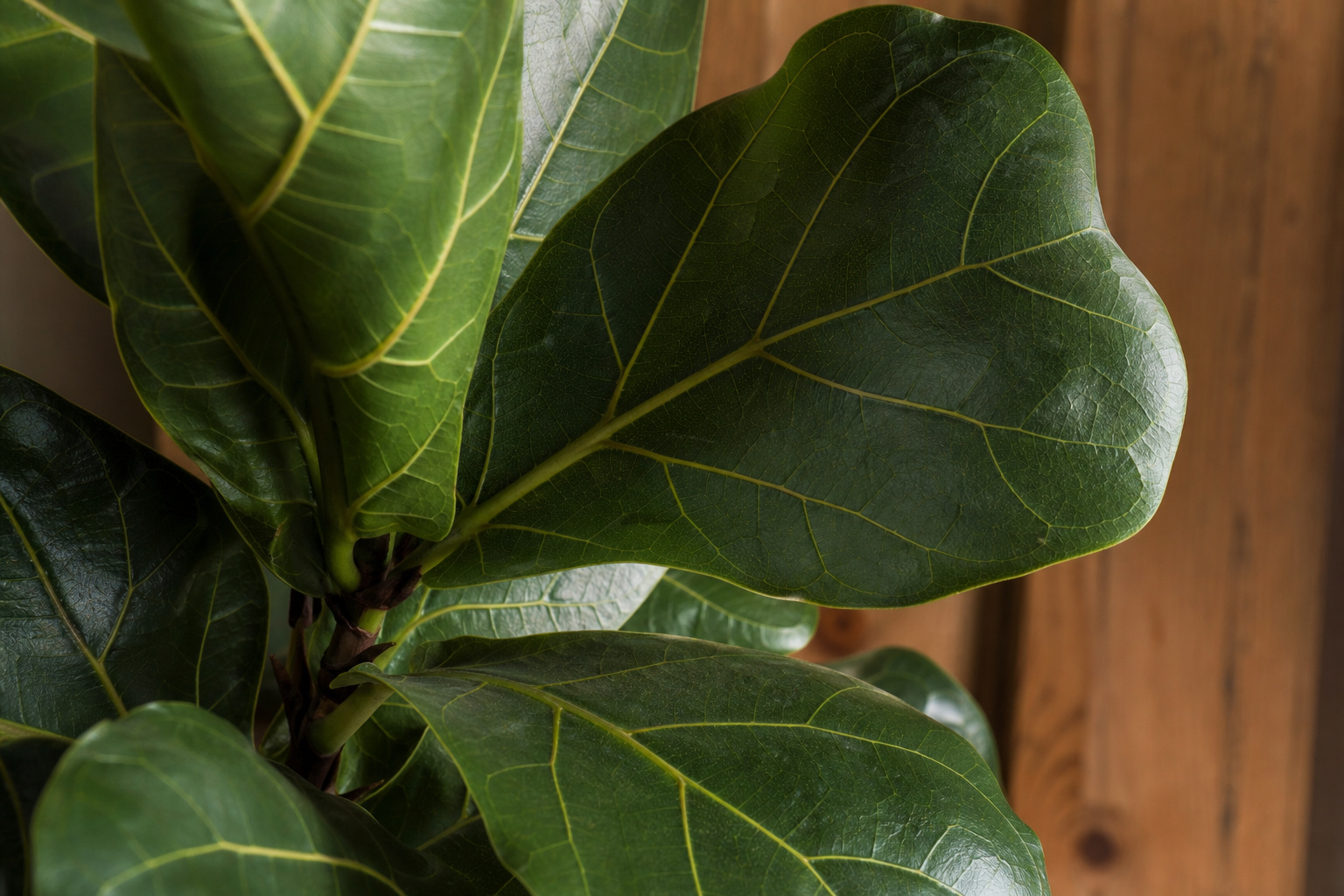
The fiddle leaf fig (Ficus lyrata) is native to western Africa’s tropical rainforests, where it grows as an understory and canopy tree, sometimes reaching 40 feet or more. Indoors, you’re looking at 6 to 10 feet under good conditions, though most people keep them pruned shorter than that.
The leaves are large, dark green, and violin-shaped, hence the name. They’re glossy and stiff, and each one can span 12 inches long and 8 inches wide at full size. New leaves emerge from a tight protective sheath and unfurl slowly, which is one of the more satisfying things to watch happen on a windowsill.
Growth is slow. Don’t expect dramatic size changes in the first year. But if you get the conditions right, you’ll see consistent new leaves and a plant that keeps getting better-looking with age.
Pick the Right Spot — and Then Leave It There
This is the single most important thing I tell people. Fiddle leaf figs are sensitive to being moved. Every time you relocate the plant, it has to acclimate all over again — and that stress often shows up as leaf drop or browning within a week or two.
Bright, indirect light is what you’re after. A spot near a large east-facing window is ideal — you get gentle morning light without the afternoon intensity that can scorch the leaves. South or west windows can work too, but filter them with a sheer curtain during peak summer hours.
Keep the plant away from heating and cooling vents, exterior doors, and drafty windows. Temperature swings are the second-fastest way to trigger leaf drop. These plants want consistency in the 60–75°F range.
Once you find a spot that works, commit to it. Rotate the pot a quarter turn every month or so to encourage even growth — that’s fine. But don’t haul it from room to room looking for the perfect location. Pick a spot with good light, keep it stable, and let the plant settle in.
Water Consistently, Not Generously
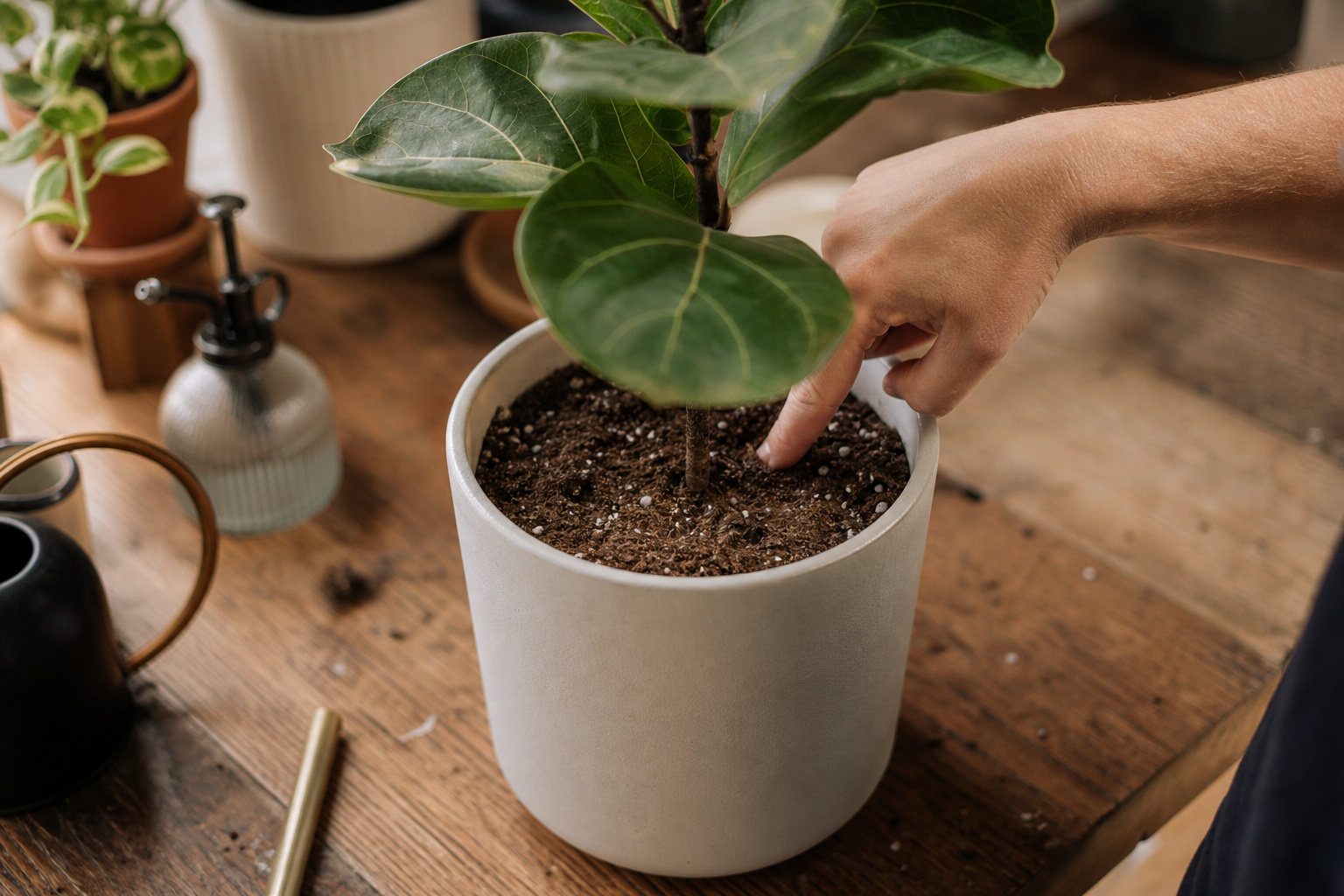
Overwatering kills more fiddle leaf figs than anything else. The roots are susceptible to rot, and a waterlogged pot is a fast path to a plant that can’t recover.
The rule I give everyone: water when the top 1–2 inches of soil feel dry. Stick your finger in. If it still feels damp, wait. For most homes, that shakes out to about once a week in spring and summer, and every 10 days or so in fall and winter when growth slows.
When you water, water thoroughly enough that it drains out the bottom of the pot. Then empty the saucer so the roots aren’t sitting in standing water. Room-temperature water is better than cold; cold water can shock the roots.
Here’s a rough guide by plant size:
- Small plant (1–2 feet): about 1 cup per watering
- Medium plant (3–5 feet): 2–3 cups
- Large plant (6+ feet): 3–4 cups, or water until it drains freely
Adjust based on your pot size, drainage, and how warm and bright the plant’s spot is. These are starting points, not hard rules.
Keep the Humidity Up
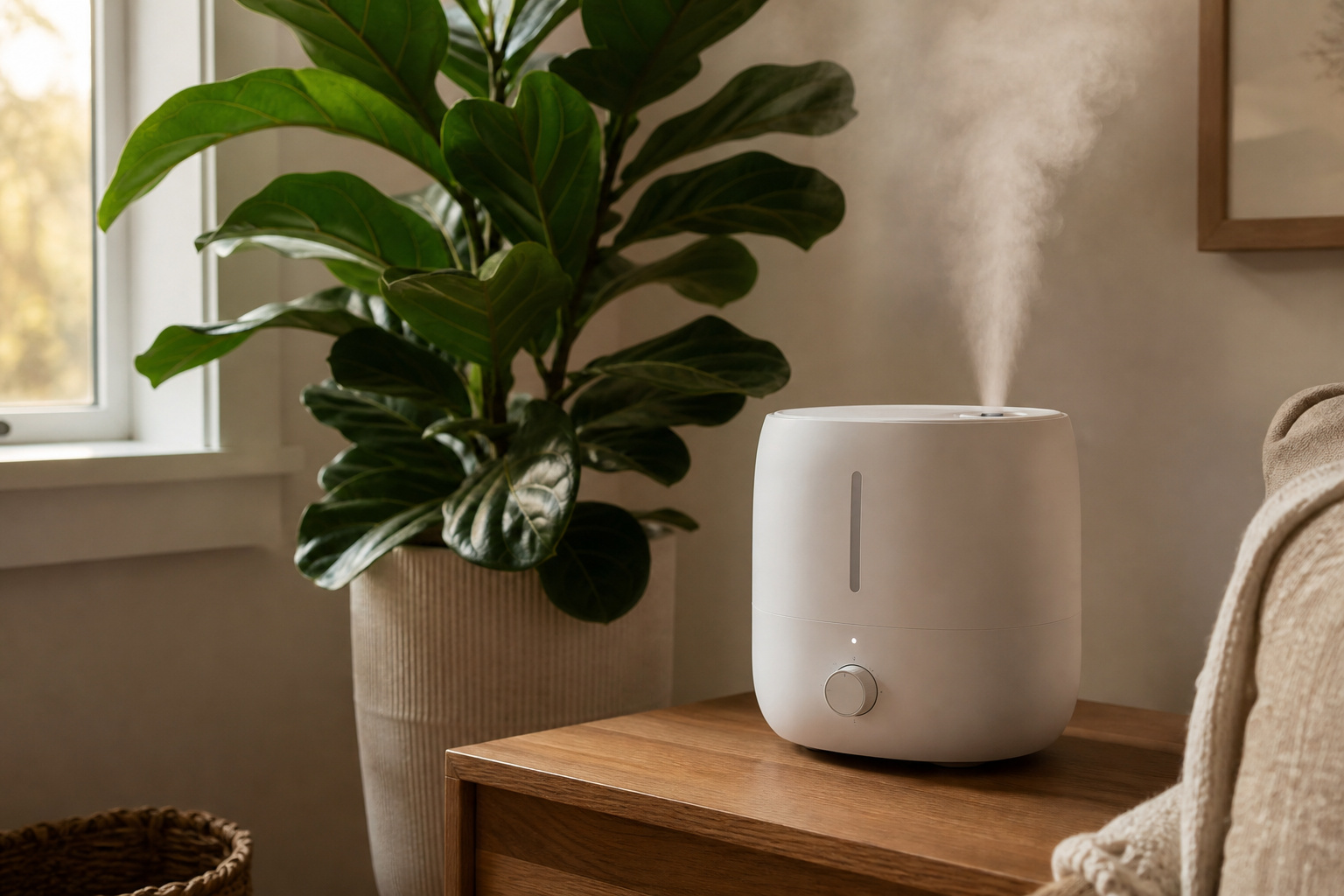
Fiddle leaf figs prefer humidity in the 30–65% range. That’s not hard to hit in most homes during summer, but winter heating can drop indoor humidity well below that — and you’ll see it in the leaves. Brown, crispy edges are a common sign.
A few ways to boost humidity around the plant:
- Pebble tray: Set the pot on a shallow tray filled with pebbles and water. As the water evaporates, it raises the local humidity around the plant.
- Room humidifier: The most consistent option, especially in dry climates or heated homes.
- Grouping plants: Plants transpire moisture, so clustering them together creates a slightly more humid microclimate.
Misting the leaves occasionally is fine, but don’t go overboard. Too much leaf moisture without adequate airflow can invite fungal problems. A light mist every few days is plenty.
What I use in the shop: For any plant that needs consistent humidity, I reach for a small ultrasonic humidifier. They’re quiet, low-maintenance, and make a real difference in dry months.
Get the Soil and Fertilizer Right
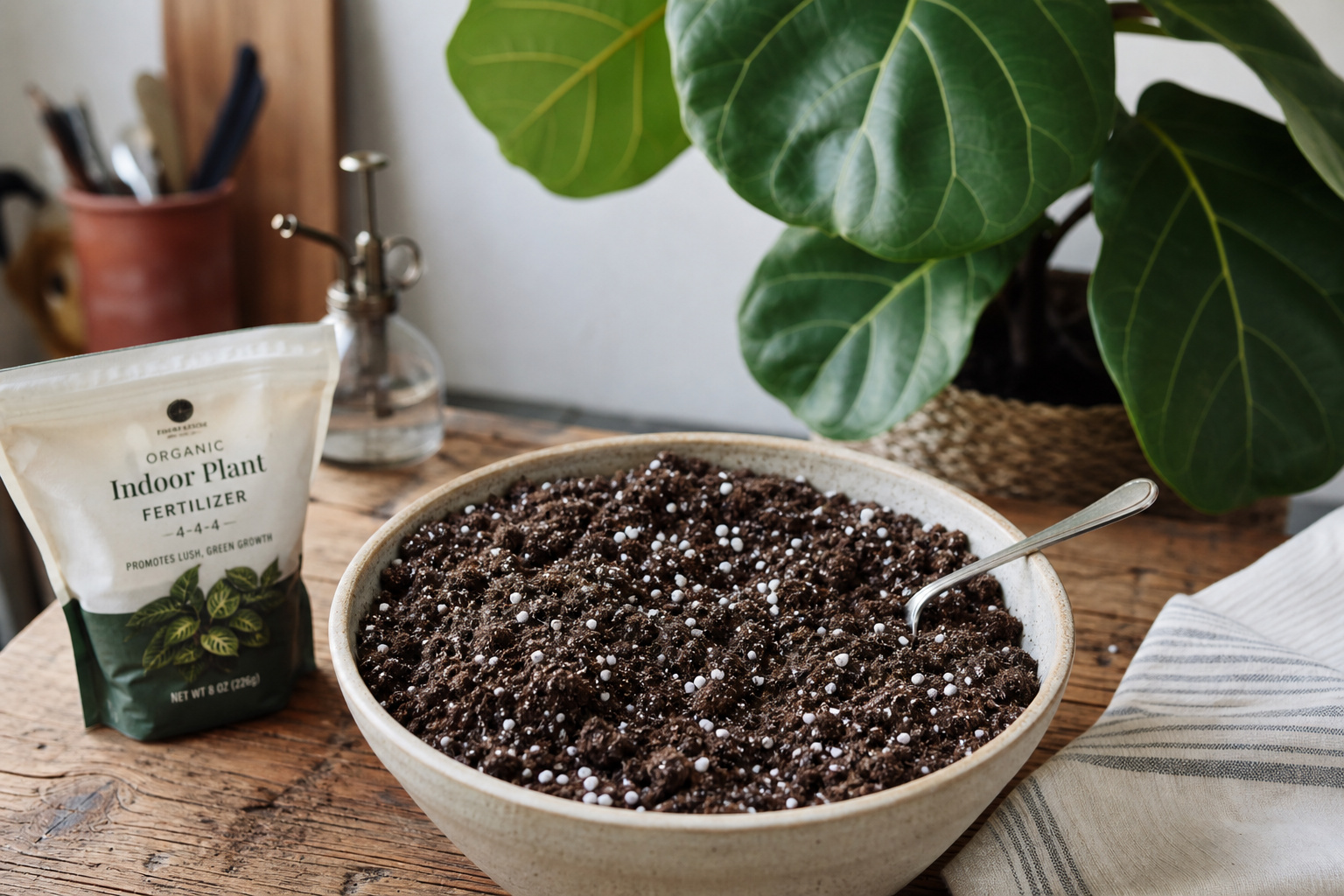
Fiddle leaf figs want a well-draining potting mix. Heavy, dense soil holds too much moisture and creates root rot conditions that are hard to recover from. A mix of standard potting soil with added perlite works well — roughly two parts soil to one part perlite.
Adding a small amount of horticultural charcoal helps keep the mix fresh and resists fungal buildup. It’s not required, but it’s a nice addition if you’re repotting anyway.
For fertilizing: feed during the growing season (spring and summer) every 4–6 weeks with a balanced, water-soluble fertilizer diluted to half-strength. Back off in fall and winter. The plant isn’t actively growing during those months, and fertilizing a dormant plant can cause more harm than good.
Watch for yellowing leaves or slow growth during the growing season — those can be signs of nutrient deficiency. A balanced fertilizer, applied consistently, usually fixes it within a few weeks.
What I use in the shop: Fiddle leaf fig-specific fertilizers are widely available and take the guesswork out of ratios. They’re formulated with the higher nitrogen these plants prefer during active growth.
Diagnose Problems Before They Get Worse
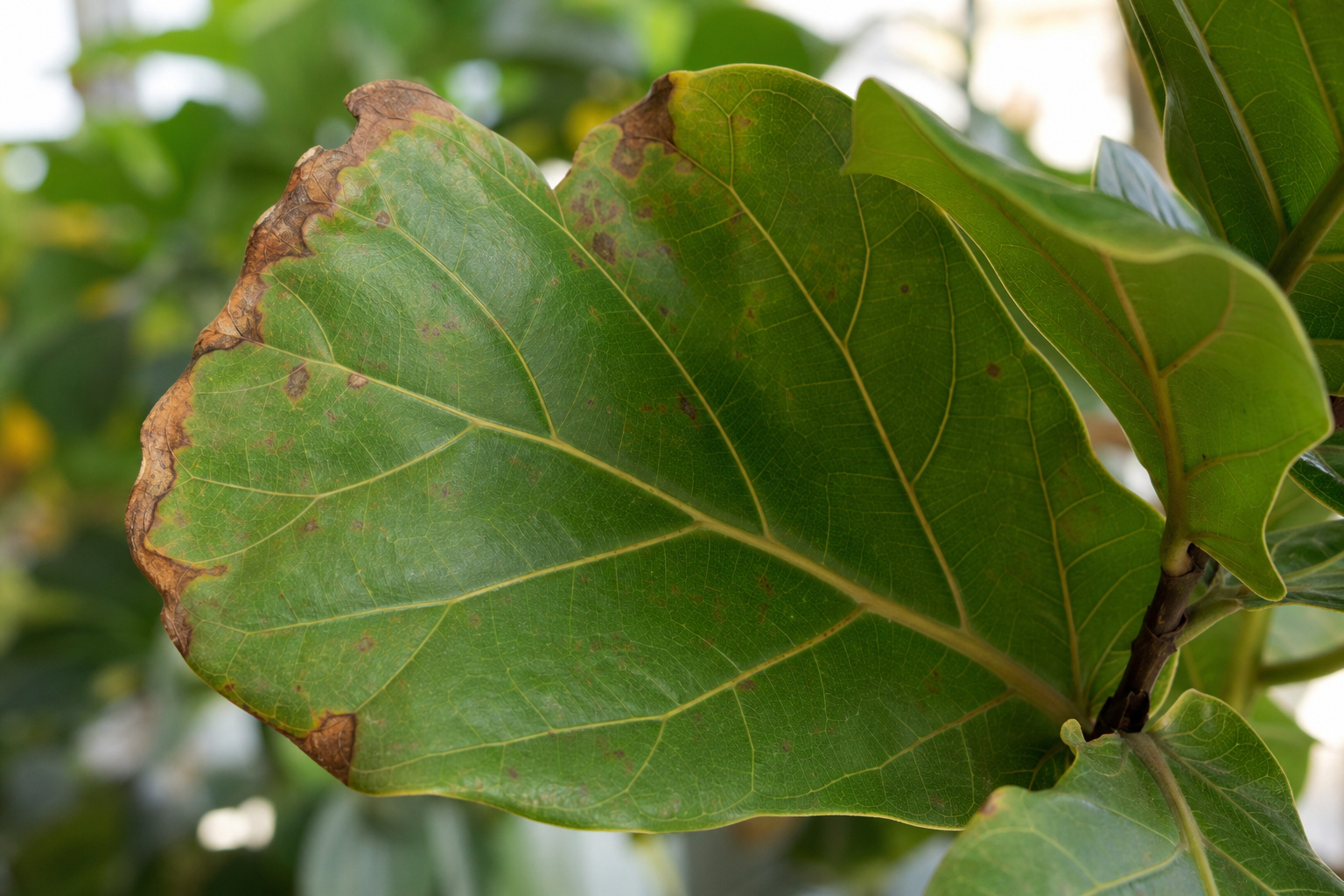
Most fiddle leaf fig problems trace back to one of four causes: overwatering, underwatering, low light, or pests. Here’s how to read the symptoms:
Brown spots in the center of leaves usually mean root rot from overwatering. Check the soil. If it’s soggy, let it dry out fully before watering again, and consider repotting into a fresh, well-draining mix if the roots look dark and mushy.
Brown, dry edges typically point to low humidity, underwatering, or too much direct sun. Work through those variables one at a time.
Drooping or wilting leaves are often a watering signal. Check the soil. If it’s dry, water. If it’s wet, ease off and make sure drainage is working. Drooping in a recently moved plant is almost always just stress from the relocation.
Yellowing leaves can mean overwatering, a nutrient gap, or simply older leaves cycling off. One or two yellowing lower leaves at a time is normal. If it’s happening throughout the plant, look at your watering and fertilizing routine.
For pests, spider mites, mealybugs, scale insects, and fungus gnats are the usual suspects. If you see fine webbing, sticky residue, or white cottony clusters on the leaves or stems, isolate the plant immediately. Wipe the leaves down with a damp cloth to remove what you can see, then treat with neem oil or insecticidal soap. Repeat applications over several weeks until you’re sure the infestation is cleared.
Trim affected leaves with clean, sharp scissors if the damage is severe. Older leaves yellowing and dropping on their own is normal and not a sign of a problem.
Style It Like a Pro
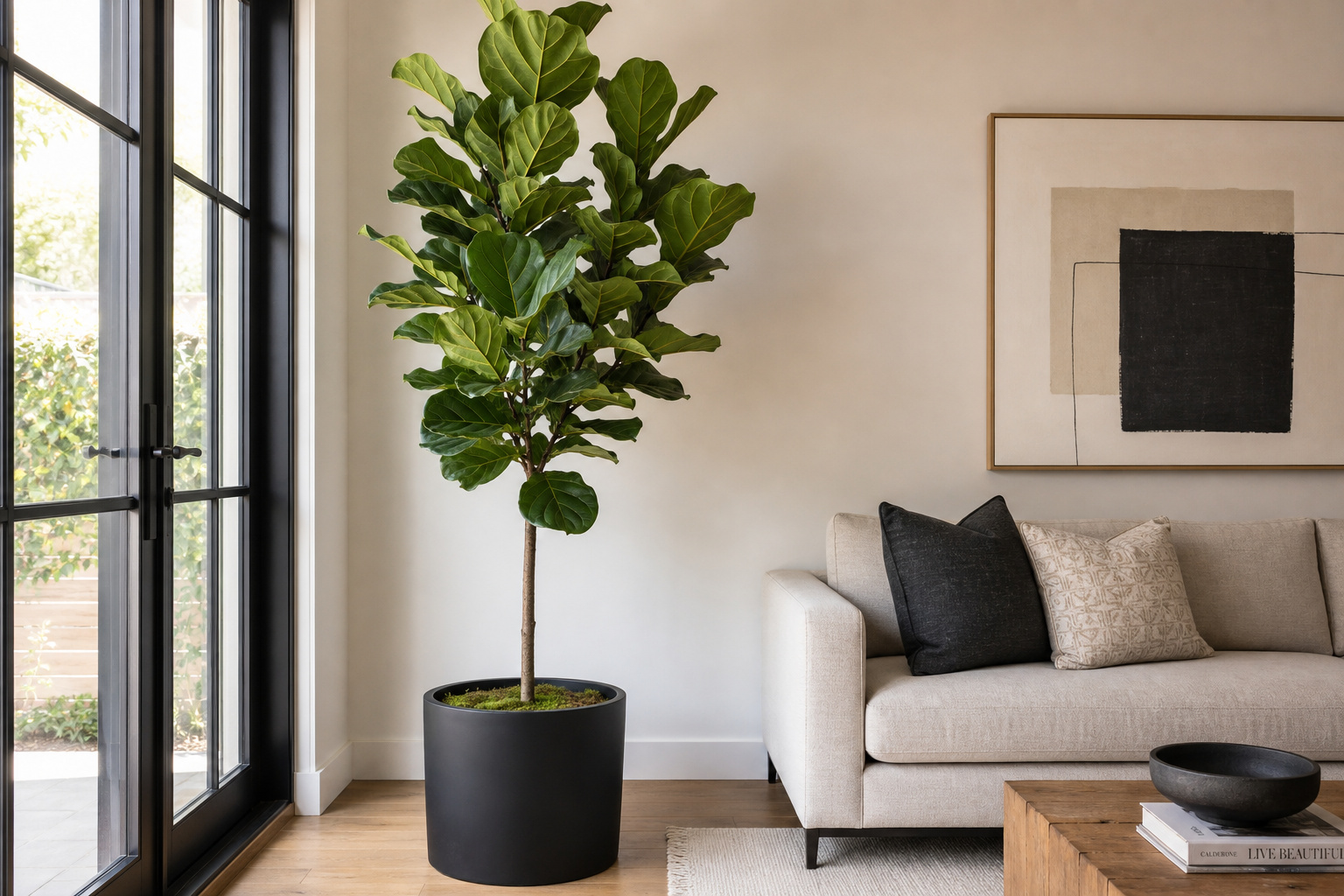
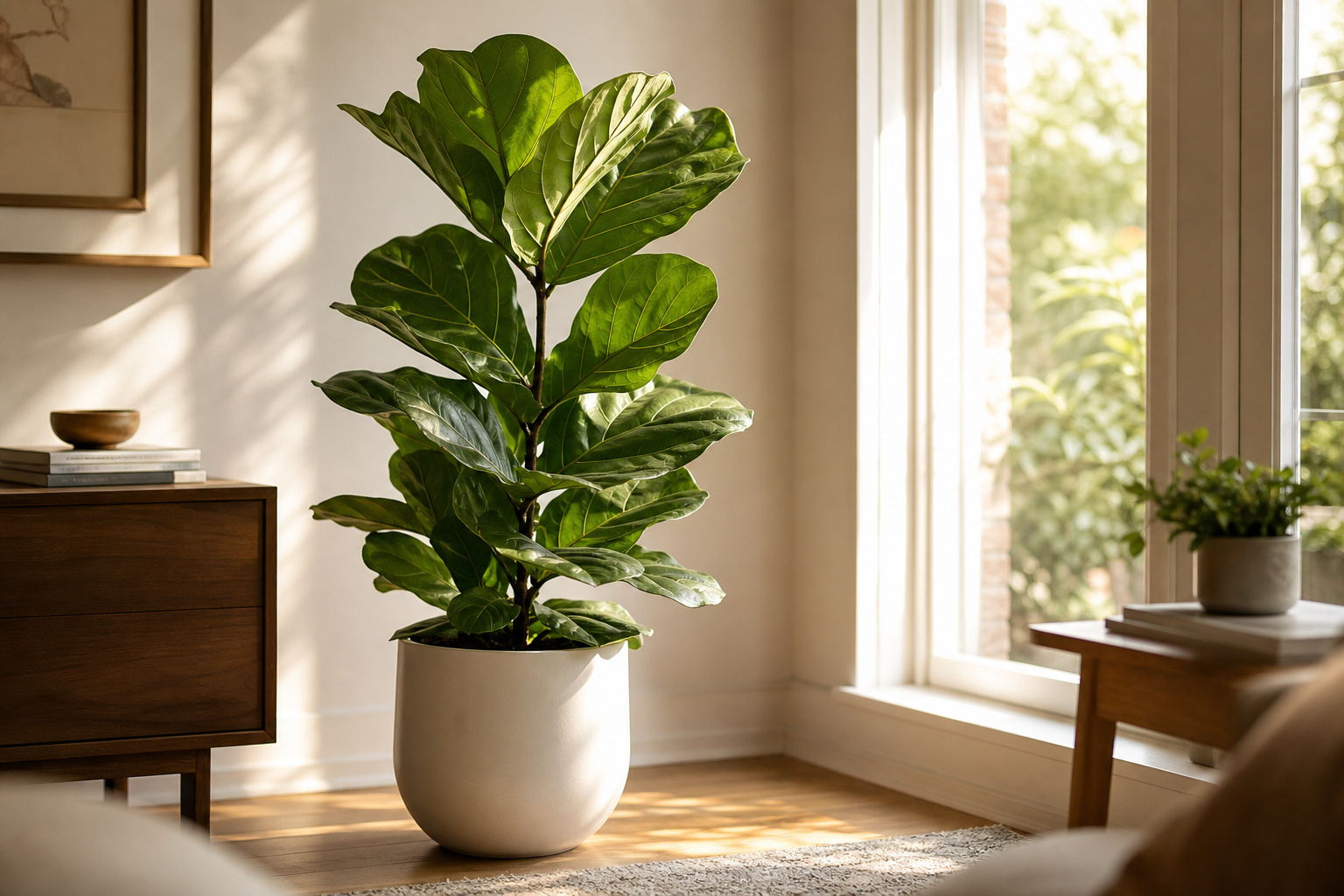
The fiddle leaf fig became a design darling for good reason. A healthy specimen in the right spot carries a room. The tall, slender trunk and large canopy of leaves give it a sculptural presence that most plants can’t match.
Here’s what I’d do: position it in a corner with good light, give it a pot that’s proportional to the size of the plant. not too big, not too small, and let it be the focal point rather than one plant in a crowded cluster. It earns that space when it’s healthy.
Container choice matters. A clean, modern planter in a neutral tone (white, black, warm terracotta) tends to work well because the plant’s leaf shape does all the visual work. Avoid overly decorative pots that compete with the foliage.
If you want to shape the plant, prune in late spring or early summer. Cutting above a leaf node encourages branching, which gives you a bushier, more tree-like silhouette over time. Wear gloves. Fiddle leaf figs produce a milky white sap that can irritate skin.
If you’re building out a plant collection and want a different indoor option that’s a bit more forgiving, my jade plant care guide and aloe vera care guide are worth a look. Both are low-maintenance and pair well visually with taller statement plants like this one.
Frequently Asked Questions
Why is my fiddle leaf fig dropping leaves?
The most common cause is a recent move or environmental change. Fiddle leaf figs are sensitive to being relocated. Temperature swings, drafts, and overwatering can also trigger leaf drop. Give the plant a week or two to stabilize in a new spot before assuming something is wrong.
How do I know if I’m overwatering?
Check the soil before every watering. If the top 1–2 inches are still damp, wait. Brown spots in the center of leaves, and a musty smell from the soil are signs of too much water. Root rot is the main risk with overwatering, and it’s hard to reverse once it’s established.
Can a fiddle leaf fig recover from leaf drop?
Yes, in most cases. Once you identify and correct the stressor, whether that’s overwatering, low light, or pest damage, the plant will typically stabilize and push new growth. It won’t regrow the dropped leaves, but healthy new leaves will follow.
How fast does a fiddle leaf fig grow indoors?
Slowly. Under good conditions, you might see 1–2 feet of new growth per year. Growth is fastest in spring and summer and slows considerably in fall and winter. Consistent light, proper watering, and regular fertilizing during the growing season all contribute to better growth rates.
Do fiddle leaf figs need direct sunlight?
No, direct sun, especially afternoon sun, can scorch the leaves. Bright, indirect light is the goal. An east-facing window or a south/west window with a sheer curtain is ideal.
Is the fiddle leaf fig toxic to pets?
Yes. Fiddle leaf figs are toxic to dogs and cats. The sap and leaves can cause mouth irritation, drooling, and gastrointestinal upset if ingested. Keep the plant out of reach if you have pets in the house. The ASPCA toxic plant list is a good reference.
Closing Thoughts
The fiddle leaf fig has a reputation for being difficult, but most of the problems I’ve seen come down to a few consistent mistakes. Moving the plant too often, overwatering, or putting it somewhere with too little light. Get those three things right, and you’ll find it’s a lot more manageable than the internet makes it out to be.
Pick a good spot, stick to a watering routine, and let the plant do its thing. It’s not a plant that rewards fussing. It rewards consistency. Think of it like keeping cut flowers fresh. Proper conditions from the start, and you’ll have something that holds up and turns heads.
If you’ve got a fiddle leaf fig story, a recovery you’re proud of, a mistake that finally made sense, a spot that turned out to be perfect, drop it in the comments. I read every one.
Til next time,