Disclosure: This post may contain affiliate links. If you click and buy, we may earn a commission at no extra cost to you. As an Amazon Associate, we earn from qualifying purchases.
Last updated: May 24, 2026
The oldest jade plant I’ve ever seen in a customer’s home was 47 years old. It was a wedding gift to the customer’s mother in 1979, sat on a kitchen windowsill in Milwaukee for four decades, and by the time I saw it, it was the size of a small shrub with a trunk thicker than my wrist. The customer brought in a clipping for me to root because she was finally moving her mother into assisted living and wanted to preserve the plant.
That’s the thing about jade plants. They outlast almost everything else in the house. A jade you buy today for $12 at the garden center can still be on a shelf when your kids have kids of their own. They grow slowly, they ask for very little, and given the right setup they will absolutely refuse to die.
The flip side: most people kill them within the first year. The two reasons are always the same — too much water and the wrong kind of pot. Get those two right and the rest is almost automatic.
Here’s everything I tell customers when they buy one from the shop, plus what I’ve learned about shaping mature plants into the bonsai-style trees they want to become.
Know What You’re Working With
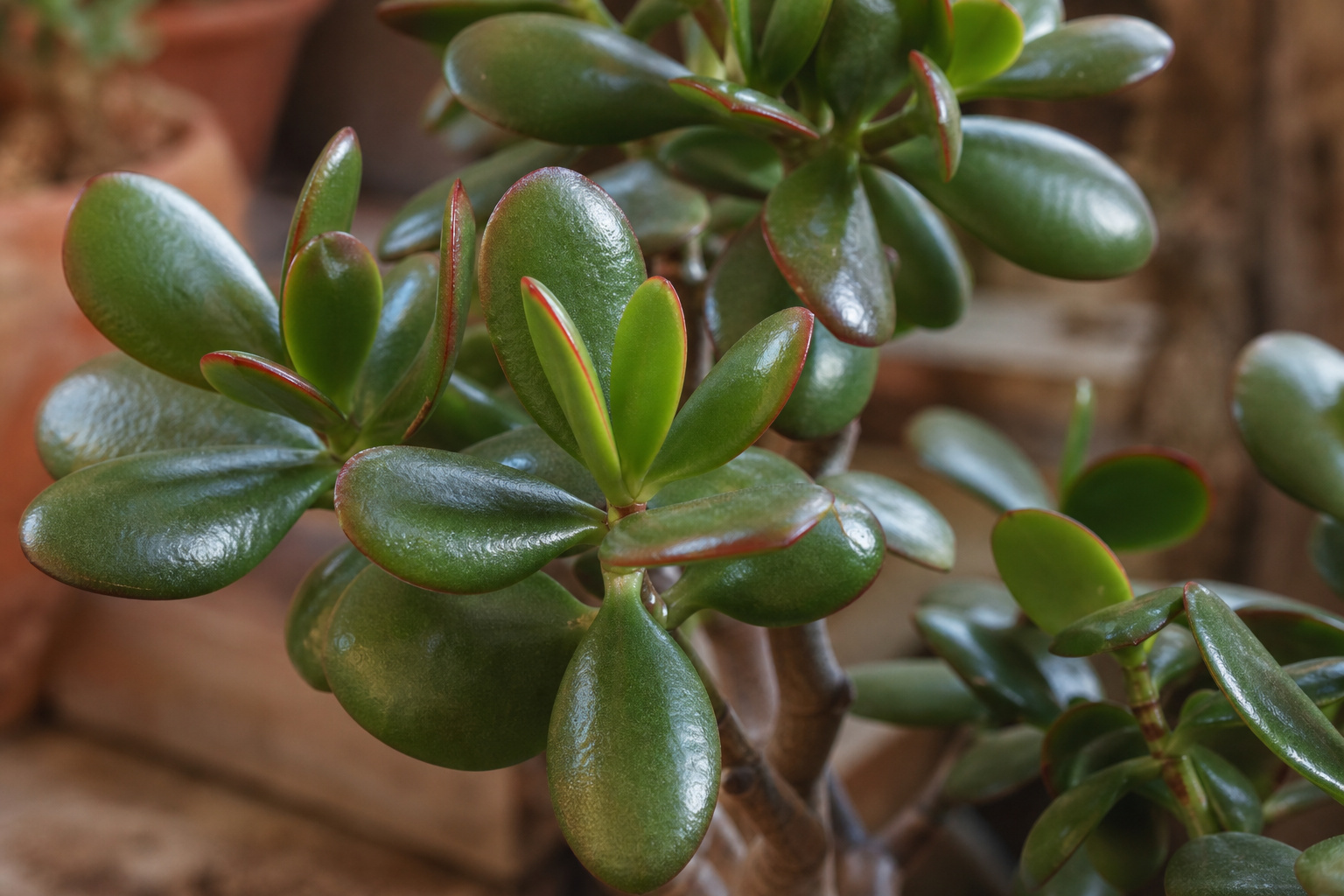
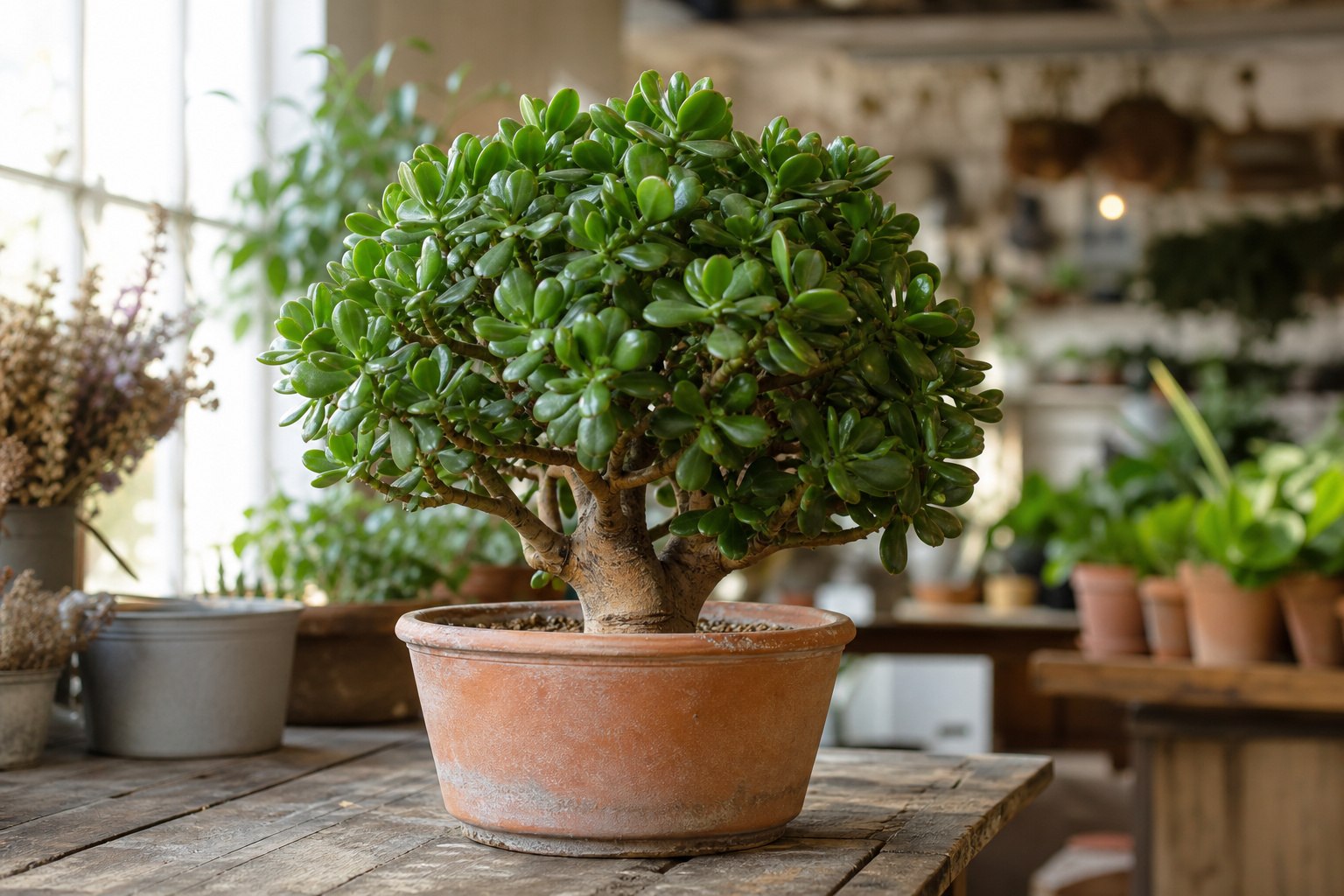
The jade plant (Crassula ovata) is a succulent native to South Africa. It’s part of the same family as the kalanchoe, which is why both plants share the same basic care rhythm — bright light, infrequent water, fast-draining soil. In its native climate it grows into a small tree four to six feet tall. Indoors it’ll usually max out around two to three feet over a couple of decades.
The leaves are the giveaway. Thick, oval, glossy, and almost waxy to the touch. That waxiness is the plant storing water against drought. When you pinch a leaf and it feels firm and plump, the plant is well hydrated. When it feels soft or starts to wrinkle, it’s thirsty. Jade tells you what it needs if you pay attention.
One more thing worth knowing up front: jade is toxic to dogs and cats if chewed. Not lethal, but it’ll cause vomiting and lethargy. If you have curious pets, take a look at indoor houseplants safe for pets for safer alternatives.
Give It the Right Light
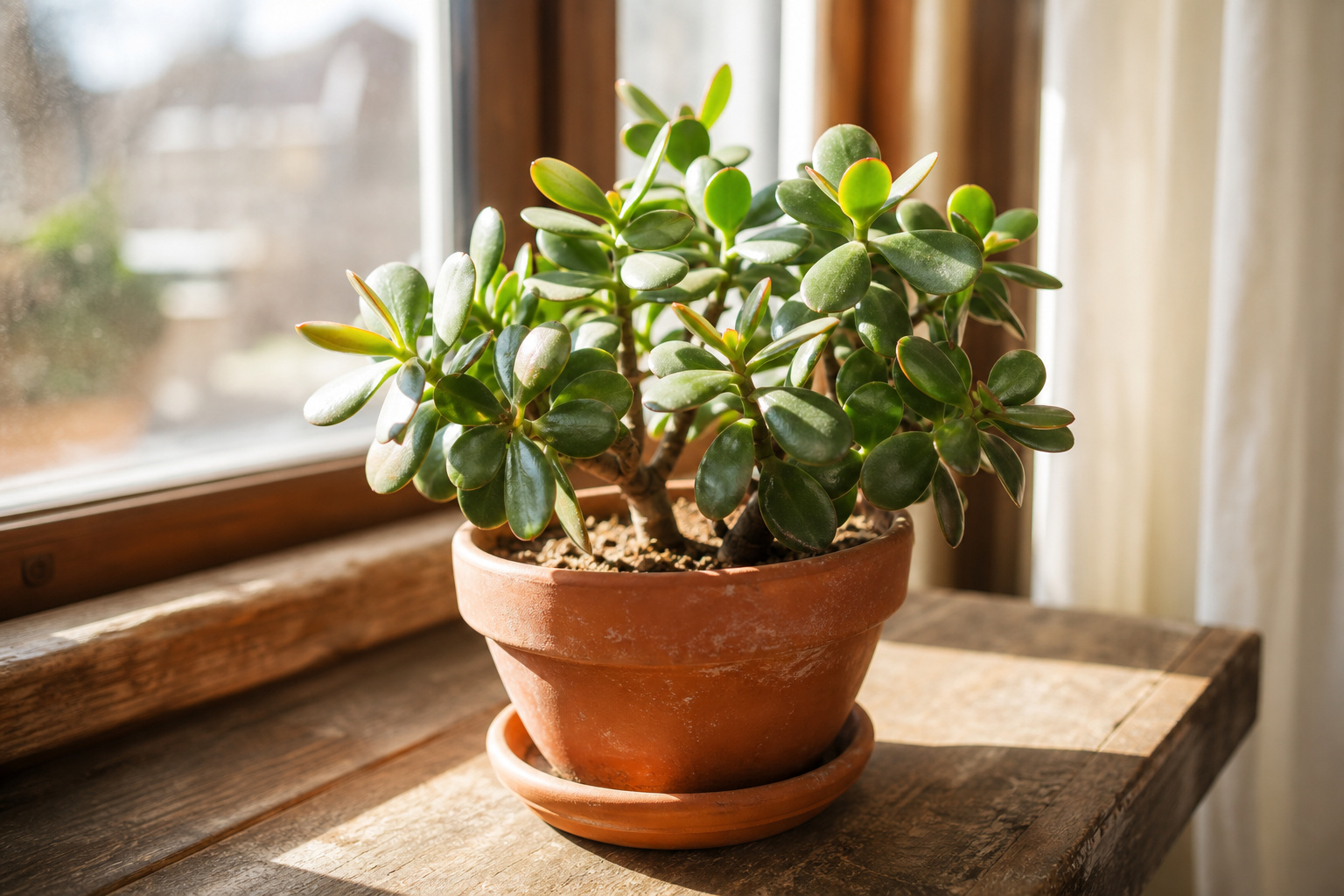
Jade plants want a lot of light. More than most houseplants, but less than full direct sun all day. A south or west-facing window is ideal — that’s where most jades I see in customer homes do best. East-facing works if it’s the brightest spot you’ve got. North-facing is a problem.
You can tell when a jade isn’t getting enough light. The stems stretch out and get leggy, the leaves grow smaller and farther apart, and the whole plant takes on a pale washed-out green. The fix is move it closer to a window. If you don’t have a bright window, a basic grow light running 10 to 12 hours a day will do the job — jades respond well to artificial light.
Outdoor summers are great for jades if you’ve got the option. I move my shop jade out onto a covered porch from late May to mid-September and the plant practically doubles in vigor over the season. The leaves get a red blush on the edges from the sun stress, which is harmless and honestly looks gorgeous. Just bring it back in before the first 40-degree night.
Water Less Than You Think
This is where almost everyone goes wrong. A jade plant in active growth (spring and summer) wants water every two to three weeks. In winter, when it’s basically dormant , every four to six weeks is plenty. Some of mine go almost two months in January without a drink and look perfectly content.
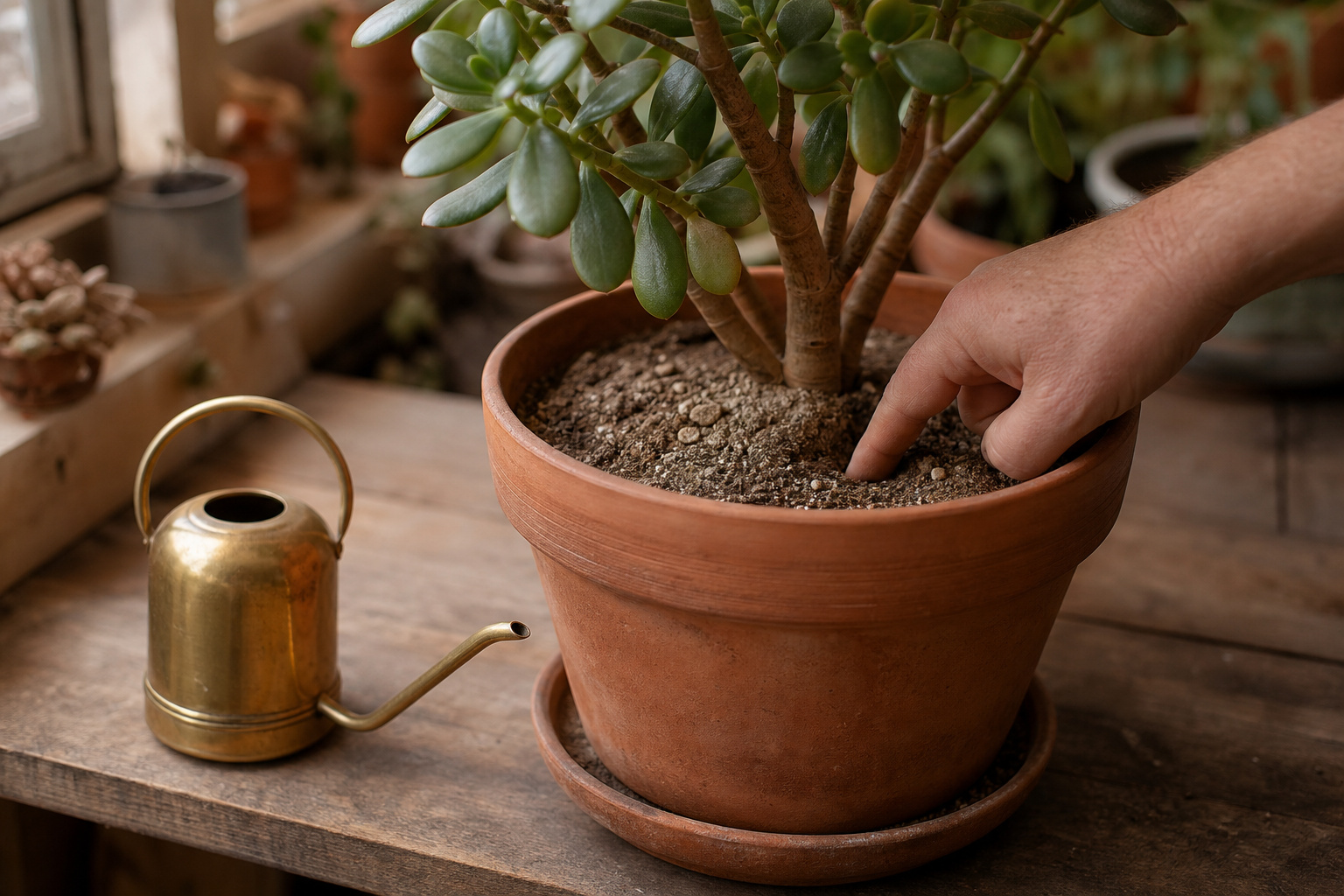
The actual rule isn’t a calendar, though. It’s the soil. Stick a finger an inch and a half down into the pot. If it’s bone dry, water deeply until water runs out of the drainage hole. If you feel any moisture at all, wait a few more days and check again. That’s it. No schedule beats checking.
When you do water, water all the way through. Half-measure watering, a little splash on top every few days, is worse than letting it stay dry. You want the whole root ball to drink and then dry out completely between drinks. That dry-wet-dry rhythm mimics the desert conditions that jades evolved in.
Signs you’re overwatering: mushy or translucent leaves, leaves dropping easily when you brush against the plant, a soft, spongy feel at the base of the stem, and black or brown patches on the lower trunk. Any of those means stop watering immediately and let the soil dry out for two to three weeks. In bad cases, you’ll need to repot into fresh dry soil to save the plant.
Pot It in Terra Cotta With Cactus Mix
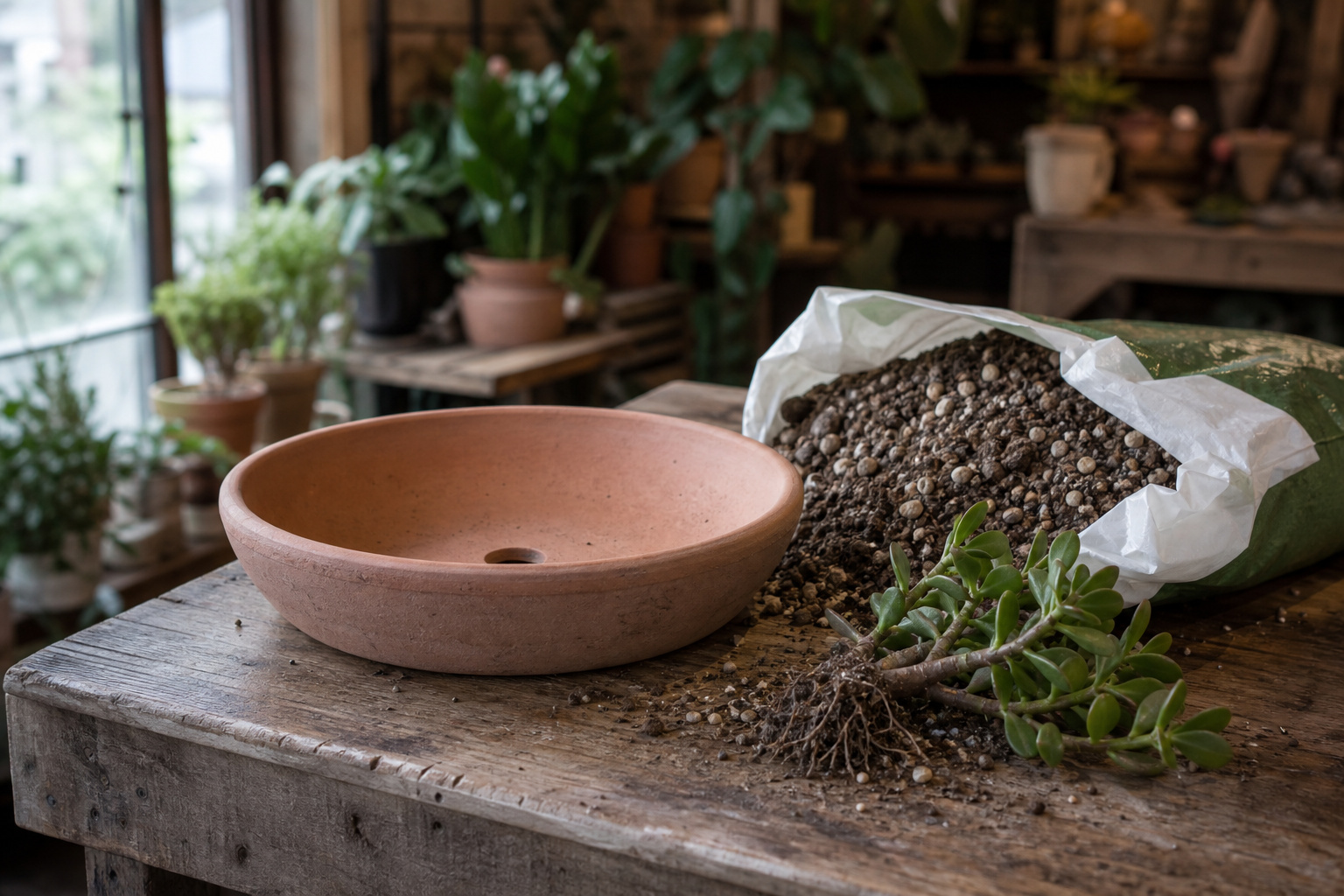
The pot matters more for jade than for almost any other houseplant. A few rules I follow without exception.
Use terra cotta, not glazed ceramic or plastic. The unglazed clay is porous and wicks moisture out of the soil between waterings, which is exactly what you want. A jade in a sealed plastic pot is fighting an uphill battle against root rot from day one.
Pick a wide, shallow pot rather than a tall, narrow one. Jade roots spread out, not down, and a top-heavy plant in a deep pot tips over every time you bump the table. A shallow bowl shape also dries out faster, which keeps the roots happy.
Drainage holes are non-negotiable. A pot without holes is a death sentence for jade plants. If you love a decorative pot that has no hole, use it as an outer pot and nest a plastic grow pot inside that you can lift out for watering.
For soil, use a cactus and succulent mix. Don’t use regular potting soil; it holds far too much water. If you can’t find cactus mix locally, you can amend regular potting soil with about a third coarse sand and a third perlite to get something close. Even better: add a layer of small gravel or pumice at the bottom of the pot for extra drainage.
Repot Slowly and Only When Needed
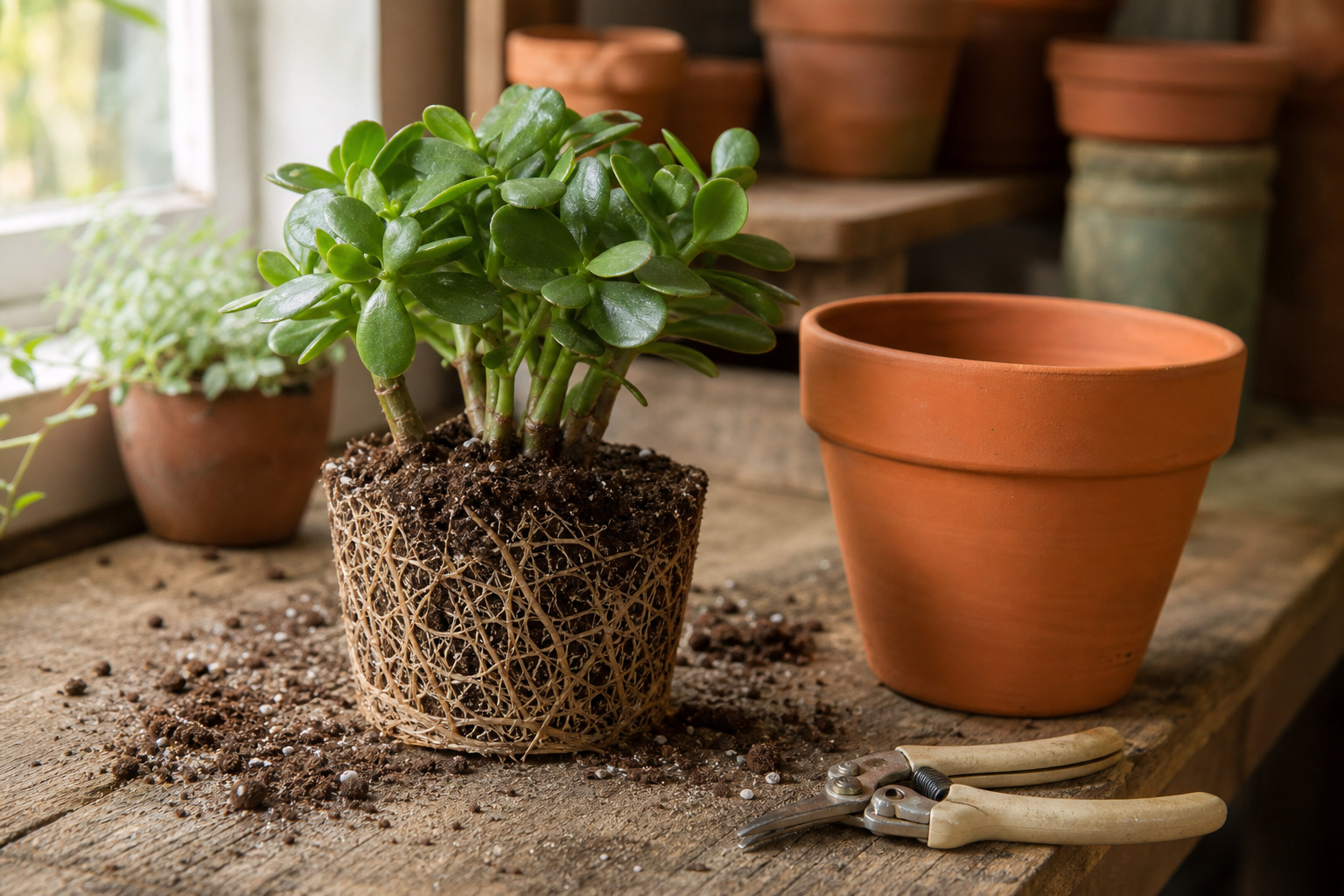
Jade plants don’t need to be repotted often. Every two to three years is plenty for a young plant. A mature jade can sit happily in the same pot for five years or longer. They actually prefer being slightly rootbound — too much soil around the roots holds moisture they don’t want.
The right time to repot is spring, just as growth picks up. Bump up one size only. Going from a 6-inch pot to an 8-inch is the typical move. A jade in a pot that’s too big will sulk and may rot. Smaller increments work better.
Here’s the move I use in the shop. Let the soil dry out completely first. Slide the plant out of the old pot and gently brush off as much loose soil as you can without disturbing the root ball. Inspect the roots. They should be firm and tan or white. Cut off any black, mushy, or rotting roots with clean shears. Set the plant in the new pot, fill with fresh cactus mix, and then — this part is important — do not water for a full week. Let the roots heal in dry soil before you reintroduce moisture.
Train It Like a Bonsai
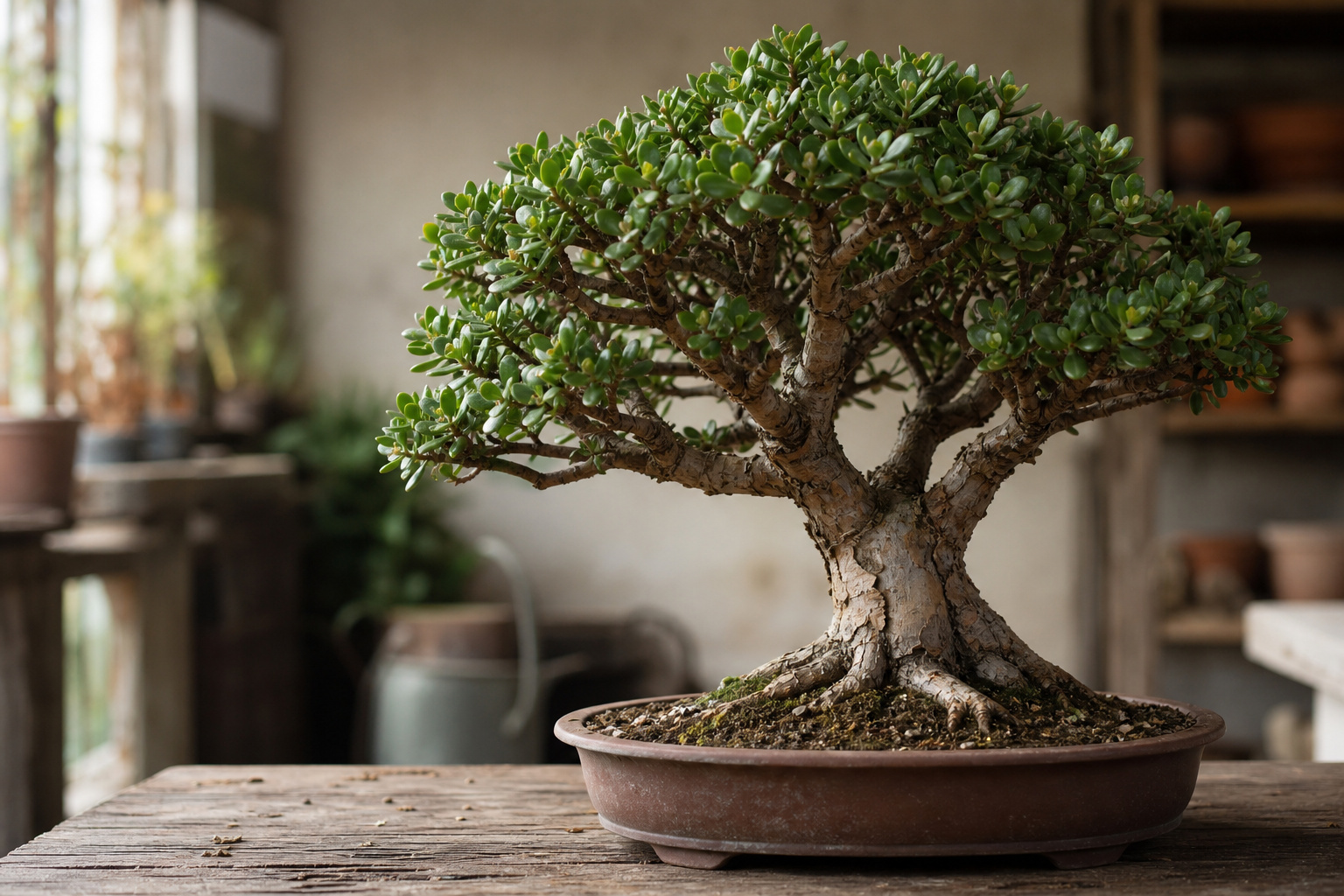
Here’s where it gets interesting. A jade plant left alone will grow into a leggy, lopsided bush. A jade plant pruned and shaped over a few years will turn into a miniature tree that looks like it belongs in a temple courtyard. The plant is naturally suited to bonsai-style training because the trunk thickens with age, the branches are set in place, and the leaves stay proportional to the canopy.
You don’t need wire or fancy tools. Jade responds to pruning more than to bending, so most of the shaping happens with a sharp pair of shears and patience.
Start with the trunk. Pick out the strongest central stem and gradually remove the lower side branches over the course of a year or two. This exposes the bare trunk and creates the classic tree silhouette. Don’t strip everything off at once — take one or two branches at a time and let the plant adjust.
Pinch and prune the canopy. When a branch reaches the length you want, pinch off the growing tip with your fingernails. The branch will respond by sending out two new shoots from the cut point, which is how you build the dense, rounded crown that jades are known for. Repeat this over multiple growing seasons, and the branching structure compounds.
Cut hard branches with shears. For thicker branches, the fingernail pinch won’t work. Use a clean, sharp pair of shears and cut just above a leaf node at a slight angle. The cut heals over in a few weeks, and new growth emerges from the leaves just below the cut.
Be patient with the trunk thickening. A jade trunk thickens slowly — maybe a quarter inch a year in good conditions. The customer’s 47-year-old plant I mentioned at the top had a trunk thicker than my wrist because nobody pruned it aggressively, and let it just keep adding wood season after season. You can speed thickening slightly by letting “sacrificial” lower branches grow long before cutting them. Those long branches feed the trunk before you remove them.
Don’t expect bonsai results in a year. Three to five years of consistent shaping is the minimum to start seeing the form. Ten years gets you something genuinely beautiful. That’s the deal with jade. It asks for time, not effort.
Propagate From Leaves or Cuttings
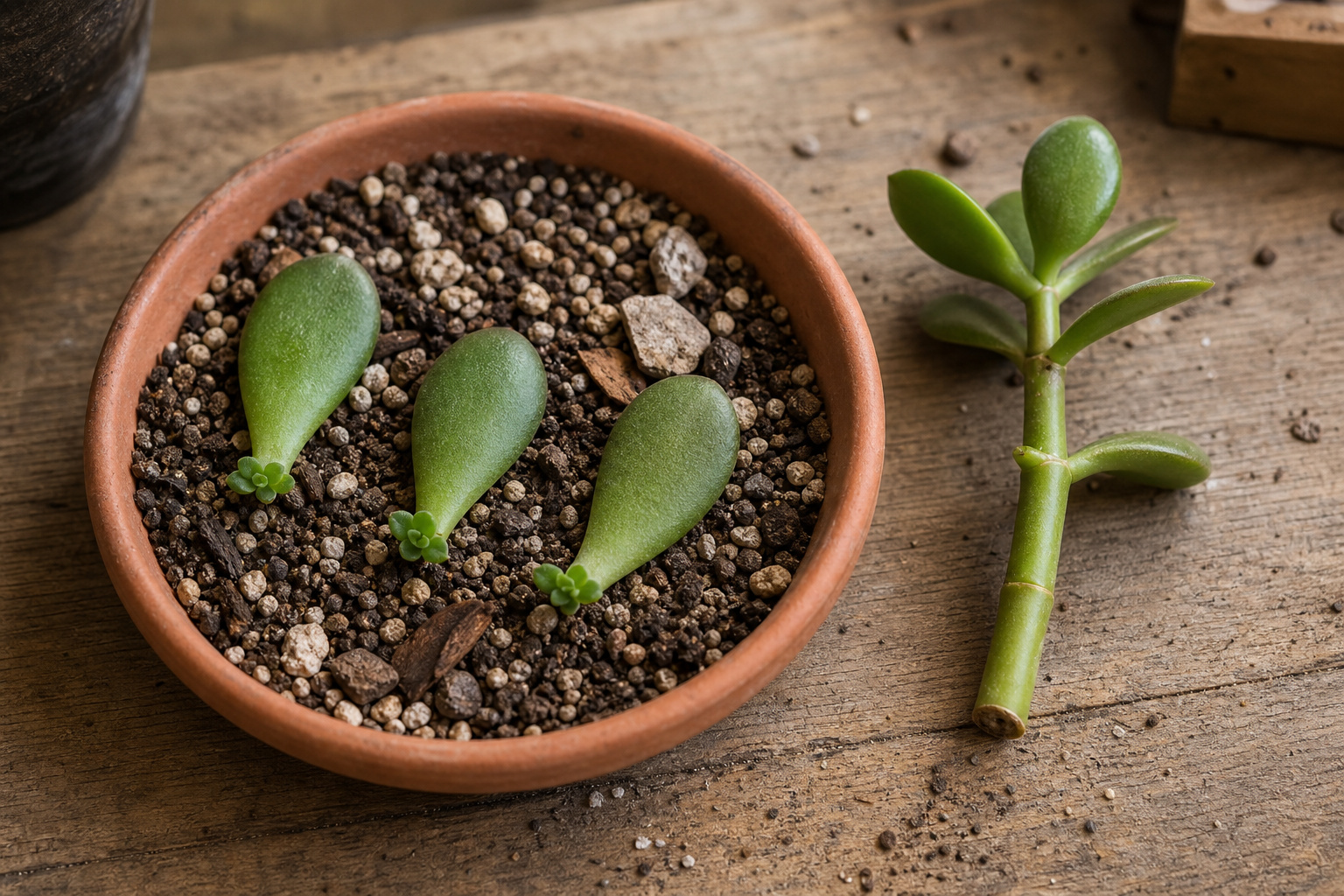
Jade is one of the easiest plants in the world to propagate. The customer with the 47-year-old plant — I rooted three cuttings from that one visit and gave her back fully established plants four months later. Here’s how.
From a leaf: Gently snap a healthy leaf off the plant where it meets the stem. The full base of the leaf needs to come away clean; a torn leaf won’t root. Let the leaf sit on a paper towel for two to three days until the cut end forms a dry callus. Then lay it flat on top of some dry cactus mix and ignore it. Mist lightly every few days. In about three to four weeks, a tiny rosette of new leaves will appear at the base. The original leaf eventually shrivels and falls away as the new plant takes over.
From a stem cutting: Cut a 3- to 4-inch length of healthy stem with clean shears. Strip the lower leaves off the bottom inch. Let the cutting callus for three to five days. That’s longer than leaf propagation because the cut is larger. Stick the calloused end an inch into dry cactus mix and don’t water for a week. After that, light watering every 10 days. Roots form in three to six weeks.
Spring and summer are the best times to propagate. Winter cuttings can work, but they take twice as long and fail more often.
What I Use in the Shop
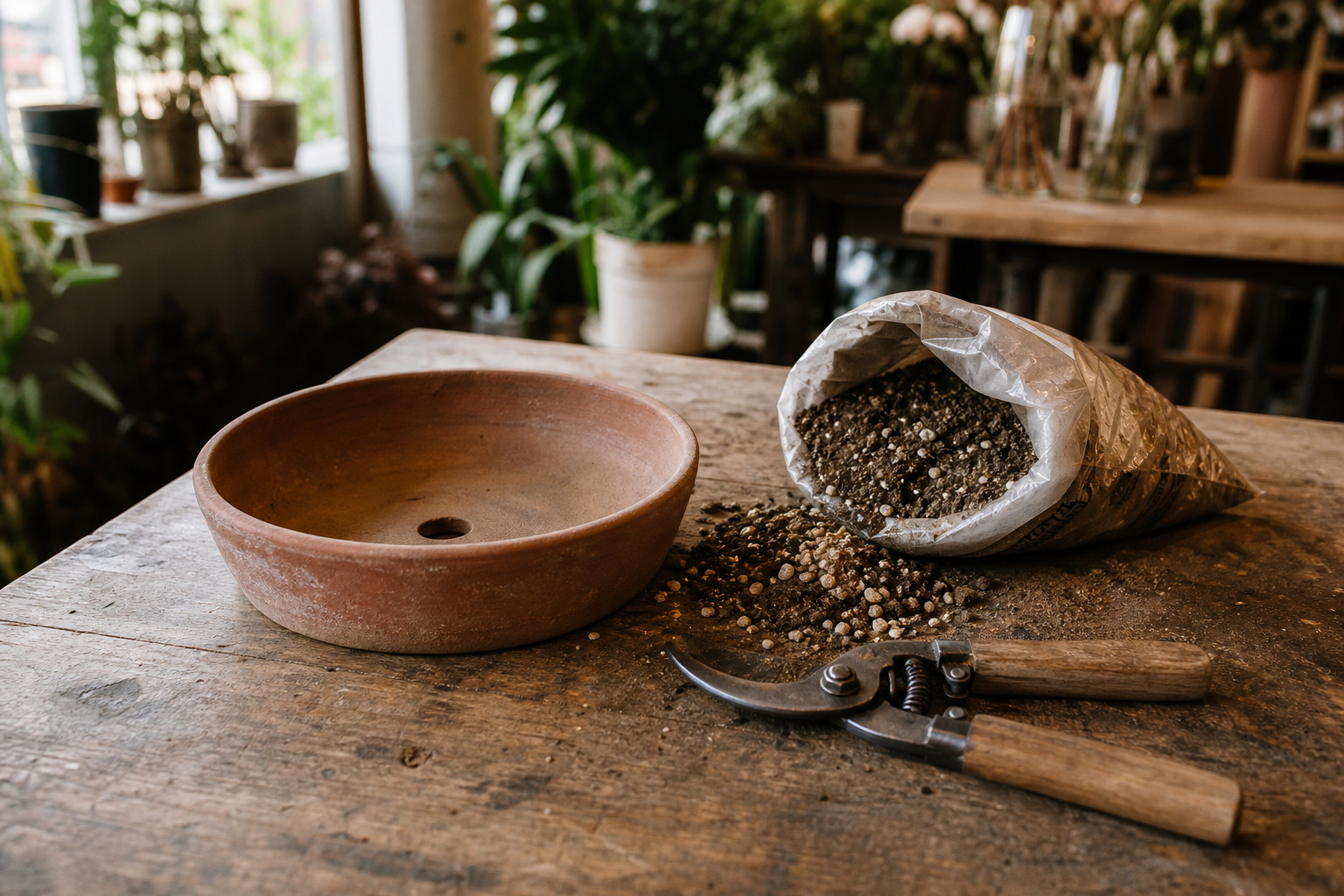
You don’t need much for jade plants. Three things matter, and skimping on any of them is the difference between a jade that thrives and one that limps along:
- A wide, shallow terra cotta pot — The shape suits jade’s spreading root system, and the porous clay keeps the soil from staying wet too long. A 6- to 8-inch low bowl shape is what I use for shop plants.
- Cactus and succulent potting mix — Drains fast, which is the whole game with jade. A bag lasts a long time because you repot rarely. Avoid anything labeled “moisture-control” — that’s the opposite of what jade wants.
- Sharp bypass pruning shears — A clean, sharp cut heals fast and looks intentional. A dull or crushing cut tears the stem and invites rot. If you’re going to do any bonsai shaping at all, this is the one tool that matters.
I only recommend products I actually use. That’s everything you need for a jade. Anything else is optional.
Fix Common Jade Plant Problems
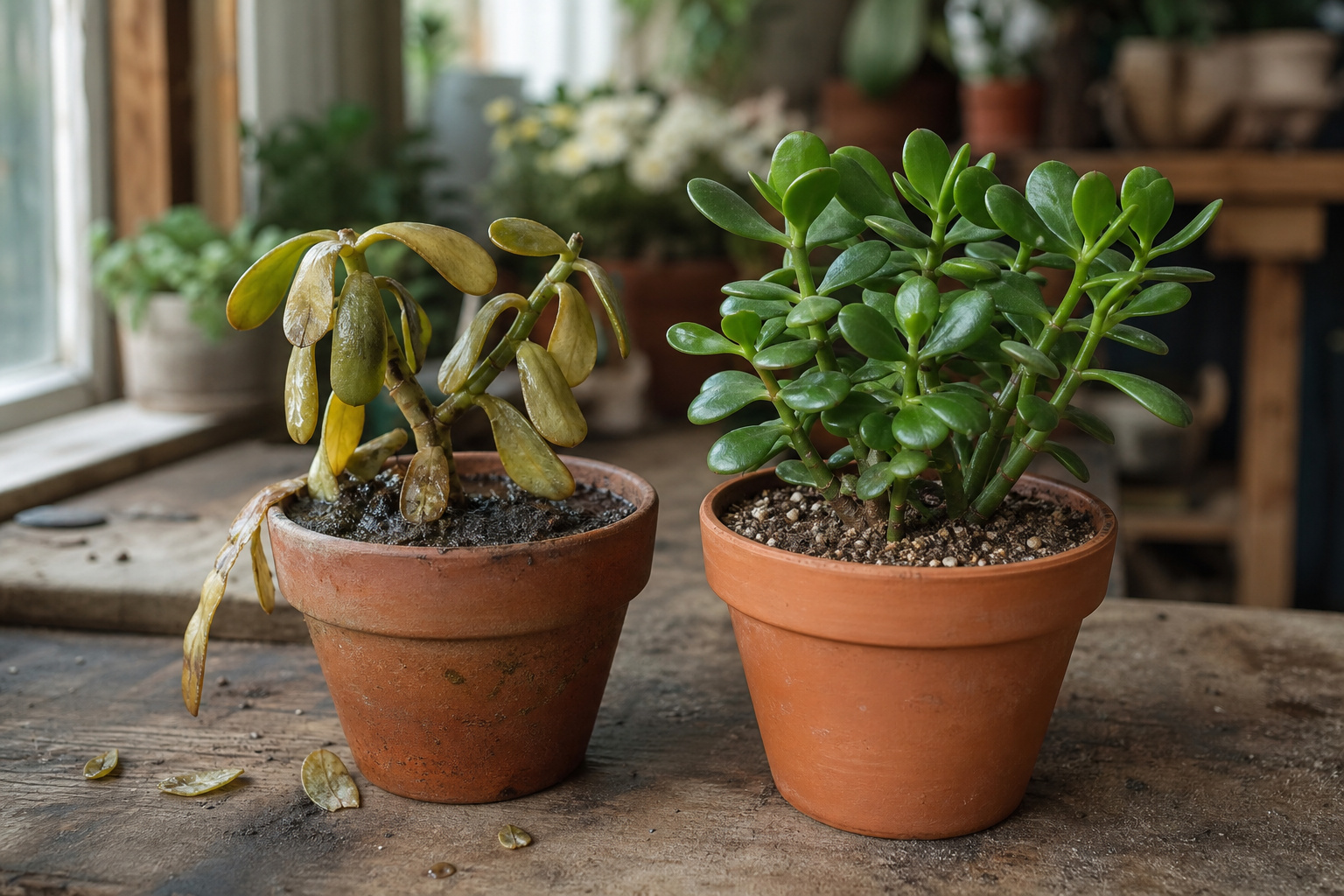
If your jade is unhappy, it’s almost always one of these four things.
Mushy, dropping leaves. Overwatering, every time. Stop watering for two weeks. If the base of the stem is soft or blackening, the plant is in active root rot. Unpot it immediately, cut away any black mushy roots, let the plant sit bare-rooted in open air for two days, and repot into completely dry fresh cactus mix. Don’t water for another full week.
Shriveled, wrinkled leaves. Underwatering or rootbound. Stick your finger in the soil. If it’s bone dry all the way down, water deeply, and the leaves will plump back up within a few days. If the soil is moist but leaves are still shriveled, the plant may be severely rootbound, and the roots can no longer absorb water effectively; it’s time to repot.
Leggy growth with small pale leaves. Not enough light. Move the plant closer to a bright window or add a grow light. Once the new growth comes in at the proper size and color, you can prune off the stretched-out portions, and the plant will come back fuller.
White cottony spots on leaves and stems. Mealybugs. They love jade plants. Dip a cotton swab in rubbing alcohol and wipe each spot directly. Check the plant weekly for the next month. Mealybugs hide in leaf joints and come back if you miss any. For serious infestations, a neem oil spray every 10 days for three rounds will usually clear it up.
Frequently Asked Questions
How often should I water a jade plant?
Every two to three weeks in spring and summer, every four to six weeks in fall and winter, but only if the soil is bone dry an inch and a half down. Check first, water second. The biggest cause of jade plant death is sticking to a watering schedule instead of paying attention to the soil.
Why is my jade plant dropping leaves?
Mushy leaves dropping off mean overwatering. Firm leaves dropping off mean stress from a sudden change — moved to a new spot, drafty window, big temperature swing. Give the plant two or three weeks to adjust to a new location before worrying about anything else.
Will a jade plant bloom indoors?
Yes, but it takes patience. Mature jades that are at least four or five years old will produce small white or pale pink star-shaped flowers in late fall or winter — but only if they get a stretch of cool nights (around 55 degrees) and slightly drier conditions in autumn. Indoor jade plants in heated rooms year-round rarely bloom. It’s a treat when it happens, not something to count on.
How big do jade plants get indoors?
Most indoor jades reach two to three feet tall and roughly as wide over 10 to 20 years. With aggressive bonsai-style pruning, you can keep one at 12 to 18 inches indefinitely. With no pruning at all and good conditions, the occasional plant can hit four feet, but that’s rare indoors.
Are jade plants toxic to pets?
Yes. Jade plants are toxic to dogs and cats if chewed, causing vomiting, lethargy, and an unsteady gait. Not usually fatal, but unpleasant for the pet and worth a vet call. If you have curious animals, check the ASPCA’s toxic plant database or pick from the pet-safe houseplant list instead.
Can I grow a jade plant from a single leaf?
Yes. Snap off a healthy leaf at the base, let it callus for two to three days, lay it on dry cactus mix, and mist lightly every few days. A new rosette will appear in three to four weeks. Stem cuttings work even better and produce a usable plant faster, but leaf propagation is the most beginner-friendly method.
Closing Thoughts
Jade plants are an investment in time, not effort. A few minutes of attention every couple of weeks, the right pot, the right soil, and a sunny window. That’s the whole job. In exchange, you get a plant that can outlast almost everything else you own.
If you want to go further, the bonsai-style training turns a forgettable little succulent into something genuinely sculptural over a decade. Most of the work is just deciding to take the shears to it every spring and trusting the plant to do the rest. Jade is forgiving that way. It grows back from almost anything you do to it, short of drowning the roots.
If you’re looking for a jade plant to start with, the cleanest pickup is usually a 4- or 6-inch potted plant from a local garden center. For more variety, the same seven succulents guide covers other beginner-friendly options worth pairing on the windowsill.
How old is the oldest jade plant in your house, and where did it come from? I always love hearing the stories, because these plants tend to be tied to people, not just rooms. Drop a note in the comments.
Til next time,