Disclosure: This post may contain affiliate links. If you click and buy, we may earn a commission at no extra cost to you. As an Amazon Associate, we earn from qualifying purchases.
Last updated: May 31, 2026
A woman came into the shop a few summers ago carrying a hanging basket with what was left of a string of pearls plant. The trailing strands had mostly turned to mush. A few at the edges still looked okay, but the center of the plant was gone. She’d watered it every few days because she read that it needed “consistent moisture.” It did not need consistent moisture. Quite the opposite.
I salvaged a few healthy strands and sent her home with them in a small pot of dry cactus mix. Three months later she came back in with photos. The plant was trailing over the edge of the pot, looking exactly the way those posts on Pinterest do.
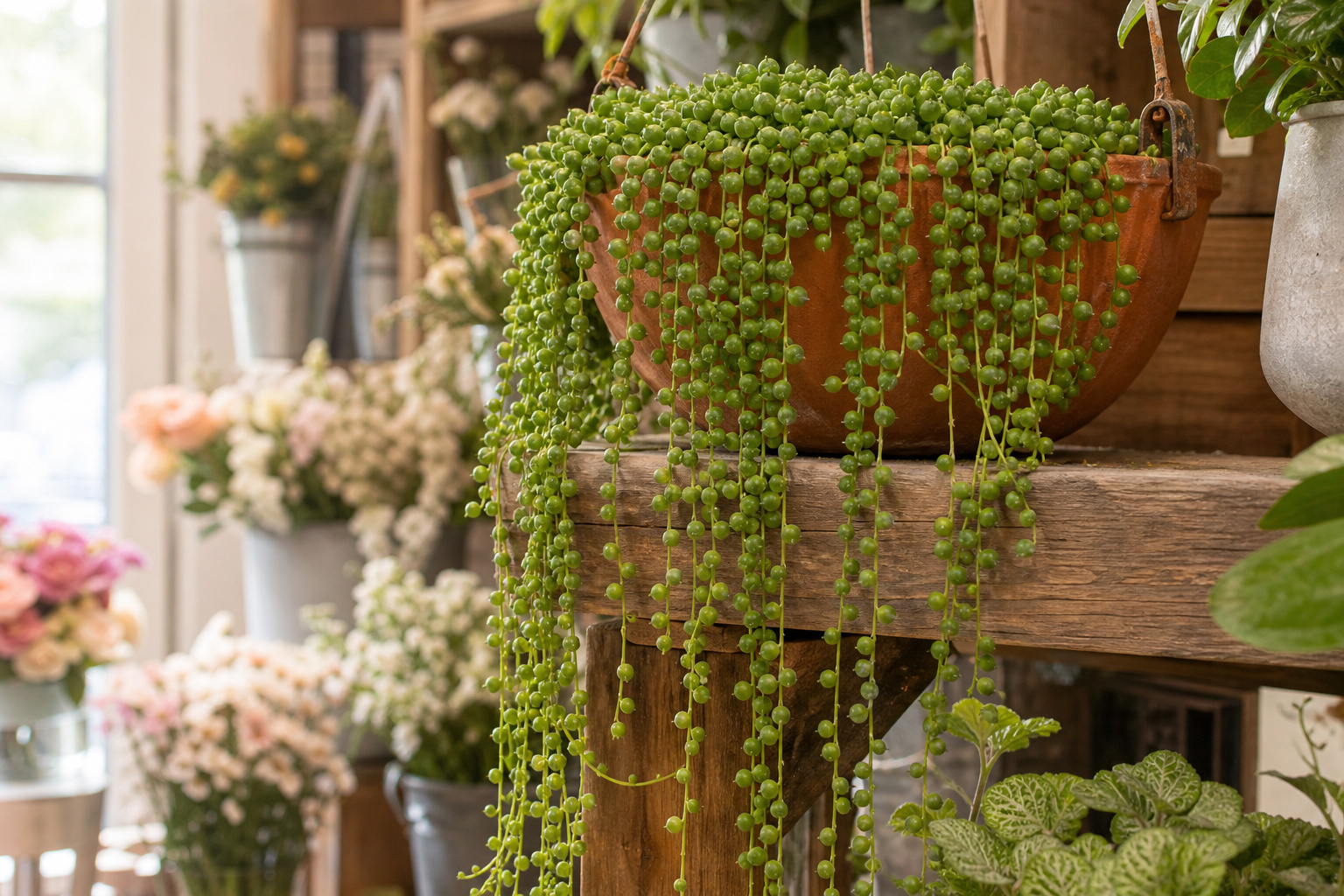
String of pearls (Curio rowleyanus, formerly Senecio rowleyanus) is one of the most visually striking succulents you can grow indoors. Those little bead-like leaves aren’t just for show. Each one is a water storage vessel, which is why the plant handles drought so well and handles overwatering so poorly. Get the watering right, and the rest mostly takes care of itself.
Here’s what I tell people when they pick one up, plus how to keep it trailing long and full.
Know What You’re Working With
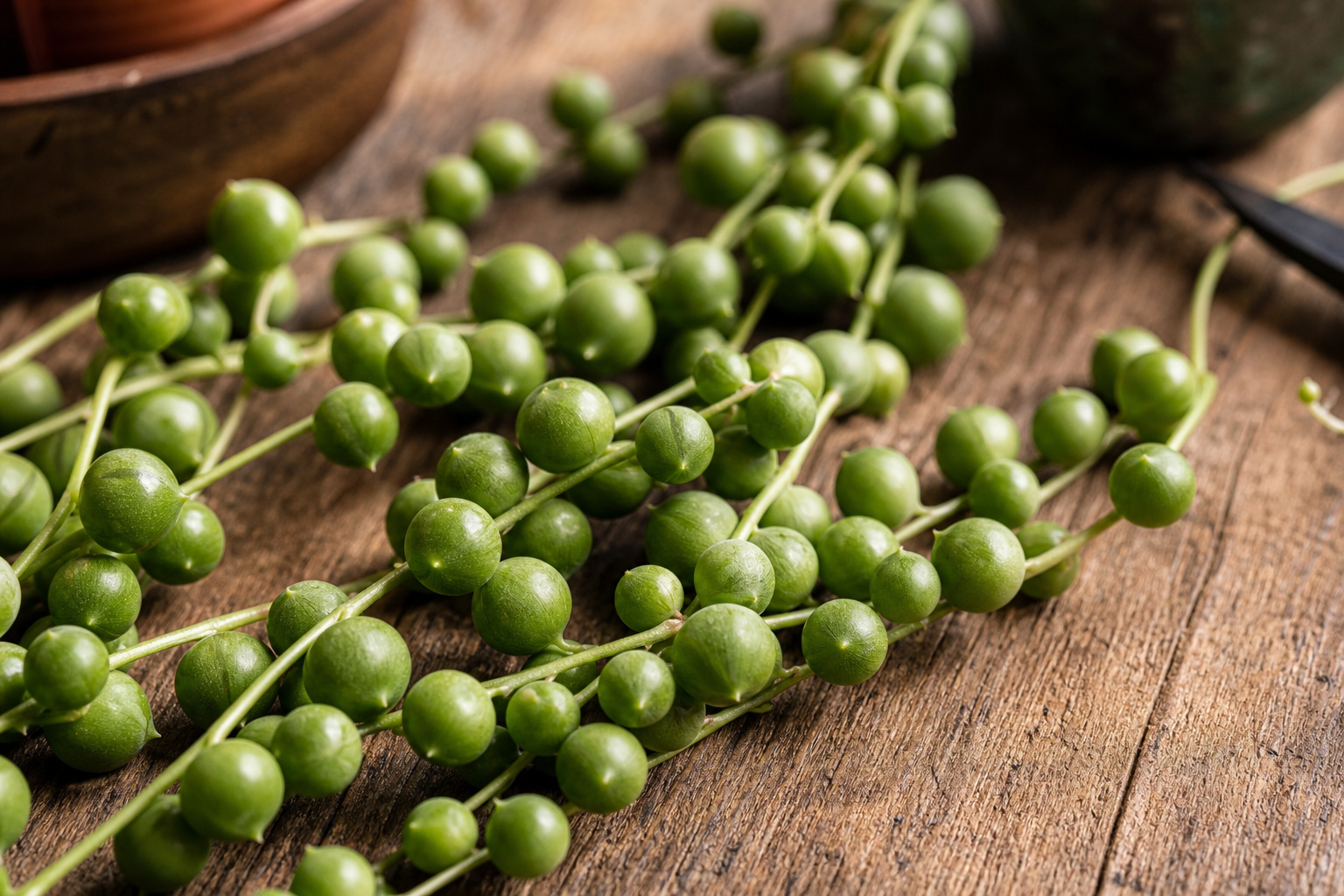
String of pearls is native to the dry, rocky slopes of southwestern Africa. It grows along the ground in its natural habitat, sprawling across sandy soil and scrambling over rocks in filtered sunlight. Indoors, most people grow it in a hanging basket or on a high shelf where the stems can trail downward, which suits it perfectly.
The round leaves, the “pearls”, are the whole show, and they’re the plant’s survival mechanism. Each bead is a modified leaf packed with water-storing tissue. A thin strip of translucent skin runs along the top of each pearl; that’s the window the plant uses to capture light without exposing too much surface area to drying heat. It’s an elegant piece of engineering.
A healthy pearl is firm and round, like a small grape. A dehydrated pearl goes flat and shriveled. An overwatered pearl goes mushy and translucent. Once you can read those signals, you know everything you need to know about the plant’s condition at a glance.
One thing to flag upfront: string of pearls is toxic to dogs, cats, and humans if ingested. The sap is a skin and eye irritant for some people, too. Keep it out of reach of pets and children, and wash your hands after handling it. If you need a pet-safe trailing plant, take a look at the indoor houseplants safe for pets guide for better options.
Give It Bright Indirect Light
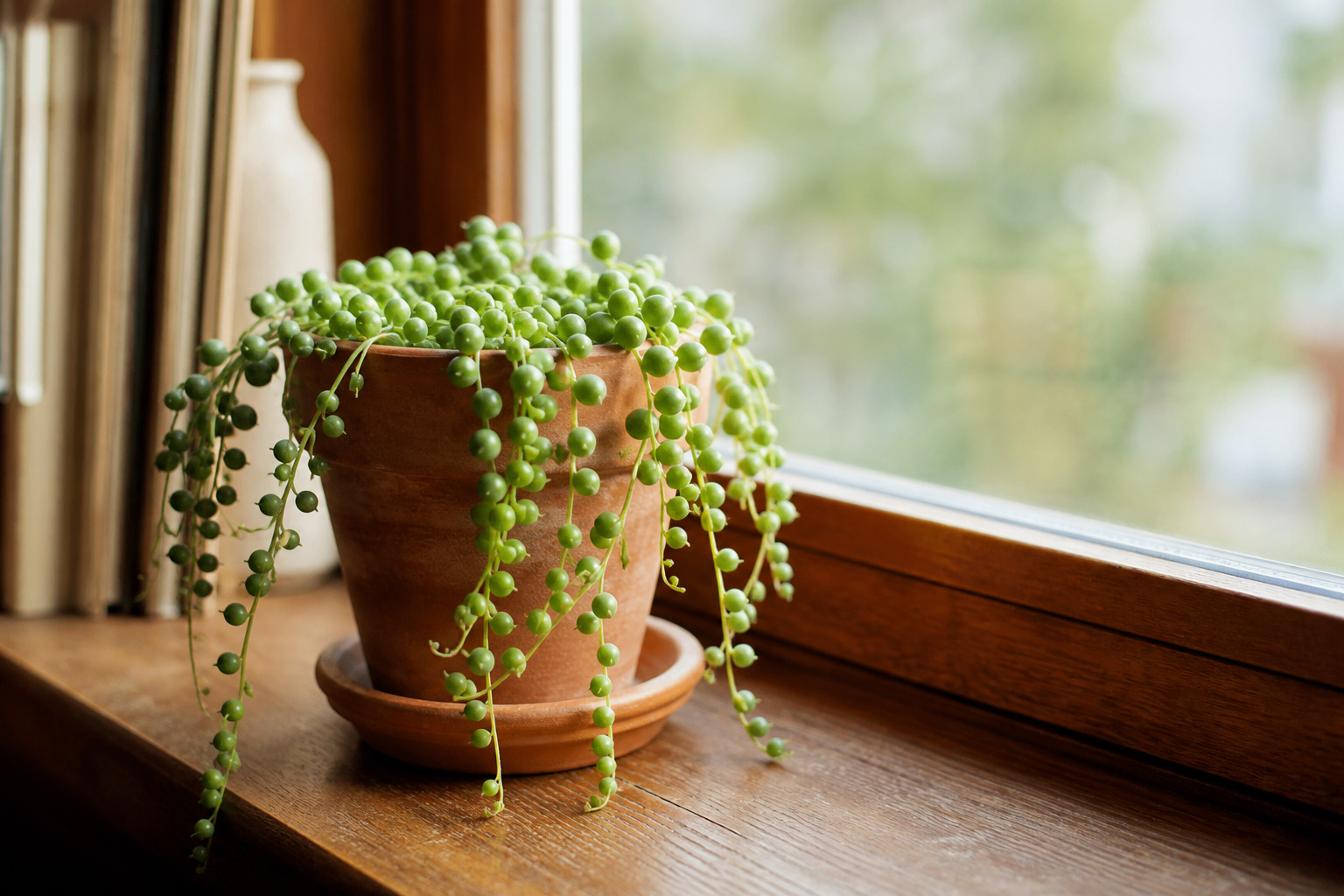
String of pearls wants bright light, but not the scorching direct midday sun through a south-facing window in July. The sweet spot is bright indirect light, or a few hours of gentle morning sun. An east-facing window is often ideal. A west-facing window can work with a bit of sheer curtain to diffuse the afternoon heat.
What happens without enough light is gradual. The pearls start spacing out along the strand, leaving longer bare stretches of stem between them. The plant gets leggy and sparse instead of full and trailing. If you catch this early, move the plant closer to a brighter window and give it a month to adjust before worrying about it further.
Too much direct sun scorches the pearls — you’ll see brown, papery patches on the tops of the beads that never heal. The solution is to move the plant back from the window or add a light curtain filter. New growth will come in undamaged.
If you don’t have a bright enough window, a grow light set to run 12 to 14 hours a day will keep a string of pearls healthy. Position it 6 to 12 inches above the plant. This is one succulent that actually responds well to supplemental light indoors.
Water Sparingly — Less Than You Think
This is the whole game with a string of pearls. It is a drought-tolerant succulent. It wants to dry out completely between waterings. Not mostly dry, completely dry, all the way through the pot.
In spring and summer, that usually works out to watering once every two weeks, sometimes longer depending on your home’s humidity and temperature. In fall and winter, when the plant slows down, every three to four weeks is plenty. Some of mine go six weeks in January without a drink and look fine.
Check the soil before every watering. Stick your finger an inch down into the pot. Any moisture at all? Wait. When it’s bone dry all the way down, and the pearls are starting to look the slightest bit less plump than usual, that’s the right moment to water. Water deeply, let it run out the drainage hole, and then leave it alone until the soil is completely dry again.
The most reliable sign of overwatering is mushy, translucent pearls that drop off easily. When that happens, stop watering immediately. If the damage is limited to a few strands, cut them back and let the plant dry out for two to three weeks before watering again. If the center of the plant has gone mushy, you may need to take cuttings from the healthy outer strands and start over, which is easier than it sounds, covered below in the propagation section.
Pot It for Drainage, Not for Show
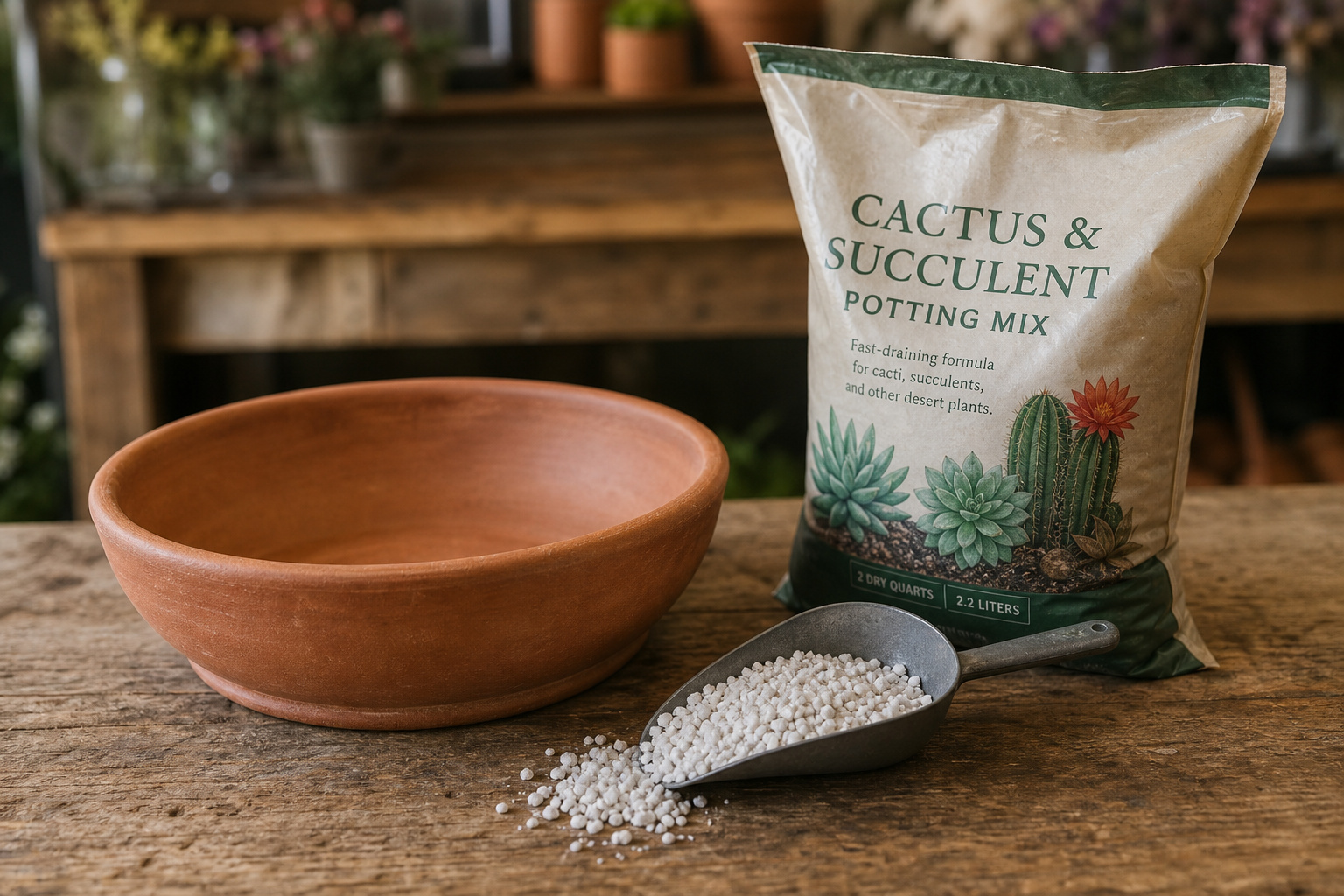
String of pearls has a shallow, spreading root system that doesn’t need a deep pot. A wide, shallow container with drainage holes is better than a tall pot. A hanging basket with coconut coir liner and drainage holes works well if you want the trailing effect.
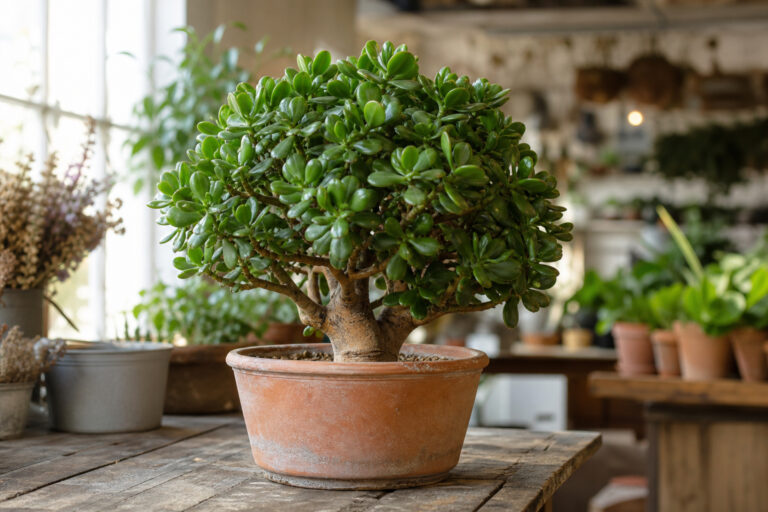
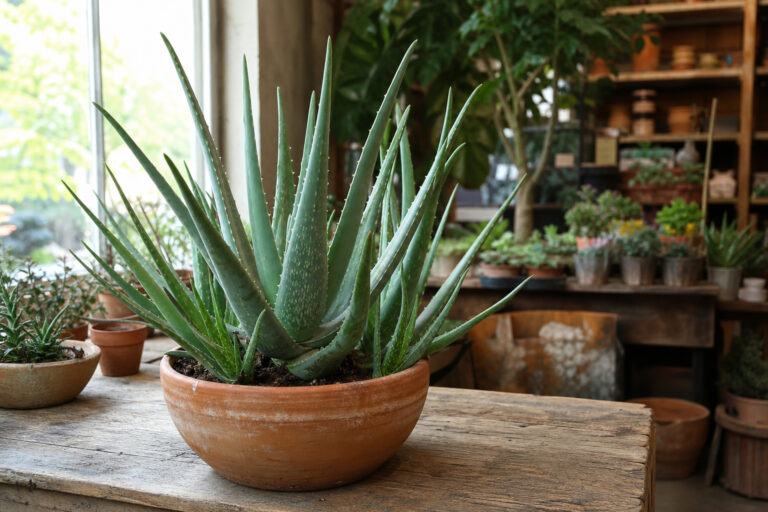
Terra cotta is my preference, same as for jade and aloe. The porous clay wicks moisture out of the soil between waterings, which reduces root rot risk significantly. A glazed ceramic or plastic pot that seals in moisture stacks the odds against you before you even begin.
Drainage holes are a must. A decorative pot without drainage will kill this plant within a season, no matter how carefully you water. If you love a particular pot that has no hole, use it as a cachepot. Nest a plastic grow pot inside it, pull the inner pot out over the sink for watering, then let it drain fully before dropping it back in.
For soil, use a cactus and succulent mix. Regular potting soil holds far too much moisture. I sometimes mix in a bit of coarse perlite, about one part perlite to three parts cactus mix, for extra drainage, especially in the winter months when watering slows down, and the soil stays wet longer.
Repot Only When the Plant Tells You To
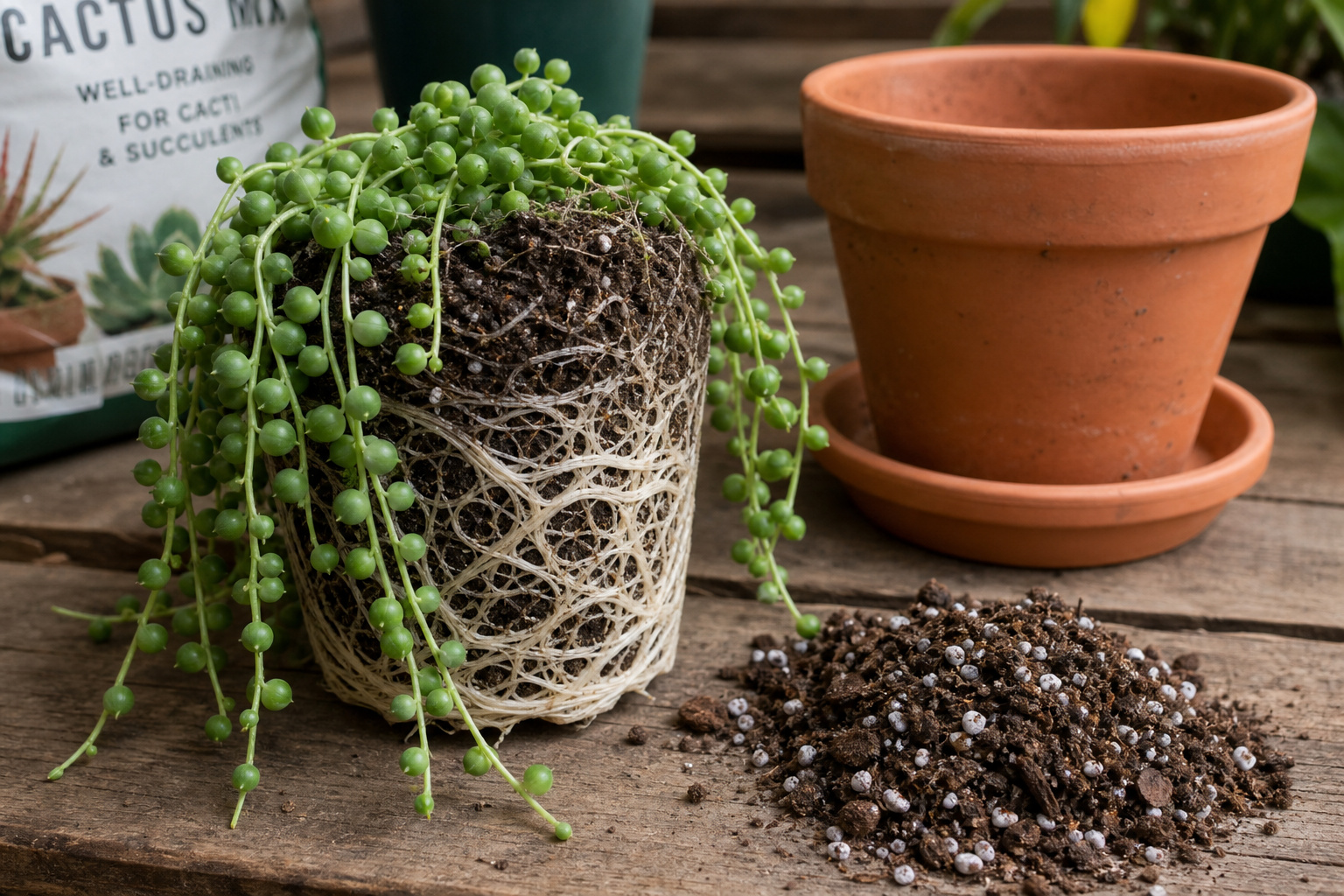
String of pearls doesn’t need frequent repotting. Every two to three years is usually enough, and only when the roots are visibly cramped, or the plant is drying out faster than normal. Unlike jade or aloe, this plant isn’t prone to dramatic pup production that signals a need to repot — you’re mainly watching for roots circling the drainage hole or spilling out the bottom.
When you do repot, spring is the right time. Use a pot only slightly larger than the current one. An inch or two of extra room is plenty. More soil means more moisture-holding capacity, which is the opposite of what this plant wants.
Let the soil dry out for a week before repotting. Slide the plant out carefully, as the stems are fragile and break easily. Shake off loose soil, inspect the roots, and trim any that are black or mushy. Set the plant into the new pot with fresh dry cactus mix and hold off on watering for at least a week. Same rule as jade and aloe: let those root tips heal in dry soil first.
Propagate From Stem Cuttings
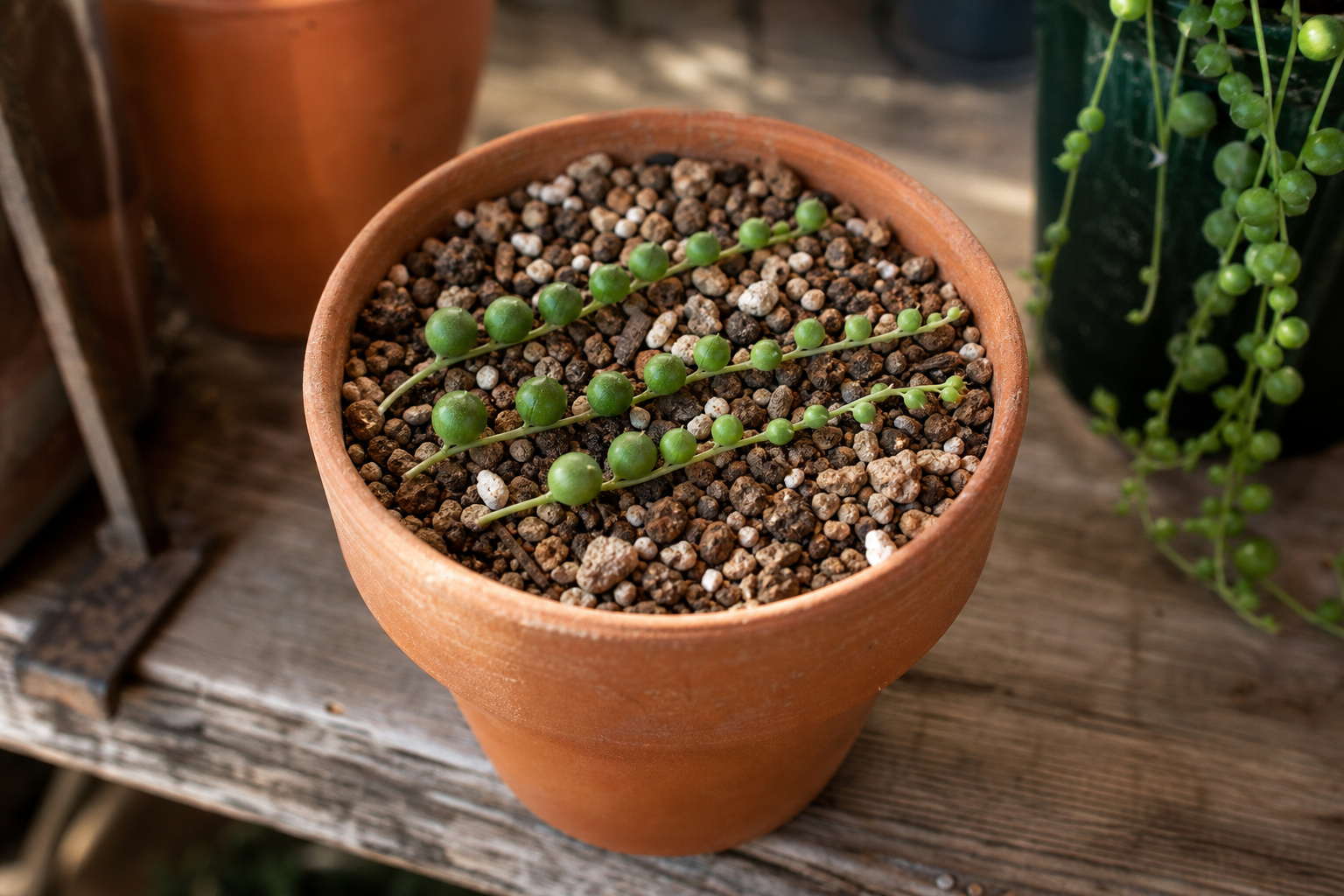
String of pearls is one of the easiest succulents to propagate, which is good news if you’ve lost the center of a plant and need to rebuild from healthy outer strands. It’s also just a satisfying way to get more plants for nothing.
Take cuttings from healthy strands. Use clean scissors or shears and cut 4- to 6-inch lengths from strands that look full and firm. You don’t need to treat the ends the way you would with jade. The pearls at the cut end will dry naturally within a day or two. Strip the bottom inch or two of pearls off the strand to expose the bare stem. That bare section is what you’ll bury.
Two ways to root them. The first is soil propagation: lay the bare stem sections on top of dry cactus mix and mist lightly every few days. The stems put out roots at the nodes within two to three weeks. The second is to coil a longer strand in a circle on top of the soil. Pin it down at a few points with a hairpin or bent wire, and leave the pearls resting on the soil surface. The nodes will root all along the length. Both methods work; the coil method fills out a pot faster.
Don’t bury the pearls themselves. The beads will rot if buried. Only the bare stem sections go below the soil. It’s a common mistake when people treat this plant like a standard cutting.
Keep the cuttings out of direct sun while they root, and don’t overwater. Misting every few days is enough. Once you see new pearl growth forming, the roots are established and you can begin a normal watering schedule.
What I Use in the Shop
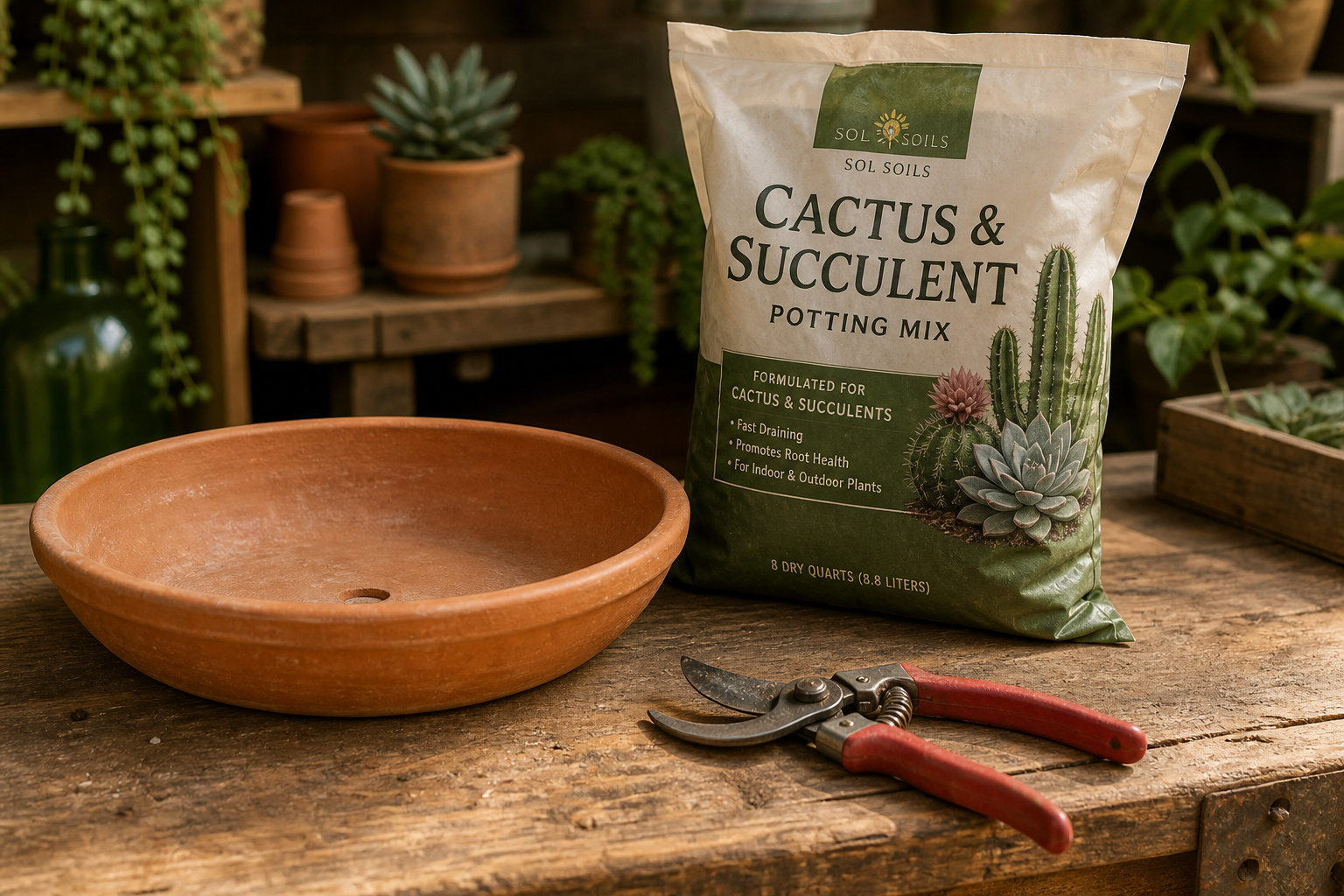
The same kit that works for jade and aloe handles string of pearls fine. No special equipment required:
- A wide, shallow terra cotta pot — The shallow profile suits the root system, and the porous clay keeps moisture from building up between waterings. For hanging baskets, I use a simple wire basket with coconut coir liner and line the bottom inside with a piece of plastic to slow drainage slightly without blocking it completely.
- Cactus and succulent potting mix — Fast drainage is the whole point. Avoid anything with “moisture control” on the label. I often blend in about 25% extra perlite for this plant specifically, since it’s even less tolerant of wet soil than jade or aloe.
- Sharp bypass pruning shears — For taking cuttings cleanly. The stems are delicate, and a dull blade crushes them instead of cutting, which slows rooting and invites rot at the cut. Sharp and clean make the difference.
I only recommend products I actually use. That’s the whole kit for a string of pearls. The same supplies pull double duty for jade and aloe, so one purchase covers the whole succulent windowsill.
Fix Common String of Pearls Problems
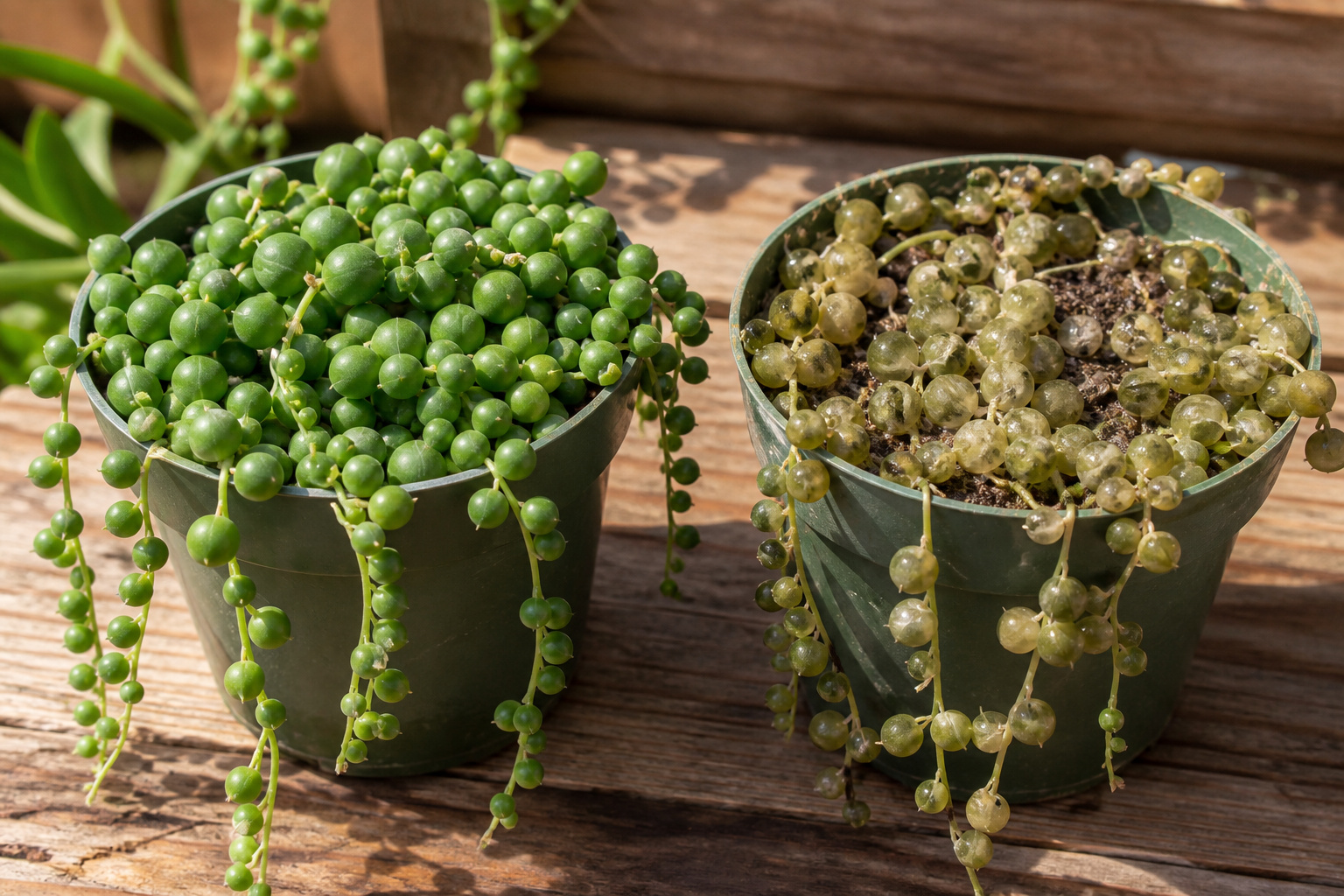
If something’s going wrong, it’s almost always one of these four things.
Mushy, translucent pearls dropping off. Overwatering. This is the number one killer. Stop watering immediately. Let the soil dry out completely, two to three weeks minimum. Cut off any strands where the pearls have gone mushy all the way to the pot. If the center of the plant is gone, salvage healthy outer strands as cuttings and start fresh.
Flat, shriveled pearls. Underwatering, or severely rootbound. Press a pearl between your fingers. If it’s flat and soft rather than round and firm, the plant is thirsty. Water deeply, and the pearls should plump back up within a day or two. If the soil is also bone dry within hours of watering, the roots have outgrown the pot. Time to repot.
Sparse strands with long gaps between pearls. Not enough light. Move the plant to a brighter spot. The existing leggy strands won’t fill in, but new growth will come in denser. You can trim back the sparsest strands to encourage bushier regrowth.
Brown papery patches on the tops of pearls. Sunscorch from too much direct sun. Move the plant out of direct afternoon light. New growth won’t show the damage, but the burned pearls won’t recover. Trim the worst-looking strands if you want a cleaner look.
Frequently Asked Questions
How often should I water a string of pearls plant?
Every two weeks in spring and summer, every three to four weeks in fall and winter, but only when the soil is completely dry all the way through. Check with your finger before every watering. If there’s any moisture at all, wait. Overwatering is the single most common cause of string of pearls death, and it’s almost always the result of sticking to a watering schedule instead of checking the soil.
Why is my string of pearls shriveling?
Flat, shriveled pearls mean the plant is thirsty. Water deeply, and they should plump back up within 24 to 48 hours. If the pearls are shriveling despite regular watering, the plant may be severely rootbound. The roots have crowded out so much soil volume that the pot can’t hold enough moisture. Repotting into a slightly larger container with fresh cactus mix usually fixes it.
Why are the pearls falling off my plant?
Mushy pearls that drop off easily are a sign of overwatering or root rot. Stop watering immediately and let the soil dry out completely. Firm pearls dropping off after a move or repot is usually just stress from the change — give the plant two to three weeks to settle before worrying further. A sudden temperature drop from a drafty window can also trigger a drop.
Can I grow a string of pearls in low light?
Not really, no. It’ll survive in lower light for a while, but the strands get sparse and leggy with long bare sections between the pearls. It needs bright indirect light to stay full and healthy. A grow light is a better fix than hoping a dim corner works out. String of pearls responds well to supplemental light, and 12 to 14 hours under a basic grow light will keep it healthy in a room without a bright window.
Is string of pearls toxic to pets?
Yes. String of pearls is toxic to dogs, cats, and humans if ingested, and the sap can irritate skin and eyes on contact. Keep it somewhere genuinely out of reach — a high shelf or hanging well above pet height. If you need a trailing plant that’s safe around animals, the pet-safe houseplant guide has safer options. The ASPCA’s toxic plant database is also worth bookmarking.
How do I make my string of pearls fuller and longer?
Two things drive fullness: light and propagation. Make sure the plant is getting enough bright indirect light. Low light is the primary cause of sparse strands. For density, take cuttings from healthy strands and root them directly in the same pot by laying the bare stems on the soil surface and misting. Multiple rooted strands in one pot fill it out much faster than waiting for a single plant to branch on its own. You can also pin strands back into the pot at intervals to encourage rooting at the nodes along the length of the strand.
Closing Thoughts
String of pearls is one of those plants that looks delicate but isn’t, as long as you resist the urge to water it. The bead-like leaves fool people into thinking they’re fragile. They’re not. They’re water tanks. The plant is built for drought. Treat it like a cactus in terms of watering frequency and like a tropical in terms of light, bright but not brutal, and you’ll have trailing strands that go on for feet.
The propagation piece is worth spending some time on. A single healthy plant in a good spot will give you all the cuttings you need to fill out a pot, start new ones for friends, or recover from an overwatering incident without starting completely from scratch. These plants travel well as cuttings. Some of the strings of pearls I’ve passed along to customers over the years have probably already made a second generation by now.
If you’re building out a succulent collection, the jade plant and aloe vera use the same soil, the same watering approach, and the same terra cotta preference. One good bag of cactus mix covers all three.
What’s your experience been with string of pearls? Are you a repeat offender on the overwatering, or have you found a routine that works? Drop a note in the comments. It’s always the watering, until it isn’t.
Til next time,