Disclosure: This post may contain affiliate links. If you click and buy, we may earn a commission at no extra cost to you. As an Amazon Associate, we earn from qualifying purchases.
Last Updated: May 31, 2026
A customer came into the shop a few years back and asked if we sold succulents for a vertical wall project she was working on. I told her we had a few varieties in the shop, and she pulled out her phone to show me what she was building.
It was a cigar box packed with echeveria and sedum, wired over sphagnum moss, hanging on her back porch. I hadn’t seen one up close before. I was genuinely impressed.
That conversation stuck with me. Succulents have always been popular in floral work, weddings, boutonnieres, and centerpieces, but the vertical arrangement angle is something a lot of people overlook. You don’t need a greenhouse. You don’t need a green thumb. You need the right frame, the right moss, and a little patience while the roots anchor in.
Below, I’ve pulled together everything you need to build one yourself, starting with a great video walkthrough that covers the full process step by step.
Gather Your Materials Before You Start
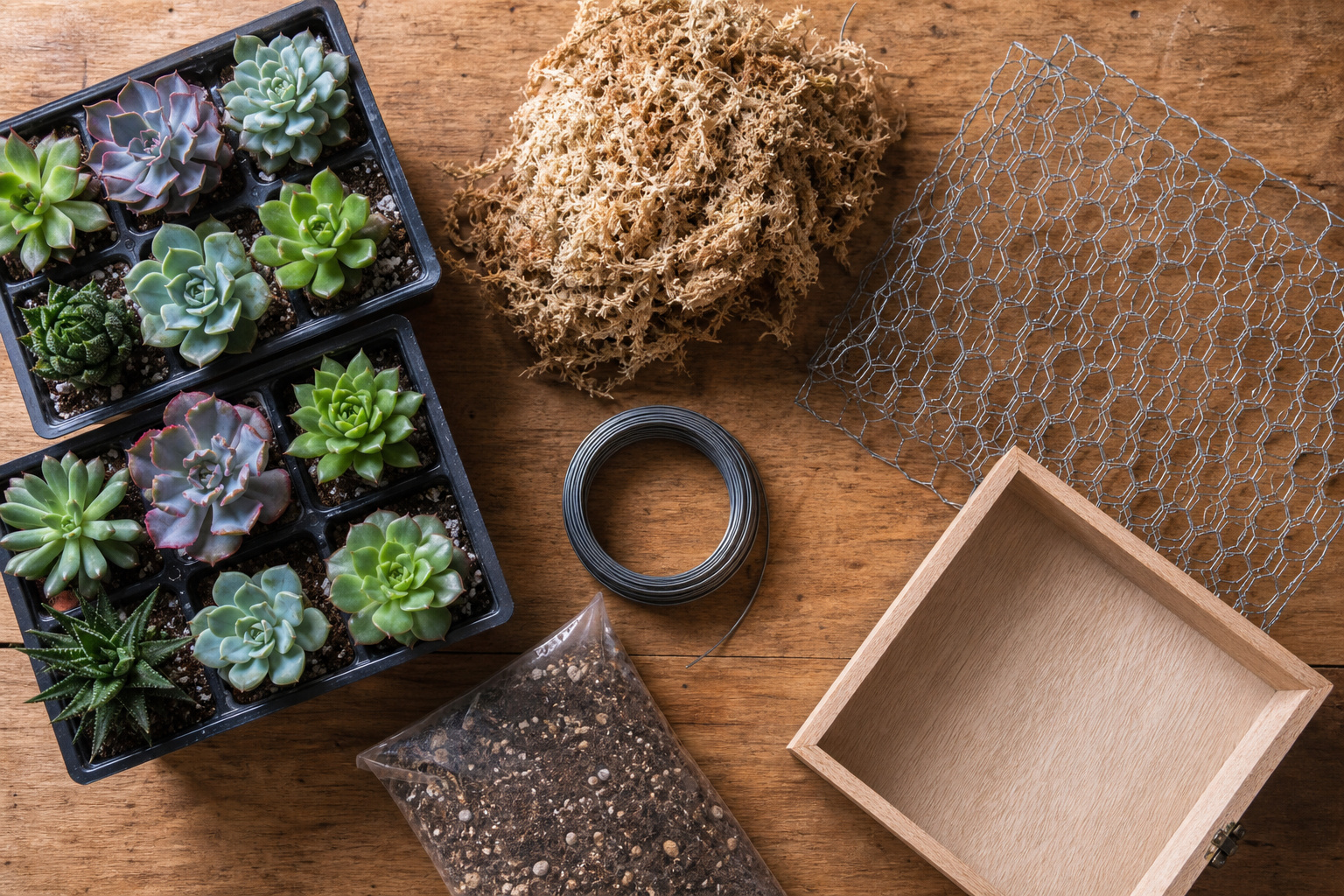
This is a project where having everything on the table before you begin makes a real difference. Succulents don’t love being handled more than necessary, and if you’re stopping mid-project to track down chicken wire or the right gauge of wire, things get messy fast.
Here’s what you’ll need:
- Succulent plants — a mix of rosette types like echeveria, sempervivum, and sedum work best for vertical planting
- Unfinished cigar box or shadow box frame — the frame needs to be sturdy enough to hold damp moss and roots over time
- Chicken wire — stretched across the front to hold succulents in place
- 22-gauge paddle wire — for securing chicken wire and wiring individual plants
- Sphagnum moss — the growing medium that fills the box and keeps roots hydrated
- Cactus and succulent soil mix — mixed in with the moss for drainage and structure
- Spray paint for the frame (optional), jute twine, and eye bolts for hanging — all available at Home Depot or Lowe’s
For the succulents specifically, I’d always suggest sourcing from a locally-owned florist, garden center, or nursery first. You’ll get fresher, better-acclimated plants than what comes off a shipping truck, and someone there can usually point you toward varieties that root well in vertical applications. That said, if you need a wider selection or you’re ordering in bulk, online is a perfectly fine option.
Watch the Full Step-by-Step Video
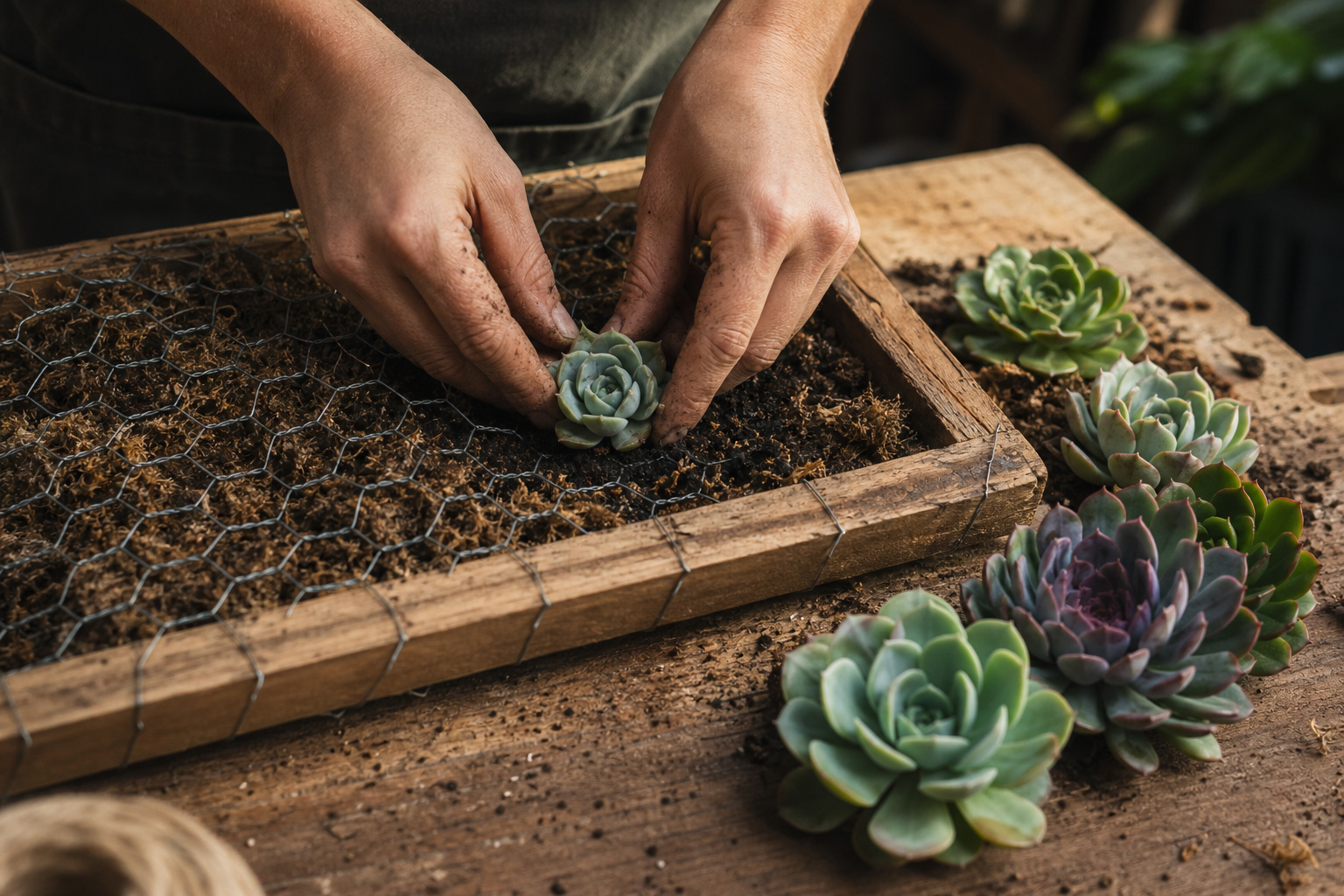
Laura from Garden Answer walks through the entire build in this video — from lining the frame with moss and soil to wiring in the chicken wire and placing each succulent. It’s one of the clearest demonstrations I’ve seen for this type of project. Watch it through once before you start, then refer back to it as you go.
A couple of things I’d add to what’s shown in the video: don’t rush the initial laying-flat period after you plant. The box needs to stay horizontal for several weeks while the roots establish. Tilting it too soon is the number-one reason these arrangements fall apart. And don’t water it like a houseplant. Succulents in a moss-based frame need far less moisture than you’d expect.
Pick Succulents That Actually Work Vertically
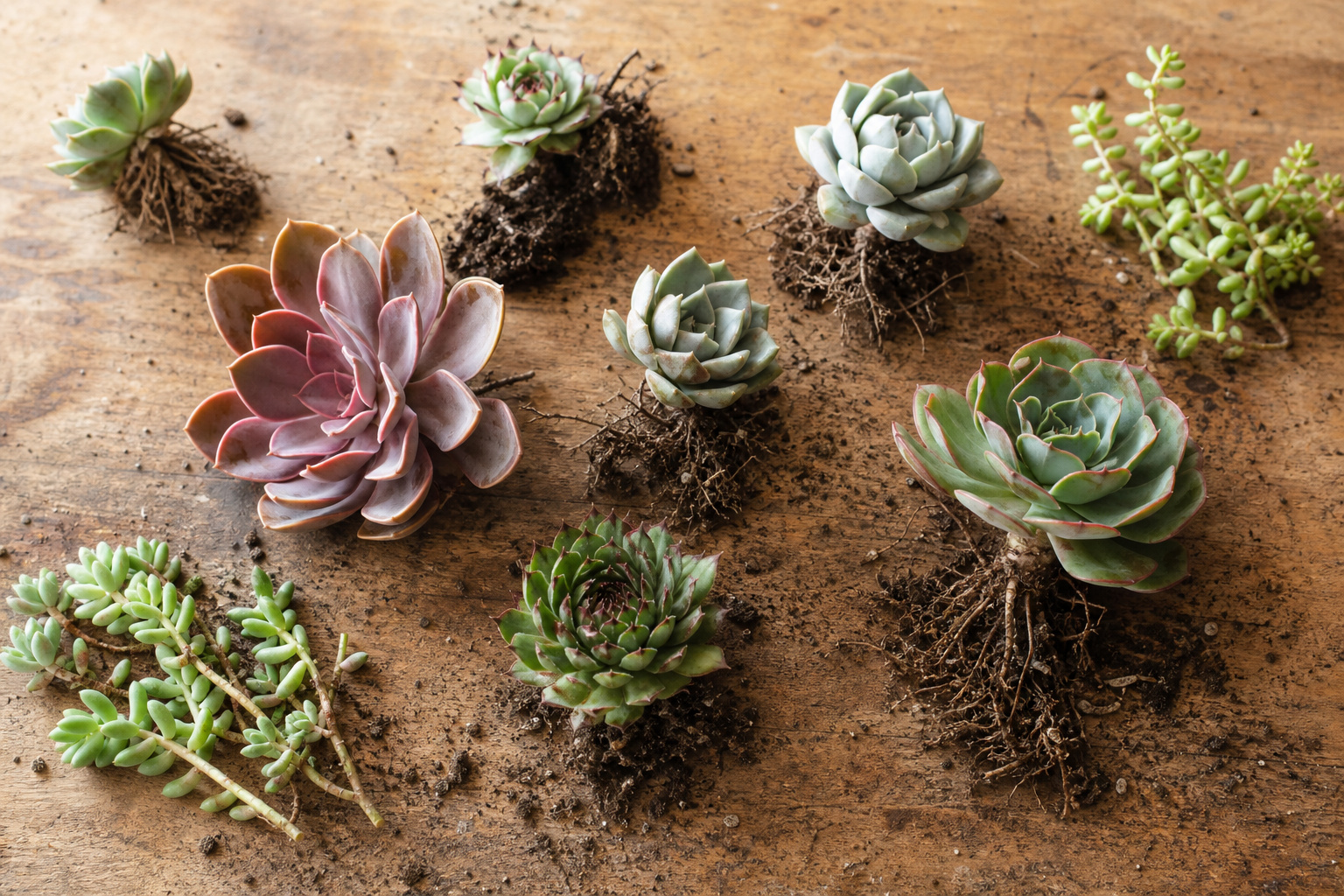
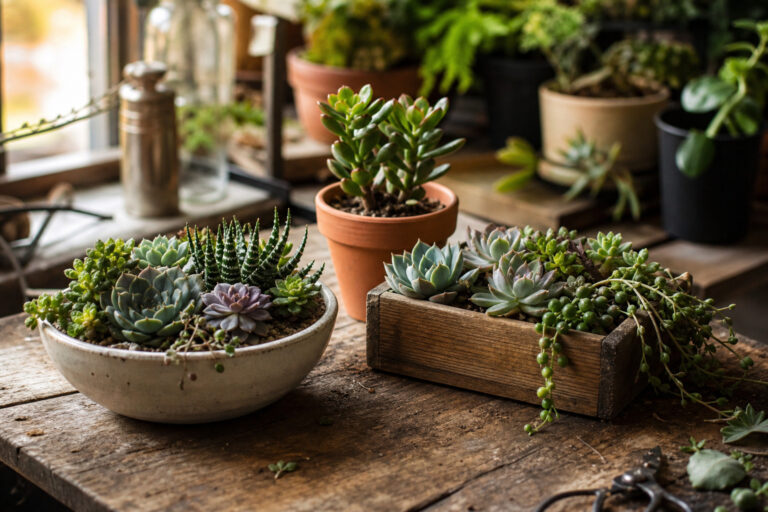
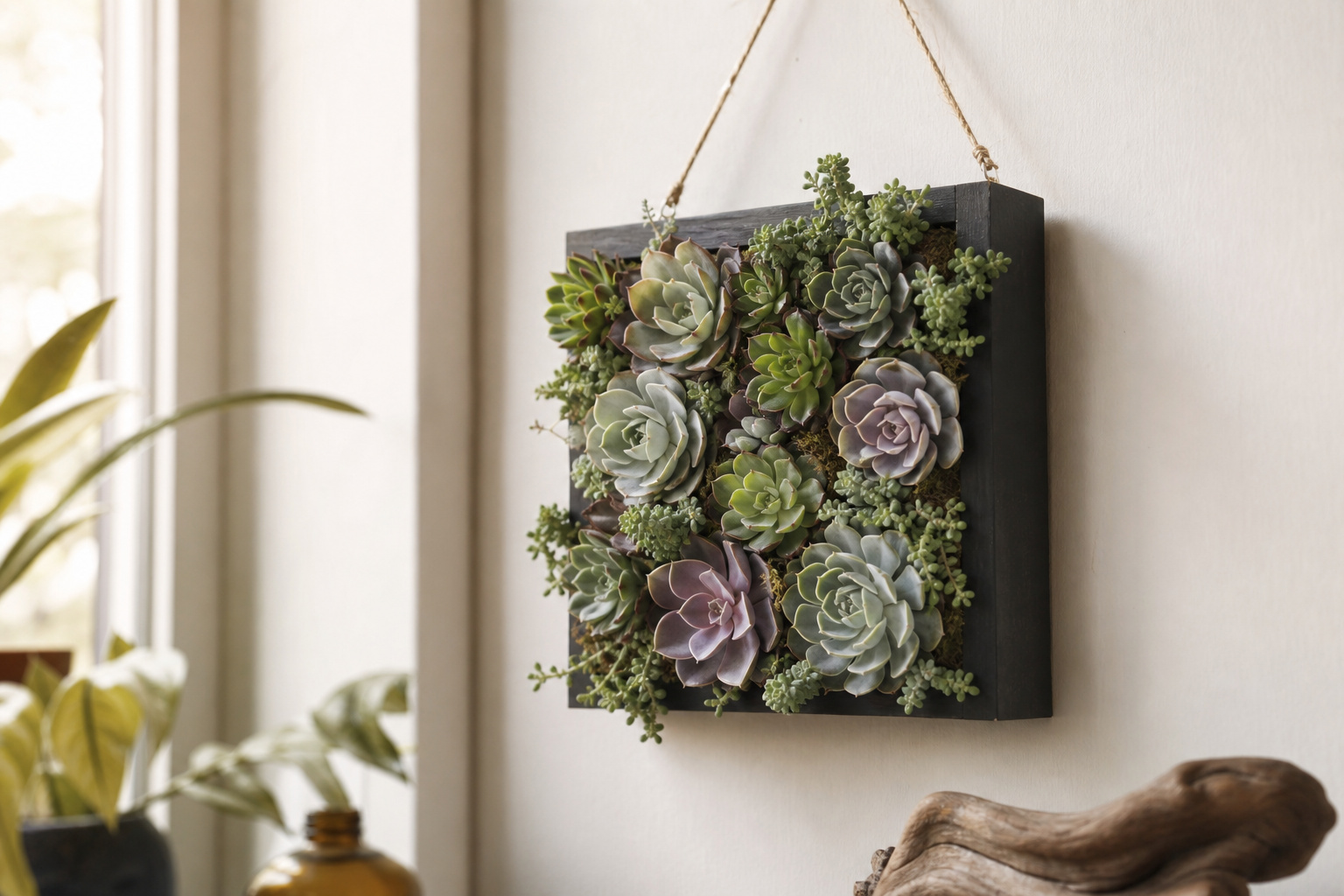
Not every succulent is a good candidate for a vertical arrangement. The ones that hold up best are low-growing rosette types — echeveria and sempervivum are the workhorses here. They root quickly into moss, stay compact, and don’t get leggy in low-light conditions the way some trailing varieties do.
Sedum is another solid choice, especially the smaller-leaved varieties. It fills gaps well and roots almost aggressively, which helps hold the structure together over time.
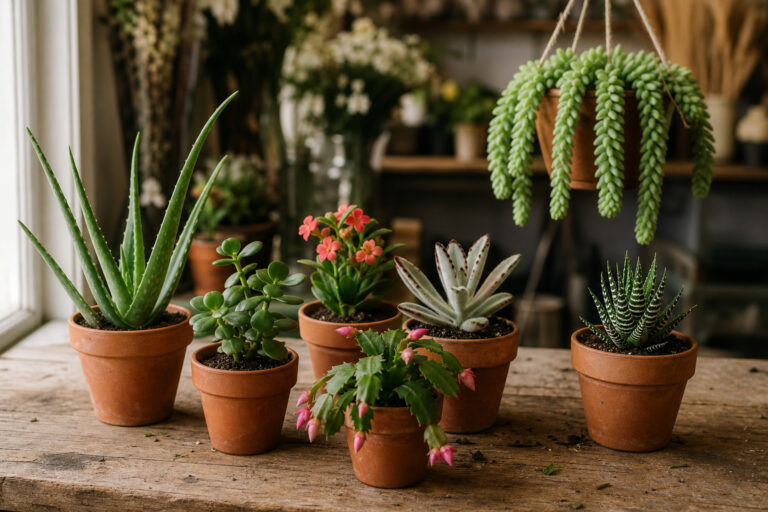
What I’d avoid: tall, columnar varieties like certain euphorbias or anything with fragile stems. They’re too top-heavy for a vertical frame and tend to pull loose before the roots can anchor. Aloe is another one I’d skip for this application. It’s a great plant on its own (our guide on aloe vera plant care covers what it actually needs), but it doesn’t adapt well to the cramped, moss-based environment of a vertical arrangement.
Stick with rosettes, keep the variety count manageable, and mix in a few different textures and colors. That’s what makes these arrangements look intentional rather than random.
Keep Your Finished Arrangement Looking Good
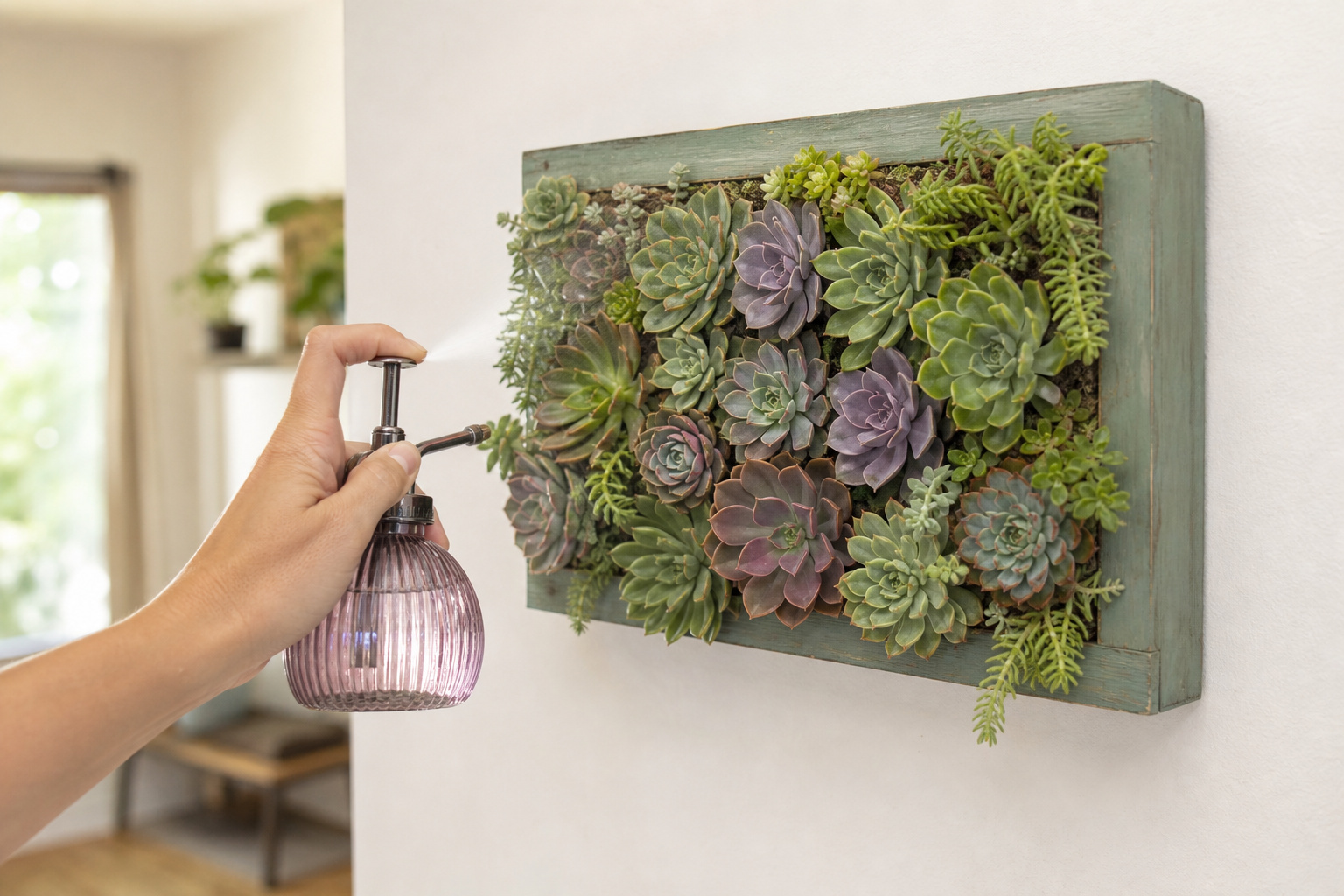
Vertical succulent arrangements are low maintenance — that’s a big part of their appeal. But “low maintenance” doesn’t mean “no maintenance.” A few habits will keep yours looking sharp for years.
Water sparingly. Once the arrangement is hanging, mist the moss lightly every two to three weeks. Let it dry out completely between waterings. Succulents rot fast when they sit in moisture, and a frame packed with damp moss holds water much longer than a pot with drainage holes.
Give it enough light. Bright, indirect light is ideal. A south- or east-facing wall works well indoors. Direct afternoon sun can scorch the plants; deep shade will make them stretch and go leggy.
Rotate it occasionally. If the arrangement is indoors, rotating it every few weeks keeps the plants growing evenly toward the light source instead of leaning in one direction.
Trim and replace as needed. Individual plants will occasionally die off or outgrow their space. That’s normal. Pull them out, let the spot dry, and replace with a fresh cutting. The arrangement is essentially self-renewing if you keep up with it.
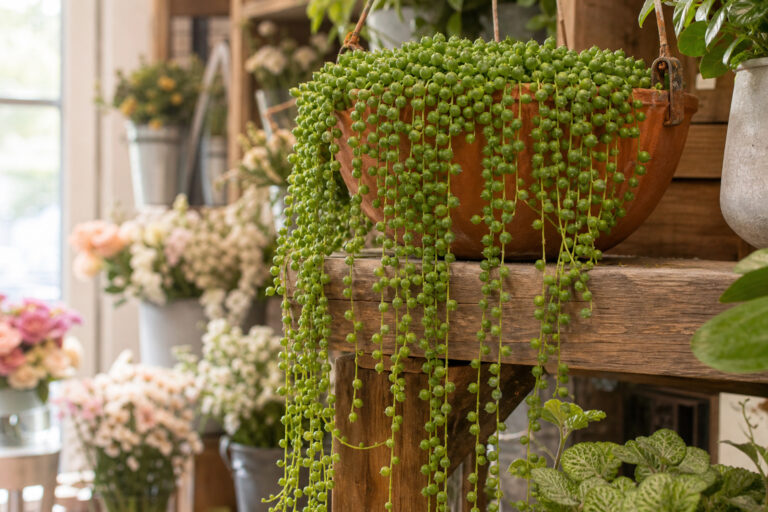
If you’re interested in how succulents behave as individual houseplants, their light preferences, watering cycles, and propagation, the care guides for jade plants and string of pearls are worth a look. Different plants, but the same fundamental logic around watering and light applies.
Frequently Asked Questions
How long does it take for a vertical succulent arrangement to be ready to hang?
Plan on four to six weeks of lying flat after you plant it. The roots need time to anchor into the moss before the frame goes vertical. I know it’s tempting to rush it, but hanging it too early is how you end up with succulents on the floor.
Can I use a picture frame instead of a cigar box?
Yes, as long as it has enough depth to hold a layer of moss and soil, at least an inch and a half, ideally two inches or more. Shadow box frames work well. Standard picture frames don’t have the depth and won’t hold the growing medium.
How often do I water a vertical succulent frame?
Every two to three weeks is usually enough, and even that may be too frequent depending on your climate. The goal is to mist the moss until it’s barely damp, then let it dry out completely before the next watering. When in doubt, water less.
Can this be hung outdoors?
It can, but with conditions. A covered porch with bright indirect light is ideal. Full rain exposure will oversaturate the moss and rot the roots. Direct afternoon sun in summer will scorch the plants. Think of it like a houseplant that happens to live outside — it needs shelter from the extremes.
What’s the best way to attach individual succulents to the frame?
For rosette types, push the stem gently through the chicken wire into the moss below. No wiring needed in most cases. The roots will take care of the rest. For smaller cuttings that don’t have much stem, a U-shaped pin made from paddle wire works well to hold them in place while they root.
Do succulents used in a vertical frame need to be rooted first?
Not necessarily. Unrooted cuttings will root into the moss during the laying-flat period, which is actually how most of these projects are built. Just let the cut end callous over for a day or two before planting. That helps prevent rot at the wound site.
Closing Thoughts
Vertical succulent arrangements are one of those projects that look a lot harder than they are. The materials are straightforward, the steps are repeatable, and once you’ve made one, you’ll see why people keep making more. From a single cigar box to a full living wall, the same basic approach scales up as far as you want to take it.
If you decide to build one, I’d love to hear how it turned out. Drop a comment below and let me know which succulents you used and how the arrangement held up after hanging.
Til next time,
Greg