Disclosure: This post may contain affiliate links. If you click and buy, we may earn a commission at no extra cost to you. As an Amazon Associate, we earn from qualifying purchases.
Last updated: July 1, 2026
A woman came into the shop a couple of winters back holding a kalanchoe that had stopped blooming. She was ready to toss it in the trash on her way out the door. I asked her to leave it with me for a week instead.
All it needed was a stretch of longer, uninterrupted darkness at night. Two weeks later she came back to pick it up, and it was covered in buds. Kalanchoes aren’t fussy plants. They’re just particular about a couple of things, and once you know what those are, they’re about as forgiving as houseplants get.
Give It the Right Light and Water
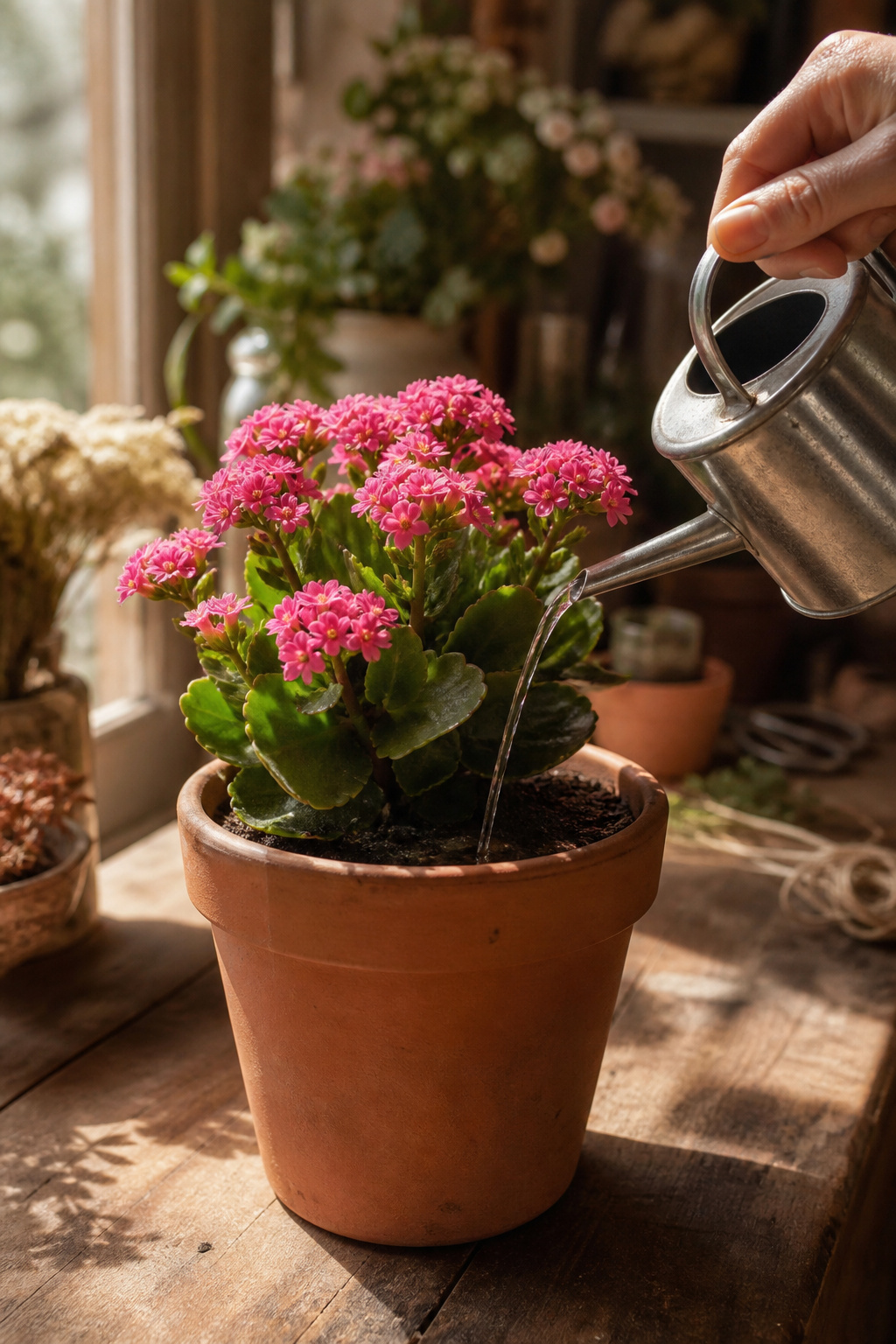
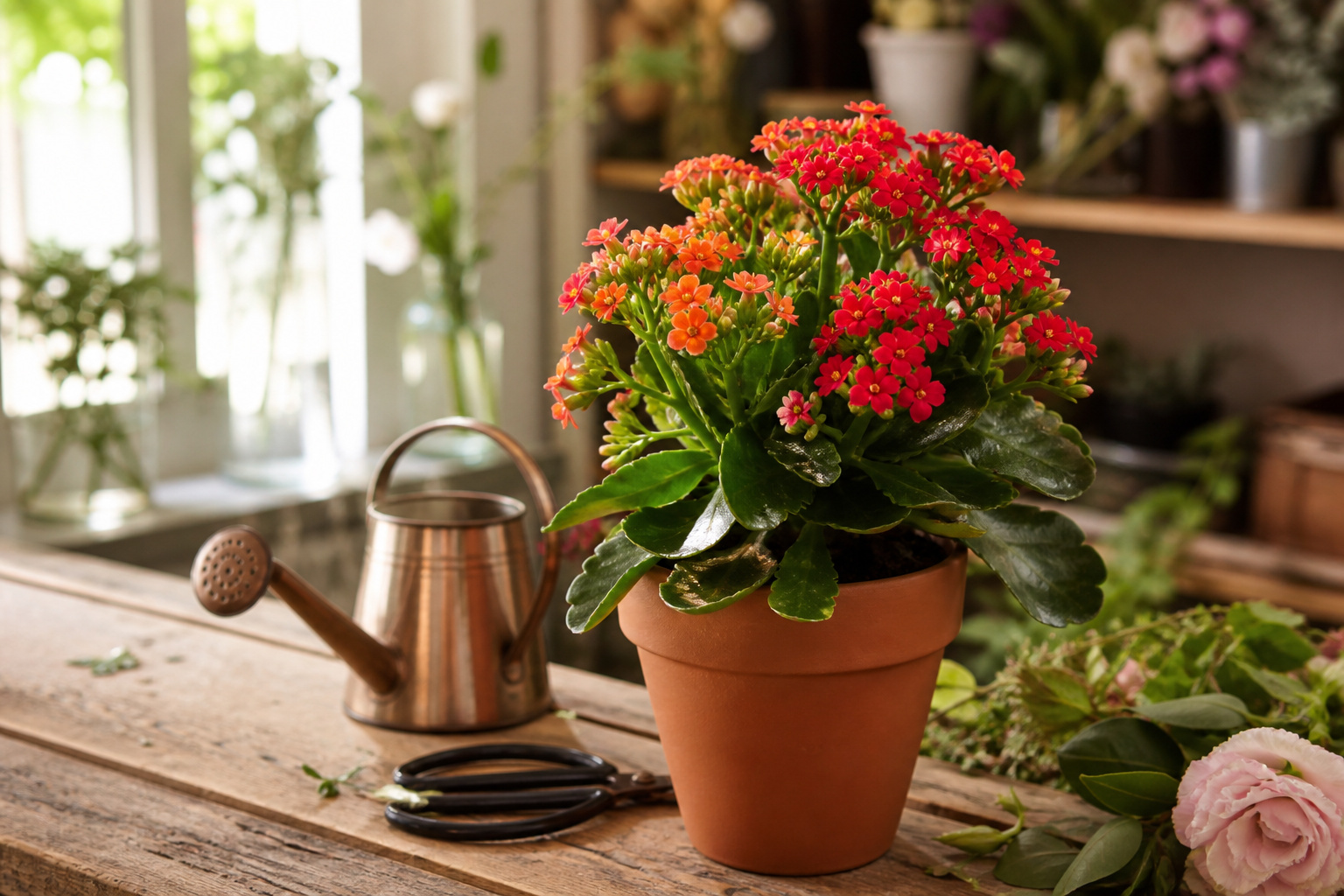
Kalanchoes (Kalanchoe blossfeldiana, sometimes sold as “Flaming Katy”) are part of the Crassula family, the same family as jade plants, so if you’ve had luck with a jade plant, this one will feel familiar. They want a bright spot near a window, but not blasting midday sun through the glass.
Weak light shows up fast on this plant. The flowers fade to pale, washed-out versions of themselves, and that’s your sign to move it somewhere brighter.
Water is the other half of the equation, and the mistake I see most is overdoing it. Let the soil dry out most of the way between waterings, then water thoroughly and let it drain completely. Never let the pot sit in a saucer of water. Soggy roots are the fastest way to lose one of these.
What I use in the shop: a well-draining succulent potting mix. Regular potting soil holds too much water for a kalanchoe’s roots, and it’s one of the more common reasons I see these plants struggle at home.
Watch the Temperature, Not the Calendar
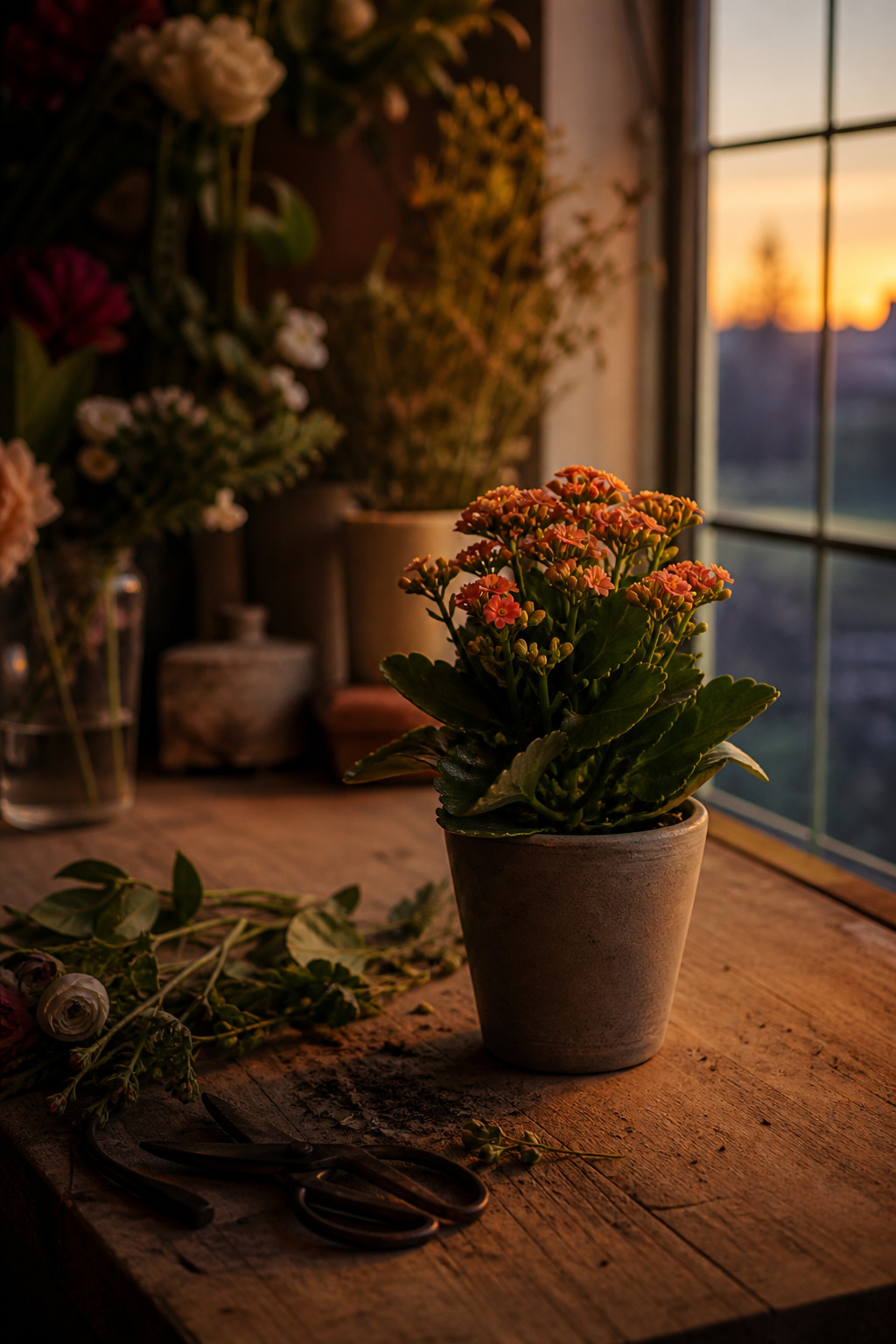
Kalanchoes like it moderate: 60 to 70°F during the day, and a bit cooler at night, 50 to 60°F. Keep them away from cold drafts near a winter window and away from heat vents.
Here in the upper Midwest, mine don’t survive a Wisconsin winter outdoors, and yours probably won’t either unless you’re somewhere considerably warmer. Treat it as an indoor plant, and if you want to give it a summer outside, bring it in well before the first frost.
In my opinion, this is the plant’s real secret to reblooming, and it’s the part most people skip. Kalanchoes are photoperiodic, meaning they set buds based on the length of uninterrupted darkness, not the temperature outside. Give a kalanchoe roughly 14 hours of complete darkness at night for several weeks; a closet or a covered box works fine, and it will set buds again, whether it’s December or July.
Feed It Sparingly
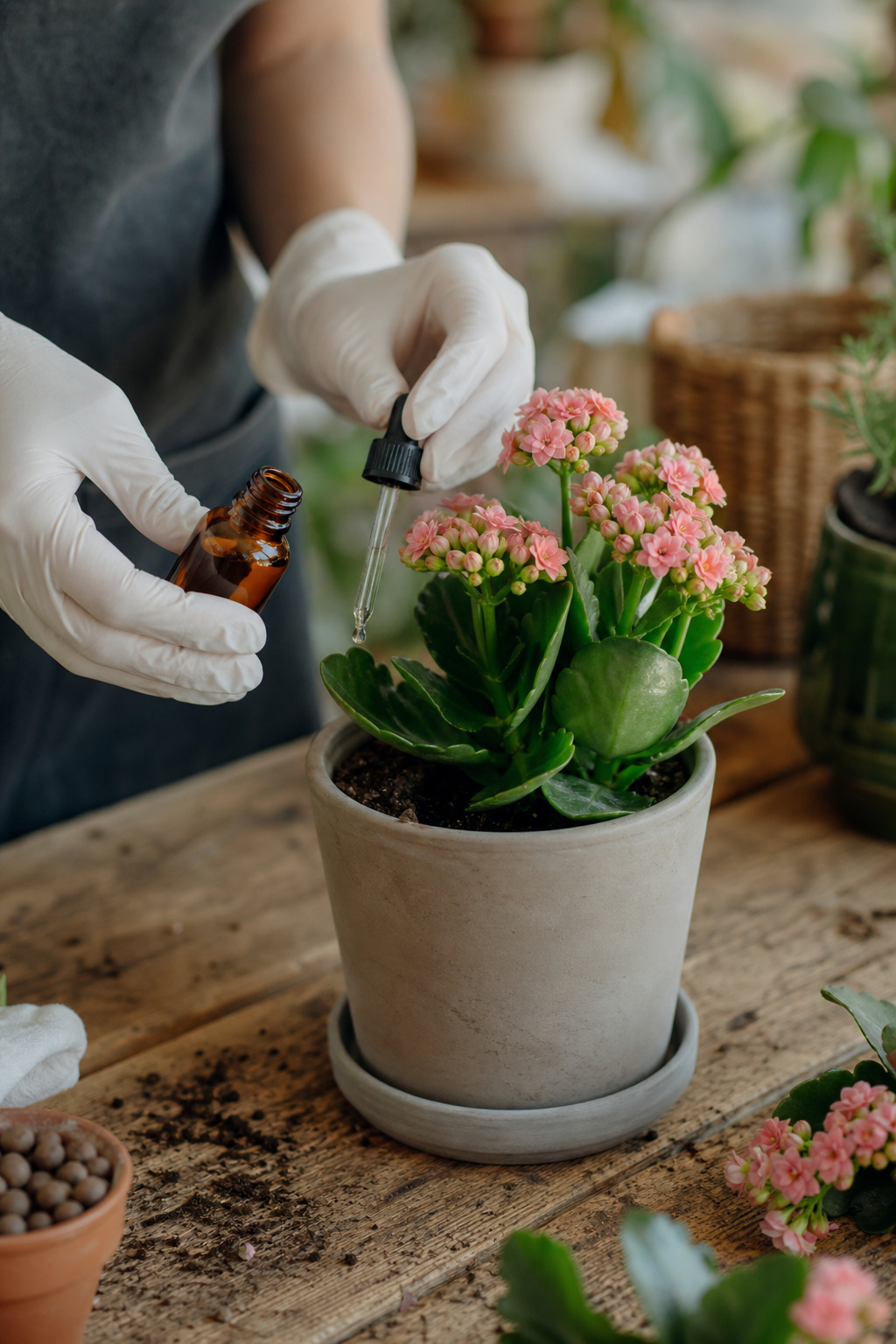
Wait two to three weeks after you bring a kalanchoe home before you start fertilizing it. Once you do, a diluted balanced fertilizer every four to six weeks during active growth is plenty.
Skip the fertilizer entirely once the plant goes into its dark-treatment period before reblooming. Feeding it while you’re trying to force buds confuses the plant, and it won’t help the flowers along.
Take a Cutting and Start a New One
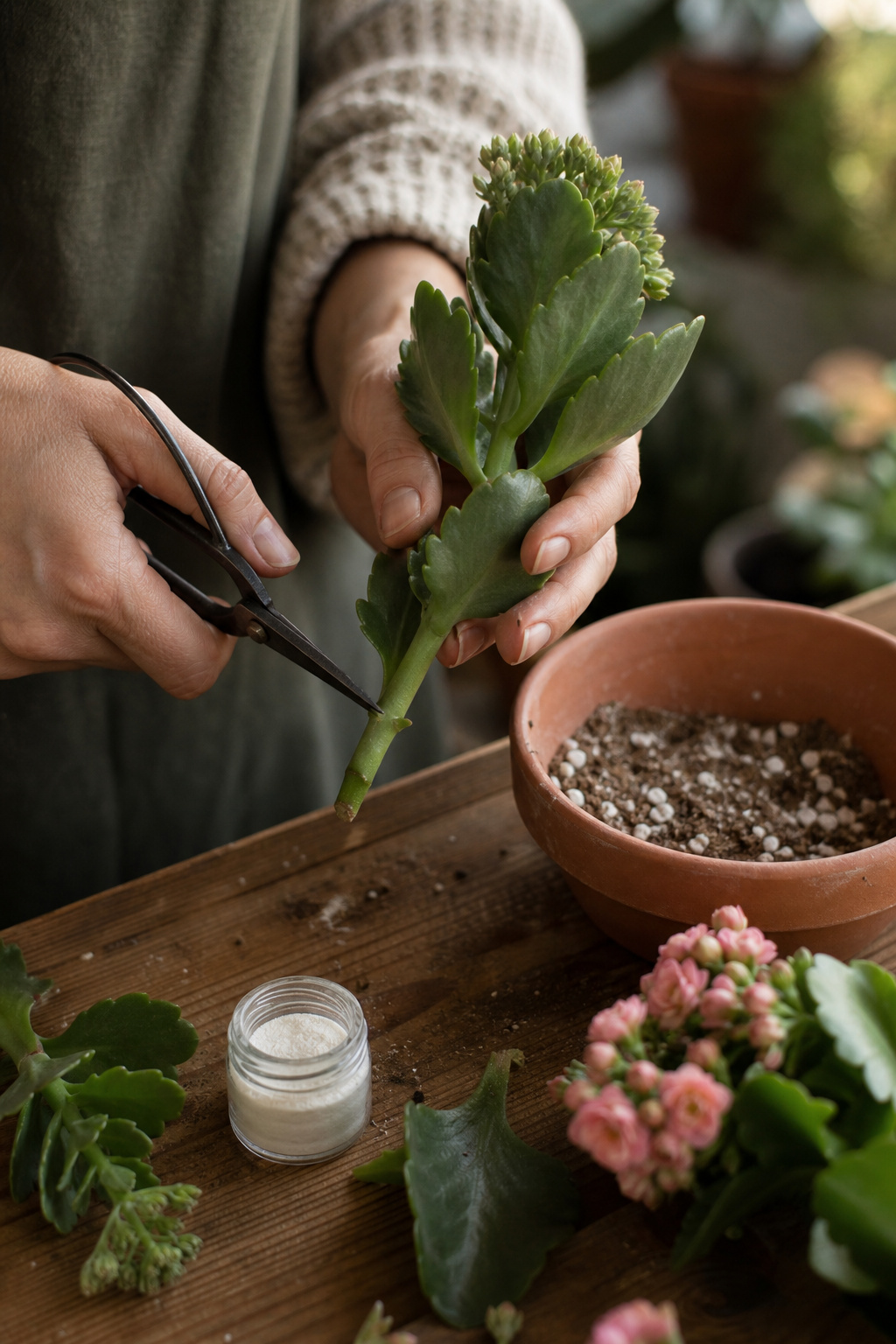
Propagating a kalanchoe is about as low-stakes as it gets. Cut a healthy four-inch piece of stem just below a node, and strip the leaves off the bottom half.
Let the cut end callous over for three to five days before you plant it. This matters more than people think. A cutting planted while it’s still fresh-cut is much more likely to rot before it roots.
What I use in the shop: I’ll dip the calloused end in rooting hormone before potting it. It’s not required for a plant this easy, but it speeds things along and gives me a little more confidence in a cutting I’m planning to sell.
Plant the cutting in the same well-draining mix mentioned above, keep it lightly moist, and you’ll see new growth in about three weeks. Once that new growth shows up, treat it like any other kalanchoe.
Buy From Someone Who Actually Knows the Plant
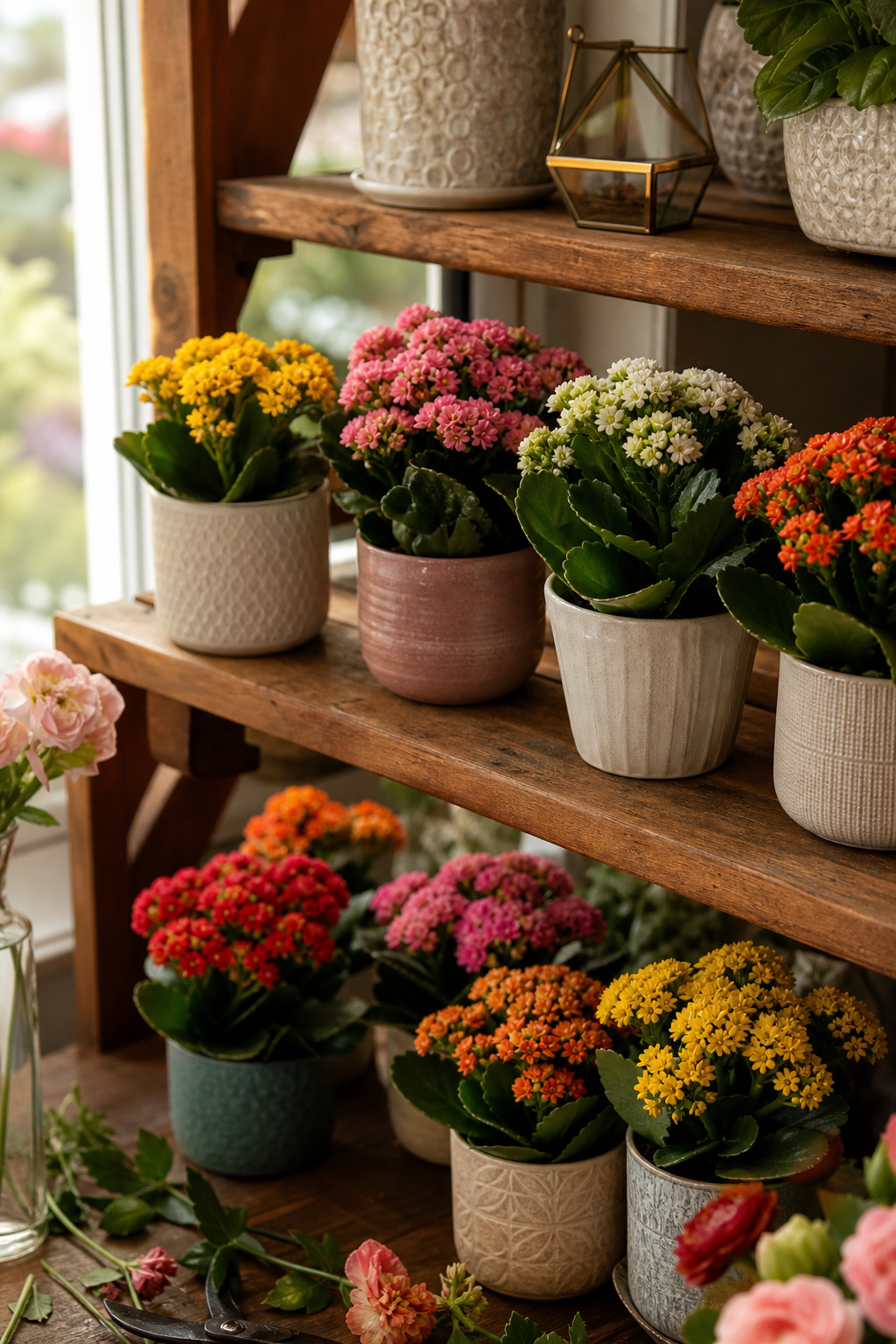
You’ll find kalanchoes just about everywhere flowers and plants are sold, from grocery stores to big-box retailers. That doesn’t mean everywhere is a good place to buy one.
In my experience, a local garden center, greenhouse, or florist is worth the extra couple of dollars. You’re getting a plant that’s actually been cared for properly, someone who can answer questions when you have them, and a good point of contact if something goes wrong. They’re usually happy to point you toward a healthy plant while they’re at it.
Frequently Asked Questions
Why did my kalanchoe stop blooming?
It’s almost always light-related. Once the flowers fade, the plant needs a stretch of uninterrupted darkness at night to set new buds. It’s not dying, it’s just resting.
Are kalanchoes toxic to pets?
Yes. Kalanchoes contain compounds that are toxic to cats and dogs if chewed or eaten, so keep them out of reach of curious pets.
Can I grow a kalanchoe outdoors?
Only in warm climates that don’t see frost. Everywhere else, including here in Wisconsin, it needs to come indoors before the weather turns.
How often should I water a kalanchoe?
Only when the soil has dried out most of the way, usually every one to two weeks, but it depends on your home’s humidity and light.
Why are the leaves getting soft or mushy?
That’s almost always overwatering. Cut back and let the soil dry out fully before you water again.
How long do kalanchoe blooms last?
With the right light and consistent care, the flowers can stay on the plant for several weeks at a stretch.
Closing Thoughts
A kalanchoe is one of the easiest blooming plants to grow, once you know it’s a light plant rather than a water plant. Get the darkness right, and the color takes care of itself.
If you’ve got a kalanchoe that won’t rebloom, drop a comment below and tell me what your setup looks like. I’ll help you figure out what it’s missing.
Til next time,