Disclosure: This post may contain affiliate links. If you click and buy, we may earn a commission at no extra cost to you. As an Amazon Associate, we earn from qualifying purchases.
Last Updated: June 26, 2026
A woman came into the shop a few years back, poinsettia in hand, looking equal parts frustrated and embarrassed. She’d had it for maybe ten days and the leaves were already yellowing. “I did everything right,” she said. I asked if she’d taken the foil wrapper off the bottom when she watered it. She hadn’t. That was it. That was the whole problem.
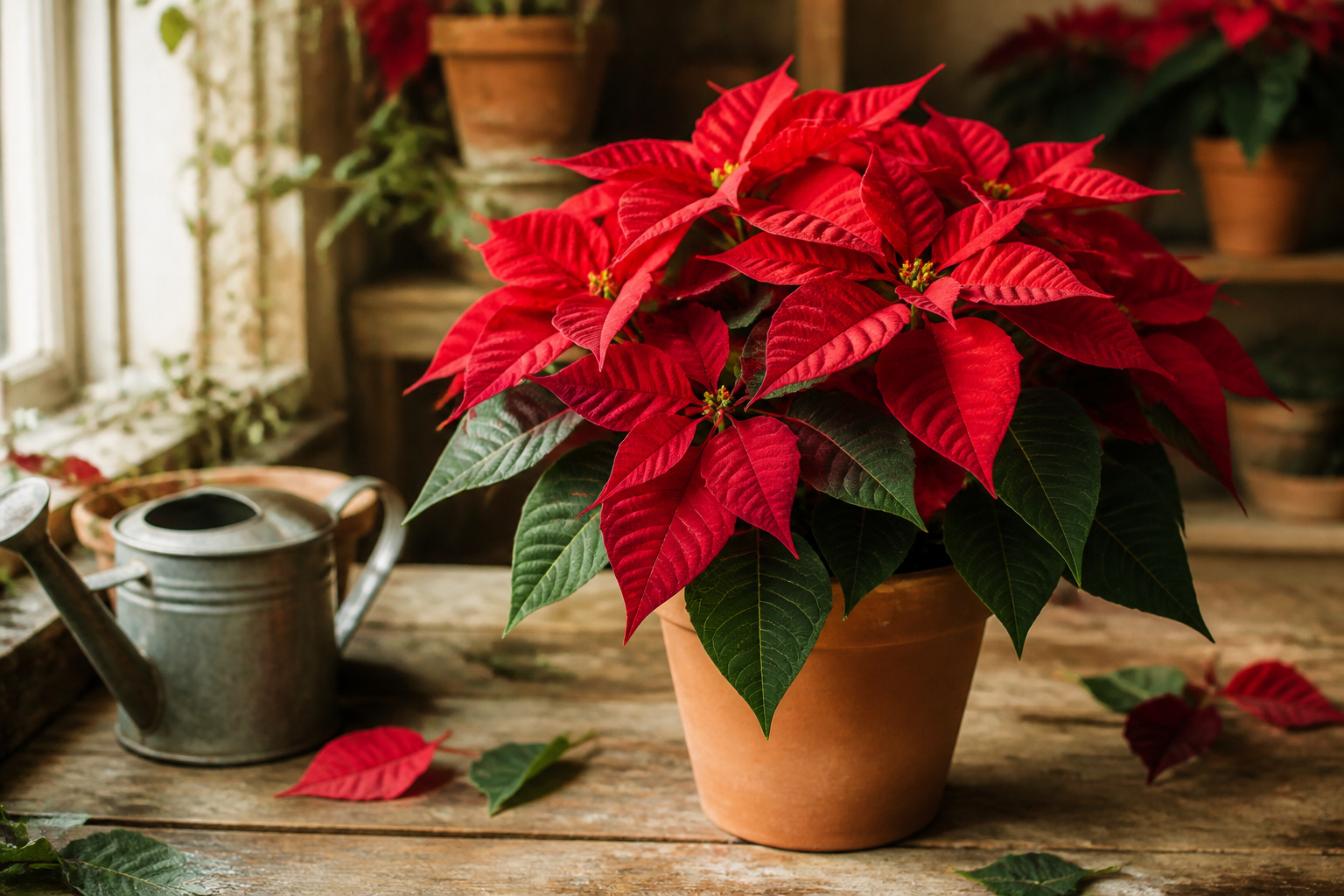
Poinsettias have a reputation for being fussy. In my experience, they’re really not. They do have a few requirements that nobody bothers to explain when you buy one. Get those right, and yours will look great through the entire holiday season.
Pick a Good One at the Store
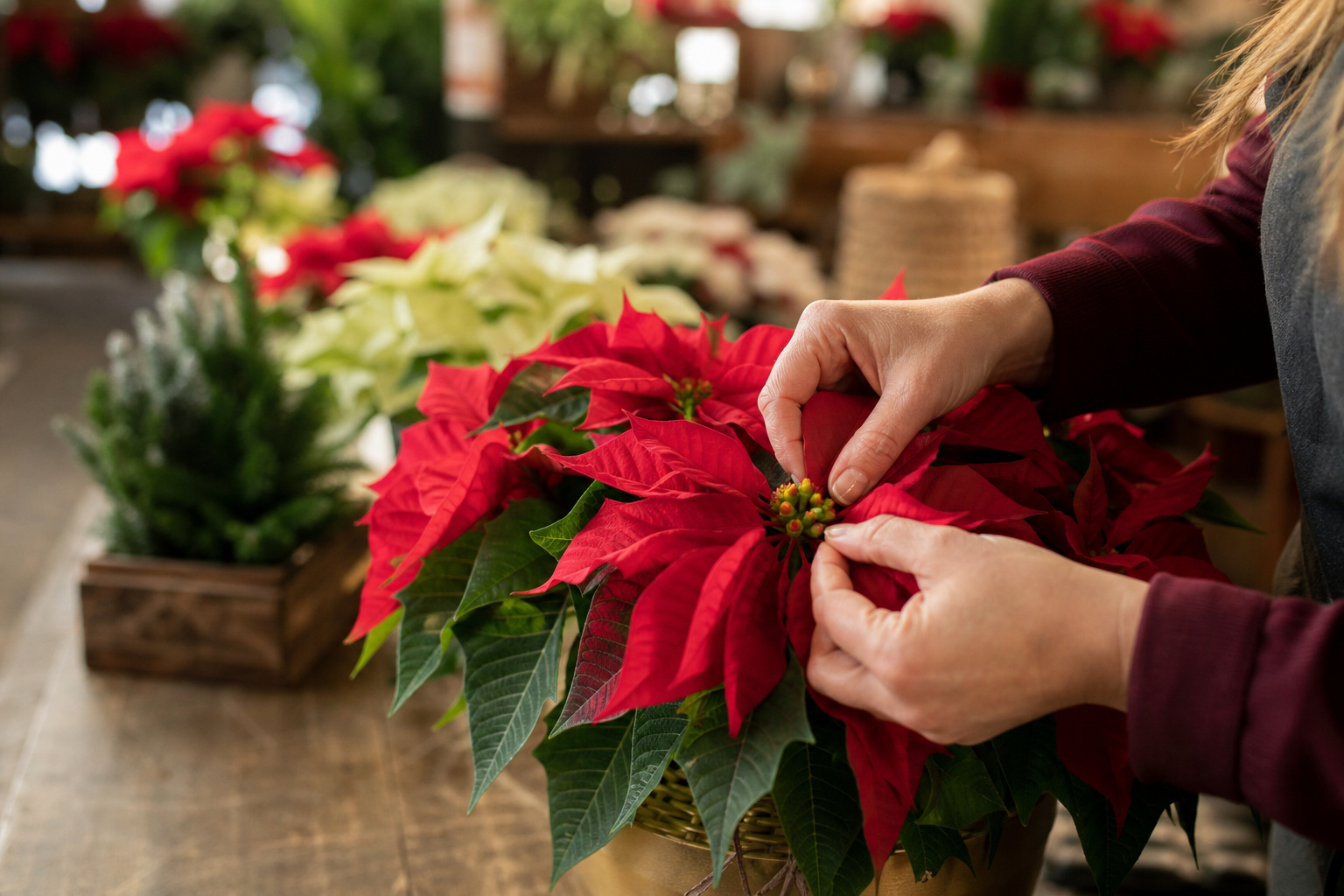
Poinsettia care starts before you even get the plant home, and which one you pick at the store matters more than most people think. I’ve written a full poinsettia buying guide that walks through checking the true center flowers, timing your purchase, and spotting a plant that’s already stressed before it reaches the register. Worth a read before you shop, since everything in this post assumes you started with a healthy plant.
Give It the Right Light
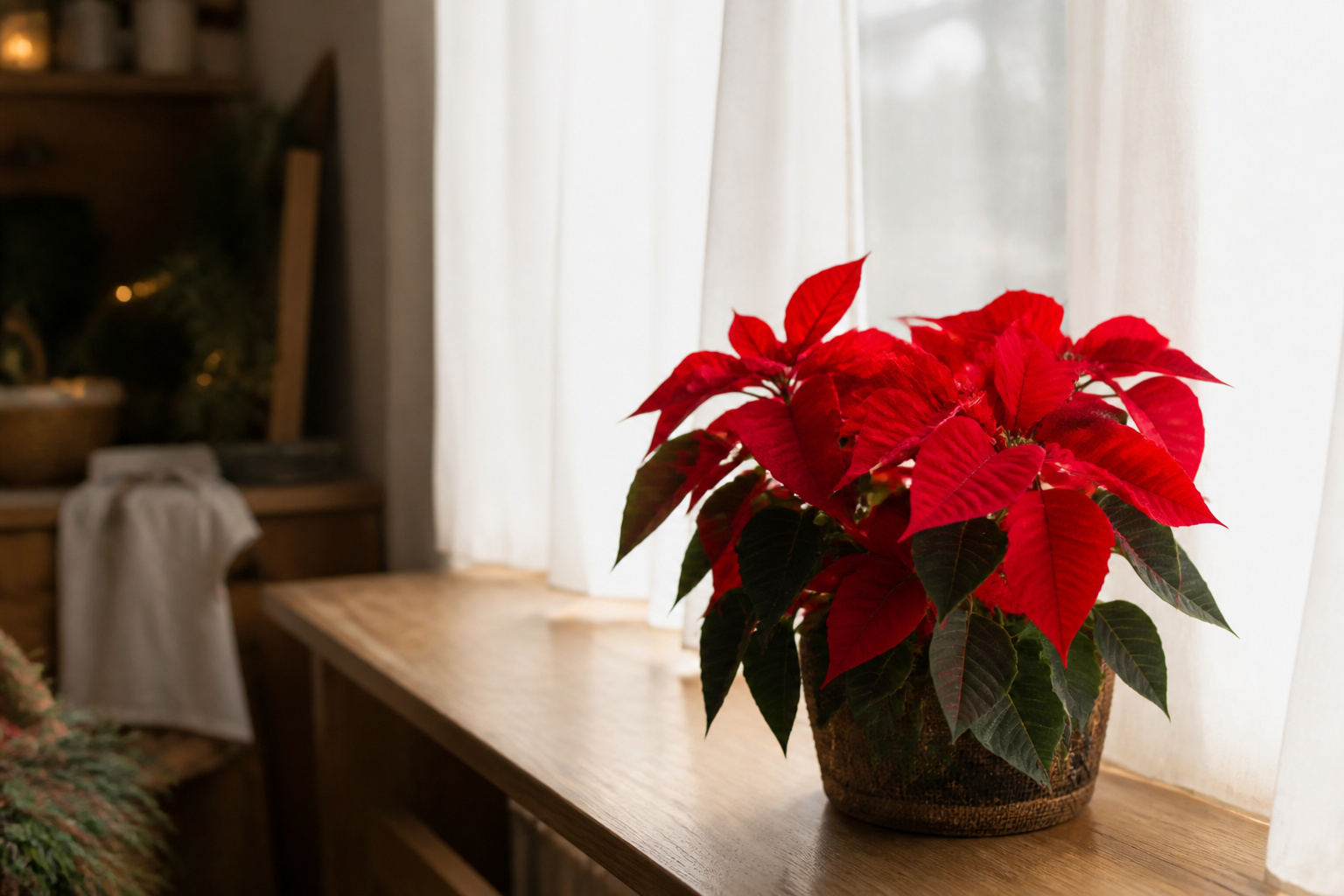
Poinsettias want bright, indirect light. A south- or east-facing window is ideal. Somewhere that gets 6 hours of good light without direct sun hitting the bracts. Direct sun will bleach and burn the colored leaves.
One thing people don’t think about: don’t let the leaves touch the glass. In winter, window glass can get cold enough to damage the plant on contact. Pull it back an inch or two from the pane.
No great window? They’ll manage with less light, but the bracts will fade faster. A good grow light for a few hours a day will extend the show if your space is dark.
Water It Correctly — This Is the Big One
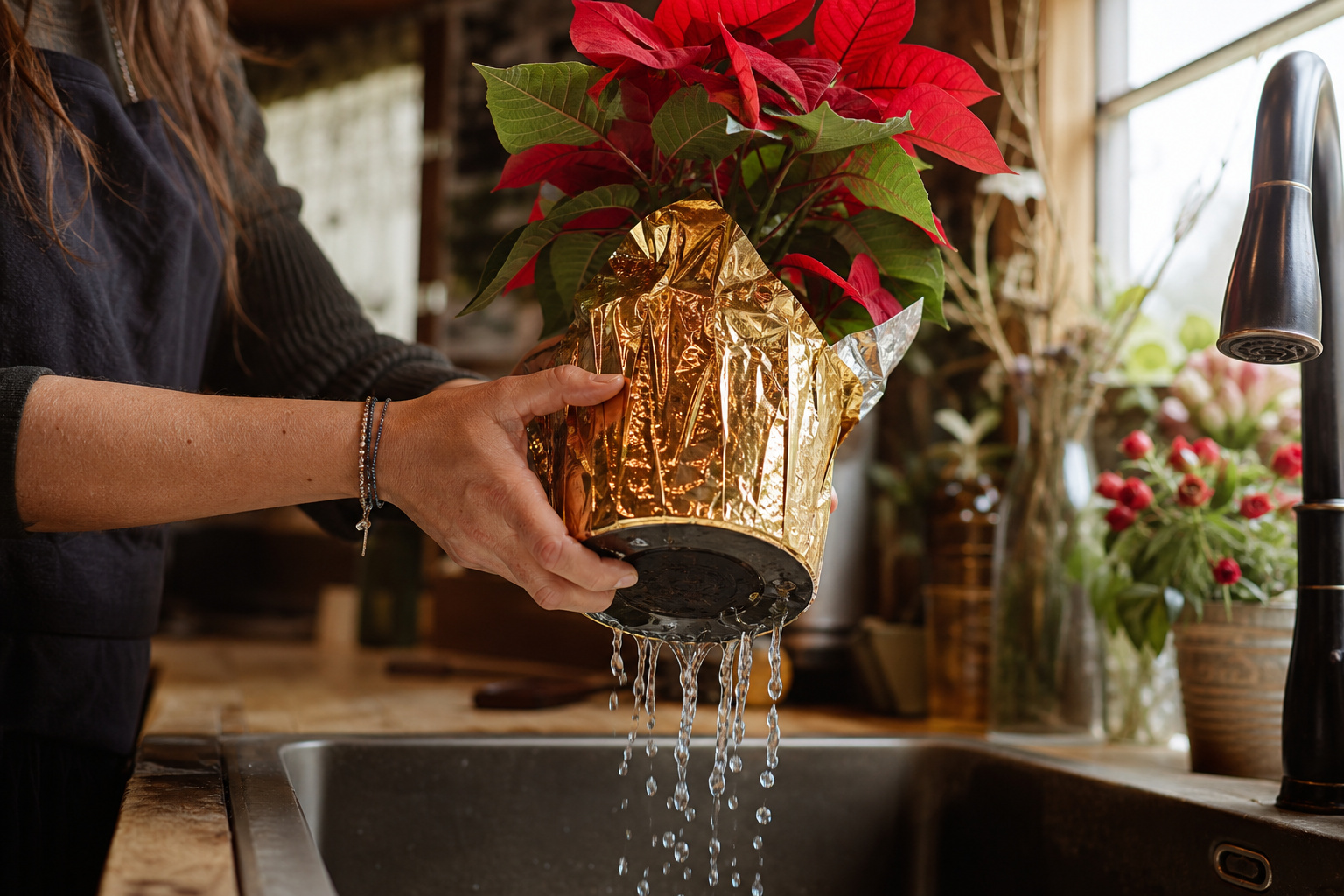
More poinsettias die from overwatering than anything else. The rule I give every customer: water thoroughly when the top inch of soil feels dry, then let it drain completely. Never let the pot sit in water.
Here’s the specific thing that trips people up: most poinsettias come wrapped in decorative foil. That foil traps water at the bottom of the pot. Before you water, pull the pot out of the foil, take it to the sink, water it well, let it drain fully, then put it back. Sounds like an extra step. It is. Do it anyway.
At home, my poinsettias are typically in 8-inch pots. I water them at the kitchen sink every four to five days during the holidays, letting them drain completely before I put them back on display. That’s what works in my house. Your schedule may differ depending on pot size, heat, and light.
Smaller pots dry out faster. Larger ones hold moisture longer. Use your finger to check the soil rather than going by the calendar.
Keep the Temperature Steady
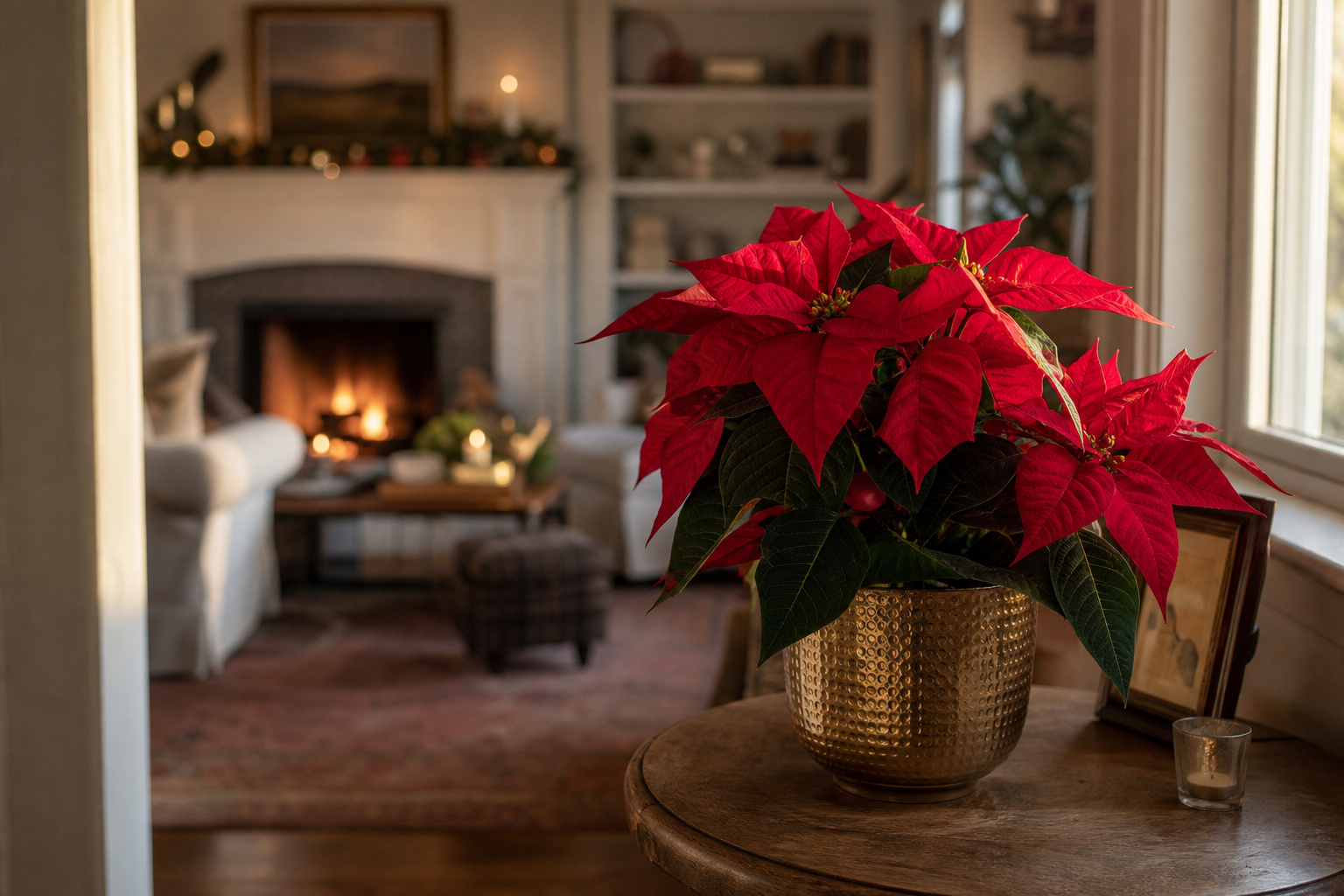
The sweet spot for poinsettias is 65°F to 75°F. They’ll tolerate a little variation, but cold drafts are the enemy. Keep them away from exterior doors, drafty windows, and heating vents. A blast of cold air when the front door opens won’t kill the plant, but repeated exposure will cause leaf drop.
Indoor humidity in winter is usually low, especially with forced-air heat running. Poinsettias appreciate a little extra moisture in the air. Misting the foliage a couple of times a week helps. A small humidifier near the plant works even better if you have one.
Skip the Fertilizer During Blooming
No fertilizer while the plant is in bloom. It doesn’t need it and can actually push the plant to put energy into new vegetative growth instead of holding its color. Save the fertilizer for spring, after the bloom cycle ends.
What to Do After the Holidays
Poinsettias aren’t expensive. Honest answer: Most people are better off buying a fresh one each December than trying to carry one over. I compost mine before the first frost every year and pick up a new plant in early December. That’s not laziness, that’s just being practical about where your time goes.
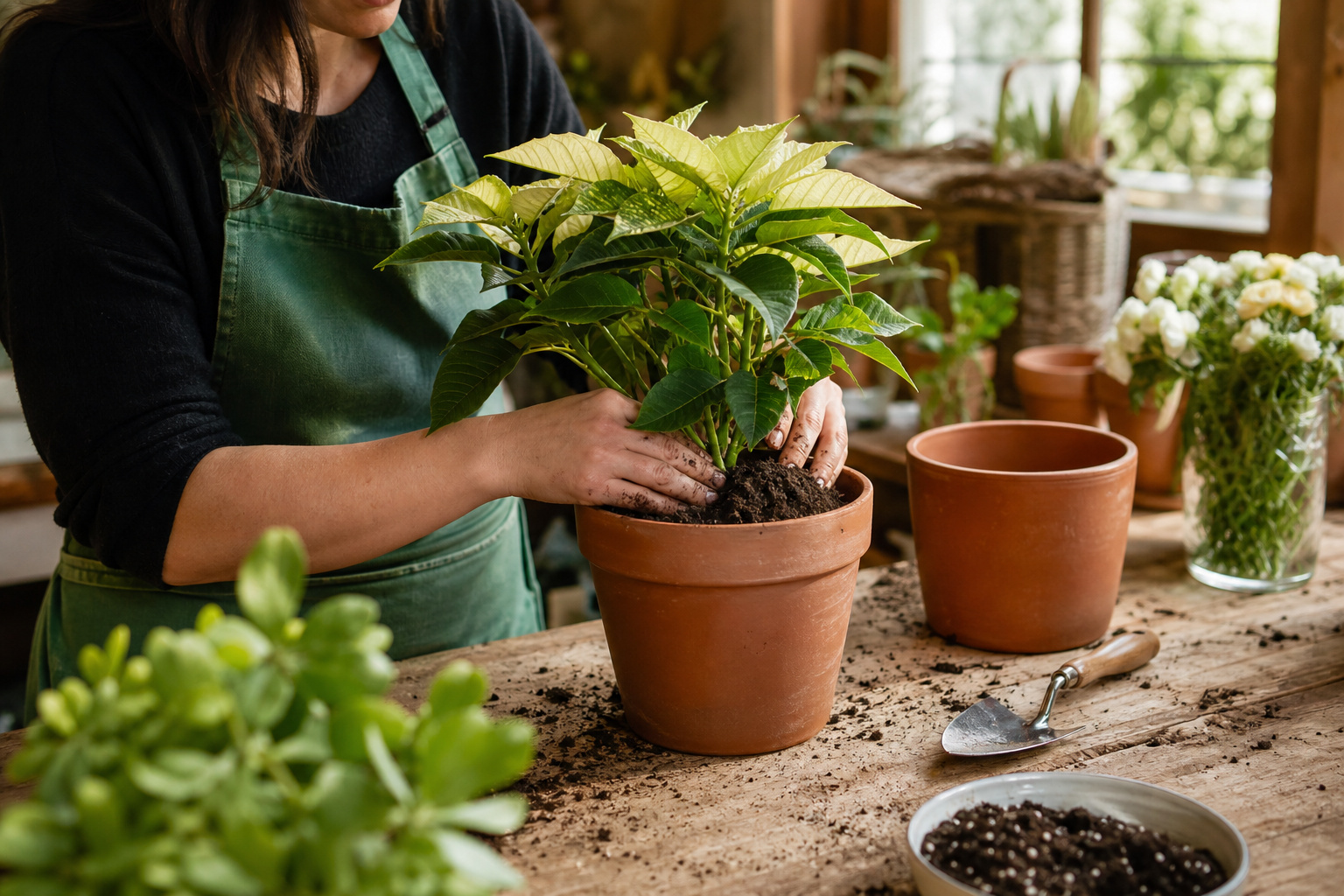
That said, if you want to keep yours going, here’s what I do. In March, I cut the plant back by about a third to encourage bushier growth. Then I repot it into a slightly larger container, move it outside once nighttime temps stay above 50°F, and let it grow through summer with regular watering and a balanced fertilizer every two weeks. It makes a decent-looking foliage plant through the warm months.
Before the first frost, bring it back inside. If you want it to bloom again for the holidays, you’re signing up for some work.
Getting It to Rebloom (If You’re Up for It)
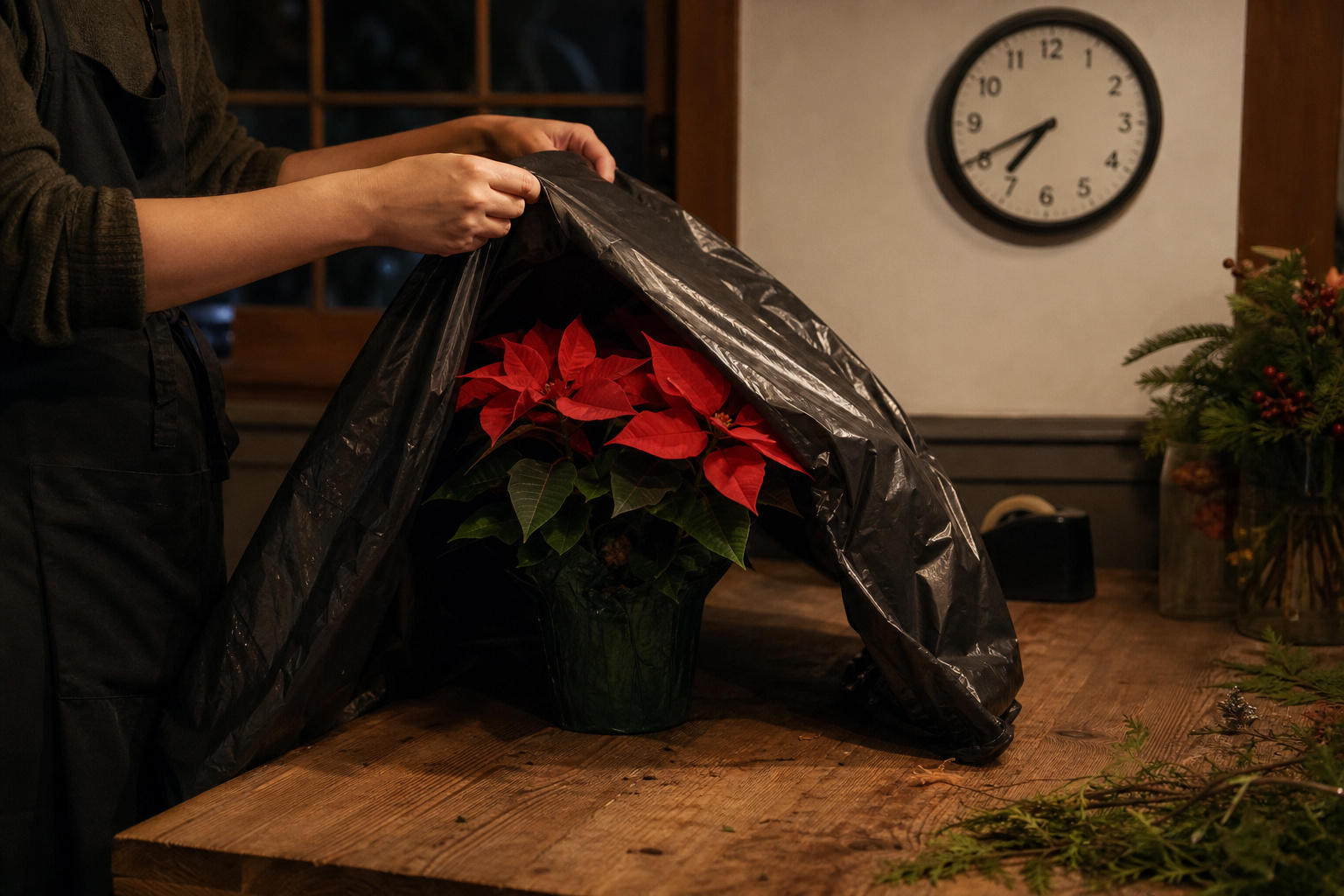
Poinsettias are short-day plants. They need 14 hours of complete darkness each night for roughly 8 to 10 weeks to trigger flowering. You need to start in early September to have color by the holidays.
The process: cover the plant completely from 5 p.m. to 8 a.m. every single day. No exceptions. A large black plastic bag or a cardboard box works. Then move it to bright light from 8 a.m. to 5 p.m. Any light during the dark period, even from a streetlight through the window, can disrupt the whole process.
Do this faithfully for 8 to 10 weeks, and the bracts should start to color up in November. Stop the dark treatment, put the plant in its display spot, and resume normal care.
I tried it a few times early on. The results were inconsistent. It takes military-like discipline, and one missed evening can set you back. That’s why I replaced mine with a new plant each year. But if you enjoy the process, it absolutely can be done.
Frequently Asked Questions
Why are my poinsettia leaves turning yellow and falling off?
Almost always a watering issue; either too much or too little. Check whether the foil wrapper is trapping water at the bottom of the pot, and make sure the soil isn’t staying soggy between waterings. Cold drafts can also cause leaf drop, so check the plant’s position near doors or vents.
Are poinsettias poisonous to dogs, cats, or people?
Mildly toxic, not lethal. The milky white sap can cause skin irritation on contact and an upset stomach if ingested in quantity, but it’s not the deadly plant it’s sometimes made out to be. If you have pets or small children who like to chew on things, keep the plant out of reach as a precaution.
How long do poinsettias last?
With proper care, four to six weeks of good color is realistic. If you bought one with tight, unopened buds and you’re managing light, water, and temperature correctly, you can push that toward eight weeks. Conditions matter; a warm, drafty room will shorten the bloom period considerably.
Can I put my poinsettia outside in the summer?
Yes, once nighttime temperatures stay consistently above 50°F. They do well outside in a partly shaded spot. Bring them back in before the first fall frost. Poinsettias are not cold-hardy.
Why won’t my poinsettia rebloom?
The most common reason is light interruption during the dark period. Any light at all, even briefly, can reset the clock. If the room where you’re storing the plant gets light from a TV, lamp, or streetlight, the plant won’t flower. The dark period has to be complete.
Do poinsettias come in colors other than red?
Yes, white, pink, salmon, burgundy, bi-color, and even speckled varieties are all available. The care is the same regardless of color. Red is the classic for a reason, but the other colors work just as well in holiday arrangements.
Closing Thoughts
Poinsettias are one of the few plants that actually live up to the occasion they’re sold for. With a little attention to water, light, and temperature, yours will hold its color from Thanksgiving through New Year’s without much drama.
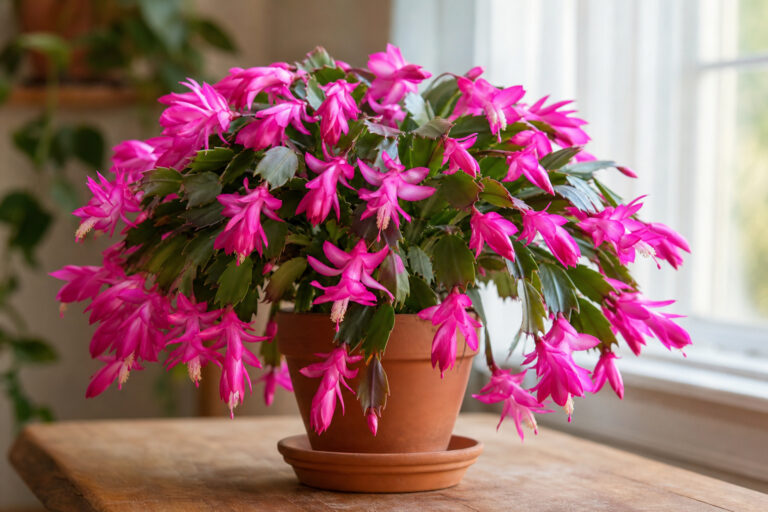
If you want to put those colorful bracts to work beyond the pot, take a look at my post on using poinsettias as cut flowers. There’s a trick to keeping that milky sap from fouling your water. And if you’re into other holiday plants, the Christmas cactus care guide is worth a read.
Drop a comment below and let me know if you replace yours every year as I do, or if you are one of the dedicated few who get it to rebloom. I’m genuinely curious how many people pull that off.
Til next time,