Disclosure: This post may contain affiliate links. If you click and buy, we may earn a commission at no extra cost to you. As an Amazon Associate, we earn from qualifying purchases.
Last updated: May 25, 2026
A woman came into the shop a few years back with a Christmas cactus that hadn’t bloomed in three years. She’d been giving it what she called “the full treatment” — watering it regularly, keeping it in a sunny window, fertilizing it every month. The plant was healthy, absolutely. Lush, even. Just completely silent on the flower front.
The problem wasn’t neglect. It was the opposite. She was doing too much, and doing it at the wrong times.
A Christmas cactus is one of the better gift plants out there — a real step up from the standard poinsettia if you want something that’ll last for years instead of one holiday season. With the right care, these plants bloom reliably every winter and can live for decades. But “the right care” isn’t the same year-round. That’s the part most people miss.
Here’s what I tell customers when they buy one.
Know Which Holiday Cactus You Actually Have
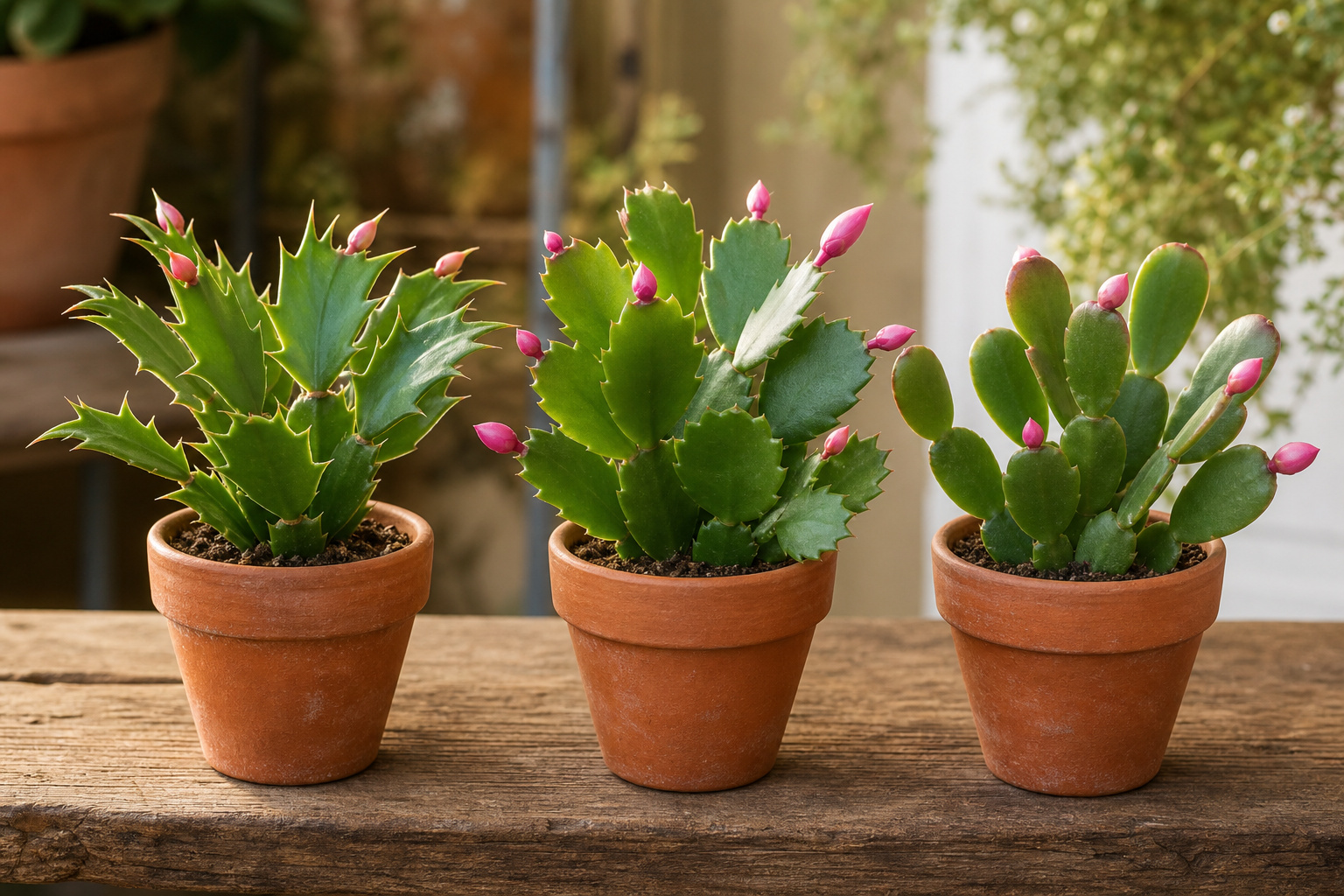
Here’s the thing most people don’t know: the majority of plants sold as Christmas cacti today are actually Thanksgiving cacti. You can tell them apart by the leaf segments. Thanksgiving cactus has pointed, claw-like projections on each segment. True Christmas cactus has rounder, scalloped edges. Easter cactus has smoother, more rounded segments and tends to bloom in spring.
For our purposes, the care is essentially the same across all three. I’ll call them all Christmas cacti here, because that’s what most people call them, regardless of which one they’ve got.
Here’s a short video that covers the basics well, including how to tell them apart and what to expect from each variety.
Give It the Right Light
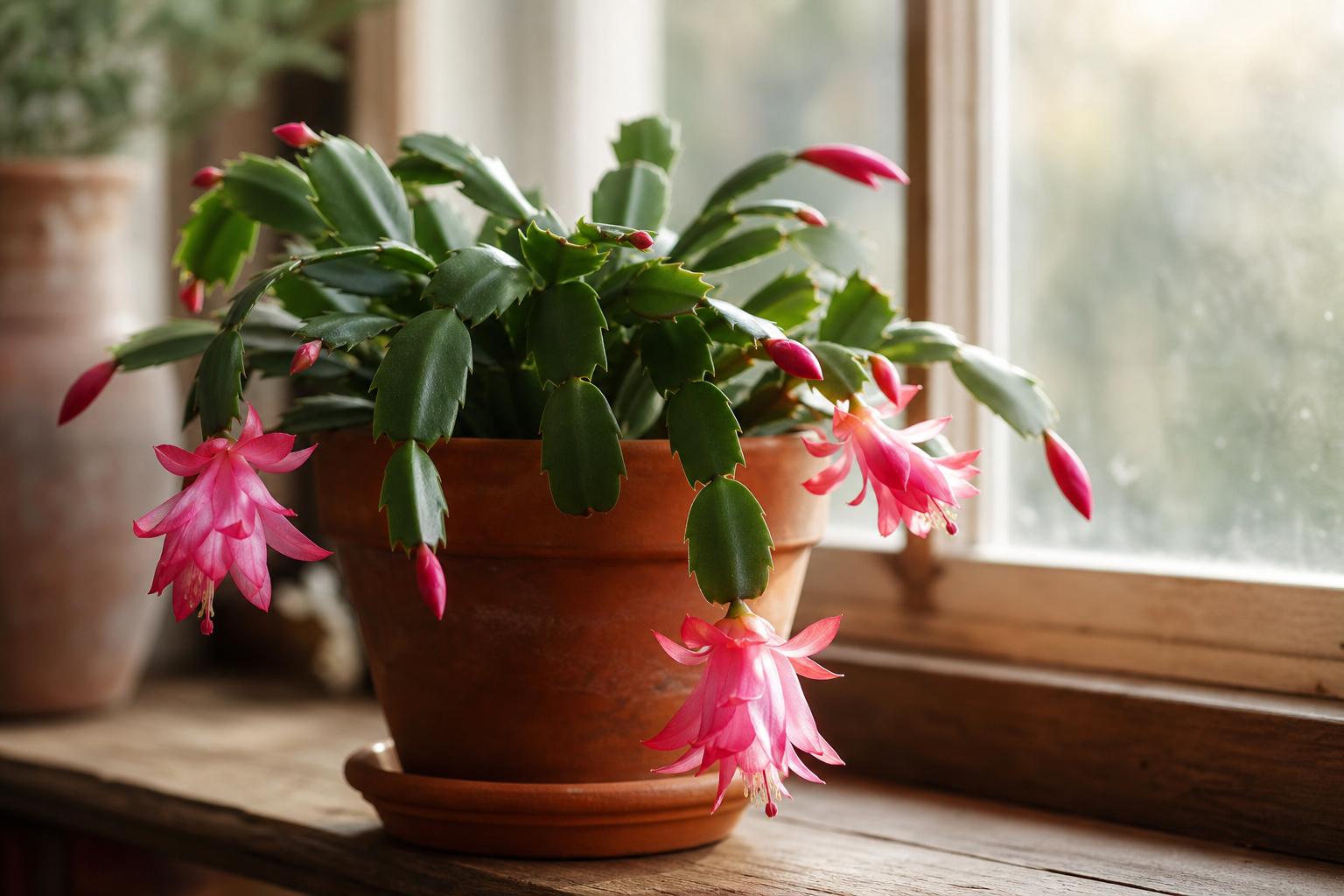
Christmas cacti want bright indirect light. A north or east-facing window is the sweet spot — enough light to keep the plant healthy, without the intensity of direct afternoon sun that can bleach and burn the leaf segments.
They can survive in lower light, but you’ll get noticeably fewer blooms. If your only option is a low-light spot, consider supplementing with a basic grow light during the fall and winter months when they’re setting buds.
One thing worth knowing: Christmas cacti are not desert plants. They’re epiphytic, meaning they grow attached to trees and rocks in tropical forests in their native Brazil — similar to orchids in that way. They evolved in humid, shaded conditions, not baking sun. That background matters for everything from light to watering.
Water It Right — This Is Where Most People Go Wrong
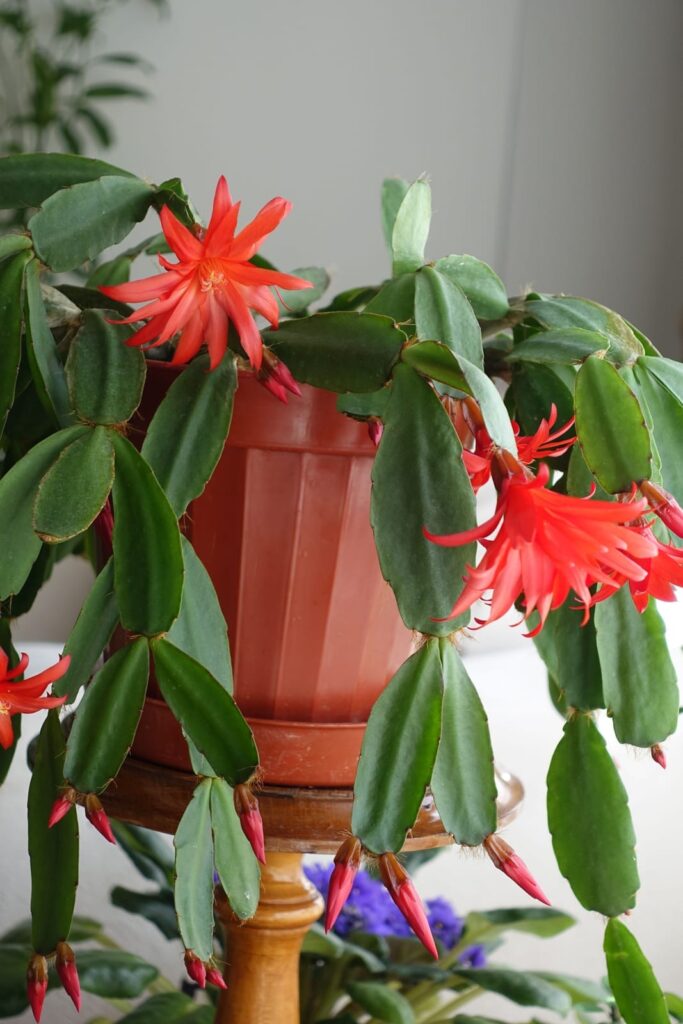
Unlike desert cacti, Christmas cacti cannot tolerate bone-dry soil for extended periods. But they also can’t sit in soggy soil. The right rhythm is thoroughly watering when the top inch of soil is dry, then letting it dry out before watering again.
In practice, that usually means watering every one to three weeks, depending on the season, your home temperature, pot size, and humidity level. No fixed schedule works for every situation. Check the soil first, every time.
Always water thoroughly, until water runs out the drainage hole, and then drain off any excess. Never let the pot sit in standing water. That’s the fastest path to root rot.
During the blooming period, back off the water a bit. After blooms drop, you can resume normal watering. In the fall, when you’re trying to trigger bud set, reduce watering further and let the soil get drier than usual. More on that in the blooming section below.
Use the Right Soil and Pot
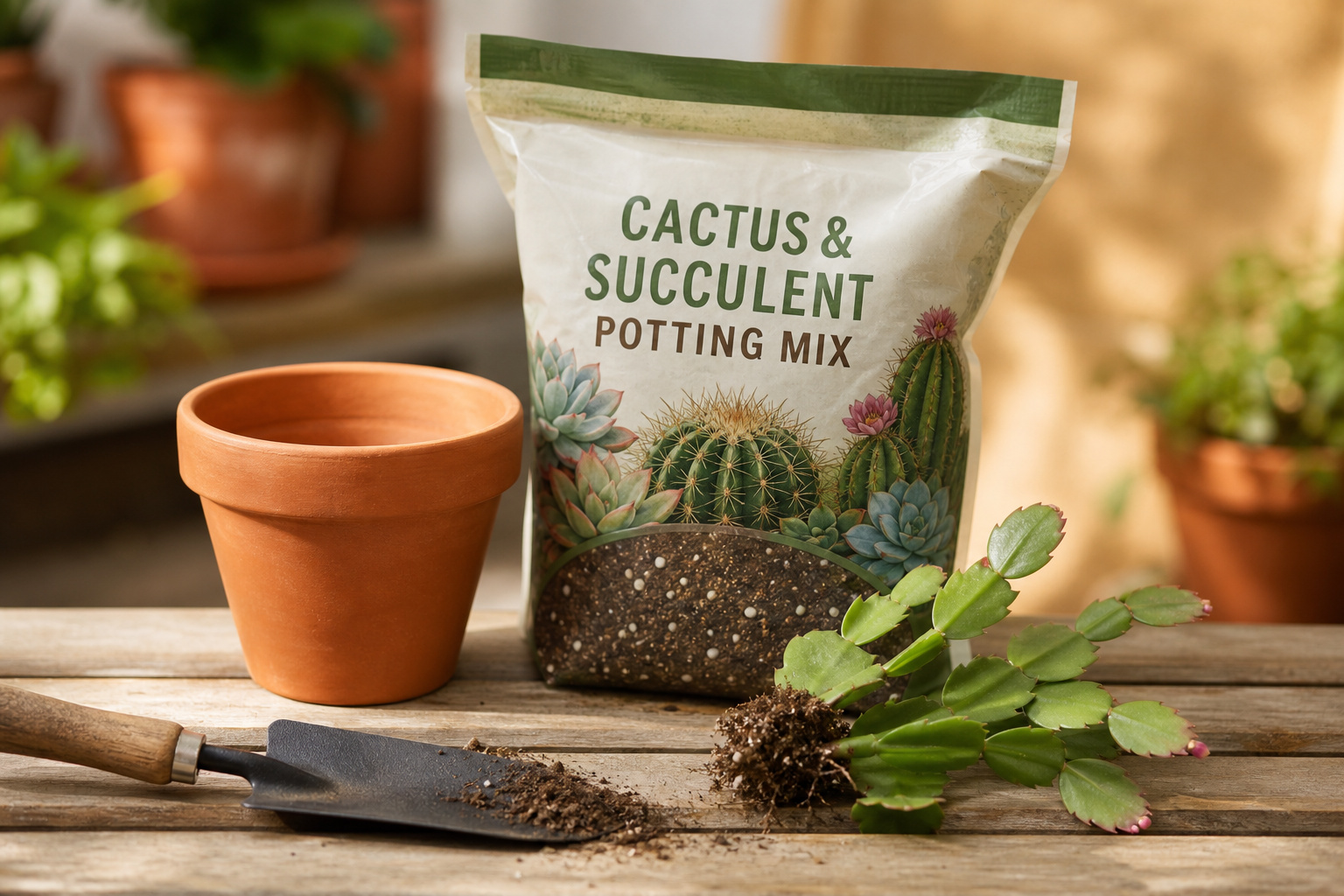
Standard potting soil holds too much moisture for Christmas cacti. Use a cactus and succulent mix — it drains quickly and keeps the roots from sitting in wet soil. I use Miracle-Gro Succulent Potting Mix in the shop. It’s porous, fast-draining, and consistent.
For pots, terra cotta is your friend. The porous clay wicks moisture away from the soil between waterings, which is exactly what these plants want. Plastic and glazed ceramic trap moisture and make it too easy to overwater.
Christmas cacti actually prefer being slightly potbound. Don’t rush to repot them. Every two to three years is plenty, and the best time is a couple of months after blooming — usually in spring or early summer. Move up only one pot size at a time.
Keep It in the Right Temperature Range
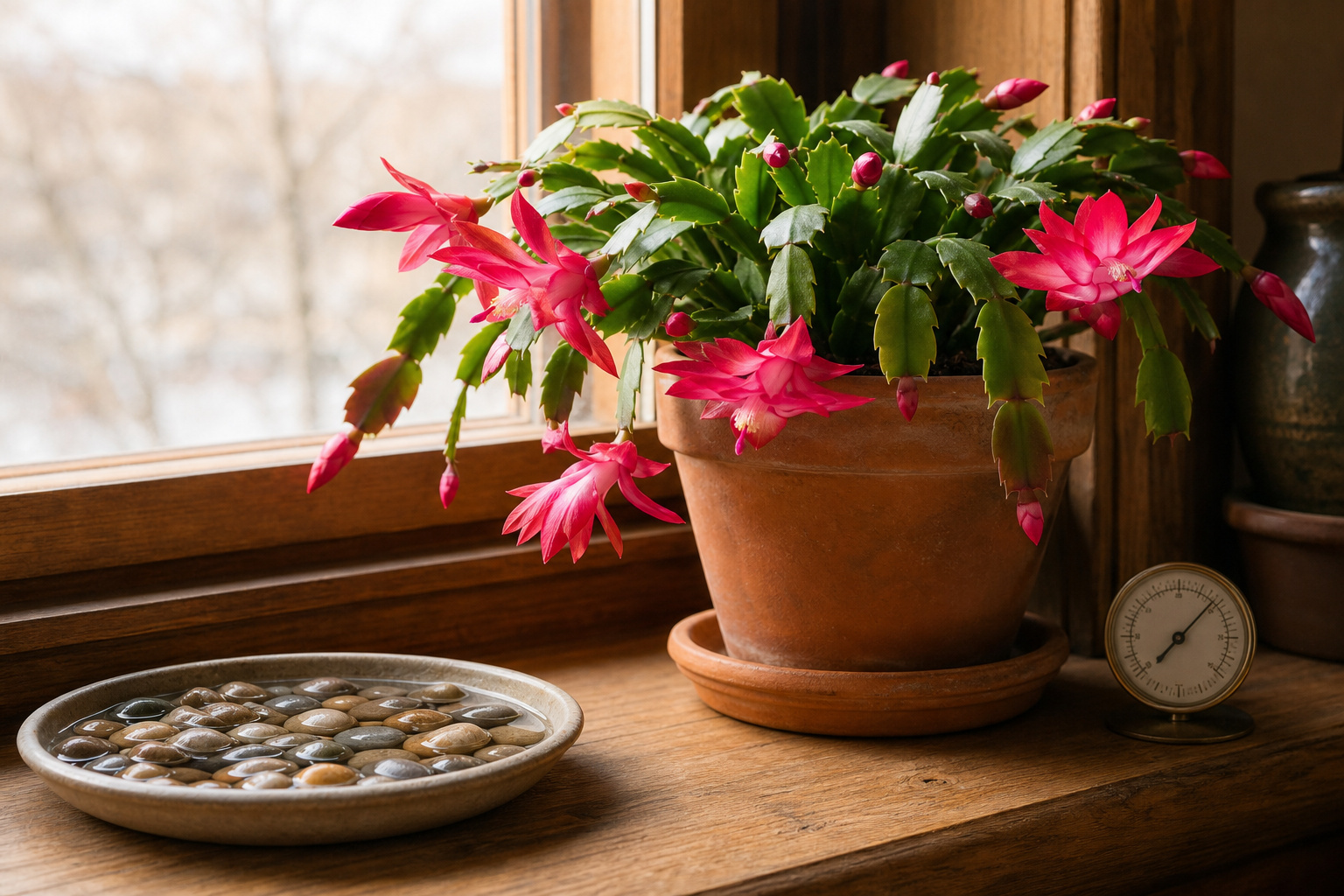
During the day, 65°F to 75°F is their comfort zone. They need cooler temperatures at night to set and hold their buds — somewhere in the 55°F to 65°F range is ideal. This is one of the reasons plants in a slightly cool bedroom or near a drafty window often bloom better than ones in a warm, centrally heated room.
If you move yours outside for the summer — which is fine and they do well outdoors in warm weather — bring it in before temperatures drop below 50°F. Frost will kill it.
Humidity matters too. These are tropical plants, and they appreciate some moisture in the air. The simplest way to boost humidity without a humidifier: set the pot on a shallow tray of pebbles and water, making sure the pot bottom doesn’t actually touch the water. As the water evaporates, it raises the humidity around the plant.
Fertilize During the Growing Season Only
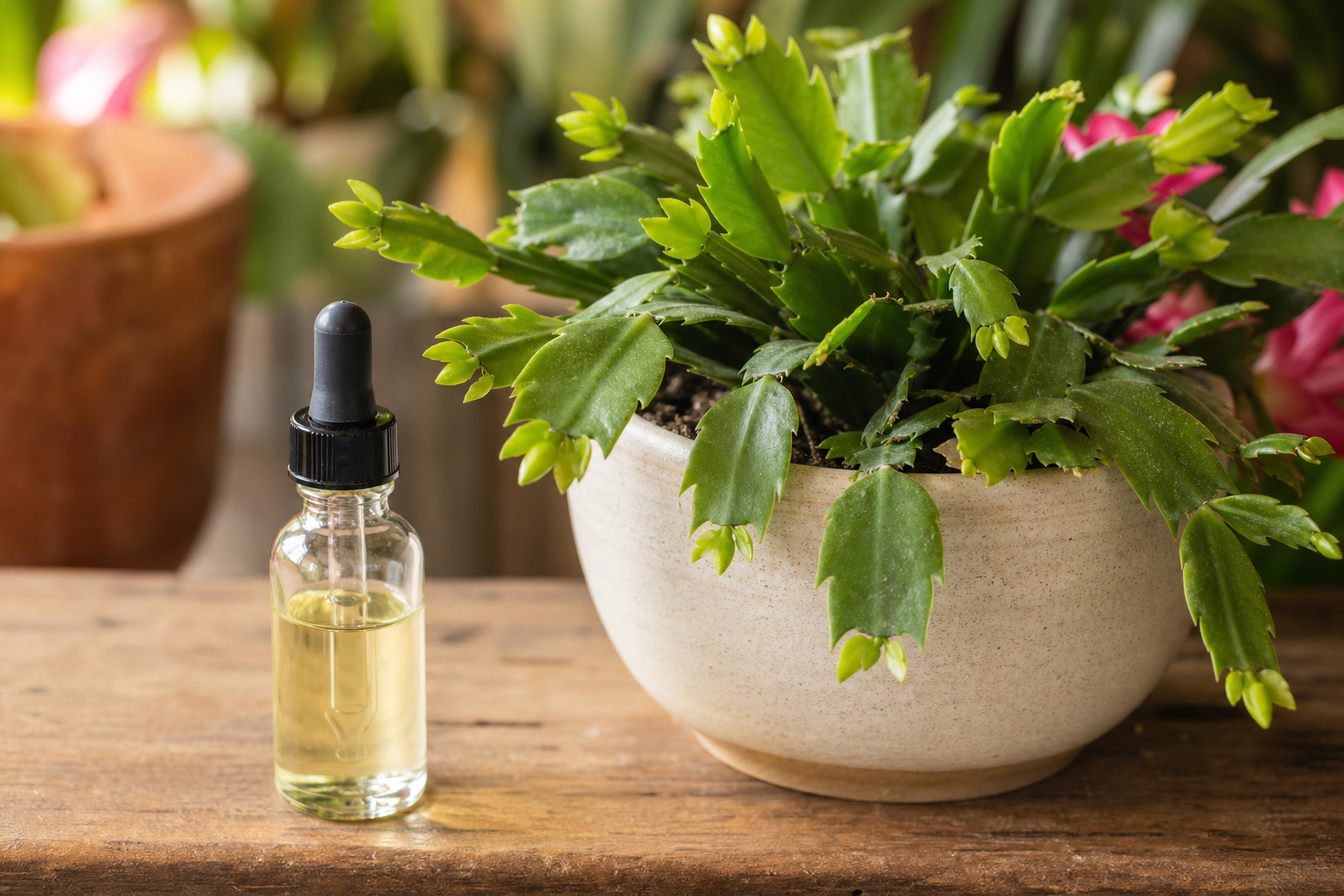
Christmas cacti don’t need much fertilizer, but they do respond to feeding during their active growth period. Once new growth appears in the spring, start fertilizing monthly through midsummer. Use a fertilizer made for succulents. I use Miracle-Gro Succulent Plant Food.
Stop fertilizing in late summer, around the beginning of September, and don’t fertilize during the blooming period. Feeding during bloom can cause buds to drop. Let the plant do its thing without the extra push.
Trigger Blooming on Cue
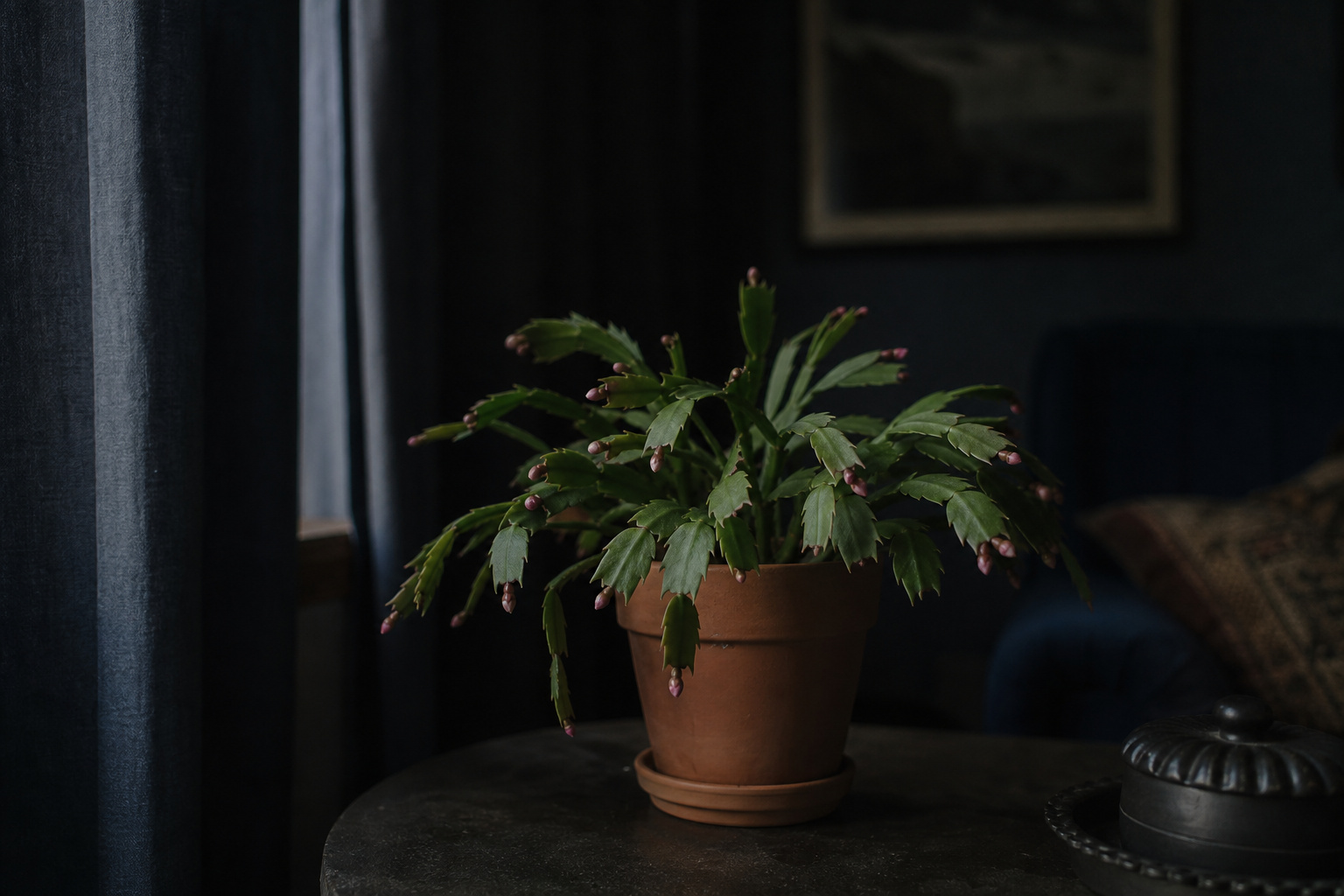
This is the part that makes the difference between a plant that blooms every year and one that sits there looking healthy.
About six to eight weeks before you want it to bloom, so mid-September to early October if you’re aiming for Christmas, give the plant two conditions: more darkness and cooler temperatures.
Ideally: 12 to 14 hours of uninterrupted darkness per day, and nighttime temperatures between 50°F and 55°F. A cool bedroom, a basement, or an unheated spare room works well. Even moving it in the evenings away from artificial light helps.
Can’t manage the cool temperatures? Lean harder on the darkness instead. Extended dark periods will still trigger bud set even without the temperature drop, though it may take longer.
Once you see buds forming, move the plant back to its display spot and resume normal care. From that point on, leave it alone. Don’t move it to different locations, don’t repot it, and try to keep the temperature consistent. Any significant change in the environment, such as a new room, temperature swing, or drafts, can cause buds to drop before they open. It’s one of the most common complaints I hear, and usually the fix is simple: stop moving the plant.
Prune and Propagate After Blooming
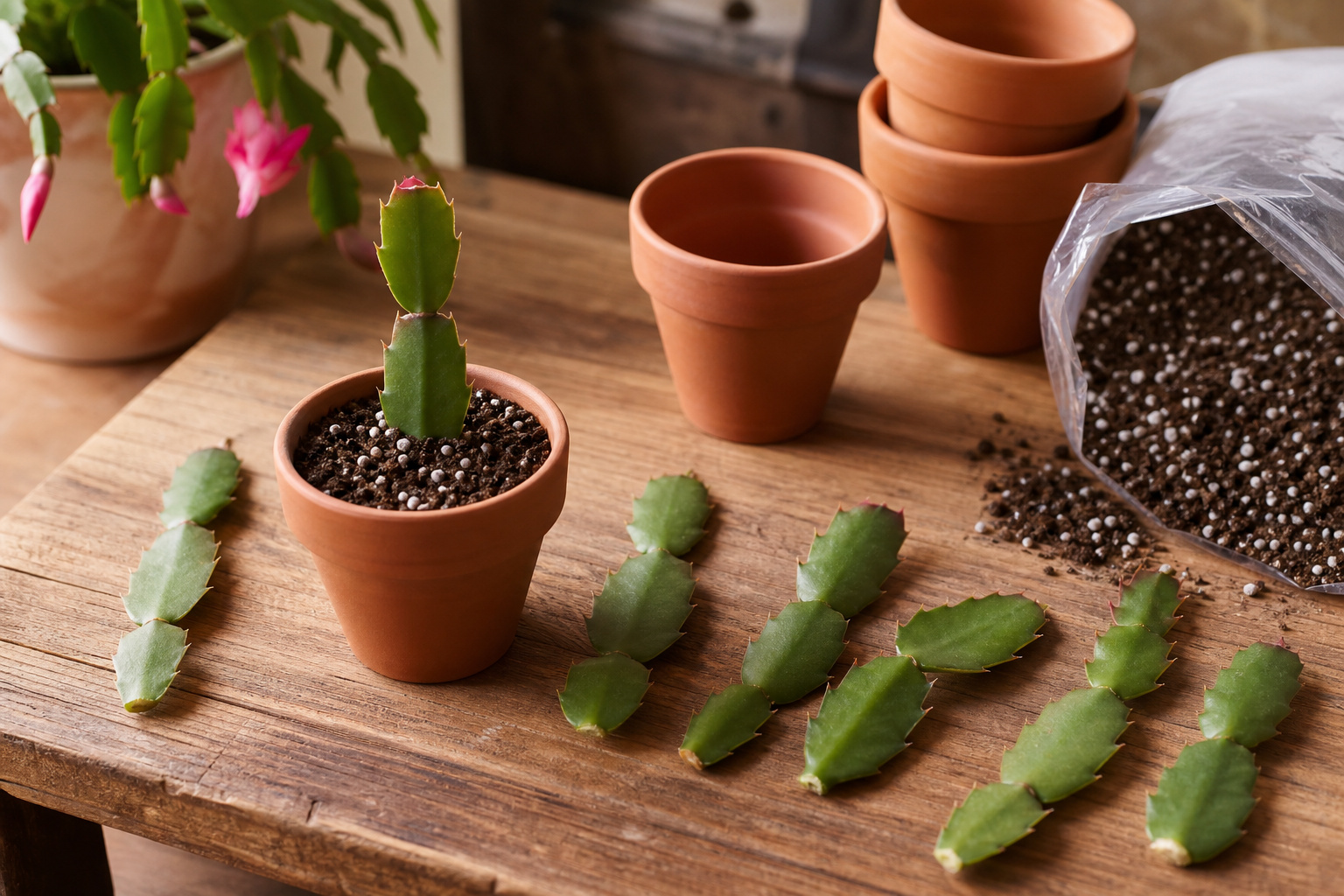
If your plant looks a little leggy or uneven after blooming, spring is the time to tidy it up. Cut between two stem segments — the natural joint — and take the plant back by no more than a third. It’ll branch out from the cut points and come back fuller.
The cuttings you remove can be propagated. Let them sit out for a few days so the cut end can callus over, then plant them about a half-inch deep in cactus soil mix. Keep the cuttings slightly moist, not wet, and they’ll have roots in about two weeks. This is one of the easiest plants to propagate. One mature plant can give you several new ones in a single afternoon.
Watch Out For These Problems
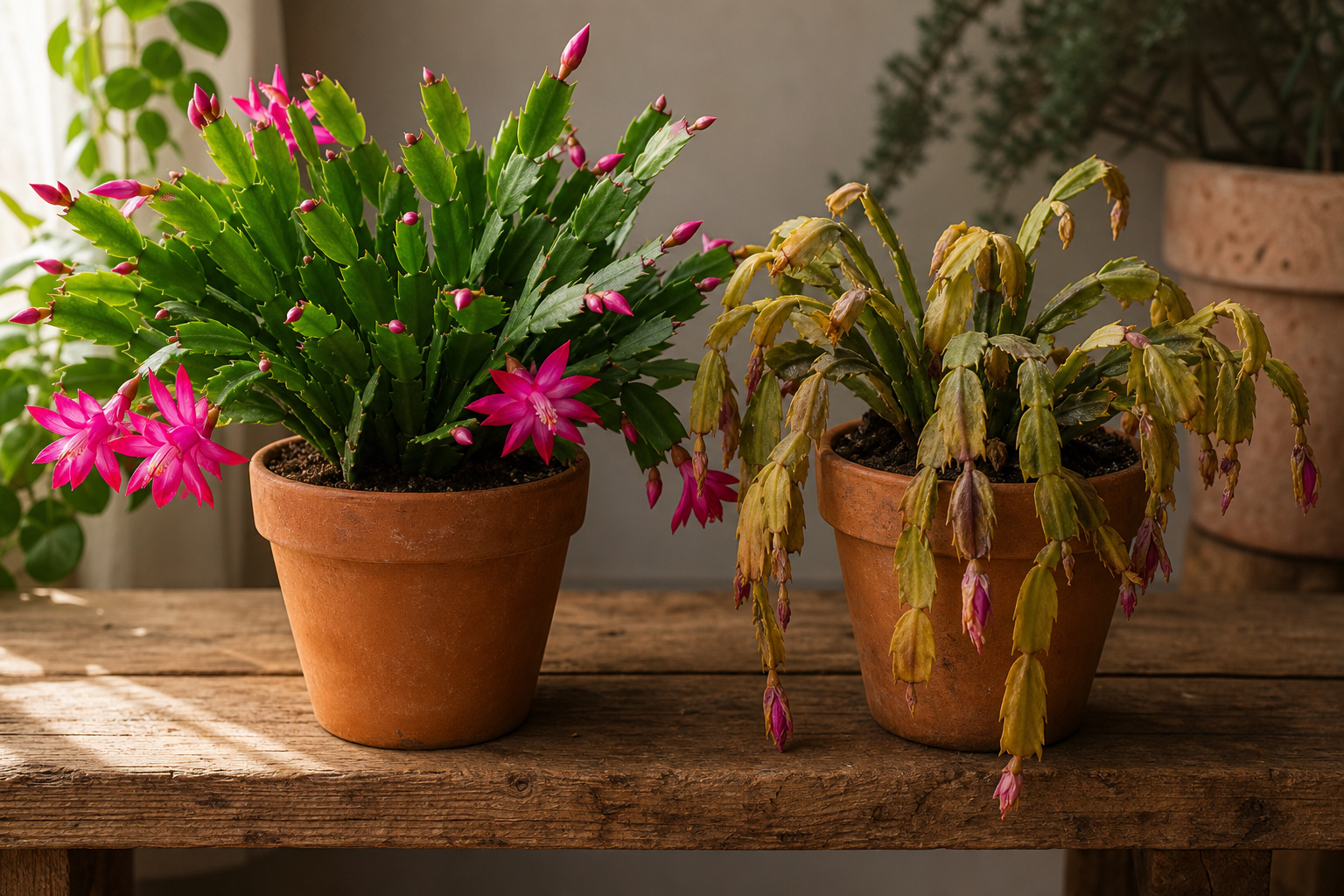
Most Christmas cactus problems can be traced back to one of two things: too much water or inconsistent conditions around bloom time.
Buds are dropping before they open. The most common complaint. Almost always caused by a change in environment, such as moving the plant to a new spot, temperature fluctuations, cold drafts, or a sudden change in watering. Once buds form, keep the plant in the same location, keep temperatures steady, and water consistently. Don’t panic and start adjusting things.
Wilting, soft, or mushy stems. Overwatering. Let the soil dry out and don’t water again until it’s dry at least an inch down. If the base of the plant feels soft or smells off, you may have root rot — unpot it, trim any black, mushy roots with clean shears, let it sit bare for a day or two, and repot into dry, fresh cactus mix.
Leaves are turning red or purple. Too much direct sun, or the plant is getting stressed from temperature extremes or drought. Move it out of direct light and check your watering. A little reddish color can be normal in bright light, but if it’s intense or widespread, something is off.
No blooms despite good care. The plant didn’t get enough darkness or cool temperatures in the fall to trigger bud set. Start the darkness treatment six to eight weeks before your target bloom date, and be consistent about it. One night of indoor lighting left on can reset the cycle.
Insects. Overwatered plants attract fungus gnats. Mealybugs occasionally show up, hiding in the joints between stem segments. Treat with insecticidal soap and adjust your watering to get the soil drying out properly between waterings.
What I Use in the Shop
You don’t need a lot for a Christmas cactus. Here’s what I keep on hand:
- Miracle-Gro Succulent Potting Mix — Fast-draining and consistent. Works for potting, repotting, and rooting cuttings. Don’t use standard potting soil for these plants.
- Miracle-Gro Succulent Plant Food — Easy to use during the spring and summer growing season. Follow the label and stop in early fall.
- Sharp bypass pruning shears — For pruning after bloom and taking clean cuttings for propagation. A clean cut heals faster and doesn’t invite disease.
- Terra cotta pots — The porous clay helps prevent overwatering by wicking moisture away from the roots. Sizing just slightly bigger than the root ball is the right call for these plants.
- Shallow pebble tray — The simplest humidity solution I know. Set the pot on it with an inch of water below the pebbles, and let evaporation do the work.
Frequently Asked Questions
How often should I water a Christmas cactus?
The general range is every week to three weeks, but the honest answer is: check the soil first. When the top inch is dry, water thoroughly. When it still feels moist, wait. No calendar schedule works for every home, pot size, and time of year. Overwatering kills more Christmas cacti than anything else.
Why isn’t my Christmas cactus blooming?
Almost always because it didn’t get the right conditions in the fall to trigger bud set. Christmas cacti need 12 to 14 hours of darkness per day and cooler nighttime temperatures — around 50°F to 55°F — for six to eight weeks before bloom time. If your home stays warm and well-lit all fall, the plant has no reason to flower. Start the treatment in mid-September for Christmas blooms.
Is a Christmas cactus the same as a Thanksgiving cactus?
Not exactly, though the care is essentially the same. The easiest way to tell them apart is the leaf segments: Thanksgiving cactus has pointed, claw-like projections; true Christmas cactus has smoother, scalloped edges. Most plants sold as Christmas cacti in stores today are actually Thanksgiving cacti, which tend to bloom a few weeks earlier.
Why are my Christmas cactus buds falling off?
Bud drop is almost always caused by a change in the plant’s environment after buds have formed — moving it to a new location, temperature swings, cold drafts from a window or door, or inconsistent watering. Once you see buds forming, leave the plant in the same spot, keep the temperature steady, and water consistently. The plant doesn’t like surprises at that stage.
How do I propagate a Christmas cactus?
Take a cutting of two to three stem segments after blooming in spring. Set it aside in a dry spot for two to three days so the cut end can callus over. Then plant it about a half-inch deep in cactus soil mix and keep it slightly moist. You should see roots in about two weeks. It’s one of the easier plants to propagate — one healthy plant can give you several cuttings in one session.
Is a Christmas cactus toxic to pets?
Christmas cacti are generally considered non-toxic to cats and dogs, which makes them a better choice than many flowering houseplants. That said, chewing on any plant can cause mild digestive upset in some animals. If you have a pet that tends to chew on plants, check the ASPCA’s toxic plant database for the most current information, or have a look at our list of indoor houseplants safe for pets.
Closing Thoughts
The woman who came in with her non-blooming Christmas cactus went home with one simple instruction: put it in a cool, dark spare bedroom every evening from September through October and stop fertilizing. That was it. She called in December to say it was covered in buds.
That’s really the whole story with Christmas cacti. The basic care isn’t complicated — right light, careful watering, cactus soil, correct pot. But the blooming part takes a little seasonal thinking. These plants respond to what’s happening outside even when they’re living inside. Work with that rhythm instead of against it and you’ll have blooms every year.
If you want more ideas for long-lived houseplants, the easy indoor succulents guide is a good starting point, and the jade plant care post covers another holiday-season favorite that uses the same soil and pot setup. Long-lived plants are worth the small amount of attention it takes to understand what they actually need. Think of it as tending something that’ll still be blooming on your windowsill long after the poinsettia has been composted.
Have you managed to get your Christmas cactus to bloom on cue, or is it doing its own thing on its own schedule? Drop a note in the comments. I’m curious whether the darkness treatment worked for you or if you’ve found another approach that works.
Til next time,