Disclosure: This post may contain affiliate links. If you click and buy, we may earn a commission at no extra cost to you. As an Amazon Associate, we earn from qualifying purchases.
Last Updated: May 30, 2026
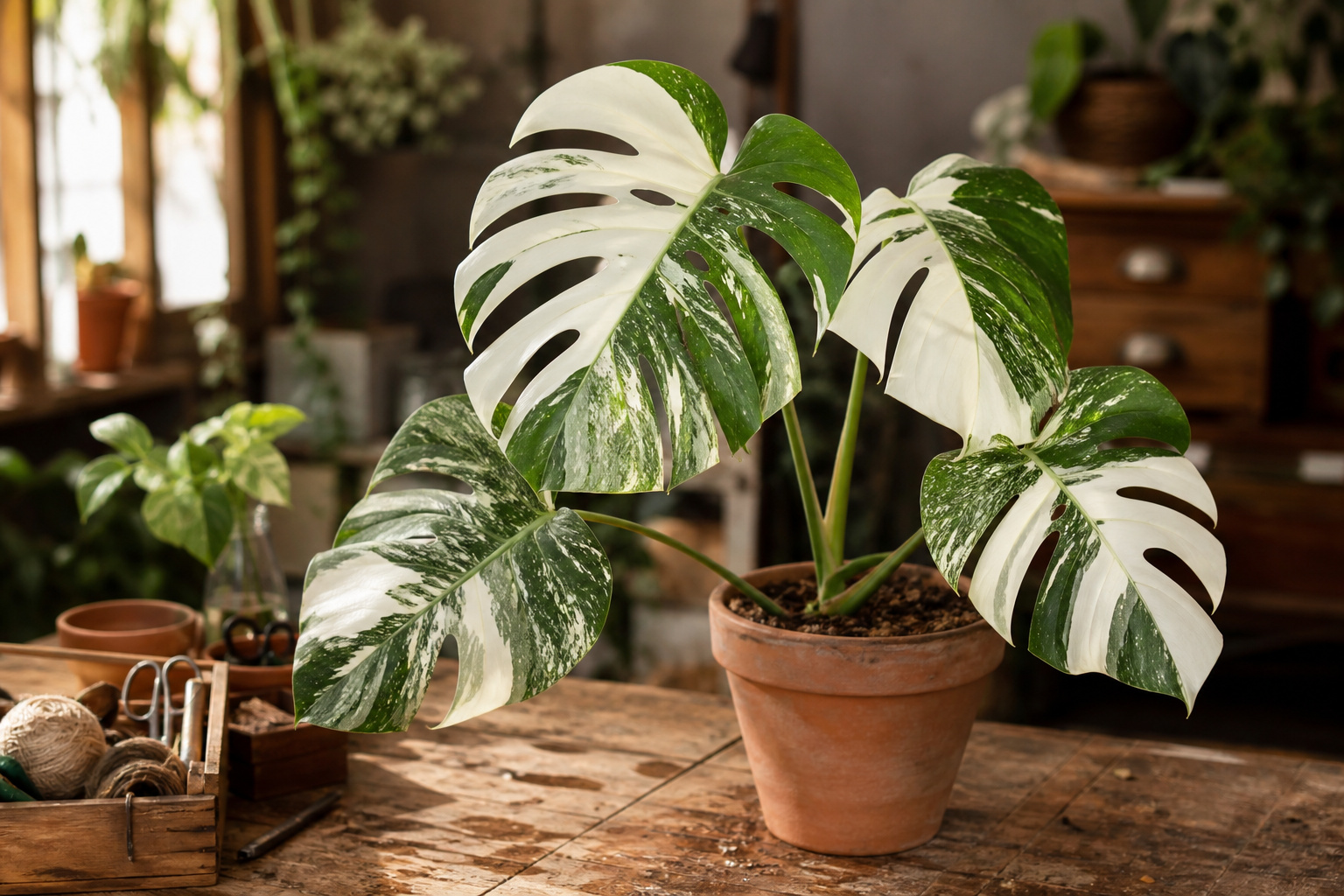
A customer came in a couple of years back and set her phone on the counter to show me a photo. It was a Monstera with bold white splashes across the leaves — almost like someone had flicked a paintbrush at it. “I have to have one,” she said. “Where do I find it?”
I told her the truth: it wasn’t going to be easy. The Monstera Deliciosa ‘Albo Borsigiana’ is one of those plants where the hunt is half the story. But I also told her it was absolutely worth the effort. And a few months later, she came back in to show me a photo of the cutting she’d finally tracked down — already throwing out a new leaf.
If you’re in the same boat, this post is for you. I’ll walk you through what makes the Albo Borsigiana so special, how to care for it once you’ve got one, and where to start looking.
Know What You’re Looking For
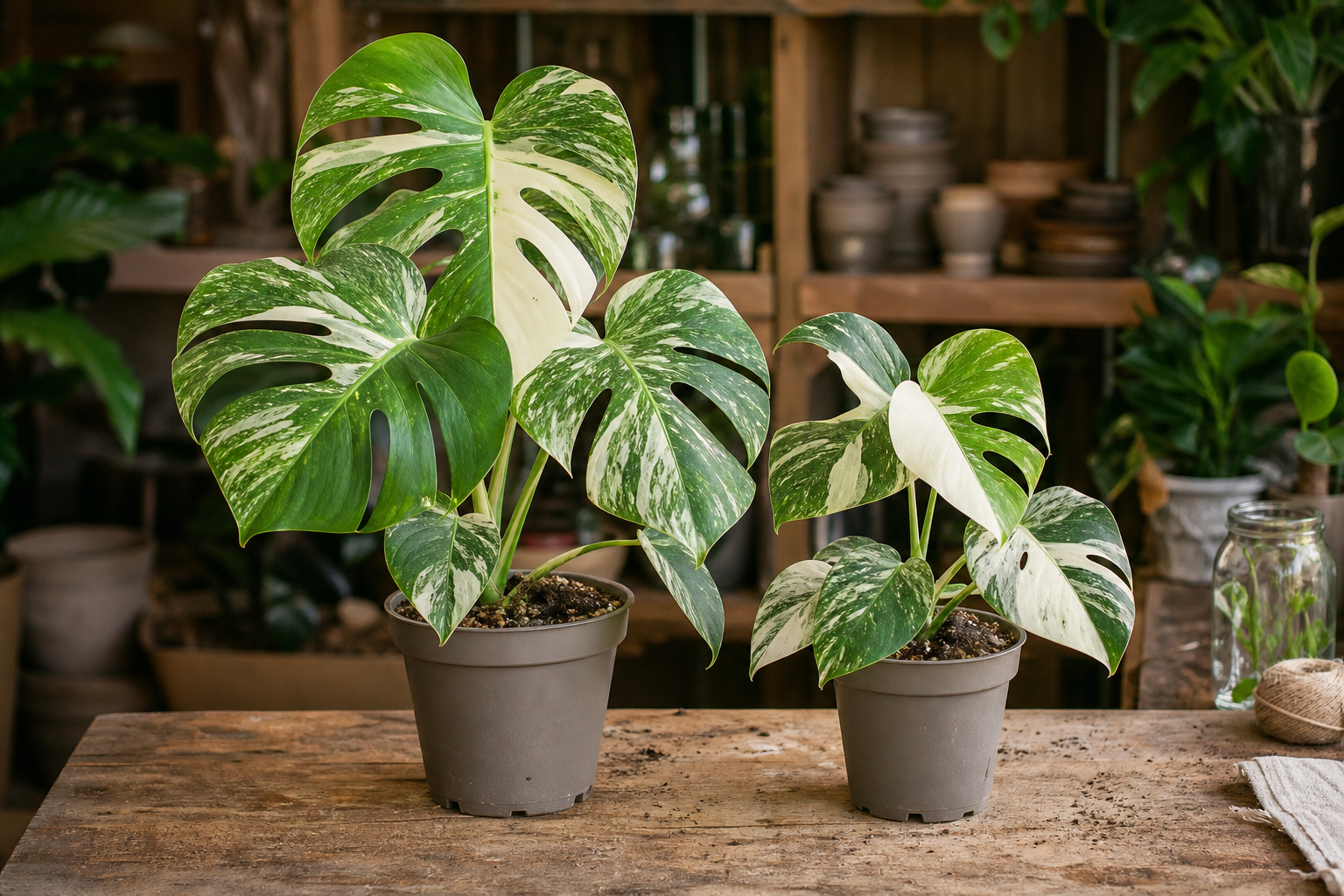
First, a quick clarification that trips a lot of people up. There are two variegated Monstera varieties you’ll see floating around:
Monstera deliciosa ‘Albo Variegata’ — a larger, slower-growing plant with bigger leaves and chunkier variegation. It’s even rarer and commands higher prices.
Monstera deliciosa ‘Albo Borsigiana’ — a slightly smaller, faster-growing variety with the same stunning white-and-green patterning. This is the one most people are hunting for, and the one we’re focused on here.
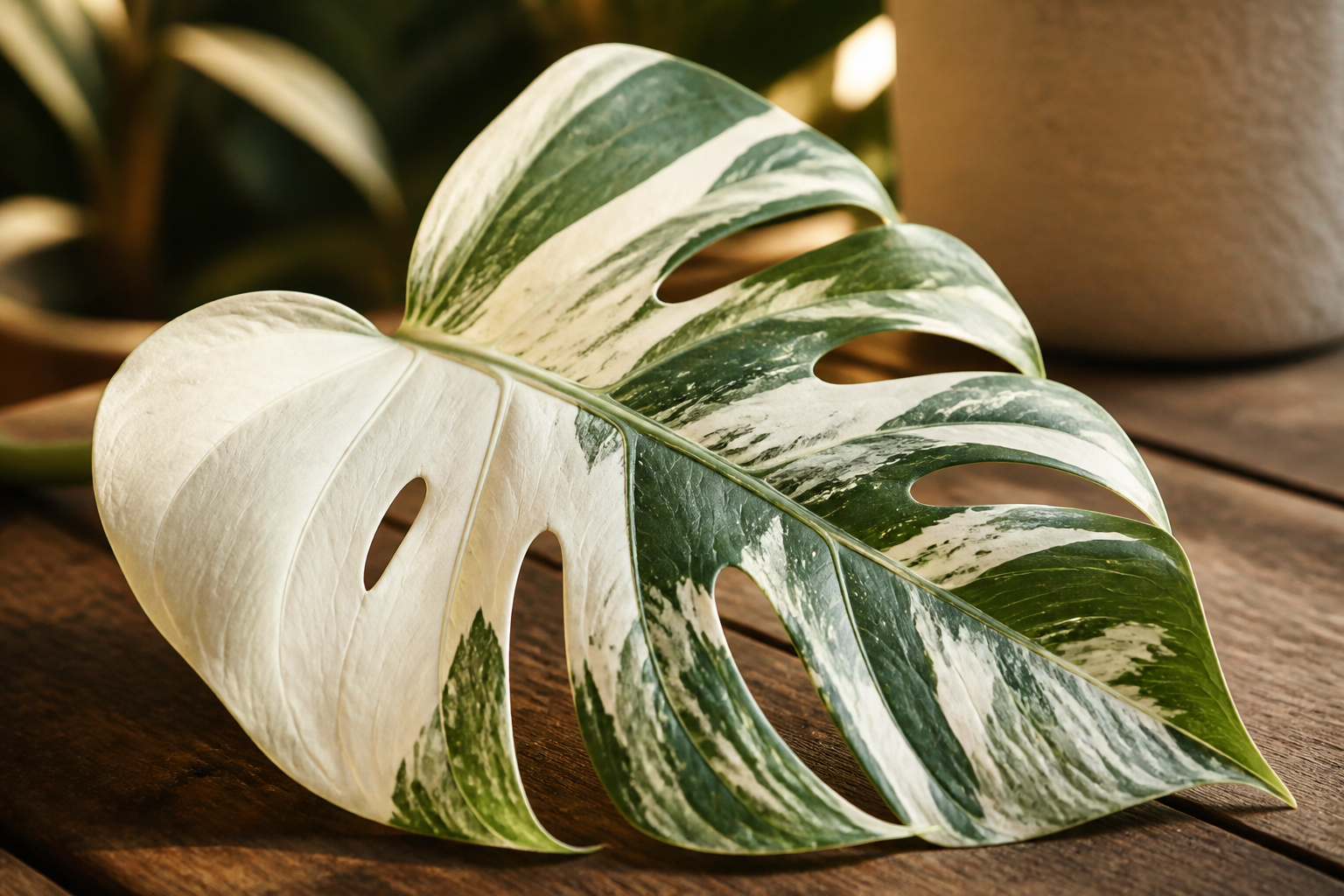
Both are mutations that cause chlorophyll to be absent in parts of the leaf, which is why you get those white patches, half-moon leaves, and occasional fully white sections. The variegation is unstable, meaning no two plants and no two leaves will look the same.
That unpredictability is a big part of the appeal. Every new leaf is a surprise.
Understand What Makes the Albo Borsigiana Special
In its natural habitat, Monstera can climb 20 feet or more up the side of a tree. Indoors, you’re working with a more manageable 6 to 10 feet — though with the right support, it’ll push toward the ceiling if you let it.
The leaves start smaller and solid green, then develop those distinctive fenestrations, the natural splits and holes, as the plant matures. Add in the white variegation, and you’ve got something that genuinely looks like living art. That’s not marketing language, that’s just what it is.
Because the white portions of the leaf contain no chlorophyll, they can’t photosynthesize. The green parts do all the work. This is why the Albo Borsigiana grows more slowly than its all-green cousins, and why proper light matters more for this plant than it would for a standard Monstera.
It also grows as a vine, which means it wants something to climb. A moss pole is the go-to, and in my experience, plants with proper support grow noticeably faster and produce larger, more fenestrated leaves. Worth the investment.
Give It the Right Light
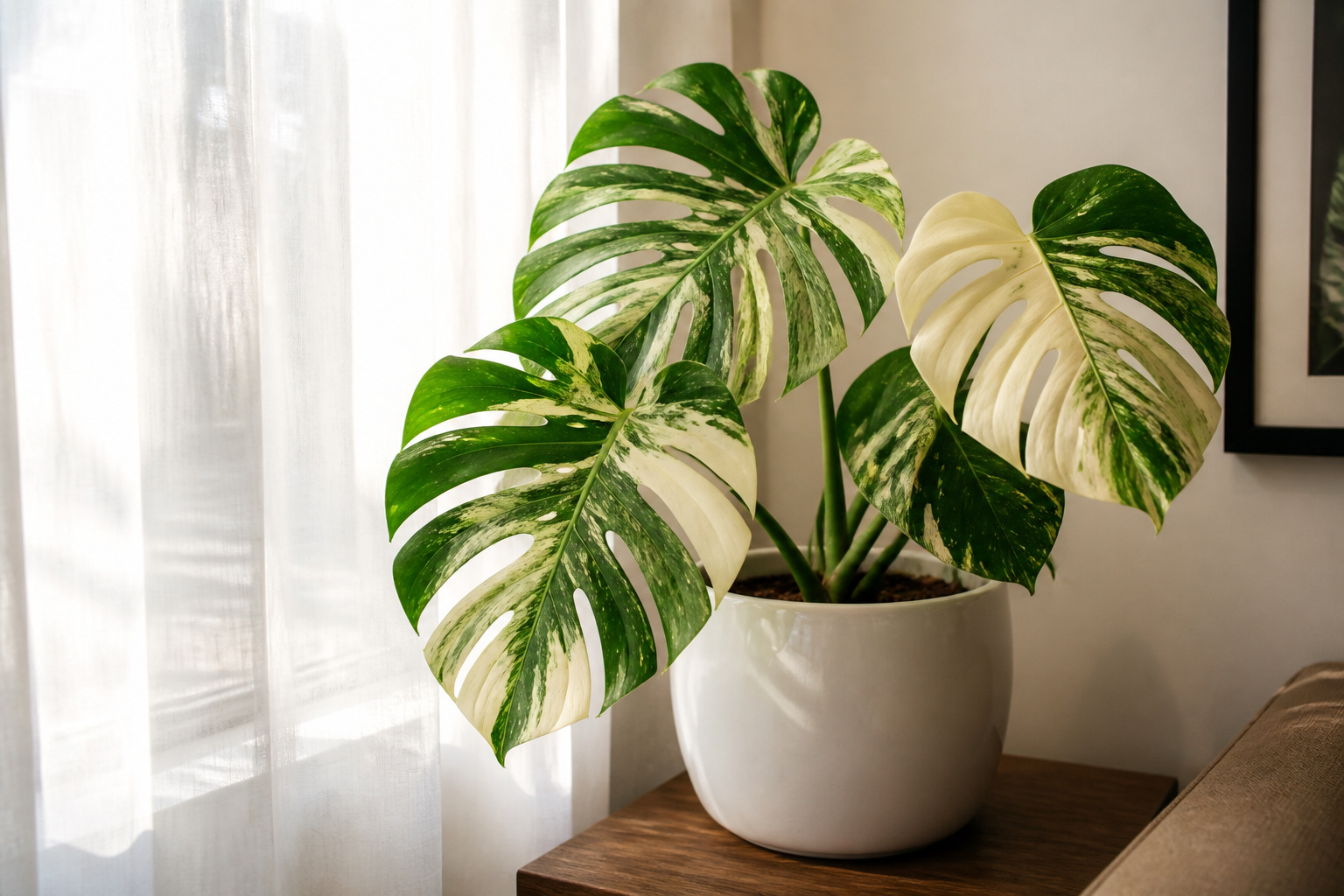
Bright, indirect light is what you’re aiming for. Think about a spot a few feet back from a south- or east-facing window, or near a window with a sheer curtain to filter the direct rays.
Here’s what I’d do: err on the side of more light, not less. Because the white sections of the leaf don’t photosynthesize, the green sections have to work harder. A plant in low light will survive, but it’ll be slow, the variegation tends to diminish, and new leaves won’t be as dramatic. Brighter conditions reward you with faster growth and more striking leaves.
That said, avoid direct afternoon sun. It’ll scorch the white portions of the leaf fast, and those burns don’t heal.
Water It Right — Not Just Regularly
Monstera like moist soil, not wet soil. There’s a difference, and it matters.
The standard advice is to let the top inch or two of soil dry out before watering again. That’s a reasonable starting point. But what I’ve found works better is checking the weight of the pot. A dry pot is noticeably lighter than a wet one. After a while, you just know.
The number one killer of Monstera is root rot from overwatering. Soggy soil with no drainage will do it every time. Make sure your pot has drainage holes, and that water isn’t sitting in a saucer below. If it is, dump it out.
Water thoroughly when you do water. Let it run through the soil and out the drainage holes. Then leave it alone until it’s ready again. In winter, when growth slows, you’ll water less frequently. Let the plant tell you what it needs.
What I use in the shop: A good moisture meter takes all the guesswork out of watering, especially useful for a plant this valuable.
Nail the Temperature and Humidity
Monsterras are tropical plants, so they want warmth and humidity. The sweet spot for temperature is 65°F to 80°F. Most homes land in that range without any effort, which is part of why Monstera have become such popular houseplants.
Keep the plant away from heating vents, drafty windows, and air conditioning units. Cold, dry air stresses it out and slows growth considerably.
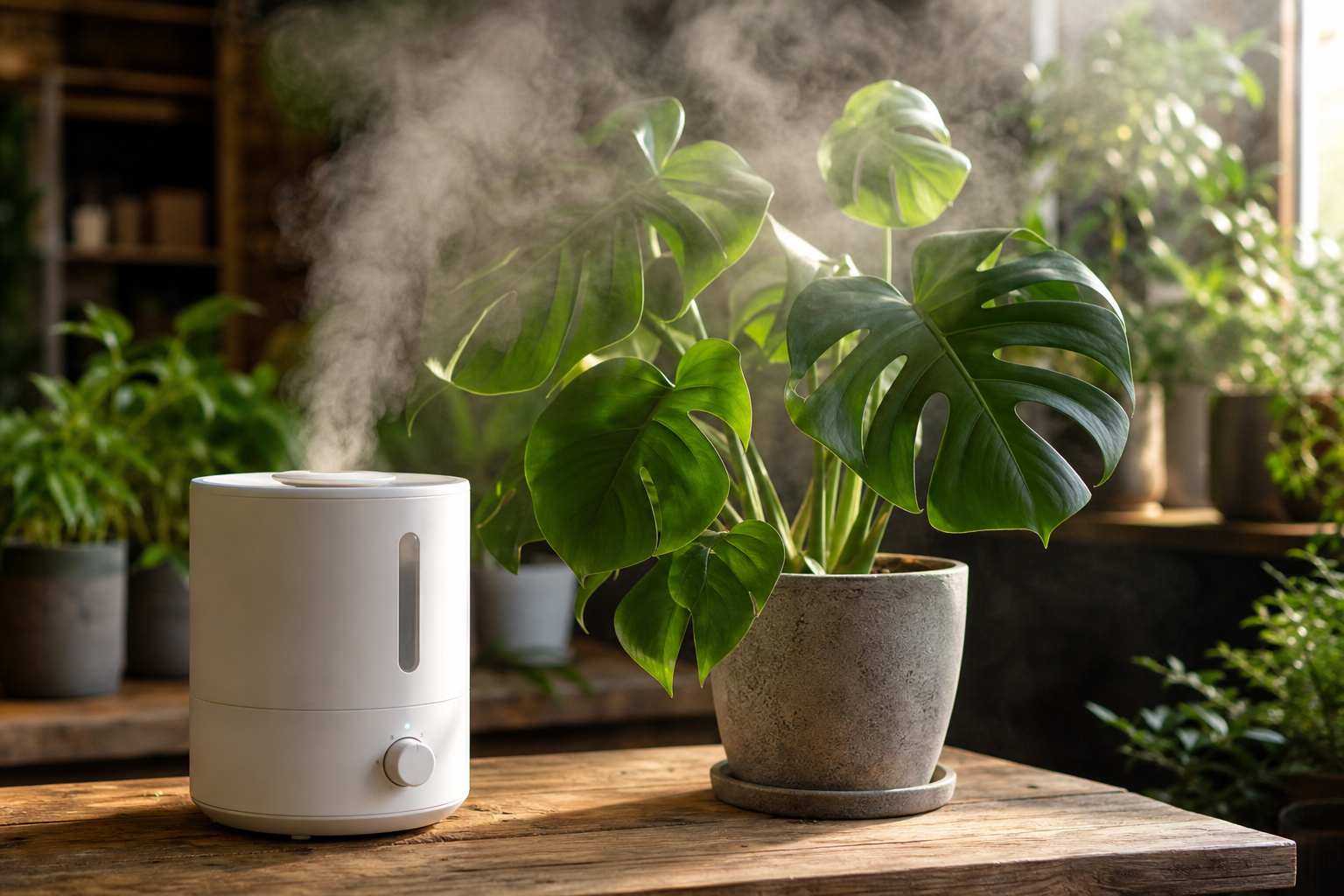
Humidity is where a lot of people fall short. Monstera prefers humidity above 60%. Most homes run around 30–50%, especially in winter. A few ways to help:
A humidifier nearby is the most effective option. Misting the leaves is better than nothing, but it doesn’t actually raise ambient humidity the way a humidifier does. Grouping plants also helps. They create a more humid microclimate around each other.
What I use in the shop: We run a small cool mist humidifier in the houseplant area year-round. The difference in leaf quality is noticeable.
Feed It — But Don’t Overdo It
The Albo Borsigiana needs more nutrients than a standard Monstera because it’s working harder to compensate for those non-photosynthesizing white sections. But overfeeding is a real problem. You’ll burn the roots and damage the plant.
A balanced liquid fertilizer, something like a 20-20-20, applied at half strength once a month during the growing season (spring through summer) is the right approach. Stop feeding in fall and winter when growth slows down. The plant isn’t asking for more food when it’s not actively growing.
What I use in the shop: Dyna-Gro Foliage Pro is what I reach for on the tropical plants. Consistent results, easy to use, and you’re not fumbling with mixing ratios.
Propagate It Yourself
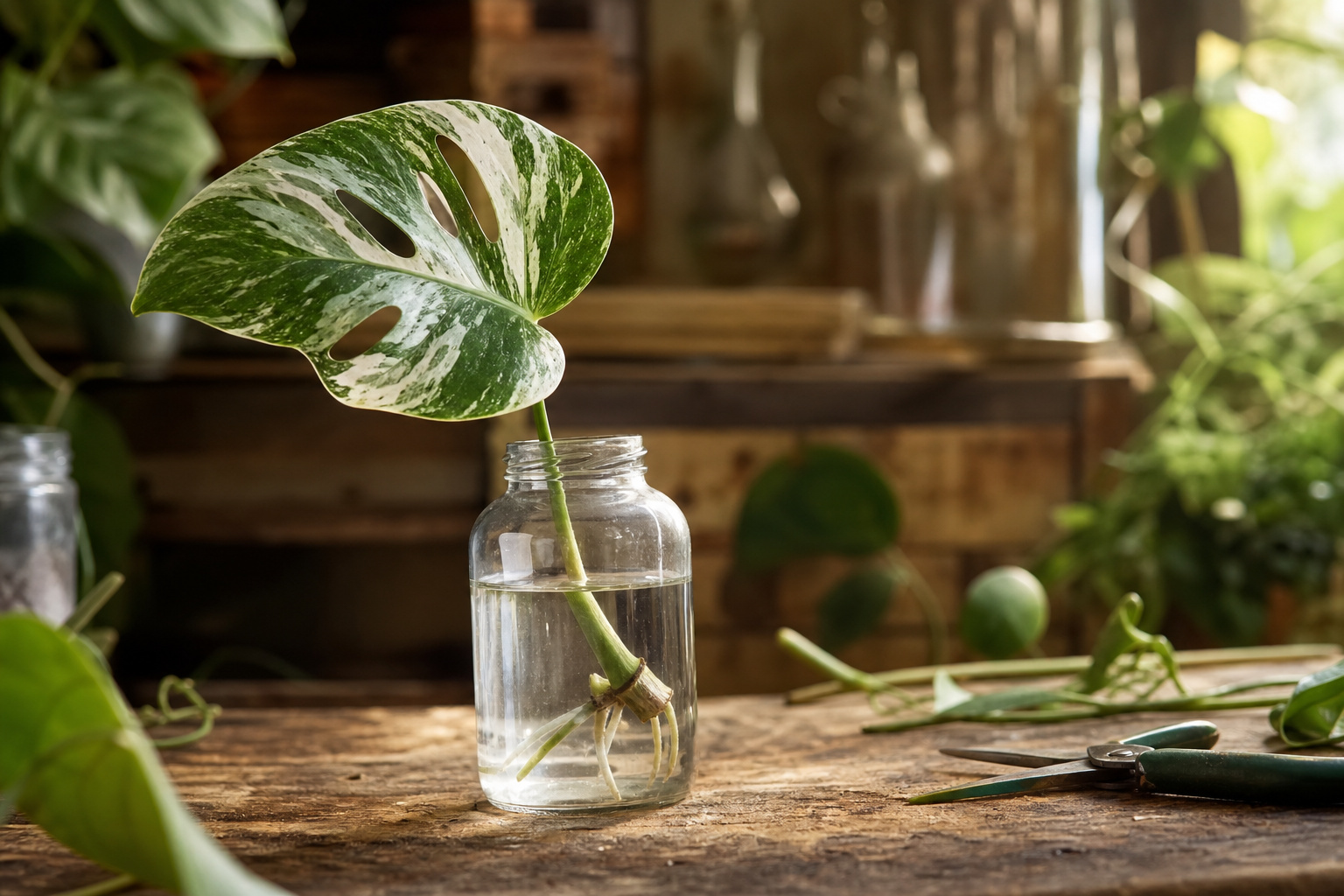
Growing a Monstera from seed is a long, expensive road that most people skip. The standard approach, and honestly the best one, is stem cuttings.
A healthy cutting needs at least one node (the bump on the stem where roots and leaves emerge) and ideally a leaf attached. You can root it in water or directly in a well-draining soil mix. Water propagation lets you watch the roots develop, which is satisfying, but soil propagation tends to produce stronger roots that transition better.
Keep the cutting warm and humid while it roots. Bright indirect light, consistent moisture, and patience. It takes a few weeks, sometimes longer. Don’t rush it.
Here’s a short video on general Monstera deliciosa care — worth watching if you’re new to the plant or just getting started with propagation.
Find One — Then Don’t Get Ripped Off
This is the part that trips people up the most. The Albo Borsigiana is genuinely rare, and that rarity gets exploited.
Prices vary wildly, from a few hundred dollars for a small cutting to well over a thousand for a mature, well-variegated plant. If you see one priced suspiciously cheap, be skeptical. A “variegated Monstera” without clear photos showing the actual variegation pattern is a red flag.
Where to look:
Reputable online sellers — platforms like Etsy have a lot of plant sellers, and the reviews tell you a lot. Look for sellers with photos of the actual plant or cutting, not stock photos.
Local plant swaps and Facebook groups — often the best deals come from local collectors who’ve propagated their own plants and want to find them good homes.
Specialty nurseries — call ahead. Most general garden centers won’t carry them, but a nursery that specializes in tropicals might.
One more thing: if you’re buying a cutting, make sure it has a node. A cutting without a node will not root. Period. This is the most common mistake I see with Monstera cuttings. People get sold a beautiful leaf with no node attached. That leaf will sit in water and slowly rot. Don’t let it happen to you.
Avoid These Common Mistakes
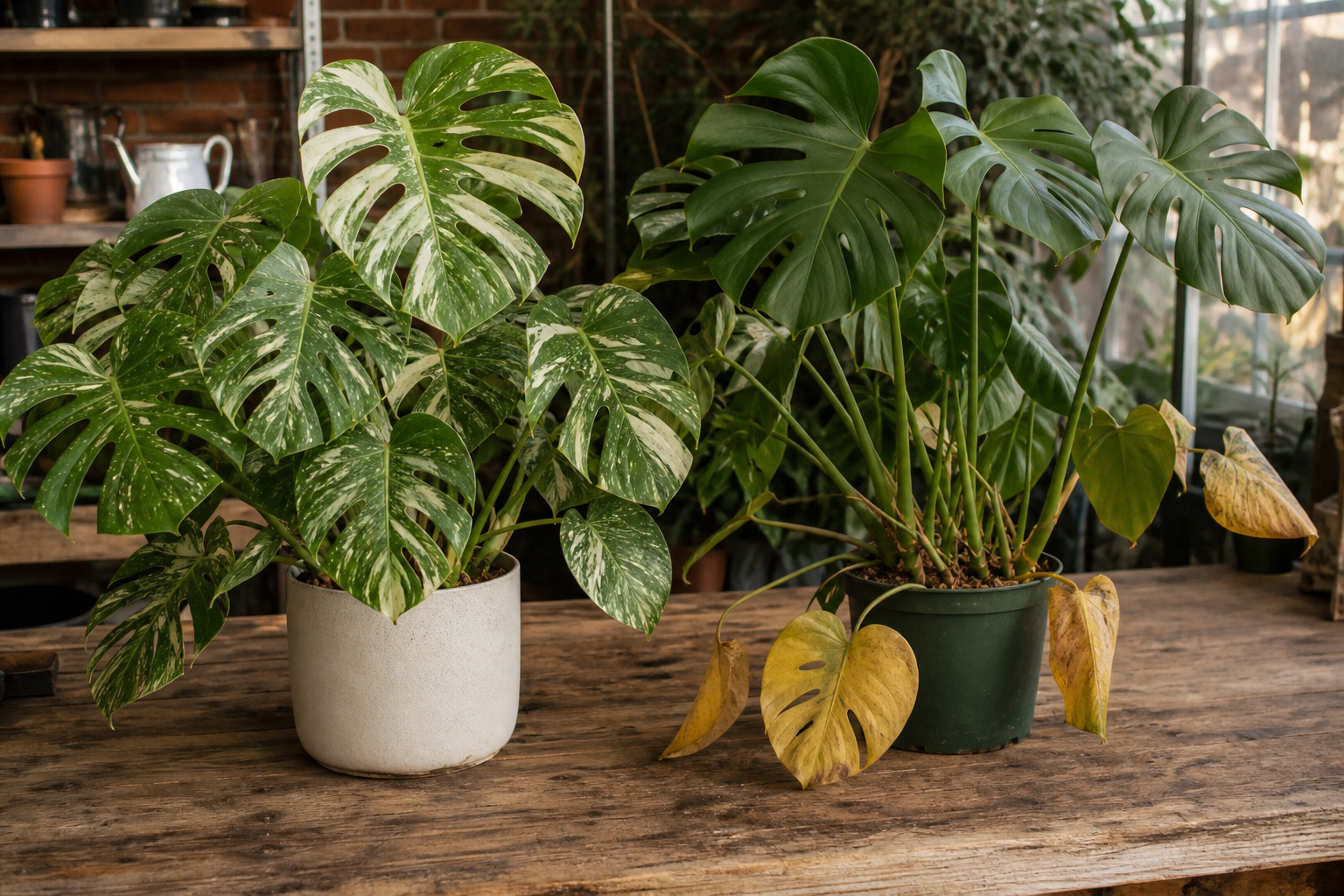
Putting it in too little light. The plant will survive, but the variegation fades, and growth slows to a crawl. Give it the brightest indirect light you have.
Overwatering. Root rot is the fastest way to kill one of these. When in doubt, wait another day or two before watering.
Skipping the moss pole. This plant is a climber. Give it something to climb, and it’ll reward you with larger, more fenestrated leaves.
Buying a leafless cutting without a node. No node, no roots. Don’t do it.
Neglecting humidity. Wisconsin winters are brutal on tropical plants. A humidifier nearby makes a real difference in leaf quality and overall health.
Frequently Asked Questions
How is the Albo Borsigiana different from the Albo Variegata?
The Borsigiana is a smaller, faster-growing form of Monstera deliciosa. The Variegata is the larger, slower-growing species. Both have similar white variegation, but the Variegata tends to have larger leaves and chunkier variegation patterns — and carries a higher price tag.
Why is the Monstera Albo so expensive?
A genetic mutation causes the variegation and cannot be reliably reproduced from seed. It can only be propagated by cuttings, which is a slow process. High demand and limited supply drive the price up.
Will my plant revert to solid green?
It can. If a section of the stem starts producing all-green growth, you can prune back to where the variegation was present to encourage the plant to push out a variegated shoot. Variegation is unstable, so some fluctuation is normal.
How often should I water my Monstera Albo?
There’s no fixed schedule. Check the soil. When the top inch or two is dry, it’s time to water. In summer, that might be every 7 to 10 days. In winter, less often. The weight of the pot is another reliable indicator.
Does it need a special potting mix?
A chunky, well-draining mix works best. You can use a standard tropical potting mix amended with perlite or orchid bark to improve drainage and aeration. Avoid dense, moisture-retentive mixes. They encourage root rot.
Is the Monstera Albo safe for pets?
No. Like all Monstera, the Albo contains calcium oxalate crystals that are toxic to cats and dogs if ingested. Keep it out of reach. For a list of pet-safe houseplants, see my post on indoor houseplants that are safe for pets.
Closing Thoughts
The customer who first showed me that photo eventually found her Albo Borsigiana through a local plant group. She paid a fair price for a rooted cutting with two nodes and excellent variegation. Last time she came in, she told me it had put out four new leaves since she got it home.
That’s what this plant does when you give it what it needs. Bright light, careful watering, humidity, something to climb, and a little patience while you track one down. The rarity is real, but so is the payoff. Some plants are worth the hunt. This one’s at the top of that list.
If you’ve tracked down a Monstera Albo, or if you’re still in the search, I’d love to hear about it in the comments. Drop a note below and let me know where you found yours and how it’s doing.
Til next time,