Disclosure: This post may contain affiliate links. If you click and buy, we may earn a commission at no extra cost to you. As an Amazon Associate, we earn from qualifying purchases.
Last Updated: September 16, 2026
A woman sent me several photos of a poinsettia a few Decembers ago, more confused than upset. She’d bought a big, full-looking plant at a grocery store the week before Thanksgiving, and by the time her holiday party rolled around three weeks later, the center of every bract had gone bare and dull. She wanted to know what she’d done wrong.
Nothing, really. She just bought it at the wrong stage for how she planned to use it. That’s the part almost nobody explains at the register, and it’s why some poinsettias hold their color for six weeks while others look tired after ten days.
Know Your True Flowers Before You Shop
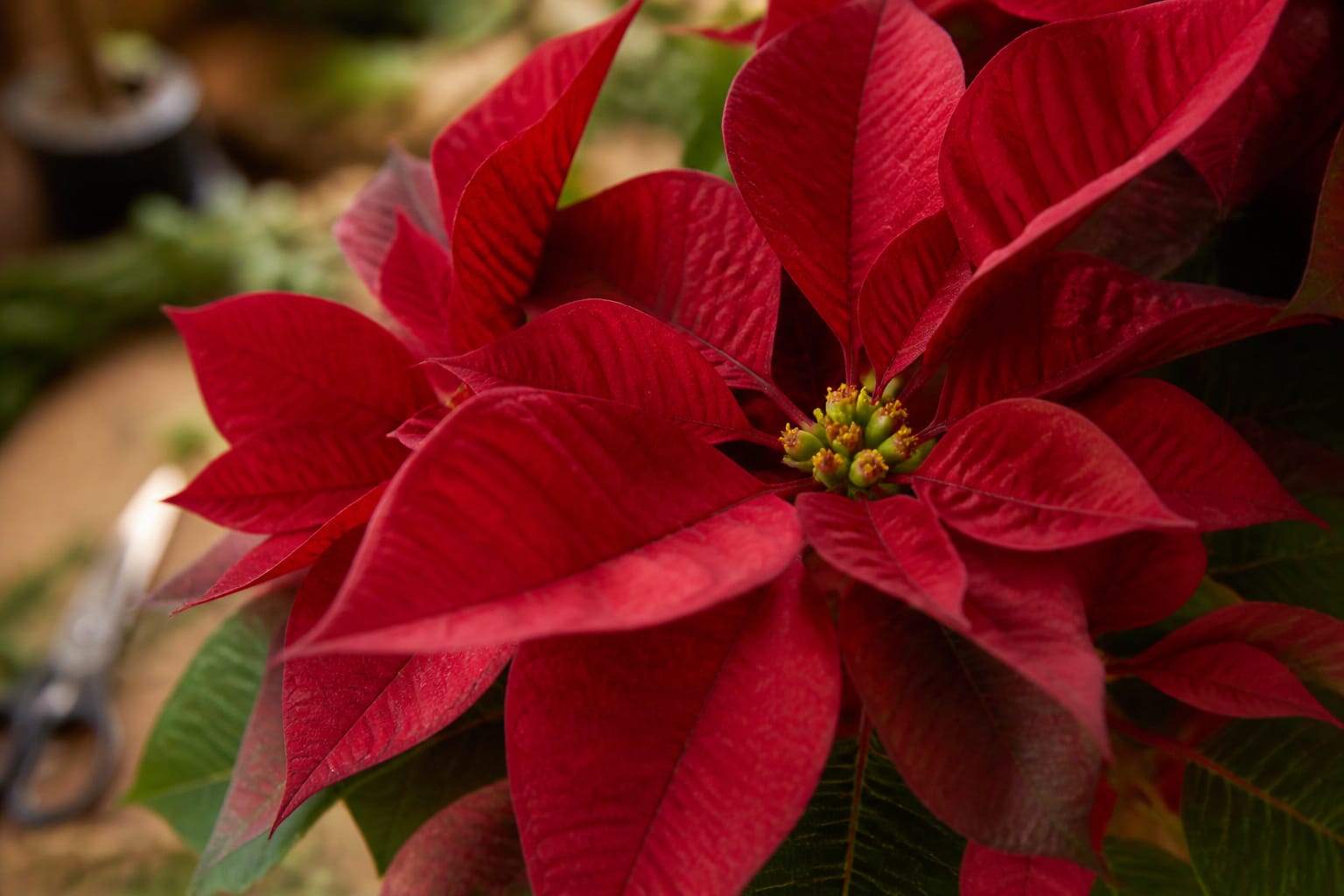
Here’s what trips up most shoppers: those big red, white, or pink petal-looking things aren’t flowers at all. They’re bracts, modified leaves that change color to attract pollinators, the same trick a dogwood or a bougainvillea pulls.
The actual flowers are the small, tight, ball-like clusters sitting right in the center of each bract group. Florists call them cyathia. That center cluster tells you everything about a poinsettia’s age, and it’s what you should be looking at instead of how big or colorful the bracts appear on the shelf.
In my experience, bract size gets all the attention and tells you almost nothing about maturity. A poinsettia with enormous bracts and a center that’s already dropped its cyathia is further along than one with smaller bracts and tight, closed centers. Check the center first, every time.
Time Your Purchase to How You’ll Use It
Once you know what to look for in the center, timing your purchase gets simple.
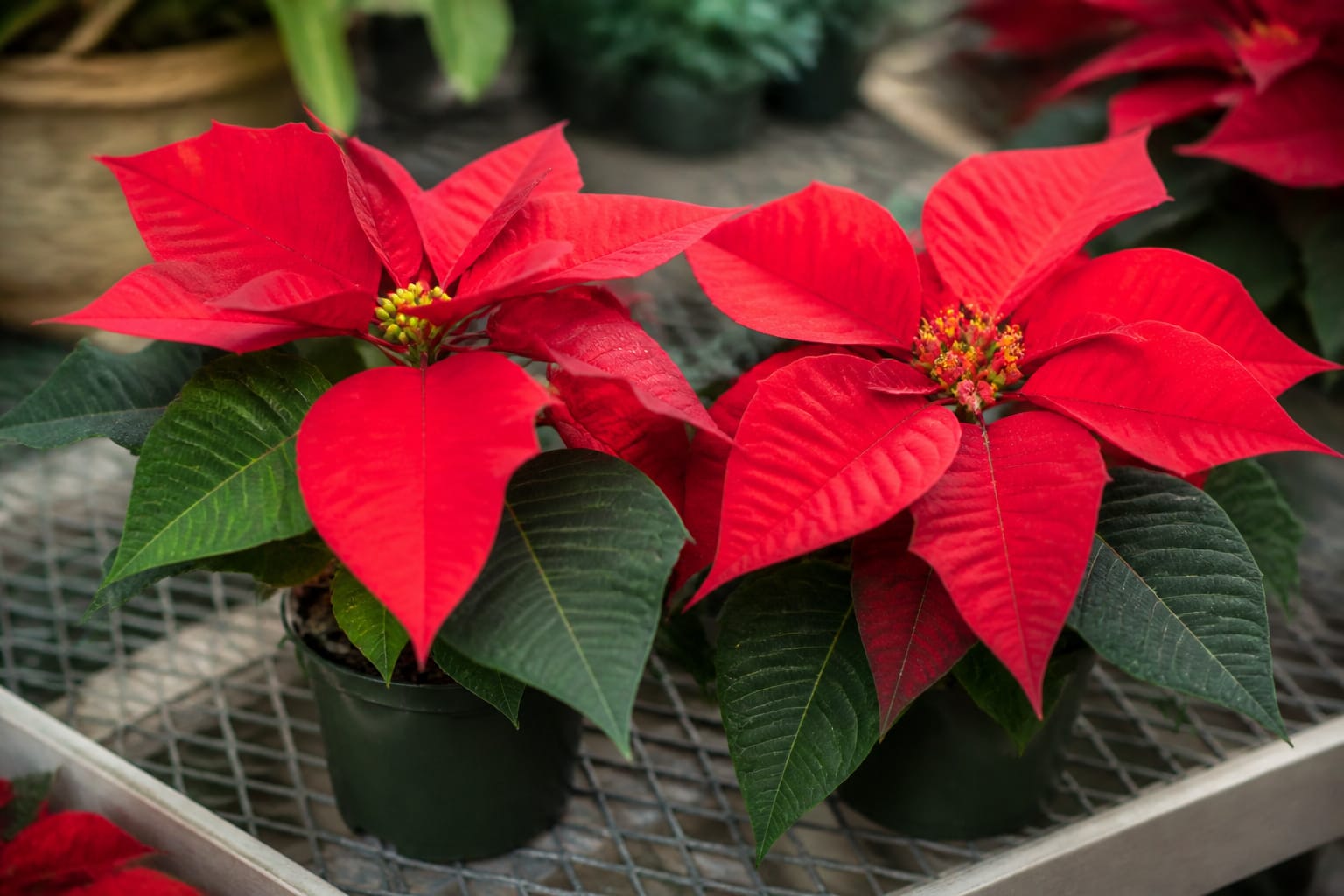
If you’re shopping in early December and want a plant that’ll still look good on New Year’s, pick one with tight, immature cyathia in the center that resemble small unopened balls. That plant has weeks of color ahead of it and will hold its structure through the entire season.
If you’re shopping the week before Christmas and only need it to look its best for one day, you can afford to pick a plant with open centers and visible yellow pollen. It’s already at peak visual impact, which is exactly what you want for Christmas Day and won’t matter much after that.
Either way, skip anything where the center flowers have already dropped or shed. That leaves a noticeable void in the middle of the plant, and there’s no timing strategy to fix a poinsettia that’s already past its peak.
Give the Plant a Quick Check Before You Buy
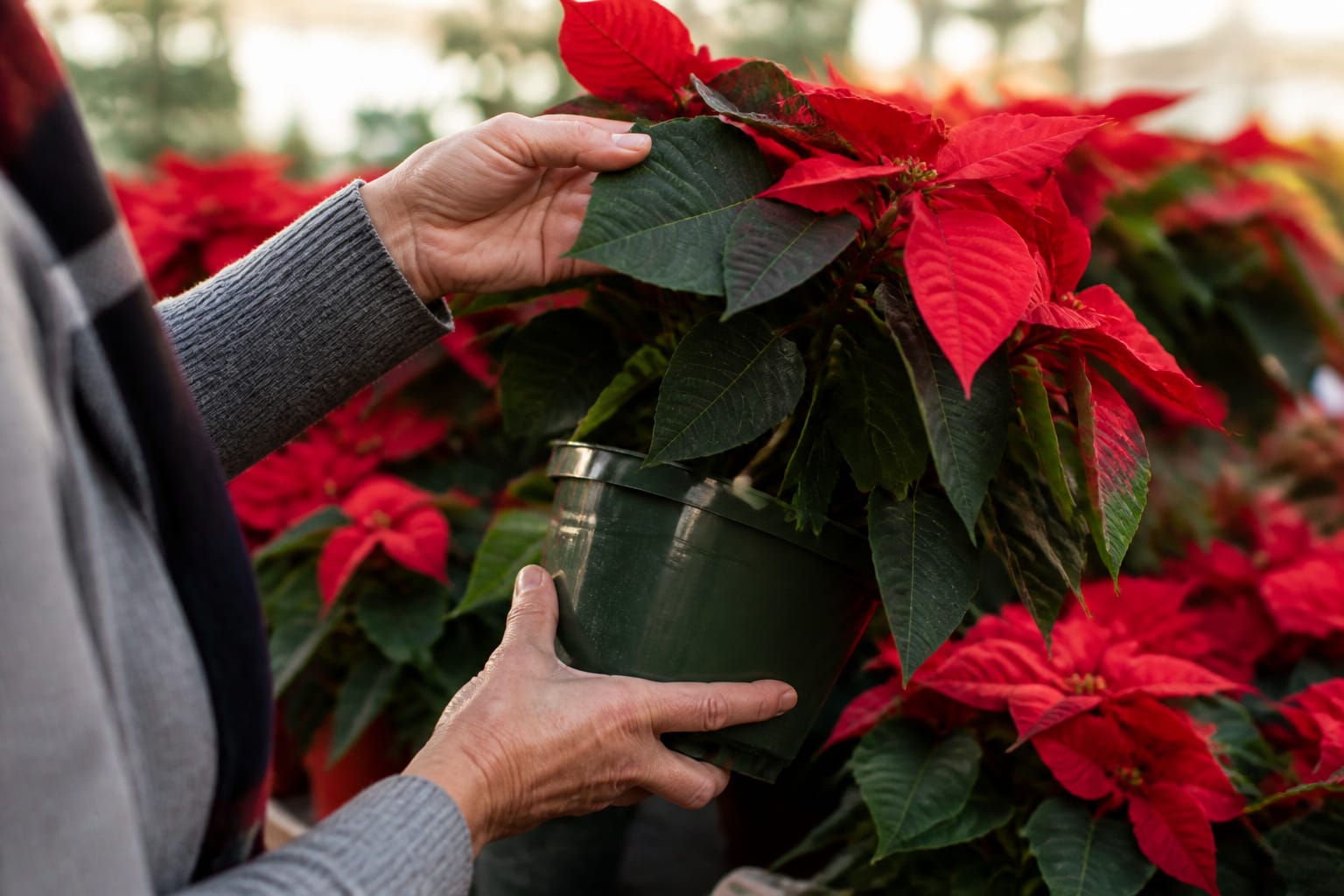
Beyond the center flowers, a few quick checks will tell you a lot in the two minutes you’re standing in front of the display.
The foliage should be dark green with no yellowing, and the bracts should be fully colored with no green showing at the edges. A well-grown plant is also proportional, standing about two and a half times taller than its container and looking full from every angle, not just the side facing the aisle.
Avoid anything drooping, wilted, or sitting in soil that’s staying wet. That combination almost always means the plant has been stressed, and a stressed poinsettia rarely recovers well once it’s in your house.
Watch Where You’re Buying It
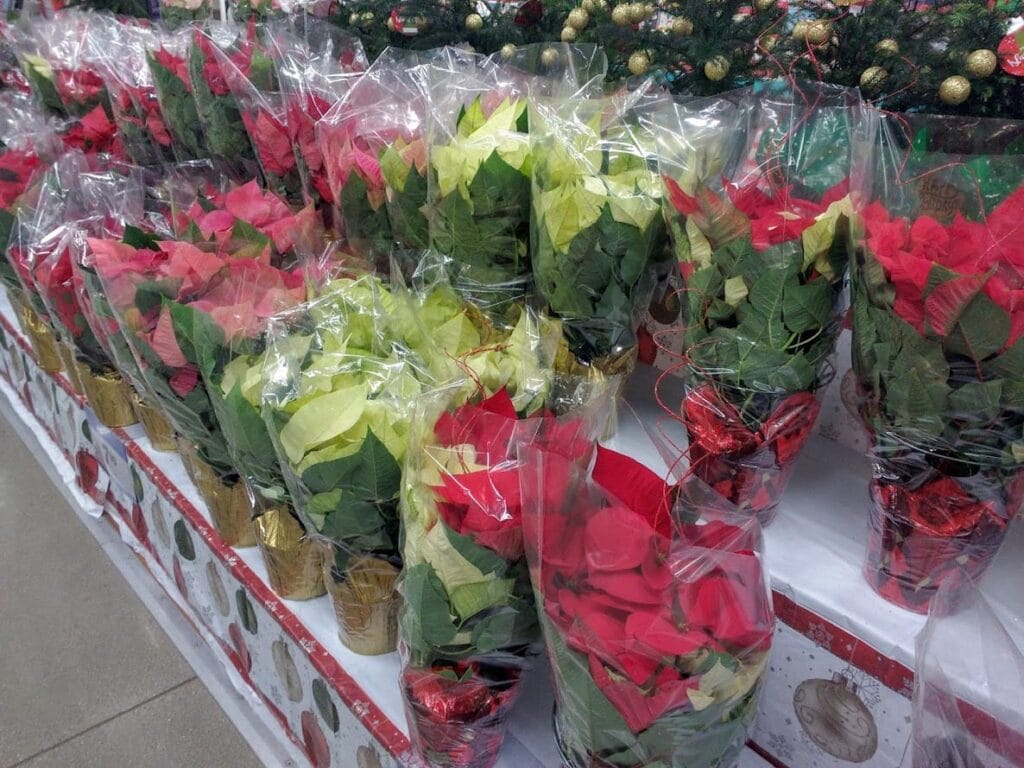
Plenty of non-floral retailers, convenience stores, grocery chains, and big-box stores use poinsettias as loss leaders to entice shoppers. Those plants usually sit near a cold, drafty entrance, and judging by the ones I see in some stores, more than a few also seem to have a no-water policy.
You’ll also often find them displayed in a tight paper or plastic sleeve. That sleeve is meant for transport, not display. A plant that’s been sitting sleeved on a shelf for days has had poor air circulation the whole time, and it shows once you get it home.
You may find a lower price at one of these stores, and sometimes that’s a fine trade if you just need one for a single event. But for a plant that needs to hold up for weeks, your local florist is worth the visit. We handle poinsettias by the hundreds every season, and we won’t sell you one that’s already stressed out.
Wherever you buy it, get it wrapped if the temperature outside is below 50°F, and don’t leave it wrapped once you’re home. A poinsettia left sleeved indoors will deteriorate just as fast as one left sleeved on a store shelf.
Frequently Asked Questions
How can I tell a poinsettia’s true flowers from the colorful bracts?
The colorful parts are bracts, modified leaves, not petals. The true flowers are the small cyathia clustered at the center of each group of bracts. Those centers tell you the plant’s actual age, regardless of how big or vivid the bracts look.
Should I buy my poinsettia early or wait until closer to Christmas?
Depends on what you need it for. Buy early with tight, closed centers if you want color through New Year’s. Buy the week before Christmas with open centers if you only need peak color for one day, like the holiday itself.
Is it worth paying more at a florist instead of a grocery store or big-box retailer?
If you only need the plant for a single event, a big-box or grocery store poinsettia is often fine. If you want it to look good for the full holiday season, a florist-grown plant that hasn’t been sitting near a drafty entrance is the better bet.
Why do poinsettias come wrapped in a sleeve, and should I remove it?
The sleeve is for transport and cold protection only. Remove it as soon as you’re home. Left on, it blocks air circulation, and the plant will decline quickly, the same way it does when a store leaves plants sleeved on the shelf too long.
Is it safe to transport a poinsettia in cold weather?
Only if it’s wrapped. Poinsettia plants can be easily stressed when transported in cold weather. Even a few minutes below 50°F can cause leaf drop or blacken the bracts. Have the store wrap it, and keep the car warm on the drive home.
How long will a well-chosen poinsettia actually last?
Four to six weeks of good color is realistic if you picked one at the right stage and it wasn’t stressed before you got it home. From there, how long it lasts comes down to care, which is a different conversation than buying it.
Closing Thoughts
Picking a good poinsettia isn’t complicated once you know to check the center, not the bracts. Match the stage to how long you actually need it to look good, skip the sleeved plant that’s been sitting by a drafty door, and you’ll walk out with a plant that earns its spot on the table.
Once you’ve got it home, my poinsettia care guide covers watering, light, and what to do with it after the holidays. And if you’d rather cut a few bracts for an arrangement than keep the whole plant, I’ve also written about using poinsettias as cut flowers.
Tell me in the comments: do you shop early for a plant that lasts the season, or wait for the week-before-Christmas markdown?
Til next time,