Disclosure: This post may contain affiliate links. If you click and buy, we may earn a commission at no extra cost to you. As an Amazon Associate, we earn from qualifying purchases.
Last Updated: July 16, 2026
A customer brought me a photo a while back of a miniature garden she’d tried building herself, a tiny bench and a bridge crowded onto a saucer with plants three sizes too big for the scene. She wanted to know why it looked off. It wasn’t the plants or the accessories. It was that nothing agreed on scale.
Miniature gardening is a fun, low-cost hobby anyone can pick up, but getting the scale right is what separates a garden that looks intentional from one that looks like a pile of small objects. Here’s how I’d approach building one.
Miniature Gardens or Fairy Gardens? Know the Difference First
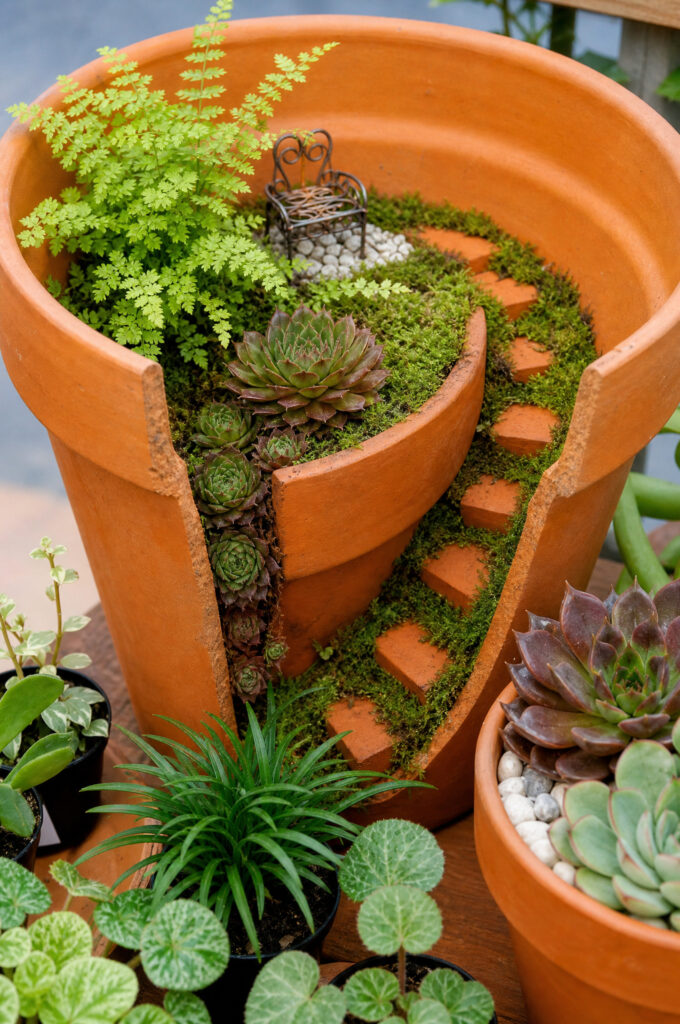
Often, these two terms get used interchangeably. There are real differences, though, and knowing them changes how you shop for both plants and accessories.
With a miniature garden, the focus is on growing an actual small garden, with real attention paid to the proportion between plants and accessories. Any accessory, a small bench, a bridge, even a rock, can set the initial scale. It works the same way model train layouts get built around the gauge of the train. Once you’ve picked your scale, the plants used as trees, shrubs, and ground cover all need to match it.
Fairy gardens focus more on the accessories, often with little attention paid to plant scale at all. Neither approach is wrong, but they call for different shopping lists. Miniature gardens need proper proportion to look right. Fairy gardens don’t.
Choose Plants That Actually Stay Small
Assuming your project is indoors, you have plenty of mini plant options, but not every houseplant your garden center carries is suited to it. Leaf size and growth rate matter more than the plant tag suggests.
For trees, try slow-growing upright plants like boxwood (Buxus sempervirens), Neanthe Bella palm (Chamaedorea elegans), Norfolk Island pine (Araucaria heterophylla), or cypress and cedar varieties (Chamaecyparis lawsoniana). Each stays proportionate for a long time without constant pruning.
For groundcover, shorter plants like dwarf mondo grass (Ophiopogon japonicus ‘Nana’), baby tears (Soleirolia soleirolii), Corsican mint (Mentha requienii), and ivy (Parthenocissus) all work well. Several types of moss also work as groundcover or shrub stand-ins. My own favorites are sheet, Spanish, reindeer, and sphagnum moss.
Add a splash of color with flowering plants like kalanchoe, African violets, or begonias. Succulents and air plants work well too, especially if your garden leans more desert than woodland.
What I use in the shop: a bag of sheet moss for groundcover on almost every miniature garden I build. It holds its shape and color far longer than fresh trimmings and never outgrows the scale you set for it.
Pick Accessories That Set the Scale, Not Fight It
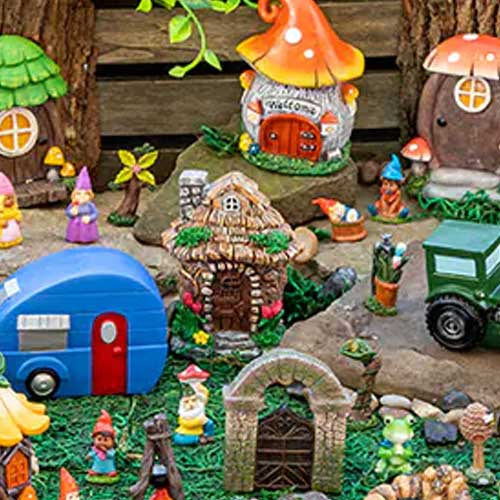
Your imagination is really the only limit on accessories, from fairies and gnomes to mushrooms, trellises, and tiny furniture. But if you’re building a true miniature garden rather than a fairy garden, pick your accessories before you pick your plants. A bench or bridge establishes the scale that everything else needs to match.
Nothing brings a miniature garden to life quite like a small animal figure tucked into the scene. Cats, dogs, birds, and frogs are the most popular choices. My own favorite is the hedgehog. There’s something about a tiny hedgehog peeking out from under a leaf that makes people stop and smile every time.

Care for the Plants Like Any Other Houseplant
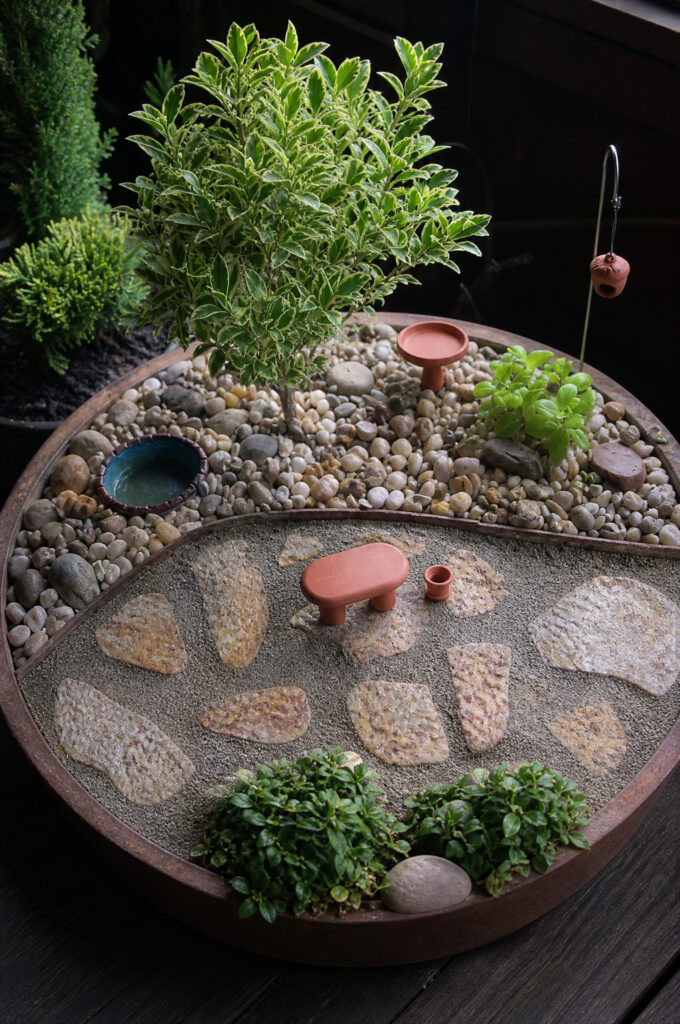
General care for miniature garden plants is close to that of any indoor houseplant, with one added wrinkle: staying inside your scale.
Give them bright light but not direct sun, and water lightly, since most of these plants want to stay moist without ever sitting in standing water. Good drainage matters more here than in a normal pot, since these containers are often shallow.
Prune regularly. Any plant standing in for a bush or groundcover needs to stay compact enough to hold its scale, and it’s easier to trim a little often than to fix an overgrown plant that’s thrown off your whole composition. Feed occasionally with an organic houseplant fertilizer diluted to about a quarter strength. Full-strength fertilizer pushes growth faster than a miniature garden wants.
Watch It Come Together
This short video walks through building one from start to finish, and it’s worth watching once before you start your own.
Frequently Asked Questions
What’s the difference between a miniature garden and a fairy garden?
A miniature garden focuses on proper scale between the plants and accessories, similar to how a model train layout is built around a gauge. A fairy garden focuses more on the accessories themselves, with less attention paid to plant proportion. Both are fun to build; they just call for a different approach.
What plants work best in a miniature garden?
Slow-growing upright plants like boxwood, Neanthe Bella palm, and dwarf cypress work well as trees. Dwarf mondo grass, baby tears, and Corsican mint work well as groundcover. Moss is also a reliable groundcover option that holds its scale without pruning.
How do I keep the plants from outgrowing the scale of my garden?
Regular pruning is the answer. Trim any plant standing in for a bush or groundcover often enough that it stays compact. It’s much easier to keep a plant in scale with light, frequent trimming than to correct one that’s gotten away from you.
How often should I water a miniature garden?
Water lightly and only when needed, since most miniature garden plants want to stay moist rather than wet. Good drainage matters even more here than in a standard pot, since these containers tend to be shallow and don’t hold excess water well.
Can I use any small figurine as a miniature garden accessory?
For a true miniature garden, choose accessories at a consistent scale with each other and with your plants, since mismatched sizes are what make a garden look thrown together rather than designed. For a fairy garden, scale matters far less, so there’s more room to just pick pieces you love.
Closing Thoughts
A miniature garden rewards patience more than skill. Pick your scale first, choose plants and accessories that respect it, and prune before things get away from you.
Get that right, and even a saucer on a windowsill can grow into a whole little world.
Are you leaning toward a true miniature garden, or is a fairy garden more your style? Tell me in the comments. I read them all.
Til next time,