Disclosure: This post may contain affiliate links. If you click and buy, we may earn a commission at no extra cost to you. As an Amazon Associate, we earn from qualifying purchases.
Last Updated: July 9, 2026
A customer called the shop the week before Christmas a few years back, upset that the amaryllis she’d bought from us four days earlier still hadn’t opened. She was hosting dinner that night and had a bare green stalk sitting on her table.
Nothing was wrong with the flower. She’d bought it four days too late.
Amaryllis is one of those flowers that stops people in their tracks. The blooms are huge, the colors are bold, and they carry a design the way almost nothing else in a winter cooler can. They also run on their own schedule, and that catches people out.
I’ve been working with amaryllis for decades, and I still reach for them when I want a design to make a statement. Here’s everything you need to know about using them as cut flowers, from care basics to the quirks that’ll trip you up if you’re not ready.
Why I Love Using Amaryllis in Floral Designs
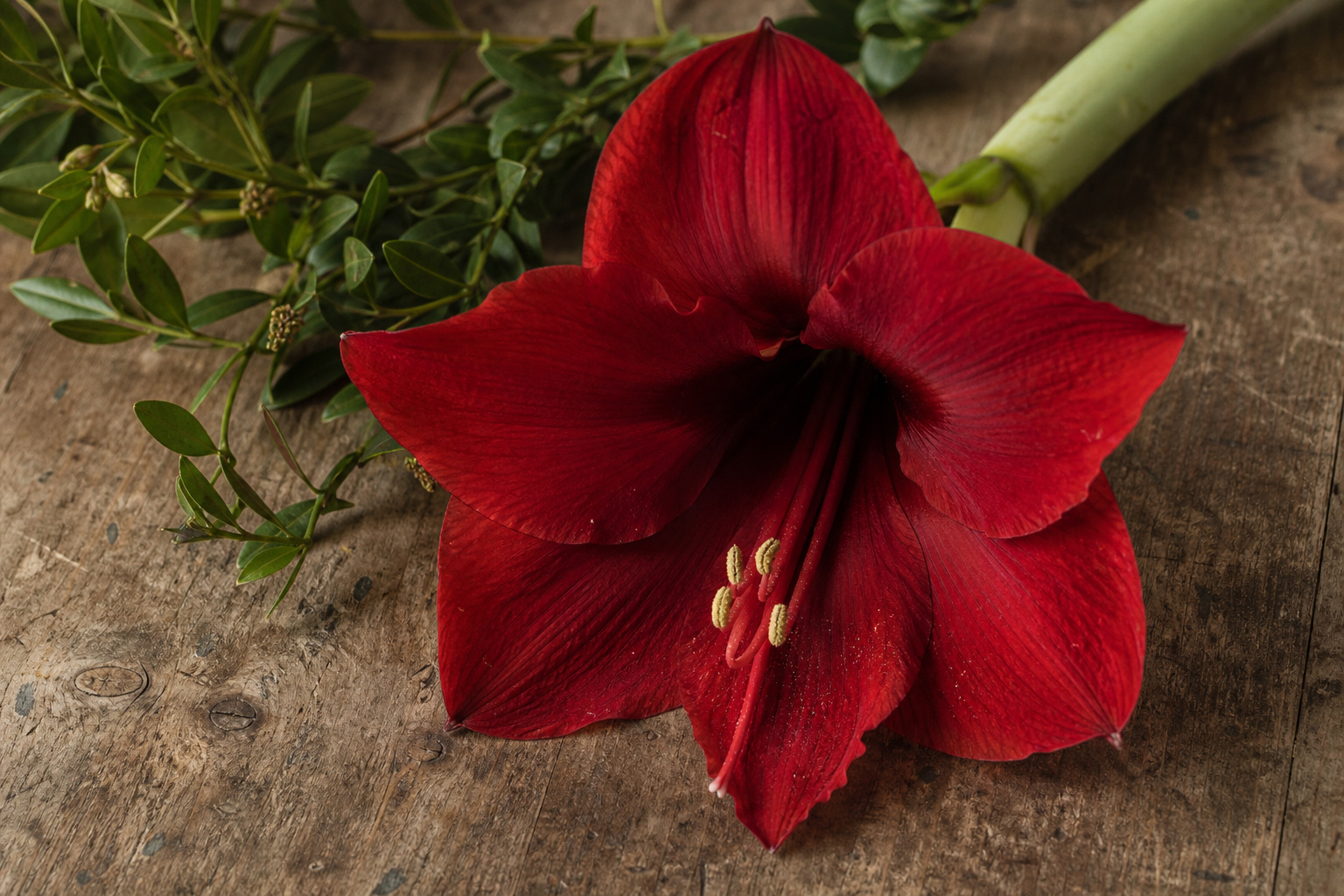
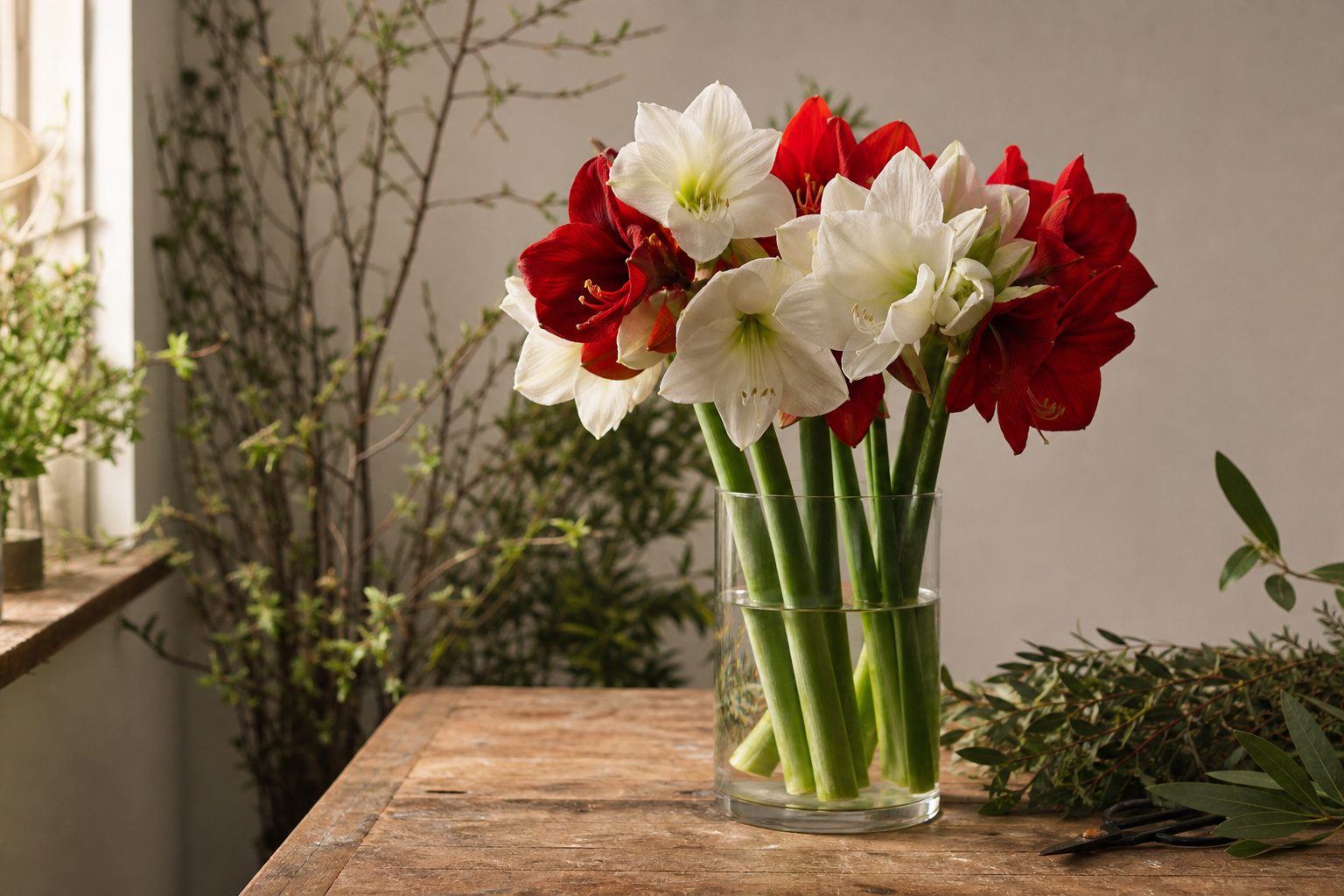
Amaryllis (Hippeastrum) is one of the most visually commanding flowers you can put in a design. The trumpet-shaped blooms are enormous, the stems are tall and architectural, and they hold up well, lasting a week or more once they’re fully open.
I’ve used them in vased arrangements, wreaths, swags, wedding bouquets, and centerpieces for everything from sympathy work to holiday events. They’re equally at home in a simple trio vase on a kitchen counter or anchoring a large event centerpiece.
What I keep coming back to is the visual impact. One amaryllis stem can carry a design that would otherwise need a dozen flowers to fill. That’s a real advantage when you’re watching your budget.
Amaryllis Availability and Colors
Amaryllis is primarily a winter flower. You’ll find them in shops and at the wholesale market from October through the end of March, with peak availability running from December through mid-February.
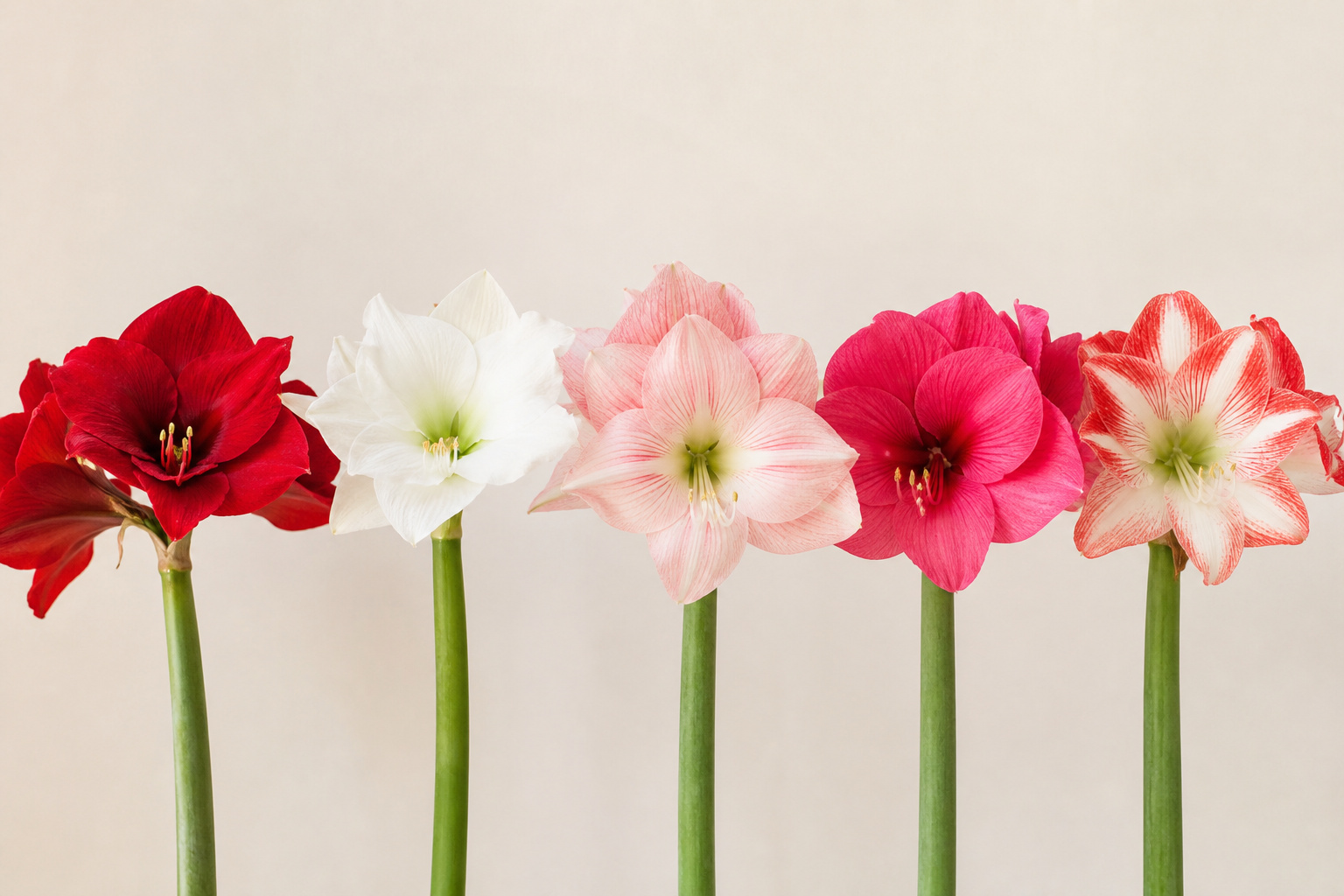
The color range is wider than most people realize. Red and white are the most common, but you’ll also find light pink, dark pink, bi-colors, peach, burgundy, and even a soft sage green. If you’re ordering for a specific palette, check with your supplier early. The less common colors move fast.
Stem length varies by variety, from 12 to 24 inches or taller. Each stalk typically carries two to three blooms. If you can source Dutch premium amaryllis, those stems come with four blooms. They’re worth it when you need maximum impact with fewer stems.
This short video showcases many of the vibrant colors they are available in.
How To Care For Cut Amaryllis
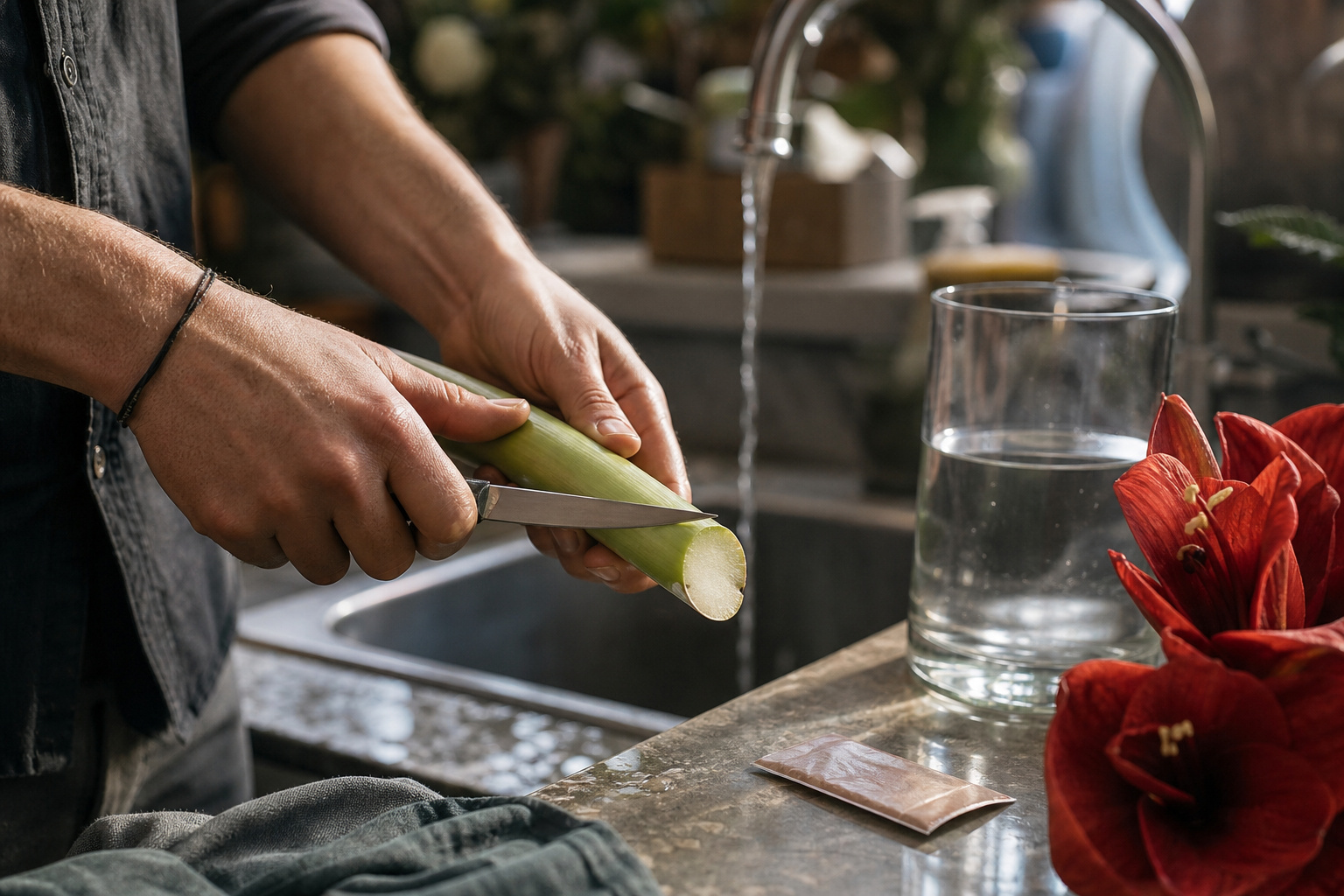
The most important thing to understand about amaryllis is the timing. These flowers take three to four days to open after you receive them. If you’re using them in a wedding bouquet or an event centerpiece, plan for that window. Don’t expect them to open the day you get them.
In my shop, we receive amaryllis seven to ten days before the event. That gives us time to condition them properly and still have fully open flowers on the day they’re needed.
When your stems arrive, re-cut the bottoms at an angle with a sharp knife and place them immediately in fresh water with flower preservative. Change the water and preservative every other day. Amaryllis stems are hollow, and stagnant water leads to bacterial buildup fast.
To slow opening, keep them cool. To speed it up, move them somewhere warmer and use lukewarm water. Keep them away from direct sun, heat vents, and cold drafts regardless.
What I Use in the Shop
Nothing exotic. These are workroom basics that do a better job on amaryllis than anything fancy.
What I use in the shop: flower preservative on every water change. With hollow stems, it earns its keep more than usual.
What I use in the shop: clear waterproof tape as the first line of defense when a stem starts to crack. It stays invisible in glass vases.
What I use in the shop: a bundle of 18-inch wood plant stakes in the workroom. They slide right into the hollow stem and brace the bloom from the inside.
What I use in the shop: pipe cleaners for lifting pollen off petals without rubbing it in. One pass usually does it.
What I use in the shop: a sharp floral knife, which is non-negotiable for a clean re-cut. A dull blade crushes the stem end and restricts water uptake.
Catch Cracking Stems Before They Spread
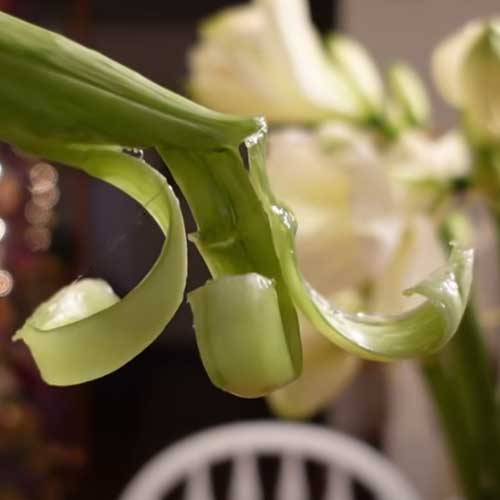
The hollow stem is both a feature and a liability. It gives amaryllis that clean, sculptural look, but it also means the stem can crack, bend, or curl back under the weight of the blooms, especially on longer varieties.
Keeping the water depth to one or two inches reduces base curling. Shallow water means less of the stem is softening in moisture.
Stem curling at the base is normal and doesn’t shorten vase life. It’s the cracking higher up the stem that you want to catch early. Wrapping the affected area with clear waterproof tape or a rubber band usually stops it from spreading. I use tape when the stems are in a clear vase, so it stays invisible.
For stems that need structural support, insert a hyacinth stake, bamboo cane, wooden dowel, or a woody stem from another flower directly into the hollow center. Whatever you use, make sure it reaches all the way up to the flower head. That’s where the weight is.
Build the Arrangement Around the Weight
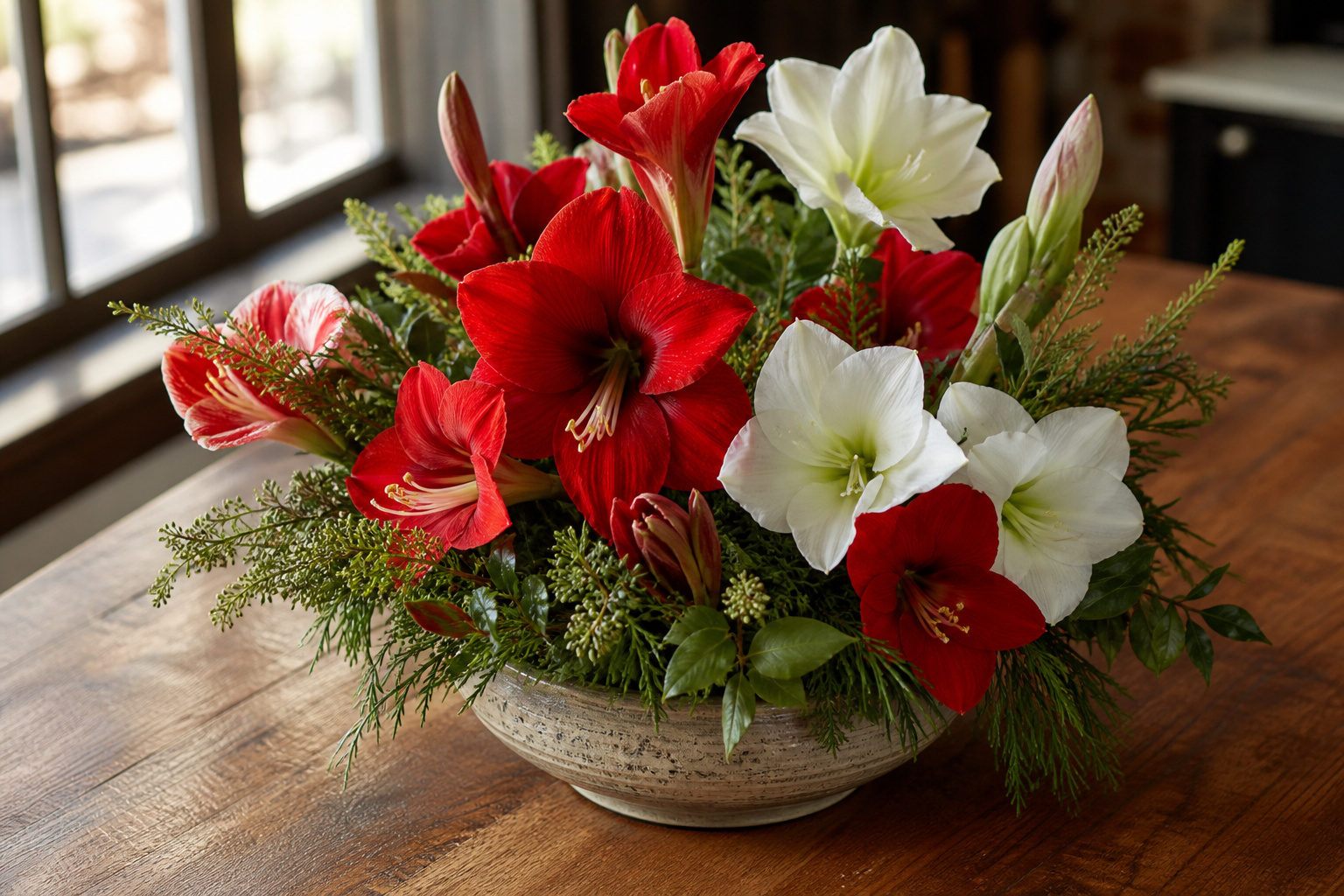
Container choice matters more with amaryllis than with most flowers. The stems are tall and the blooms are heavy, so your vessel needs to be wide-mouthed enough to support the stems and heavy enough to prevent tipping. A lightweight vase with a narrow neck is asking for trouble.
Because amaryllis only needs an inch or two of water, you won’t get much ballast weight from the water itself. Go with a heavier ceramic or glass container, or add pebbles or marbles to the base for stability.
When working in floral foam, always brace the stems before inserting, using one of the support methods above. An unsupported amaryllis stem in foam will eventually snap at the insertion point, especially if the arrangement gets moved.
One stamen note: I remove them when I’m using amaryllis in wedding bouquets. The pollen stains fabric and other petals, and it’s easier to pull them before they open than to deal with yellow smears on a bride’s dress. It won’t change the vase life at all. Unlike lilies, amaryllis stamens aren’t connected to longevity.
If pollen does land on the petals, don’t rub it. Gently lift it off with a pipe cleaner. Rubbing works it deeper into the petal tissue.
Frequently Asked Questions
How long do cut amaryllis last in a vase?
Once fully open, amaryllis blooms will hold for a week to ten days in a vase with fresh water and preservative. Change the water every other day and keep them away from heat and drafts. Individual blooms on the same stalk open at different times, so the display often extends longer than you’d expect.
Can you use amaryllis in a wedding bouquet?
Yes, and one stem carries a bouquet the way few flowers can. Timing is everything. Order them seven to ten days before the wedding so they’re fully conditioned and open by the event. Remove the stamens before they release pollen, or you’ll end up with yellow stains on the dress. Brace the stems if they’ll be going into a bouquet holder.
Why is my amaryllis stem cracking?
The hollow stem can’t always support the weight of the blooms, especially on taller varieties. Wrap the cracked area with clear waterproof tape or a rubber band to stop it from spreading. For more support, slide a wooden dowel or bamboo cane down into the hollow center. It acts as an internal brace all the way up to the flower head.
How do you keep amaryllis from falling over in a vase?
Use a heavy container with a wide opening, and keep the water level low. One to two inches is enough. If the vase still feels tippy, add pebbles or marbles to the base for ballast. The stems are tall and the blooms are top-heavy, so the container does a lot of the structural work.
Can you slow amaryllis down to prevent it from opening too fast?
Yes. Moving them to a cooler spot, like a cool room or a refrigerator set above 40°F, will noticeably slow the process. Use cold water instead of room temperature. If you need them to open faster, do the opposite: warmer room, lukewarm water. You have more control over the timing than most people realize.
Do amaryllis need flower food?
I use it on every bucket. The hollow stem is particularly prone to bacterial growth in standing water, and the preservative slows that down significantly. It’s not optional in my workroom. It’s part of the initial setup, same as a clean re-cut.
Closing Thoughts
Amaryllis rewards a little planning. Get them in early, keep the stems supported, and match your container to the flower’s weight. They’ll carry a design better than almost anything else you can put in a vase this time of year.
I’ve been using them for over 40 years, and they still earn their spot in my cooler every winter. Once you work with them a few times, you’ll understand why.
Have a question about using amaryllis in your own designs, or a stem that cracked on you at the worst possible moment? Drop it in the comments below. I read every one.
Til next time,