
Disclosure: This post may contain affiliate links. If you click and buy, we may earn a commission at no extra cost to you. As an Amazon Associate, we earn from qualifying purchases.
Last Updated: June 10, 2026
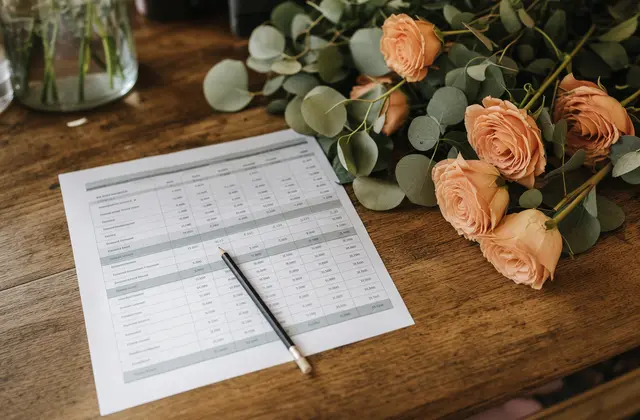
A bride came in a while back, organized, confident, and clearly had done her homework. She slid a printed spreadsheet across the counter with a line item for flowers: $800. For a wedding of 120 people. I took a breath and said, “Let’s talk about this.”
That conversation happens more than you’d think. Not because brides are unrealistic, but because wedding flowers are one of the few things you can’t easily comparison shop before you’ve ever bought them. Most people have no frame of reference.
So let me give you one.
Understand What the 8–10% Rule Actually Means
You’ll see the same figure everywhere: budget 8% to 10% of your total wedding spend on flowers. It’s not wrong. It’s just not very useful on its own.
That percentage comes from industry surveys — averages across thousands of weddings at every price point. If your total budget is $15,000, that puts flowers at $1,200 to $1,500. If your budget is $40,000, you’re looking at $3,200 to $4,000. The math works. Whether it matches what you actually want is a different question.
The percentage is a starting point, not an answer. What actually drives your flower costs is the specific work involved: how many people are in your wedding party, what types of arrangements you want for the ceremony and reception, which flowers you’ve fallen in love with on Pinterest, and how much of the florist’s time and labor your event will require.
Those variables can push the number well above 10%, or let you come in under 8% if you’re strategic. But you won’t know which direction you’re headed until you understand what’s actually on the list.
Know What’s Eating Your Budget Before You Spend It
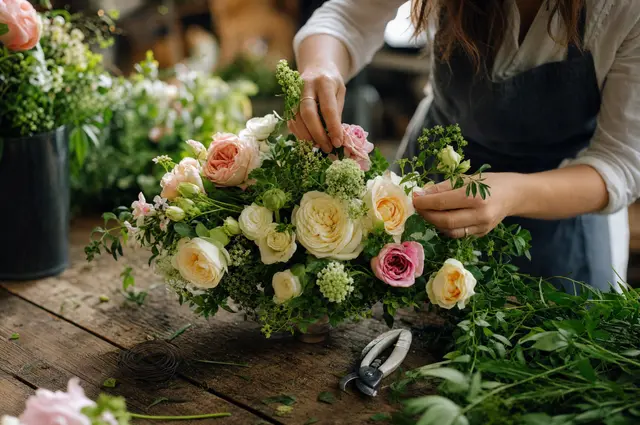
Here’s something most brides don’t realize until they get their first florist proposal: labor is often a bigger cost driver than the flowers themselves.
The flowers are perishable. The work that goes into designing, sourcing, assembling, transporting, and installing them on your wedding day is not. Your florist is creating something with a tight deadline, no margin for error, and flowers that can’t be returned if a design doesn’t come together. That expertise costs money — and it should.
In my experience, the couples most surprised by flower costs are the ones who focus on the blooms themselves and forget to account for everything around them. A large floral installation at your ceremony arch isn’t just $200 in flowers. It’s sourcing, assembly time, a delivery run, setup at the venue, and sometimes a pickup afterward. Add that up, and you understand why the proposal is what it is.
The other factor people underestimate: the size and shape of your reception tables. Rectangle tables seat fewer people per table than round ones, which means more tables, more centerpieces, and a higher total cost. It seems like a small detail. On a 120-person guest list, it isn’t.
Use a Real Benchmarking Tool — Not Just the Average
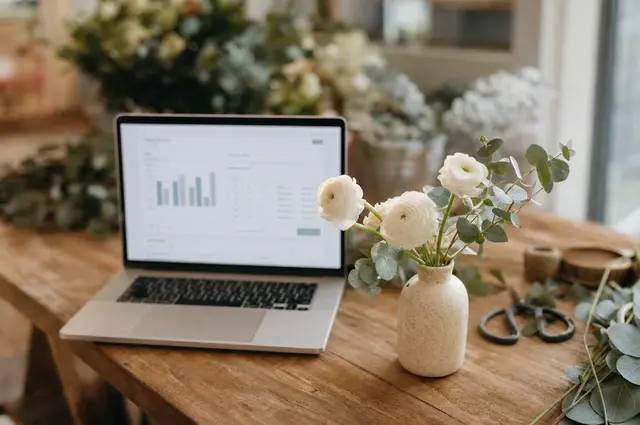
The most useful thing I can point you toward is a free wedding cost estimator that pulls data on what couples in your area actually paid, not what vendors say weddings cost. There’s a meaningful difference between those two numbers, and this tool uses the former.
I ran our own shop numbers against it a while back, out of curiosity. Most couples spend between $400 and $2,400 on wedding flowers with us, depending on the size of the wedding party and their reception preferences. The estimator came back in a similar range for the Milwaukee area. That kind of real-world validation is what makes a budgeting tool worth using.
You can use it for flowers, or run through your entire wedding budget line by line. Either way, going into your first florist meeting with a realistic sense of what others paid locally is a better starting point than a percentage calculation done in a vacuum.
You can find the wedding cost estimator here.
Set a Budget Ceiling — Not a Range
When you walk into a florist meeting, don’t say “our flower budget is between $1,500 and $2,500.” Say “our max is $2,000.” Then mentally accept that you’ll probably land a little over it once you see what’s possible.
A range gives your florist room to design toward the top end. A ceiling gives both of you a clearer target to work from, and it tends to produce more creative problem-solving. Good florists are used to working within constraints. Give them a real number.
That said, be flexible. If the first proposal comes in over budget, that’s not a failure. It’s information. You can trim from there: simplify a centerpiece design, swap one flower variety for a more affordable alternative, or cut a few items that feel optional once you see the full picture. There are always tradeoffs, and a florist who’s done this for a while will know where to find them.
Don’t Forget the Small Stuff Until It’s Too Late
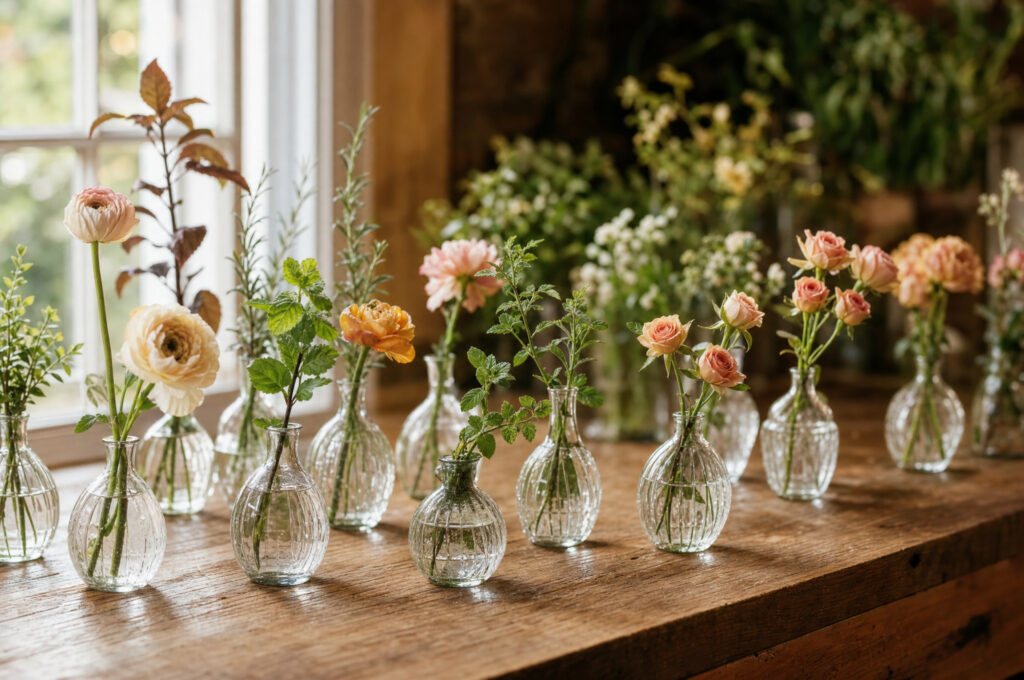
I’ve had more than a few brides call me in the final weeks before their wedding to add things they forgot. Corsages for the grandmothers. Flowers for the welcome table. A small arrangement for the escort card display. A boutonniere for the officiant. Those additions add up, and they’re harder to accommodate when your florist is already deep into their sourcing orders.
Walk through your venue early and write down every spot where you’d want flowers. Ceremony entrance, aisle markers, altar, cocktail hour tables, bar top, escort card table, sweetheart table, cake table, reception centerpieces, restroom, exit arrangements. It’s a longer list than most people expect, and catching it early keeps your budget accurate and your florist from scrambling. A good wedding flower checklist helps with this.
If you’re handling some of it yourself, that’s worth knowing upfront too. DIY brides sometimes plan to cover the smaller touches, like bud vases, table scattering, and loose blooms, while the florist handles the major pieces. There’s nothing wrong with that approach, but make sure it’s part of the conversation from the start so nothing falls through the cracks.
Ask the Right Questions Before You Sign Anything
Once you’re meeting with florists, a few questions will tell you a lot about how they work and whether they’re the right fit.
Ask what changes you’re allowed to make after signing the contract. Wedding plans evolve; guest counts shift, tables get reorganized, budgets get adjusted. You want to know what’s locked in and what’s flexible, and whether changes come with fees.
Ask what their backup plan looks like if something goes wrong the week of your wedding. Smaller shops sometimes rely on one or two key people. If something unexpected happens, you need to know there’s a plan.
And ask how they’d recommend maximizing impact within your specific budget. The florists who answer that question well, with specifics, not generalities, are the ones worth hiring. They’ve solved this problem before, and they’ll solve it for you, too.
The same goes for flower choices. You don’t need to know flower names or what’s in season before you walk in. Bring a few images of what you love. Describe the feeling you want, and let them tell you what works at your venue and price point. That’s what you’re paying for.
Frequently Asked Questions
What percentage of a wedding budget should go to flowers?
The standard figure is 8% to 10% of your total wedding budget. That’s a reasonable starting point, but your actual number will depend on your wedding party size, reception layout, venue requirements, and the specific flowers you choose. Use the percentage as an anchor, not a ceiling.
Why do wedding flowers cost so much?
A big part of the cost is labor. Designing, sourcing, assembling, transporting, and installing arrangements on a tight deadline with no margin for error. The flowers themselves are only part of the picture. Florists working with perishable materials are under real-time pressure, and that expertise has a cost.
How do I know if a florist’s quote is reasonable?
The best frame of reference is what other couples in your area actually paid. Not industry averages, but real local data. A free wedding cost estimator like the one linked above pulls that kind of local spend data and gives you something concrete to compare against.
Can I negotiate with a wedding florist?
You can discuss the budget; most florists expect it. The more productive conversation isn’t “can you come down?” but “where can we get the most impact for this number?” A florist who’s been doing this a while will know exactly where to find flexibility in a design without compromising the look you want.
When should I book a wedding florist?
As early as possible, especially if your wedding date falls on or near a popular weekend. Many florists book out a year or more for peak-season dates. Have your venue locked in before you start meeting with florists. The venue affects nearly every decision they’ll make for your event.
Is it worth hiring a florist or doing the flowers myself?
Depends on your comfort level, how much time you have, and what kind of arrangements you want. Simple DIY elements, small bud vases, greenery garlands, and loose table blooms are very manageable. Complex work like bridal bouquets, large ceremony arches, and cascading centerpieces takes more skill and sourcing access than most DIY brides expect. A hybrid approach, where the florist handles the statement pieces and you handle the smaller touches, often makes the most sense.
Closing Thoughts
The bride with the $800 line item and I worked it out. We adjusted her expectations on a few things, got creative with a couple of the centerpiece designs, and she had a beautiful wedding. She called afterward to say the flowers were her favorite part of the whole day.
That’s usually how it goes when the budget conversation happens early and honestly. The florists who do this well aren’t just designers — they’re problem solvers. Give them a real number, tell them what matters to you, and let them work.
If you’re still in the early stages of planning, a good first step is getting a realistic sense of what weddings in your area actually cost across all categories, not just flowers. That context helps everything else fall into place. If you found this useful, drop a question in the comments. I’m curious whether the estimator numbers matched your experience in your area.
Til next time,