Disclosure: This post may contain affiliate links. If you click and buy, we may earn a commission at no extra cost to you. As an Amazon Associate, we earn from qualifying purchases.
Last Updated: June 2026
A bride called the shop a few years back, about three weeks before her wedding. She’d found a ceremony arch online that she was absolutely set on - full, lush, cascading flowers from one side to the other. Her venue had the frame. She wanted to know if she could pull it off herself.
My answer was yes, with a few conditions. She needed the right mechanics, the right flowers, and a clear sequence to follow on installation day. Get those three things right, and a ceremony arch is well within reach for a confident DIY designer.
The video below, by Kaylee Young of Flourish by Kay, is one of the better step-by-step tutorials I’ve seen for this kind of build. Watch it first, then I’ll walk you through what you need to know before you get started.

Start With the Right Frame and Mechanics
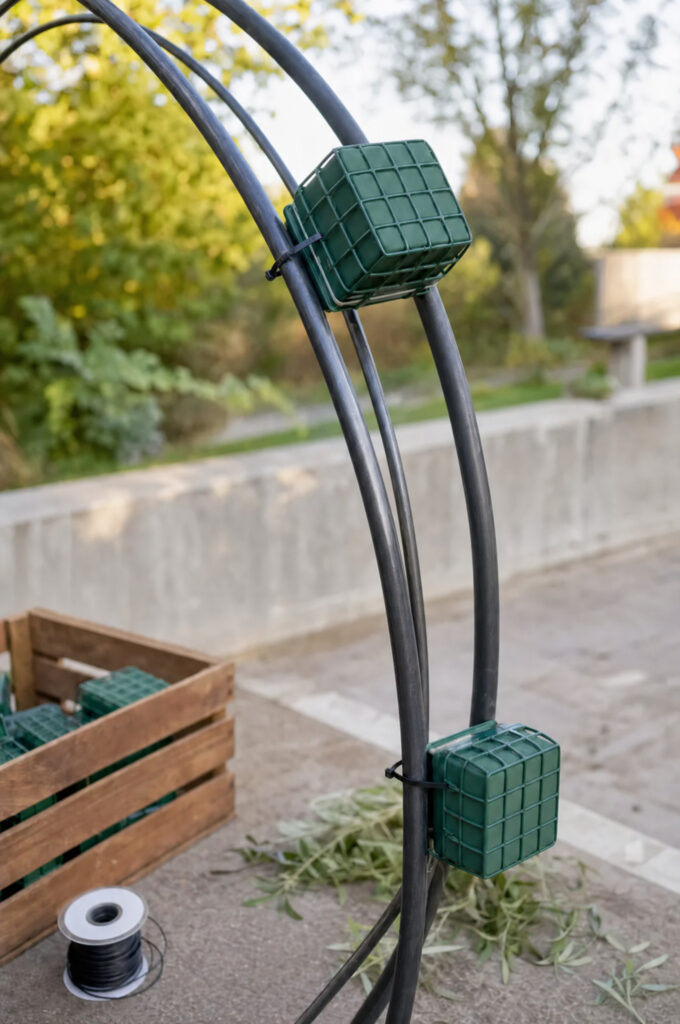
The frame is your foundation. Most DIY brides use a simple metal arbor, which works well. If you’re going for a fuller look with flowers on multiple sides or cascading from the top, make sure the frame has enough structure to hold the weight. A flimsy frame loaded with wet floral foam cages is going to shift on you.
For attaching the floral clusters, you have a few options. Chicken wire formed into cages or pouches is a classic approach. Floral foam cages zip-tied to the frame also work well, especially if you want a more secure attachment. I’ve seen both done beautifully and both done poorly. The difference is usually in how well they’re secured before a single flower goes in.
One thing I always tell DIY designers: build your mechanics the day before. Don’t be wiring foam to a frame at 7 am on your installation day. Give yourself the space to troubleshoot before the pressure is on. For a closer look at securing floral installations, this post on using zip ties in floral design covers the details.
Choose Flowers That Hold Up to the Work
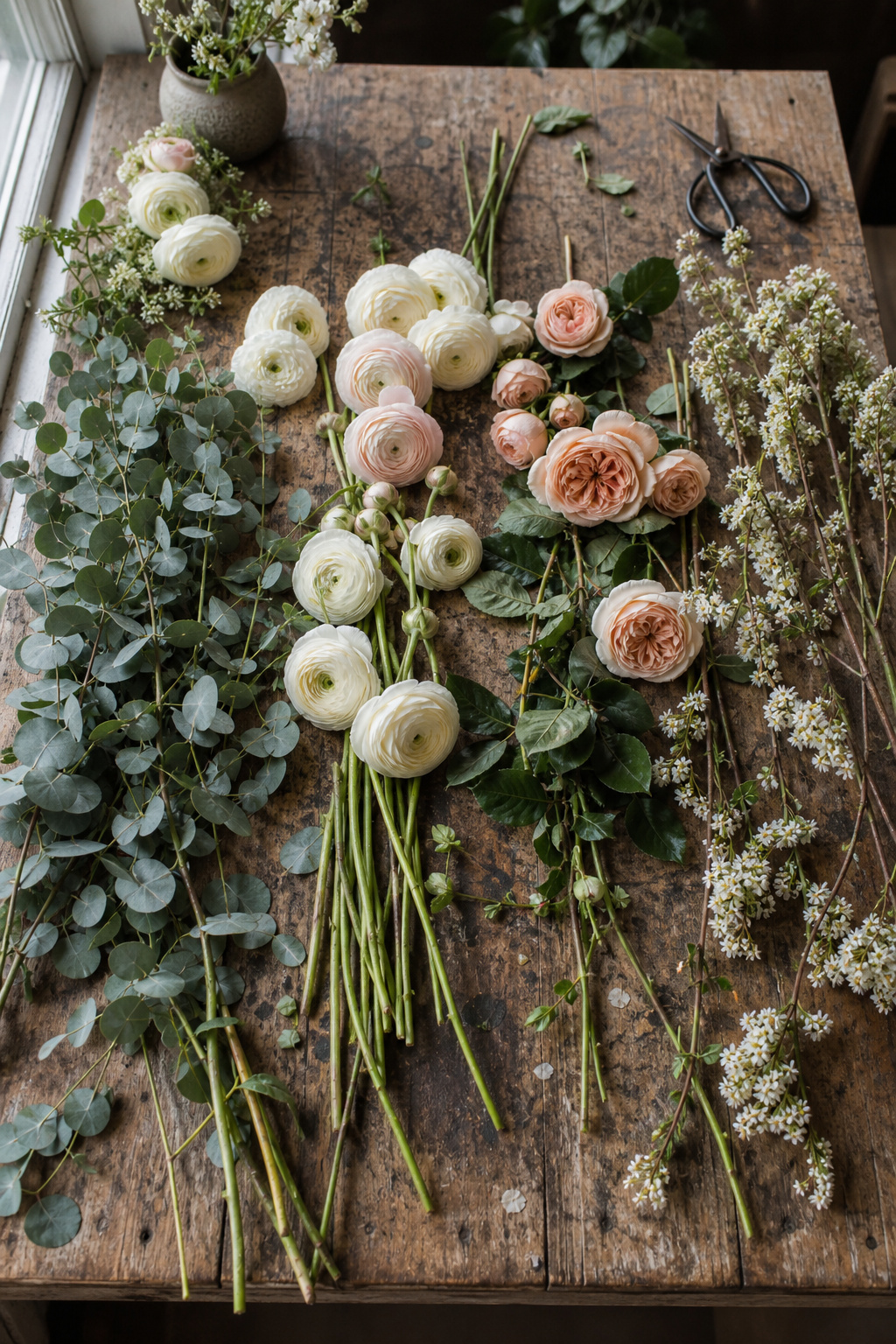
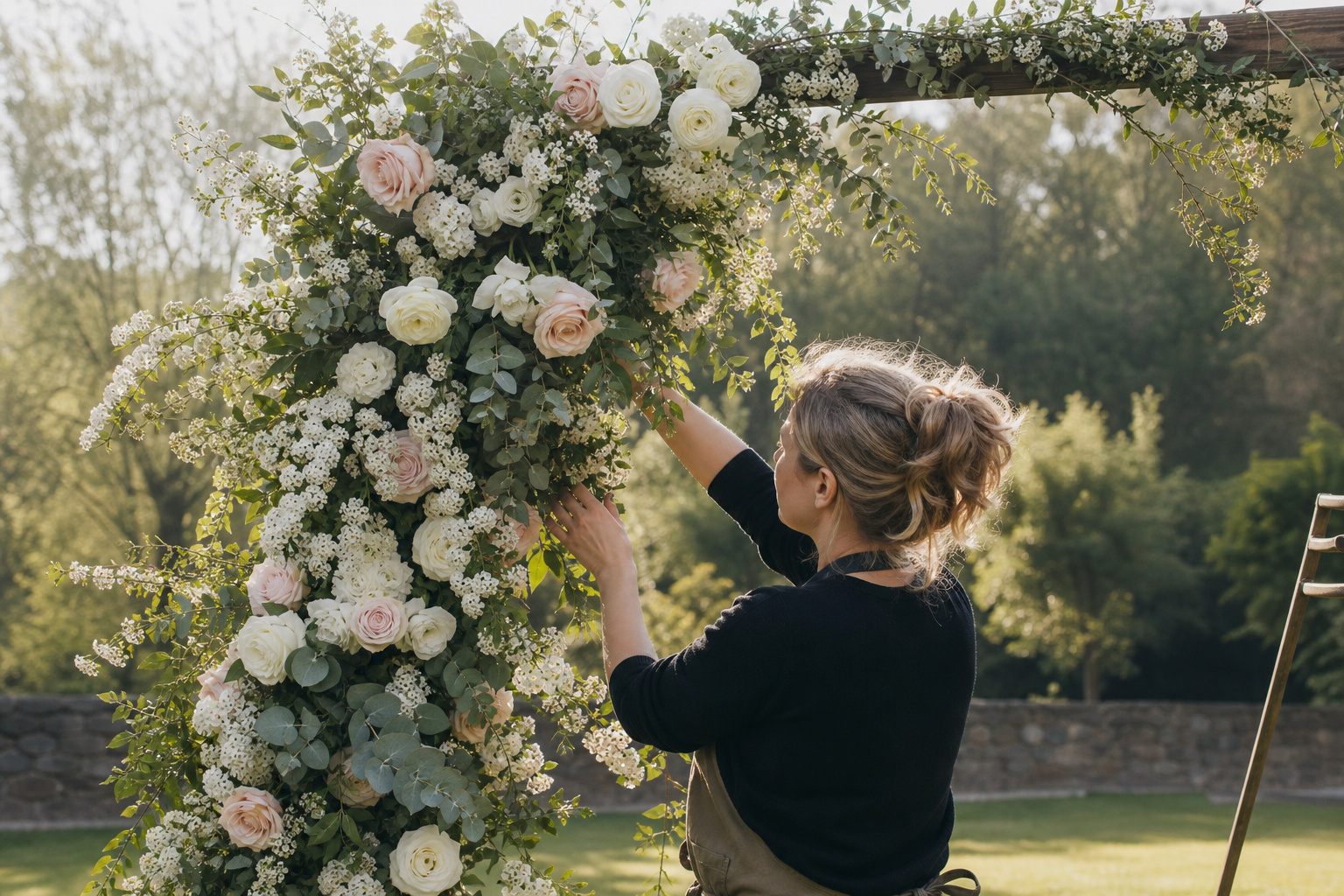
Kaylee uses spirea, ranunculus, butterfly ranunculus, acacia foliage, eucalyptus, and roses in the video. That’s a good mix for this kind of design. You’ve got structural pieces, airy filler, and focal flowers. Each one plays a role.
When I’m advising brides on ceremony arch flowers, I steer them toward varieties with strong stems and good vase life. Ranunculus is beautiful but can be delicate in the heat. Eucalyptus holds beautifully and gives you that soft, trailing look without wilting. Roses are reliable if they’re properly conditioned in advance.
One practical note: larger flowers like roses and ranunculus tend to open quickly once they’re out of the cooler. Plan your installation timing around that. If your ceremony is at 4 pm, you want to be placing those focal flowers no earlier than mid-morning, not the night before.
Foliage first, then filler, then focal flowers. That sequence applies whether you’re doing a hand-tied bouquet or a ceremony arch. Establish your base of greens before a single bloom goes in.
Source Your Flowers in Advance
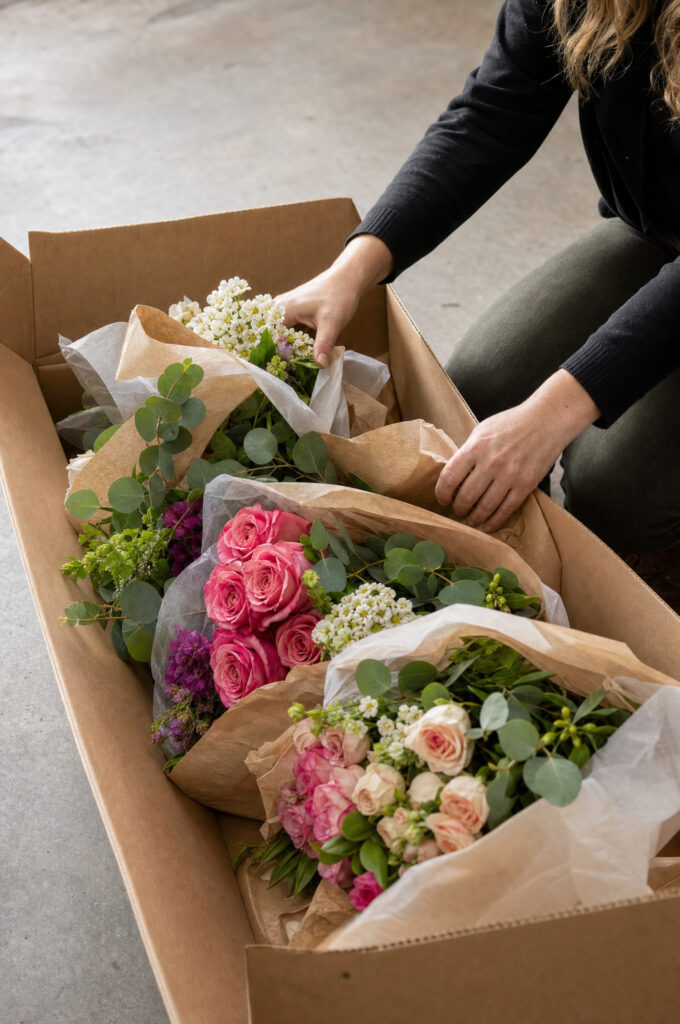
All the flowers in this tutorial, including the spirea, ranunculus, acacia, eucalyptus, and roses, can be ordered online through wholesale suppliers. The three I’ve personally bought from are FlowerExplosion, BloomsbytheBox, and GlobalRose. Those are the only three I can speak to directly.
Order early. Most wholesale suppliers need at least a week’s lead time, and you want flowers arriving two to three days before your event so you have time to condition them properly. Rushed deliveries and unconditioned stems are the two most common reasons a ceremony arch doesn’t look the way it was supposed to.
If you can’t source everything you need online, a local florist is always my first recommendation. They can often supply individual stems or small bunches, and you’ll know exactly what you’re getting. If you go the silk flower route for any part of the design, I’d pair them with real greens. A mix of fresh and faux reads much more naturally than silk flowers alone.
Plan the Installation Day Sequence
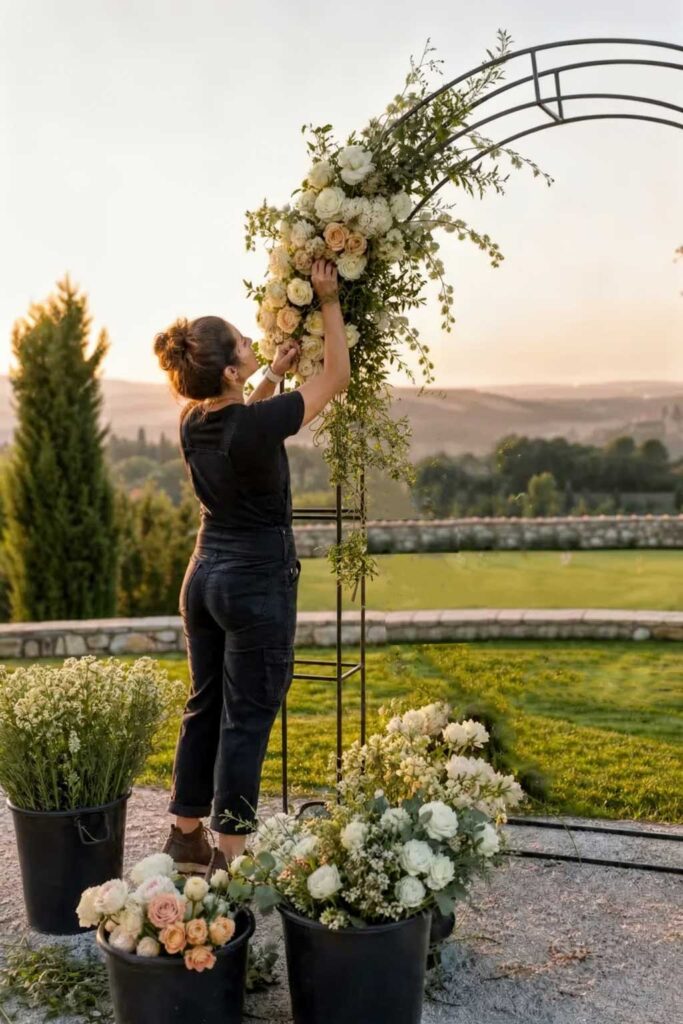
Here’s where a lot of DIY designs run into trouble. People focus on sourcing and designing, then show up at the venue without a clear plan for how the day actually unfolds. Installation day has a lot of moving parts.
Work backward from the ceremony time. If the ceremony is at 4 pm and setup ends at 2 pm, you need to be done and out of the space well before that. That means your install window is probably tighter than you think.
A few things to confirm with your venue ahead of time:
When can vendors access the space? Some venues have staggered setup windows that limit how early you can get in. Is there water access nearby? You’ll need it if you’re doing any last-minute trimming or conditioning. Where will the frame be positioned? Know this in advance so you’re not placing it three times.
If you’re also handling other floral elements at the same venue, aisle décor, table arrangements, and personal flowers, build those timelines together. For more ideas on coordinating ceremony-day florals, see our post on wedding aisle décor that goes beyond the pew bow.
Balance the Design Without Overloading It
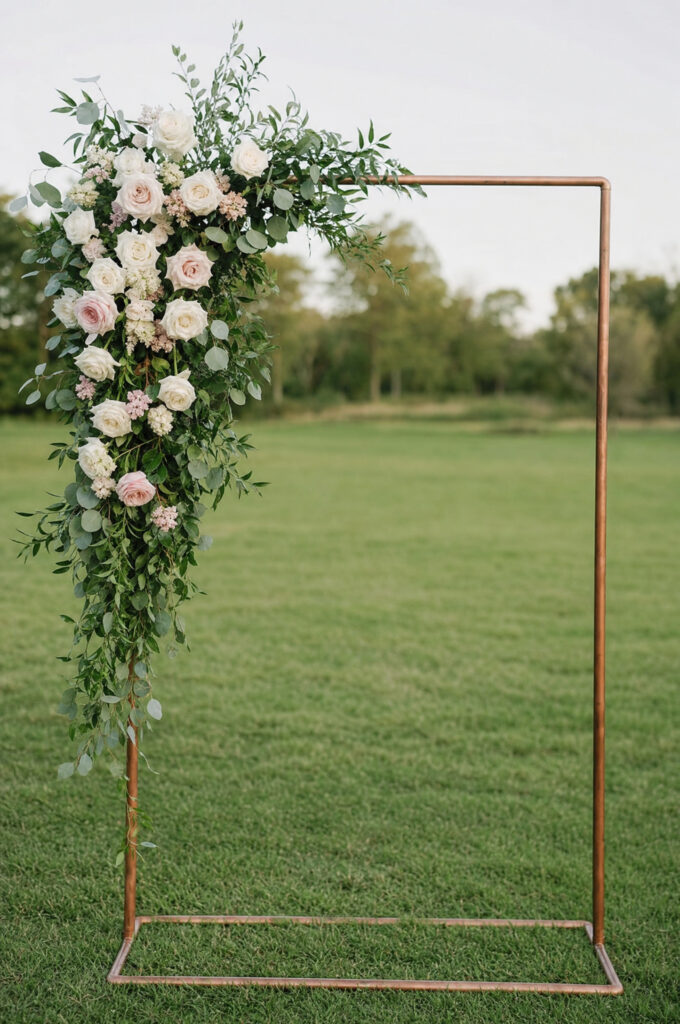
One thing the video demonstrates well is restraint. A fully packed arch from top to bottom can look impressive in photos, but it’s a lot of work, a lot of flowers, and a lot of weight. The asymmetrical approach, which is heavier on one side or cascades from one corner, is both more forgiving and more contemporary.
From a practical standpoint, a one-sided or asymmetrical design also uses fewer stems, which matters when you’re buying retail or at wholesale minimums. You don’t need to cover every square inch of the frame to get a beautiful result. Negative space is part of the design.
Start with your largest focal flowers and establish the overall shape before filling in. It’s much easier to add than to take away once things are placed. Step back frequently. What looks balanced from 18 inches away can read very differently from 20 feet.
Current trends in wedding florals are leaning toward looser, more organic shapes rather than tight, formal clusters. That’s actually good news for DIY designers - a natural, garden-style approach is more forgiving than a structured one. For a broader look at what’s working right now, see the wedding flower trends that are surprising me this year.
Frequently Asked Questions
How many flowers do I need for a ceremony arch?
It depends on the size of your frame and how full you want the design. A standard 8-foot arbor with an asymmetrical design might use 40–60 stems of mixed flowers and greens. A fully packed arch on both sides can easily require 150 or more. Start with a rough sketch of where you want flowers placed, then calculate from there.
Can I build the arch the night before?
You can attach your mechanics and greens the night before, but I’d hold off on placing focal flowers until the morning of the ceremony. Flowers placed in foam or chicken wire will continue to open and, depending on the variety, may not look their best 18 hours later.
Do I need floral foam, or can I use another method?
You don’t need foam. Chicken wire formed into pouches and filled with wet moss or saturated paper towel is a solid alternative. Some designers use water tubes tucked into the wire for individual stems. Foam is convenient, but it’s not the only option.
What if some flowers wilt before the ceremony?
Misting the design lightly with water can help in warm or dry conditions. Keep the arch out of direct sunlight until it needs to be in place. A few wilted stems are usually not visible in photos or from the congregation’s vantage point - don’t let minor imperfections derail you on the day.
Can I reuse the arch flowers after the ceremony?
If the flowers were attached in water-holding mechanics and not glued, many stems can be cut free and placed in vases for the reception. It’s worth planning for this in advance - have buckets of water on hand to receive them after the ceremony. Roses and eucalyptus hold up well to this kind of transition.
Is a ceremony arch a realistic DIY project for a non-florist?
Yes. It’s one of the more approachable large-scale floral installations, because there’s no rigid structure to maintain - the design can be as loose or as full as you want. If you can build a floral centerpiece, you can build a ceremony arch. It just takes more flowers and more time.
Closing Thoughts
A ceremony arch is one of those floral projects where preparation does more of the work than raw skill. Get your frame secured, your flowers conditioned, and your timeline mapped out in advance, and the actual installation day is much more manageable than it looks from the outside.
The video above is a great reference point. Watch it a couple of times, take notes on the sequencing, and you’ll go into your build with a clear picture of what comes next. The flowers you choose and the way you place them will be your own - that’s where the design becomes yours.
Drop a comment below and tell me what flowers you’re planning to use in your arch. I’m always curious what people are working with.
Til next time,