
Disclosure: This post may contain affiliate links. If you click and buy, we may earn a commission at no extra cost to you. As an Amazon Associate, we earn from qualifying purchases.
Last Updated: June 2026
A bride came in a few years back, right after she’d gotten engaged, full of excitement and zero budget numbers. She’d already toured two venues, met with a caterer, and fallen in love with a photographer whose work she’d found on Instagram. She asked me what I thought her flowers would run. I asked what she’d budgeted. She said, “Well, we haven’t really gotten there yet.”
That’s the moment I knew we had a problem. It was not with her taste, not with her vision, but with her sequence. She was making emotional decisions before she had a framework. By the time she circled back to flowers, there wasn’t much left to work with.
I see this pattern constantly. Couples are great at falling in love with vendors. They’re not always as good at negotiating with them. And negotiation isn’t rude, it’s just how the business works. Every experienced vendor expects it. The ones who don’t want any part of that conversation are the ones worth skipping.
Here’s what I’ve seen work over the years, from the florist’s side of the table.
Set Your Budget Before You Walk in the Door
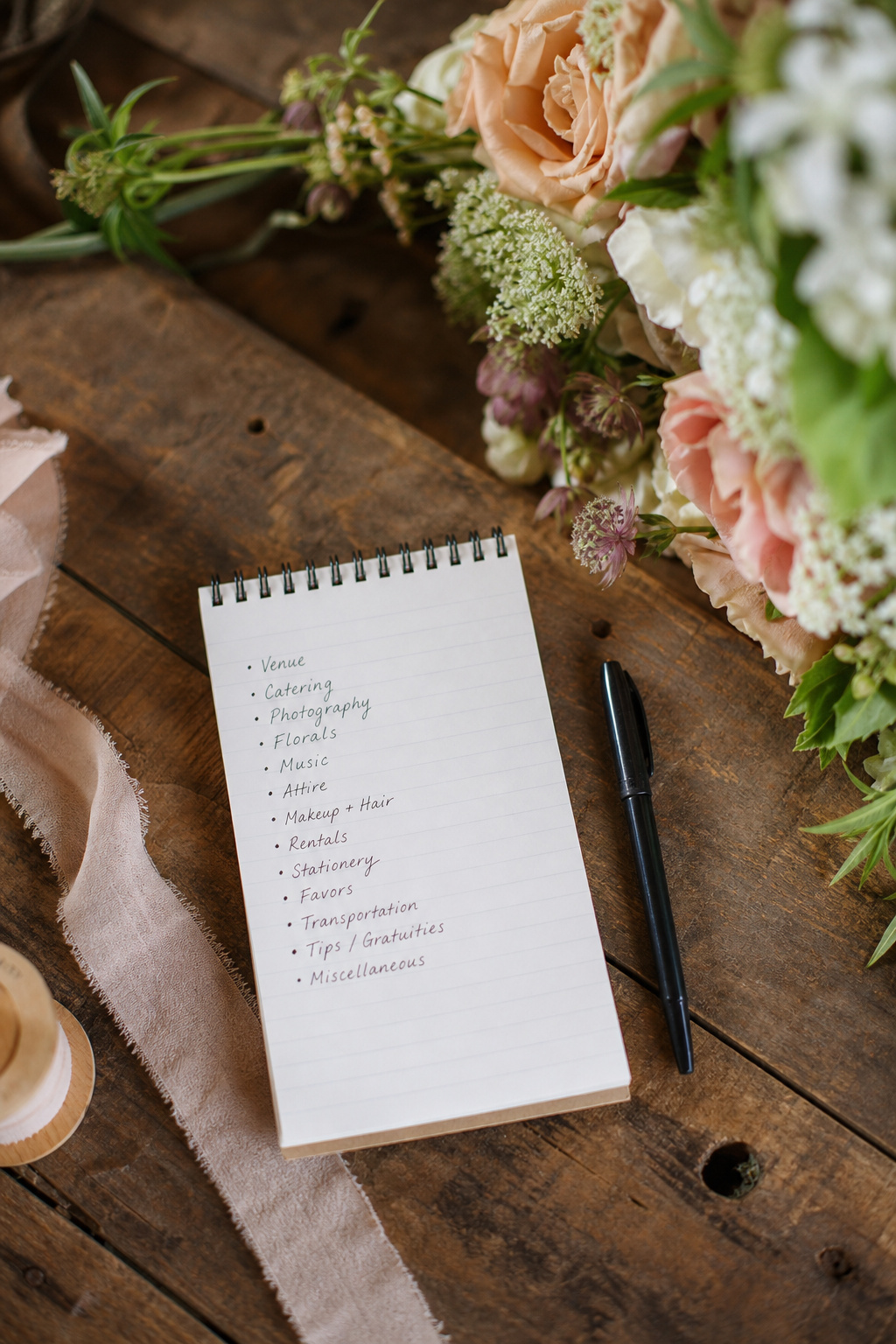
This is the first rule and the most ignored one. Go into every vendor meeting with a number — not a range, a number. A range gives a vendor permission to quote the top of the range. A ceiling gives you something to negotiate from.
Before you meet with a single florist, photographer, or caterer, sit down and figure out your total wedding budget. Then allocate it by category. Flowers typically run 8–10% of the overall wedding spend, though I’ve seen couples go higher when it matters to them and lower when it doesn’t. If you don’t know where flowers fit in your overall picture, check out our post on how much to budget for wedding flowers. It’ll give you a realistic starting point before you start pricing anything out.
The other thing worth doing before vendor meetings: use a free tool to get a sense of local spend in your area. Wedding Report’s Wedding Cost Estimator pulls real data by zip code and breaks it down category by category. No sign-up required. It won’t tell you what to spend, but it’ll tell you what others in your market typically do spend. That’s useful context when a quote comes in, and you’re not sure if it’s reasonable.
Walk in with a number, every time.
Do Your Research Before You Compare Quotes
Get at least three quotes in every major category. Not to play vendors against each other, though that’s sometimes a side effect, but because you won’t know if a price is reasonable until you have something to compare it to.
Market rates vary a lot by region and season. What a photographer charges for a Saturday in September is not what they charge for a Tuesday in January. What a florist charges for peonies in May is not what they charge for them in October, when the season’s long over and sourcing gets harder. The more context you have before you sit down, the less likely you are to agree to something just because it sounds authoritative.
Check reviews seriously. Look for specifics. Vendors who communicate clearly, show up when they say they will, and handle problems without drama. A vendor with a slightly higher quote and consistently strong reviews is usually a better deal than a lower quote from someone with a pattern of complaints. In the flower business, we’d rather lose a booking to a better-suited shop than have something go sideways on a couple’s wedding day. Most good vendors feel the same way.
Ask the Right Questions Before You Negotiate Anything

Before you talk price, understand what you’re actually pricing. Ask each vendor what’s included and what isn’t. Ask what happens if something goes wrong. Ask whether the person you’re meeting with is the person who’ll actually be at your wedding.
The questions I’d ask every vendor before signing anything:
What’s your backup plan if you’re sick or have an emergency? This matters especially with smaller independent vendors. If the florist is a one-person operation and she gets hurt the week of your wedding, what happens? You want to know before you’re in that situation, not during it.
What can I change after signing, and what’s locked? Wedding plans shift. Guest counts change. You realize three months out that you don’t actually need flowers at the bar. Know ahead of time what’s flexible and what carries a change fee.
How do you recommend I get the most out of my budget? This is the question most couples don’t think to ask, and it’s one of the most useful. A good vendor will give you a real answer. A florist might tell you that moving the ceremony date several weeks earlier puts peonies back in season and cuts the sourcing cost. A caterer might tell you that a stationed late-night snack goes further than a passed appetizer for the same money. If they can’t answer it, that tells you something, too.
Negotiate Without Apology — But Know What You’re Asking For
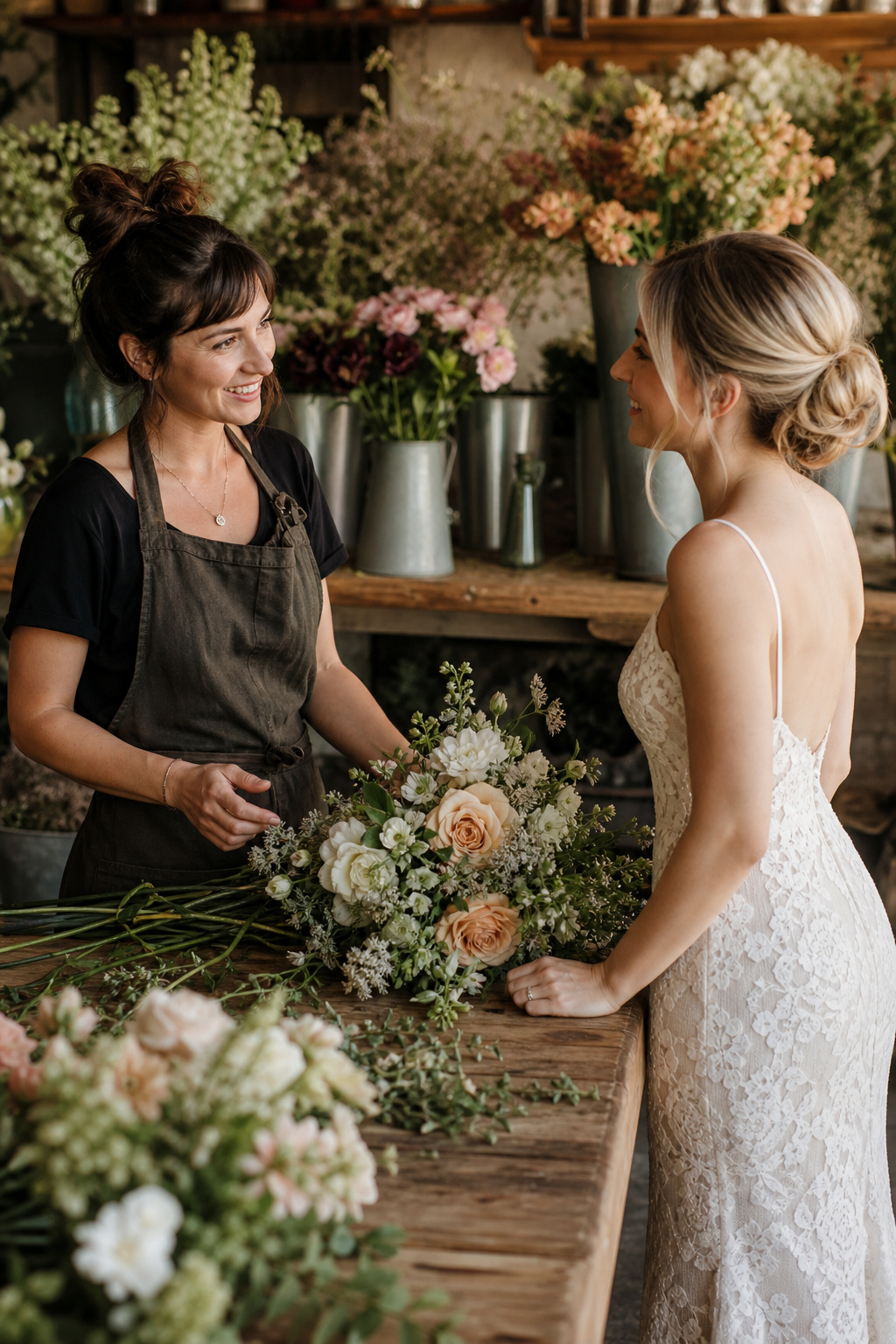
Most couples feel awkward negotiating with wedding vendors. They don’t want to seem cheap, or they’re worried about offending someone whose work they genuinely like. I get it. But vendors set their prices expecting some conversation. It’s not an insult to ask.
What works: be direct, be specific, and be honest about your number. “I love the proposal, but I’m working with $X — is there anything we can adjust to get there?” is a clean ask. It’s not aggressive, it’s not apologetic, it just gives the vendor something to respond to.
Want to sharpen your negotiating? Negotiation is a learnable skill, and there are plenty of audiobooks on it that you can listen to between vendor meetings. Eligible new members can start an Audible free trial and give one a listen. As an affiliate, we earn on qualifying purchases.
What doesn’t work: vague hints, comparing a vendor to a cheaper competitor without context, or implying they’re overpriced without knowing their costs. A florist who quotes you $4,000 for centerpieces isn’t padding the number for fun. Labor, sourcing, refrigeration, delivery, setup time — it adds up fast. The better move is to ask what’s driving the cost and whether there are places to pull back. Sometimes there are. Sometimes the design you love costs what it costs.
One thing worth knowing: if you want flowers to stretch further, the most reliable lever is simplicity. Fewer flower types, more greenery, designs that don’t require complex armature or labor-intensive techniques. A talented florist can do a lot with a tight budget if you give her room to make smart choices. The couples who get the best value are usually the ones who come in with a budget and a feeling rather than a 47-image Pinterest board and an itemized demand list.
What I’d do in the shop: When a couple tells me their budget upfront and says, “what can you do with this,” I can almost always build something beautiful. When someone hands me a mock proposal from a vendor who quoted them half what I’m quoting, I ask to see what’s actually included. Nine times out of ten, it’s not an apples-to-apples comparison.
Read the Contract — All of It
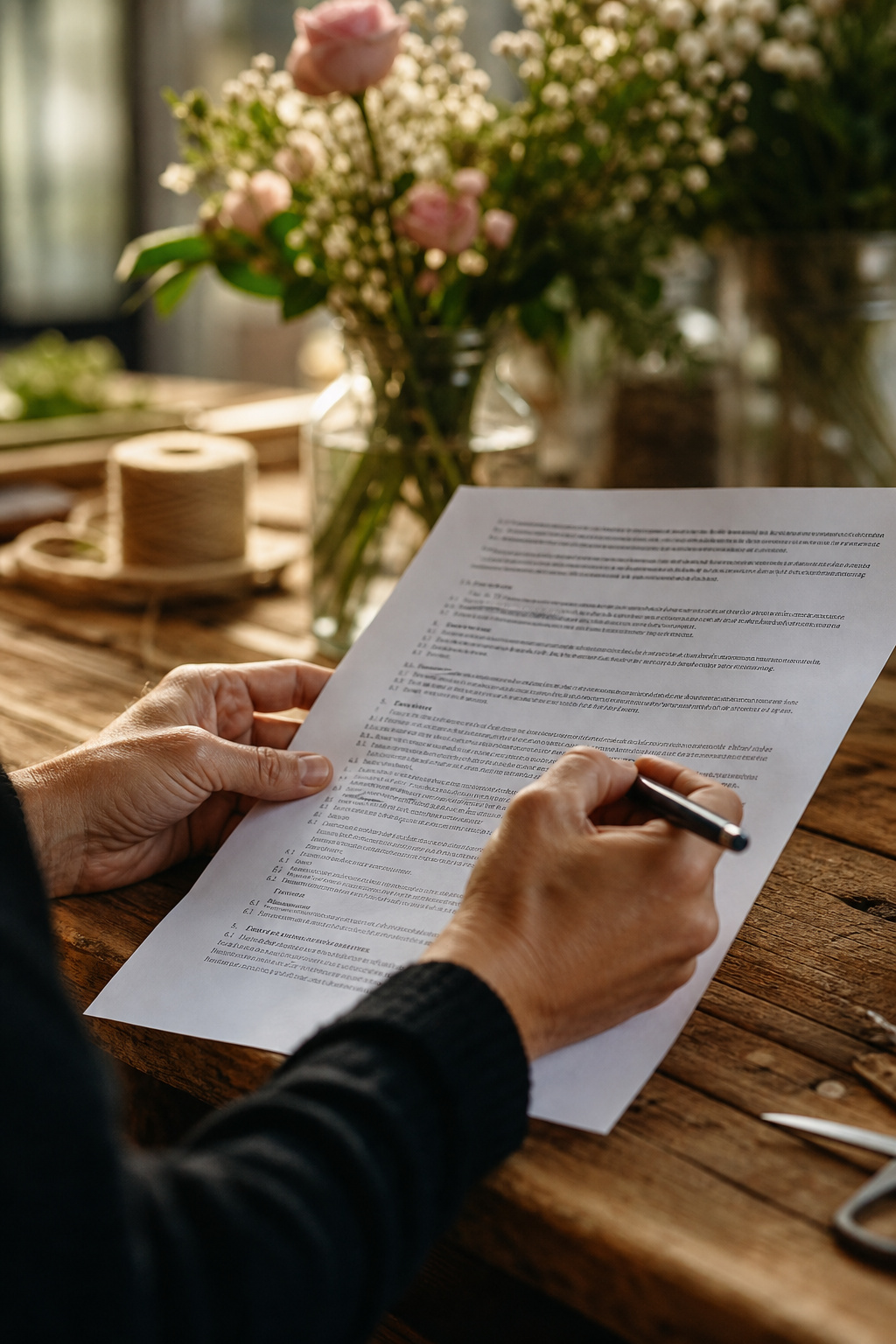
The title of this post says “common sense,” so I’ll be blunt: most couples don’t read their vendor contracts carefully enough. They skim the numbers, initial where they’re told to, and sign. Then they’re surprised when there’s an overtime charge, or the deposit is non-refundable under conditions they didn’t understand, or the timeline they assumed wouldn’t fit the venue’s setup window.
Read it. Ask about anything that isn’t clear. Look specifically for:
Payment schedules and what’s non-refundable. Deposits are standard. But know what percentage you lose if you cancel at 90, 60, or 30 days. Life happens.
Substitution clauses. In the flower business, this matters a lot. Weather, supply chain issues, and seasonal availability can all affect what’s available close to your wedding date. A good contract explains what happens if a flower isn’t available and how substitutions get approved.
Overtime and additional fees. If the reception runs long and the vendor’s team is still there, you may be billed for it. Know the rate before the wedding, not after.
Change policy. Can you add to the order? Remove items? Both? At what point does that close? Get it in writing.
If a vendor gets defensive when you ask about contract terms, that’s information. A confident vendor welcomes the questions.
Know Where to Be Flexible — and Where Not to Be

There’s a version of “flexibility” that saves money and one that costs you the wedding you actually wanted. Knowing the difference matters.
Good places to flex: day of the week (Friday or Sunday weddings often come with meaningful discounts), time of year (off-peak months like November through early March), flower selection (going with what’s seasonal and abundant rather than what’s rare), and guest count (every person you remove from the list reduces catering, florals, and table count in parallel).
Places to hold firm: the vendors who matter most to you, the moments you’ll actually remember, and anything that directly affects guest comfort or logistics. Cutting the florist budget is a reasonable call. Cutting it so far that centerpieces look sparse in photos you’ll have for the rest of your life is a different calculation.
On the flower side specifically, one reliable way to reduce cost without reducing visual impact: let the florist use what’s in season. When I’m working with a couple who trusts my sourcing, I can often put together something more impressive than a fixed list of imported out-of-season stems for the same or lower cost. Seasonal availability also applies to color palettes. Certain shades are easier to source in certain months. A good florist can guide you through that.
If you’re planning a more traditional ceremony, it’s also worth having a clear picture of who’s paying for what. Our post on navigating traditional wedding expenses covers the etiquette side of that conversation. It’s useful if the family is contributing to the budget and you want everyone on the same page before vendor meetings start.
Frequently Asked Questions
Is it rude to negotiate with wedding vendors?
No. Most experienced vendors expect some conversation around price and terms. What reads as rude is being vague, making unreasonable demands, or implying a vendor is overcharging without understanding their costs. A clear, respectful ask — “This is my budget, what can we do?” — is just business.
Should I get multiple quotes before negotiating?
Yes, always. Three quotes in each major category give you a sense of what’s reasonable in your market. It also gives you something to reference if a vendor’s proposal comes in significantly higher than others. Just make sure you’re comparing equivalent services before concluding.
Can I negotiate on flowers specifically?
You can have a conversation, but “negotiation” works differently with florists than with some other vendors. The cost of flowers is tied to sourcing, labor, and logistics. There isn’t a lot of fat to trim. What you can do is adjust the scope: fewer flower types, more greenery, seasonal selections, simpler designs. A good florist will work with your number if you give her some creative flexibility.
What’s the best time of year to get a deal on wedding vendors?
In most markets, the slow season runs from late November through early March. Vendors who have open dates during that window are often more willing to negotiate on price or add extras. Friday and Sunday weddings also typically come with lower rates than Saturdays.
What should I watch out for in vendor contracts?
Non-refundable deposit terms, substitution clauses (especially for florists), overtime rates, and the change policy. Read all of it. Ask about anything that isn’t clear. A vendor who’s annoyed by contract questions is a vendor worth reconsidering.
How do I know if a vendor’s quote is fair?
Compare it to at least two others in your area for equivalent services. Look at reviews alongside the price. A slightly higher quote from a consistently praised vendor is often a better deal than a cheaper one with mixed feedback. And ask the vendor to walk you through what’s driving the cost. Transparency is a good sign.
Closing Thoughts
The couples who navigate vendor negotiations well aren’t the ones who push the hardest for the lowest price. They’re the ones who come prepared, communicate clearly, and understand that vendors are running businesses with real costs. When you show up knowing your number, asking smart questions, and reading what you sign, you’re not being difficult. You’re being a good client. And good clients tend to get the best work.
If you’re still in the early planning stages, I’d also recommend reading through our post on how to choose your wedding florist. It covers the relationship side of things beyond just price, which matters more than most couples realize going in. Sometimes the right vendor is worth a little more than the cheapest quote. Sometimes it isn’t. You’ll be better positioned to make that call once you’ve done your research.
What’s been your experience negotiating with wedding vendors? Did something work that surprised you, or did you wish you’d asked a question you didn’t think of until after? Drop it in the comments.
Til next time,