Disclosure: This post may contain affiliate links. If you click and buy, we may earn a commission at no extra cost to you. As an Amazon Associate, we earn from qualifying purchases.
Last Updated: July 12, 2026
A mother of the bride once brought me a pre-made elastic wristlet and asked if I could dress it up to match a bouquet with a lot of texture. It worked, but it never looked quite finished, since the base itself was just a plain band doing nothing but holding the flowers up.
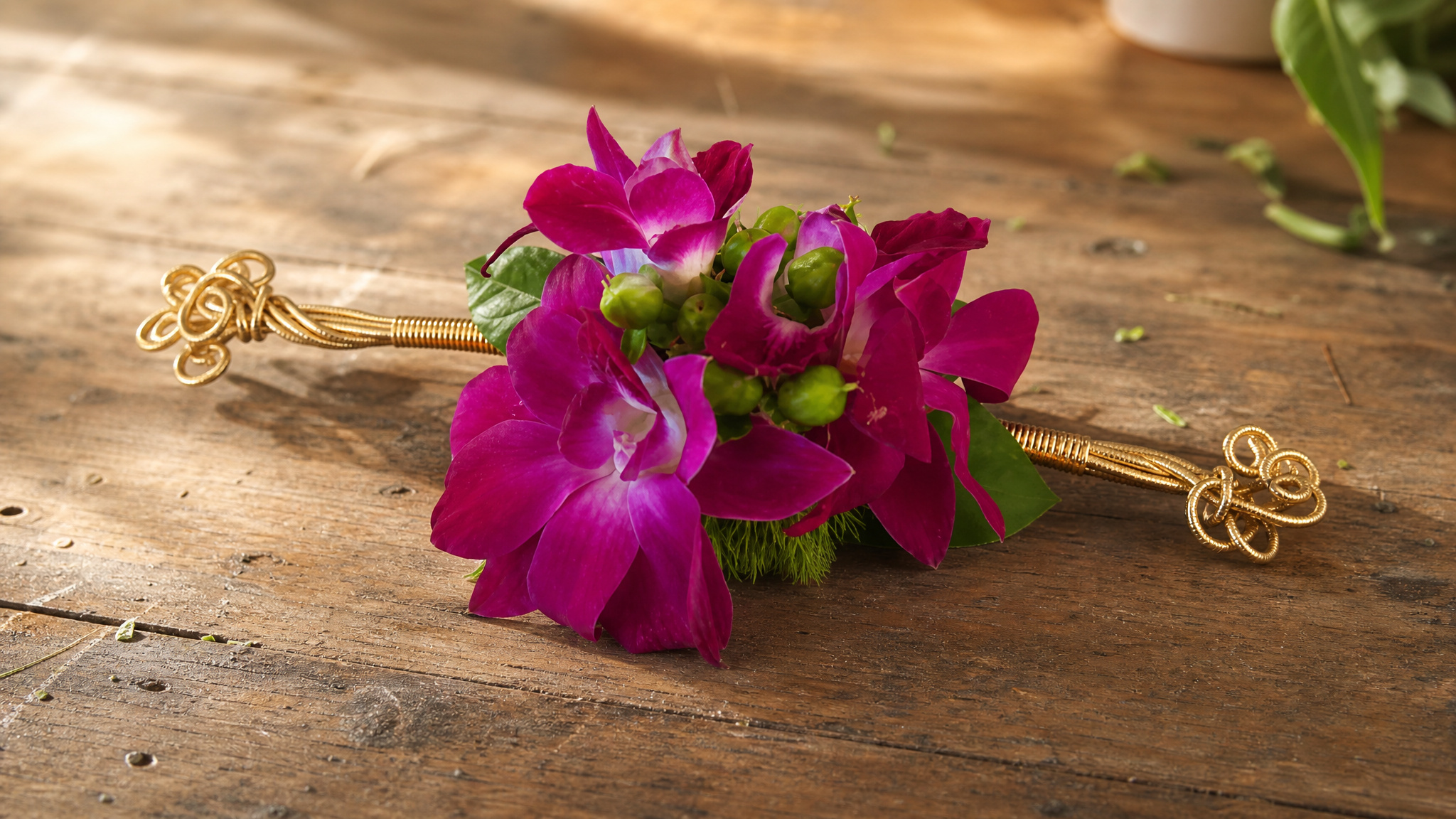
A twisted wire wristlet solves that. Instead of hiding the base under the flowers, the wire becomes part of the design, and it takes maybe twenty minutes to make once you know the technique.
Here’s a video that gives you an overview of the process.
Choose the Right Wire for the Job
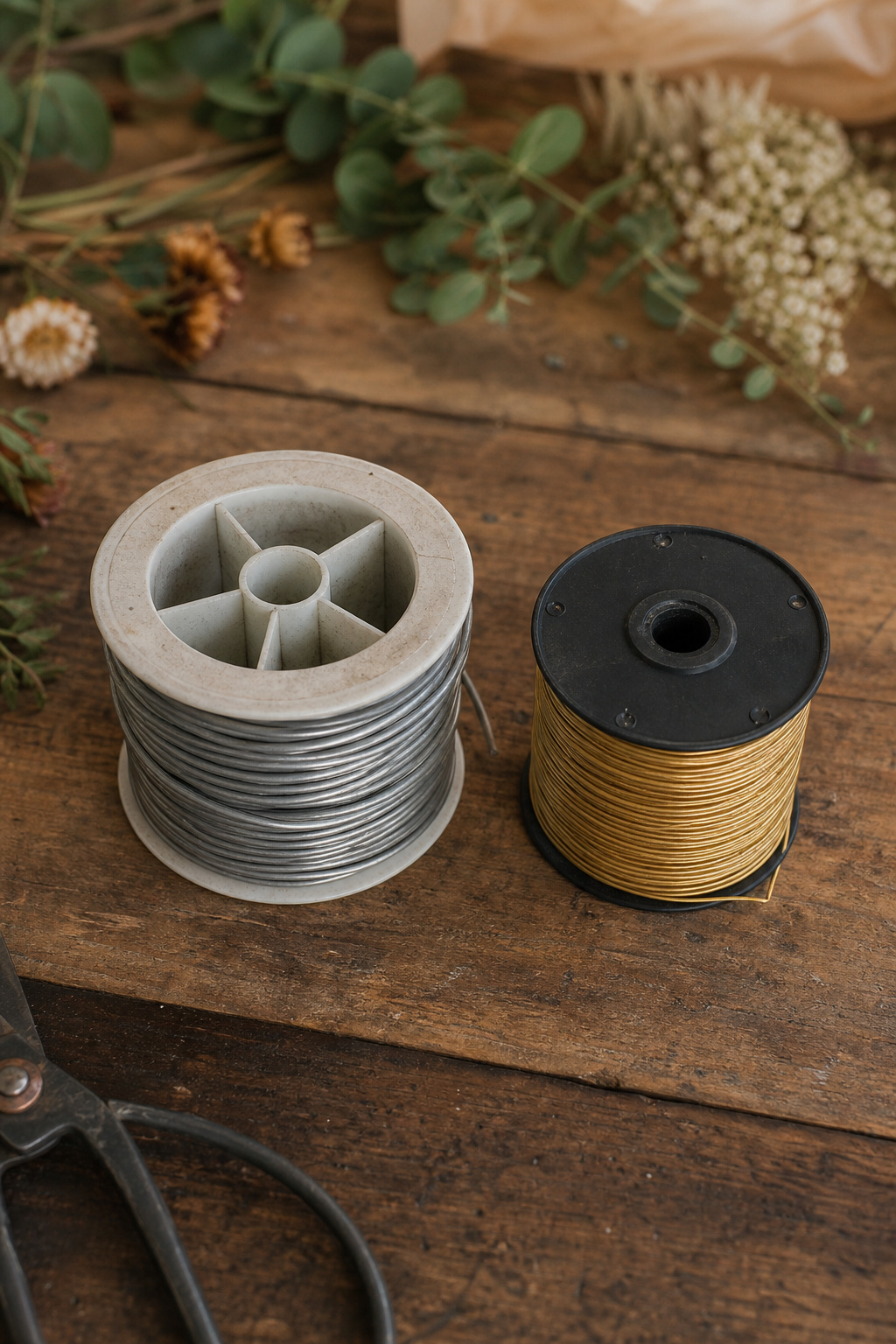
Two different wires are doing two different jobs here, and mixing them up is the most common mistake I see.
Aluminum wire, in the 12-16-gauge range, gives you the structure. It holds its shape once bent, which is exactly what you need for a band that has to actually fit around a wrist and stay there. Bullion wire, the fine, coiled decorative wire, wraps around the aluminum afterward purely for texture and shine. It has no structural job at all. If you try to build the whole band out of bullion wire alone, it’ll collapse the first time someone moves their hand.
Shape the Base Band to an Actual Wrist
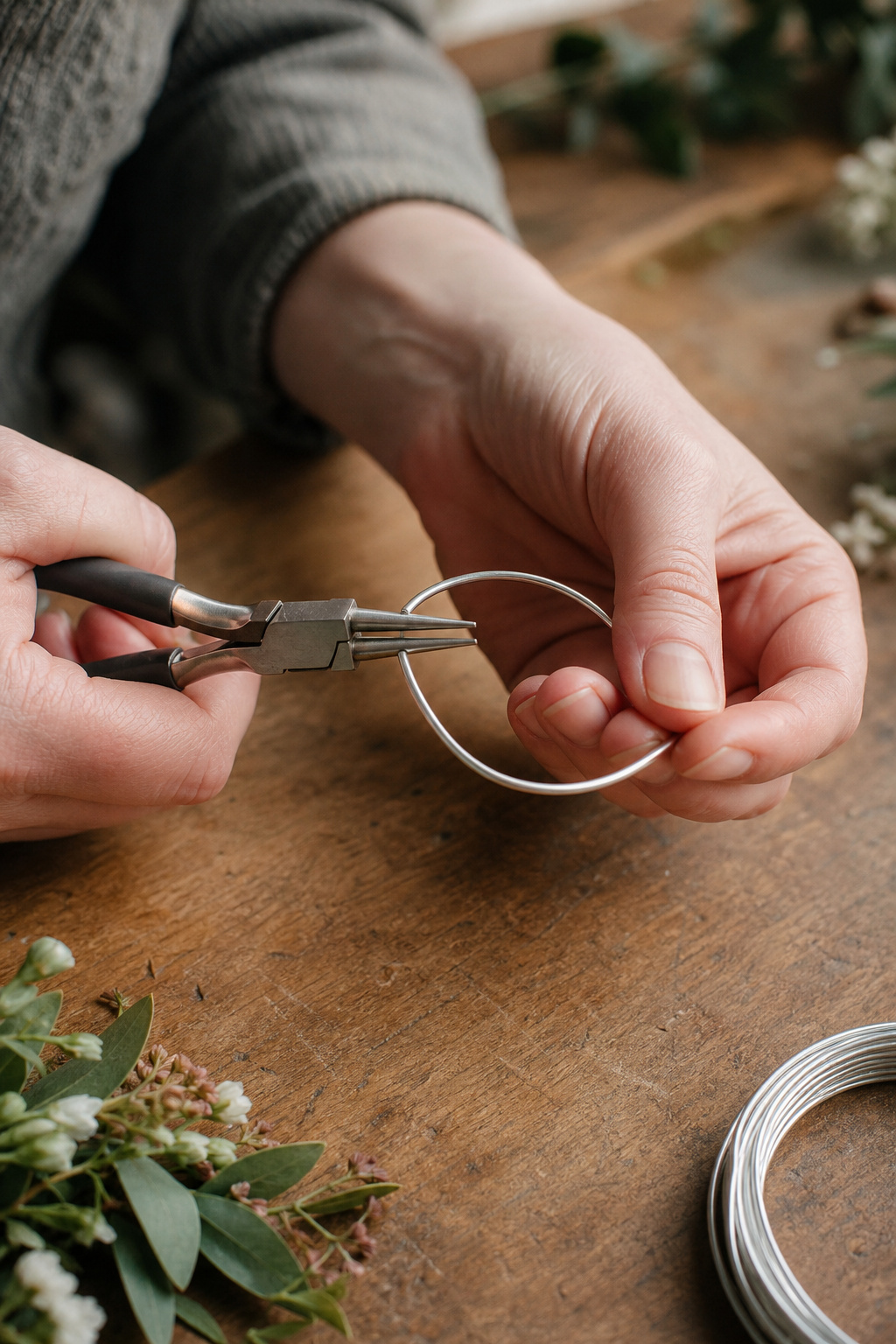
Measure loosely around the wrist it’s for, and bend your aluminum wire into a circle roughly that size, with a little extra room. You want it comfortable enough to wear for a full evening of dancing, not a tight cuff.
Round nose pliers make the clean bends and curls that separate a professional-looking piece from an amateur one. Overlap the two wire ends by an inch or so and twist them together tightly to close the circle, then tuck the sharp ends inward so nothing pokes at the skin. That last step matters more than it sounds like it would. A wristlet that looks great but scratches all night is a design failure, no matter how nice the flowers are.
What I use in the shop: round-nose pliers for every twisted wire piece. They’re the difference between a clean curl and a kink that looks like a mistake.
Attach Flowers So the Wire Still Shows
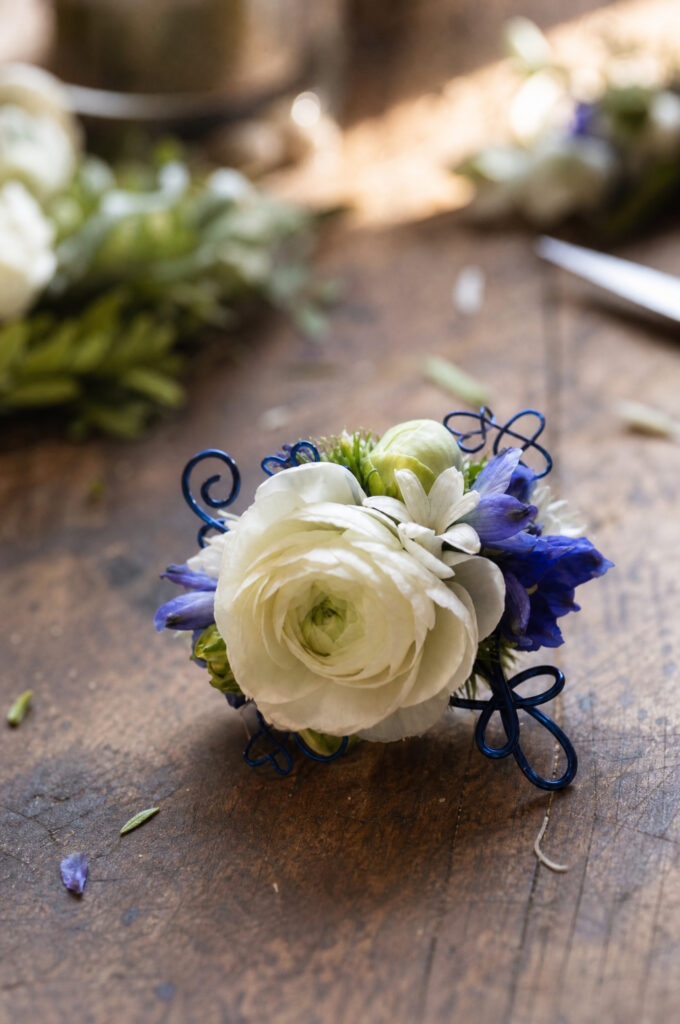
This is the part that makes a twisted wire wristlet different from a standard corsage base. You want the wire visible as part of the finished look, not buried under flowers.
Attach your wired blooms to one section of the band using corsage glue or UGlu adhesive dashes, leaving a good stretch of bare, textured wire showing on either side. Two or three small focal flowers with a little greenery is usually enough. Overloading the wire with flowers defeats the entire point of the technique, since you end up hiding the exact thing that made this style worth building in the first place. If you haven’t wired flowers before, our step-by-step corsage guide covers the flower side of this project in full.
Frequently Asked Questions
What gauge wire should I use for a wristlet base?
Aluminum wire in the 12- to 16-gauge range works best for the structural base. It’s sturdy enough to hold its shape around a wrist all evening, but still easy to bend by hand or with pliers. Anything thinner won’t hold its shape, and anything thicker gets difficult to work with.
What’s the difference between aluminum wire and bullion wire?
Aluminum wire provides structure, since it holds its shape once bent. Bullion wire is a fine, coiled decorative wire with no structural strength, used purely to wrap around the aluminum base for texture and shine. They do two different jobs, and neither substitutes well for the other.
How do I keep the wire from scratching the wrist?
Tuck any sharp wire ends inward against the band rather than leaving them exposed, and check the whole piece by running a finger around the inside edge before it’s worn. A quick wrap of floral tape along the inside of the band adds an extra layer of comfort if you’re worried about sensitive skin.
How many flowers should go on a twisted wire wristlet?
Two or three small focal flowers with a bit of greenery are usually the right amount. The whole appeal of this style is the visible wire texture, and piling on too many flowers covers up the exact detail that makes it different from a standard corsage base.
Can I make a twisted wire wristlet in advance?
The wire base itself can be made days or even weeks ahead, since it involves no flowers and won’t wilt or change. Attach the fresh flowers as close to the event as you reasonably can, following the same timing you’d use for any fresh corsage.
Closing Thoughts
A twisted wire wristlet takes the same handful of flowers most people use for a standard corsage and gives them a base that actually looks designed instead of just functional.
Once you’ve bent one band, the technique sticks, and you’ll find yourself reaching for it on every future corsage.
Have you tried working with wire before, or is this your first time picking up a pair of pliers? Tell me in the comments. I read every one.
Til next time,