Disclosure: This post may contain affiliate links. If you click and buy, we may earn a commission at no extra cost to you. As an Amazon Associate, we earn from qualifying purchases.
Last Updated: July 12, 2026
A planner called me in a panic once, fifty minutes before a gala was set to open, because a centerpiece had tipped in the elevator on the way up to the ballroom. The design itself was fine. Nobody had planned for how it would actually get there.
Designing a special event centerpiece is only half the job. The other half is getting it into the room in one piece, and that half rarely gets talked about.
Design for the Trip, Not Just the Table
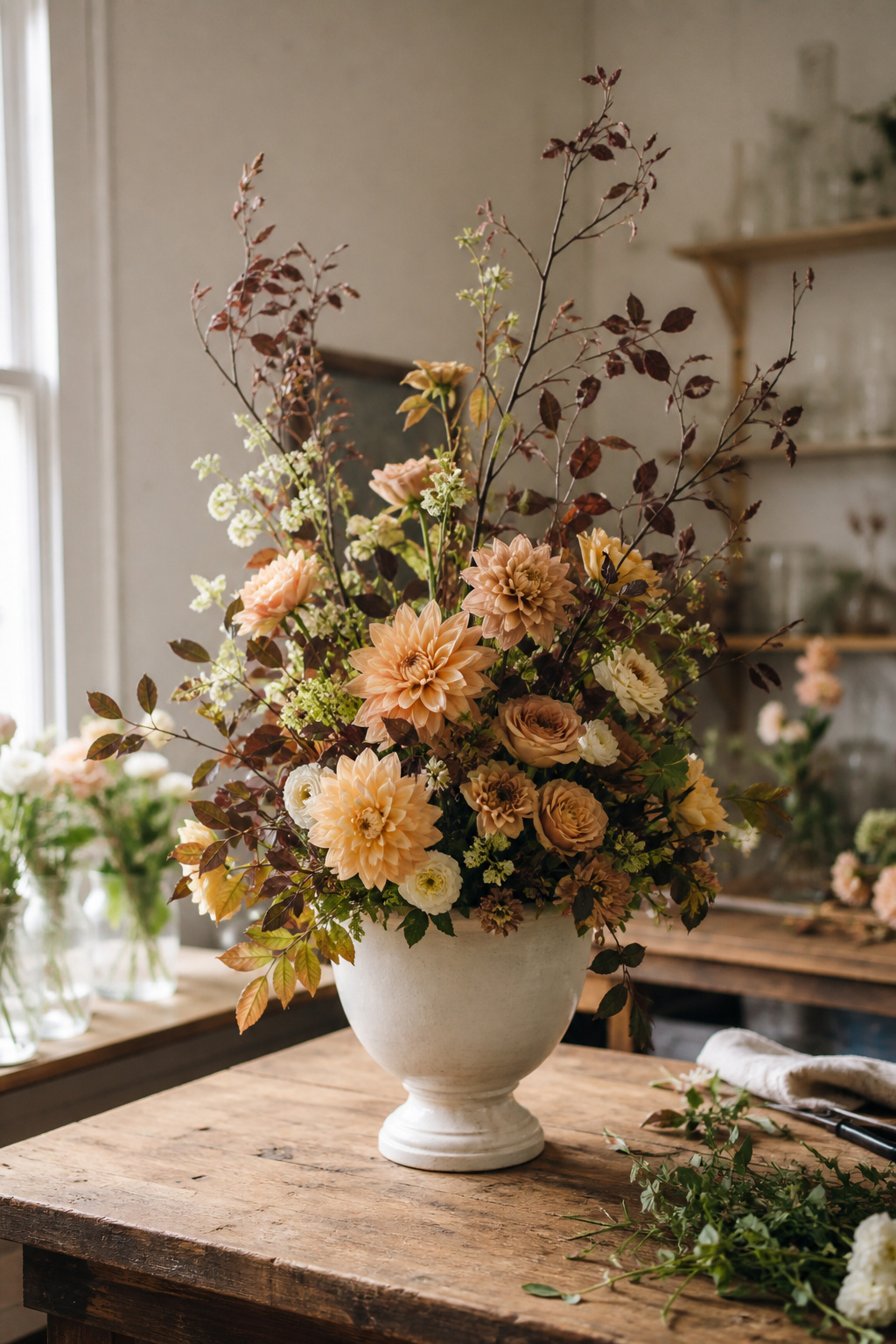
A centerpiece that looks perfect on a worktable can fall apart entirely by the time it reaches a ballroom three floors up, and the difference usually comes down to decisions made before a single flower is cut.
Anything tall or top-heavy needs a wide, weighted base, the same principle as bracing a floor vase. Anything with delicate, exposed elements, like a hanging pomander or a piece with loose trailing ribbon, needs to survive being jostled in a van, on a hand truck, and through a doorway that’s narrower than you’d like. If a design only works sitting perfectly still on a flat surface, it’s not ready for a large event.
Build With Floral Foam for Anything That Travels

For most special event work, floral foam earns its keep in a way it doesn’t always for a home arrangement. Foam locks every stem in place, which matters enormously once a piece leaves the worktable and starts moving.
Wire-armature and chicken-wire designs, the loose, garden-style look I usually favor, are wonderful for a piece that gets built and placed once and stays put. They’re a much bigger risk for anything getting loaded into a vehicle, driven across town, and carried up a service elevator. If you want to learn the tradeoffs between the two mechanics in more depth, our guide to floral foam versus chicken wire covers when each one makes sense.
Transport Upright, Never on Its Side
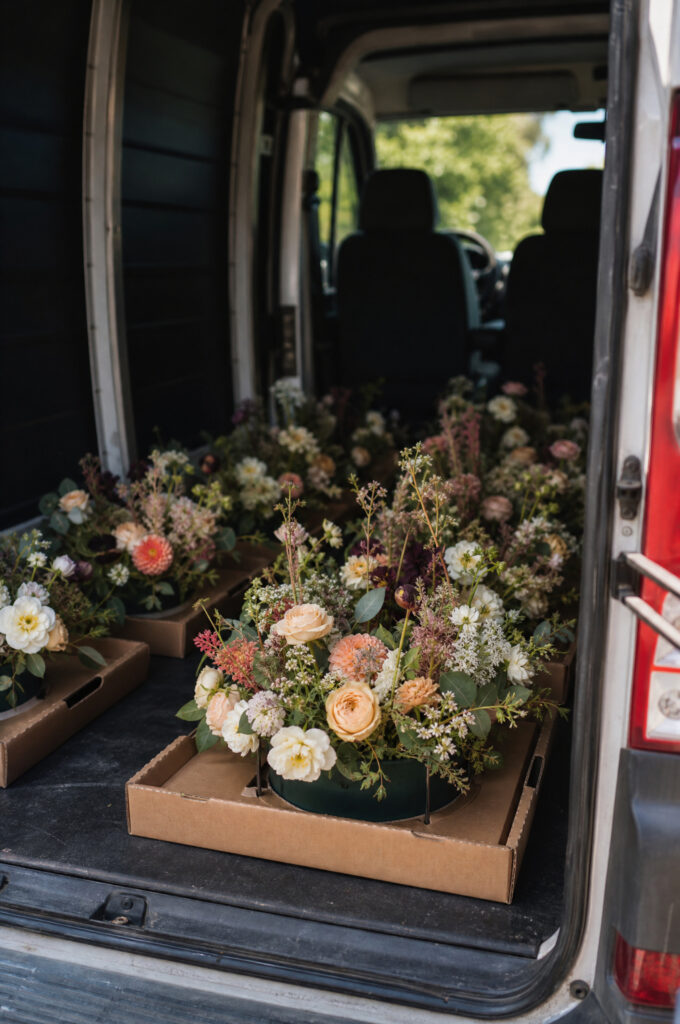
This sounds obvious until you’re the one trying to fit six centerpieces into a van that only comfortably holds four.
Every centerpiece rides upright, secured so it can’t slide or tip during transport. In my shop, we use low, flat delivery boxes cut to hold a vessel steady, or we wedge each piece with rolled towels or foam blocks so it can’t shift in transit. Load the tallest, most top-heavy pieces last so they’re the first ones unloaded upon arrival.
If you’re worried you don’t have the specialized equipment that a professional florists delivery vehicle does, don’t be. A sturdy cardboard box with a cutout to hold the base of the vase and a flat, uncluttered cargo area gets you most of the way there for a small number of pieces.
Walk the Venue Before You Design Anything
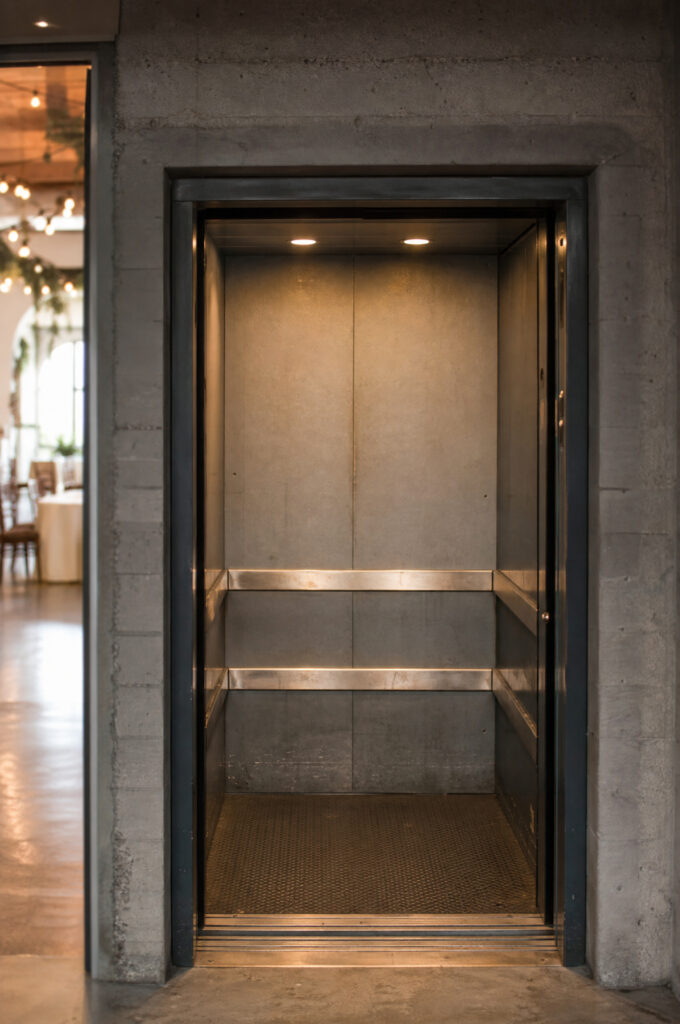
Every venue has a bottleneck, whether it’s a narrow service elevator, a tight stairwell, or a loading dock that’s a hundred yards from the ballroom door. Find it before you build, not after.
Measure the tightest doorway or elevator door your centerpieces will need to pass through, and design to fit comfortably inside that measurement with room to spare. A piece that’s a few inches too wide for the service elevator means carrying it up a stairwell instead, which is exactly the kind of problem you want to know about ahead of time rather than right before doors open.
Bring Backup Supplies for On-Site Fixes
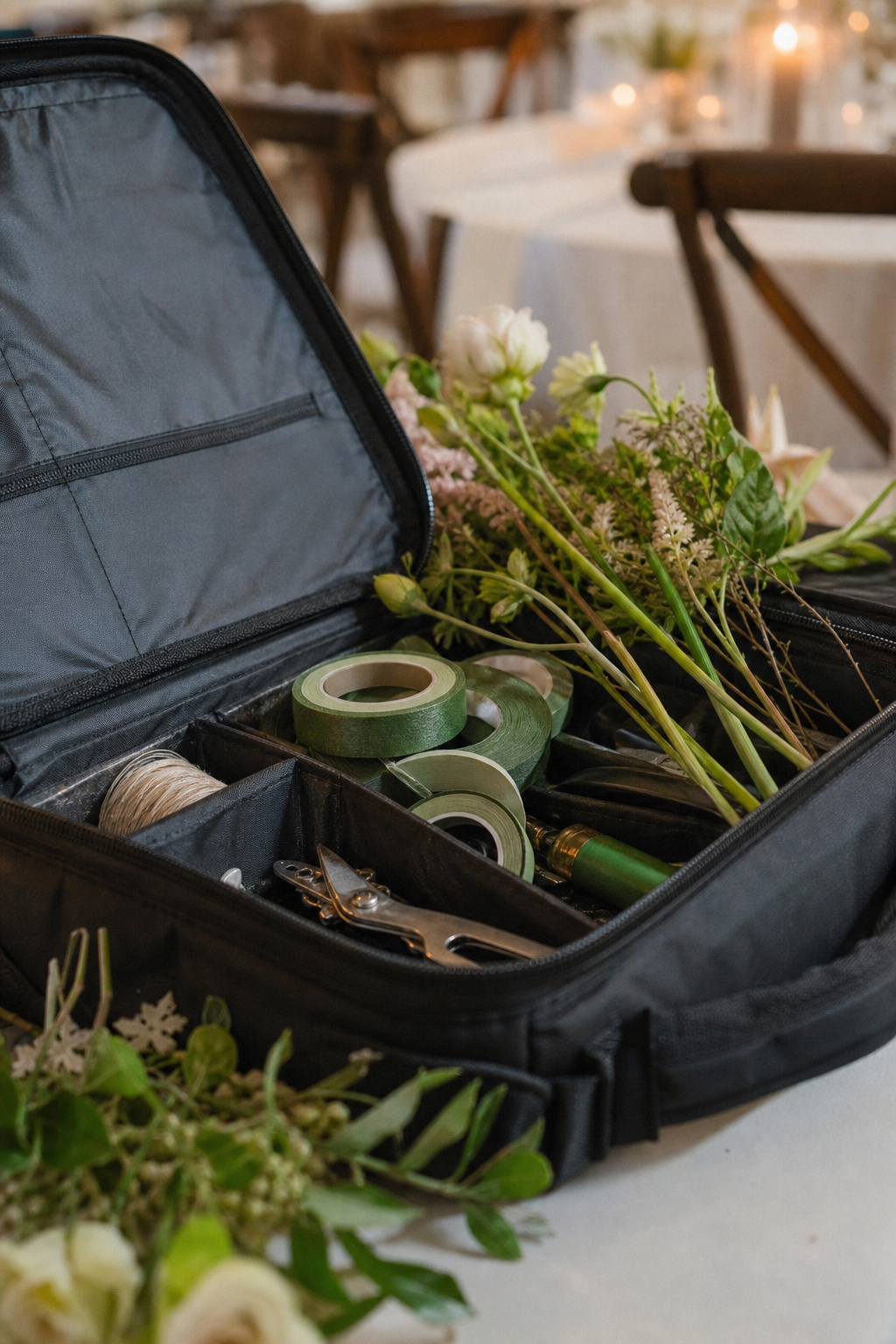
Something will shift in transit no matter how carefully you pack. Plan for it instead of hoping it doesn’t happen.
I always bring extra floral tape, a few backup stems in the same variety as the design, and a small tool kit for quick repairs on site. A stem that got crushed against the van wall or a bloom that shook loose takes thirty seconds to fix if you brought the supplies, and it’s a real problem if you didn’t.
What I use in the shop: a roll of waterproof floral tape in every delivery kit. It’s the single most useful thing for an on-site fix.
Frequently Asked Questions
How do I keep centerpieces from tipping over during delivery?
Always transport centerpieces upright, secured so they can’t slide or tip. Low, flat delivery boxes cut to hold the vessel steady work well, or wedge pieces with rolled towels or foam blocks in a flat, uncluttered cargo area. Load the tallest, most top-heavy pieces last so they’re removed first and spend the least time in transit.
Should I use floral foam for event centerpieces that need to travel?
For anything being transported, floral foam is usually the safer choice, since it locks every stem in place through the trip. Wire armature and chicken-wire designs look beautiful but are riskier for anything that gets loaded into a vehicle and moved across town before it’s placed.
Why does venue walkthrough matter for centerpiece design?
Every venue has a bottleneck, a narrow elevator, a tight stairwell, or a long walk from the loading dock, and it’s better to know about it before you build than after. Measure the tightest doorway or elevator your pieces need to pass through, and design to fit comfortably within that space.
What supplies should I bring for on-site centerpiece repairs?
Extra floral tape, a few backup stems matching your design, and a small tool kit cover most in-transit mishaps. A crushed stem or a loosened bloom takes seconds to fix with the right supplies on hand, and it’s a real problem without them.
How far in advance should I plan delivery logistics for a large event?
Walk the venue and confirm your transport route days ahead of the event, not the morning of. Knowing your bottlenecks, elevator size, doorway width, distance from the loading dock, well in advance gives you time to redesign a piece if it won’t fit, instead of discovering the problem with no time left to fix it.
Closing Thoughts
A beautiful centerpiece that never makes it to the table intact isn’t a beautiful centerpiece. Design for the whole trip, from the worktable to the elevator to the final placement, and the design part gets to be the easy half.
Get the logistics right, and nobody at the event will ever know how much thought went into getting it there.
Have you had a delivery mishap of your own, or is venue logistics something you hadn’t thought to plan for? Tell me in the comments. I read every one.
Til next time,